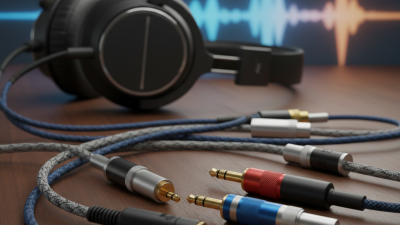
Choosing the right Audio Cables can protect a professional recording from hum, crackle, and sudden signal loss. In a studio, a cable may run beneath a console, across a stage, or beside power supplies. Its construction matters when every microphone, monitor, and interface must communicate clearly. Small details matter.
This guide examines ten Audio Cables designed for demanding professional use. The evaluation considers conductor materials, shielding, connector quality, flexibility, length, and strain relief. It also considers practical handling, because a cable that sounds excellent may still fail after repeated coiling. Noise reveals flaws. Weak connectors reveal more.
Professional engineers often judge cables through real sessions, not packaging claims alone. A balanced cable can help reject interference over longer runs, while suitable impedance supports reliable equipment matching. Gold-plated contacts may resist oxidation, but plating cannot repair poor internal construction. Marketing language can distract from measurable performance.
The selected options serve different needs, including studio recording, live sound, broadcast work, and installed systems. Some prioritize low capacitance and transparent signal transfer. Others focus on rugged jackets and flexible movement under stage pressure. No cable is perfect. Even a respected model may feel stiff, heavy, or unnecessarily expensive in a small setup.
Readers should compare specifications with their own environment. A quiet bedroom studio has different risks from a crowded concert stage. Careful storage, clean connectors, and gentle coiling also extend service life. These recommendations aim to provide practical, evidence-based guidance while acknowledging one uncomfortable truth: premium pricing does not always guarantee professional results.
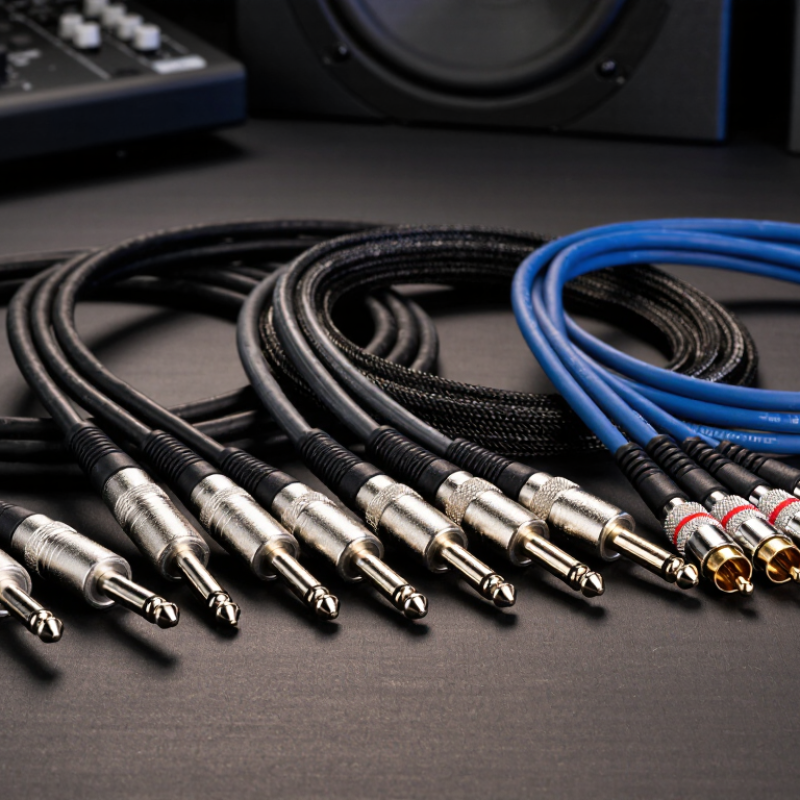
Professional audio systems depend on matching each cable to its electrical task. Balanced XLR cables carry microphone and line-level signals through two conductors and a shield. They resist hum over long stage runs. Balanced TRS cables serve mixers, interfaces, and studio patch bays. I use them when equipment provides balanced inputs and outputs. Short, clean routes matter.
TS instrument cables carry unbalanced signals from guitars, keyboards, and some effects units. Keep them short. Their exposed signal path can collect noise near power supplies. Speaker cables are different. They carry high current from amplifiers to passive speakers, so they need thicker conductors and secure connectors. Never substitute a thin instrument cable. It may look suitable, but its electrical design is wrong.
Digital systems require stricter specifications. Coaxial cables commonly carry digital audio through 75-ohm connections, while AES3 systems use 110-ohm balanced cable. A standard analog cable may work briefly, yet reflections can create clicks or unstable transmission. Optical cables provide electrical isolation between devices and help prevent ground-loop noise. MIDI cables use five-pin connectors for control data, not audio. Multicore snakes combine many channels for live stages, reducing setup time and tangled lines. Patch cables remain useful for short rack connections. They are easy to replace.
Cable quality is not a promise of better sound. Correct impedance, shielding, strain relief, and testing matter more. I still label both ends, inspect plugs, and test every channel before a session. Small oversights happen. That is why documentation should remain part of the cable system.
Professional cable selection begins with the signal path, not the price tag. The 2024 AVIXA Industry Outlook and Trends Analysis valued the global professional AV market at approximately 325 billion dollars in 2023. Larger systems create longer runs, denser racks, and greater failure risks. A cable must suit the application.
For balanced microphone lines, inspect conductor resistance, shielding coverage, and capacitance per metre. Lower capacitance can preserve high-frequency detail across long runs. It cannot repair poor grounding or damaged connectors. Balanced geometry also matters, because common-mode noise rejection depends on conductor symmetry.
ITU-R BS.468-4 provides a recognized method for evaluating audio noise, while IEC 60268-1 outlines general electroacoustic measurement principles.
Digital systems require stricter control. AES3 connections commonly use 110-ohm balanced cable, while other digital formats require different impedance targets. Using ordinary analog cable may work briefly, then produce clicks, dropouts, or unstable clocking. Check the manufacturer’s measured impedance, not just the cable’s appearance.
I have seen thick jackets create false confidence. They looked durable, but their connector strain relief failed first. That judgment was imperfect. Test every installed run with a cable tester, verify continuity, and record length, capacitance, and termination quality. In touring environments, flexible jackets and secure locking connectors often matter more than impressive specifications. Spare cables should match the system, not merely fit the connectors.
Professional cable selection depends on signal type, distance, and mechanical stress. Grand View Research’s 2024 professional audio report projects roughly 7% annual market growth through 2030. That expansion increases demand for reliable, application-specific wiring. However, market growth does not make every cable suitable for every signal.
For microphones, balanced XLR cables reject interference on long stage runs. Balanced TRS cables suit mixers, interfaces, and monitor outputs. Unbalanced TS cables remain practical for short instrument connections.
Locking speaker cables handle high-current amplifier outputs safely. AES3 cables use 110-ohm construction for digital audio. S/PDIF cables normally use 75-ohm coaxial design.
BNC word-clock cables also require 75-ohm impedance and precise termination. Cat6 Ethernet cables carry networked audio when shielding and connector quality match the installation.
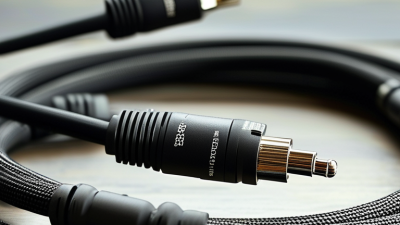
Optical cables avoid ground loops and perform well near lighting equipment. Multicore snakes simplify large stage systems but add weight and repair complexity.
The 2024 MarketsandMarkets professional audio report identifies networked and installed audio as important growth areas. That supports choosing Ethernet or optical designs for modern venues. Still, reports often overlook daily handling.
I have seen a perfect cable fail beside a drum riser.
Flexibility, strain relief, and connector fit matter more than impressive packaging. I sometimes over-specify cable length, too. A shorter, properly routed cable can reduce clutter, noise, and accidental disconnection. Impedance markings should remain visible after installation. That small detail saves time during troubleshooting.
10 Best Audio Cables for Professional Use?
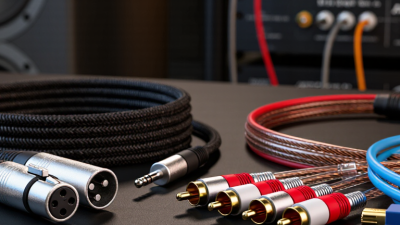
Connector standards often matter more than appearance. XLR cables suit balanced microphone and line-level connections. TRS cables can carry balanced signals or stereo headphone output. TS cables usually serve unbalanced instruments and short patch connections. RCA cables remain useful for consumer-level equipment and some monitoring systems.
Digital systems need different choices. AES/EBU commonly uses balanced XLR connections with controlled impedance. S/PDIF usually uses coaxial RCA or optical connections. These formats are not interchangeable. A cable may fit physically but still carry the wrong signal. I have seen this mistake create silent equipment and confusing troubleshooting sessions.
Signal quality depends on more than expensive materials. Good shielding reduces hum near power supplies and lighting circuits. Proper impedance supports reliable digital transmission. Shorter runs often reduce noise exposure. However, a short cable cannot repair a poor connector or damaged socket. Check compatibility at both ends before installation. Verify balanced and unbalanced wiring carefully. I once assumed a TRS connection was stereo, then discovered it carried a balanced mono signal.
For professional work, inspect strain relief, connector locking, flexibility, and cable thickness. A stiff cable may resist damage but can pull equipment from a rack. A thin cable may be convenient but less durable on busy stages. My selection process is useful, but not perfect. Room layout, equipment age, and power conditions can change the result. Label both ends, test each channel, and keep one verified spare nearby.
Professional audio systems fail quietly before they fail completely. A loose connector may create crackle, hum, or sudden signal loss. AVIXA’s 2024 Industry Outlook and Trends Analysis projected the professional AV market at about 325 billion dollars. That scale makes cable maintenance a practical investment, not a minor detail.
Install cables with gentle bends and enough slack near every connector. Never pull a cable by its plug. Follow the manufacturer’s minimum bend radius, because thicker conductors often need wider turns. Keep balanced audio lines away from power cables where possible. AES48 guidance supports careful shielding and grounding practices for reducing interference. Label both ends with source, destination, and date. This saves time during a dark venue changeover. I still find unlabeled cables in experienced teams. That remains an avoidable weakness.
Tips: Inspect connectors before every event. Look for bent pins, loose shells, crushed jackets, and green corrosion. Coil cables over-under, then store them off wet floors. Test long runs with a cable tester before installation. Replace damaged cables instead of hiding faults with tape. Record failures in a simple maintenance log. A short note can reveal repeated stress points. Avoid cleaning contacts aggressively; excess pressure can damage delicate surfaces. Recheck everything after transport, because careful work can still shift inside a crowded case.
| No. | Cable Type | Typical Construction | Key Electrical Data | Recommended Professional Use | Practical Run Length | Installation Guidelines | Maintenance Checklist |
|---|---|---|---|---|---|---|---|
| 1 | Balanced Microphone Cable | Two insulated conductors plus a braided or served shield; commonly 22–26 AWG conductors. | Low capacitance, typically 45–90 pF/m; nominal characteristic impedance is generally not specified for analog microphone cable. | Stage microphones, studio microphone lines, broadcast connections, and long balanced analog runs. | Up to about 100 m is common when the source, preamp, and electromagnetic environment are suitable. | Keep away from AC power cables where possible; cross power lines at approximately 90 degrees; provide strain relief. | Check for intermittent shielding, bent contacts, hum, crackle, and damaged outer jackets. |
| 2 | Balanced Line Cable | Two individually insulated conductors with a shield; often 22–24 AWG with flexible stranded copper. | Low capacitance, typically below 100 pF/m; balanced differential transmission rejects common-mode interference. | Mixer outputs, rack equipment, monitor feeds, effects processors, and professional analog line-level connections. | Approximately 50–100 m in normal professional installations. | Use balanced connectors at both ends when possible; avoid sharing cable trays with high-current power wiring. | Verify connector pin continuity and inspect for ground-loop symptoms after system changes. |
| 3 | Instrument Coaxial Cable | Single center conductor, dielectric insulation, conductive shield, and flexible outer jacket; commonly 20–24 AWG. | Capacitance often 60–150 pF/m; high capacitance can reduce high-frequency response from passive pickups. | Passive electric instruments, high-impedance outputs, pedals, and short unbalanced signal connections. | Usually 3–9 m for passive instruments; longer runs may require a buffer or active output. | Do not coil tightly during use; route away from transformers, dimmers, and power adapters. | Test for crackle while flexing the cable near both plugs; replace cables with intermittent shielding. |
| 4 | Speaker Cable | Two high-current conductors without signal shielding; commonly 12–16 AWG for professional passive loudspeaker systems. | Designed for low resistance and high current; cable impedance is not the same as the loudspeaker load impedance. | Power amplifier to passive loudspeaker connections and portable or installed sound reinforcement. | About 15–30 m is typical; use larger conductors for longer distances or low-impedance loads. | Never substitute a thin instrument cable; secure connectors and prevent exposed conductors from shorting. | Inspect for loose terminals, heat damage, crushed insulation, and polarity reversal. |
| 5 | AES3 Balanced Digital Cable | Shielded twisted pair with controlled impedance; commonly 22–24 AWG and terminated with three-pin professional connectors. | 110 Ω nominal characteristic impedance; balanced digital audio transmission. | Digital consoles, converters, recorders, routing systems, and point-to-point digital audio links. | Up to approximately 100 m with suitable cable and correctly matched equipment. | Use cable rated for 110 Ω digital transmission; avoid excessive adapters and sharply kinked sections. | Check clock stability, connector locking, and error symptoms such as clicks, mutes, or loss of sync. |
| 6 | S/PDIF Coaxial Cable | Shielded coaxial construction with a solid or stranded center conductor and conductive outer shield. | 75 Ω nominal characteristic impedance; suitable for unbalanced digital audio. | Short digital connections between consumer, project-studio, and broadcast-related equipment. | Approximately 3–10 m is a practical planning range; performance depends strongly on cable quality and equipment. | Use true 75 Ω coaxial cable rather than ordinary analog patch cable for critical links. | Look for intermittent locking, digital noise, and loose connectors; keep plugs clean and fully seated. |
| 7 | Word Clock Cable | 75 Ω coaxial cable, usually with BNC connectors and a continuous shield. | 75 Ω nominal characteristic impedance; carries timing reference rather than program audio. | Synchronization of converters, digital mixers, recorders, and other clocked audio devices. | 10–30 m is common in facilities when termination and distribution are correctly designed. | Maintain a consistent 75 Ω path; follow the equipment manual for termination and distribution topology. | Monitor for sync drops, clicks, and unstable sample-rate indicators; inspect BNC locking rings. |
| 8 | ADAT Optical Cable | Plastic optical fiber with molded optical connectors; electrically isolated between devices. | Digital optical transmission; immune to ground loops and most electromagnetic interference. | Multi-channel digital audio between compatible interfaces, converters, and studio hardware. | Typically 5–10 m; exact limits depend on the optical transmitter, receiver, and sample-rate mode. | Observe the specified minimum bend radius; protect connector tips with caps when disconnected. | Clean optical ends with appropriate lint-free materials; replace cables with scratched or cloudy tips. |
| 9 | Headphone Cable | Two-channel unbalanced or balanced conductors with flexible insulation; commonly 24–28 AWG. | Designed for headphone loads commonly ranging from 16–300 Ω; conductor resistance should remain low. | Control-room monitoring, live production cue systems, and personal monitoring. | Approximately 3–10 m, depending on headphone sensitivity and amplifier output. | Avoid pulling the cable from the connector; use a strain-relief loop near the headphone output. | Check stereo balance, plug fit, and channel continuity; replace cables with exposed or twisted conductors. |
| 10 | Network Audio Cable | Balanced twisted-pair data cable with an 8P8C modular connector; commonly Category 5e or Category 6. | 100 Ω nominal characteristic impedance; supports high-bandwidth packet-based audio networks. | Networked consoles, stage boxes, audio processors, installed sound, and distributed recording systems. | Up to 100 m per copper link, including permanent link and patch connections, when correctly installed. | Maintain separation from power wiring, observe bend-radius limits, and avoid untwisting pairs near terminations. | Test cable certification, link speed, packet errors, connector latches, and shield bonding where applicable. |