China Top RCA Wire Types and Their Applications Explained?
In the realm of audio and video technology, RCA wires play a crucial role. These cables connect various devices, providing both audio and visual signals. Industry expert John Anderson, a senior engineer at Sound Solutions, states, "RCA wires are the backbone of many home audio setups." His insights underline the enduring importance of these cables.
RCA wires come in different types, each designed for specific applications. For instance, composite RCA cables transmit standard video, while component cables enhance video quality through additional color channels. Their versatility makes them suitable for home theaters, gaming consoles, and professional audio equipment. However, not all RCA wires are created equal. Ensuring compatibility and quality can be challenging, especially with so many options available.
As technology evolves, the demand for better connections grows. Many consumers overlook the significance of selecting the right RCA wire. This often leads to frustrating audio experiences. Understanding the variety of RCA wire types can enhance overall performance. Exploring their applications is essential for anyone looking to optimize their home entertainment system.
Types of RCA Wires Commonly Used in China
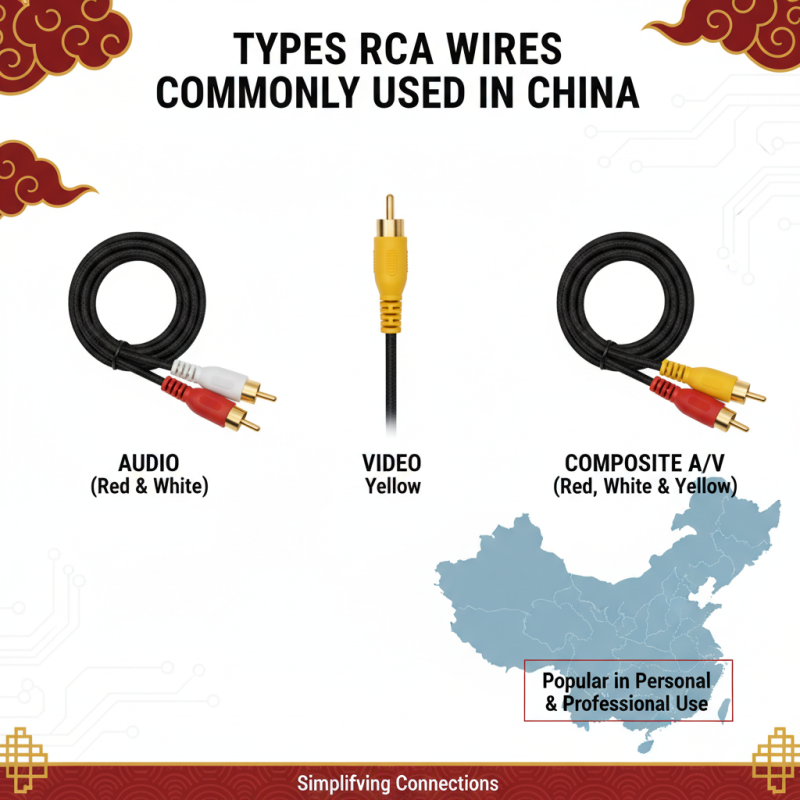
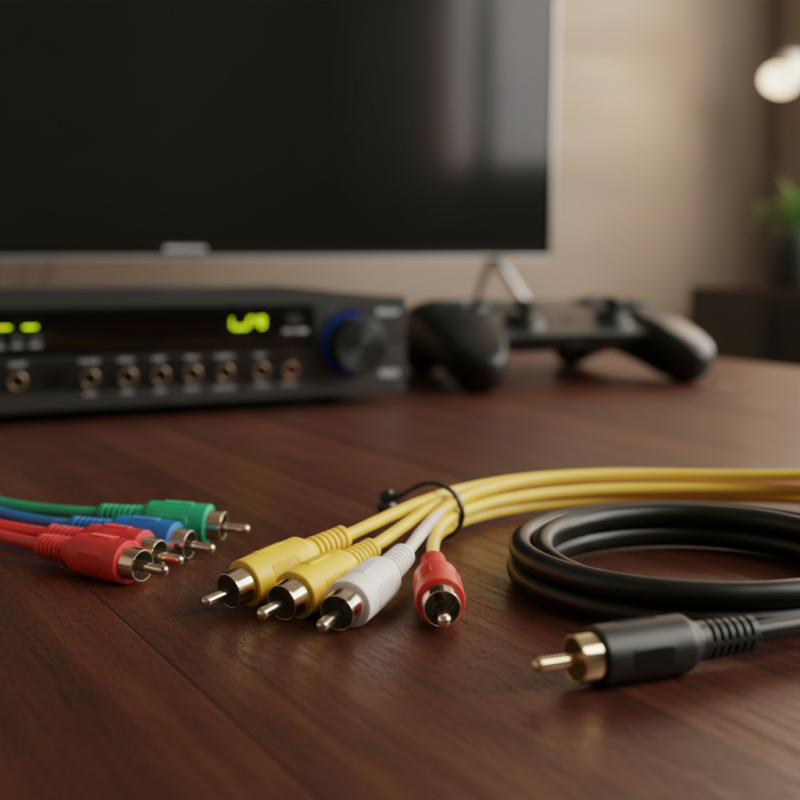
In China, RCA wires are commonly used in audio and video applications. Their versatility makes them popular for both personal and professional use. The standard RCA wire typically features a color-coded connector, commonly red and white for audio and yellow for video. This design helps users connect devices easily, reducing confusion.
There are several types of RCA wires on the market. For instance, coaxial RCA cables are known for their ability to carry high-quality audio signals. These cables have a central conductor and shielding, which helps to prevent interference. However, some users find them heavier and less flexible than other types.
Another common type is the composite RCA cable. This option is often used in connecting TVs and DVD players. While it provides decent video quality, users may notice a loss in sharpness compared to more advanced cables. It's important to assess what works best for your setup. Not all wire types will deliver the same performance, which can be a frustrating realization for many. Some users may overlook the specifics of their connections and later regret it.
Key Characteristics of Different RCA Wire Types
RCA wires are essential in audio and video systems. They connect various devices like televisions, speakers, and amplifiers. Understanding the characteristics of different RCA wire types helps in selecting the right one for specific applications.
There are three main types of RCA wires: standard, gold-plated, and heavy-duty. Standard RCA wires are common for everyday use. They provide adequate conductivity but may not deliver the best quality for high-end audio systems. A 2022 report from the Audio Engineering Society states that gold-plated connectors reduce oxidation, enhancing signal integrity. This makes them popular among audiophiles, even though they can be more expensive.
Heavy-duty RCA wires stand out for durability. They feature thicker insulation and are designed for high-power applications. According to industry data, heavy-duty wires can handle up to 1000 watts without significant signal loss. This reliability makes them ideal for professional setups. However, users should consider the trade-off: enhanced performance often comes at a higher cost. Balancing quality and budget is key in choosing the right RCA wire type.
China Top RCA Wire Types and Their Applications Explained
| RCA Wire Type |
Key Characteristics |
Typical Application |
| Standard RCA Cable |
4.5mm diameter, copper conductor, flexible PVC insulation |
Connecting audio/video devices like TVs, DVD players, and gaming consoles |
| Twisted Pair RCA Cable |
Twisted pair configuration, reduced interference, durable shielding |
High-quality audio applications, professional audio equipment |
| Gold-Plated RCA Cable |
Gold-plated connectors, better conductivity, corrosion resistance |
Home theater systems and high-end audio equipment |
| Component RCA Cable |
Three separate cables for video (Y, Pb, Pr), high-quality shielding |
HD video connections, DVD players to HD TVs |
| RCA to 3.5mm Adapter Cable |
One end RCA, other end 3.5mm jack, compact size |
Connecting smartphones or tablets to traditional audio systems |
Applications of RCA Wires in Audio and Video Equipment
RCA wires have long been a staple in audio and video equipment. Their design allows for easy connection between devices. According to industry reports, RCA cables accounted for about 40% of the global audio cable market in 2022. This statistic highlights their ongoing relevance in modern setups.
In audio applications, RCA wires transmit stereo sound effectively. For instance, they connect amplifiers to speakers or between various audio sources. The typical RCA connector features color-coded plugs: red for right audio and white or black for left audio. In video, RCA wires primarily serve composite video signals. Despite advancements, these cables remain essential for retro gaming consoles and older televisions.
Recent trends show a shift towards digital connections. While HDMI offers greater bandwidth, RCA wires are still valued for their simplicity and compatibility. Users often encounter noise or signal degradation with long RCA runs, leading to potential issues in sound clarity. Acknowledging these limitations can improve overall audio and video experiences.
Applications of RCA Wires in Audio and Video Equipment
This bar chart illustrates the common applications of RCA wires across different categories in audio and video equipment. The data highlights the versatility and importance of RCA wires in modern multimedia setups.
Comparative Analysis of RCA Wire Performance
When analyzing RCA wire performance, several factors come into play.
Signal integrity is key. High-quality RCA wires minimize interference.
This is essential for audio and video applications. Many users overlook this detail.
A poor connection can distort sound or image quality.
Different RCA wire types exhibit varying performance metrics.
Gold-plated connectors often provide better conductivity.
However, they may not be necessary for every setup. In contrast,
copper connectors are cost-effective.
They can still deliver acceptable quality for standard use.
It’s important to match wire type with specific application needs.
Users often have misconceptions about wire length.
Longer RCA cables can lead to signal loss.
This can affect clarity and detail in sound or video.
Ensuring the right length is crucial.
Testing setups with varying wire types can yield insightful results.
It’s beneficial to experiment and find the best options for your unique environment.
Factors to Consider When Choosing RCA Wires for Specific Uses
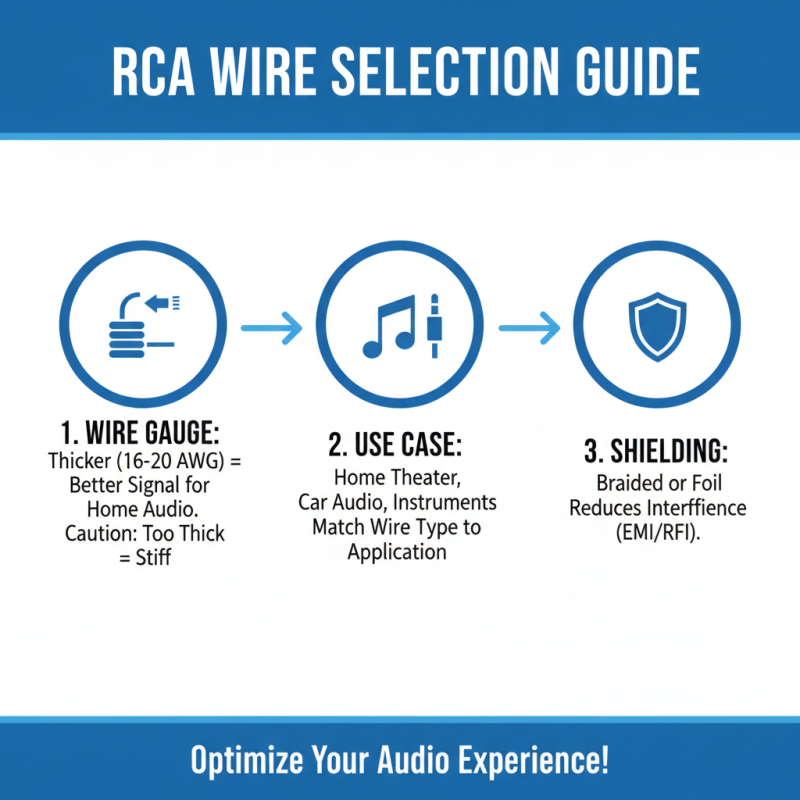
When selecting RCA wires, several factors come into play. Consider the wire gauge. A thicker wire can reduce signal loss and improve sound quality. For home audio systems, a gauge between 16 and 20 is often ideal. However, too thick can lead to rigidity, making installation challenging.
The length of the cable is another critical point. Shorter wires generally maintain signal integrity better than longer ones. Optimal lengths typically range from three to six feet for most setups. If you need longer runs, look for higher-quality shielding to minimize interference.
Don't overlook the connectors. Gold-plated connectors can enhance longevity and reduce corrosion. Yet, they may not be necessary for every application. Sometimes, a standard connector suffices. Assess your specific needs before deciding. It's essential to strike a balance between performance and practicality while being mindful of your budget.