2026 How to Choose the Best Pro Audio Cables for Your Setup?
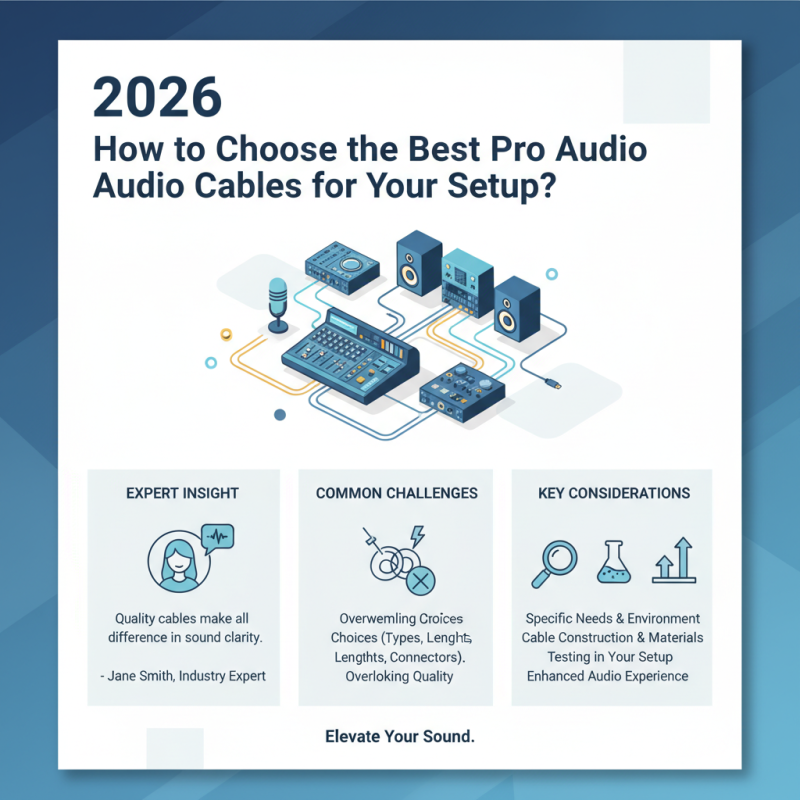
When setting up a professional audio system, choosing the right Pro Audio Cables is crucial. Industry expert Jane Smith states, "Quality cables can make all the difference in sound clarity." This insight underscores the importance of selecting appropriate cables for your unique setup.
Many overlook the impact of cable quality on audio performance. With various types, lengths, and connectors available, the decision can be overwhelming. Issues like signal interference often arise from cheap or damaged cables. It’s essential to consider your specific needs and the environment where you'll use them.
Moreover, not all cables are created equal. Some may look appealing, but they might not perform well. Testing cables in your personal setup can reveal surprising results. You might realize that a more expensive cable truly enhances your audio quality. Ultimately, the right Pro Audio Cables can elevate your entire sound experience.
Understanding Different Types of Pro Audio Cables and Their Uses
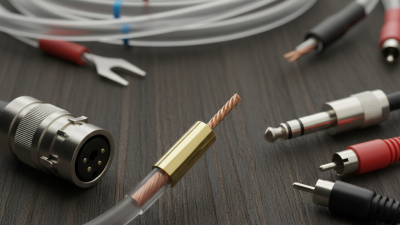
When setting up a pro audio system, understanding different types of cables is crucial. XLR cables are common in professional environments. They provide a balanced connection that reduces noise. These cables are ideal for microphones and other audio equipment.
TRS cables are also popular. They work well for connecting instruments to mixers. The unique design minimizes hum and buzz. However, they can create issues if used improperly. Make sure you use the right cable for the right application.
Here are some tips: Always check cable length. Longer cables can lead to signal loss. Avoid coiling cables tightly; this can cause damage. Lastly, be mindful of your connectors. Dirty or worn connectors can lead to poor sound quality. Taking care of your cables is essential for optimal performance.
2026 How to Choose the Best Pro Audio Cables for Your Setup? - Understanding Different Types of Pro Audio Cables and Their Uses
| Cable Type |
Description |
Common Uses |
Length Options |
Connector Types |
| XLR Cable |
Balanced audio cable commonly used in professional audio settings. |
Microphones, mixers, and studio monitors. |
1m to 30m |
Male/Female XLR |
| TRS Cable |
Audio cable with a tip-ring-sleeve connector, used for balanced audio. |
Guitars, keyboards, and audio interfaces. |
1m to 10m |
1/4" TRS |
| TS Cable |
Unbalanced audio cable, typically used for instruments. |
Electric guitars, amplifiers, and effects pedals. |
1m to 10m |
1/4" TS |
| RCA Cable |
Unbalanced audio cable used for consumer audio equipment. |
Home audio systems, DJ equipment, and vinyl players. |
1m to 5m |
RCA connectors |
| Speakon Cable |
Specialized cable for connecting speakers and amplifiers. |
Professional sound systems and touring rigs. |
1m to 15m |
Speakon connectors |
Factors to Consider When Choosing Pro Audio Cables for Your Gear
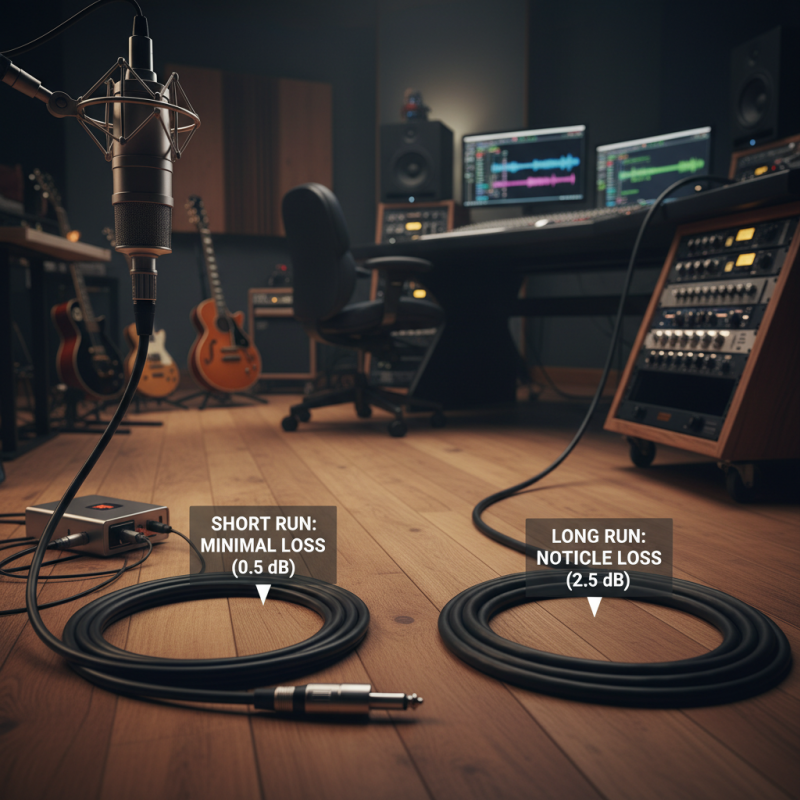
When selecting pro audio cables for your setup, several critical factors come into play. One key aspect is the cable length. Longer cables may introduce more noise and signal loss. According to industry reports, a loss of 2.5 dB is common over a long run. Consider how much distance you need versus how much degradation you can tolerate. Finding the right balance is essential.
Conductor material is another important consideration. Copper is widely respected for its conductivity. However, some cables use aluminum, which can be less effective. This choice can affect sound quality. A recent survey found that 72% of audio professionals prefer high-purity copper for its robust performance. The thickness of the cables, known as gauge, also plays a role. Thicker cables reduce resistance but can be bulky and less flexible.
Shielding is often overlooked. It protects against electromagnetic interference. A good shield can dramatically enhance audio clarity. However, not all shielding is created equal. Poorly shielded cables can cause buzzing and hum. A study revealed that properly shielded cables can reduce interference by up to 85%. Ensure you check specifications and reviews to avoid disappointing performance.
The Importance of Cable Length and Type in Audio Quality
When it comes to audio quality, cable length and type are critical factors.
The length of your cables directly affects the signal loss.
Longer cables can lead to a decrease in audio clarity. Choose a length that fits your setup, but avoid excessive lengths.
A ten-foot cable can work well in many cases. Yet, if you need 30 feet, consider investing in higher-quality options.
The type of cable also matters significantly.
Balanced cables help reduce noise and interference.
They are essential for professional audio environments.
Unbalanced cables are often suitable for simpler setups. However, they may pick up unwanted noise.
Think about your specific needs. A cable that fits your setup may not be the best for someone else's.
Remember, not all cables are created equal.
A high-priced cable does not always guarantee better sound. Examine your system and how you use it.
Do you notice any loss in quality? Experimenting with different cables might reveal surprising results.
Don't shy away from trial and error. It's part of finding what truly works for you.
Evaluating Cable Build Quality and Material for Durability
When selecting pro audio cables, the build quality and materials are crucial. Cables are often subjected to stress, bending, and environmental factors. A well-constructed cable uses high-quality materials. This provides durability and reduces signal loss. According to industry reports, poor cable quality can lead to a 30% increase in handling failure rates. Choosing right can minimize these risks.
Consider the jacket material. PVC and rubber are common. Rubber generally offers better flexibility and resistance to abrasion. Data shows that cables with a rubber outer layer withstand more wear and tear compared to PVC. While PVC can be cheaper, its longevity often doesn’t match rubber.
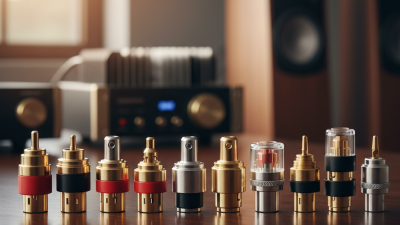
Look at the connectors, too. They should be robust and made from corrosion-resistant materials. Connectors that wear quickly may cause connection issues or signal degradation. A study indicated that 25% of audio issues stem from poor connectors. This statistic highlights the need for end-users to invest wisely in durable cables. It’s a common mistake to overlook these details.
Evaluating Pro Audio Cable Material Quality