How to Choose the Right Audio Plugs for Your Needs?
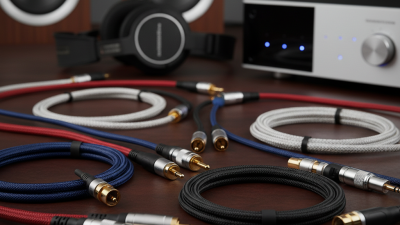
Choosing the right audio plugs is crucial for achieving optimal sound quality. From studio settings to everyday use, audio plugs play a significant role. They connect audio devices like microphones and headphones to mixers or speakers. With various types available, selecting the appropriate ones can be daunting.
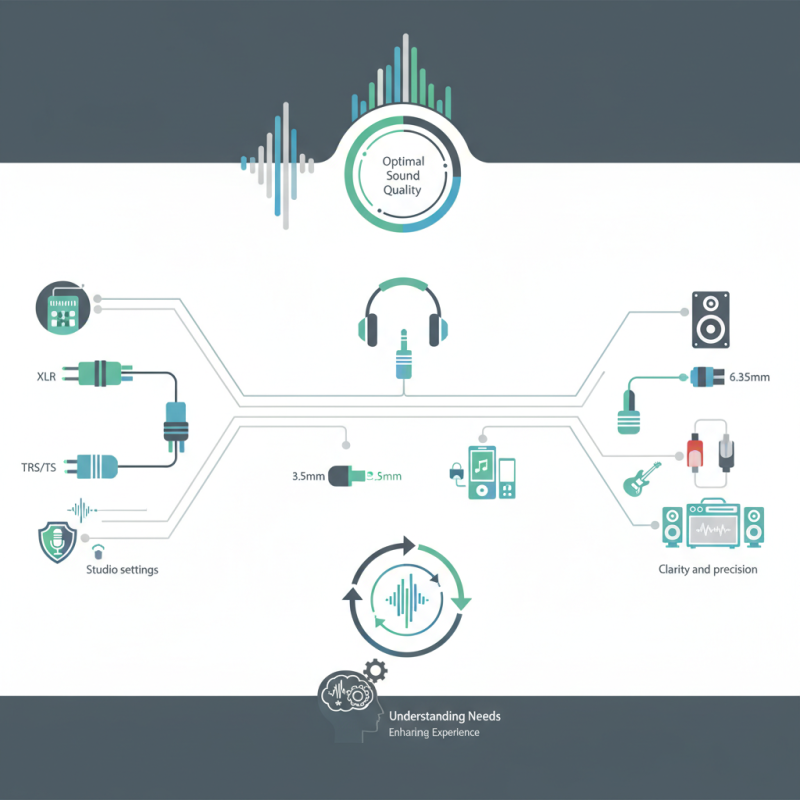
Understanding your needs is essential. Do you need balanced or unbalanced connections? Different applications require different solutions. For instance, XLR plugs are often favored in professional settings. They minimize noise and interference. In contrast, 3.5mm plugs are commonly used in portable devices, providing convenience.
Reflecting on your choices can lead to better outcomes. It’s not just about picking a plug; it's about enhancing your overall audio experience. Each plug type has its strengths and weaknesses, so consider your unique requirements. By doing this, you ensure that every sound is delivered with clarity and precision.
Understanding Different Types of Audio Plugs Available Today
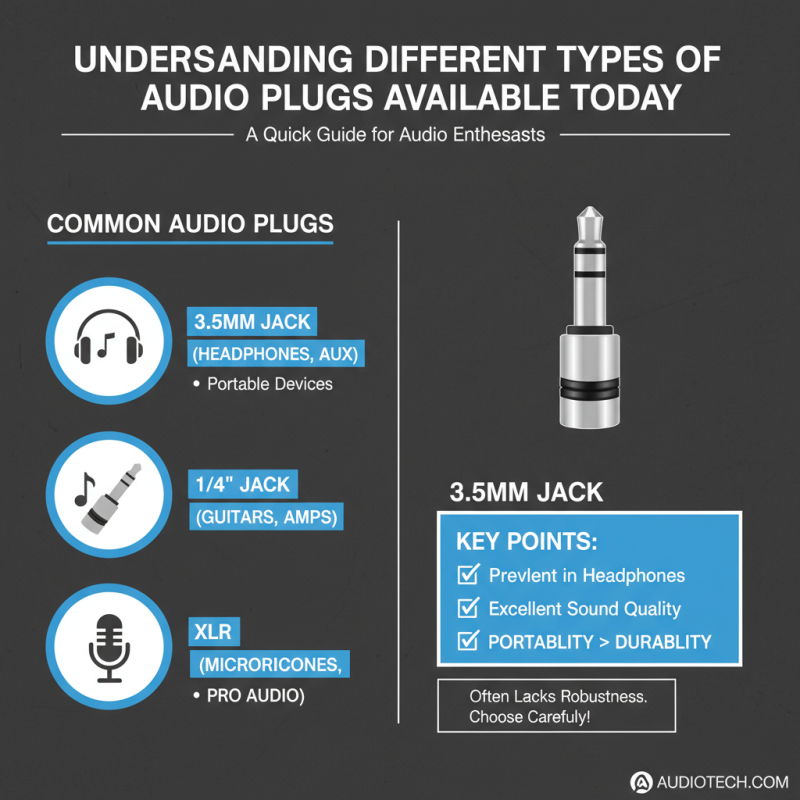
When exploring audio plugs, it's essential to know their various types and uses. The most common plugs are 3.5mm jacks, which are prevalent in headphones and portable devices. These plugs deliver excellent sound quality but may lack robustness. Many users overlook their durability when making a choice.
Another popular option is the 1/4-inch TRS plug. This is widely used in professional audio equipment. Musicians often choose this type for connecting guitars and amplifiers. However, users may find that a more significant size can be cumbersome in smaller setups.
XLR connectors are essential in studio environments and live settings. They deliver balanced audio to reduce noise. Still, they may feel overly complicated for casual listeners who just want simple connections. Many people make mistakes by not understanding the nuances between these types. It's crucial to reflect on your specific needs and sound quality preferences before deciding.
Assessing Your Audio Device Compatibility with Various Plugs
When selecting audio plugs, compatibility with your audio devices is crucial. Various plugs, such as 3.5mm, RCA, and XLR, serve different roles. According to a report by the Consumer Technology Association, 75% of consumers encounter issues due to mismatched audio plugs. This highlights the importance of understanding your device's requirements.
Many audio devices have specific plug types that cater to their design and functionality. A 3.5mm plug is common in smartphones and laptops, while RCA connectors are typically used for home audio systems. XLR connectors are favored in professional settings, offering superior sound quality. Understanding these differences can drastically improve your listening experience.
However, the landscape of audio plugs can be confusing. Users often overlook necessary adapters. Reports suggest that nearly 30% of audio problems stem from improper connections. Therefore, before making any purchases, ensure you assess the compatibility of your devices. Being educated on the types of plugs and their respective qualities will save time and frustration.
Evaluating Sound Quality and Performance of Audio Plugs
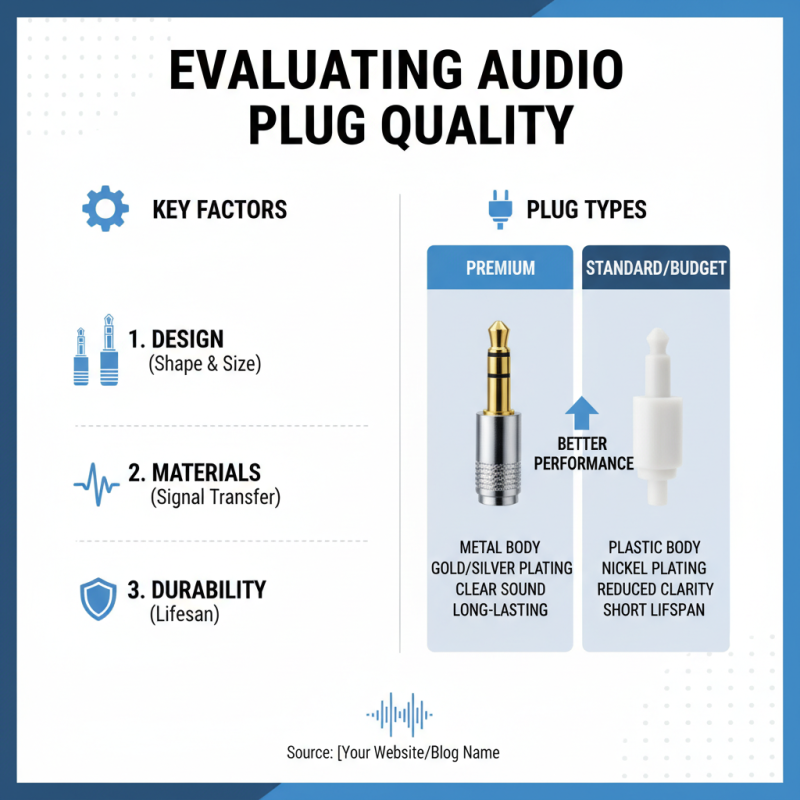
When evaluating sound quality and performance of audio plugs, the design is crucial. Plugs come in various shapes and sizes, including standard 3.5mm and larger 6.35mm options. Consider the materials used in their construction. High-quality metal bodies enhance durability and improve signal transfer. Cheap plastic plugs often lead to reduced sound clarity and lifespan issues.
Another factor is the shielding. Proper shielding prevents interference, which can muddy the audio. Look for plugs with good insulation, as this can significantly impact performance. Pay attention to the fit; loose connections can result in crackling or cut-outs. Testing different plugs in similar environments can give insight into their performance.
Listening is subjective. What sounds great to one person may not be satisfying to another. Take time to evaluate playback across multiple audio devices. The audio source, cables, and even your hearing ability influence the final outcome. Engage in critical listening sessions with a variety of music genres to identify any shortcomings. Reflect on what you value most in sound quality—clarity, depth, or warmth. This may shift your choice over time.
Considering Durability and Build Quality in Your Audio Plug Choices
When it comes to choosing audio plugs, durability and build quality are essential. A high-quality audio plug should withstand daily use and environmental factors. Look for materials that resist wear and tear. Metal connectors are often more durable than plastic ones. Rubber strains can prevent fraying, increasing the lifespan of the cable.
However, achieving durability can be a balancing act. Some plugs may be robust but heavy, making them less portable. Consider your specific needs. If you travel often, a lightweight plug might be more practical. Reflect on your usage patterns. If you’re connecting and disconnecting frequently, you’ll want a plug that can handle this wear.
It's important to research different options. Reliable reviews can guide your decisions. Don't overlook minor details like the thickness of the cable. A thicker cable usually indicates better quality. Check whether the connector has gold plating for improved conductivity. Your choice can significantly impact sound quality and longevity.
Budgeting for Audio Plugs: Finding the Best Value for Your Needs
When budgeting for audio plugs, it's important to find the best value. Research suggests that over 70% of audio professionals prioritize quality over price. However, this doesn't mean you should overspend. Many budget-friendly options deliver excellent sound quality.
Consider your specific needs. If you require durability, invest slightly more in connectors praised for longevity. A study by the Audio Engineering Society reveals that high-quality connectors can improve audio clarity by up to 25%. It's essential to weigh benefits against costs.
Don't overlook user reviews. They often highlight real-world performance. Some cheaper plugs may lack reliability. A survey indicates 34% of users experienced issues after short-term use. Be wary of deals that seem too good to be true. Aim for products backed by comprehensive warranties. This reflects confidence in quality and reliability.
How to Choose the Right Audio Plugs for Your Needs? - Budgeting for Audio Plugs: Finding the Best Value for Your Needs
| Audio Plug Type |
Connector Size |
Common Use Cases |
Price Range (USD) |
Recommendations |
| 3.5mm TRS |
Standard |
Smartphones, Headphones |
$5 - $20 |
Good for general use |
| 1/4" TRS |
Standard |
Guitars, Keyboards, Studio Monitors |
$10 - $30 |
Ideal for musicians |
| XLR |
Standard |
Microphones, Audio Interfaces |
$15 - $50 |
Best for professional audio |
| RCA |
Standard |
TVs, DVD Players, Audio Systems |
$5 - $15 |
Perfect for home theater |
| Lightning |
Standard |
Apple Devices |
$10 - $25 |
Convenient for Apple users |