Buying an Rca Male connector for global distribution is not a simple price comparison. Small construction details can affect signal quality, installation time, and customer complaints.
Audio engineer Douglas Self offers a useful principle: “Every connection deserves engineering attention.” That idea matters when a connector must fit tightly, resist oxidation, and survive repeated plugging. A polished shell may look impressive, but it cannot replace reliable contact pressure or accurate dimensions.
This guide examines seven practical buying tips for international purchasers. It considers connector geometry, contact materials, plating thickness, shielding performance, solder or crimp construction, cable compatibility, and supplier consistency. These points help buyers compare samples before placing large orders.
Look closely at the center pin. It should enter the socket smoothly without excessive force. The outer shell should grip firmly, not wobble after several connections. A poorly fitted Rca Male may create noise that appears only when equipment moves.
Ask suppliers for drawings, material specifications, inspection records, and production samples. Verify the actual cable diameter, conductor size, and jacket flexibility. Do not rely only on catalog photographs.
Some buyers focus too heavily on gold plating. That can be a mistake. Plating quality, base-metal preparation, and assembly accuracy often matter more than appearance alone.
Pricing still matters. However, the cheapest connector may create higher replacement costs later. I have seen attractive samples fail during repeated insertion testing. That experience deserves attention.
Regional packaging, labeling, and documentation should also be checked before shipment. Requirements vary between markets. A dependable supplier communicates clearly and admits limitations. That is not weakness. It is useful evidence of reliability.
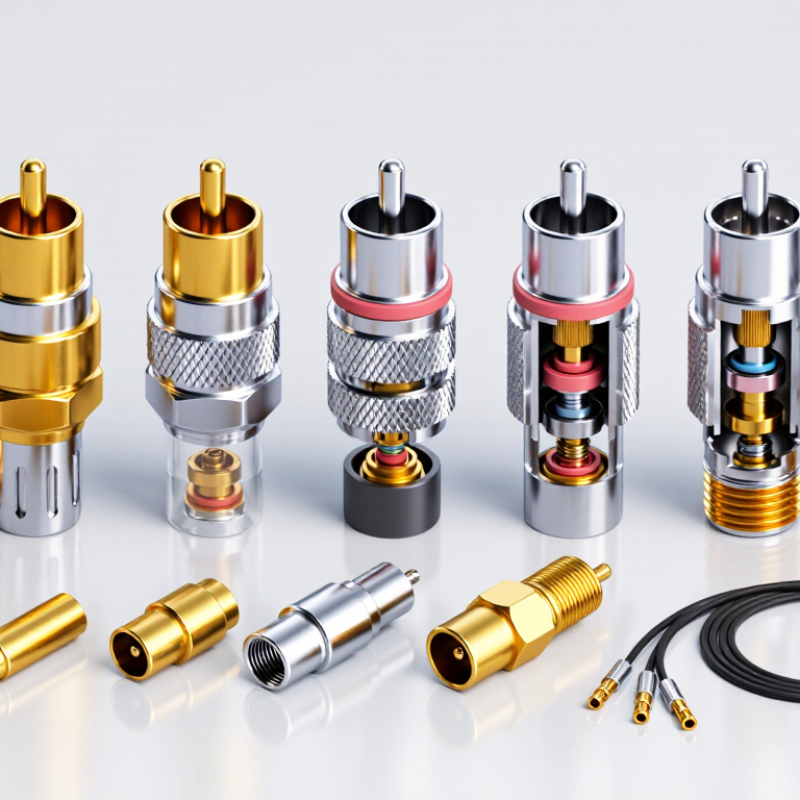
An RCA male connector is a plug designed to carry audio or composite video signals. Its central metal pin carries the signal, while the outer sleeve provides the return path and shielding. The connector usually has a cylindrical body and a firm contact spring. It mates with an RCA female jack through direct insertion. No twisting is required. The connection is simple, but small fitting errors can create noise or signal loss.
When buying, check the conductor material, contact plating, cable size, and strain relief. A gold-colored finish may resist oxidation, but plating thickness and base-metal quality matter more than appearance. For a home amplifier, a molded connector may be adequate. For repeated testing, a metal-bodied connector with a flexible boot usually survives better. Confirm the plug diameter and cable opening before ordering. A connector can look standard and still fit poorly.
Color coding helps during installation: red commonly carries right-channel audio, white carries left-channel audio, and yellow often carries composite video. These colors are conventions, not electrical guarantees. Measure continuity with a multimeter before connecting unfamiliar equipment. Field technicians often find loose shielding near the cable entry, especially after sharp bending. I have seen buyers focus on plating while ignoring strain relief. That choice is understandable, but incomplete. Even a well-made plug performs poorly when the cable is pulled sideways.
For global buyers, RCA compatibility starts with more than plug shape. Check the mating gender, contact layout, shell diameter, and panel cutout drawing. Audio applications commonly use 50 or 75 ohm coaxial designs, while composite video usually requires controlled 75 ohm impedance. A connector can fit physically and still weaken the signal. It happens.
Measure the cable outer diameter before choosing the strain relief. Confirm solder, crimp, or PCB termination methods. Then review contact plating, rated current, operating temperature, mating cycles, and required compliance documents. For outdoor equipment, ask about sealing and corrosion testing. For indoor assemblies, that requirement may be excessive. Bishop & Associates reported the global connector market at approximately US$84 billion in 2023, showing why specification errors can create costly volume risks. Statista Market Insights valued global consumer electronics revenue above US$1 trillion in 2024, increasing pressure on reliable interconnection parts. Use those figures as market context, not as a substitute for testing.
Request samples from at least two production lots. Test insertion force, retention, continuity, insulation resistance, and signal loss with the actual cable. I once accepted an RCA sample after a successful bench test, but its locking nut failed during vibration testing. That mistake changed our inspection checklist. Ask for dimensional tolerances, material declarations, and test reports before approval. A clear drawing is useful. A verified sample is better.
For composite-video applications, a compatible RCA male connector and cable should support a 75 Ω signal path. The reference levels below are commonly used for a 1.0 Vpp composite-video signal: the sync tip is approximately −0.3 V, the blanking level is 0 V, and the peak white level is approximately +0.7 V.
Material choice affects both strength and signal stability. Look for brass or copper-alloy contacts with consistent machining. Copper conducts well, while brass often offers better mechanical strength. The housing should resist cracking near the cable entry. I have seen attractive connectors fail because their shells were too thin. Ask for dimensional drawings, contact resistance data, and inspection records before placing a large order.
Plating deserves careful comparison. Nickel plating usually provides a hard, economical surface. Gold plating can improve corrosion resistance and maintain contact quality in humid environments. However, color alone proves nothing. Request the plating type, thickness, base material, and test method. A thicker coating is not automatically better if adhesion is poor. Check mating cycles with sample units. Five minutes of inspection can prevent months of complaints.
Durability should match the installation, not just the catalog description. Examine the strain relief, thread strength, solder joints, and cable grip. For repeated connections, test at least several hundred mating cycles. Signal performance also needs practical testing. Measure continuity, contact resistance, shielding effectiveness, and insertion loss at the intended frequency. For composite video, verify the required impedance instead of assuming every RCA connector performs identically. Keep cable length, termination, and equipment consistent during testing. My own early evaluations relied too heavily on appearance, which was a mistake. Small tolerances can create noticeable noise, intermittent audio, or unstable video. Suppliers who provide traceable test reports are usually easier to assess across international orders.
When buying RCA male connectors globally, evaluate the manufacturer before comparing prices. A polished catalog proves little. Ask for factory photos, production records, and recent inspection reports. Reliable manufacturers should explain their materials, tolerances, and testing methods clearly.
Request samples from the same production line used for bulk orders. Check whether the center pin fits firmly without excessive force. Examine the nickel, gold, or other specified plating under bright light. Uneven surfaces, dark spots, or loose shells often signal weak process control. Measure the connector with calipers, then compare it with the approved drawing. Small differences matter.
Electrical testing should include contact resistance, insulation resistance, and repeated insertion cycles. Ask how results are recorded and traced by batch number. A responsible supplier can provide material certificates and corrective-action records without hesitation. Packaging also deserves attention. Pins should be protected from bending, moisture, and friction during transport.
I once focused too heavily on appearance. That was a mistake. A visually clean sample still showed unstable contact after repeated use. Now, I test samples under realistic cable tension and temperature changes.
Ask difficult questions. Notice vague answers. A manufacturer that admits a limitation may be more dependable than one promising perfection. Confirm lead times, sample approval procedures, and quality responsibility in writing before placing a large order.
When buying RCA male connectors internationally, verify documents before comparing prices. Ask for certificates covering the exact model, plating, insulation, and production site. A general company certificate proves little. Request recent test reports, material declarations, and traceable batch numbers. Check whether the documents remain valid in your destination market. Small detail, major risk.
Compare the complete landed cost, not only the unit quotation. Include tooling, sampling, inspection, customs duties, insurance, and bank charges. Confirm currency, minimum order quantity, payment terms, and quotation validity. A low price can hide thin plating or inconsistent pin dimensions. Request samples from regular production, then test insertion force, continuity, and solder performance. I once treated a sample as representative; that assumption was too optimistic.
Packaging deserves equal attention. Specify bag quantity, anti-static protection, carton strength, labels, and moisture control. Ask for carton dimensions and gross weight before booking freight. Clarify the shipping term, named place, transport mode, and responsibility for export clearance. Confirm whether the supplier provides commercial invoices, packing lists, and certificates of origin. Build a delivery schedule with buffer time. Ports close, inspections expand, and forecasts change. Get every exception written into the purchase agreement.
| No. | Buying Tip | What to Verify | Practical Benchmark or Data | Recommended Buyer Action | Red Flags |
|---|---|---|---|---|---|
| 1 | Confirm the exact RCA plug configuration | Check plug gender, straight or right-angle body, cable-entry direction, contact plating, solder or crimp termination, insulating material, and panel or cable-mount design. | A standard RCA male plug normally has one signal contact and one outer ground/shield contact. Common cable sizes include approximately 3.0–6.0 mm, but the actual strain-relief range must be confirmed by drawing. | Request a dimensioned drawing, 2D/3D file, contact material, plating thickness, and a pre-production sample before mass ordering. | Generic photos, missing tolerances, or a cable-entry range that does not match the buyer’s cable. |
| 2 | Verify electrical and mechanical performance | Review rated voltage and current, contact resistance, insulation resistance, dielectric withstand, mating cycles, operating temperature, and cable-pull performance. | Typical catalog values for small audio/video RCA connectors may include contact resistance below 30 mΩ, insulation resistance above 100 MΩ, and an operating range around −20°C to +70°C. Values vary by construction and must be confirmed in the product specification. | Ask for the test method, sample quantity, acceptance criteria, and a current inspection report. Test the finished connector with the actual cable and mating socket. | Performance claims without units, test conditions, or a distinction between typical and guaranteed values. |
| 3 | Check regulatory documentation | Determine whether the finished connector or the complete cable assembly requires RoHS, REACH, conflict-minerals, or market-specific documentation. A basic passive connector may not require the same approvals as powered equipment. | For EU supply, request a current RoHS declaration and REACH substance statement. If plastic parts are specified as flame-retardant, request the exact material grade and an applicable flammability report such as UL 94 documentation. | Verify document scope, issue date, part number, material list, laboratory details, and whether the document covers the supplied configuration rather than a similar item. | A logo shown as a “certificate,” expired declarations, unverifiable laboratory reports, or a claim that CE automatically applies to every passive connector. |
| 4 | Compare total landed pricing | Compare unit price, tooling, plating, color, packaging, testing, minimum order quantity, payment charges, freight, insurance, import duty, and local taxes. | For standard unbranded RCA male plugs, a broad indicative factory-price range can be about USD 0.08–0.60 per piece in volume orders. Custom metal bodies, enhanced plating, overmolding, and low quantities can raise the price substantially. | Request a quotation with the same specification, quantity breaks, validity period, tooling ownership, sample fees, and a separate freight line. Calculate landed cost rather than comparing unit price alone. | An unusually low quote that excludes tooling, packaging, inspection, export handling, or shipping charges. |
| 5 | Inspect packaging and labeling | Review inner-bag quantity, carton dimensions, gross and net weight, moisture and dust protection, terminal protection, lot traceability, and barcode or carton-marking requirements. | A practical packing format may use 100–500 pieces per inner bag, with dividers or molded trays for plated parts. The final quantity should be based on connector finish, transport route, and customer handling process. | Approve a packing specification showing pieces per bag, bags per carton, carton size, weight limits, label content, and acceptable quantity variance. | Loose bulk packing, scratched plating, mixed lots, missing part numbers, or cartons without quantity and origin markings. |
| 6 | Define inspection and quality terms | Specify visual defects, dimensional tolerances, plating defects, solderability, continuity, contact resistance, sample approval, and the procedure for nonconforming goods. | Use an agreed inspection level and AQL plan where appropriate. For critical dimensions and electrical continuity, define zero-tolerance or tightened criteria separately from general cosmetic defects. | Attach the approved drawing, golden sample, inspection checklist, corrective-action deadline, replacement or credit terms, and change-notification requirement to the purchase order. | “Quality guaranteed” without measurable acceptance criteria, no sample retention, or unapproved substitutions of materials or tooling. |
| 7 | Clarify global shipping and Incoterms | Confirm shipping origin, export documents, customs classification, transport mode, delivery time, insurance, import responsibility, and the exact named place under Incoterms® 2020. | FCA is often clearer than EXW when the seller handles export clearance. Under DAP, the buyer generally handles import clearance and duties; under DDP, the seller generally assumes those obligations where legally and operationally permitted. | Put the term and named location on the quotation and purchase order, for example “FCA [named place], Incoterms® 2020.” Request commercial invoice, packing list, transport document, and origin information before dispatch. | “Free shipping” with no named place, unclear duty responsibility, unsupported delivery promises, or customs documents issued after shipment. |
Note: Price ranges, electrical values, packaging quantities, and delivery estimates are indicative purchasing benchmarks only. The signed specification, approved sample, quotation, and Incoterms® 2020 agreement should control the final transaction.