




1/4 Inch Jack vs 3.5mm: The Ultimate Guide to Audio Connectors for Professionals and Product Designers
Key Takeaways
- Primary Difference: The core distinction between a 1/4 inch jack vs 3.5mm isn't audio quality—it's physical durability and application. The 1/4 inch (6.35mm) jack is the robust standard for professional audio and musical instruments, while the 3.5mm jack is the compact, convenient choice for consumer and portable electronics.
- The Durability Debate: Real-world user experiences from audio forums consistently show that 1/4 inch connectors are far more resilient to physical stress, bending, and repeated use. Professional users report that quality 1/4 inch jacks can withstand over 10,000 insertion cycles, while 3.5mm jacks typically fail around 5,000 cycles—a major consideration for B2B product designers targeting the US market.
- Audio Quality Myth: For standard unbalanced stereo signals, there's no inherent, audible difference in sound fidelity between a clean, well-made 1/4 inch and 3.5mm connection. Perceived differences in quality almost always stem from the connected equipment (e.g., a high-end amplifier vs. a laptop's output) rather than the connector size itself.
- For B2B & OEM Clients: The choice of connector is a critical design decision that impacts product longevity and user perception in the competitive US professional audio market. Partnering with an experienced OEM/ODM manufacturer like Jingyi Audio (site_5615465d-0395-48c6-b01f-dc3d38213fc5), which produces a full range of both 1/4 inch and 3.5mm connectors with over 30 years of manufacturing expertise, gives you access to reliable, standards-compliant components for any product line.
When you're designing audio equipment for the American professional market or simply trying to understand why your expensive headphones came with that bulky adapter, the 1/4 inch jack vs 3.5mm debate goes far deeper than physical size. These two connectors represent fundamentally different design philosophies: one built for the punishing demands of touring musicians and recording studios, the other engineered for the space constraints of smartphones and laptops. Understanding their real-world performance differences, common failure modes, and market positioning is necessary for anyone making purchasing decisions or designing audio products for US consumers and professionals.
A Tale of Two Standards: The Heritage of the 1/4" and 3.5mm Jacks

The Professional's Workhorse: Why the 1/4 Inch (6.35mm) Jack Endures
The 1/4 inch phone connector has an impressive pedigree dating back to the 1877 telephone switchboard era. Originally designed for environments requiring thousands of daily plug-in operations by telephone operators, this connector was engineered from day one for reliability and longevity. That heritage of durability became the foundation of its adoption by the music industry.
When electric guitars emerged in the 1930s and 1940s, manufacturers needed a connector that could withstand the rigors of live performance—being stepped on, yanked, and plugged in dozens of times per night. The 1/4 inch jack's larger diameter (6.35mm) meant thicker metal construction, greater contact surface area, and inherently stronger mechanical components. This "built like a tank" philosophy made it the undisputed standard for connecting guitars to amplifiers, studio equipment to mixing consoles, and professional headphones to dedicated amplifiers.
The ecosystem effect solidified its position. Once major manufacturers like Fender, Gibson, and Marshall standardized on 1/4 inch inputs and outputs, an entire industry infrastructure grew around it. Attempting to introduce a different connector standard in professional audio would require replacing billions of dollars' worth of existing equipment—a practical impossibility. As one veteran sound engineer aptly put it: "If it ain't broke, don't fix it."
The Mini Jack Revolution: How the 3.5mm Connector Conquered Consumer Electronics
The 3.5mm jack (also called the mini jack or 1/8 inch jack) emerged as consumer electronics demanded miniaturization. Sony's Walkman, introduced in 1979, popularized portable personal audio and created an urgent need for a smaller connector that could fit into increasingly compact devices. The 3.5mm jack was the answer.
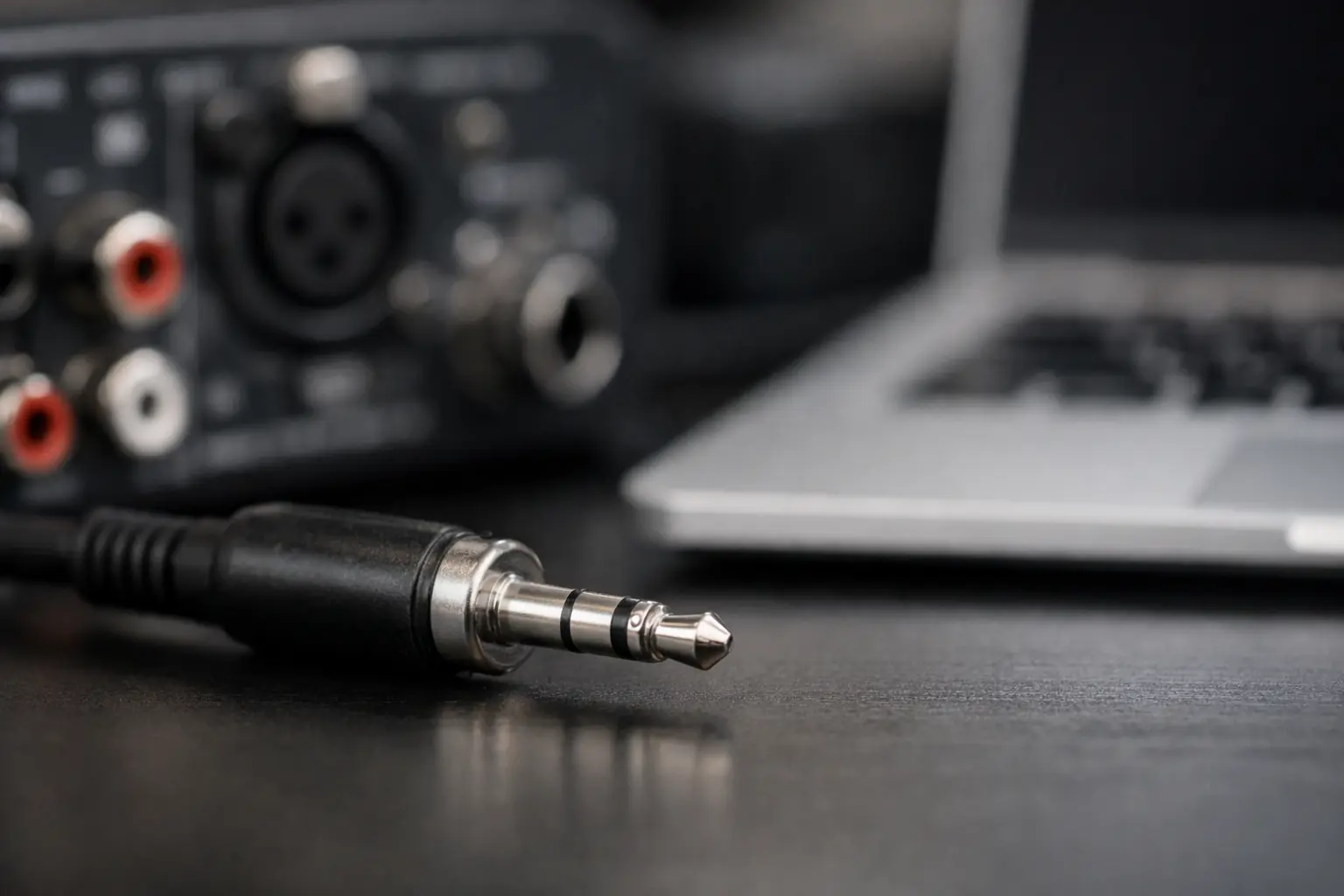
Its compact footprint—roughly half the diameter of its 1/4 inch cousin—made it ideal for smartphones, laptops, portable audio players, and tablets. By the 2000s, it had achieved near-universal adoption in consumer electronics. The introduction of the TRRS (Tip-Ring-Ring-Sleeve) variant, which adds a fourth conductor for microphone signals, further expanded its utility for smartphone headsets and gaming headphones.
However, this miniaturization came at a cost. The smaller diameter meant thinner metal components, reduced contact surface area, and more delicate internal spring mechanisms—all factors that would prove significant in real-world durability.
The Durability Debate: Real-World Failures and User Experiences
"Built Like a Tank": Social Media Praise for the 1/4 Inch Jack's Reliability
When audio professionals discuss connector reliability on forums like Gearspace and Head-Fi, a consistent narrative emerges. One particularly revealing comment from a veteran audio engineer states: "In 5 decades I've had to replace many 3.5mm jacks and plugs. I've never had to change a 1/4" jack. Ever." This isn't hyperbole—it reflects the extreme longevity expected in professional environments where equipment reliability directly impacts livelihood.
The engineering reasons for this durability are straightforward. The 1/4 inch connector's larger diameter provides greater structural strength and resistance to bending forces. The internal spring contacts that grip the plug are substantially larger and more robust than their 3.5mm counterparts, maintaining firm electrical contact even after tens of thousands of insertion cycles. Professional-grade 1/4 inch jacks are typically rated for over 10,000 insertion cycles, with premium models exceeding 100,000 cycles.
The 1/4 inch connector's repairability is also a significant advantage. Any technician with basic soldering skills can replace a damaged 1/4 inch plug on a cable in minutes, extending the equipment's service life and reducing long-term costs—a critical consideration for US-based music venues, recording studios, and touring operations.
The "Achilles' Heel" of Portable Devices: Common 3.5mm Jack Failures
Reddit and tech support forums paint a very different picture for 3.5mm jacks. A telling case study involves a Sony Xperia user whose 3.5mm headphone jack failed twice within 16 months. The failure mode was classic: audio would drop out in one channel unless the user physically held the plug in place, indicating worn internal spring contacts or a cracked PCB solder joint.
This isn't an isolated incident. Common 3.5mm jack failures reported across social media platforms include:
- Bent plugs: The thin 3.5mm plug shaft is vulnerable to bending when pressure is applied in a pocket or bag, rendering the connector unusable.
- Broken tips trapped inside devices: Users report plugs breaking off and becoming lodged in the device's jack, requiring professional extraction.
- Intermittent connection: Internal spring contacts lose tension over time, causing crackling sounds or channel dropouts with slight movement.
- PCB solder joint failure: The small jack often relies on fragile surface-mount PCB soldering that cracks under repeated stress.
The technical reality is that standard 3.5mm jacks are typically rated for only around 5,000 insertion cycles—half the minimum specification of professional-grade 1/4 inch connectors. For devices experiencing daily use, this translates to a predicted failure window of just 13-27 months, aligning perfectly with real-world user complaints.
For US manufacturers designing consumer electronics or "prosumer" equipment, this durability gap represents both a challenge and an opportunity. Products targeting professionals who value reliability over compactness—such as field recorders, audio interfaces, and monitoring systems—benefit significantly from specifying 1/4 inch connectors, even if it increases device footprint.
Debunking the Myth: Does Jack Size Actually Affect Sound Quality?
The Electrical Reality: Signal Integrity in Unbalanced Audio
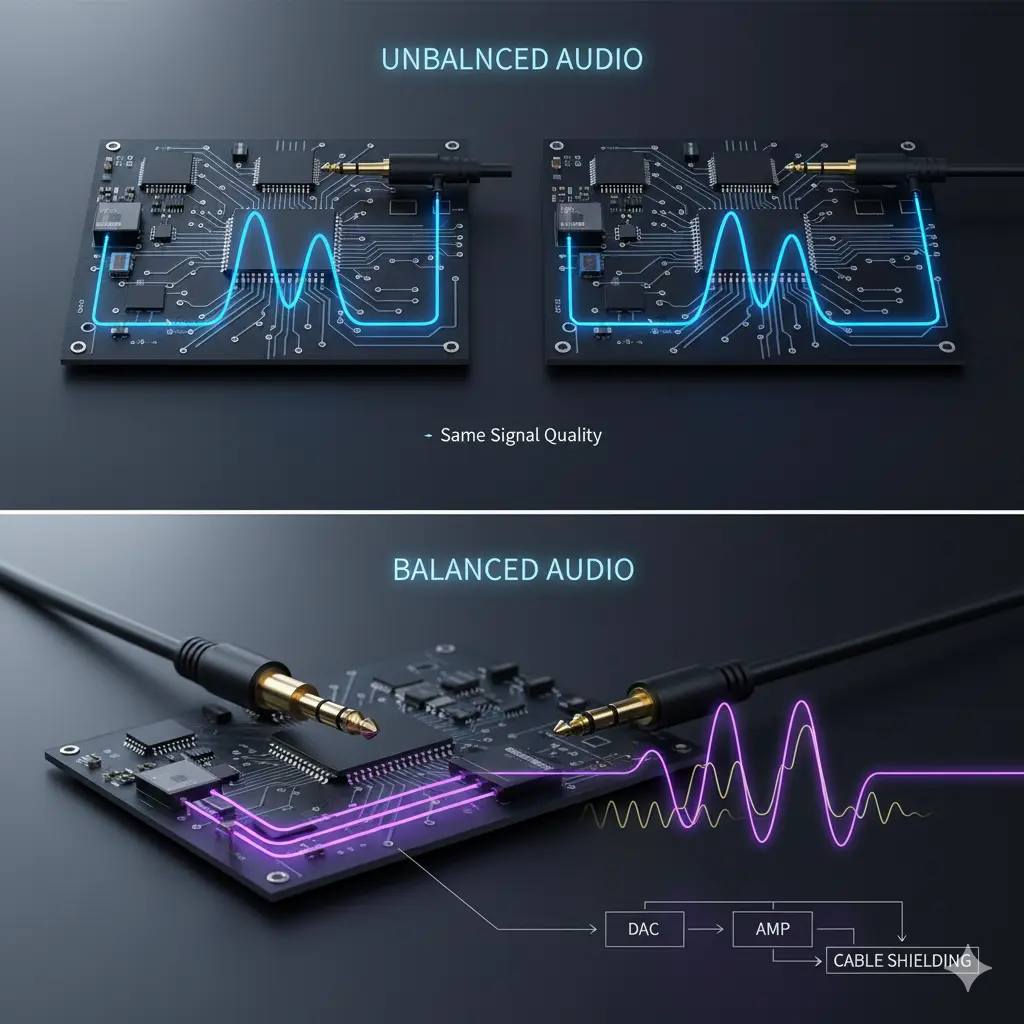
One of the most persistent myths in audio forums is that larger connectors inherently sound better. The electrical engineering reality is more nuanced. For standard unbalanced stereo signals (the type used in most consumer headphones and portable devices), the physical size of the connector has virtually no impact on audio fidelity.
Both 3.5mm and 1/4 inch TRS (Tip-Ring-Sleeve) connectors carry audio signals through identical configurations: tip for left channel, ring for right channel, and sleeve for ground. When both connectors are in good condition with clean contacts, they transmit electrical signals with identical fidelity. Multiple blind listening tests conducted by audio enthusiasts have confirmed that listeners cannot reliably distinguish between the same headphones connected via 3.5mm versus 1/4 inch when using quality adapters.
The real determinants of audio quality lie elsewhere in the signal chain:
- Digital-to-Analog Converter (DAC) quality: The chip that converts digital audio files to analog signals has far more impact than connector size.
- Amplifier circuit design: The power and noise floor of the amplification stage dramatically affect perceived sound quality.
- Cable shielding: Proper electromagnetic interference (EMI) shielding prevents noise injection—a function of cable design, not connector size.
- Contact quality: Oxidation or contamination on any connector degrades signal, regardless of size.
The Balanced vs. Unbalanced Factor: Where Connector Type Does Matter
There is one scenario where 1/4 inch connectors offer a genuine technical advantage: balanced audio connections. In professional audio environments, 1/4 inch TRS connectors are frequently used to carry balanced mono signals, where the tip carries the positive phase signal, the ring carries the negative phase (inverted), and the sleeve provides ground and shielding.
This balanced configuration uses differential amplification at the receiving end to cancel out electromagnetic interference picked up during transmission—critical for long cable runs in recording studios or live venues where cables may run alongside power lines. The balanced signal topology can eliminate hum and noise that would be clearly audible in an unbalanced connection.
Here's what many people overlook: The perceived "better sound" of 1/4 inch jacks is often correlation, not causation. When users connect headphones to a device with a 1/4 inch output, they're typically using dedicated professional equipment—a studio headphone amplifier, audio interface, or mixing console—which features superior DACs, more powerful amplification, and cleaner power supplies than a laptop's integrated audio. The equipment quality delivers the sonic improvement, not the connector size itself.
This distinction matters for product designers. Adding a 1/4 inch jack to a device won't magically improve its sound unless the underlying electronics are designed to professional standards—but it will signal to the US professional audio market that your product is meant for serious use.
For B2B Success in the US Market: A Manufacturer's Perspective on Connector Choice
Geo-Targeting Your Product: Why American Pro-Audio Still Demands the 1/4 Inch Standard
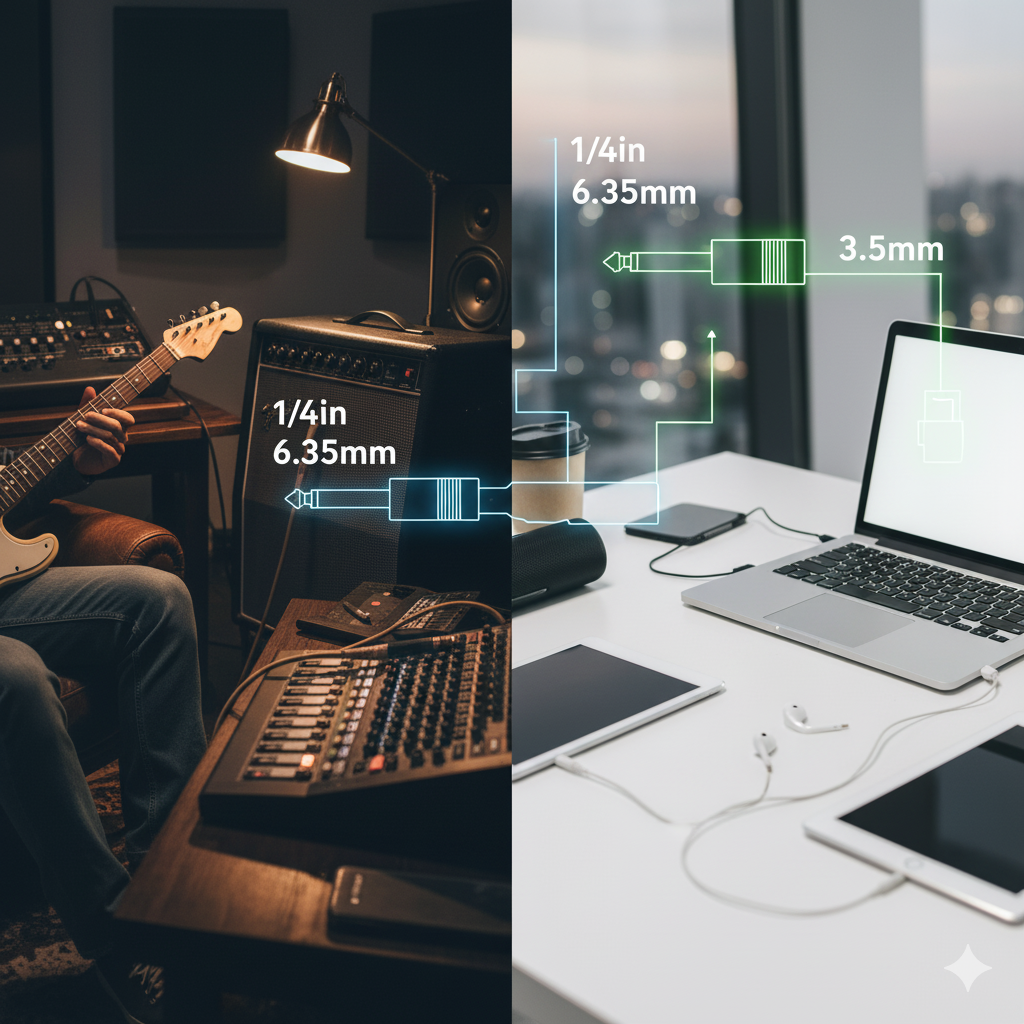
The United States represents one of the world's largest professional audio equipment markets, with American musicians, recording studios, broadcasters, and live sound companies spending billions annually on equipment. This market has deeply ingrained expectations around connector standards.
For professional-grade products targeting US customers—audio interfaces, studio monitors, guitar amplifiers, mixer consoles, and professional headphones—the 1/4 inch jack isn't just preferred, it's practically mandatory for market acceptance. American professionals value backward compatibility with their existing cable infrastructure and expect the proven durability that 1/4 inch connectors provide.
Consumer electronics and portable devices succeed with 3.5mm jacks, which American consumers associate with convenience and universal compatibility. Despite the removal of 3.5mm jacks from some flagship smartphones (a controversial move that generated significant consumer backlash), the connector remains standard in laptops, tablets, car audio systems, and entry-to-mid-range phones throughout the US market.
For OEM/ODM manufacturers serving US brands, the strategic implication is clear: your connector portfolio must span both standards to address the full market spectrum.
Sourcing for Success: Partnering with an OEM/ODM Expert like Jingyi Audio
When US-based brands design audio products, connector quality often determines long-term product reputation. A single batch of defective jacks can generate thousands of warranty claims and irreparable brand damage in the age of social media reviews.
This makes supplier selection critical. Jingyi Audio (site_5615465d-0395-48c6-b01f-dc3d38213fc5), established in 1992, exemplifies the type of manufacturing partner that sophisticated US brands seek. With over 30 years of specialization in professional audio components, Jingyi provides the wide-ranging connector portfolio that modern product lines require—from consumer-grade 3.5mm TRRS jacks for smartphone accessories to professional-grade 1/4 inch TRS connectors for studio equipment.
Their Ningbo facility spans 15,000 square meters and employs a workforce of over 120, including dedicated engineering and quality control teams. As a one-stop OEM/ODM supplier, Jingyi can support US brands through the entire product development cycle: from initial connector specification and prototyping, through high-volume manufacturing, to final quality assurance.
For American companies particularly concerned about compliance and quality consistency, Jingyi's certifications—including RoHS (Restriction of Hazardous Substances) and CE marking—demonstrate adherence to international standards. Their focus on precision machining and use of OFC (Oxygen-Free Copper) 99.99% pure conductors addresses the performance expectations of discerning US professional audio customers.
The geographic advantage of working with an established Chinese manufacturer like Jingyi Audio is significant for US importers. Their proximity to Ningbo Port streamlines logistics and reduces shipping times to US West Coast distribution centers. For brands managing multiple product lines spanning consumer and professional segments, consolidating connector sourcing with a single trusted supplier simplifies supply chain management and improves negotiating leverage for volume pricing.
Avoiding Common Pitfalls: The "Disappearing Vocals" Mystery Solved
Case Study: Why Does My Music Sound Muffled or Like Karaoke?
One of the most frequent—and most frustrating—problems reported on audio forums involves users connecting their phone or laptop to a mixing console or powered speaker using a standard TRS cable, only to hear bizarrely thin audio with missing vocals, bass, and kick drum. The music sounds like a karaoke backing track, with lead elements mysteriously absent.
This isn't a defective cable or jack—it's a classic case of impedance mismatch caused by connecting an unbalanced stereo output to a balanced mono input.
Here's the technical explanation: When you plug a phone's 3.5mm TRS output (configured as Tip = Left, Ring = Right, Sleeve = Ground) into a mixer's balanced TRS input (configured as Tip = Hot/Positive, Ring = Cold/Negative, Sleeve = Ground), you create an unintended configuration. The mixer's differential amplifier performs the operation: Output = Tip - Ring, which becomes Output = Left Channel - Right Channel.
In modern stereo mixing, lead vocals, bass, and kick drum are typically panned to the center of the stereo field, meaning they exist equally in both left and right channels. When the mixer subtracts right from left (L - R), these center-panned elements mathematically cancel out through phase cancellation. Only elements panned significantly left or right survive—hence the hollow, backing-track sound.
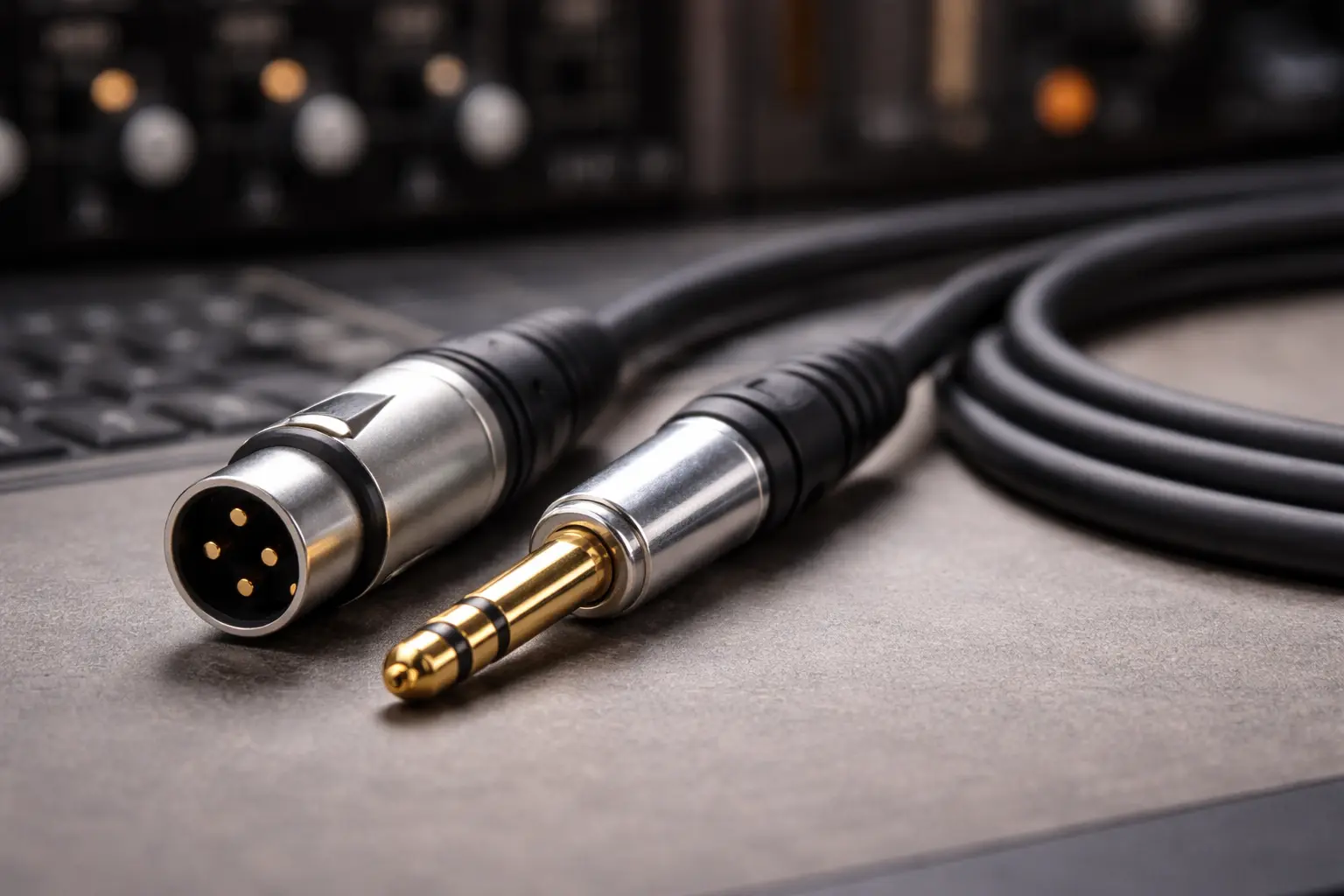
The simple solution: Use a proper "stereo breakout cable"—a cable with a 3.5mm TRS plug on one end and two separate 1/4 inch TS (mono) plugs on the other. This physically separates the stereo signal into discrete left and right mono signals, which can then be routed to two separate channels on the mixer, preserving the full stereo mix.
This common pitfall shows why product documentation and user education matter. For US manufacturers of audio equipment, clearly labeled inputs ("STEREO IN" vs. "BALANCED MONO") and included quick-start guides explaining proper cable selection can dramatically reduce customer support burden and negative reviews.
Frequently Asked Questions (FAQ)
Q1: Is a 1/4 inch jack the same as a 6.35mm jack?
Yes, they are identical. 1/4 inch is the imperial measurement (commonly used in the United States), and 6.35mm is its metric equivalent. Audio equipment specifications may use either term interchangeably.
Q2: Can I use an adapter to plug my 3.5mm headphones into a 1/4 inch socket?
Absolutely. Simple passive adapters (3.5mm female to 1/4 inch male) are widely available for $3-$10 and work perfectly fine for headphone connections. However, invest in a quality adapter from reputable brands like Hosa or Neutrik—cheap adapters with loose tolerances can cause intermittent connections and crackling sounds, frustrating the listening experience.
Q3: Why are companies removing the 3.5mm jack from smartphones?
Manufacturers cite several reasons: achieving thinner device profiles, improving water resistance (one fewer port to seal), freeing internal space for larger batteries, and reducing manufacturing costs. Cynically, it also encourages consumers to purchase proprietary wireless earbuds and USB-C audio accessories, creating new revenue streams. The move has been controversial, with many US consumers specifically seeking phones that retain the 3.5mm jack.
Q4: What is the difference between TS, TRS, and TRRS connectors?
The abbreviations refer to the number of conductors on the plug:
- TS (Tip-Sleeve): Two conductors—mono unbalanced audio, typically used for instrument cables like guitar leads.
- TRS (Tip-Ring-Sleeve): Three conductors—either stereo unbalanced audio (consumer headphones) or mono balanced audio (professional line-level connections).
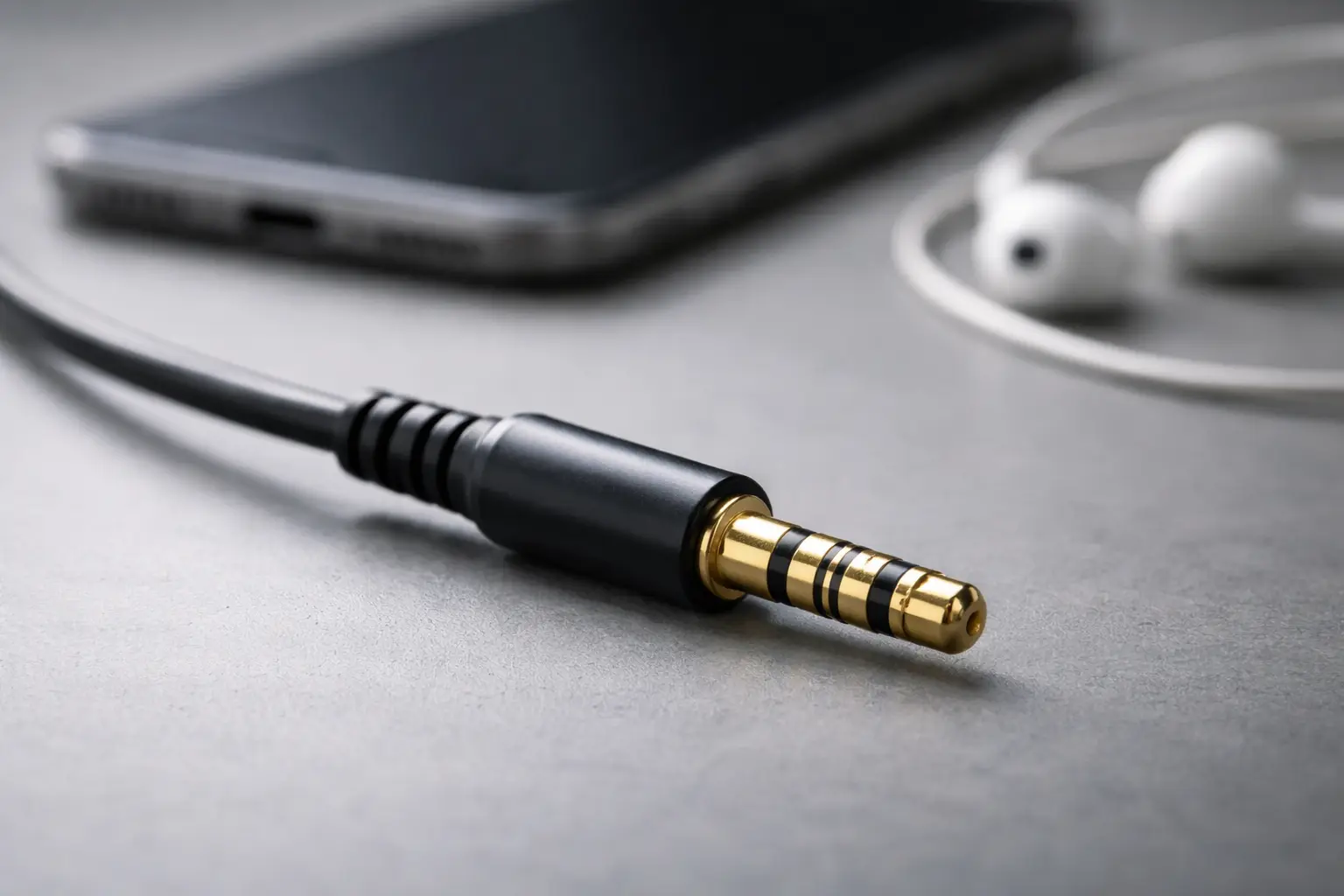
- TRRS (Tip-Ring-Ring-Sleeve): Four conductors—stereo unbalanced audio plus a microphone channel, standard for smartphone headsets and gaming headphones.
Note that TRRS has two incompatible wiring standards (CTIA and OMTP), which can cause microphone failure if mismatched.
Q5: For B2B clients: How do I choose between 3.5mm and 1/4 inch for my audio product design?
Think about your target market and use case:
- Choose 1/4 inch if: Your product targets professional musicians, recording studios, or live sound applications in the US market; durability and repairability are critical; your device will experience frequent plugging/unplugging; you need balanced audio capability.
- Choose 3.5mm if: Compactness is paramount; your product is portable or battery-powered; you're targeting general consumers; the device has space constraints; you need TRRS (headset with mic) functionality.
For product lines spanning both markets, think about offering both connector types or including quality adapters. Partner with experienced OEM suppliers like Jingyi Audio who can provide both connector types to consistent quality standards.
Citations
- Wikipedia contributors. (2024). Phone connector (audio). In Wikipedia, The Free Encyclopedia. Retrieved from https://en.wikipedia.org/wiki/Phone_connector_(audio)
- Gearspace Community. (2020). 1/4 inch superior to 3.5mm headphone jacks on audio interfaces? [Forum thread]. Retrieved from https://gearspace.com/board/so-much-gear-so-little-time/1316250-1-4-inch-superior-3-5mm-headphone-jacks-audio-interfaces.html
- Head-Fi Community. (2012). 1/4 inch vs. 3.5 mm Jack Difference? [Forum thread]. Retrieved from https://www.head-fi.org/threads/1-4-inch-vs-3-5-mm-jack-difference.632583/
- Ningbo Jingyi Electronic Co., Ltd. (2024). Professional Audio Components & OEM/ODM Services. Jingyi Audio. Retrieved from https://site_5615465d-0395-48c6-b01f-dc3d38213fc5/
- Behringer Knowledge Base. (2018). Phasing Issues - TRS cables and mono input channels [Video]. YouTube. Retrieved from https://www.youtube.com/watch?v=xK8oQcft6VA