

10 Must-Have Speaker Connectors for High-Fidelity Sound
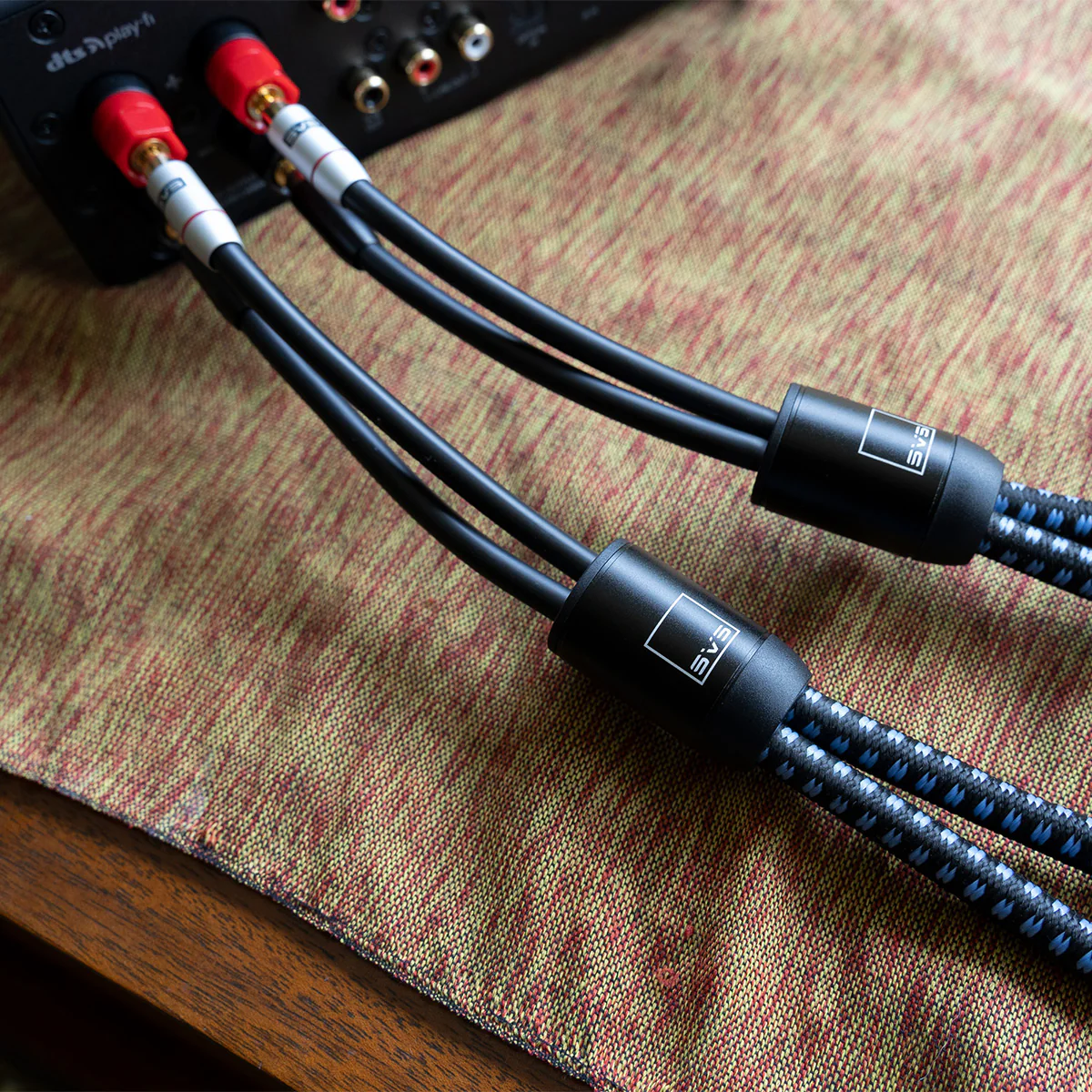
Speaker connectors play a key role in delivering clear sound. Reliable audio connectors help prevent issues like signal loss from oxidation or poor contact. Rca connectors, audio cable connector types, and other audio connectors can fail if not maintained. Careful selection ensures strong connections and consistent performance.
Key Takeaways
- Choose speaker connectors that match your system’s needs for the best sound and reliable performance.
- Use high-quality connectors like banana plugs or spade connectors to reduce signal loss and prevent corrosion.
- Install connectors carefully by twisting wires, checking polarity, and maintaining connections to keep sound clear and strong.
Top 10 Speaker Connectors for Audiophiles
Banana Plugs Speaker Connectors
Banana plugs remain a favorite among audiophiles for their secure fit and ease of use. These connectors use a cylindrical metal pin that fits tightly into banana jacks, creating a strong connection that reduces signal loss. The spring-loaded sides expand inside the jack, increasing the contact surface and minimizing electrical resistance. Gold-plated banana plugs resist corrosion and maintain low contact resistance, which is important for high-fidelity sound systems. Soldered connections provide a permanent joint, preventing loosening and supporting consistent audio quality. The design also resists vibration and movement, reducing the risk of frayed or loose wires. Many high-end brands, including NINGBO JINGYI ELECTRONIC Co., LTD., offer banana plugs with advanced features for audiophile setups.
Tip: Banana plugs are ideal for users who want quick, reliable connections without the hassle of bare wire.
Spade Speaker Connectors
Spade connectors offer a large contact surface area, ensuring minimal resistance and optimal signal transfer. Their design allows for tight mechanical connections that resist loosening over time, making them more reliable than bare wire. Compared to banana plugs, spades provide superior electrical contact due to their larger surface area and tighter fit, which enhances signal fidelity. High-end spade connectors often feature gold plating for corrosion resistance and improved conductivity. Some models include anti-vibration features and elastomer damping to reduce resonance. Materials like solid copper and phosphor bronze contribute to low impedance and long-term stability. Spade connectors generally provide a lower contact resistance than banana plugs, especially when tightened with significant pressure.
Pin Speaker Connectors
Pin connectors are engineered with professional-grade materials such as gold-plated beryllium copper contacts. These materials enhance conductivity and maintain spring tension over time. The precise pin dimensions ensure consistent contact pressure and resist disconnection from vibration. Features like strain relief and orientation keying help prevent damage from incorrect connections. While explicit durability ratings are not always available, pin connectors are designed for repeated use in demanding environments.
Bare Wire Speaker Connectors
Bare wire connections are simple and cost-effective. Some users believe that fewer connections preserve signal integrity. However, bare wire can oxidize over time, which may degrade the connection. Stray wire strands can cause shorts if not properly twisted or inserted. Binding posts with serrated edges can cut wire strands when tightened, and handling bare wire can sometimes cause injury. Many users prefer banana plugs or spade connectors for convenience and reliability. Soldering wire ends can prevent oxidation and improve connection quality by creating an airtight seal.
| Aspect | Summary |
|---|---|
| Simplicity | Fewer connections, cost-effective |
| Oxidation | Risk of degraded connection over time |
| Shorts | Stray strands can cause shorts |
| Damage | Binding posts may cut wire strands |
| Handling | Can cause injury, less convenient |
| Alternatives | Banana plugs and spades preferred for reliability |
Speakon Speaker Connectors
Speakon connectors are designed for professional audio and live sound applications. They feature a robust locking mechanism that prevents accidental disconnections, even in high-vibration environments. Speakon connectors handle high-power, high-current signals safely, making them ideal for PA systems and concerts. Their design provides better shielding against interference and noise. The connectors are user-friendly, easy to install, and do not require special tools. NINGBO JINGYI ELECTRONIC Co., LTD. manufactures Speakon connectors that comply with industry safety standards, ensuring reliability during live events.
- Speakon connectors handle up to 50 amps, far more than 1/4-inch phone plugs.
- The locking mechanism ensures a secure connection.
- Durable construction withstands heavy use and high power.
Binding Post Speaker Connectors
Binding posts are common in home and professional audio systems. They accept banana plugs, spade connectors, pin connectors, and bare wire. High-quality binding posts use materials like pure copper, silver-plated copper, and tellurium copper for excellent conductivity. Some posts use brass for vibration damping and EMI/RF noise rejection. Phosphor bronze and stainless steel are also used, though they offer lower conductivity. The choice of material affects signal transmission and durability. Binding posts from NINGBO JINGYI ELECTRONIC Co., LTD. balance mechanical strength and electrical performance for reliable audio connections.
| Material | Usage | Effect on Conductivity |
|---|---|---|
| Pure Copper | Core conductor | Excellent conductivity |
| Silver-plated Copper | Plating | Superior conductivity, durability |
| Tellurium Copper | Advanced posts | High conductivity, low resistance |
| Brass | Housing | Vibration damping, less conductive |
| Phosphor Bronze | Some posts | Improved by cryogenic treatment |
| Stainless Steel | Occasionally used | Low conductivity, mechanical use |
XLR Speaker Connectors
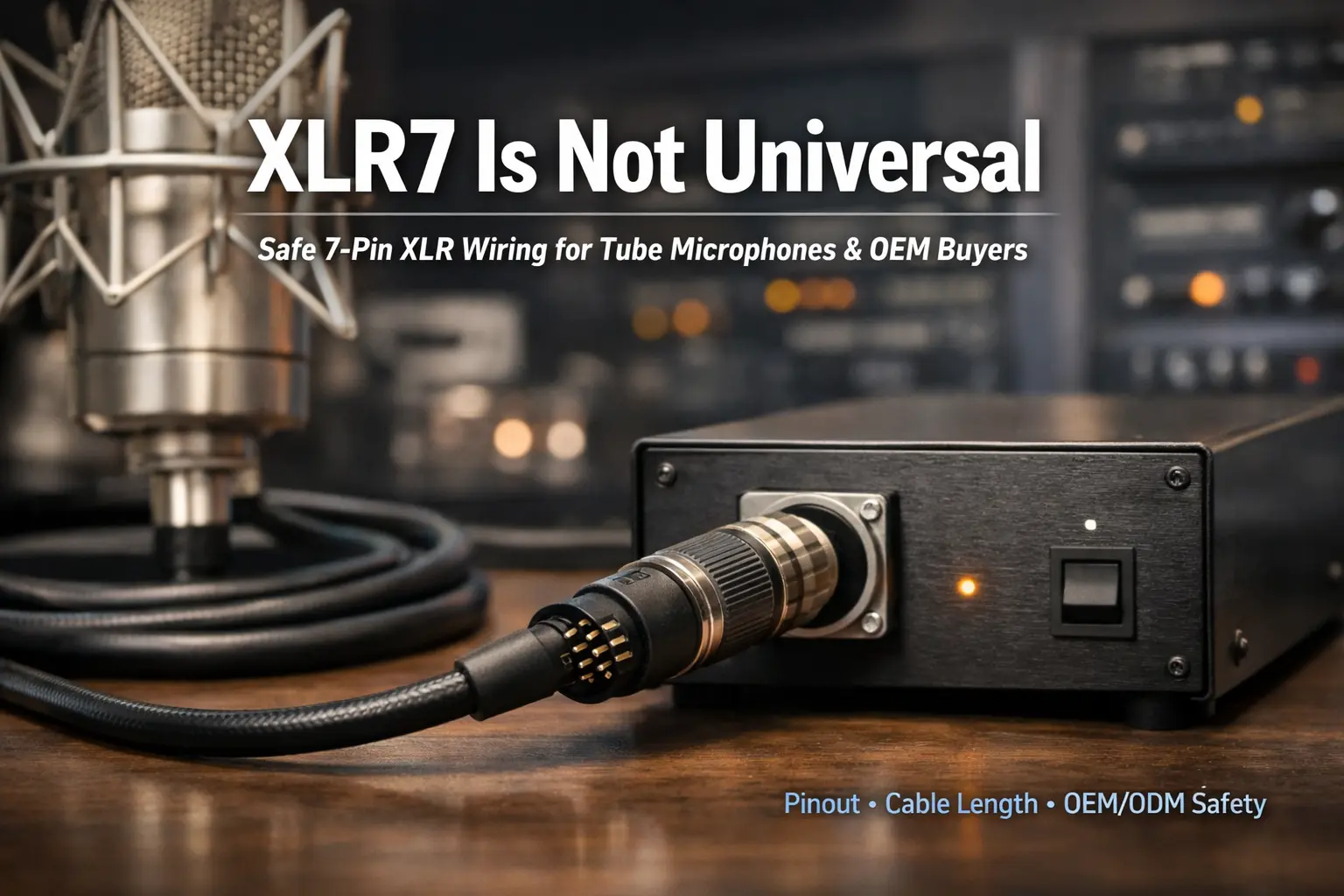
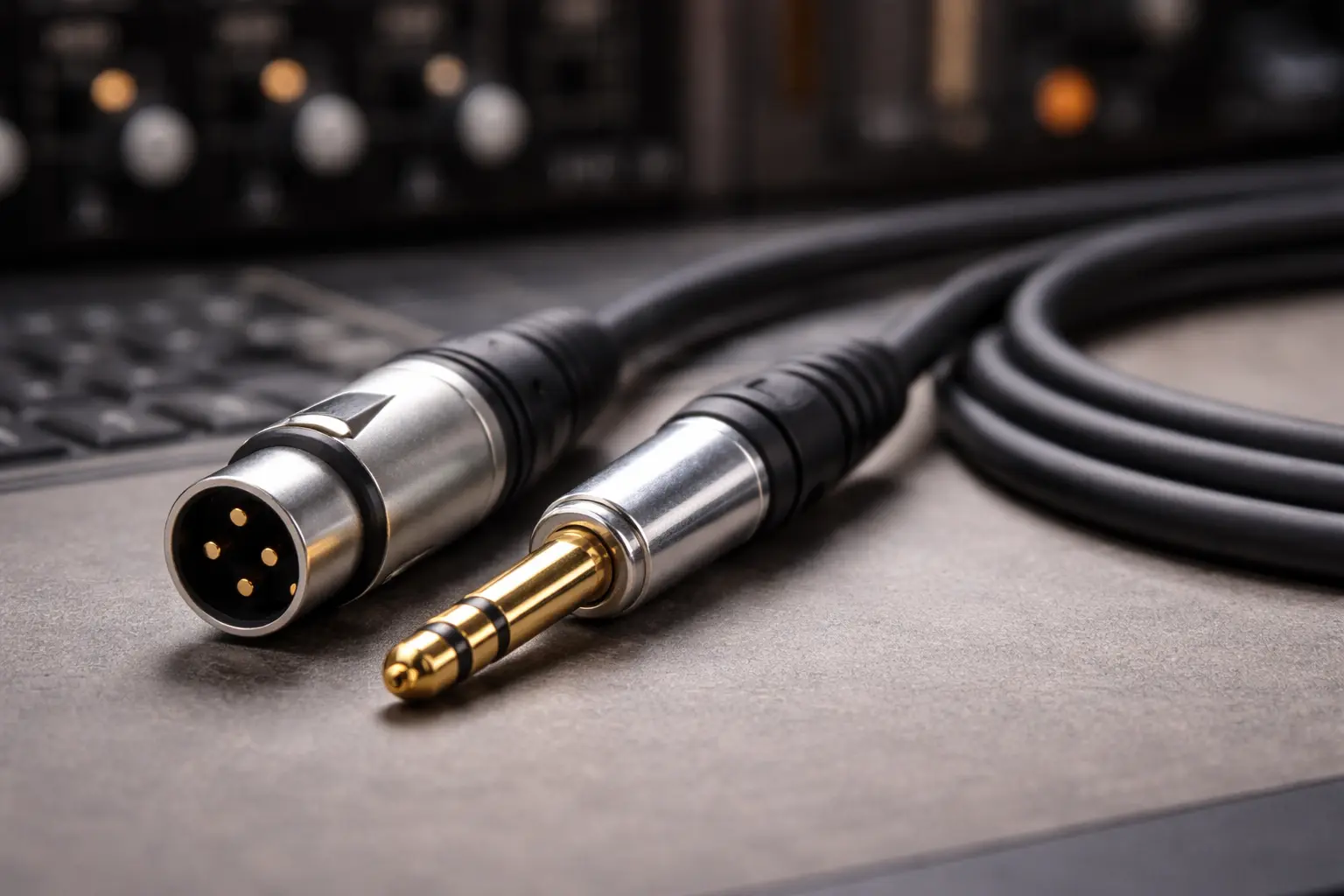
XLR connectors are the standard for balanced audio transmission in professional environments. They use two wires carrying the audio signal in opposite polarity and a ground wire. This design cancels out noise picked up during transmission, making XLR connectors ideal for long cable runs. The metal housing shields the pins and cables from external interference. A locking mechanism secures the connection, and gold-plated contacts resist corrosion. XLR connectors are widely used in studios, live sound, and broadcast setups for their noise immunity and durability.
- Balanced transmission cancels noise and interference.
- Metal housing and locking mechanism add durability.
- Suitable for long cable runs and professional setups.
RCA Speaker Connectors
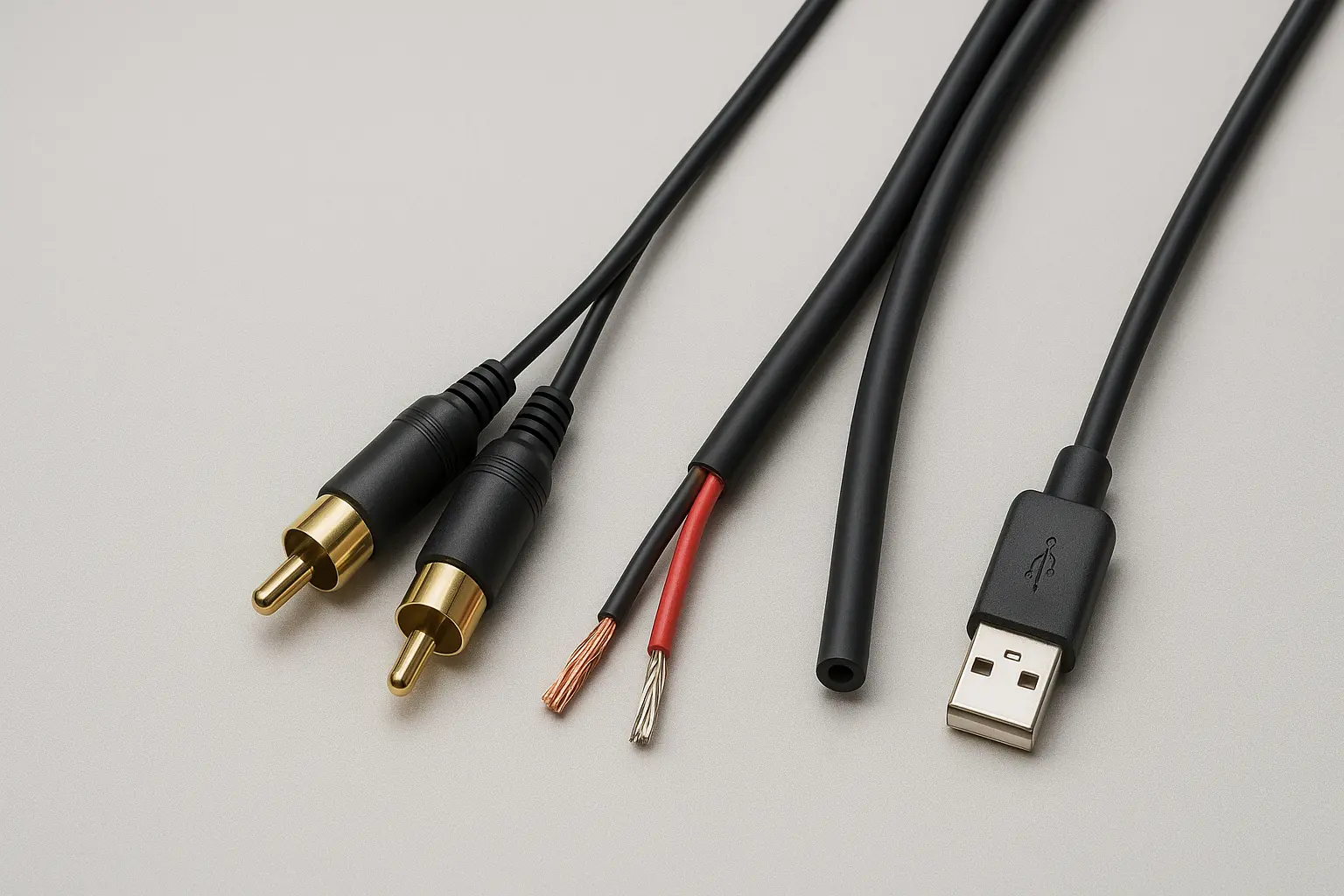
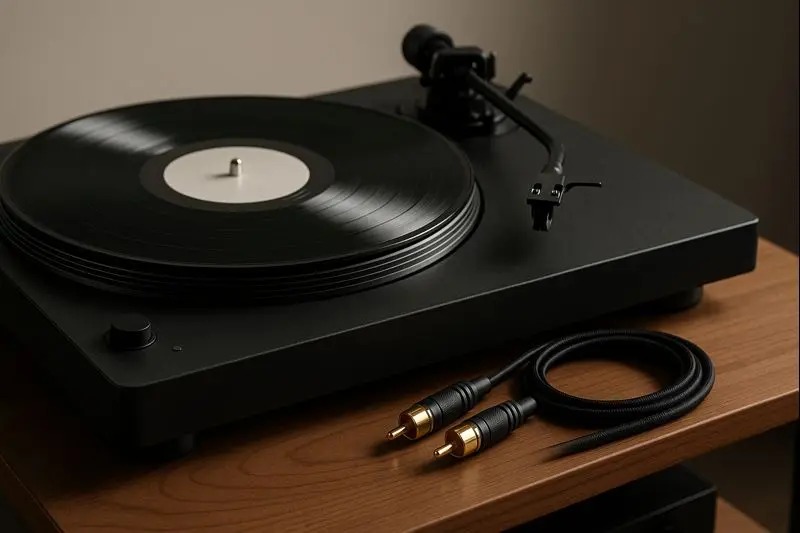
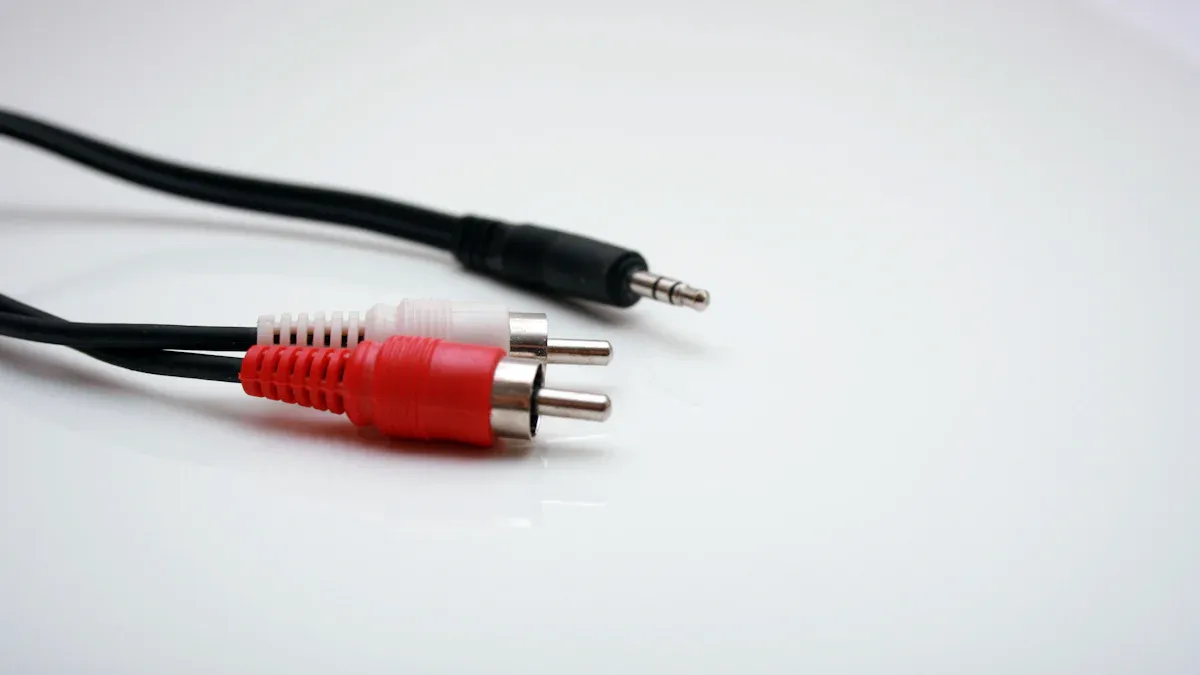
RCA connectors are common in consumer audio systems for unbalanced analog stereo connections. They connect devices like DVD players, TVs, and game consoles. RCA connectors also support digital audio transmission and video signals. Color coding helps users make correct connections. While RCA connectors are easy to use and widely available, they are more susceptible to electromagnetic interference than balanced connectors like XLR. Despite these limitations, RCA connectors remain popular in modern audio and video equipment.
- Used for analog and digital audio, as well as video.
- Simple to connect and widely compatible.
- Best for short cable runs in home audio systems.
1/4-Inch Phone Plug Speaker Connectors
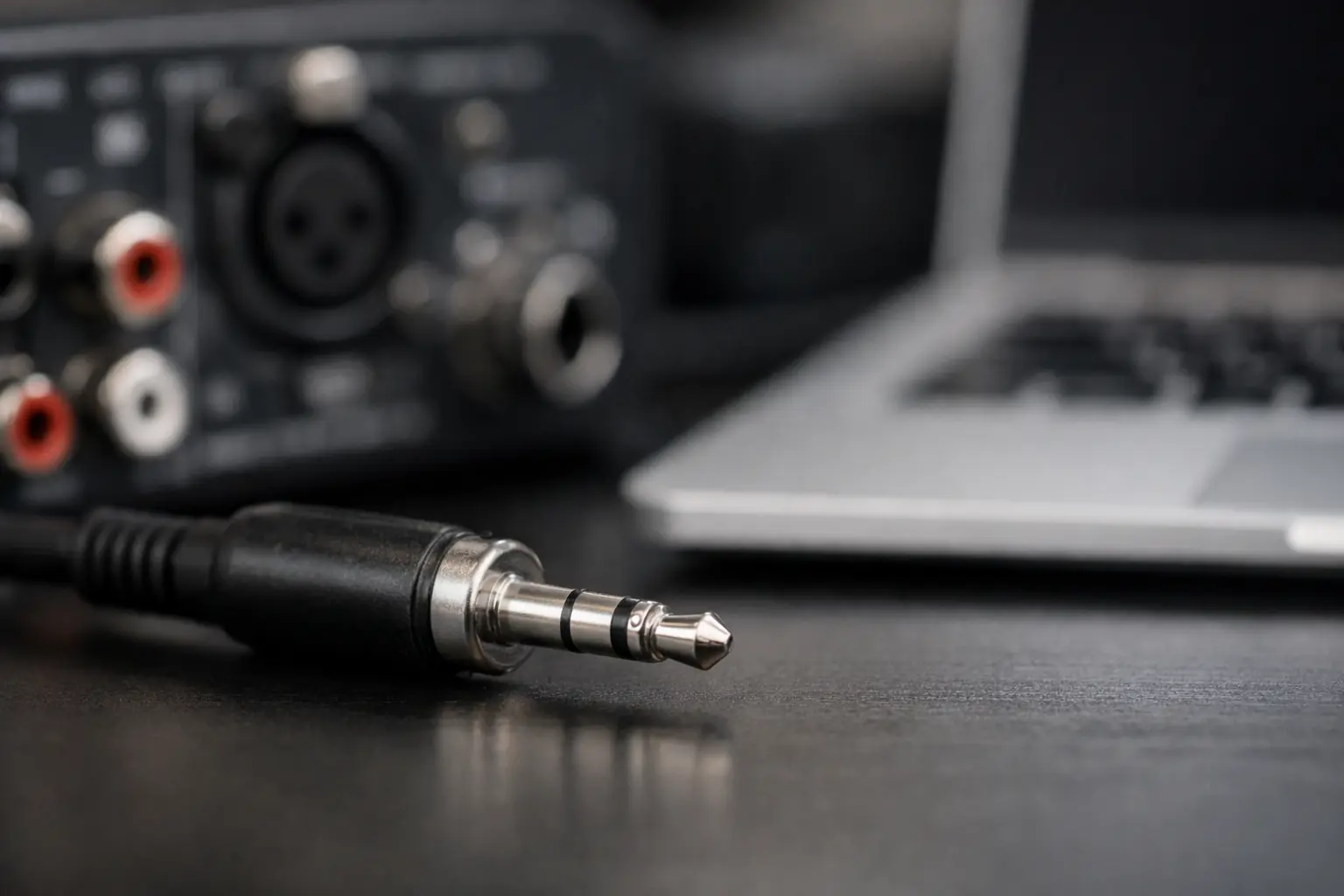
1/4-inch phone plugs, also known as TRS connectors, are versatile and compatible with many audio devices. They are common in studio environments for connecting amplifiers, mixers, and instruments. These connectors support balanced signal transmission, which helps reduce noise and interference. 1/4-inch phone plugs are affordable, sturdy, and easy to find. However, they have a smaller contact area than Speakon connectors, which can lead to higher resistance and heat buildup under high current loads. For high-power applications, Speakon connectors are preferred.
- Versatile and widely compatible.
- Support balanced signals for reduced noise.
- Affordable and durable for studio use.
BFA Speaker Connectors
BFA connectors are a variation of the 4mm banana plug, designed to meet EU safety regulations. They provide more surface contact than spade connectors and offer better contact pressure than regular banana plugs. The unique "inside out" design, often coated in ABS, improves safety and performance. However, BFA connectors are not directly compatible with standard banana plugs, and users may need adapters. Some users notice that part of the BFA plug remains visible when connected, which is normal.
- Enhanced contact surface and pressure.
- Improved safety features.
- Compatibility issues may require adapters.
Note: When choosing speaker connectors, consider system compatibility, durability, and ease of installation. NINGBO JINGYI ELECTRONIC Co., LTD. offers a wide range of high-quality connectors to meet various audio needs.
How to Choose the Right Speaker Connectors
Speaker Connectors and System Compatibility
Selecting the right connectors starts with understanding the system’s requirements. Each audio setup has unique needs based on room size, usage, and sound quality goals. Users should check speaker specifications, including power handling, impedance, and sensitivity, to ensure compatibility with the amplifier or receiver. Matching impedance helps maintain a stable load and prevents equipment strain. Physical compatibility also matters; connectors must fit securely with the speaker terminals. For complex systems, such as surround sound, users should confirm that the connectors support the required formats and configurations.
Tip: Consulting manufacturer specifications or seeking expert advice can help optimize system integration and performance.
Speaker Connectors for Audio Quality and Signal Integrity
Audio quality depends on the physical properties of cables and connectors. Thicker cables and high-quality connectors reduce resistance, which improves signal transmission. Secure connections prevent signal loss and distortion. In controlled tests, well-matched connectors deliver tighter bass, clearer highs, and a more defined soundstage. Properly crimped or soldered connectors, such as banana plugs or spade connectors, maintain conductivity and resist corrosion. Regular inspection and maintenance help sustain optimal performance.
- Secure, tight connections reduce signal loss.
- High-quality materials and shielding minimize interference.
- Regular maintenance preserves audio clarity.
Matching Speaker Connectors to Budget and System Needs
Buyers should balance performance with budget. Entry-level systems may benefit from simple connectors, while high-end setups require premium materials for the best sound. Consider these factors:
- Define requirements: room size, usage, and desired sound quality.
- Check compatibility: power handling, impedance, and sensitivity.
- Confirm physical fit: connector type and speaker size.
- Seek advice if unsure.
A well-matched connector ensures reliable operation and long-term satisfaction.
Installation Tips for Speaker Connectors
Proper installation prevents common mistakes. Users should strip wires carefully, twist copper strands to avoid fraying, and attach connectors securely. Double-checking polarity alignment between amplifier and speakers avoids phase issues. Using the correct wire gauge and following manufacturer instructions ensures safe, reliable connections. Connectors like banana plugs and spade connectors simplify installation and improve reliability.
Note: Regularly inspect connections and clean contacts to maintain high-fidelity sound.
Quality audio connections elevate sound clarity and system reliability. Experts recommend the following for best results:
- Select cables by gauge and length to reduce resistance.
- Choose robust connectors like banana plugs or spade connectors.
- Align polarity correctly during installation.
- Focus on technical quality, not myths about expensive cables.
Tel: +86 574 86100572#8816
Whatsapp: +86 15168592711
E-mail: sales@jingyiaudio.com
Youtube: JINGYI
Facebook: JINGYI