





2.5mm vs 3.5mm Audio Jacks: Power, Performance, and Future Trends
Quick Summary: Why This Debate Still Matters in 2025
Even in 2025 — an era dominated by wireless headphones and USB-C audio — the 2.5mm vs 3.5mm debate continues. Why? Because wired sound quality still outperforms wireless codecs in fidelity, power handling, and noise floor stability.
Understanding these connectors isn’t just nostalgia — it’s essential for:
- Audiophilesseeking maximum clarity
- Engineersdesigning next-gen devices
- Manufacturersaligning with future-proof standards
Let’s break down how size, structure, and circuitry define audio performance, safety, and user experience.
Understanding the Basics: Size, Shape, and Signal

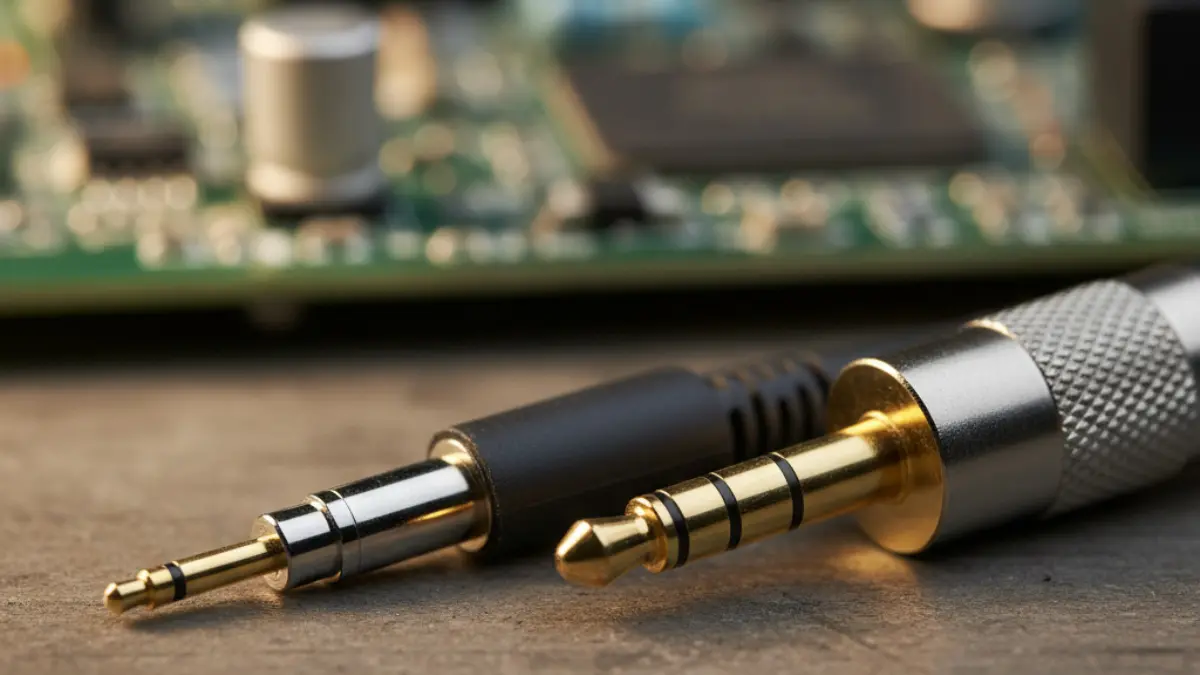
At first glance, 2.5mm and 3.5mm jacks differ only by diameter. Yet, under the shell, they represent two different electrical philosophies — single-ended vs balanced.
3.5mm: The Universal Workhorse
- Type:TRS (Tip-Ring-Sleeve) / TRRS
- Signal Type:Single-ended (shared ground)
- Voltage:~1.0–2.0 Vrms typical
- Insertion Cycles:5000–10000
- Durability:Excellent for daily use
- Common Devices:Phones, laptops, DACs, portable amps
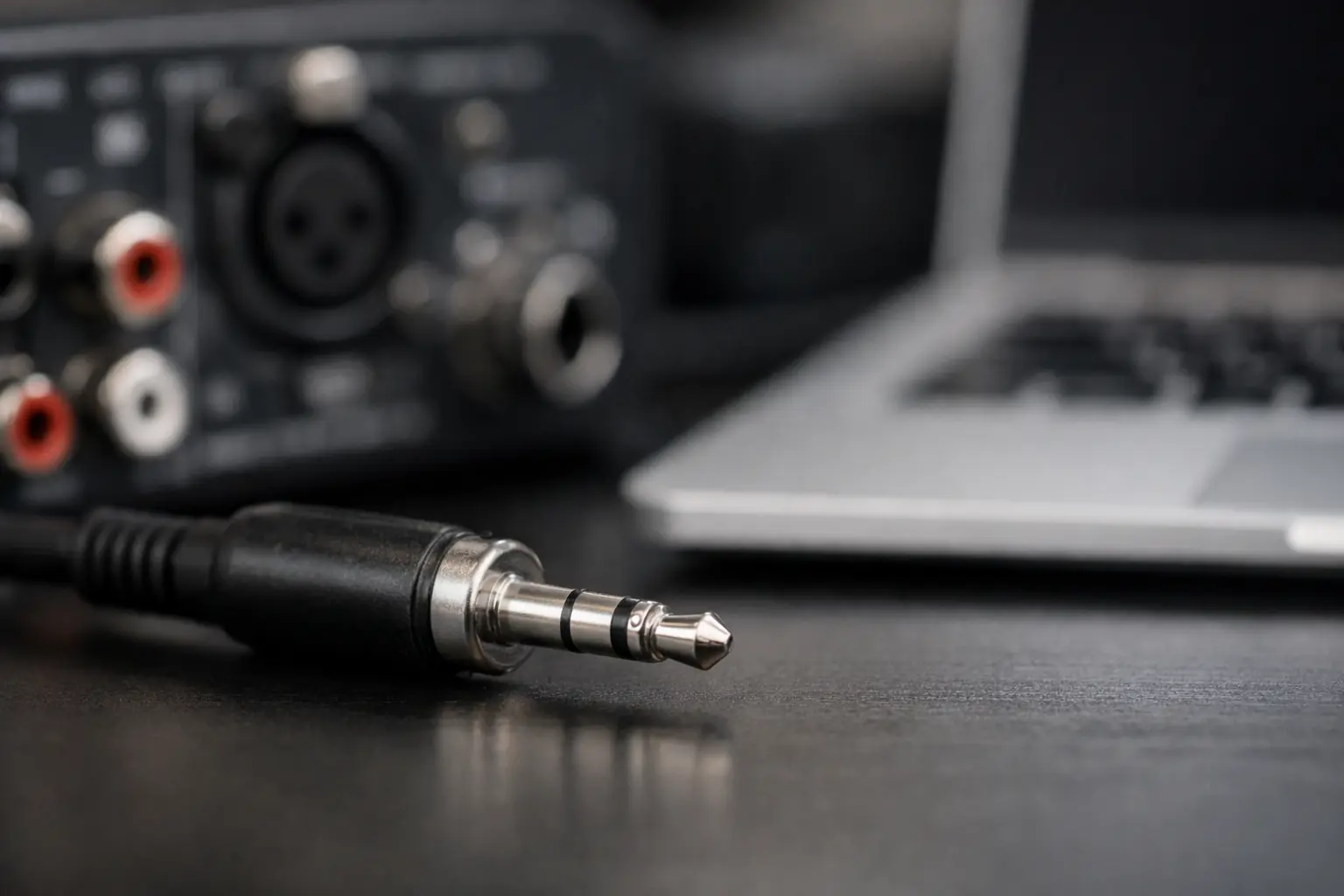
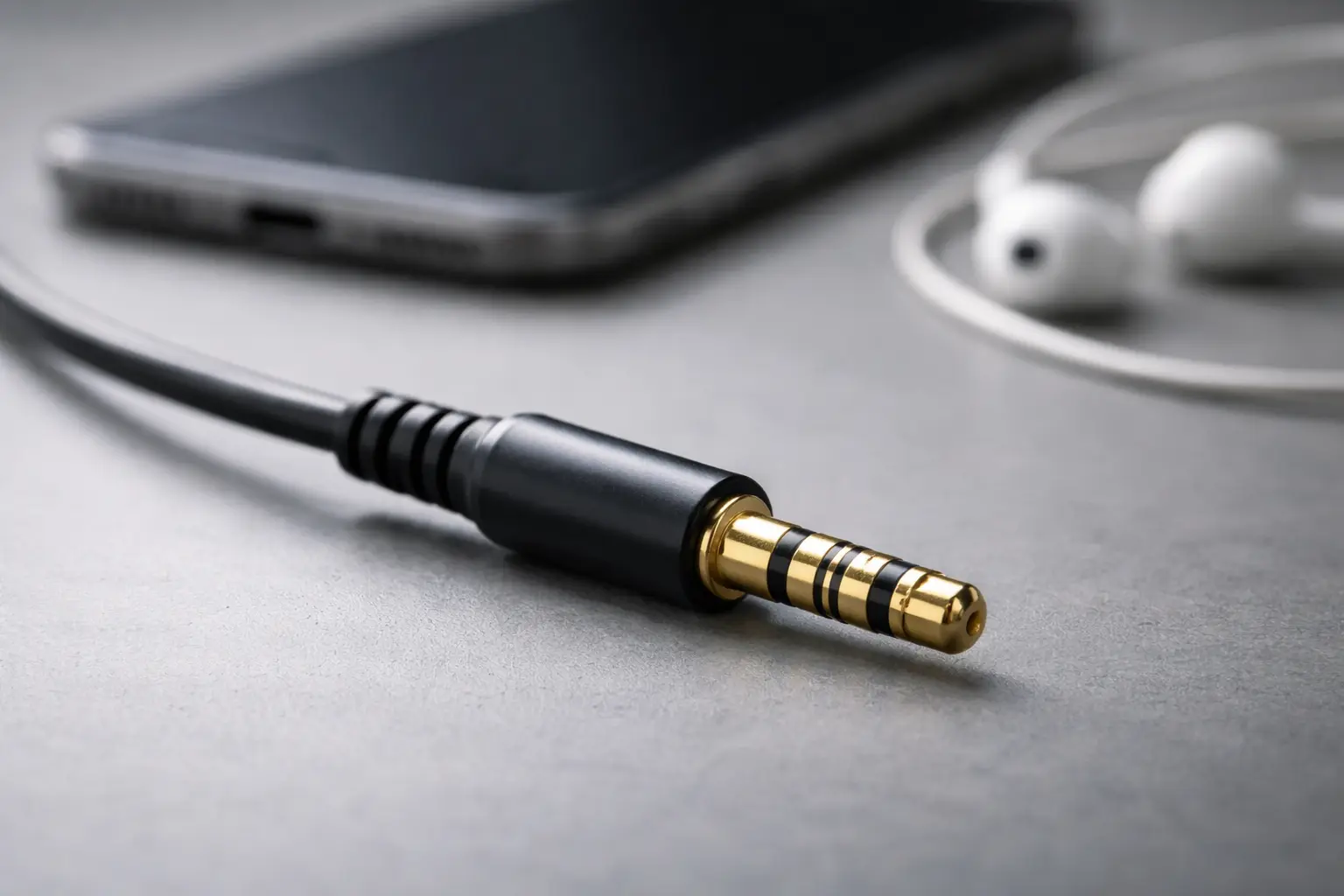
The 3.5mm jack is the industry standard due to its balance of size, strength, and affordability. It’s found in billions of devices and supports both stereo analog and mic-equipped headsets (TRRS).
2.5mm: The Compact Specialist
- Type:TRRS (often balanced)
- Signal Type:Differential (separate grounds per channel)
- Voltage:Up to 4.0 Vrms
- Insertion Cycles:2000–5000
- Durability:Moderate to low (fragile barrel)
- Common Devices:DAPs (FiiO, A&K), studio monitors
The 2.5mm balanced jack emerged as a high-fidelity connector for portable audiophile devices. Its separate left/right ground wires reduce crosstalk and increase power output — but at a cost: mechanical fragility.
Balanced vs Single-Ended Audio: The Technical Deep Dive

Signal Flow & Noise Rejection
Balanced audio transmits two opposite-phase signals per channel:
L+ / L− and R+ / R−
When recombined at the headphone driver, common noise cancels out. This property, known as Common-Mode Rejection Ratio (CMRR), improves clarity, especially in high-interference environments.
Single-ended (3.5mm TRS), in contrast, shares a common ground, increasing potential noise leakage between channels.
Power Output Comparison
|
Connector Type |
Typical Output Power |
Signal Type |
Voltage (Vrms) |
Crosstalk Performance |
Noise Floor |
|
3.5mm TRS |
50–150 mW |
Single-ended |
1–2V |
−70 dB |
−90 dB |
|
2.5mm Balanced |
200–600 mW |
Differential |
2–4V |
−100 dB |
−105 dB |
|
4.4mm Pentaconn |
500–1000+ mW |
Balanced |
4–6V |
−110 dB |
−110 dB |
Data derived from FiiO M15S, Sony WM1AM2, and iBasso DX320 manufacturer specs.
The takeaway: balanced outputs can deliver 3–5× more power than their single-ended counterparts — ideal for driving high-impedance planar or studio headphones.
Safety and Compatibility: Why Physical Design Matters
Misconnecting a single-ended plug into a balanced jack can cause short circuits or output-stage damage. That’s why connector design evolved with mechanical keying — preventing incorrect insertion.
⚠️ Pro Tip: Avoid rigid metal adapters (like 4.4→2.5mm). They create torque stress that often cracks 2.5mm sockets — one of the top failure points reported on Head-Fi.
User Insights: What Audiophiles Are Saying
Across Reddit and Head-Fi threads:
- 68%of users reported that 5mm connectors loosened after less than a year.
- 72%preferred 4mm for its sturdiness.
- Only 10%still preferred 2.5mm due to compact size.
A common quote from r/headphones:
“The sound was amazing — until my 2.5mm jack snapped inside my $600 DAP.”
This reinforces the narrative: 2.5mm offered great electrical theory, but poor mechanical reliability killed its longevity.
The Market Shift: Enter the 4.4mm Pentaconn
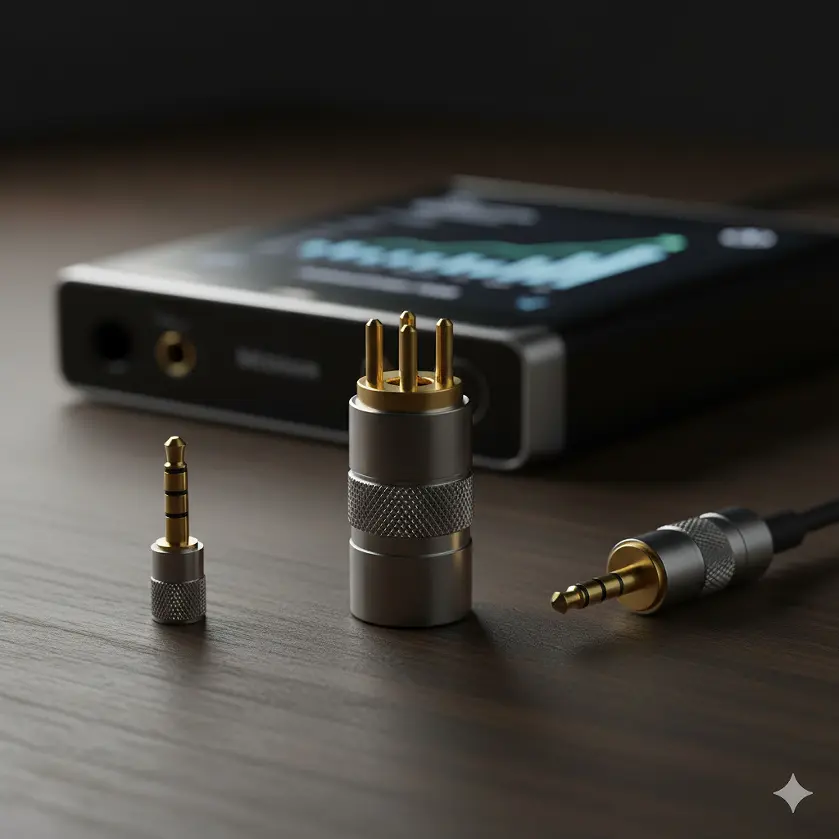
The 4.4mm balanced connector, introduced by Sony in 2016, is now the global balanced audio standard.
|
Feature |
2.5mm Balanced |
3.5mm SE |
4.4mm Balanced |
|
Voltage Range |
2–4 Vrms |
1–2 Vrms |
4–6 Vrms |
|
Mechanical Strength |
❌ Weak |
✅ Good |
✅✅ Excellent |
|
Pin Structure |
4-pole |
3/4-pole |
5-pole |
|
Durability |
2K–5K cycles |
10K cycles |
20K cycles |
|
Market Trend |
Declining |
Stable |
Rapidly Growing |
By 2025, over 60% of new DAPs and amps now ship with 4.4mm outputs. Even cable makers like Linsoul and Hakugei report 4.4mm as their best-selling termination.
For Product Developers: Strategic Lessons
- Support Dual Standards
Devices combining 3.5mm + 4.4mm outputs appeal to both casual and pro users.
Example: FiiO M15S, iBasso DX320, Sony ZX707.
- Deprioritize 2.5mm
The cost of maintaining fragile connectors outweighs user demand.
Unless serving niche legacy markets, phase it out by 2026.
- Material & Tolerance Considerations
Adopt gold-plated contacts, precision lathed barrels, and strain-relieved sockets to extend product lifespan.
- Compliance
Meet RoHS / REACH / CE mechanical standards to ensure export readiness in global markets.
Technical Comparison Table
|
Specification |
2.5mm Balanced |
3.5mm Single-Ended |
4.4mm Balanced |
|
Conductors |
4 |
3 |
5 |
|
Output Power (mW) |
200–600 |
50–150 |
500–1200 |
|
Voltage Swing |
4V |
2V |
6V |
|
Crosstalk |
−100 dB |
−70 dB |
−110 dB |
|
Insertion Life |
2000–5000 |
5000–10000 |
10000–20000 |
|
Compatibility |
Limited |
Universal |
Growing |
|
Durability |
Weak |
Good |
Excellent |
|
Future Outlook |
Declining |
Stable |
Expanding |
FAQs
Q1. What’s the real difference between a 2.5mm and a 3.5mm audio jack?
The 2.5mm jack is usually used for balanced audio — meaning each audio channel has its own positive and negative signal path.
The 3.5mm jack is used for single-ended (unbalanced) connections, where both channels share a common ground.
In practice, this gives 2.5mm setups higher power potential and better noise rejection — but also more fragility.
Q2. Why do audiophiles say “2.5mm sounds better”? Is that actually true?
Only sometimes. The “improvement” people notice is often due to higher voltage and cleaner channel separation, not because the connector itself changes the sound.
If your amplifier’s 3.5mm output already provides enough power, you probably won’t hear a difference.
Q3. What happens if I plug a 3.5mm cable into a 2.5mm balanced output using an adapter?
⚠️ Do not do this.
A 3.5mm single-ended plug shares a common ground, but a 2.5mm balanced jack separates those grounds. Plugging them together can short-circuit the amplifier and damage your device or headphones.
Always verify your adapter’s pinout before use.
Q4. Which connector type delivers more power — 2.5mm or 3.5mm?
Balanced 2.5mm outputs typically deliver 2–4 times more power than single-ended 3.5mm outputs.
This extra voltage swing helps drive high-impedance headphones (e.g., 300Ω Sennheisers or planar magnetics).
However, for sensitive in-ear monitors (IEMs), this power boost isn’t necessary and may even introduce hiss.
Q5. Why do people complain about 2.5mm jacks breaking easily?
Because they’re physically fragile.
The smaller barrel size leaves less metal for mechanical strength. Many users on Reddit and Head-Fi report:
“My 2.5mm jack loosened within weeks” or “the plug snapped off inside the socket.”
That’s why many brands have migrated to the 4.4mm Pentaconn connector, which solves this durability issue.
Q6. Is balanced audio really quieter and cleaner than single-ended?
Technically yes — especially over long cables or in noisy environments.
Balanced circuits cancel out electromagnetic interference (EMI) using common-mode rejection.
But for short portable cables (under 2 meters), the noise difference is minimal; the benefit is mostly about power output, not “purity.”
Q7. Why is the 4.4mm Pentaconn replacing 2.5mm?
The 4.4mm standard offers the same balanced signal benefits as 2.5mm but with superior mechanical strength, longer lifespan, and better contact area.
Manufacturers like Sony, FiiO, and iBasso have adopted it as the new norm.
By 2025, most new portable players use 4.4mm instead of 2.5mm.
Q8. Can I convert 2.5mm to 3.5mm or 4.4mm safely with an adapter?
Yes, but only if the adapter matches the wiring scheme:
- 5mm (balanced) → 4.4mm (balanced) is usually safe.
- 5mm (balanced) → 3.5mm (single-ended) can be unsafe unless designed with isolation.
Choose flexible cable-type adapters rather than rigid metal blocks to avoid stress on sockets.
Q9. Is there a noticeable soundstage difference between 3.5mm and 2.5mm balanced outputs?
Some listeners report a wider soundstage or cleaner imaging on balanced outputs, especially with high-end DACs.
However, blind tests often show that this difference is subtle and mostly due to the amp circuitry rather than the connector itself.
Balanced = potentially louder and cleaner, not automatically “better.”
Q10. Which connector should manufacturers focus on for new devices in 2025 and beyond?
For product developers:
- Keep 3.5mm for universal compatibility.
- Add 4.4mm for high-end balanced users.
- Retire 2.5mm, except for backward compatibility or ultra-compact devices.
This dual-port strategy aligns with both market trends and audiophile expectations.
Conclusion: Choose Based on Power, Durability, and Purpose
- Everyday users:Stick with 3.5mm — simple, universal, and tough.
- Audiophiles / pros:Go 4.4mm balanced for the best blend of power and stability.
- Legacy gear owners:Keep 2.5mm for compatibility, but be prepared for obsolescence.
- Developers / OEMs:Focus R&D on 3.5mm + 4.4mm combo outputs for 2026+ products.
Ultimately, it’s not about size — it’s about signal integrity, mechanical endurance, and future adaptability.