




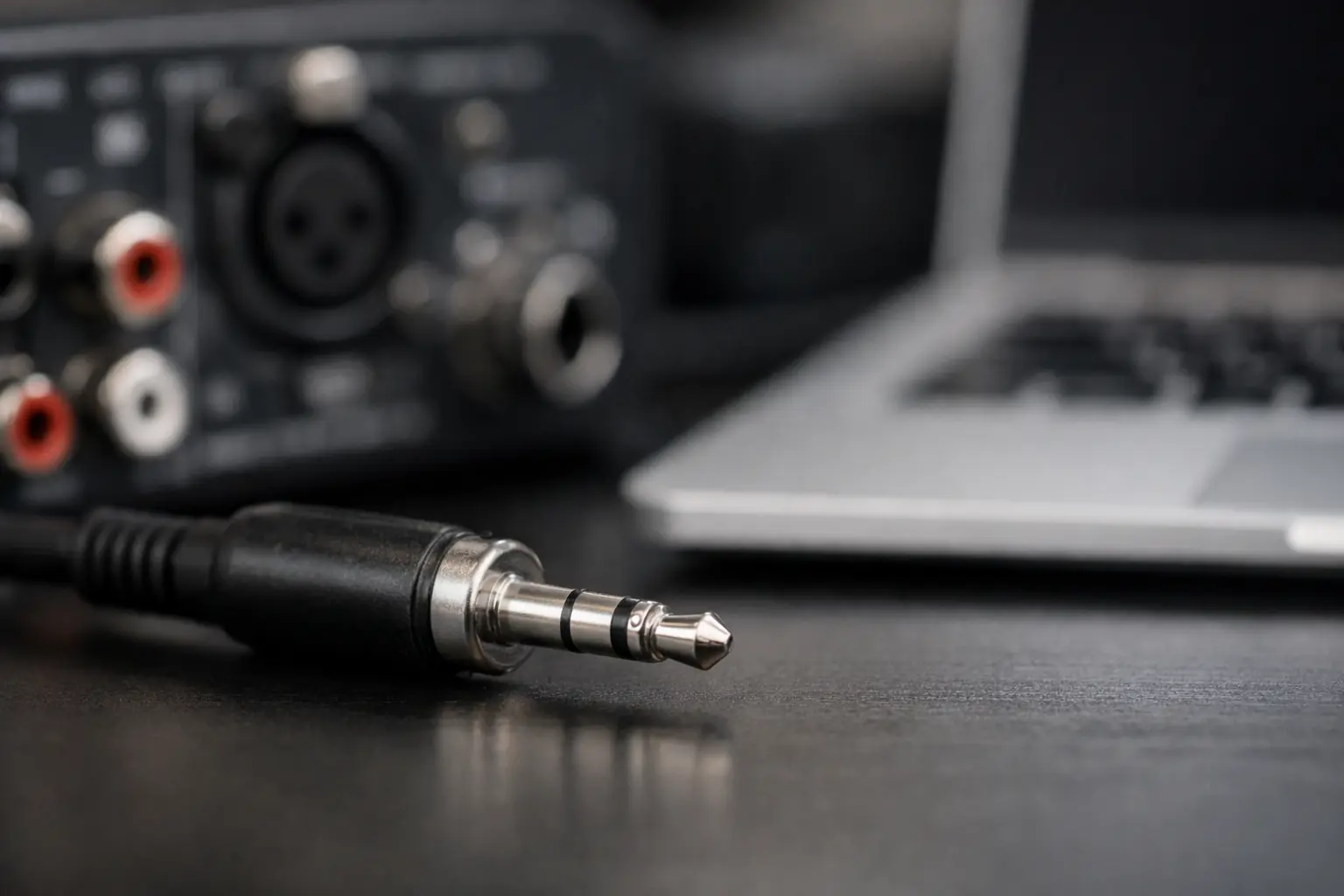
3.5 mm jack pin Explained: Fast Pinouts + Real Fixes for Everyday Gear and OEM Builds
Key Takeaways
- TRS (3-pole) stereo wiring: Tip = Left, Ring = Right, Sleeve = Ground.
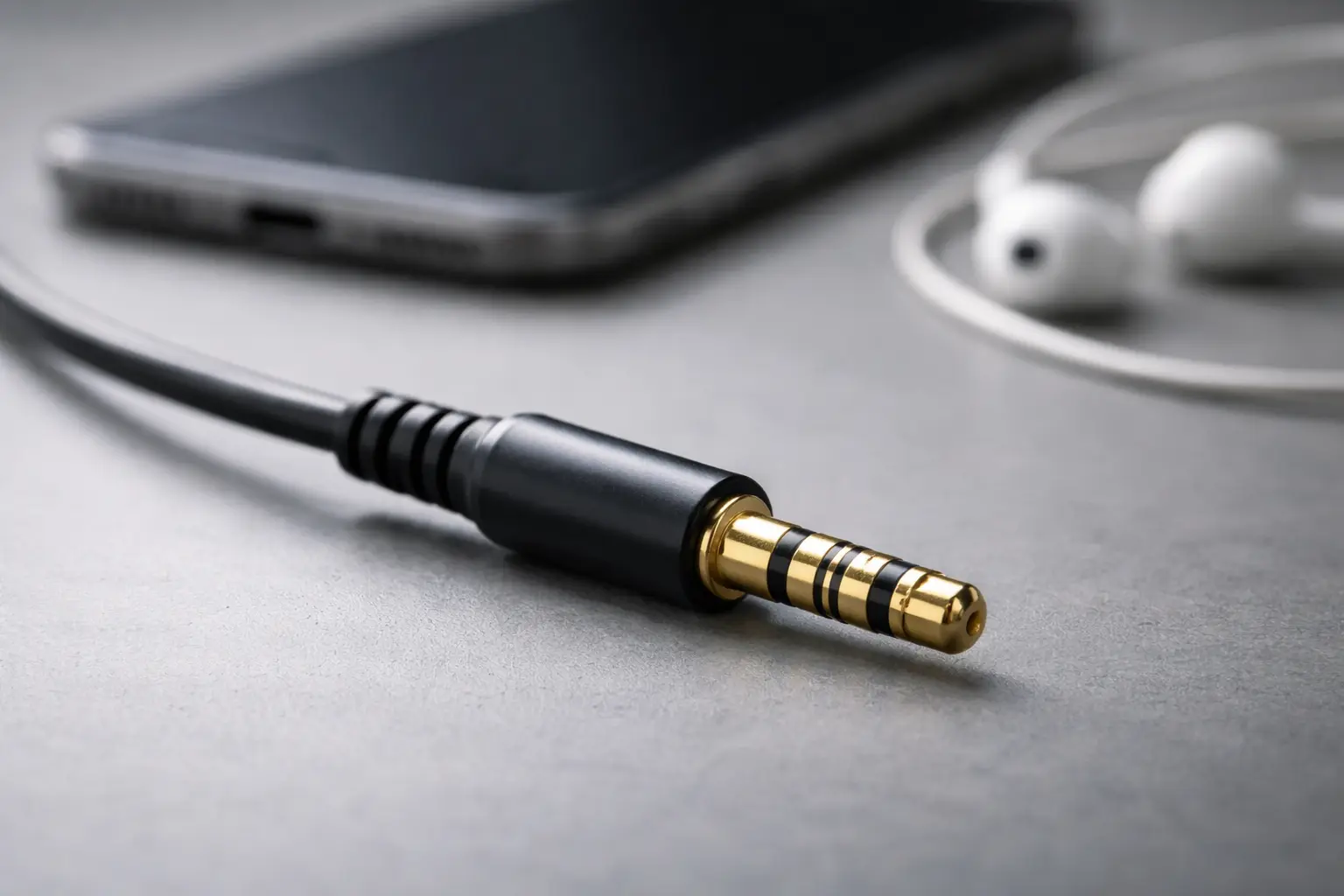
- TRRS (4-pole) headset wiring: CTIA and OMTP look the same, but Mic and Ground swap—that’s why “audio works, mic doesn’t.”
- Ring count isn’t a guarantee. TRRS can mean “headset mic,” “camera wiring,” or something else. Always confirm the wiring.
- Most “bad sound” complaints online come down to contact and fit: oxidation, weak spring pressure, loose fit, or worn plating.
- Adapters cause a lot of headaches. Some USB-C/Lightning dongles pass audio out but don’t carry mic input.
- For OEM/B2B sourcing, ask for numbers you can test: contact resistance, insertion/withdrawal force, mating cycles, and plating durability (example published targets: contact resistance ≤3 mΩ, force ≤20 N, life >1000 cycles).
Introduction
If you’ve searched 3.5 mm jack pin, chances are you’re trying to solve something annoying, not memorise a diagram. Maybe your headset plays music but the mic is dead. Maybe the sound crackles unless you hold the plug at a weird angle. Or maybe you’ve got the nightmare situation: a broken tip stuck inside the jack.
I’ve been there with the “hold it just right” trick—works for five minutes, then it’s back to crackles. This post keeps things simple: quick pinouts first, then real fixes, then an OEM/B2B section with specs you can actually write into an RFQ (using published examples from Jingyi Audio).
Answer Box: 3.5mm Pinout Cheat Sheet (TRS & TRRS)
At a Glance: TRS vs TRRS
|
Item |
TRS (3-pole) |
TRRS (4-pole) |
|
Rings on plug |
1 ring |
2 rings |
|
Typical use |
Headphones, AUX, line-out |
Headsets (mic), combo jacks |
|
Most common snag |
No mic conductor |
CTIA vs OMTP mismatch |
|
Typical “bad cable” complaint |
Loose fit → crackle |
Audio works, mic fails |
Answer Box: TRS (Tip–Ring–Sleeve) Stereo Pinout
TRS is usually stereo audio only.
|
TRS Segment |
Signal |
|
Tip |
Left (L) |
|
Ring |
Right (R) |
|
Sleeve |
Ground (GND) |
Answer Box: TRRS (Tip–Ring–Ring–Sleeve) Headset Pinout
TRRS adds a mic conductor—but two standards swap Mic and Ground.
CTIA (common on modern phones/laptops/headsets)
|
TRRS Segment |
Signal |
|
Tip |
Left (L) |
|
Ring 1 |
Right (R) |
|
Ring 2 |
Ground (GND) |
|
Sleeve |
Mic |
OMTP (older/legacy headsets)
|
TRRS Segment |
Signal |
|
Tip |
Left (L) |
|
Ring 1 |
Right (R) |
|
Ring 2 |
Mic |
|
Sleeve |
Ground (GND) |
Quick check:
If audio works but mic doesn’t, suspect CTIA/OMTP mismatch or a weak adapter first.
TRS vs TRRS vs TRRRS: What Ring Count Can (and Can’t) Tell You
Ring count tells you how many conductors exist. That’s it. It doesn’t promise the wiring matches your device.
- TRS is commonly stereo unbalanced (L/R plus a shared ground).
- TRRS is commonly stereo + mic, but the mic/ground order depends on CTIA vs OMTP.
- TRRRS (5 conductors) shows up more in 4.4mm balanced systems. In 3.5mm it’s less common, but the same rule applies: don’t guess—confirm.
One line worth saving:
Rings show capability, not compatibility.
Plug vs Jack: Quick Definitions
People mix these words up all the time:
- Plug = the male part on the cable (what you insert).
- Jack = the female socket on the device (laptop, mixer, dongle).
You can have perfect wiring on the plug and still get crackles if the device jack is worn out.
Real-World Case Files (Symptoms → Cause → Test → Fix → Prevention)
Case 1: “Audio Works, Mic Doesn’t”
Symptom: Music plays fine, but Zoom/Teams/voice recorder shows no mic input.
Likely cause: CTIA vs OMTP mismatch (Mic and Ground swapped).
Quick test: Try a known CTIA headset (most modern headsets are CTIA).
Fix: Use a CTIA↔OMTP adapter or switch to CTIA wiring.
Prevention (brands/OEM): Label the standard clearly. Don’t mix standards inside one product line.
Case 2: Crackling When You Move the Plug
Symptom: Crackles or dropouts when rotating the plug or touching the cable near the jack.
Likely cause: Contact isn’t steady—oxidation, worn plating, loose fit, or tired jack springs.
Quick test:
- Same headset in a different device
- Different headset in the same device
If the problem follows the headset, it’s the cable/plug. If it stays with the device, it’s the device jack.
Fix: Clean carefully (don’t flood the jack). Replace the cable/plug if the crackle follows it.
Prevention: For OEMs, set targets for contact resistance and insertion/withdrawal force so the connection stays firm.
Case 3: Tip Snapped Off Inside the Jack
Symptom: The plug comes out, but the tip stays stuck inside. Some devices then think headphones are always plugged in.
Likely cause: Weak plug construction, repeated bending at the neck, or poor strain relief.
Quick test: Shine a light into the jack—if you see a metal fragment deep inside, it’s likely the tip.
Fix: Try safe extraction methods first (non-destructive). If it’s a laptop, jack replacement may be needed.
Prevention: For OEM builds, choose sturdy plug bodies and solid strain relief, then prove it with bend and pull tests.
Case 4: “They Can Hear What I’m Listening To”
Symptom: Call partner hears your headphone audio faintly, or the mic behaves strangely.
Likely cause: Wrong TRRS wiring or a bad adapter mapping signals incorrectly.
Quick test: Swap in a known-good headset and adapter.
Fix: Verify wiring with a continuity test; rewire/replace using the correct CTIA mapping if that’s what the device expects.
Case 5: USB-C/Lightning Dongle: Audio OK, Mic Dead
Symptom: Headset mic works on one device but fails when you use a dongle.
Likely cause: Some low-cost adapters carry audio out only and don’t pass headset mic input.
Quick test: Try a dongle that explicitly supports headset microphones.
Fix: Replace the dongle—don’t assume “3.5mm adapter” means “TRRS mic support.”
Prevention: If you bundle a dongle with a headset, qualify it as part of the system.
Case 6: Car AUX Buzz/Whine While Charging
Symptom: Buzz or whine (often changes with engine RPM) when phone is charging and connected to AUX.
Likely cause: Ground loop between power and audio ground.
Quick test: Unplug the charger. If the noise drops, ground loop is likely.
Fix: Use a ground loop isolator or change the power setup.
Prevention: Don’t promise that a “premium cable” will fix it—this is usually a system grounding problem.
Engineering Notes: Why Pinout Isn’t the Whole Story
Pinout tells you what should happen on day one. Reliability decides what still works after months of use.
Contact Resistance: Small Number, Big Effect
When contact resistance drifts or becomes unstable, you’ll see crackles, dropouts, or flaky mic detection. A published example spec for a 3.5mm TRS plug (Jingyi JYS23) lists contact resistance ≤3 mΩ (initial).
OEM takeaway: Ask for contact resistance at the start and after life testing (after X insertions). One number isn’t enough.
Plating: “Gold-Plated” Isn’t a Complete Spec
Gold helps prevent oxidation. That’s the real benefit. But plating thickness and wear performance matter. Thin decorative plating may look great and still wear out fast.
OEM takeaway: Ask what the plating stack is, how thick it is, and what test results back it up.
Insertion / Withdrawal Force: The “Feels Loose” Spec
When users say “it’s loose” or “it crackles unless I press it,” insertion/withdrawal force is often part of the story. The same JYS23 example spec lists insertion/withdrawal force ≤20 N and life >1000 mating cycles.
OEM takeaway: Set a force window and test it before and after cycling.
OEM / B2B Sourcing + GEO (Ningbo + Thailand)
For OEM buying, the smartest move is to turn common complaints into measurable requirements. That keeps returns down and support tickets quieter.
Why location details matter (written in normal buyer language)
Buyers care about geography because it ties to shipping routes, lead times, and risk control.
Jingyi Audio provides public info that’s useful in a sourcing conversation, including product specs and details about manufacturing presence in Ningbo and a Thailand facility near Bangkok with logistics notes (ports/airport) and capacity figures.
RFQ Template (Copy/Paste)
Target wiring: TRS / TRRS (CTIA or OMTP)
Contact resistance (initial / after X cycles): ≤ __ mΩ / ≤ __ mΩ
Insulation resistance: ≥ __ GΩ
Insertion / withdrawal force: __ N to __ N (test method: __)
Mating cycles (minimum): ≥ __ cycles
Plating: Au over Ni (or equivalent), thickness: __ µm; corrosion test: __ hours
Cable OD range supported by strain relief: __ mm to __ mm
QA: AQL __ ; 100% test definition: __ ; reports required: __
Compliance docs: RoHS / REACH / Prop 65 (as needed)
Concrete Example Specs (So Everyone Starts on the Same Page)
A published 3.5mm plug listing includes targets like:
- Contact resistance ≤3 mΩ (initial)
- Insulation resistance >2 GΩ (initial)
- Cable OD 3.5–8.0 mm
- Insertion/withdrawal force ≤20 N
- Life >1000 mating cycles
Even if you source a different part, this shows what “real specs” look like.
Troubleshooting Flow (Identify → Test → Fix)
1) Identify
- 1 ring → TRS
- 2 rings → TRRS
2) Test
- TRRS mic fails → check CTIA vs OMTP first
- Using USB-C/Lightning → check whether the dongle supports headset mic input
- Crackle with movement → swap devices/cables to isolate “cable” vs “device jack”
3) Fix
- Use CTIA↔OMTP adapter when needed
- Replace low-quality dongles with ones that support headset microphones
- Replace worn cables/plugs; service the device jack if the issue stays with the device
- For stuck tips: try safe extraction methods first; avoid damaging the jack
FAQ
What is the correct TRS pinout for a 3.5mm stereo plug?
Tip = Left, Ring = Right, Sleeve = Ground.
CTIA vs OMTP—what’s the difference?
They swap Mic and Ground on TRRS. That’s why audio can work while the mic fails.
Why does my mic not work through a USB-C/Lightning dongle?
Some dongles pass audio out only and don’t carry headset mic input. Use one that clearly supports headset microphones.
Why does audio crackle when I rotate the plug?
Usually contact issues: oxidation, loose fit, worn plating, or jack springs losing tension.
Is “gold-plated” always better?
Gold mainly helps with oxidation resistance. Thickness and wear matter more than the label.
For OEM buyers: which specs reduce returns the most?
Contact resistance (start + after cycling), insertion/withdrawal force, mating cycles, and plating durability.
What’s a reasonable mating-cycle target?
Many products publish targets around >1000 cycles, and higher is possible when it’s designed and tested for it.
When should we move away from 3.5mm?
If you need stronger noise rejection or higher durability in harsh use, another connector may fit better. For many products, a well-built 3.5mm system still makes sense.
Wrap-Up
If you came here for pinouts, you’ve got them. If you came here because something isn’t working, the case cards and troubleshooting flow should get you unstuck faster than guessing.
One last thought: pinout problems are easy to spot. Reliability problems sneak up later. If you’re building products at scale, treat the 3.5mm system like a small mechanical project: set specs, test them, and qualify the adapter chain. That’s where most of the “mystery failures” really come from.
Citations (URLs)
https://site_5615465d-0395-48c6-b01f-dc3d38213fc5/tl/35mm-stereo-plug-black-plated-with-gold-contact-jys23/
https://site_5615465d-0395-48c6-b01f-dc3d38213fc5/zh/jingyi-thailand/
https://site_5615465d-0395-48c6-b01f-dc3d38213fc5/zh/about-us/
https://www.digikey.cn/zh/blog/have-you-thought-about-connector-mating-cycles-lately
https://epicaudio.co.uk/blogs/guides/3-5-mm-jack-with-microphone
https://discussions.apple.com/thread/255889326
https://www.ifixit.com/Answers/View/429146/3.5mm%2Bjack%2Bbroke%2Boff%2Band%2Bis%2Bnow%2Bstuck