




3.5mm vs 4.4mm: An OEM’s Strategic Playbook for the U.S. Audio Market
Executive Overview
In today’s headphone and portable audio industry, the 3.5mm vs 4.4mm connector debate is not about chasing absolute sound purity—it’s about understanding market segmentation, power delivery, and product positioning. For OEMs designing for the U.S. market, connector choice can determine not just audio performance but target demographics, price tiers, and profitability.
This optimized guide blends technical insights, real-world consumer data, and B2B sourcing strategy to help manufacturers choose between the mass-market 3.5mm single-ended jack and the premium 4.4mm balanced Pentaconn connector. The analysis also highlights how supply partners like Jingyi Audio (site_5615465d-0395-48c6-b01f-dc3d38213fc5) support high-volume, U.S.-compliant production across both connector formats.
Why 3.5mm Remains the Mass-Market Powerhouse

- The Economics of Ubiquity
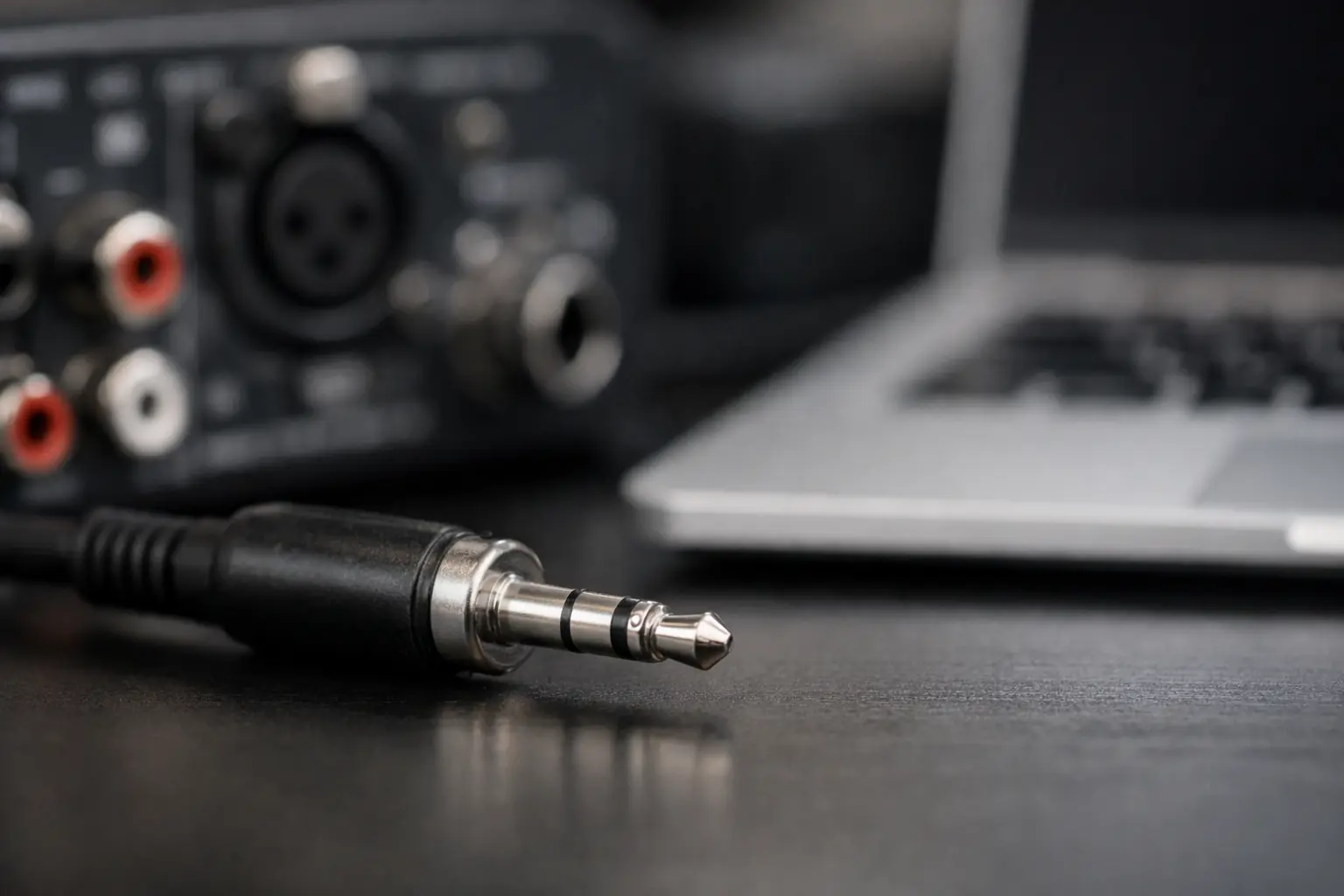
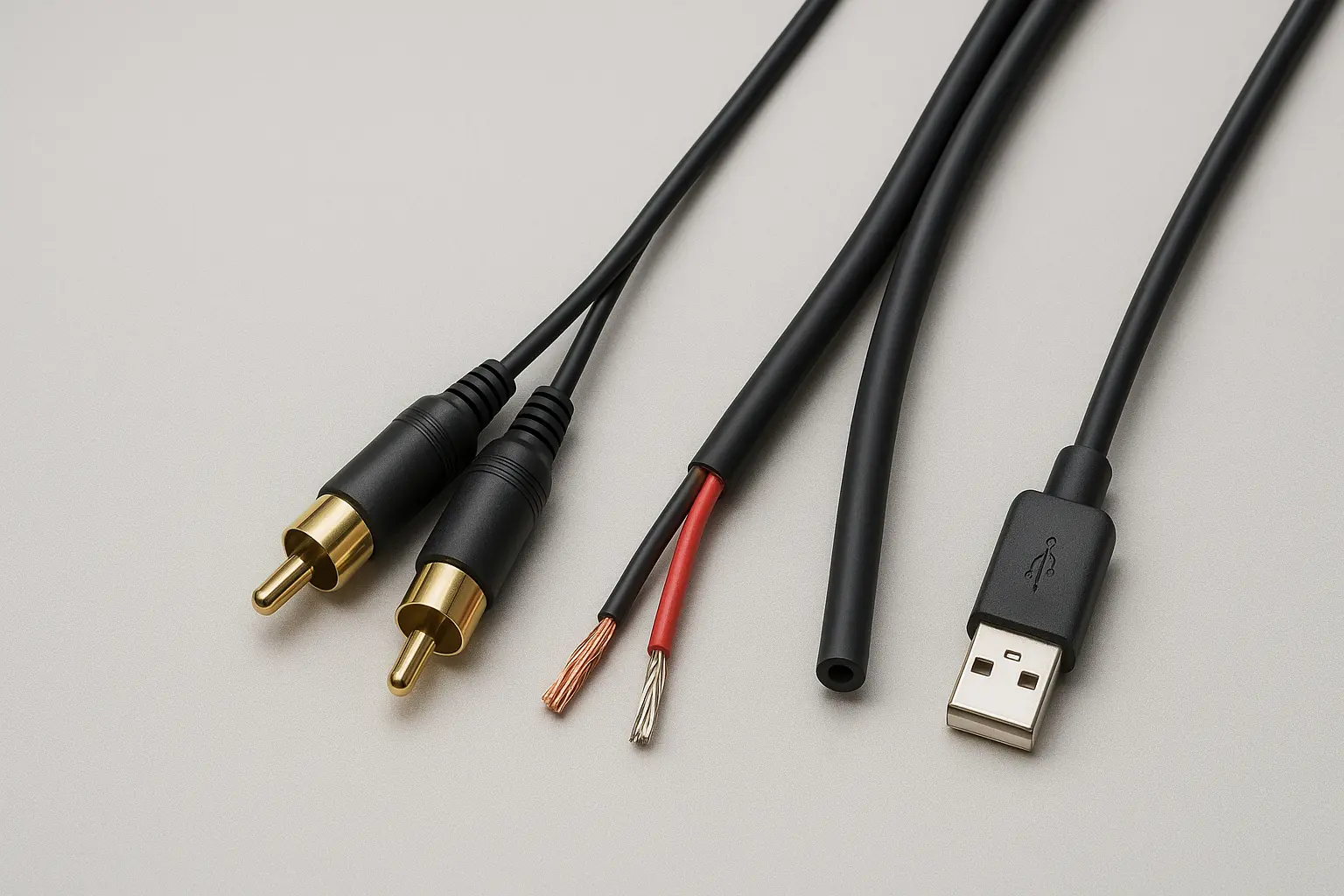
For more than three decades, the 3.5mm TRS connector has been the undisputed workhorse of the audio industry. Even in the age of wireless earbuds, it remains deeply entrenched in American consumer electronics—from laptops and game consoles to studio gear.
Key OEM advantages:
- Cost Control: 3.5mm jacks have been refined over decades, allowing ultra-low unit costs that significantly reduce BOM (bill of materials) expenses.
- Universal Compatibility: The 3.5mm interface remains the default across U.S. devices. Surveys show 68% of American consumers still prefer having a headphone jack for reliability.
- Supply Chain Security: Trusted suppliers such as Jingyi Audio ensure ISO-certified, IEC-compliant connectors with large-scale capacity (10,000–1,000,000+ units) and proven export reliability.
In the ultra-competitive sub-$200 consumer segment, where pricing and accessibility dictate purchase decisions, these factors give 3.5mm an irreplaceable advantage.
- Meeting “Good Enough” Consumer Expectations
Despite the audiophile discourse, most consumers can’t perceive the difference between 3.5mm and 4.4mm sound quality in short portable use. The typical 3.5mm connector achieves channel separation of -60dB or better, far exceeding human perceptual thresholds.
A Reddit user summarized it perfectly: “For 90% of headphones, 3.5mm is perfect. 4.4mm is a solution looking for a problem.” For OEMs selling to the mass U.S. market, that means reliability and universality beat theoretical audio advantages.
- Proven for Enterprise and Industrial Applications
Beyond consumer use, the 3.5mm format dominates B2B and industrial audio systems thanks to its maturity and compliance record:
- Available in sealed IP54 variants for medical or broadcast applications
- Supports >10,000 insertion cycles in industrial-grade models
- Streamlines FCC/UL certification with decades of standards history
For OEMs serving educational or enterprise buyers, the 3.5mm choice minimizes technical and regulatory risk.
The Rise of the 4.4mm “Pentaconn” Balanced Connector
- Engineering and User Perception
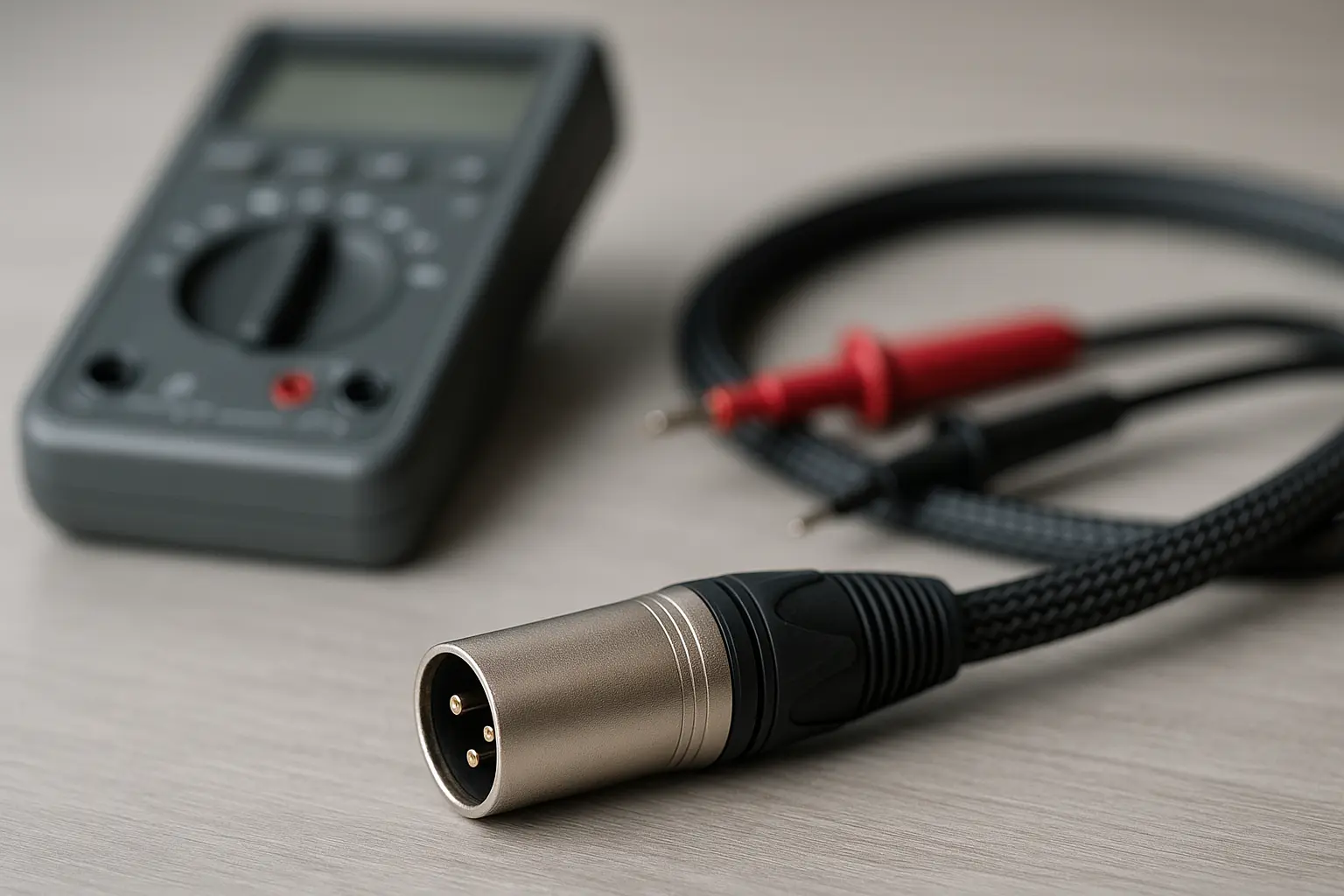
The 4.4mm TRRRS connector—developed by Nippon Dics—implements true balanced differential transmission. Each channel (L+, L-, R+, R-) is isolated, reducing crosstalk and enabling higher voltage swing.
Engineering benefits:
- Ground isolation for near-zero crosstalk
- Differential signaling for improved noise rejection
- Larger contact surface for superior electrical stability
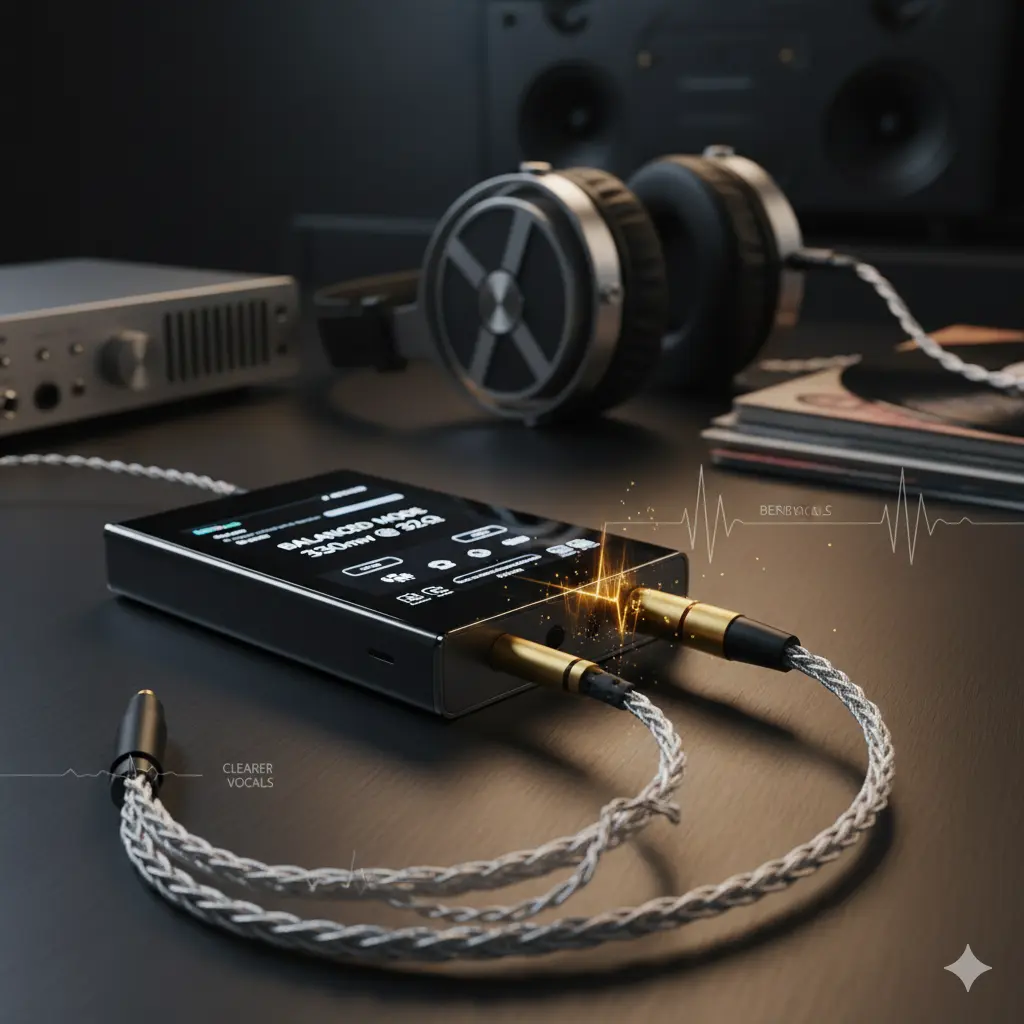
User perception: Facebook and Head-Fi discussions reveal that U.S. audiophiles describe 4.4mm sound as having “stronger impact,” “better instrument separation,” and “clearer vocals.” Yet most also admit these improvements coincide with increased output power, not inherent sonic purity.
- Mechanical Durability and Design Appeal
The 4.4mm’s larger diameter provides a more secure and robust fit. For high-end portable DACs or DAPs used daily, this mechanical resilience translates to fewer connection failures—an essential feature for premium products with multi-year warranties.
Head-Fi users frequently note: “After switching from 2.5mm to 4.4mm, no more loose connections.” This reliability reinforces brand perception among discerning American buyers.
- The Real Differentiator: Power Delivery
The defining characteristic of 4.4mm products is amplifier power, not merely electrical symmetry. Balanced designs use bridge-tied load (BTL) amplification, effectively doubling voltage swing and quadrupling power output.
- Example: A 3.5mm output rated at 90mW (32Ω) delivers up to 330mW through 4.4mm.
- This results in greater dynamic headroom, letting headphones reproduce transients cleanly.
As one Reddit user noted: “At matched volumes, 3.5mm and 4.4mm sound identical—but only 4.4mm drives my planars properly.”
For OEMs, this means real, marketable performance gains that justify “Pro” or “Balanced” branding.
Building a Tiered Product Strategy
Smart manufacturers use connector choice to segment product lines strategically:
|
Product Tier |
Connector |
Price Range (USD) |
Target User |
Key Message |
|
Entry |
3.5mm |
$99–199 |
Mainstream users |
Reliable and compatible |
|
Mid-Range “Pro” |
4.4mm |
$249–399 |
Enthusiasts |
Studio-grade balanced output |
|
Flagship |
3.5mm + 4.4mm |
$400+ |
Audiophiles |
Ultimate versatility and power |
Adding a 4.4mm port increases BOM cost by ~$15–25 but enables price premiums of $100–150. Brands like FiiO, iBasso, and Astell&Kern have used this tactic to dominate the $300–800 U.S. segment.
Case Study: When Astell&Kern launched the SR25 with both outputs, reviewers fixated on its “superior balanced output”—even though the DAC was identical. Perception equals profit.
OEM Supply Chain Strategy for the U.S. Market
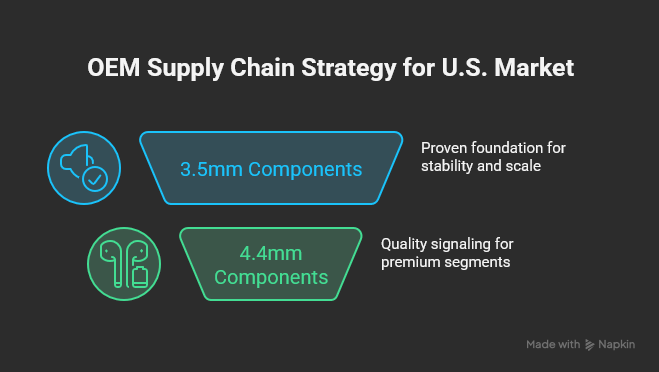
- 3.5mm: Scale and Stability
Manufacturers like Jingyi Audio provide a proven foundation for U.S.-bound products:
- Decades of experience supplying global OEMs
- High-volume scalability and cost control
- IEC 61076 compliance and ISO-certified production
- Logistics expertise aligned with U.S. customs and distribution cycles
This supply chain maturity ensures your U.S. launch isn’t delayed by component shortages or quality inconsistencies.
- 4.4mm: Quality Signaling for Premium Segments
Authentic 4.4mm Pentaconn components from Nippon Dics or licensed producers are ideal for audiophile-tier devices. The higher connector cost signals premium craftsmanship—an important psychological cue for American enthusiasts.
While BOM expenses increase by up to 400%, these parts reinforce brand credibility and reduce returns from mechanical failures.
Market Alignment: Understanding U.S. Buyer Behavior
Mainstream Trend: NPD Group’s 2024 U.S. headphone report shows 73% of under-$200 sales are wireless, but 82% of those still include a 3.5mm backup cable. This confirms that wired reliability remains non-negotiable.
Premium Trend: Among U.S. audiophile consumers:
- 45% own DAC/AMPs with 4.4mm outputs
- 67% would pay 20–30% more for “balanced” features
- 31% purchase aftermarket balanced cables
This split suggests OEMs should lead with 3.5mm for volume and introduce 4.4mm in premium lines to capture enthusiast margins.
Choosing for Industrial and Professional Use
For broadcast, studio, or medical equipment targeting U.S. institutional buyers, consider the following:
- Durability: 3.5mm connectors rated for 10,000+ cycles meet most pro-audio demands.
- Environmental Protection: Sealed IP-rated 3.5mm jacks outperform 4.4mm alternatives for rugged environments.
- Compliance: Legacy connector types streamline FCC/UL processes, cutting certification lead time by weeks.
Here, 3.5mm remains the logical, compliant, and cost-effective solution.
Strategic Recommendations
When to Choose 3.5mm
- Prioritize cost, scale, and universal compatibility
- Target mainstream U.S. consumers or institutional clients
- Optimize reliability for warranty-sensitive markets
When to Choose 4.4mm
- Position as premium or “Pro” tier
- Target enthusiast communities and creators
- Showcase amplifier performance as a clear differentiator
When to Offer Both
For maximum flexibility, integrate both ports. This dual strategy—employed successfully by FiiO and iBasso—lets you dominate multiple U.S. price tiers while maintaining unified R&D.
Final Takeaway
Connector choice isn’t just an engineering decision—it’s a market strategy. The 3.5mm jack anchors your brand in mass-market accessibility, while the 4.4mm port unlocks premium margins through performance signaling. Together, they empower OEMs to balance cost efficiency with aspirational value.
By partnering with specialized suppliers such as Jingyi Audio, OEMs can ensure consistent quality, regulatory compliance, and scalable production for both formats—transforming a technical specification into a strategic differentiator in the U.S. audio market.
References
- HiFiGo. (2023). Single-Ended vs Balanced Audio: Pros and Cons. Available at: https://hifigo.com/blogs/guide/single-ended-vs-balanced-audio
- Reddit. (2024). Discussion on 3.5mm vs 4.4mm differences in r/iems. Available at: https://www.reddit.com/r/iems/comments/1mp34ht/is_it_true_or_im_just_paranoid35mm_vs_44mm/
- Facebook. (2024). HIFI FREEDOM: Beyond the Hype – User Discussion on Audio Jacks. Available at: https://www.facebook.com/groups/517665269706033/posts/1205086100963943/
- Audioengine. (n.d.). What Is Balanced Audio and Why It Matters. Available at: https://audioengine.com/explore/what-is-balanced-audio-why-does-it-matter/
- Jingyi Audio. (n.d.). Professional Audio Connector Manufacturing. Available at: http://site_5615465d-0395-48c6-b01f-dc3d38213fc5