

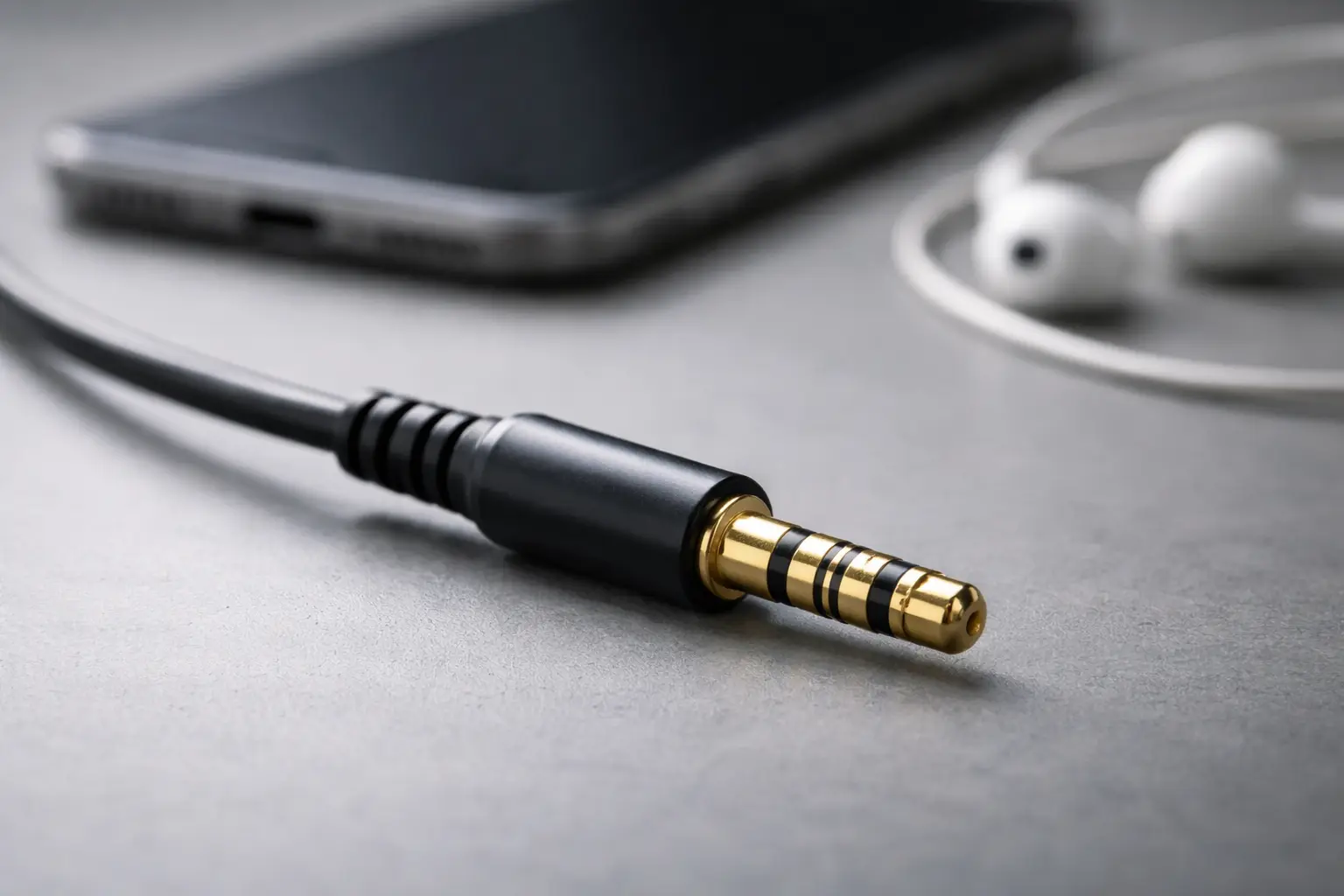
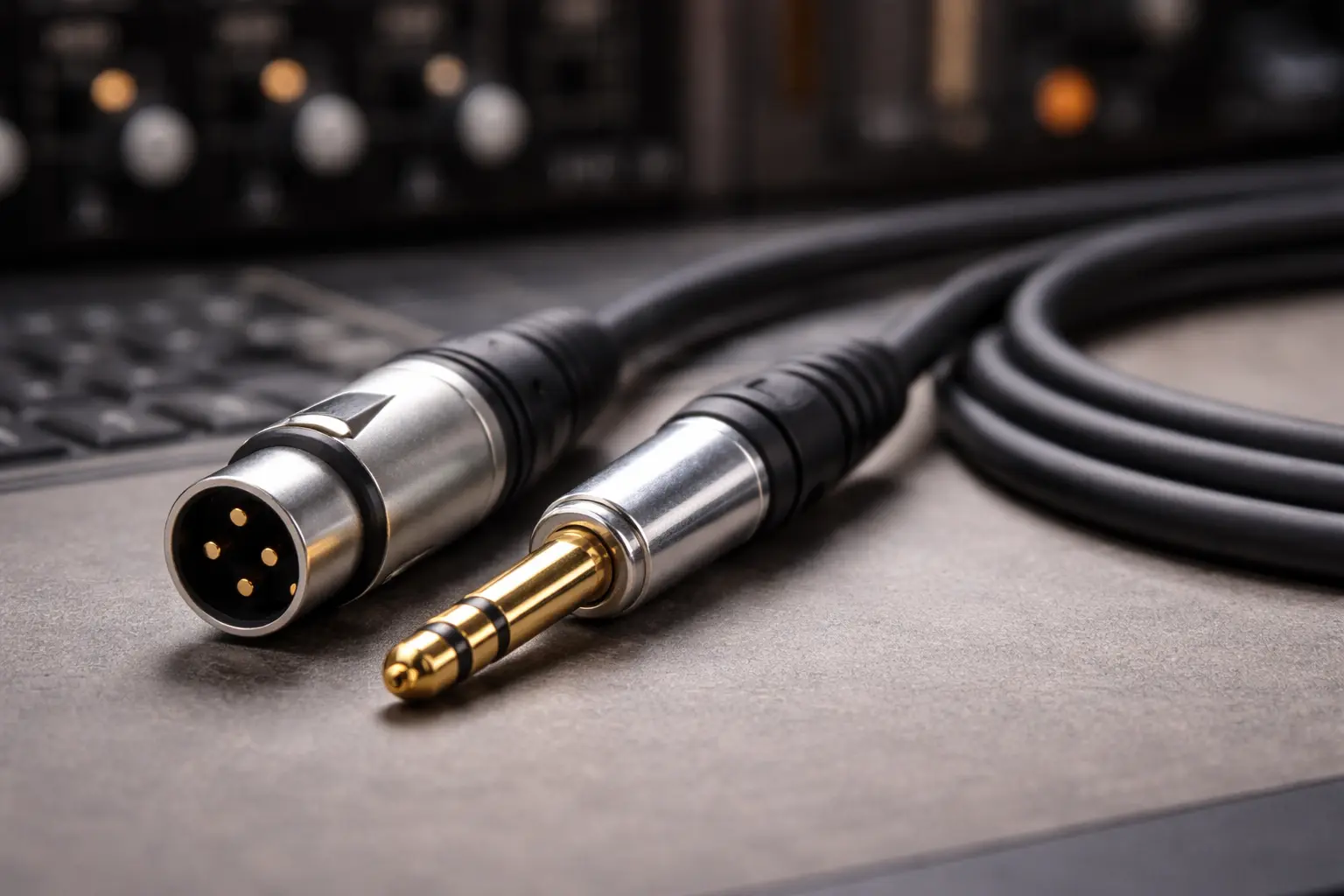
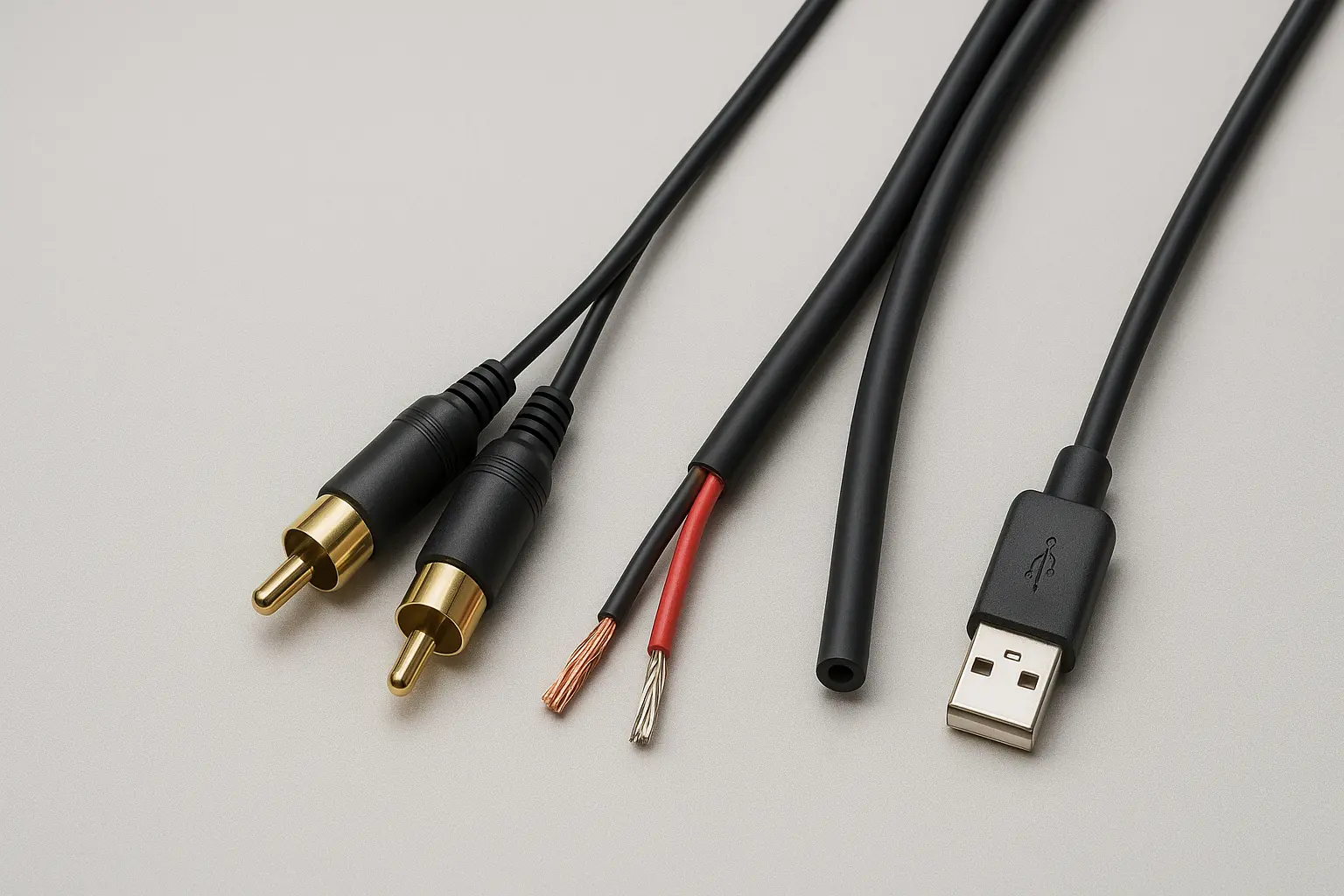
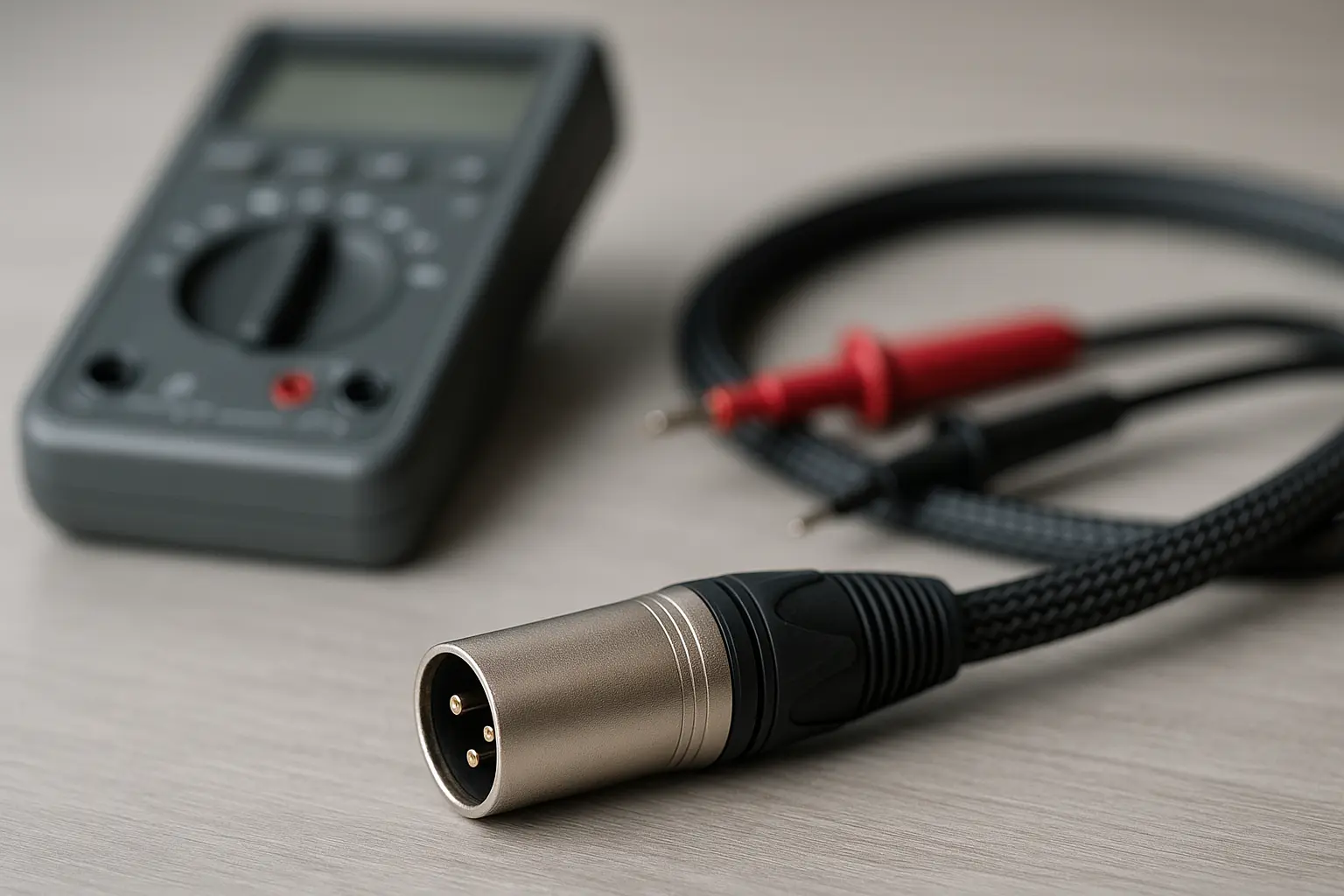
Audio Manufacturing Companies for OEM: 2025 Guide for US Brands
Key Takeaways
- The keyword audio manufacturing companies usually attracts people who want a list of real factories or brands, but OEM buyers in the US also need practical guidance, not just names.
- China is still the main base for audio manufacturing, and “China+1” locations like Thailand are now common for US OEM and private-label projects.
- Ningbo Jingyi Electronic Co., Ltd. (Jingyi Audio) shows how a mid-sized factory can grow from simple parts to OEM/ODM work and its own brand, while running plants in both China and Thailand.
- Reviews and forum posts about products like ZZYZX Snap Jack magnetic cables show how factory decisions around design and quality show up later in real use on stage and in studios.
- US brands get the best results when they follow a clear process: shortlist factories, talk to them properly, test samples, audit the plant, then scale orders step by step.
If you’re a US-based audio brand trying to find reliable audio manufacturing companies for OEM or ODM projects, you’ve probably already noticed one thing: Google gives you a mix of big-name brands, affiliate “Top 10” lists, and supplier directories.
Those pages are fine if you just want names. They’re less helpful if you need a factory that can actually build your cables, speakers, or accessories under your brand, meet US standards, and ship on time.
This guide is written from that angle. It’s for people in the US who need factories, not just logos. We’ll keep things practical, use simple language, and pull in a real example: Jingyi Audio in Ningbo and its ZZYZX magnetic cable line.
What Are Audio Manufacturing Companies?
Before you start searching, it helps to be clear about who does what.
Audio equipment manufacturers vs. OEM factories
- An audio brand or audio equipment manufacturer is the name you see on the front panel: JBL, Yamaha, Devialet, and so on. They design products, run marketing, build a dealer network, and handle support.
- An audio manufacturing company is the factory that actually builds the product. Sometimes the brand owns the factory. Sometimes the brand buys from a separate OEM partner.
If you look at public lists of loudspeaker manufacturers and “manufacturers of professional audio equipment,” you’ll see dozens of well-known names. Some have their own plants. Many also work with outside factories, especially for certain product lines or price tiers.¹²
As a US OEM buyer, you usually don’t talk to those big-brand factories directly. You talk to the companies that sit behind the scenes.
OEM, ODM and OBM in plain English
You’ll hear three short terms a lot:
- OEM – the factory builds your design. You own the brand, the look, and often the design files.
- ODM – the factory has its own designs and platforms, and you tweak them. You still sell under your brand, but you’re starting from their base.
- OBM – the factory sells under its own name.
Many audio manufacturing companies in China begin with OEM jobs, then add ODM work as they hire engineers, and finally put their own logo on products (OBM).
Jingyi Audio is a good example: for many years it focused on connectors, cables, and stands for other brands. Later it started using the ZZYZX name on magnetic guitar cables and related products while still offering OEM/ODM services.³
Different kinds of audio manufacturing companies
You’ll find factories that mainly produce:
- Pro audio gear – PA systems, line arrays, amps, mixers, stage monitors, installed sound.
- Consumer hi-fi – stereo amps, DACs, speakers, subwoofers, home cinema systems.
- Components and hardware – audio cables, connectors, stands, racks, enclosures, drivers.
- Niche lines – bass amps, headphones, studio monitors, car audio, IEMs, and more.
A factory that is great at cables and connectors may not be the right place to design a complex streaming amplifier from zero. Matching your needs with what the factory does best saves a lot of trouble later.
Why US Brands Look Overseas for Audio Manufacturing
If you run a US audio brand, you already know that building a full factory at home is a huge investment. Even if you have a small shop for prototypes or boutique runs, high-volume work tends to move offshore.
Pain points inside the US
Common problems:
- Labor and facilities are expensive.
- It’s hard to find enough people who are good at repetitive assembly and testing.
- Setting up cable extrusion, die-casting, or high-speed SMT lines costs a lot and takes time.
- Scaling from a hundred units to several thousand can break your schedule and your budget.
So most brands, even well-known ones, work with audio manufacturing companies in other countries for at least part of their range.
What overseas factories bring to the table
Factories in China and nearby regions usually already have:
- Established supply chains for metals, plastics, drivers, and electronics.
- Tooling partners who know audio housings, connectors, and chassis work.
- Trained operators for assembly, test, and packing.
For a US brand, this usually means:
- Lower cost per unit at volume.
- Faster scale-up once the product is stable.
- Less time spent running a shop floor and more time left for design, sales, and support.
China, Thailand and the “China+1” pattern
Over the last few years, many audio manufacturing companies have adopted a simple pattern:
- Keep R&D and part of production in China, where the ecosystem is strong.
- Add another plant in a second country such as Thailand or Vietnam.
Why this matters for US OEM buyers:
- It can help reduce certain tariffs on Chinese goods, depending on how and where final assembly is done.
- It spreads risk when one region has logistics or policy problems.
- It gives you more routing options into the US: different ports, different carriers, different schedules.
Ningbo, where Jingyi Audio is based, is a huge port city with strong metalwork and plastics factories around it. Thai industrial zones now host a growing number of finishing and assembly plants for audio and electronics.
How to Judge Audio Manufacturing Companies as a US OEM Buyer
Let’s keep this simple and practical. When you evaluate a factory, look at four main areas: quality system, capability, communication, and location.
Quality and US compliance
Things you should actually check, not just assume:
- ISO 9001 (or similar) for quality management. Ask for the certificate.
- Written processes for checks on incoming parts, during assembly, and at final test.
- For electronics: clear standards for soldering, wiring, and PCB quality.
- Environmental compliance: RoHS and REACH for materials.
- If you make powered or wireless products:
- UL or ETL type safety approvals.
- FCC approvals for wireless radios or digital gear.
- Ability to support California Prop 65 warnings where needed.
Many US retailers won’t even talk to you unless these boxes are ticked.
Production capability and MOQs
You want to know what they really do in-house:
- Do they extrude cable?
- Machine or cast metal connector shells?
- Mold plastic parts?
- Run SMT and through-hole lines?
- Only assemble and test?
Then ask about minimum order quantities (MOQs):
- Cables: meters per color/gauge and per model.
- Connectors: pieces per type and finish.
- Electronics: units per variant.
Finally, ask how strong their engineering team is:
- Do they understand things like capacitance in long instrument cables?
- Can they discuss shielding for low-noise mic lines?
- Do they know the mechanical tolerances needed for XLR, TRS, and other common formats?
If your main contact can call an engineer into the call and get clear answers, that’s a good sign.
Communication, IP, and mindset
Soft topics that matter a lot:
- Do they reply within a day or two, or do emails vanish?
- Is there someone who can talk through drawings and test results in clear English?
- Are they willing to sign NDAs and explain how they handle files and tooling from different customers?
- How do they react if you say “We compete with one of your other customers”? Do they have a policy?
You’ll be working together for years if things go well. You need a partner who thinks long term, not just a one-off seller.
Global Audio Manufacturers vs. OEM Audio Factories
People search for audio manufacturing companies and often expect a list, so let’s talk briefly about the different types that show up in those lists.
Professional audio brands
Lists of professional audio equipment manufacturers usually show big names: JBL, Yamaha, QSC, Shure, and many more.¹²
These companies:
- Design products internally.
- Run their own plants or use a mix of in-house and OEM production.
- Enforce clear standards on sound, safety, and reliability.
They are good reference points for you, but you probably won’t use them as your factory. Instead, you can:
- Study how they describe their technology.
- Look at how they design product lines and price tiers.
- Use them as benchmarks when you brief your OEM partners.
High-end hi-fi brands
Luxury names such as Goldmund, Esoteric, and Devialet show what happens when strong engineering and strong branding come together:
- They talk openly about materials, signal paths, and mechanical design.
- They support long product life cycles and service networks.
- They charge high prices because the story, quality, and support all line up.
Even if you’re not in that segment, their sites are useful reading when you plan your own product line and support promises.
Sample Shortlist of Audio Manufacturing Companies
To match what people expect from “audio manufacturing companies” searches, it helps to see an example table. This is not a ranking, just a sample of how you might map the landscape when you’re doing your own research.
|
Company / Type |
Region |
Role |
Core Products / Strengths |
Typical Fit for US OEM Buyers |
|
Ningbo Jingyi Electronic Co., Ltd. |
China + Thailand |
OEM/ODM + own brand (ZZYZX) |
Audio cables, connectors, premade assemblies, stands |
Cables, connectors, stage gear with China+1 flexibility |
|
T.I Audio |
China |
Pro audio manufacturer (ODM) |
PA systems, line arrays, venue and church sound systems |
Turnkey pro audio projects and installations |
|
Cable-focused OEM in Guangdong (example) |
China |
OEM/ODM |
Bulk audio cable, wiring harnesses, custom assemblies |
Private-label cables for MI, studio, and hi-fi |
|
Loudspeaker OEM in Dongguan (example) |
China |
OEM/ODM |
Passive/active speakers, drivers, crossovers |
Branded speakers, soundbars, entry-level studio monitors |
|
Thai final-assembly plant (example) |
Thailand |
OEM / final assembly |
Final build, testing, packing for export |
Country-of-origin shift and tariff planning |
|
Yamaha Pro Audio |
Japan + global |
Brand manufacturer |
Pro audio gear, consoles, speakers, amplifiers |
Benchmark for quality and ecosystem |
|
Devialet |
Europe + Asia |
High-end brand manufacturer |
Wireless speakers, amplifiers, DSP-heavy consumer products |
Example of strong story and industrial design |
In your own version you’d replace the generic rows with real factory names, backed by research, calls, and visits.
Case Study: Jingyi Audio and ZZYZX Snap Jack

Now let’s look closer at Ningbo Jingyi Electronic Co., Ltd. as a real example of an audio manufacturing company serving both OEM clients and its own brand.
Jingyi’s footprint: Ningbo and Thailand
Key points about Jingyi Audio:³
- Headquartered in Ningbo, China, a major port city.
- Focuses on audio connectors, audio cables, premade assemblies, and stands.
- Supplies overseas brands and distributors, especially in North America and Europe.
- Has invested in a Thai factory to support a China+1 strategy and give customers more options on tariffs and logistics.
For a US brand, this sort of setup means:
- Strong access to raw materials and parts in China.
- A second base that can handle assembly and packing in Thailand when needed.
- Better options when planning cost and risk over the life of a product.
ZZYZX Snap Jack: what musicians actually say
ZZYZX Snap Jack is a magnetic guitar cable system linked to Jingyi’s manufacturing. The idea is simple:
- The cable uses magnetic plug “tips” that attach between the guitar and the main cable.
- Under normal use, the connection holds.
- If someone trips on the cable, the magnetic parts separate, so the guitar jack or amp doesn’t take the hit.
- The design also aims to mute the signal during disconnect so you don’t get a loud crackle.
If you read reviews on zZounds and forum threads on TalkBass, you see recurring comments:⁴⁵
- Players say the cable feels solid and rugged, and the tone is as good as other premium cables they use.
- The magnetic quick release behaves as advertised: it stays together when you walk around, but it can pop apart instead of yanking your rig.
- The “no loud pop” claim works well in real gigs, which is important if you’re plugged into a hot amp or big PA.
- The main frustration some players mention is availability: they like the product and want more tips or extra cables, but at times they couldn’t find stock.
This is a clear example of how a factory-driven product can win real fans on stage. It also reminds OEM buyers of one more thing: even if engineering is strong, you still need steady supply, stock planning, and clear after-sales support.
What US OEM buyers can learn from this
From Jingyi and ZZYZX, a few lessons stand out:
- Factories that focus on cables, connectors, and stands can still bring new ideas, not just low prices.
- A dual base (China + Thailand) can help US brands manage tariffs and risk.
- Real feedback from retailers and forums is a powerful way to confirm if a manufacturing partner can deliver products that survive heavy use.
Using Online Research and Social Proof to Check Factories
You don’t need to be in China tomorrow to start checking audio manufacturing companies. Basic online checking can filter out a lot of bad options.
What to look for on factory websites and B2B platforms
On the factory’s own site:
- Do they show clear product categories, specs, and photos of real products?
- Do they mention export markets like North America or the EU?
- Are there photos or videos of real production lines and test setups?
On B2B sites (Alibaba, Global Sources, and so on):
- How many years have they been in business and how long on the platform?
- Have they passed any third-party audits?
- What regions do they list as main markets?
- Do they show on-time shipment rates or customer ratings?
You don’t need perfection, but you do want consistency across these sources.
How to use forums and reviews
Retailer reviews and musician forums are a great way to see how products hold up:
- Long-term reviews show whether cables remain quiet and flexible, whether connectors loosen, or whether amps hold up under touring.
- Communities like TalkBass, The Gear Page, and hi-fi forums often name the exact models they trust—or avoid.
- If you see a certain brand name praised for years and you know which factory builds for them, that factory deserves a closer look.
In the case of ZZYZX Snap Jack, the reviews tell you that the design works well on stage and that reliability is not a fluke.⁴⁵ That’s worth more than any brochure claim.
Red flags and green lights
Red flags:
- No clear business address, or only a post office box.
- No sign of quality or environmental certificates.
- Stock photos only, with no real factory images.
- Vague answers about MOQs, lead times, or test methods.
Green lights:
- Long operating history with exports to the US and EU.
- Verified audits and factory visits documented on B2B platforms.
- Products that show up on reputable retailers and carry years of positive reviews.
A Simple Process for US OEM Buyers
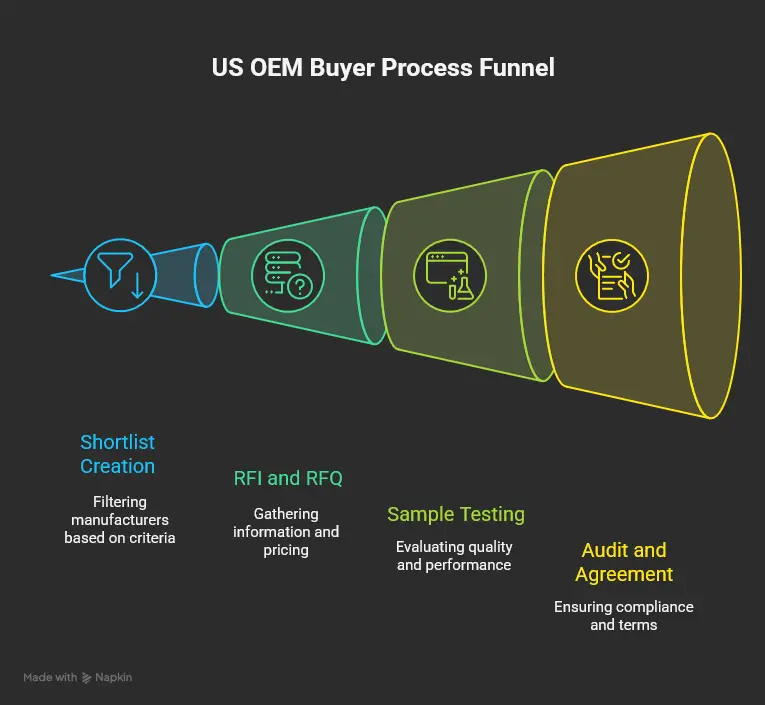
To keep risk under control, you can follow a simple three-step path.
- Build a shortlist of audio manufacturing companies
- Start with public lists, trade shows, and industry blogs to collect names.¹²
- Filter by:
- Product type (cables, connectors, loudspeakers, electronics).
- Region (China only, or China + Thailand, or other).
- Export experience with North America.
- Send RFIs and RFQs, then test samples
- Use an RFI (Request for Information) to ask about:
- Their core processes and strengths.
- MOQs and rough price brackets.
- Certifications and test equipment.
- Once you like a few candidates, send RFQs (Request for Quotation) with drawings or detailed specs.
- Order samples and test them for:
- Sound quality and noise.
- Mechanical strength (bending, pulls, plug/unplug cycles).
- Fit and finish, plus packaging.
- Audit, sign, and scale carefully
- For key products, arrange a factory visit or third-party audit.
- In your agreement, make sure you cover:
- Tooling ownership and storage.
- The way your designs and logos can be used.
- Warranty expectations, defect rates, and who pays for what.
- RMA handling for US customers.
- Start with a smaller run. If yields and quality are good, increase quantities over time.
Geo Questions: Shipping, Tariffs and Service for US Brands
Location isn’t just a map issue. It affects cost, timing, and paperwork.
Tariffs and origin
US Section 301 tariffs apply to many Chinese electronic products. For some categories, building or finishing in Thailand or another country can change the origin of the product.
You’ll need a customs broker or trade lawyer to confirm details, but the basic idea is:
- The place where the product gets its final, main form often counts as the origin.
- If that step is in Thailand instead of China, duty rates can be different.
This is one reason why audio manufacturing companies like Jingyi add plants outside mainland China.
Shipping routes into the US
Common flows include:
- Ningbo or Shanghai → US West Coast ports like Los Angeles / Long Beach.
- Bangkok or Laem Chabang → West Coast or Gulf ports.
When you speak with factories, ask:
- Which ports they usually ship from.
- Typical transit times they see.
- What incoterms they are used to (FOB, CIF, DAP, etc.).
- How they package fragile gear to avoid damage on the water.
Service and returns
You also need a plan for when things go wrong:
- How will customers in the US return faulty products?
- Will you hold a buffer stock locally for fast replacements?
- Can the factory help with spare parts and analysis of failed units?
Good audio manufacturing companies will have RMA processes, and they will be willing to share defect data and root-cause findings so you can improve over time.
Where Audio Manufacturing Is Heading

The audio business is changing, and factories are changing with it.
More wireless and networked audio
Speakers and amplifiers are no longer just analog boxes. Many products now include:
- Wi-Fi or Bluetooth modules.
- DSP and streaming platforms.
- App control and cloud features.
Factories need test setups and skills for RF, networking, and digital audio, not just analog circuits.
Sustainability pressure
Large US buyers, including retail chains and corporate clients, ask more questions about:
- Materials and recycling.
- Packaging volume and waste.
- Energy use and working conditions in factories.
Factories that can document their environmental and social practices will stand out when you are selecting suppliers for bigger projects.
More data on the line
Inside the plant, more and more steps are tracked digitally:
- Automatic inspection on PCBs and assemblies.
- Test data linked to serial numbers.
- Systems that alert managers when defect rates move above target.
For you, this means better consistency and better evidence if you need to dig into a field issue.
Wrapping Up: Picking the Right Audio Manufacturing Company
Let’s pull this together.
- The term audio manufacturing companies covers everything from high-end brand factories to mid-sized OEM/ODM plants making cables and stands.
- As a US brand, you care about four big things: quality, capability, communication, and where the plant sits on the map.
- Factories like Jingyi Audio, with a base in Ningbo and added capacity in Thailand, show how a mid-sized company can support US OEM needs while also building its own brand.³
- Real-world feedback on products such as ZZYZX Snap Jack helps you see whether a factory’s work holds up on stage and in studios.⁴⁵
- A simple process—shortlist, talk, sample, audit, then scale—gives you control and lowers risk.
Pick your partners with care. The factory’s name might never appear on the front of your gear, but their work will be inside every box you ship.
FAQ: Audio Manufacturing Companies and US OEM Projects
What’s the difference between an audio brand and an audio manufacturing company?
An audio brand is the public face: logo, website, marketing, dealer network. An audio manufacturing company is the plant that builds the product. Sometimes the brand owns the plant. Often, especially for mid-tier lines, the brand works with an outside OEM factory.
How can I find reliable audio manufacturing companies for my US OEM project?
Start with public lists, trade show exhibitor lists, and industry blogs to gather names. Then check B2B platforms, factory websites, and, where possible, retailer reviews and forum posts about products they build. Look for proof of exports to North America, real certificates, and consistent information across sources.
Which certifications matter most for the US market?
For most hardware, ISO 9001 and RoHS/REACH are baseline. Powered products may need UL or ETL approvals. Wireless or digital gear usually needs FCC clearance. If you sell in California, be ready to handle Prop 65 labeling with help from your factory.
What MOQs should I expect when working with audio manufacturing companies?
It depends on the product. Simple cables and connectors might start at a few hundred to a few thousand units per SKU. Complex electronics or large speakers often require higher MOQs to justify tooling, setup, and testing. Always ask for MOQ ranges upfront.
How do I avoid scams when working with overseas factories?
Check registration, address, and years in operation. Ask for audit reports if they have them. Be careful with suppliers who avoid video calls, give vague answers, or push for large upfront payments before sending proper samples. When in doubt, use safer payment methods and third-party inspections.
Should I only work with factories in China, or also add plants in Thailand or other countries?
If your volumes and risk level justify it, a mix can help. Many audio manufacturing companies now run plants in China and at least one other country. A China-only setup is simpler but more exposed to tariffs and policy shifts. A China+1 setup, for example China plus Thailand, adds options on cost and routing but also adds coordination work.
References
- List of loudspeaker manufacturers – Wikipedia
https://en.wikipedia.org/wiki/List_of_loudspeaker_manufacturers - Category: Manufacturers of professional audio equipment – Wikipedia
https://en.wikipedia.org/wiki/Category:Manufacturers_of_professional_audio_equipment - Ningbo Jingyi Electronic Co., Ltd. – Product overview
https://m.site_5615465d-0395-48c6-b01f-dc3d38213fc5/product/ - Jodavi ZZYZX Snap Jack Quick Release Guitar Cable – Product Reviews – zZounds
https://www.zzounds.com/productreview--JODSNAPAJACK - zzyzx snap jack – New magnetic cable technology – TalkBass Forum
https://www.talkbass.com/threads/zzyzx-snap-jack-new-magnetic-cable-tecnology.518018/