



Balanced vs Unbalanced Audio Cables: The Ultimate 2025 Guide for Noise-Free Audio
Key Takeaways
- Noise Fighting Power: Balanced cables use common-mode rejection (CMRR)to cancel electromagnetic interference, making them ideal for studios and noisy spaces.
- Keep It Short: Unbalanced cables work best under 15–20 feet; balanced cables can run over 100 feet without degradation.
- Gaming Setup Reality: High-end gaming PCs generate serious interference. Balanced connections matter, even on your desk.
- Both Ends Count: Your gear needs balanced inputs andoutputs to benefit from noise rejection.
- Location Beats Length: A short cable next to your gaming rig can pick up more buzz than a longer one in a quiet room.
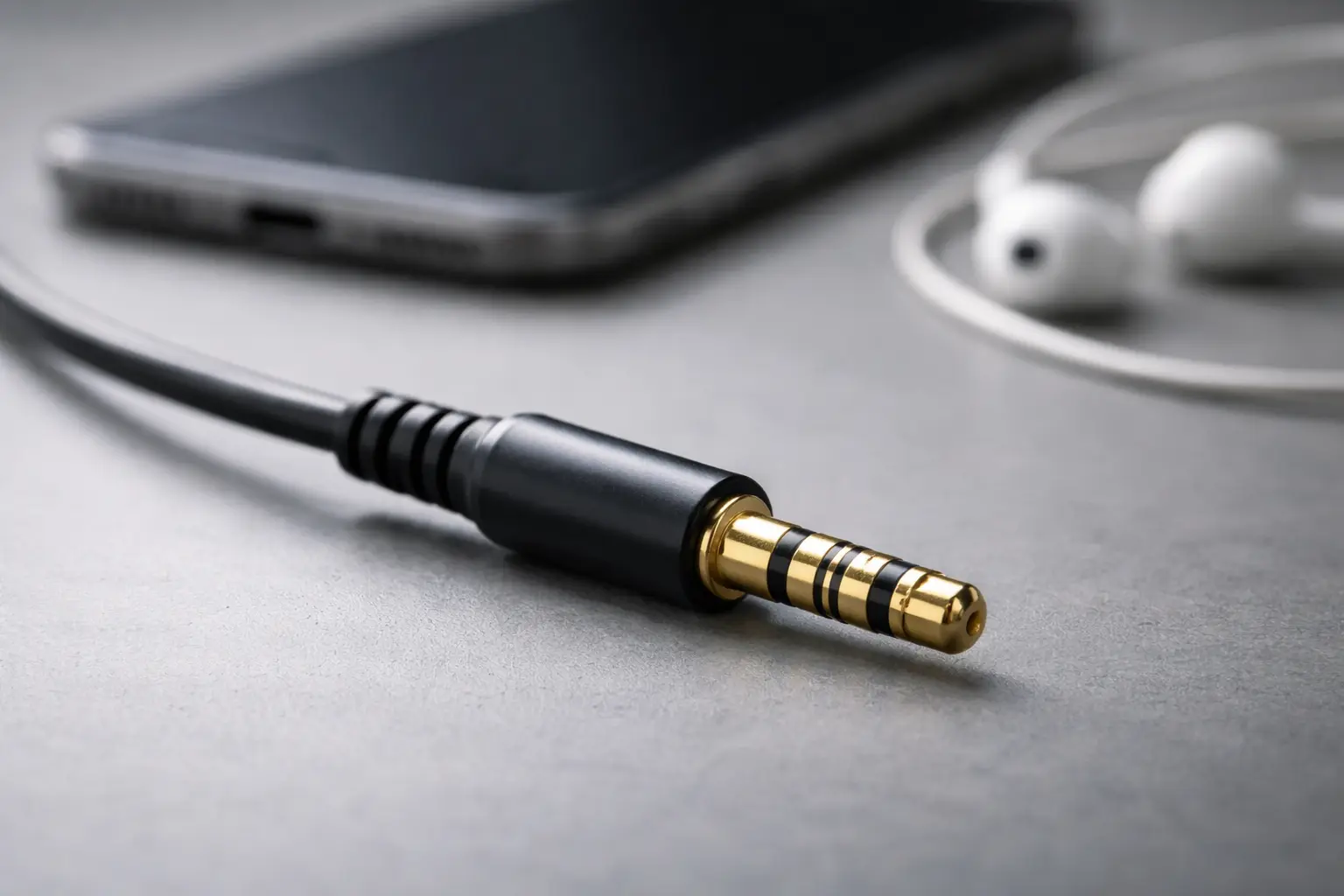
- TRS Trickery: TRS plugs do double duty — they handle balanced mono or regular stereo (like headphones). Always know which is which.
Nothing kills the vibe like that annoying hum creeping into your mix. After years of setting up audio systems — from bedroom studios to professional facilities — I’ve learned one truth: picking the right cable type makes or breaks your sound.
Whether you’re recording, gaming, or enjoying Hi-Fi, understanding these cable differences saves you hours of troubleshooting.
What Are Unbalanced Audio Cables and How Do They Work?
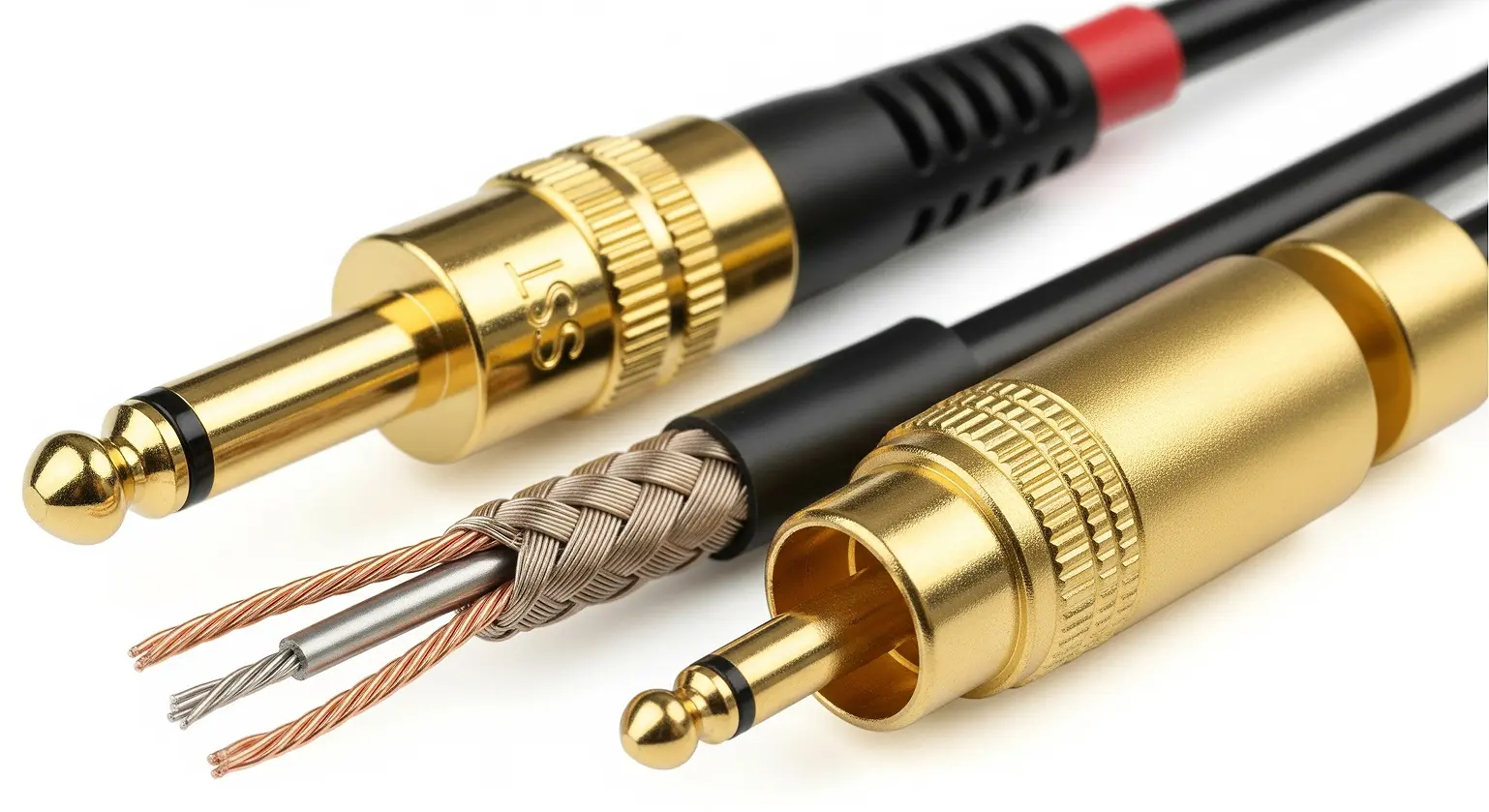
Unbalanced cables keep things simple — maybe too simple. They use just two wires: one carries your audio signal, the other handles both grounding and shielding.
The Two-Wire Problem
Here’s the catch with unbalanced setups: the ground wire pulls double duty. It must:
- Provide your audio signal with a 0-volt reference point
- Block interference from external devices
When this wire picks up noise from Wi-Fi routers, computers, or power lines, that interference becomes part of your audio. There’s no way to separate the good from the junk.
Common Unbalanced Plugs You Know
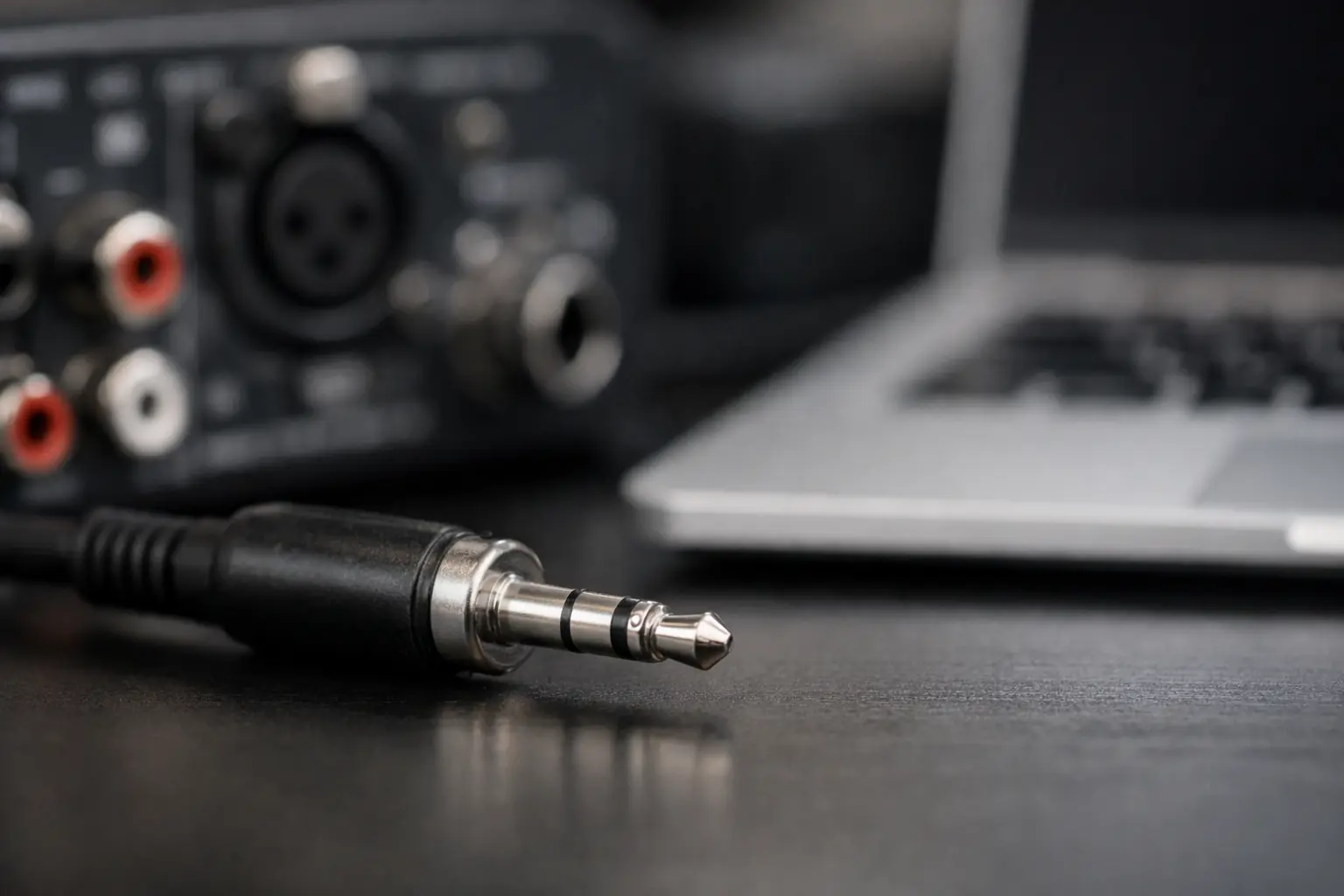
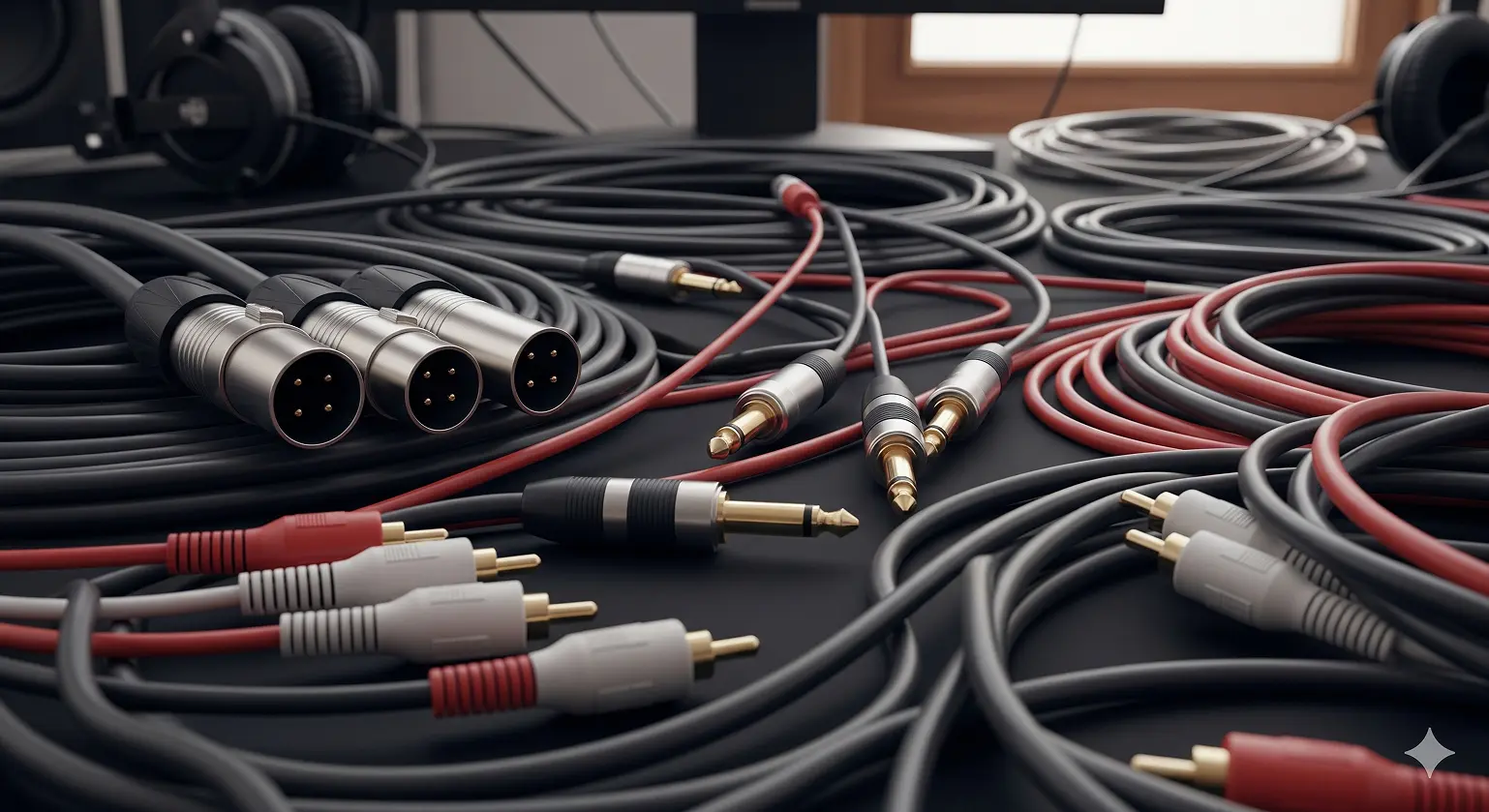
TS (Tip-Sleeve) Connectors: Standard for guitars and keyboards. You’ve seen them — one black ring near the tip. They work because instruments output strong signals that resist noise. I’ve run 20-foot guitar cables in Nashville studios without issue.
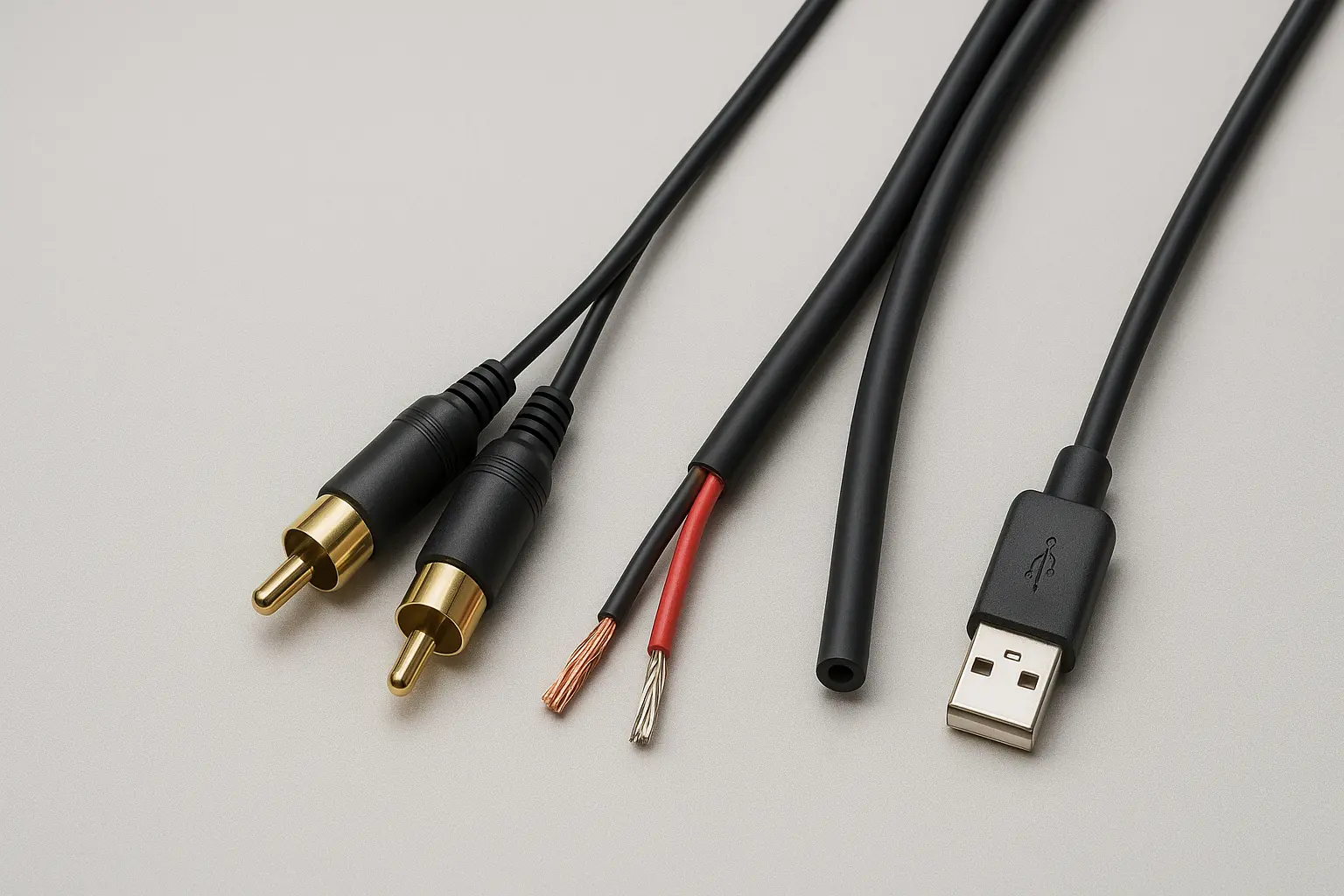
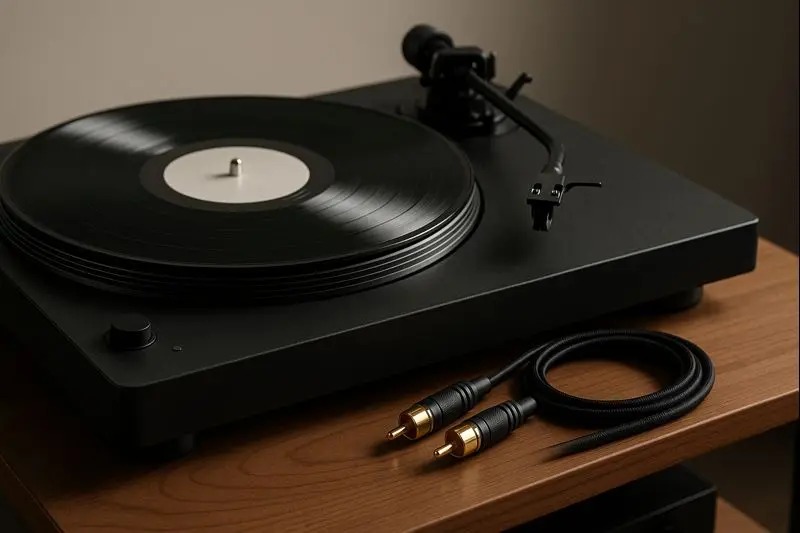
RCA Connectors: The red and white plugs on home stereo systems. Popular since the 1940s, they remain common in consumer Hi-Fi setups.
What Are Balanced Audio Cables and Why Are They Better?
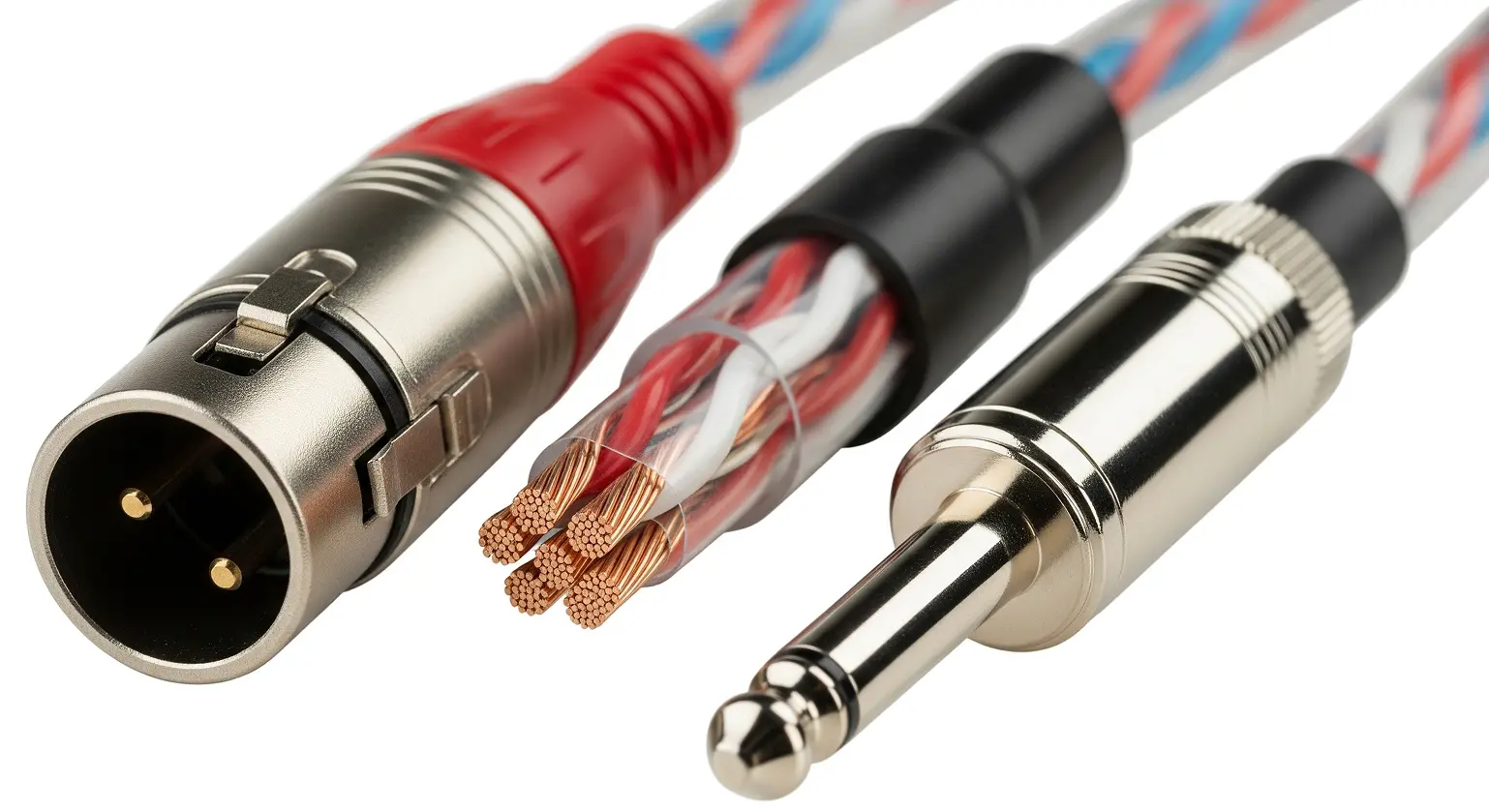
Balanced cables flip the script. Instead of fighting noise, they use it against itself — thanks to common-mode rejection (CMRR).
The Three-Wire Solution
Balanced cables separate tasks into three wires:
- Hot (+): Carries the original signal
- Cold (-): Carries the same signal, but inverted
- Ground/Shield: Handles interference rejection only
Because the shield doesn’t carry audio, it can focus entirely on blocking noise.
How Noise Canceling Works
Here’s what happens at the receiving end:
- The “cold” signal is flipped right-side up
- Both signals are combined
- Audio doubles in strength
- Noise cancels out completely
I’ve run XLR cables past fluorescent lights, servers, even welding equipment. Balanced rejection works in the real world.
Pro-Level Balanced Plugs
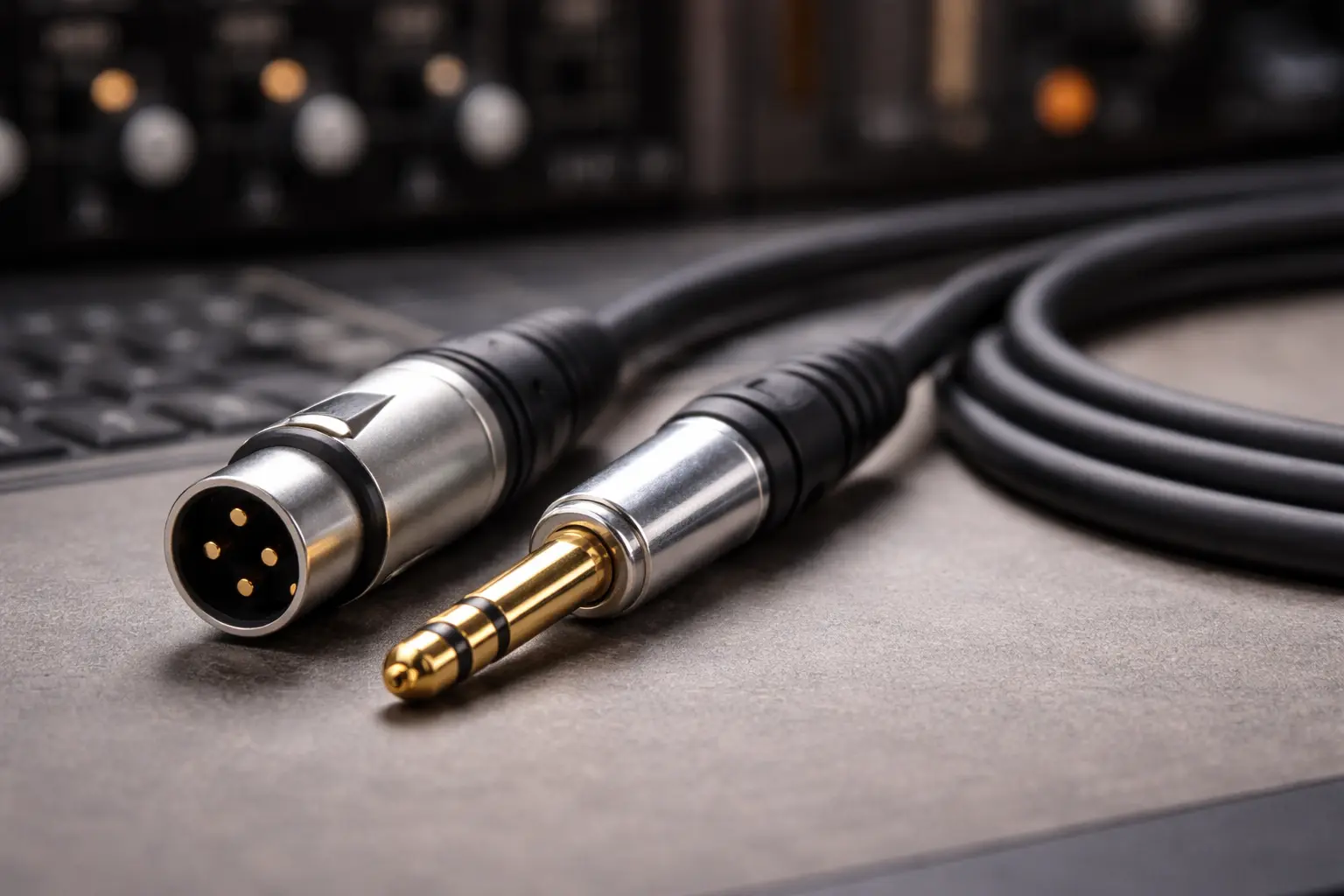
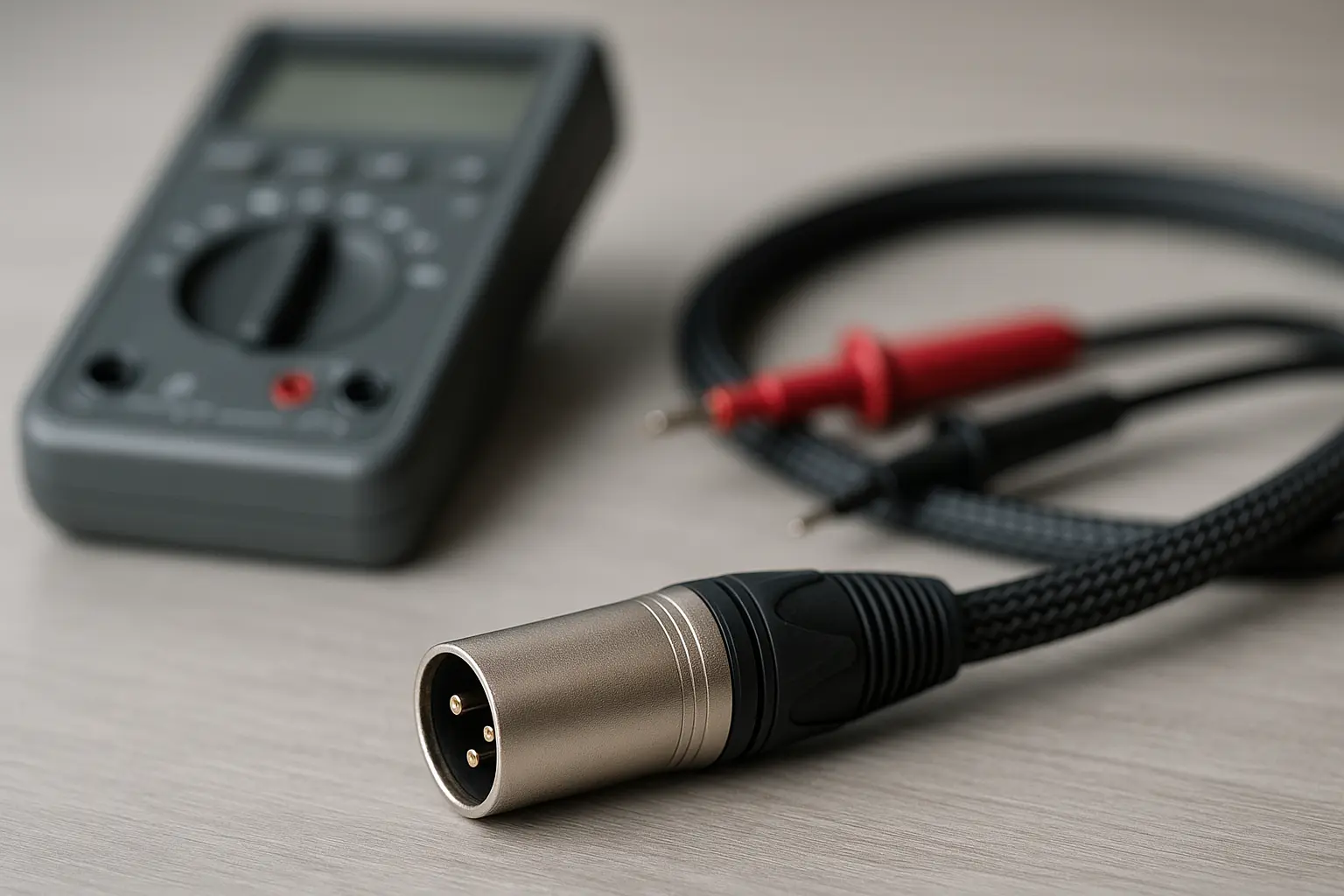
XLR Connectors: Three-pin connectors that lock into place. Standard for microphones and professional gear.
TRS Connectors: Look like stereo headphone jacks, but carry balanced mono signals in studio setups.
Balanced vs Unbalanced: At-a-Glance Comparison
|
Feature |
Unbalanced Cables |
Balanced Cables |
|
Wire Count |
2 (signal + ground) |
3 (hot, cold, ground) |
|
Max Length |
15–20 feet (safe) |
100+ feet |
|
Noise Resistance |
Low |
Very high (CMRR) |
|
Common Connectors |
TS, RCA |
XLR, TRS |
|
Best Use Case |
Guitars, consumer Hi-Fi |
Studios, live sound, pro gear |
|
Cost |
Cheaper |
Slightly higher |
When to Choose Balanced vs Unbalanced: Real-World Scenarios

Modern Home Studio Challenges
Homes are full of interference: smart devices, LED lighting, gaming PCs. Balanced cables provide insurance against all of it.
- Gaming PC Problem: A GPU like an RTX 4080 pulling 300 watts generates enough interference to cause hum in a 3-foot unbalanced cable.
- Power Line Hum: U.S. power runs at 60Hz — a frequency that loves to creep into unbalanced cables. Balanced lines block it effectively.
Regional Challenges in the U.S.
- East Coast: Dense RF environments (New York, Boston). Balanced becomes mandatory.
- West Coast: Silicon Valley and Seattle have high Wi-Fi congestion. Balanced cables reduce interference.
- Suburbs: Even quiet neighborhoods contain noisy circuits and smart devices.
Guitar and Keyboard Cable Reality Check
Why do guitarists still use unbalanced TS cables? Because it works. Electric guitars and keyboards output strong signals that resist noise. A Stratocaster at -10dBV can travel 20 feet through TS without issues.
But in large venues, musicians use DI boxes to convert unbalanced signals into balanced XLR for long runs.
High-End Home Audio Considerations
Audiophile equipment often includes both RCA (unbalanced) and XLR (balanced) inputs. While short runs might not require balanced, they can improve signal-to-noise ratio in noisy environments.
Impedance Balanced vs True Balanced
Not all balanced outputs are created equal:
- True Balanced: Both hot and cold wires carry opposite signals. When summed, you get +6dB gain and noise rejection.
- Impedance Balanced: Only the hot wire carries signal; the cold wire is matched in impedance. Noise still cancels, but without the 6dB boost.
Understanding this difference helps when comparing gear specs.
Busting Common Cable Myths
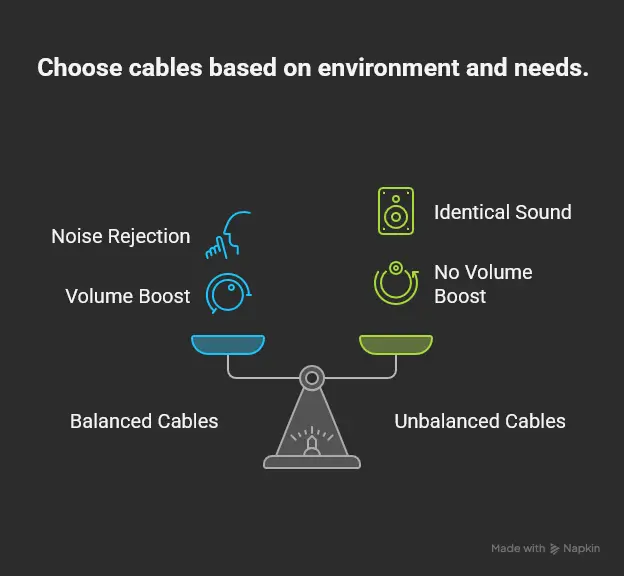
Myth 1: “Balanced cables sound better”
Reality: They only reject noise. In quiet environments, unbalanced can sound identical.
Myth 2: “TRS is always balanced”
Reality: TRS can be stereo (headphones) or balanced mono.
Myth 3: “Balanced is always louder”
Reality: Only true balanced gear provides a +6dB boost. Impedance balanced gives noise rejection without volume gain.
Cable Length Rules from Real Testing
- Unbalanced: Up to 20 feet in quiet spaces, but keep under 10 feet near computers.
- Balanced: Excellent past 100 feet. Some runs work at 500+ feet.
Frequently Asked Questions
What happens if I use balanced cables with unbalanced gear?
The connection still works, but you don’t get noise cancellation. The cable essentially behaves as unbalanced.
How do I know if my gear supports balanced?
Look for XLR or TRS jacks labeled “balanced.” Check your manual. Most interfaces and monitors do.
Do balanced cables make headphones better?
No. Balanced headphone systems are a different technology involving separate amplifiers for each ear cup.
Should I replace all my cables with balanced?
Focus on monitor feeds, microphones, and any cables near noisy equipment. Instruments often work fine with unbalanced.
XLR vs TRS: Which is better?
Both carry balanced signals. XLR locks in place and is tougher, making it better for live sound. TRS saves panel space.
Can I mix balanced and unbalanced in one system?
Yes, but use DI boxes or interfaces to convert properly.
Bottom Line: Choosing the Right Cable
Your choice depends on three things:
- Cable length
- Interference environment
- Your gear’s connectors
For modern setups — especially with gaming rigs or studios — balanced cables are becoming a must-have. They cost a bit more but save endless headaches.
Citations
- Hosa Technology. (n.d.). Balancing Act: Understanding Balanced vs Unbalanced Audio. https://hosatech.com/press-release/balancing-act/
- ADAM Audio. (2024). Balanced vs Unbalanced Audio Connections: Professional Studio Guide. https://www.adam-audio.com/blog/balanced-vs-unbalanced-audio-connections/
- (2023). Balanced vs Unbalanced Audio: Technical Specifications and Applications. https://www.aviom.com/blog/balanced-vs-unbalanced/
- (2024). Understanding Balanced and Unbalanced Audio Connections. https://motu.com/techsupport/technotes/what-is-the-difference-between-balanced-or-unbalanced
- Audio-Technica. (2024). Professional Audio Connection Guide: TRS Balanced vs Stereo. https://www.audio-technica.com/en-us/support/audio-solutions-question-of-the-week-how-do-i-determine-if-the-trs-1-4-connection-is-balanced-or-stereo
- HEDD Audio. (2024). Cable Theory: Balanced vs Unbalanced Signal Transmission. https://hedd.audio/blog/unbalanced-vs-balanced-cables-understanding-the-difference
- Epiphan Video. (2023). Audio Cables in Professional Video Production: Balanced vs Unbalanced. https://www.epiphan.com/blog/audio-cables-balanced-vs-unbalanced/
- (2024). Live Streaming Audio: Balanced vs Unbalanced Cable Selection. https://www.boxcast.com/blog/balanced-vs.-unbalanced-audio-whats-the-difference
- (2024). High-Fidelity Audio Connections: Technical Analysis. https://www.hifiberry.com/blog/techtalk-balanced-vs-unbalanced-audio/
- (2024). Broadcast Audio Standards: Balanced Connection Implementation. https://castr.com/blog/balanced-vs-unbalanced-audio/