



Balanced vs Unbalanced XLR: The Ultimate Guide to Noise-Free Audio in 2025
Key Takeaways
• The Core Difference:Balanced XLR uses three conductors and common-mode rejection to cancel noise. Unbalanced (TS, RCA) uses two conductors, making them vulnerable to EMI and RFI interference.
• Environment Matters More Than Distance:A short 6-foot unbalanced cable near a gaming PC in Texas may be noisier than a 25-foot balanced XLR in a quiet Nashville studio.
• When to Use Balanced:Always for microphones, studio monitors, and any run over 15–20 feet. Use them even for short runs if your U.S. setup is near power supplies, LED lights, or Wi-Fi routers.
• When Unbalanced Works:Short runs (under 15 feet) in quiet environments, such as a guitar into an amp or a CD player into a stereo receiver.
• Pro Solution:A DI box (Radial, Behringer, Countryman) converts unbalanced guitar or keyboard signals into balanced XLR, eliminating hum and signal loss on stage or in recording.
Introduction: Why This Debate Still Matters in 2025
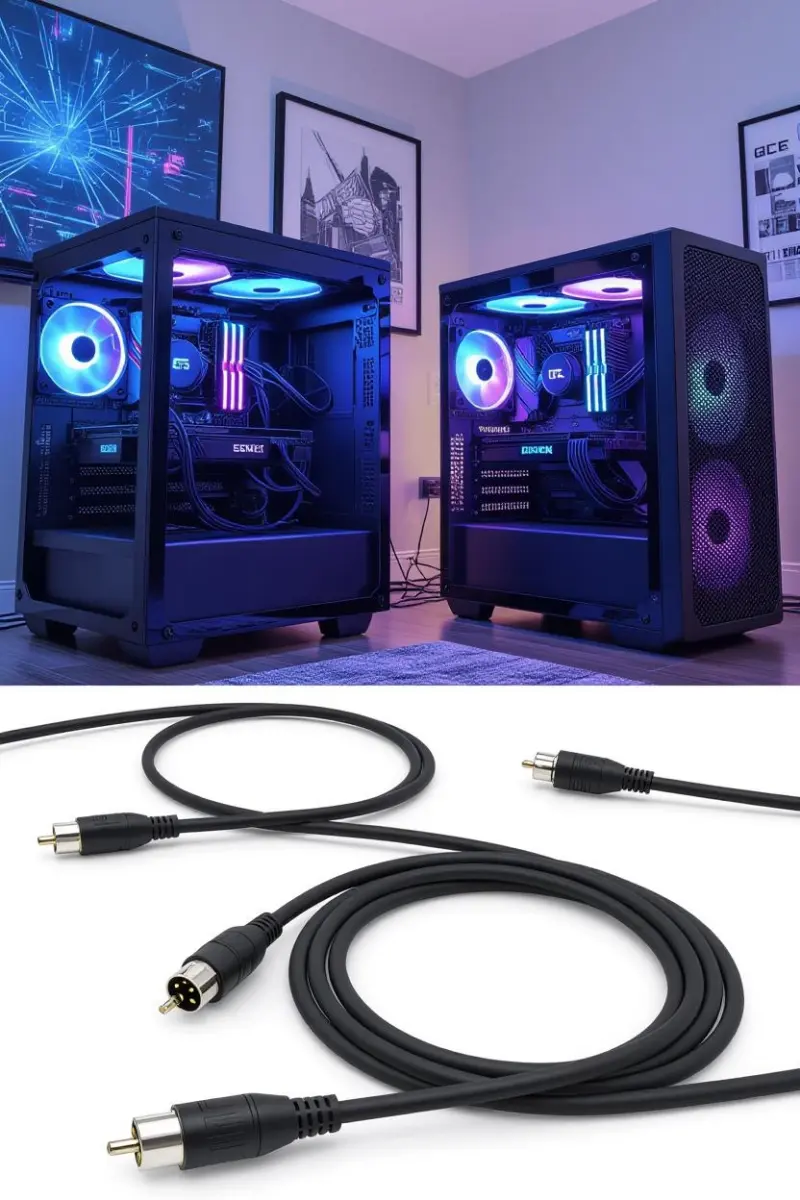
That infuriating 60Hz hum. That persistent digital hiss when your Wi-Fi router kicks in. If you’ve tried recording music, streaming, or setting up a PA system in the United States, you’ve likely fought these audio demons.
For decades, the advice was simple:
•Short cable? Use unbalanced.
•Long cable? Use balanced.
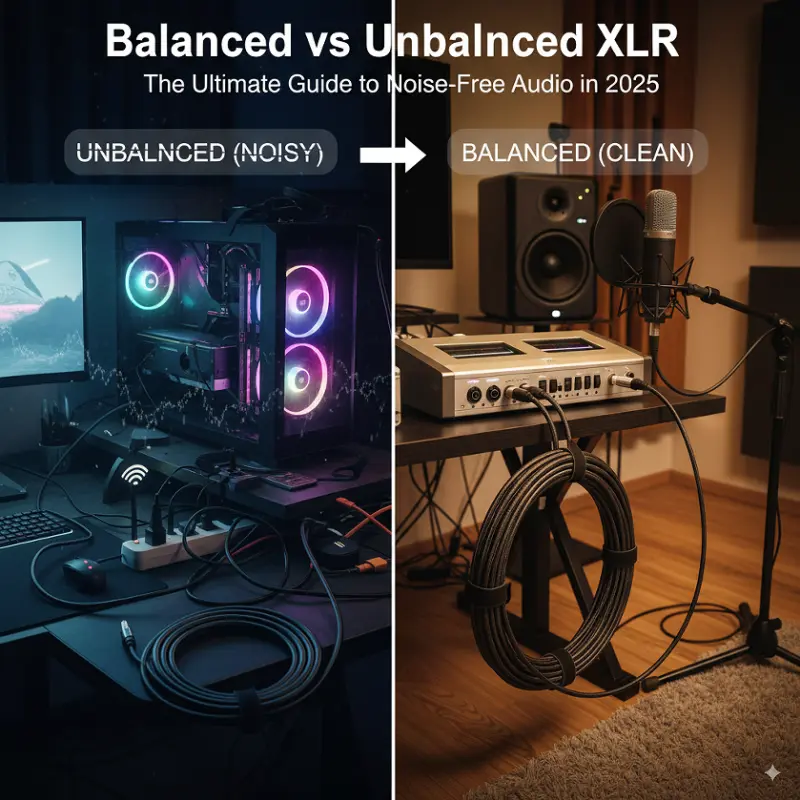
But in today’s U.S. homes filled with electronics, cable length is no longer the main factor. Instead, your electrical environment decides whether your sound stays clean or gets trashed by interference.
👉 Unique Viewpoint: Even a short 6-foot TS cable can be noisier than a 25-foot XLR — if it’s running past a gaming PC with dual GPUs and RGB lighting.
This guide cuts through myths, shares real-world experiences from Reddit, Gearspace, and YouTube creators, and helps you choose the right cable for your setup.
Balanced vs Unbalanced: What’s the Difference?
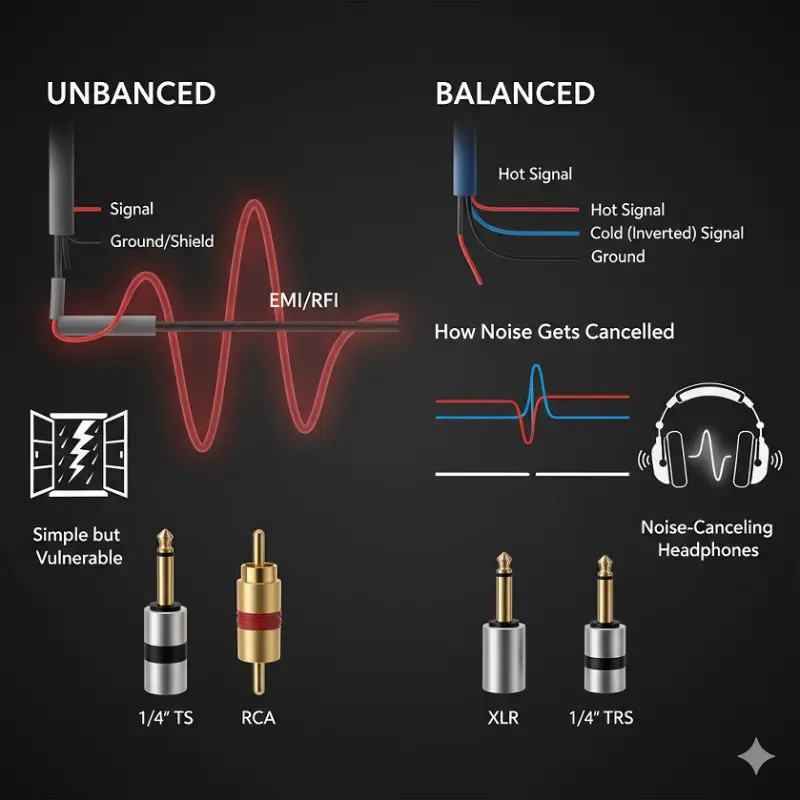
Unbalanced 101: Simple but Vulnerable
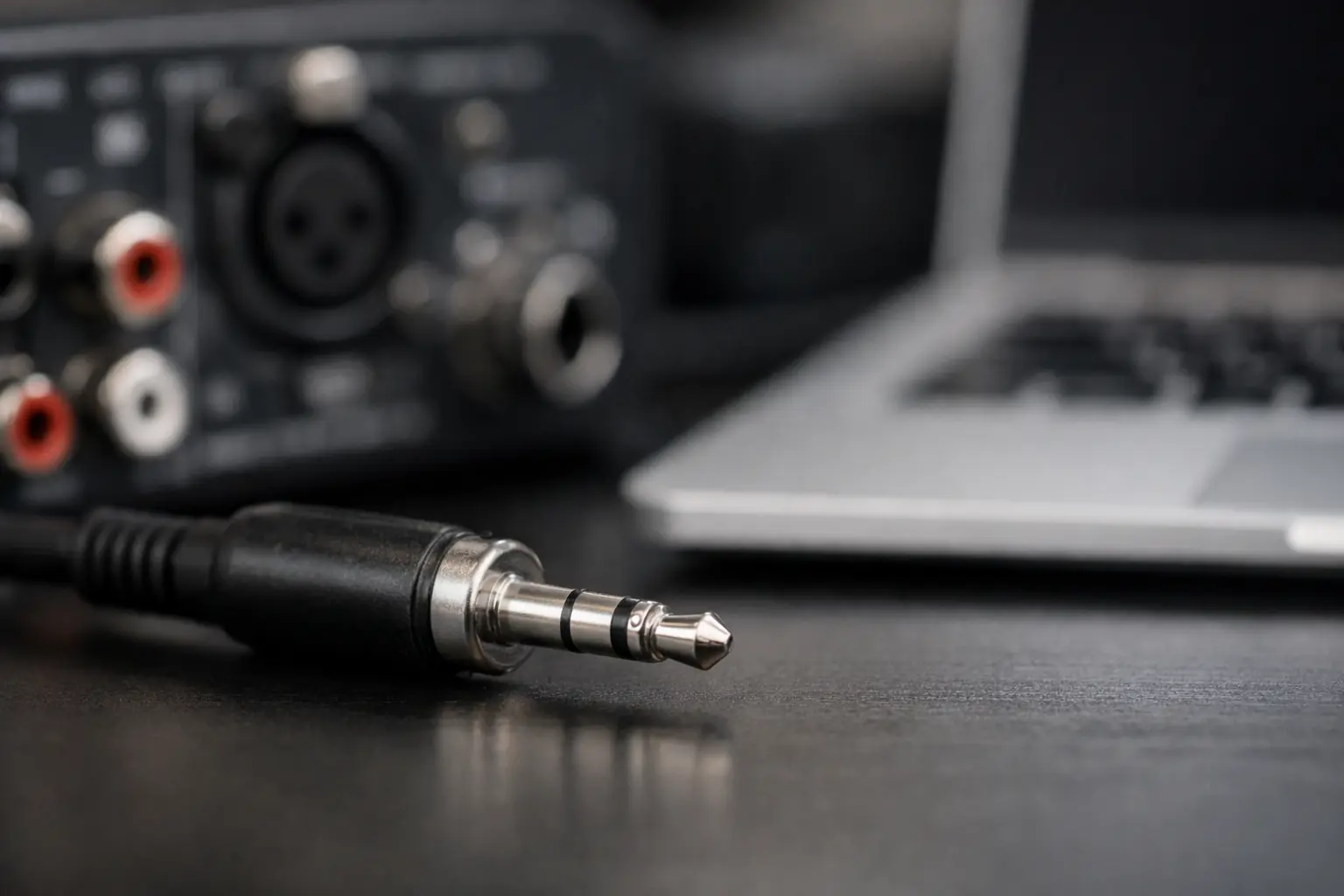
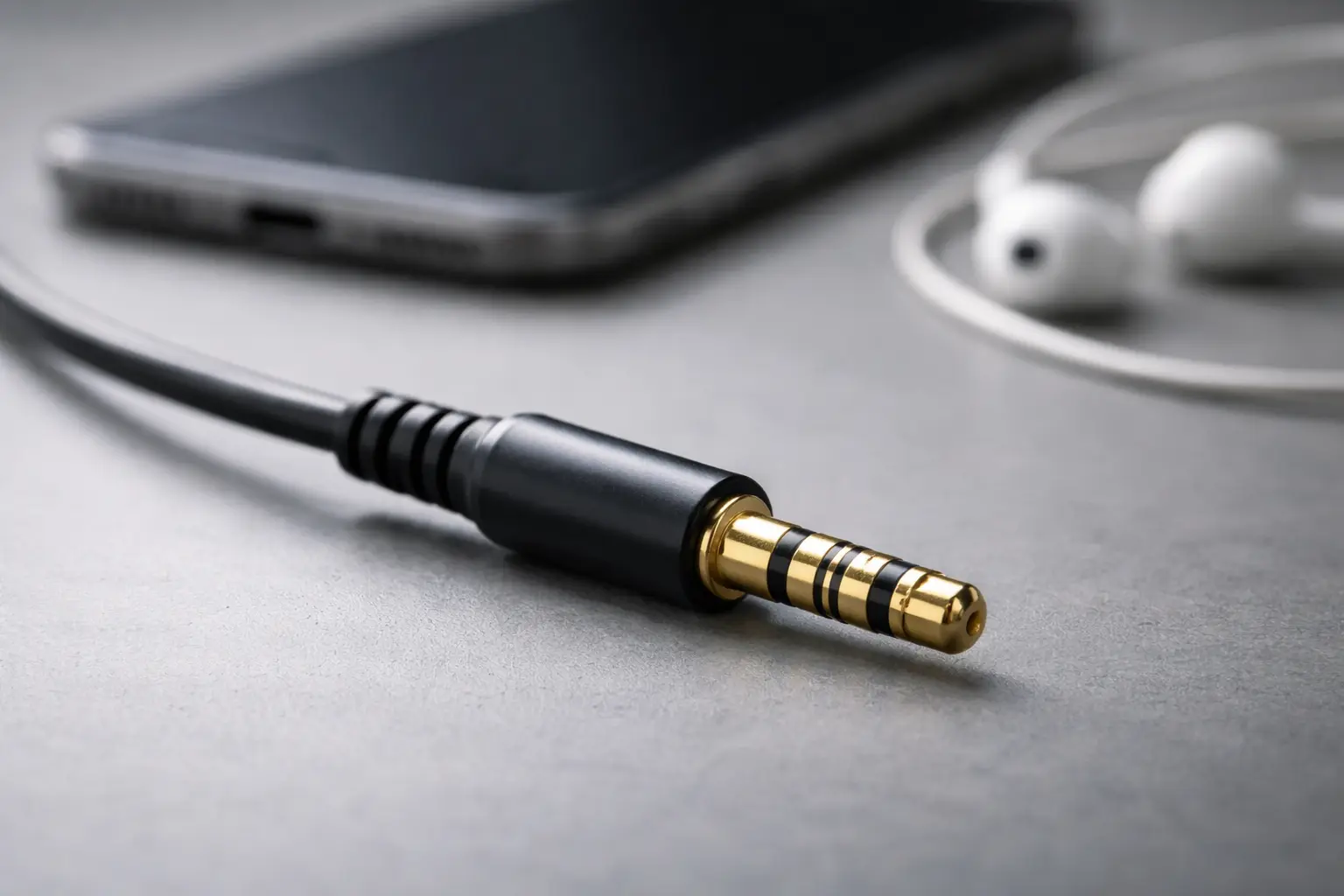
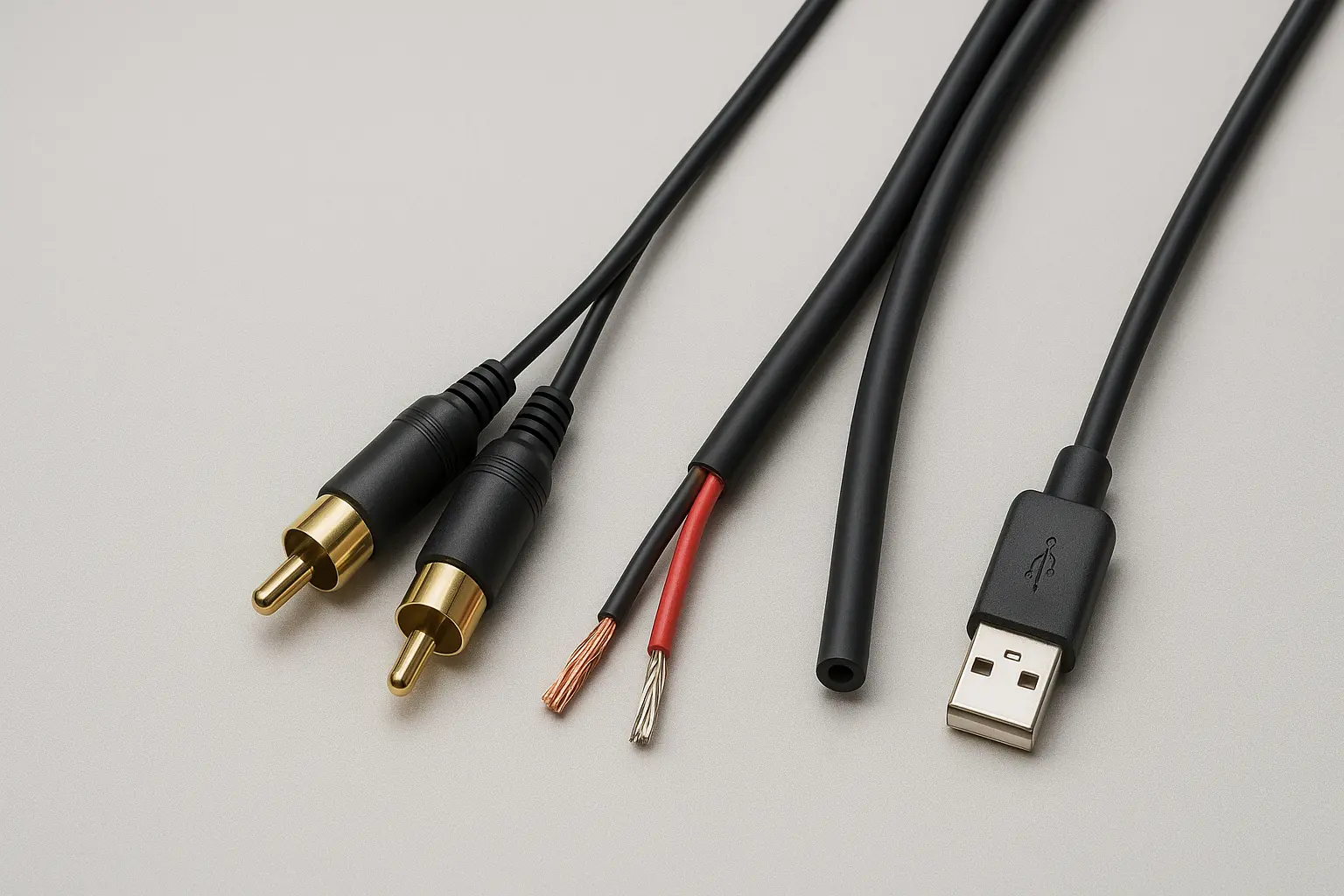
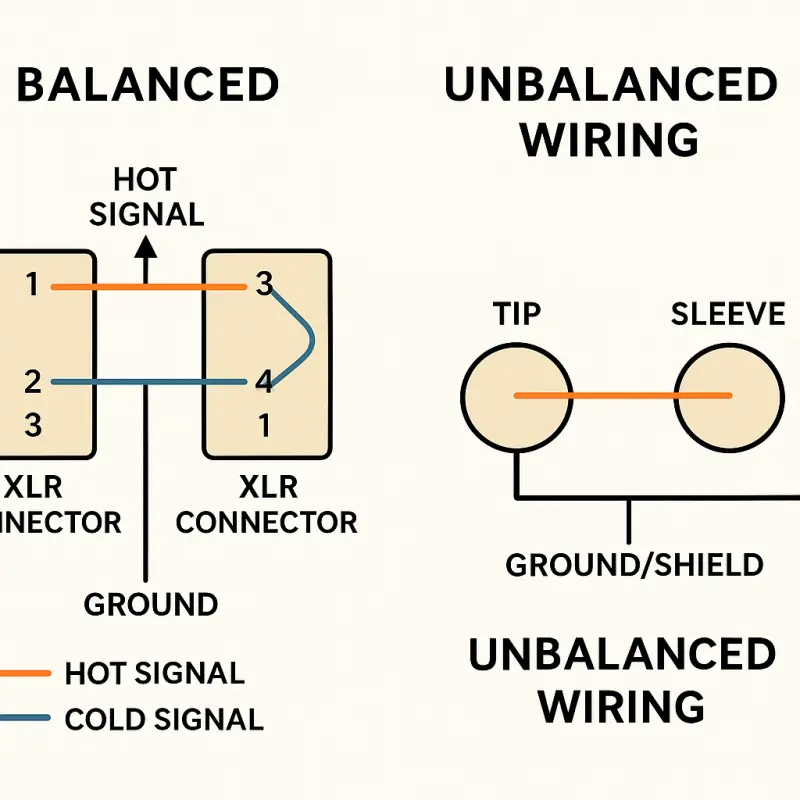
•Design:Two conductors — one for signal, one for ground/shield.
•Weakness:The shield doubles as ground, which means it can pick up EMI (electromagnetic interference) and RFI (radio interference) like an antenna.
•Typical in the U.S.:
•1/4" TS (Tip-Sleeve)— standard guitar/instrument cables.
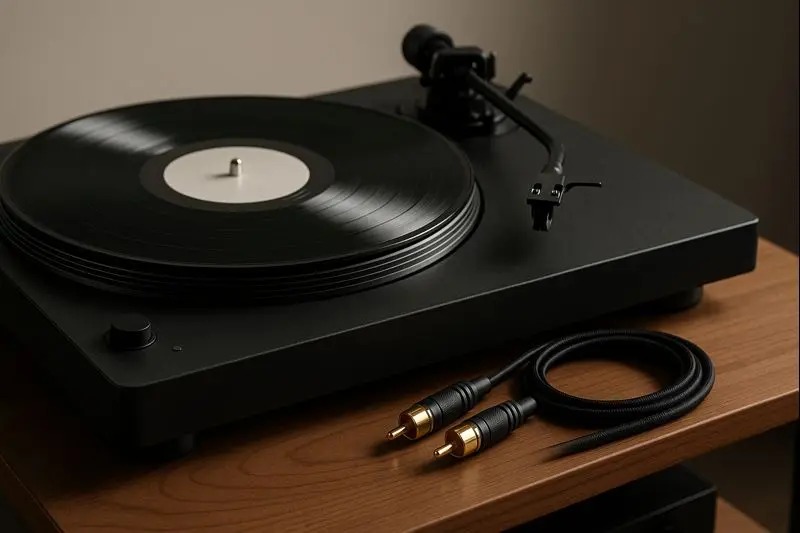
•RCA— used in consumer stereo gear and some DJ equipment.
💡 Imagine leaving a window open in a storm: fine on calm days, but a disaster when the noise comes rolling in.
Balanced XLR & TRS: How Noise Gets Cancelled
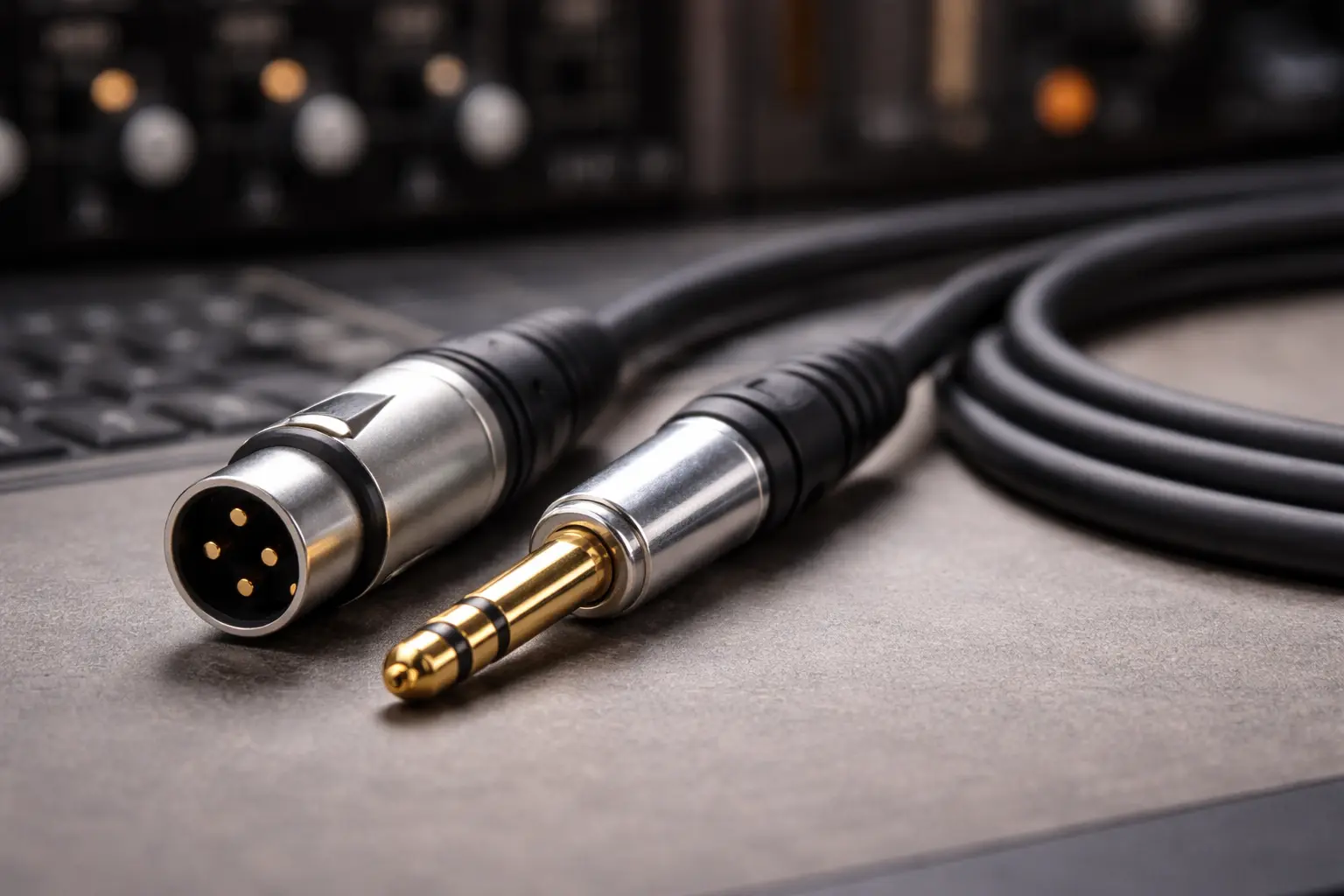
•Design:Three conductors — hot signal, cold (inverted) signal, and ground.
•Process:
1.Signal is sent twice (one inverted).
2.Noise enters both lines equally.
3.At the destination, the inverted copy flips back.
4.Audio reinforces, noise cancels.
•Typical in Pro Audio:
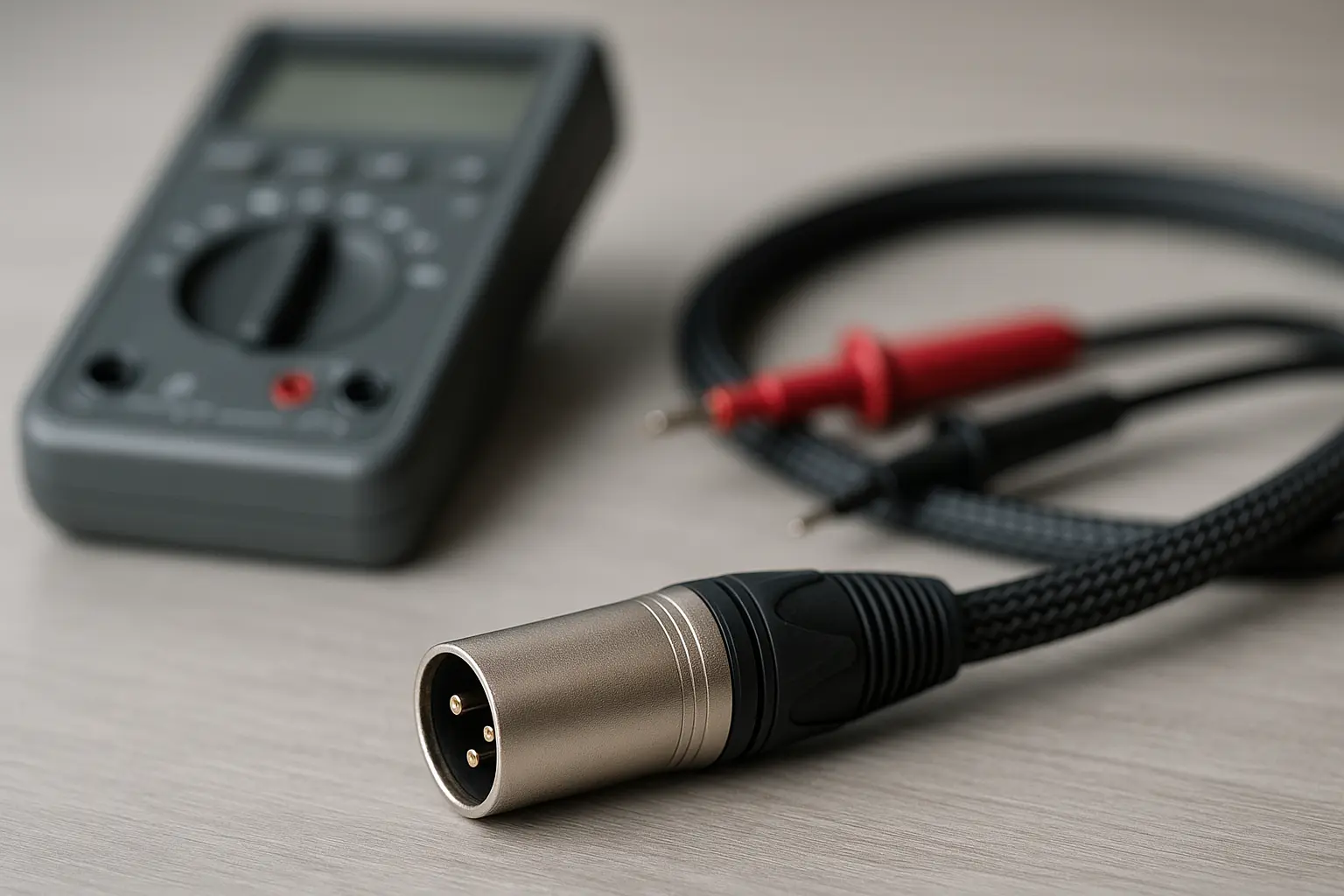
·XLR (3-pin)— standard for mics, mixers, DI boxes.
·1/4" TRS (Tip-Ring-Sleeve)— balanced alternative for monitors and interfaces.
Balanced cables are essentially noise-canceling headphones for your gear: they don’t stop interference from entering, but they cancel it out before you hear it.
When to Use Balanced Cables in U.S. Homes & Studios
The Old Rule: Length Matters in Live Sound
In classic live sound setups — think Nashville stages or New York theaters — cable runs stretch from stage to mixing boards 50+ feet away. Here, balanced XLR is non-negotiable.
Rule of thumb:
•Over 15–20 feet:Always go balanced.
•Under 15 feet:Unbalanced can work if the environment is clean.
The New Rule: Electrical Noise in Modern Homes
Fast forward to 2025. U.S. homes are buzzing with devices:
•Gaming PCs with 1200W PSUs
•LED strip lighting and dimmers
•Cheap switching power supplies
•120V/60Hz household AC
Reddit threads are full of producers in Texas and California complaining about hum in 6-foot RCA cables when placed near PCs. Switching to balanced TRS or XLR instantly solved it.
👉 Takeaway: In U.S. home studios, environment > distance. If you’re near noisy electronics, always use balanced.
Real-World Use Cases
For the Home Studio Producer
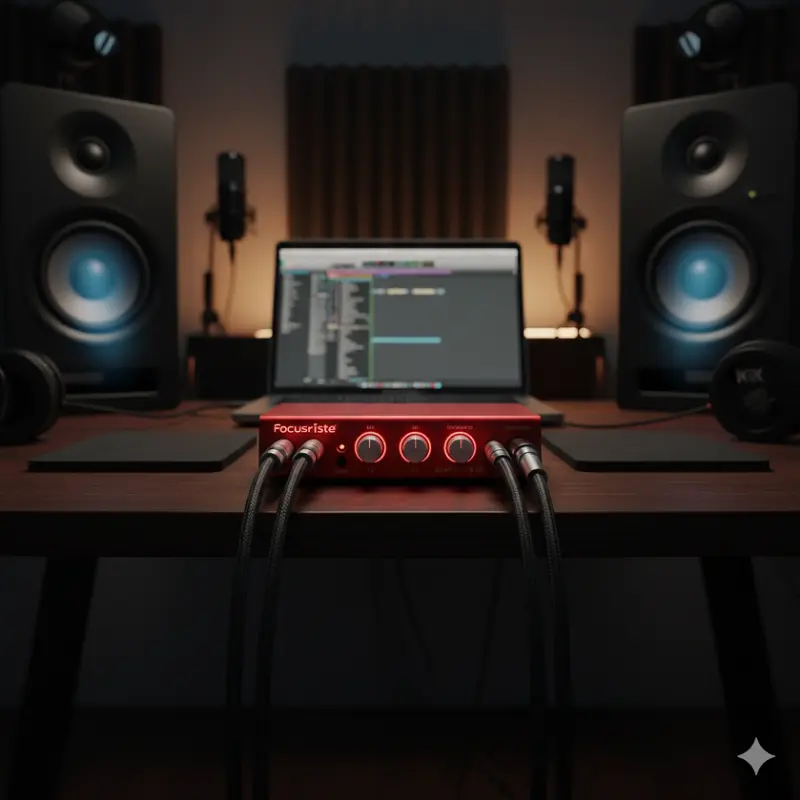
•Common Mistake:Using unbalanced TS cables for studio monitors.
•Fix:Interfaces like Focusrite Scarlett or Universal Audio Apollo have balanced TRS outputs. Use TRS-to-TRS or TRS-to-XLR cables for clean, accurate monitoring.
For the American Guitarist
•Guitars output unbalanced, high-impedance signals.
•On stage, running 20–30 feet on TS = hum and tone loss.
•Solution:Use a DI box (Radial JDI, Behringer Ultra-DI). It converts to a balanced, low-impedance XLR signal, ready for long runs to mixers.
For the High-Fidelity Audiophile
•"Balanced headphones" ≠ noise cancellation. It means each earcup gets its own signal path, improving separation and power delivery.
•Short headphone cables rarely need EMI rejection, but U.S. audiophiles love balanced outputs on DACs (like Schiit or Topping) for fidelity.
Advanced Audio Problems (and Fixes)
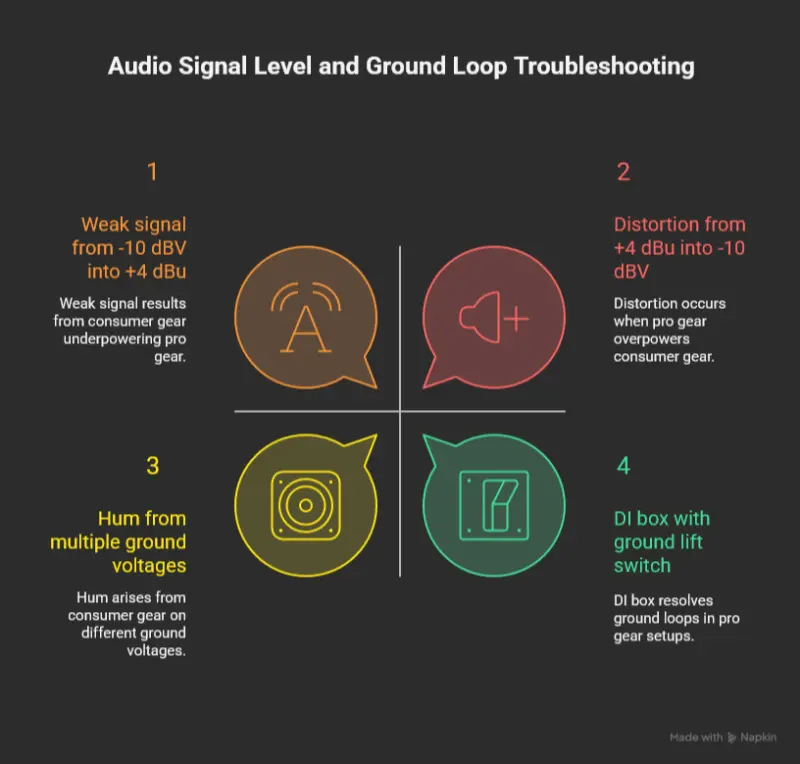
Signal Levels: +4 dBu vs -10 dBV
•Pro gear (mixers, interfaces):+4 dBu.
•Consumer gear (CD players, home receivers):-10 dBV.
•Mismatch:+4 into -10 = distortion; -10 into +4 = weak noisy signal. Always match levels.
Still Hearing Hum? Ground Loops
•If balanced cables don’t fix it, you may have a ground loop.
•Caused by multiple devices on different ground voltages.
•Fixes:
•Use DI boxes with ground lift switches.
•Keep all gear on the same power strip in your U.S. setup.
Conclusion
The balanced vs unbalanced XLR debate is no longer just about length. In U.S. homes filled with electronics, electrical noise is the real battlefront. Balanced connections give you a professional edge — preventing issues before they start. Whether you’re producing beats in LA, streaming in Texas, or running live sound in Nashville, making the switch to balanced ensures your audio stays true.
FAQ: Balanced vs Unbalanced XLR
1.Will balanced XLR cables sound better for short runs?
Not always. If you hear no hum, you won’t notice a difference. But in U.S. homes with noisy electronics, balanced can make even 6-foot runs cleaner.
2.Can I plug an unbalanced TS cable into a balanced TRS input?
Yes, but it becomes unbalanced. You lose the noise cancellation.
3.Does an XLR-to-RCA adapter keep the signal balanced?
No. RCA is unbalanced by design. The entire chain becomes unbalanced.
4.Are expensive XLR cables better?
Not for sound quality — but reputable U.S. brands (Mogami, Canare) offer better shieldingand durability.
5.Is every microphone with XLR balanced?
Yes. Virtually all pro microphones output a balanced low-impedance signal via XLR.
Citations
1.(2014, March 27). Balanced vs. Unbalanced. Aviom Blog.
🔗https://www.aviom.com/blog/balanced-vs-unbalanced
2.(2022, March 10). Balanced vs. Unbalanced Audio: What's the Difference?. Boxcast Blog.
🔗https://www.boxcast.com/blog/balanced-vs-unbalanced-audio-whats-the-difference
3.(2022). What’s the difference between balanced and unbalanced?. r/audiophile.
🔗https://www.reddit.com/r/audiophile/comments/9uz5h3/whats_the_difference_between_balanced_and/
4.(n.d.). Cable Buying Guide. Sweetwater InSync.
🔗https://www.sweetwater.com/insync/cables-buying-guide/
5.Rane Corporation. (2015, November). Sound System Interconnection (RaneNote 110).
🔗https://www.ranecommercial.com/kb_article.php?article=2107