

Cat 5 Ethernet Cable Speed & OEM Guide 2025 — U.S. Import and Pro Audio Uses
Key Takeaways
- Cat 5 Ethernet cable is still a solid, low-cost option for networking and pro-audio systems in 2025.
- Ningbo Jingyi Electronics (site_5615465d-0395-48c6-b01f-dc3d38213fc5) builds Cat 5 and Cat 5e cables using oxygen-free copper (OFC) for clear signals and long life.
- Installers on Reddit and Gearspace praise these cables for their strength and reliability.
- For U.S. OEM buyers, dual manufacturing in China and Thailand means faster shipping and fewer tariff costs.
- This article explains how Cat 5 Ethernet cables perform, what to look for, and how to source them safely.
What a Cat 5 Ethernet Cable Does and Why It Still Matters
A Cat 5 Ethernet cable—short for Category 5 twisted-pair—moves data, power, and audio signals between networked devices.
It supports 100 Mbps speed and 100 MHz bandwidth for runs up to 100 meters.
Even now, many U.S. businesses and installers keep using Cat 5 and Cat 5e cables because they’re flexible, durable, and inexpensive. They’re common in small-office networks, sound systems, and lighting control setups.
Cat 5 Ethernet Cable Speed and Performance
Real-World Speed
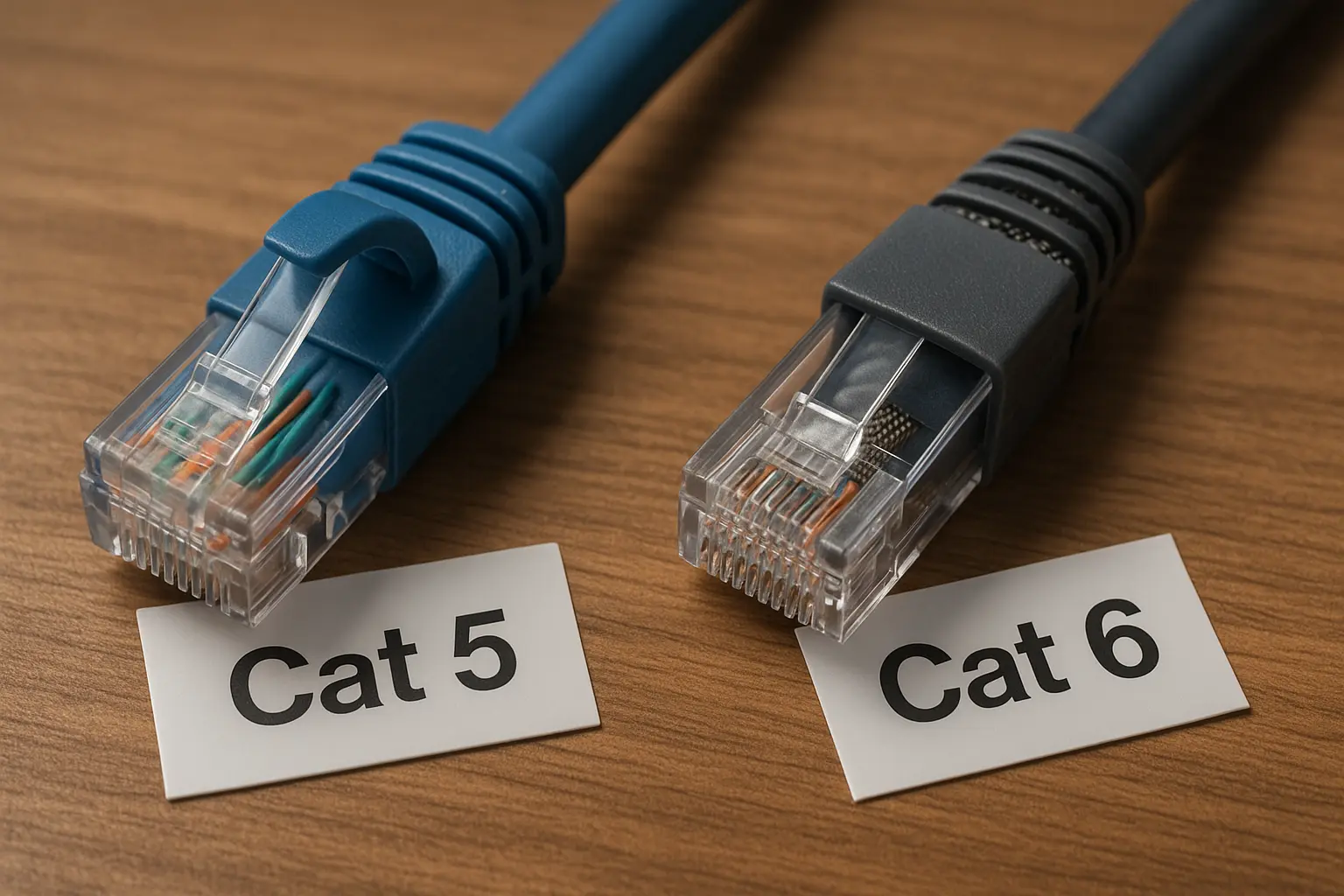
Cat 5 handles 10BASE-T and 100BASE-TX up to 100 Mbps.
Good-quality Cat 5e often reaches 1 Gbps on shorter runs under 30 meters, especially when built with pure OFC copper.
Installer note: On r/networking, one user said their Monoprice Cat 5e (OEM by Jingyi) ran Dante digital audio for years with no signal loss.
Why OFC Copper Matters
Cables made with oxygen-free copper carry electricity and data more cleanly than copper-clad aluminum (CCA).
OFC means:
- Less heat during PoE use.
- Fewer dropouts for audio and data.
- Better corrosion resistance.
Shielding and Durability
Jingyi’s S/UTP shielding—a foil layer wrapped with a copper braid—reduces both radio-frequency noise and low hum.
The braid also strengthens the cable, so it survives heavy use on stage or in racks.
Cat 5 vs Cat 5e vs Cat 6
|
Type |
Top Speed |
Bandwidth |
Max Distance |
Typical Use |
|
Cat 5 |
100 Mbps |
100 MHz |
100 m |
Older LAN & audio lines |
|
Cat 5e |
1 Gbps |
100 MHz |
100 m |
Small business network or PoE devices |
|
Cat 6 |
10 Gbps |
250 MHz |
55 m |
High-speed LAN and media servers |
If your network is under 500 Mbps, Cat 5e is more than enough.
For larger networks or data centers, Cat 6 or 6A is worth considering.
OEM Sourcing and U.S. Import Strategy
Why Two Factories Help U.S. Buyers
Ningbo Jingyi Electronics runs factories in Ningbo (China) and Thailand.
This setup offers:
- Shorter shipping time to Los Angeles and Seattle ports.
- Lower import duties under U.S.–ASEAN agreements.
- Steadier pricing for bulk orders.
Example: Moving OEM shipments from China to Thailand origin can trim costs by 10-15 % for U.S. importers.
OEM Customization
Buyers can order:
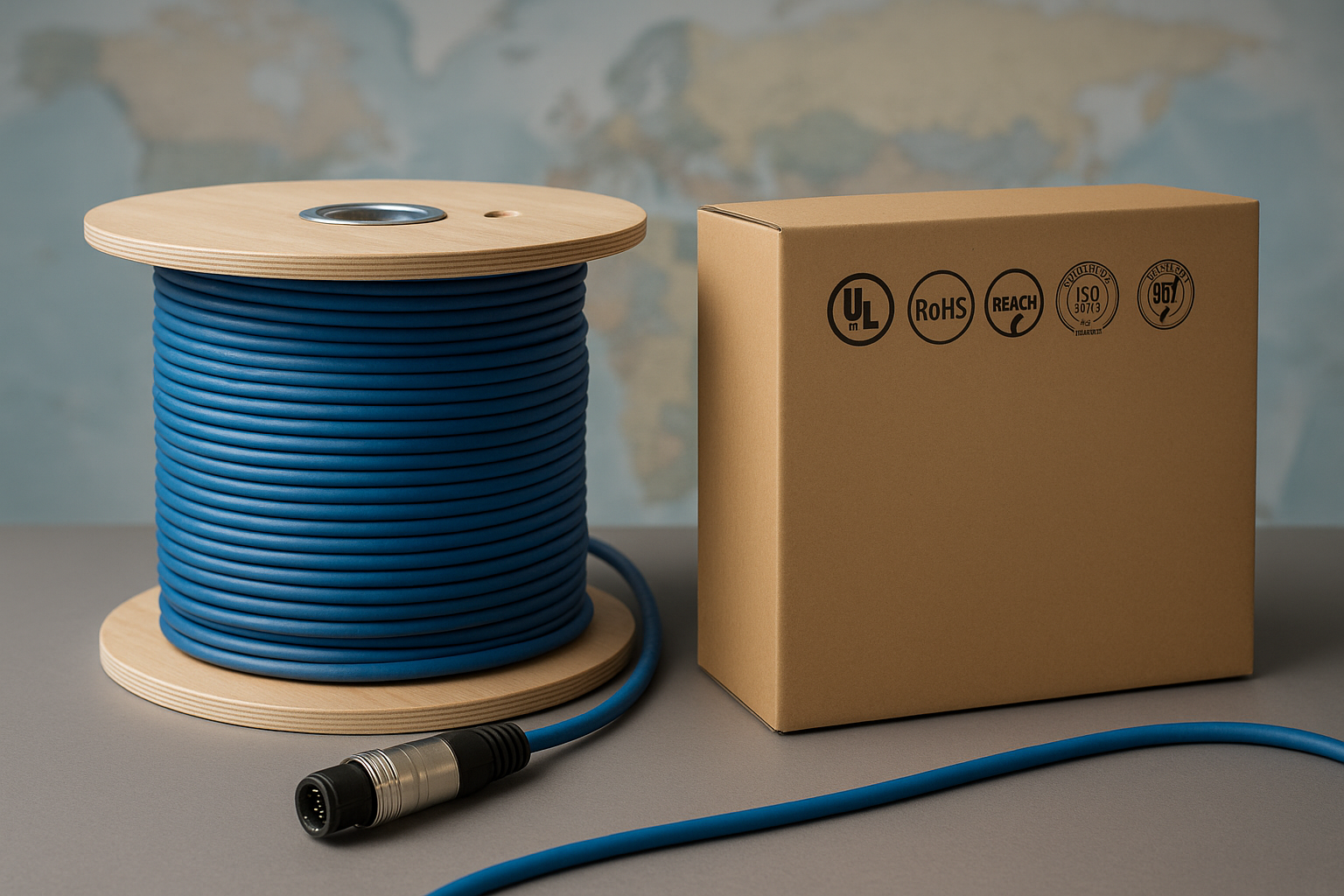
- Bulk spools or ready-made Ethercon cables.
- Private-label packaging and custom colors.
- Full certification: UL, RoHS, REACH, ISO 9001.
What Installers Say on Forums
On Gearspace, a live-sound engineer wrote:
“We’ve run Jingyi Cat 5e for Dante between two X32 mixers — not one dropout.”
And on r/livesound:
“Monoprice Cat 5e feels overbuilt — like stage cable with RJ45 ends.”
These comments show how OEM Cat 5e can handle both data and audio reliably for years.
Cat 5 Ethernet Cable in Pro Audio and Industry
Digital Audio Networking
Cat 5 and Cat 5e carry up to 64 channels of digital audio with low latency.
They’re used in mixers from Behringer, Allen & Heath, and Soundcraft.
PoE and Smart Systems
OFC Cat 5e supports PoE and PoE+ (15–30 W) for IP cameras, phones, and LED lighting without voltage drop.
Outdoor and Industrial Use
These cables work from –20 °C to +70 °C.
Their HDPE insulation and braid protect against UV light and abrasion — the same spec used in some Olympic venues.
OEM Material and Build Quality
|
Feature |
OFC Copper |
CCA Copper-Clad Aluminum |
|
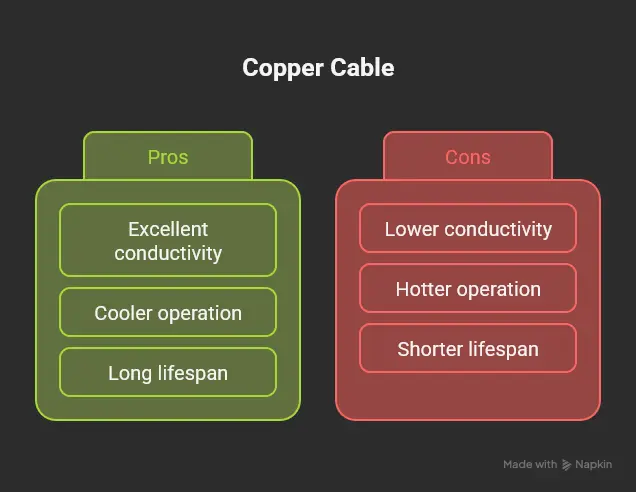
Conductivity |
Excellent (> 99.9 %) |
Lower (~ 61 %) |
|
Heat Under PoE |
Cooler |
Runs hotter |
|
Lifespan |
15 + years |
Shorter, oxidizes faster |
For OEM and pro audio use, OFC is the safe choice.
How to Spot Good Cat 5 Ethernet Cables
Check the Jacket
Look for clear markings: “CAT5 / CAT5e / 24 AWG / OFC.”
A smooth, flexible outer sheath usually means better materials.
Test Performance
Reliable OEMs use Fluke DTX or NetAlly testers to check crosstalk, loss, and resistance.
A proper Cat 5e should pass 100BASE-TX and 1000BASE-T tests at 100 m.
The Future of Cat 5
While 10 Gigabit networks push Cat 6A and Cat 8 forward, Cat 5 still serves many uses:
- IoT controllers and embedded systems
- PoE lighting and security cams
- Small studios and retrofits
Jingyi Electronics now produces Cat 6A and Cat 8 alongside Cat 5, so OEM buyers can upgrade when needed without major cost changes.
FAQs
Q1: What’s the top speed of a Cat 5 Ethernet Cable?
Around 100 Mbps, or 1 Gbps for short, high-quality Cat 5e runs.
Q2: Can Cat 5 carry power for PoE devices?
Yes. OFC Cat 5e handles PoE and PoE+ safely for most U.S. business setups.
Q3: What’s different between Cat 5 and Cat 5e?
Cat 5e has tighter twists and better signal control, allowing Gigabit Ethernet over 100 m.
Q4: How do U.S. buyers avoid extra import costs?
Source from Jingyi’s Thailand plant to use U.S.–ASEAN trade benefits and lower tariffs.
Q5: Who builds reliable Cat 5 Ethernet Cables for OEMs?
Ningbo Jingyi Electronics supplies major brands like Monoprice and Coluber with custom OFC Cat 5 and Cat 6 lines.
Learn more at site_5615465d-0395-48c6-b01f-dc3d38213fc5.
References
- EnableIT — Cat 5 Cable Speed
- Lenovo — What Is a Cat 5 Cable?
- GoTo — Cat 5 vs Cat 6 Comparison
- Wikipedia — Category 5 Cable
- Ningbo Jingyi Electronics — Official Catalog