



Coax Cable vs Ethernet: Key Differences, Real Uses & OEM Insights for Pro-Audio Networks (2025 Guide)
Key Points
- Ethernet cables deliver higher speed, lower latency, and better scalability than coaxial cables.
- Coaxial cables still serve important roles in long-distance, retrofit, and MoCA installations.
- JINGYI Audio supplies OEM Ethernet and coaxial assemblies designed for U.S. pro-audio and networking clients.
- Using Ethernet-over-Coax helps businesses upgrade older systems without replacing existing wiring.
Introduction
When people compare coax cable vs ethernet, they usually want to know which one is faster, more reliable, and easier to install.
The answer depends on what you’re connecting — and where.
In professional audio, office networks, and OEM applications, cable choice affects speed, signal stability, and even compliance with U.S. standards.
JINGYI Audio has spent over three decades making cables and connectors for studios, integrators, and global OEM clients. From broadcast setups to networked audio, they’ve seen how coax and Ethernet each have their moment to shine.
Understanding Coax Cables
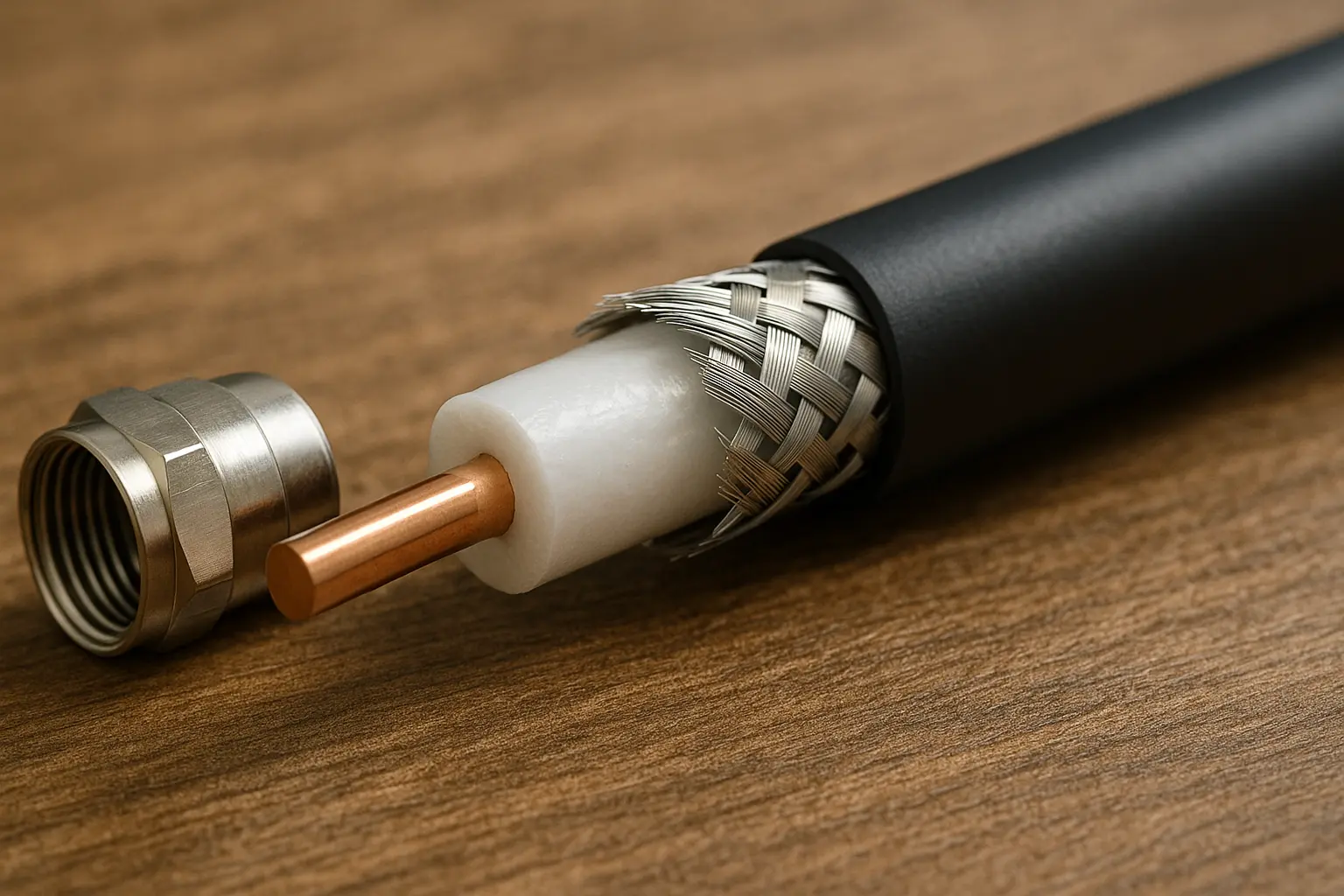
A coaxial cable has one copper core surrounded by insulation, a metal shield, and an outer jacket.
That layered structure keeps signals stable by blocking outside interference. It’s perfect for longer runs where noise might be an issue.
Where Coax Still Fits
You’ll often find coax cables in:
- Cable TV and satellite systems
- ISP last-mile Internet (DOCSIS)
- CCTV installations
- MoCA networks for homes and small offices
- Broadcast and digital audio systems
JINGYI Audio’s Coaxial Assemblies are made for precision uses like S/PDIF audio and video sync, where signal timing really matters. Their 75 Ω impedance cables deliver stable, clean transmission for recording studios and broadcast control rooms.
Why Many U.S. Installers Still Use Coax
In the U.S., a lot of homes and offices already have coax wiring inside the walls. Pulling new Ethernet lines can be expensive or messy. Using MoCA 2.5 adapters, those same coax cables can handle up to 2.5 Gbps of data — almost identical to a wired LAN.
Understanding Ethernet Cables
Ethernet cables use four pairs of twisted copper wires instead of a single conductor.
The twists cancel out interference and let the cable carry data in both directions at once.
Common Ethernet Types
|
Category |
Speed |
Typical Use |
|
Cat5e |
1 Gbps |
Basic office or home network |
|
Cat6 / Cat6a |
1–10 Gbps |
Studios, offices, small data centers |
|
Cat8 |
Up to 40 Gbps |
High-speed servers or data hubs |
Ethernet is now the backbone of Audio-over-IP (AoIP) systems — used for Dante, AVB, and AES67 networks.
With its low delay and Power over Ethernet (PoE) support, it connects everything from microphones to mixing consoles.
For pro-audio setups, JINGYI Audio’s Shielded Ethernet Cables and RJ45 extenders help reduce hum and maintain clarity across studio equipment.
Coax Cable vs Ethernet: Side-by-Side Comparison
|
Feature |
Coax Cable |
Ethernet Cable |
|
Speed |
Up to 1 Gbps (MoCA 2.5) |
1–40 Gbps (Cat6–Cat8) |
|
Max Distance |
500 m (without repeater) |
100 m (standard) |
|
Signal Type |
Analog or modulated RF |
Digital packets |
|
Duplex |
Half |
Full |
|
Power (PoE) |
No |
Yes |
|
Noise Resistance |
Excellent (shielded) |
Very high (pair twisting) |
|
Main Uses |
TV, MoCA, CCTV, legacy audio |
LAN, AoIP, data centers |
|
OEM Use |
Broadcast, long-distance |
Studio, live sound, industrial |
(Suggested image: Coax vs Ethernet cross-section illustration)
Caption: Coax has a single shielded conductor, while Ethernet uses four twisted pairs. Ethernet supports full-duplex and PoE; coax excels at long-range shielding.
Real-World Experiences
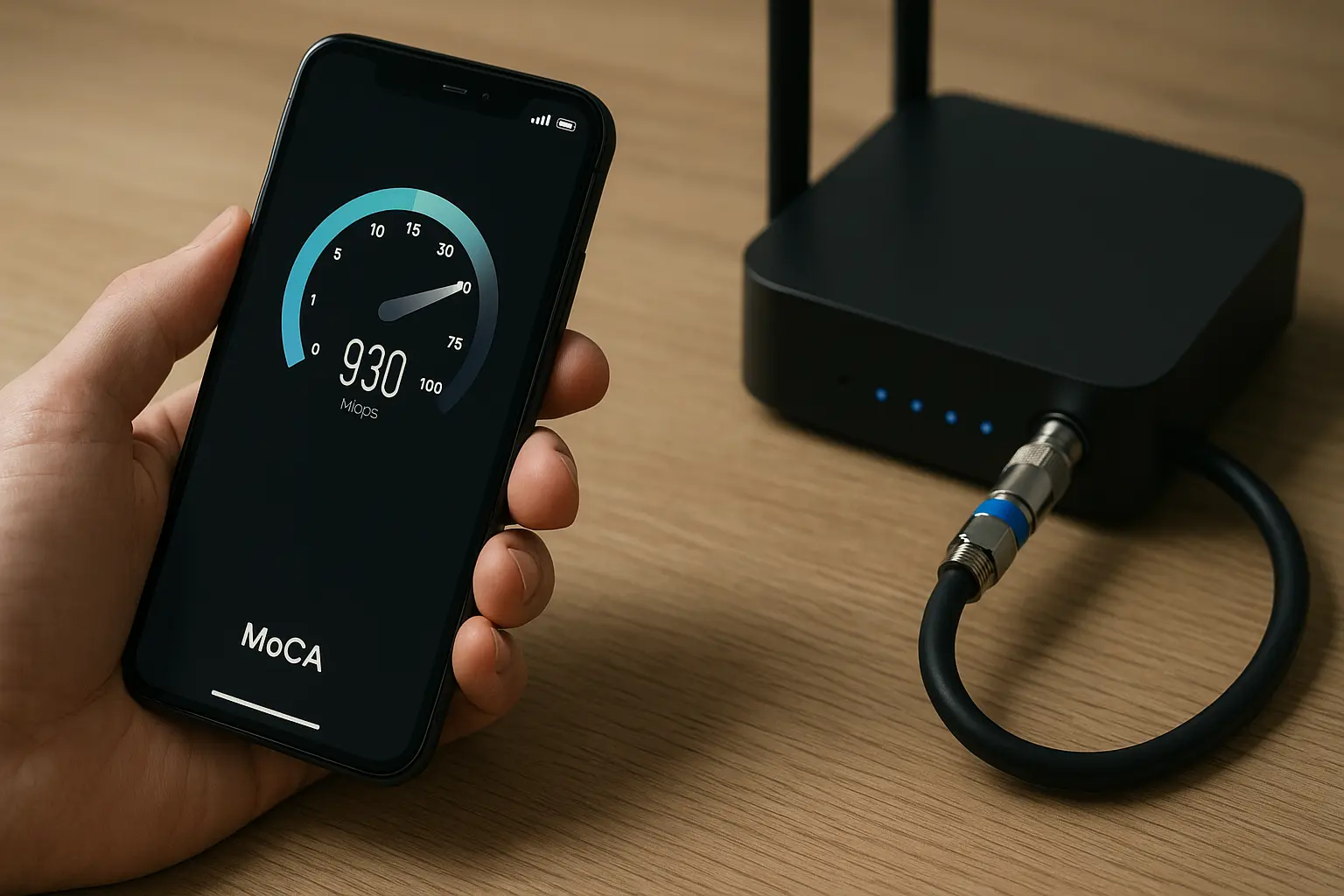
Across social platforms like Reddit and AVSForum, U.S. users have shared real test results using MoCA 2.5.
“I’m getting 930 Mbps down and under 5 ms ping with MoCA — just like Ethernet.”
— r/HomeNetworking user
“Switched from Wi-Fi to MoCA and finally got stable gaming latency.”
— AVSForum discussion
Installers on LinkedIn and YouTube also talk about mixing both cable types — using Ethernet for new runs and Ethernet-over-Coax (EoC) adapters where rewiring isn’t possible.
For OEM clients managing large facilities, this approach reduces downtime and cost while maintaining performance.
OEM Perspective from JINGYI Audio
JINGYI Audio has supported global OEM clients for years, helping them move from analog audio to networked systems.
They build Cat6a/Cat7 assemblies, custom connectors, and extenders used in recording studios, theaters, and event venues.
Custom Coax Solutions
Even with digital audio everywhere, coax still matters for S/PDIF, broadcast, and timecode sync.
JINGYI Audio Coax Assemblies are known for tight tolerance and consistent signal response — exactly what studios and OEM integrators need.
Built for the U.S. Market
Their OEM cables meet UL 444, CSA C22.2, and TIA/EIA-568 standards.
Integrators across California, Texas, and New York rely on UL-listed assemblies for commercial installations that demand safety and durability.
Hybrid Networking: MoCA & Ethernet-over-Coax
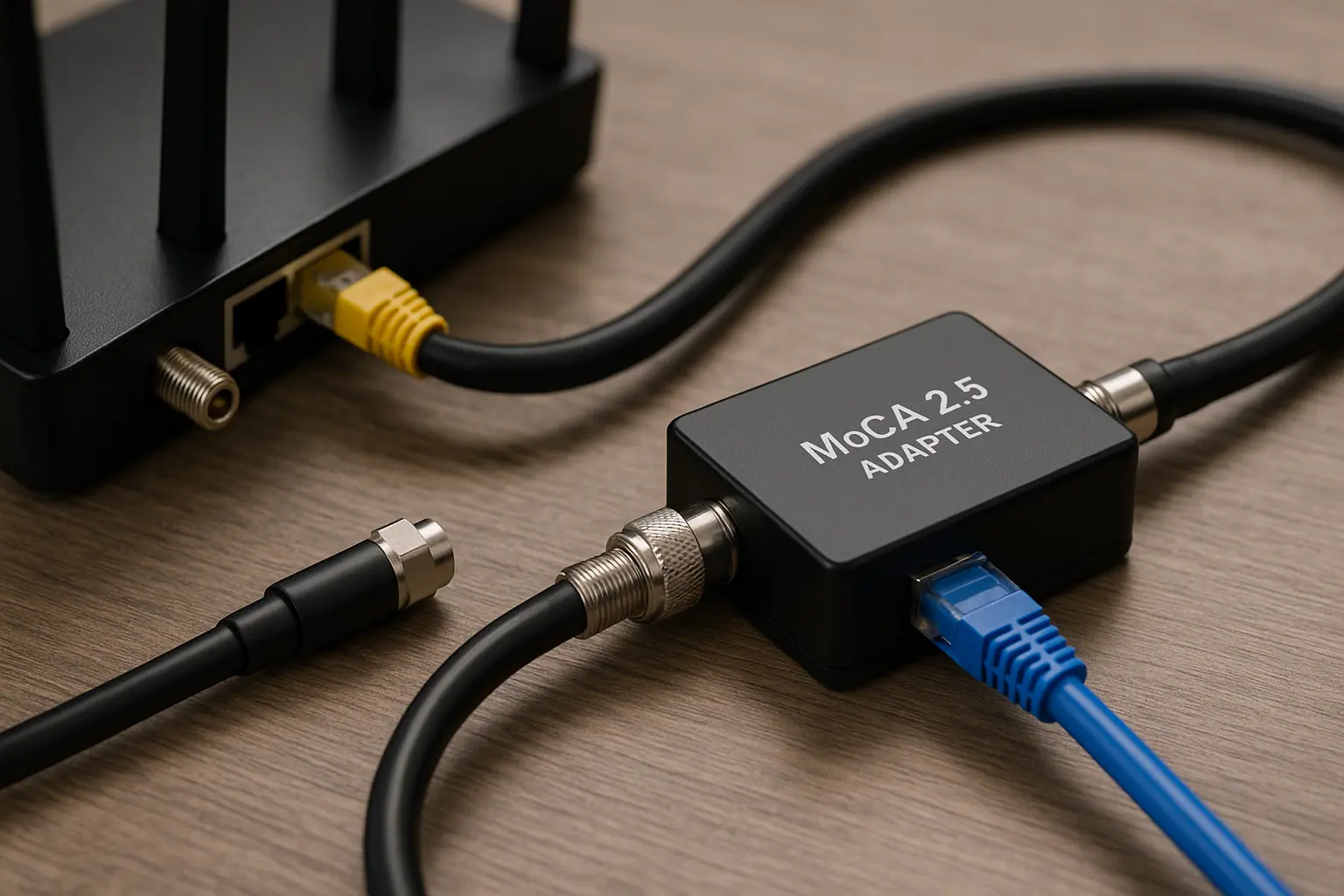
MoCA 2.5 in Action
MoCA technology lets data and TV signals travel on different frequency bands over the same coax.
That means you can connect routers, smart TVs, or consoles using existing coax outlets. Real users see 900–950 Mbps downloads and only a few milliseconds of delay — plenty for 4K streaming or online gaming.
Ethernet-over-Coax (EoC)
EoC systems use the G.hn standard to transmit Ethernet signals through coax over long distances.
For U.S. OEM clients, this is ideal in buildings where new conduit runs are not allowed.
JINGYI Audio’s Network Extenders support both Ethernet and coax, helping integrators link devices in large venues, hotels, and campuses.
Choosing the Right Cable for OEM Projects
How to Decide
If you’re planning an installation in the U.S., your best option depends on the situation:
- New construction or AoIP networks → go with Cat 6a or Cat 7 Ethernet for 10 Gbps speeds and PoE.
- Existing coax wiring → use MoCA 2.5 or EoC adapters to save time and money.
- Broadcast systems → keep 75 Ω coax for precise signal timing.
👉 Tip: JINGYI Audio offers custom OEM audio and network assemblies made to North American standards.
Quick Selection Table
|
Scenario |
Recommended Cable |
Reason |
|
Legacy building |
MoCA / EoC |
Uses coax already installed |
|
Recording studio |
Cat 6a / Cat 7 |
High speed, low delay |
|
PoE cameras |
Ethernet |
Power + data in one line |
|
Broadcast rack |
Coax 75 Ω |
Stable timing |
|
OEM with mixed clients |
Both |
Flexibility across markets |
Industry Standards That Matter
To ensure performance and compliance, most U.S. projects follow these standards:
- IEEE 802.3 – Defines Ethernet speeds and distance limits.
- MoCA 2.5 – Allows up to 2.5 Gbps over coax.
- TIA/EIA 568-C.2 – Sets cable category specs for Cat 6/6a.
Referencing these gives confidence to OEM buyers and integrators that their networks meet accepted benchmarks.
FAQs
Q1: Is coax cable faster than Ethernet?
No. Ethernet can reach up to 40 Gbps, while coax with MoCA 2.5 typically tops out around 1 Gbps.
Q2: Can coax cables carry Ethernet?
Yes. MoCA or Ethernet-over-Coax adapters convert the signal, giving near-Gigabit speeds on existing coax lines.
Q3: Which cable works better for professional audio?
Ethernet (Cat 6a/7) — it’s the base for Dante and AVB systems, delivering low delay and clean digital transfer.
Q4: Does JINGYI Audio supply both types?
Absolutely. JINGYI Audio produces Ethernet, coaxial, and hybrid cables for OEM and B2B clients across the U.S.
Q5: Are JINGYI Audio cables certified?
Yes. All cables meet UL and ETL standards and can be customized with private labeling or OEM branding.
Partner with JINGYI Audio
If you’re planning a new installation or OEM product line,
JINGYI Audio can help design and build Ethernet, coaxial, or mixed systems that match your exact needs.
They offer rapid prototypes, custom labeling, and UL-certified manufacturing from a single source.
🔗 Request an OEM Quotation | View Product Catalog
Looking Ahead
The coax cable vs ethernet debate isn’t about replacing one with the other.
Ethernet will keep leading modern LAN and audio networks, while coax stays useful in retrofit and MoCA setups.
Many OEM installers are now combining both — running Ethernet where possible and extending it over coax where needed.
JINGYI Audio continues to make reliable, U.S.-certified cables that connect analog and digital systems worldwide.
Citations
- trueCABLE – Coaxial vs Ethernet Cable
- VCELINK – Coaxial vs Ethernet Comparison
- NewYorkCables – Coax vs Ethernet Guide
- Netsys-America – Ethernet Over Coax Explained
- JINGYI Audio Official Site