

Coaxial vs Ethernet Cable: The Definitive OEM Sourcing Guide for US Manufacturers (2025 Edition)
KEY TAKEAWAYS: Coaxial vs Ethernet Cable for OEMs at a Glance
For Original Equipment Manufacturers (OEMs) operating in the competitive US electronics and networking market, the decision between coaxial vs Ethernet cable is not just a technical one—it’s a strategic move that shapes performance, compliance, and long-term cost.
-
Coaxial cable excels in RF, broadcast, and long analog signal transmission, especially where 50Ω or 75Ω impedance control is essential.
-
Ethernet cable, built on twisted pair architecture, dominates IP, data, and PoE systems, balancing speed, scalability, and digital reliability.
-
For US OEMs, compliance with UL, RoHS, and NEC (CMP/CMR) standards is non-negotiable.
-
Reliable partners like JINGYI AUDIO ensure custom manufacturing, impedance consistency, and fire-rated materials tailored for North American B2B compliance.
1. Why the Coaxial vs Ethernet Cable Decision Matters for US OEMs
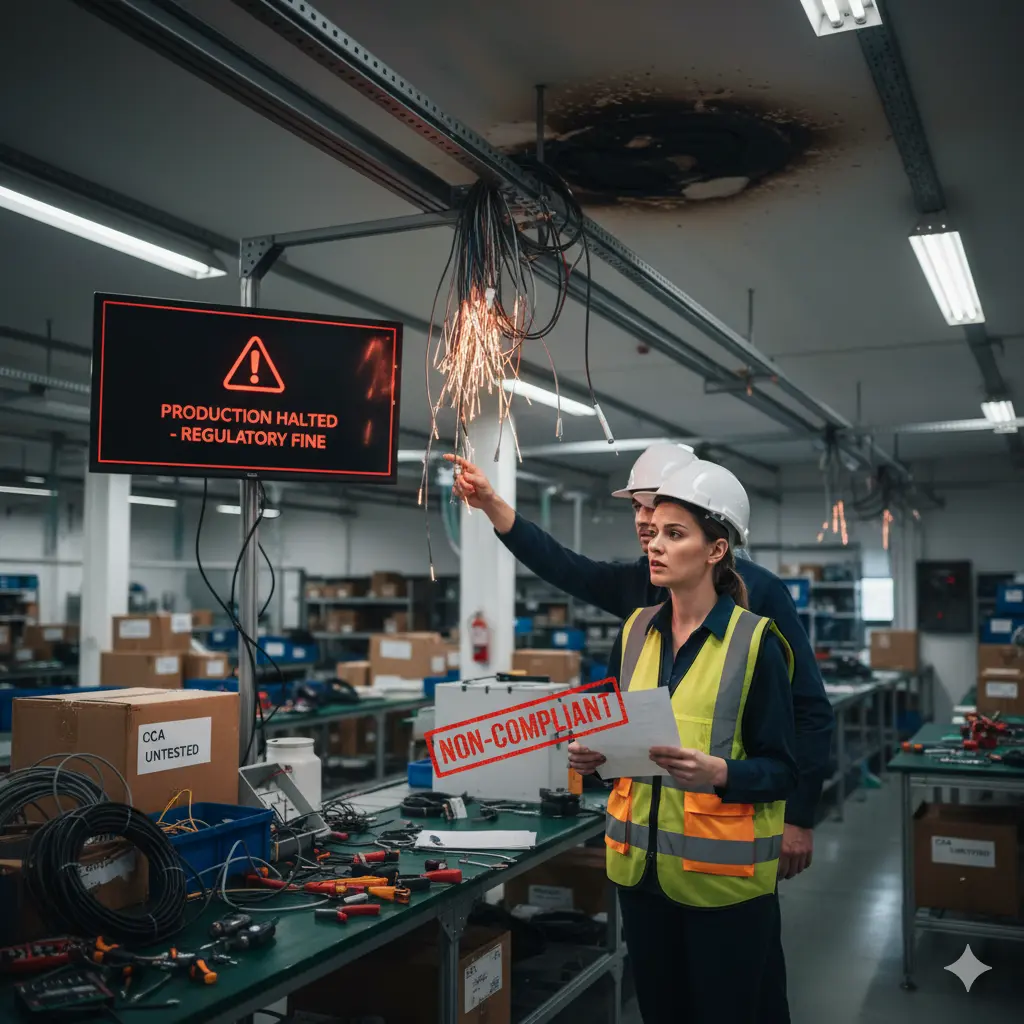
Selecting the wrong cable type—or worse, a non-compliant version—can derail entire production cycles. For OEMs, it’s not about upfront cost, but total cost of ownership (TCO) and compliance assurance.
-
Regulatory stakes: Failing UL or NEC fire safety inspections (Plenum/CMP) can halt construction and trigger fines.
-
Performance risk: Impedance mismatches in coaxial systems lead to reflection losses; poor shielding in Ethernet cables causes noise and packet loss.
-
Supply chain exposure: Inconsistent copper purity or counterfeit materials in imported cables create costly rework cycles and warranty claims.
In short, the choice defines not only signal integrity but also product reliability and certification success.
2. Technical Foundation: Understanding the Core Signal Differences
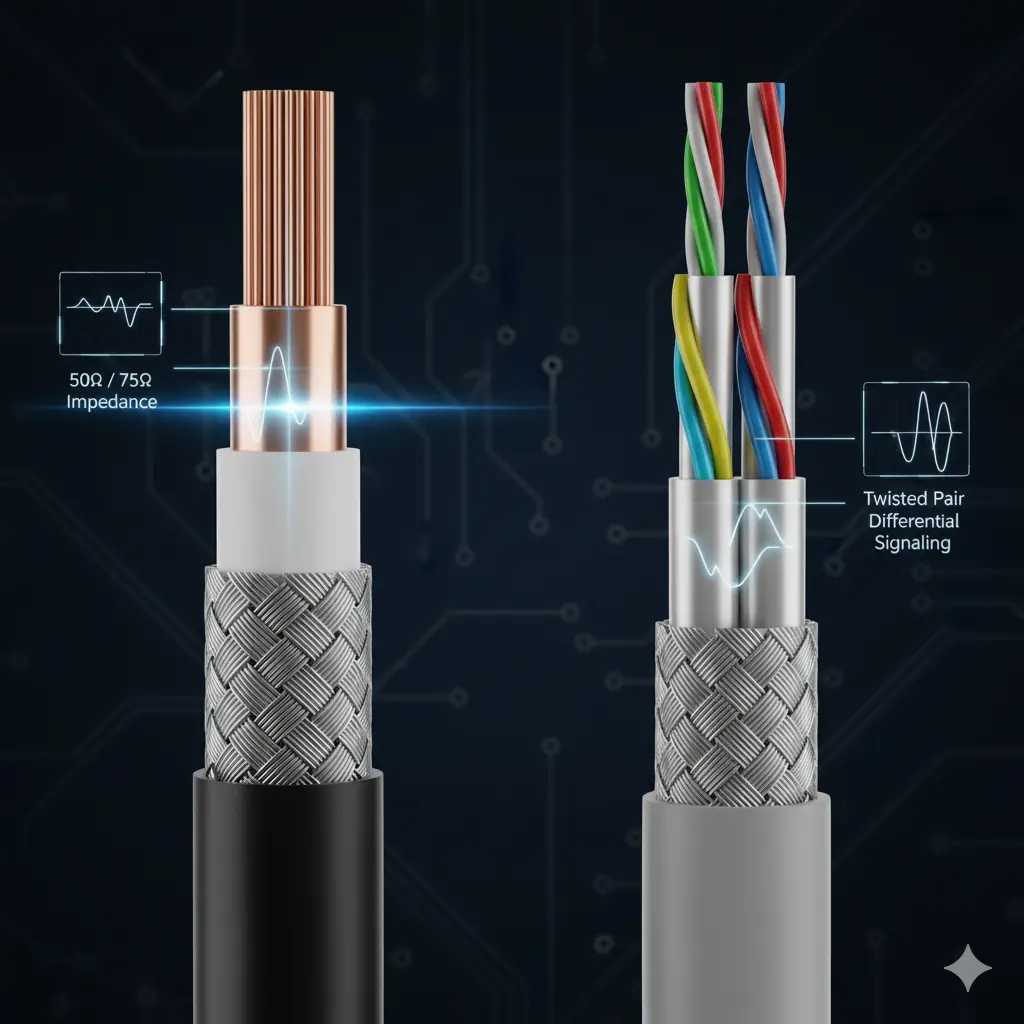
Twisted Pair vs. Coaxial Construction
A coaxial cable consists of a central copper conductor, surrounded by a dielectric insulator, a metallic shield, and a protective outer jacket. The signal travels through the center while the shield serves as the return path—creating an unbalanced yet highly controlled transmission line.
In contrast, Ethernet cables use four twisted pairs of copper wires, each carrying equal and opposite signals. This differential signaling cancels out external noise, making Ethernet ideal for data-heavy and electrically noisy environments.
Impedance Standards: 50Ω, 75Ω, and 100Ω
-
75Ω coax (e.g., RG-6, RG-59): Optimized for video broadcast and CATV.
-
50Ω coax (e.g., RG-58, RG-174): Standard for RF, antenna feeds, and industrial communication.
-
100Ω Ethernet (Cat 5e, Cat 6A, Cat 8): Standardized for data transmission and PoE.
Impedance mismatch—say, using 50Ω cable in a 75Ω system—causes reflections and loss, measurable via Voltage Standing Wave Ratio (VSWR). Precision manufacturing, as offered by JINGYI AUDIO, ensures consistent impedance across batches.
3. Real-World Performance: Which Cable Excels in Which Environment?
Signal Distance and Frequency Range
-
Coaxial cable can carry RF and analog signals over hundreds of feet with minimal loss—ideal for surveillance, broadcast, or distributed audio.
-
Ethernet cable supports data up to 40 Gbps (Cat 8) but typically over shorter distances (≤100m) before requiring regeneration.
Shielding and Noise Control
-
Coaxial relies on physical shielding—foil or braided metal—to block electromagnetic interference (EMI).
-
Ethernet relies primarily on differential signaling and twist pair geometry, with optional shielding (S/FTP or F/UTP) in high-noise environments.
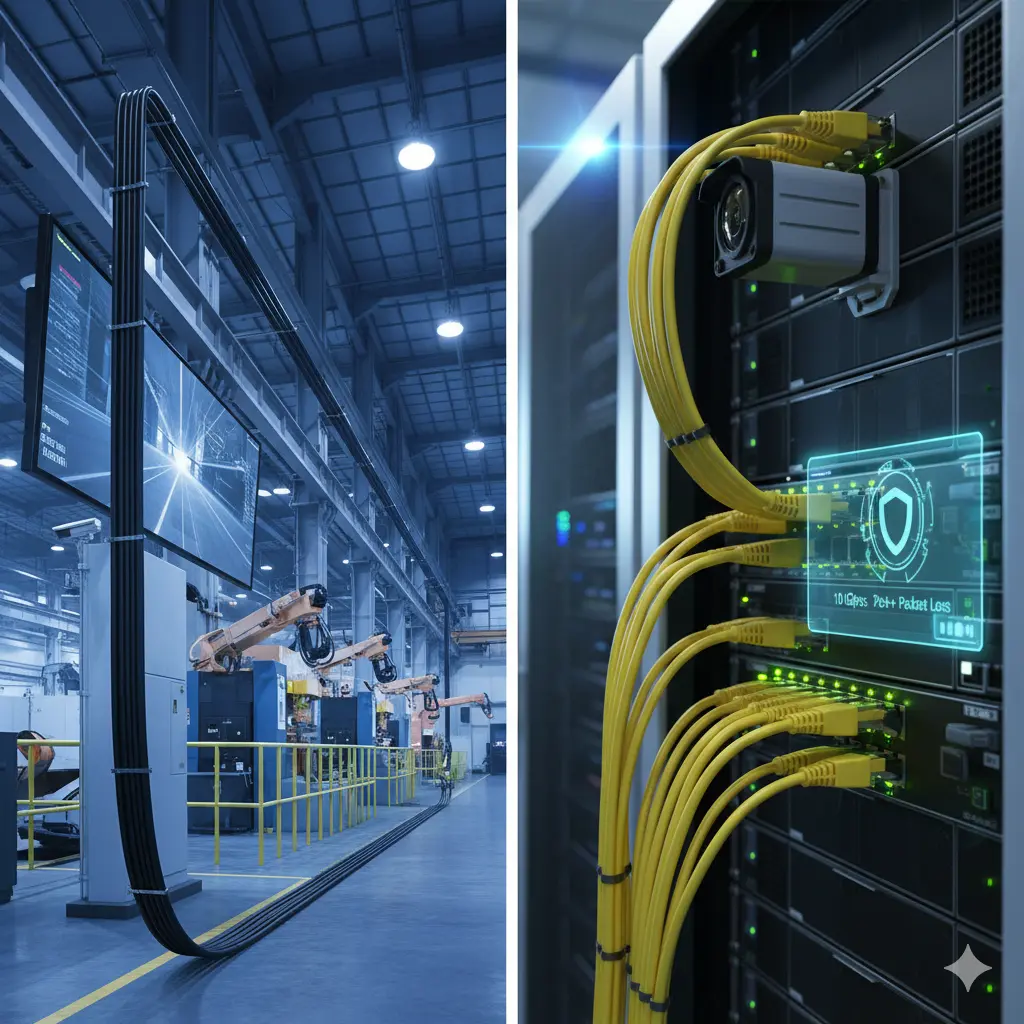
In industrial US settings—like factories or data centers—shielded Cat 6A/7 or quad-shield RG-6 remains the standard for EMI-heavy zones.
4. Case Studies: Real OEM Deployments from the Field
Case 1 – Long-Run Audio Distribution Using RG-6
In a popular Reddit A/V forum, a system integrator shared how an older US building used quad-shield RG-6 coax to distribute high-fidelity audio across 300-foot conduits. Ethernet couldn’t meet distance or attenuation requirements without repeaters. Coax offered a passive, low-cost, zero-latency solution—highlighting why coax remains essential in specialized analog systems.
Case 2 – PoE-Powered Industrial Cameras Using Cat 7 S/FTP
A US-based OEM integrated custom Cat 7 Ethernet cables from JINGYI AUDIO for its industrial camera systems. The goal: stable 10 Gbps PoE++ operation in a high-EMI factory. Custom shielding and TPE jackets ensured thermal stability and compliance with CMP/CMR standards, delivering predictable performance and reduced downtime.
5. Cost & Compliance: What US OEM Buyers Must Know
Material Quality and UL Testing
US OEMs should verify that suppliers provide UL-listed, RoHS-compliant, and NEC-rated cables (CMP for Plenum spaces). Cables must be tested for fire safety, dielectric strength, and impedance consistency.
Copper Purity vs. CCA
Pure copper conductors are mandatory for PoE and RF performance. Copper-Clad Aluminum (CCA) may seem cheaper but introduces voltage drop, heat buildup, and long-term failure risks.
| Material | Performance | Compliance Risk |
|---|---|---|
| Pure Copper | High conductivity, long lifespan | Low |
| CCA | High resistance, poor PoE reliability | High |
GEO-Optimized Sourcing
Importing cables to the US requires UL certification and customs documentation. OEMs sourcing from Asia-based partners like JINGYI AUDIO benefit from factory-level UL testing, pre-certified jacket materials, and predictable logistics timelines—key for maintaining US supply chain continuity.
6. When to Combine Coaxial and Ethernet: Hybrid OEM Systems
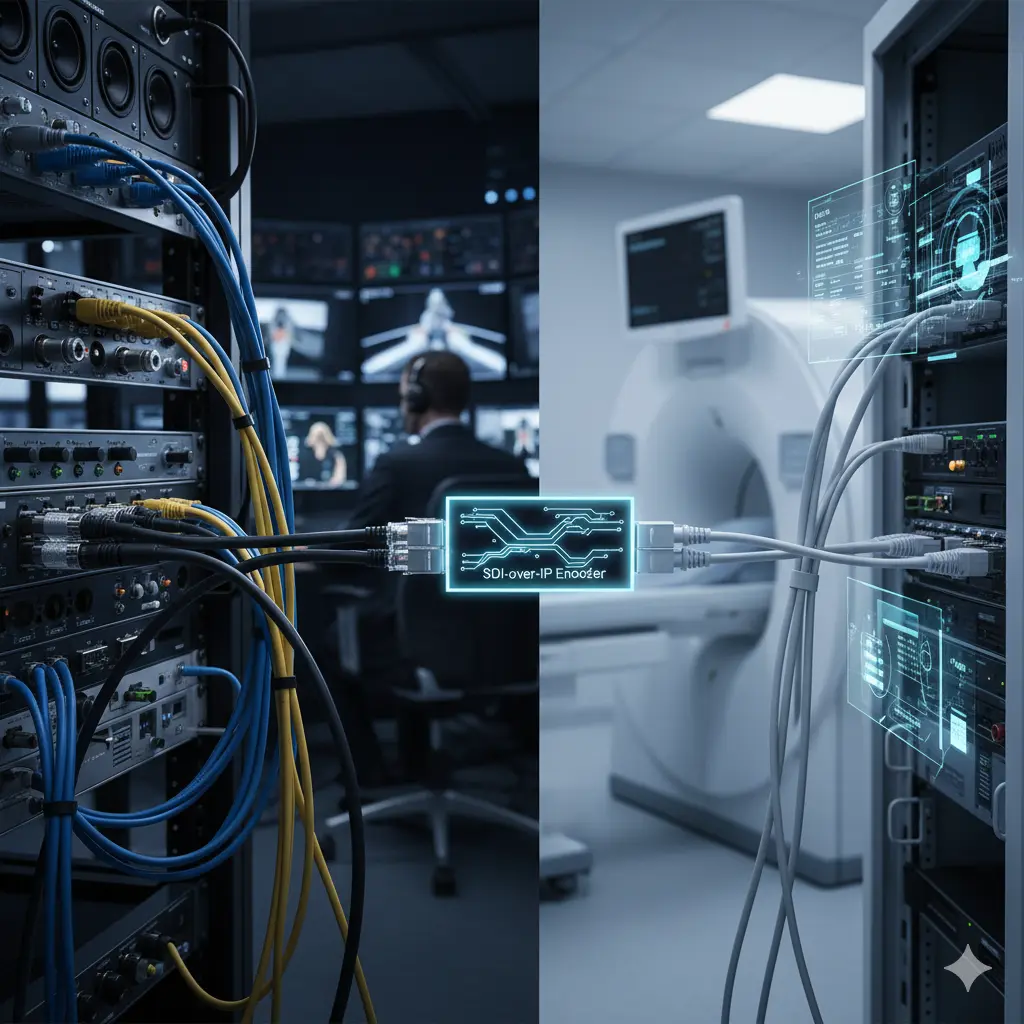
Complex systems often need both.
-
Stadium AV systems: Coax for long-distance video; Ethernet for control and IP streaming.
-
Medical imaging devices: Coax handles analog sensor data; Ethernet transmits patient information to servers.
Signal Bridging and Latency Trade-Offs
Devices like baluns (balancing coax to twisted pair) or SDI-over-IP encoders enable hybrid integration. However, each conversion adds latency and potential compression artifacts—critical factors for real-time applications like broadcasting or robotics.
7. Future Outlook: Copper vs Fiber in Next-Gen OEM Designs
Why Fiber Won’t Replace Coax
Despite fiber’s dominance in long-haul data transport, RF physics still demand coax in microwave, satellite, and broadcast systems requiring strict impedance control and low VSWR.
Ethernet Evolution
New standards like Cat 8 (2000 MHz, 40 Gbps) continue to enhance copper’s viability in smart manufacturing and Industry 4.0 environments, ensuring that copper cabling remains cost-effective and scalable for OEM applications through 2030.
8. OEM Procurement Checklist (US GEO-Optimized)
| Requirement | OEM Impact | Coax Focus | Ethernet Focus |
|---|---|---|---|
| UL & NEC Compliance | Fire safety, customs clearance | CMP-rated jacket | CMP/CMR jackets mandatory |
| Impedance Match | Signal reflection risk | 50Ω/75Ω testing via VNA | 100Ω certification via Fluke |
| Material Purity | Heat and signal loss | Verify pure copper | Mandatory for PoE++ |
| Customization | Integration flexibility | Shield type, color, capacitance | Jacket material, S/FTP shielding |
| Supply Stability | Lead time predictability | Tested batches | Factory-level QC (e.g., JINGYI AUDIO) |
9. Partner Spotlight: Why JINGYI AUDIO Is Trusted by US OEMs
JINGYI AUDIO has built its reputation by engineering customized, compliant, and high-fidelity cable solutions for B2B OEM buyers worldwide, particularly those targeting the US market.
Customization Expertise
-
Custom impedance tuning (50Ω/75Ω/100Ω)
-
Jacket materials rated for CMP, CMR, or industrial TPE
-
Specialized shielding (S/FTP, quad-foil) for low-loss RF and PoE++
B2B Supply Chain Reliability
With in-house testing, UL documentation support, and geo-optimized logistics, JINGYI AUDIO minimizes sourcing risks, ensuring every shipment arrives certified, compliant, and production-ready.
FAQ: Common OEM Questions About Coaxial vs Ethernet Cable
Q1. How do I choose between RG-6 and Cat 6A for OEM systems?
If your system handles RF or long analog video, use RG-6 coax. For IP or digital communication, Cat 6A Ethernet is optimal. Some systems integrate both for hybrid performance.
Q2. What’s the safest cable for Plenum installations in the US?
Only CMP-rated cables meet UL and NEC fire safety codes for air-handling spaces. Always verify manufacturer certification.
Q3. How can I test Ethernet performance before bulk shipment?
Use professional testers like Fluke DSX series to validate Category compliance (NEXT, Return Loss, Insertion Loss).
Q4. Is shielded Cat 7 necessary for industrial PoE?
In environments with high EMI—yes. S/FTP Cat 7 provides stable data and power integrity, especially for PoE++ (Type 4) systems.
Q5. How can I confirm an overseas manufacturer’s UL compliance?
Request the UL file number and cross-check it on the UL Product iQ database. Legitimate suppliers (like JINGYI AUDIO) provide documentation upfront.
Final Thoughts: Making the Right Cable Choice for OEM Success
Choosing between coaxial vs Ethernet cable isn’t just a technical decision—it’s a strategic sourcing choice that impacts performance, certification, and customer trust.
For OEMs targeting the US market, compliance, quality assurance, and supplier reliability are the ultimate differentiators.
For expert guidance or customized OEM cable sourcing, contact JINGYI AUDIO—a trusted manufacturing partner delivering UL-compliant, performance-tested, and OEM-ready cabling solutions for modern industrial, broadcast, and network applications.