



DMX Cable vs XLR Cable: What’s the Key Difference and Which One to Choose?
Key Takeaways
-
DMX and XLR cables serve distinct purposes: DMX cables are primarily for lighting control, while XLR cables are designed for audio signals.
-
The 3-pin DMX cable is the most common, although 5-pin DMX cables are available for more complex lighting setups.
-
XLR cables are vital for professional audio equipment like microphones, PA systems, and mixing consoles, providing clear, balanced audio signals.
-
The choice between DMX and XLR depends on your system’s needs—whether you are managing lighting control or audio performance.
What is the Difference Between DMX and XLR Cables?
DMX Cables: The Backbone of Lighting Control
DMX (Digital Multiplex) cables are specifically designed for lighting control systems, which is a common requirement in settings like theaters, concert venues, and event spaces. The function of these cables is to transmit digital signals that control lighting equipment such as LED panels, dimmers, and moving lights.
DMX cables are engineered to carry data over long distances—up to 1000 feet—without significant loss in quality. This long-distance capability makes them ideal for large-scale productions or setups where multiple lighting fixtures need to be controlled by a single system.
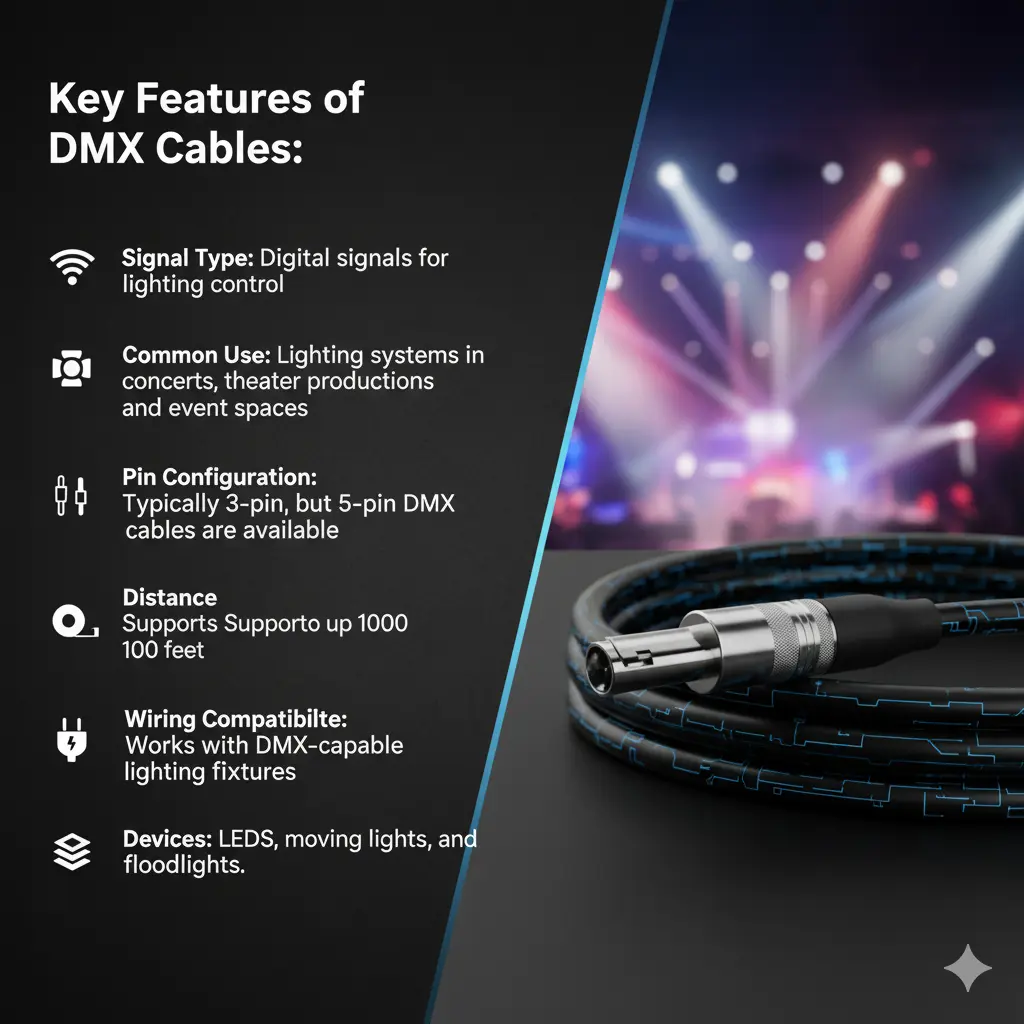
Key Features of DMX Cables:
-
Signal Type: Digital signals for lighting control
-
Common Use: Lighting systems in concerts, theater productions, and event spaces
-
Pin Configuration: Typically 3-pin, but 5-pin DMX cables are available for advanced setups
-
Distance: Supports up to 1000 feet
-
Wiring Compatibility: Works with DMX-capable lighting fixtures, such as LEDs, moving lights, and floodlights.
XLR Cables: Ensuring High-Quality Audio
XLR cables are most often associated with audio applications. These cables transmit balanced audio signals, ensuring minimal interference and noise, even over longer distances (up to 300 feet). XLR cables are used in professional sound systems for connecting devices like microphones, mixing consoles, and speakers.
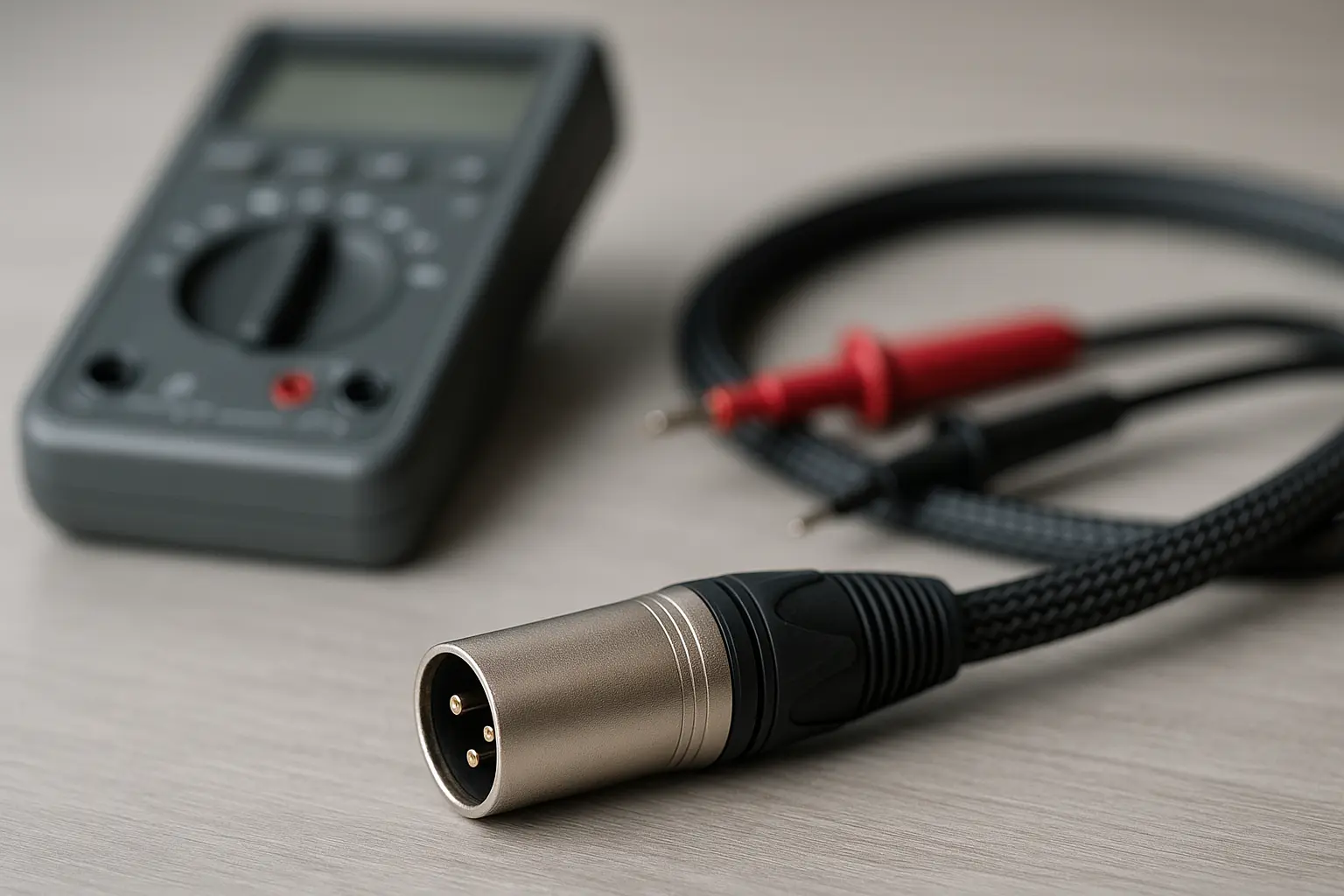
An important feature of XLR cables is their three-pin design that ensures balanced audio transmission. This helps eliminate hum and interference that can distort sound quality, which is crucial in high-stakes live performances, broadcast settings, and studio environments.
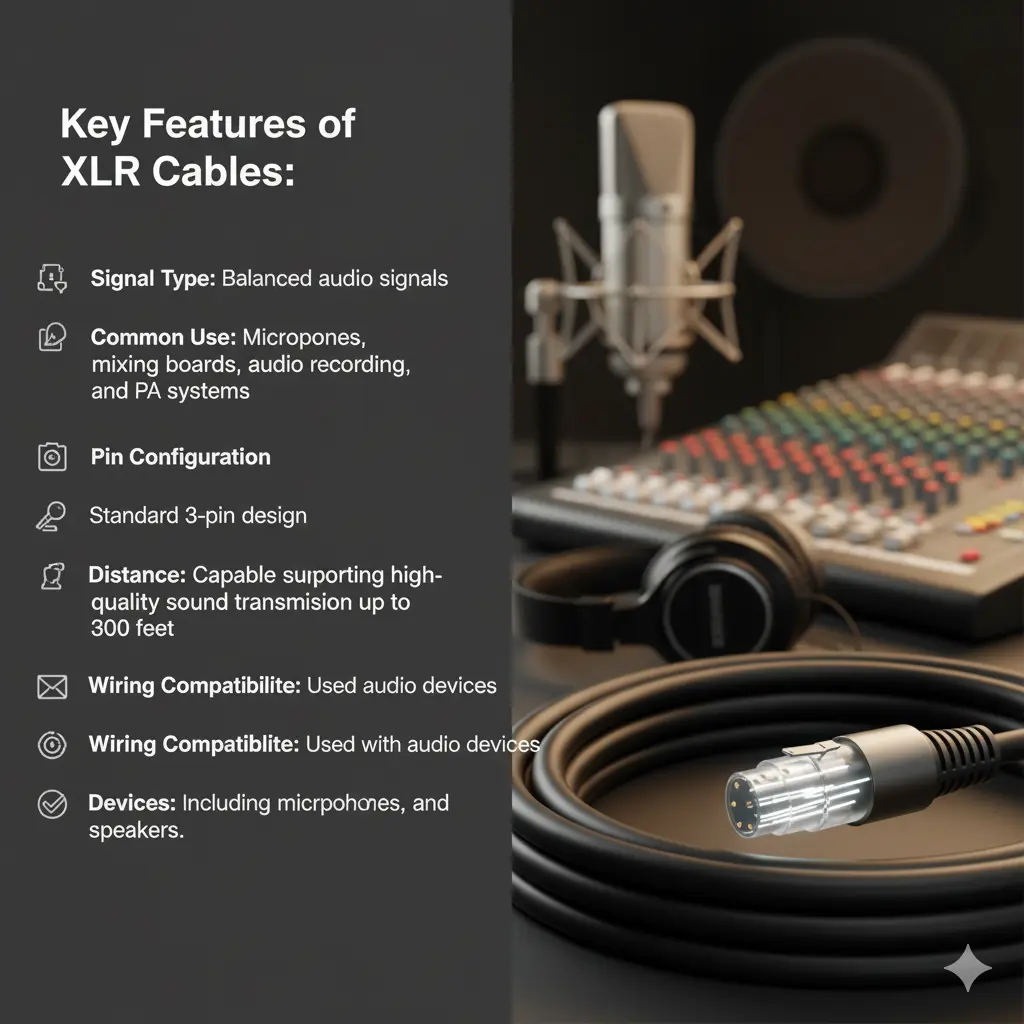
Key Features of XLR Cables:
-
Signal Type: Balanced audio signals
-
Common Use: Microphones, mixing boards, audio recording, and PA systems
-
Pin Configuration: Standard 3-pin design
-
Distance: Capable of supporting high-quality sound transmission up to 300 feet
-
Wiring Compatibility: Used with audio devices, including microphones, mixers, and speakers.
DMX Cable vs XLR Cable: Key Differences
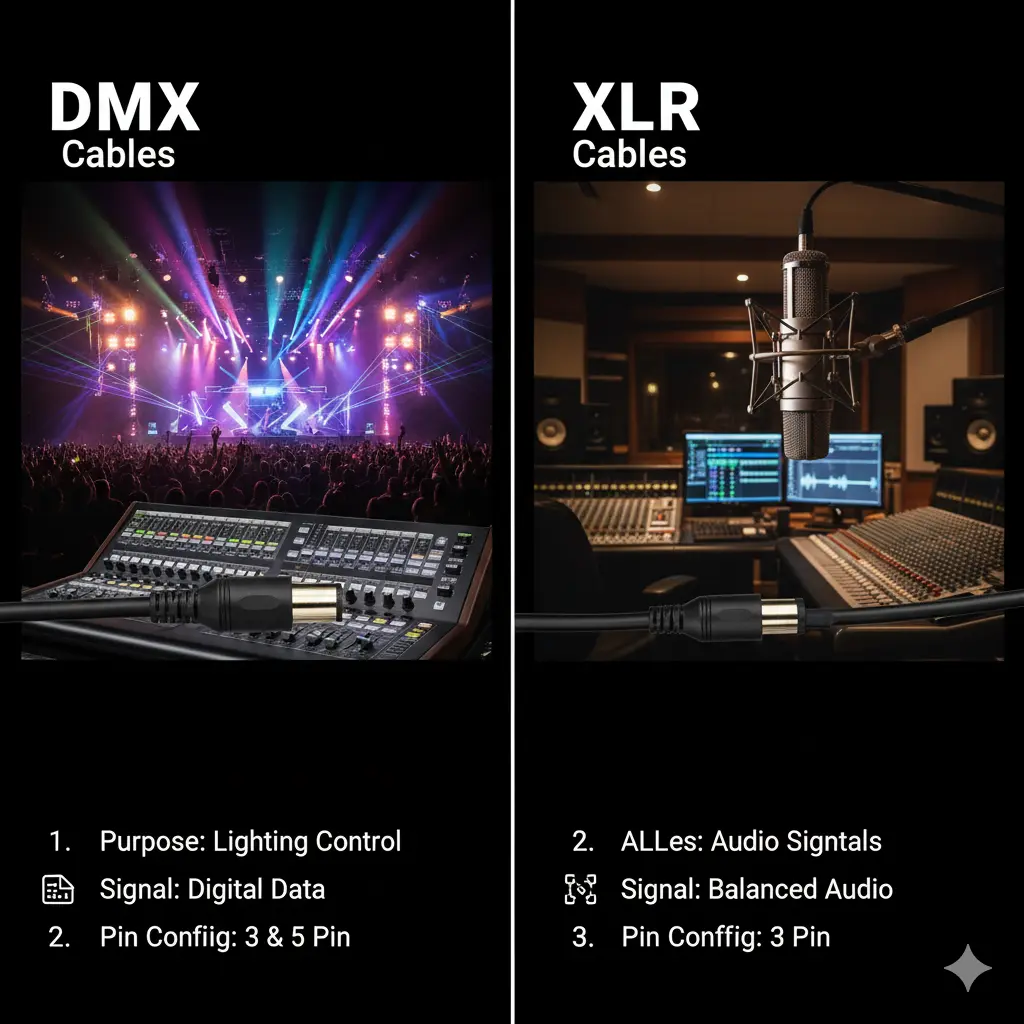
1. Purpose and Application
-
DMX Cables: DMX is specifically designed for lighting control. Whether you're setting up a concert stage, a theater production, or an event space, DMX cables are used to send data that adjusts the intensity, color, and movement of the lights.
-
XLR Cables: These are the go-to choice for audio equipment. Whether you're using microphones in a live concert or setting up a recording studio, XLR cables ensure that your audio signals are transmitted clearly and without noise.
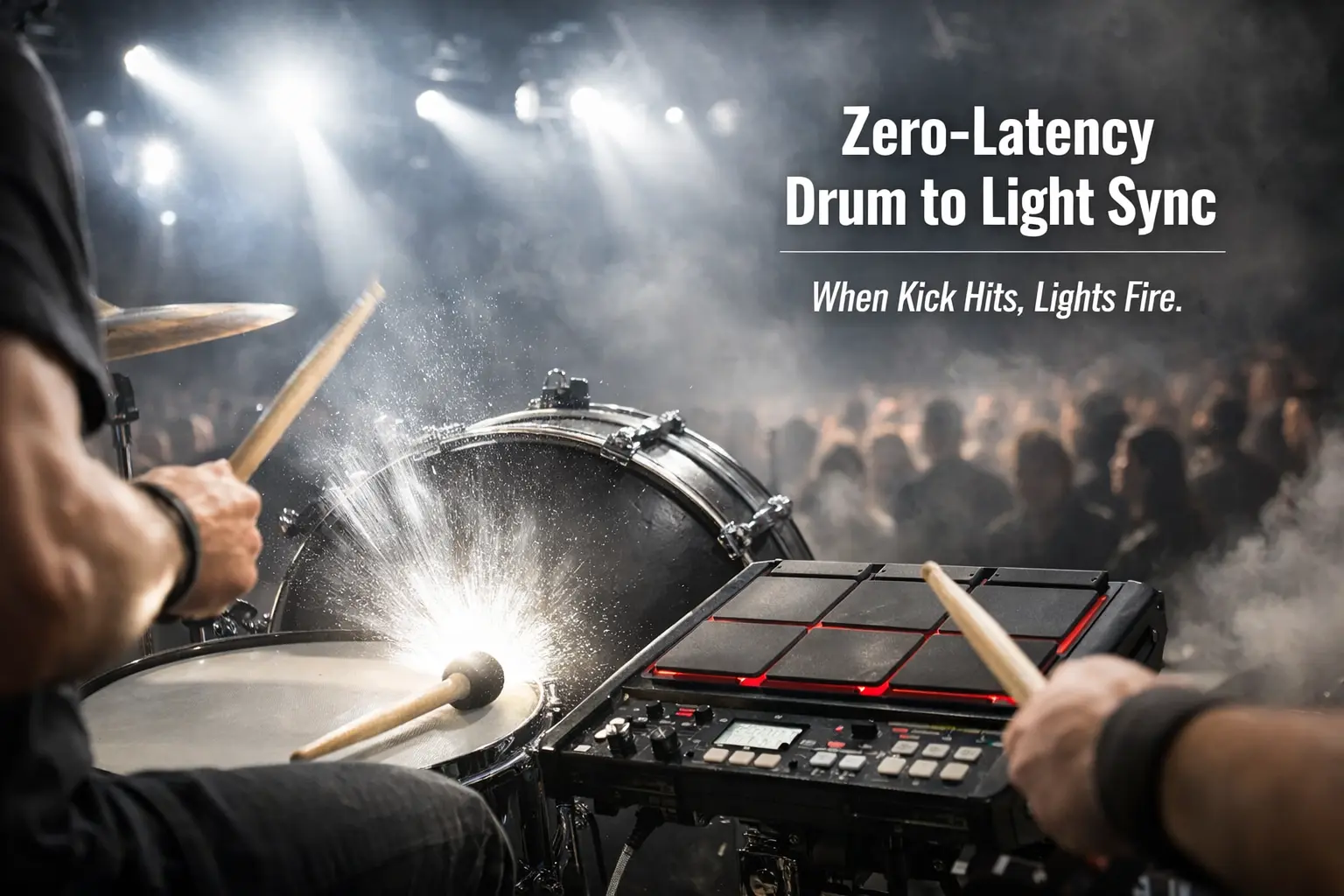
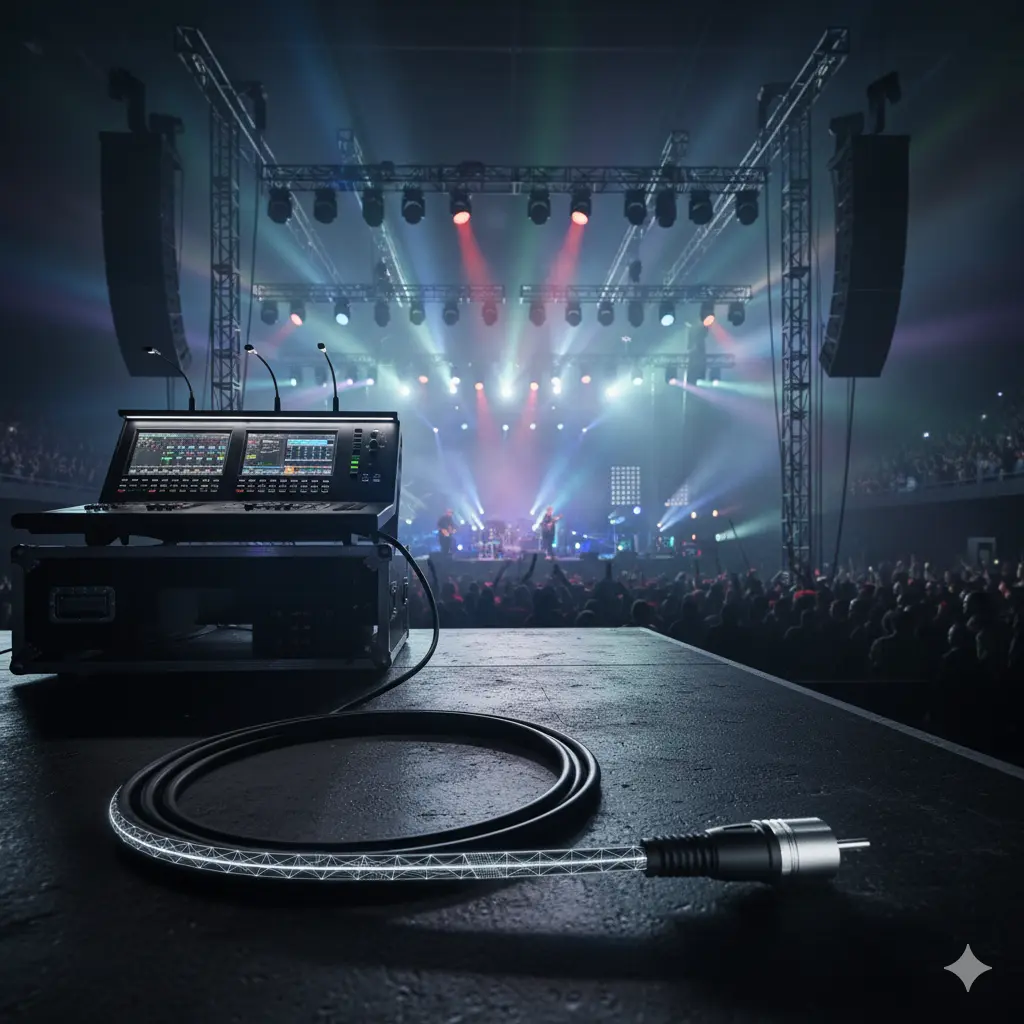
Real-Life Example: A live concert might involve using XLR cables to connect the microphone to the soundboard and DMX cables to control the stage lights, ensuring smooth performance without interference.
2. Signal Type and Transmission
-
DMX Cables transmit digital signals for controlling lighting. While data transmission is important, it’s not as critical to maintain analog precision as it is in audio systems.
-
XLR Cables use balanced audio signals to ensure a pristine transmission of audio. This balance minimizes electrical interference and guarantees that your audio remains clean, especially over long distances.
Real-Life Example: In a theater performance, DMX cables control color changes in stage lighting, while XLR cables manage the microphone signals, ensuring sound clarity for the audience.
3. Pin Configuration
-
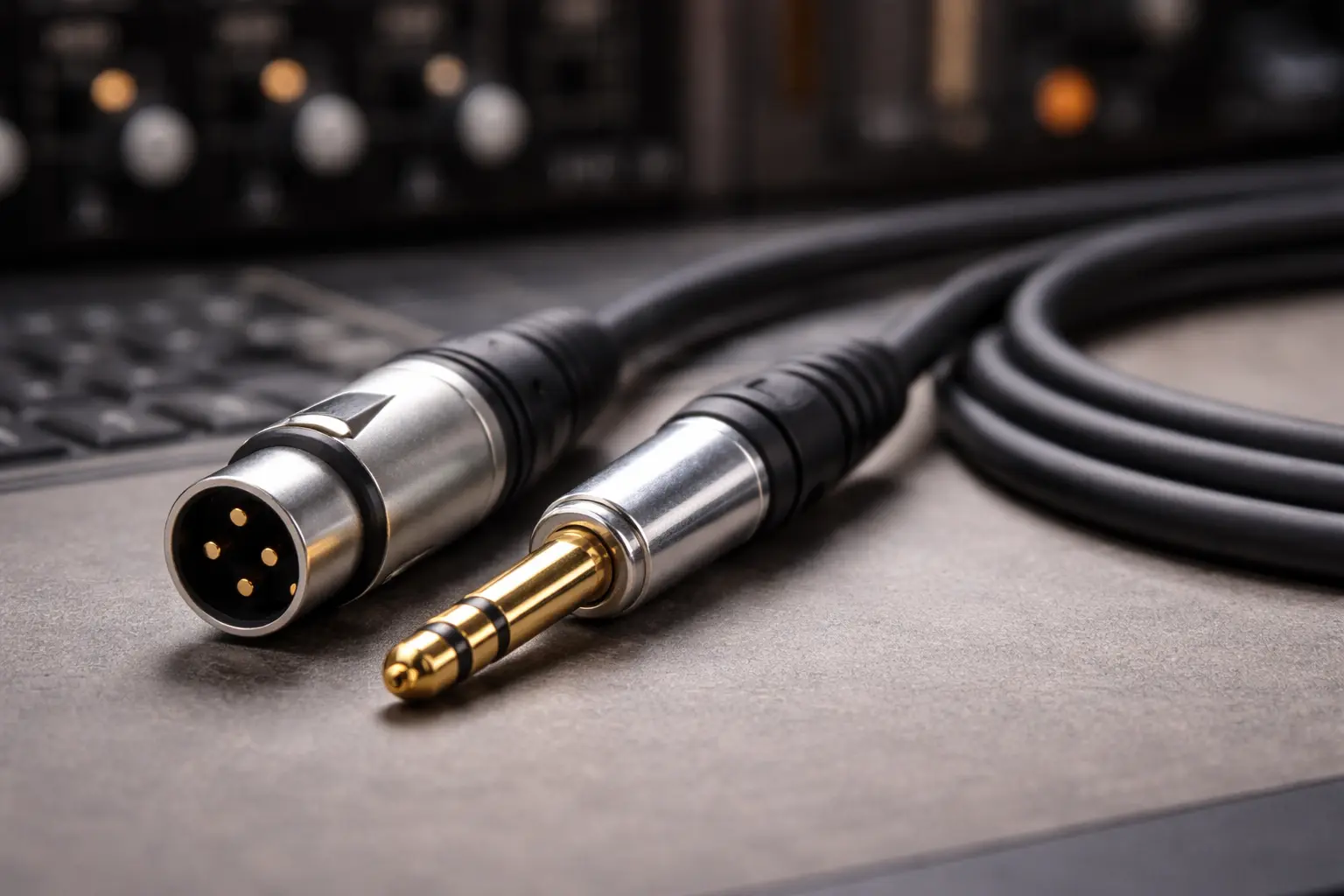
DMX Cables: Available in 3-pin or 5-pin configurations. 3-pin cables are the most common for standard lighting setups, while 5-pin cables are used for more advanced systems that require additional channels of control.
-
XLR Cables: Always have 3 pins. The three-pin setup is specifically designed for balanced audio transmission, which is necessary to prevent ground loops and interference.
4. Distance and Durability
-
DMX Cables: Designed for long-distance data transmission, DMX cables can be used over distances of up to 1000 feet. This is especially useful in venues with extensive lighting systems where the controller is far away from the lighting fixtures.
-
XLR Cables: While XLR cables also offer durability and long-distance transmission (up to 300 feet), they are more suited for audio systems, where precise sound quality is paramount.
When to Choose DMX or XLR Cable?
Choosing DMX Cable for Your Lighting Setup
If you're setting up a lighting control system for a theater or concert, then DMX cables are essential. They ensure that you can control multiple lighting fixtures over long distances, especially when working with large setups like moving lights or LED panels.
Case Study: In a major music festival, DMX cables are used to control hundreds of lighting fixtures from a single console. This system allows real-time adjustments to light colors and movements, helping create a dynamic atmosphere.
Choosing XLR Cable for Your Audio Setup
For audio equipment, XLR cables should be your go-to choice. Whether you're using them for microphones, mixers, or audio speakers, XLR cables ensure that you can transmit balanced audio signals over longer distances without signal loss.
Case Study: A recording studio uses XLR cables to connect microphones to mixing consoles, ensuring high-fidelity sound recording without noise interference.
FAQ: Frequently Asked Questions
Can I use an XLR cable for DMX?
While XLR cables and DMX cables look similar, XLR cables are not recommended for use in DMX systems. The wiring inside an XLR cable doesn’t support the digital data required for lighting control. It’s essential to use DMX-specific cables for lighting setups to avoid data transmission errors.
Can I use DMX cables for audio equipment?
DMX cables are not suitable for audio signals. DMX cables are made for digital data transmission and lack the necessary wiring for balanced audio signal transmission. Using DMX cables for audio could result in signal distortion and noise.
What is the difference between 3-pin and 5-pin DMX cables?
The main difference lies in the extra pins in a 5-pin DMX cable. While 3-pin cables are the industry standard for most lighting setups, 5-pin cables provide additional data channels for advanced DMX setups. If you're working with a simple lighting system, a 3-pin DMX cable is sufficient, but for complex systems, 5-pin cables are the better choice.
How long can I run DMX or XLR cables without losing signal quality?
-
DMX cables can transmit signals effectively for distances up to 1000 feet, but this distance can vary based on the cable's quality and the number of devices in the chain.
-
XLR cables are best for audio transmission up to 300 feet. For longer distances, signal degradation can occur unless you use signal boosters or active cables.
Can I use DMX and XLR cables together in a live performance?
Yes! In a live event or concert, DMX cables and XLR cables often work together seamlessly. DMX cables control the lighting, while XLR cables manage audio signals from microphones, making both cables integral to creating a dynamic and balanced live performance experience.
What’s the best cable for a live sound system?
For live sound systems, XLR cables are the best choice. They are designed for balanced audio signals, ensuring that your sound system delivers clear, professional-quality audio. DMX cables will only be necessary if you're managing the lighting in the same setup.
Conclusion: Choosing the Right Cable for Your Setup
Whether you’re working on a lighting setup or a sound system, choosing the correct cable is crucial for ensuring optimal performance. DMX cables are ideal for controlling lighting systems, while XLR cables are essential for managing audio equipment. Both cables play important roles in modern entertainment and event setups.
For US-based businesses looking for high-quality OEM cables, visit Jingyi Audio for top-notch DMX and XLR cables that suit your needs. For more information, visit site_5615465d-0395-48c6-b01f-dc3d38213fc5.
Citations:
-
Hosa Technology - What is the Difference Between XLR and DMX Cables?
https://hosatech.com/blogs/blog/what-is-the-difference-between-xlrs-and-dmx-cables -
GearIT - Understanding DMX Cables: The Vital Component of Modern Lighting Control
https://gearit.com/blogs/gearit/understanding-dmx-cables-the-vital-component-of-modern-lighting-control -
LeadsDirect - DMX Wiring Guide
https://leadsdirect.co.uk/technical-library/pinouts-wiring-diagrams/dmx-wiring -
Quora - What’s the Difference Between XLR and DMX Cables?
https://www.quora.com/What-is-the-difference-between-XLR-and-DMX-cables -
RS Components - A Guide to XLR Cables
https://uk.rs-online.com/web/generalDisplay.html?id=xlr-cables-guide -
Hollyland - What Is an XLR Cable Used For? A Complete Guide with Pros, Cons, and Troubleshooting
https://www.hollylandtech.com/blogs/what-is-an-xlr-cable-used-for -
SoundGuys - XLR vs. 3.5mm: What's the Difference?
https://www.soundguys.com/xlr-vs-3-5mm-18135/ -
Reddit - Are 3-Pin DMX Cables Wired Differently Than Standard XLR Cables?
https://www.reddit.com/r/livesound/comments/lhfzpo/are_3pin_dmx_cables_wired_differently_than/ -
LiveSound International - DMX vs. XLR: Understanding Cable Differences for Live Sound and Lighting Systems
https://www.livesoundint.com/articles/dmx-vs-xlr-understanding-cable-differences -
Jingyi Audio - Professional DMX and XLR Cables for Lighting and Sound Systems
https://site_5615465d-0395-48c6-b01f-dc3d38213fc5