


DMX vs XLR: The Ultimate 2025 Guide to Choosing the Right Cable for Your Stage and Studio
Quick Answer
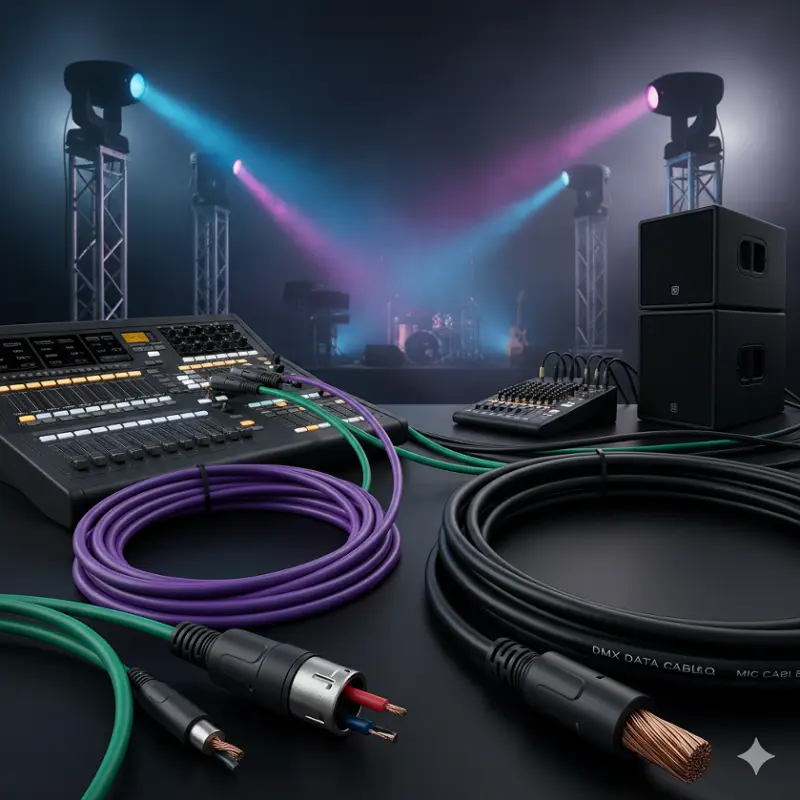
The difference between DMX and XLR cables lies in their purpose and impedance: DMX cables (110–120Ω) are designed for digital lighting control, while XLR audio cables (45–75Ω) are built for analog audio signals. Swapping them can cause flickering lights or muddy audio, especially over long runs. Always use the right cable for reliability.
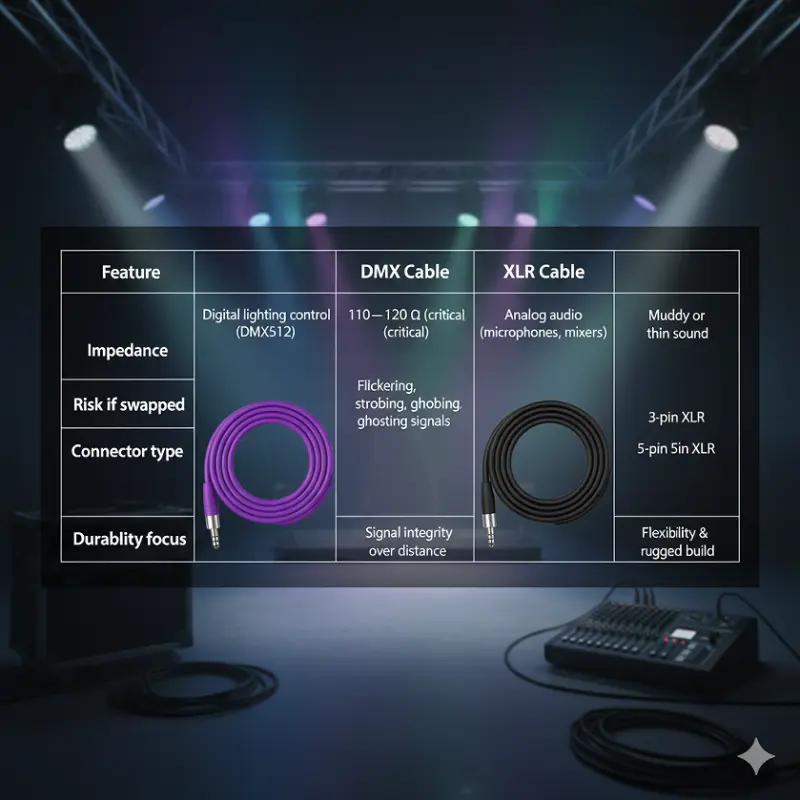
DMX vs XLR at a Glance (Comparison Table)
|
Feature |
DMX Cable |
XLR Cable |
|
Purpose |
Digital lighting control (DMX512) |
Analog audio (microphones, mixers) |
|
Impedance |
110–120 Ω (critical) |
45–75 Ω (less strict) |
|
Risk if swapped |
Flickering, strobing, ghosting signals |
Muddy or thin sound |
|
Connector type |
3-pin or 5-pin XLR |
3-pin XLR |
|
Durability focus |
Signal integrity over distance |
Flexibility & rugged build |
Key Takeaways
• Primary Use:DMX = lighting control, XLR = audio transmission.
• Critical Difference:Impedance matching (110–120Ω vs 45–75Ω).
• The Risk of Mixing:Wrong cable causes glitches, flicker, or audio loss.
• Golden Rule:Always use purpose-built cables for reliability.
The Great Connector Confusion
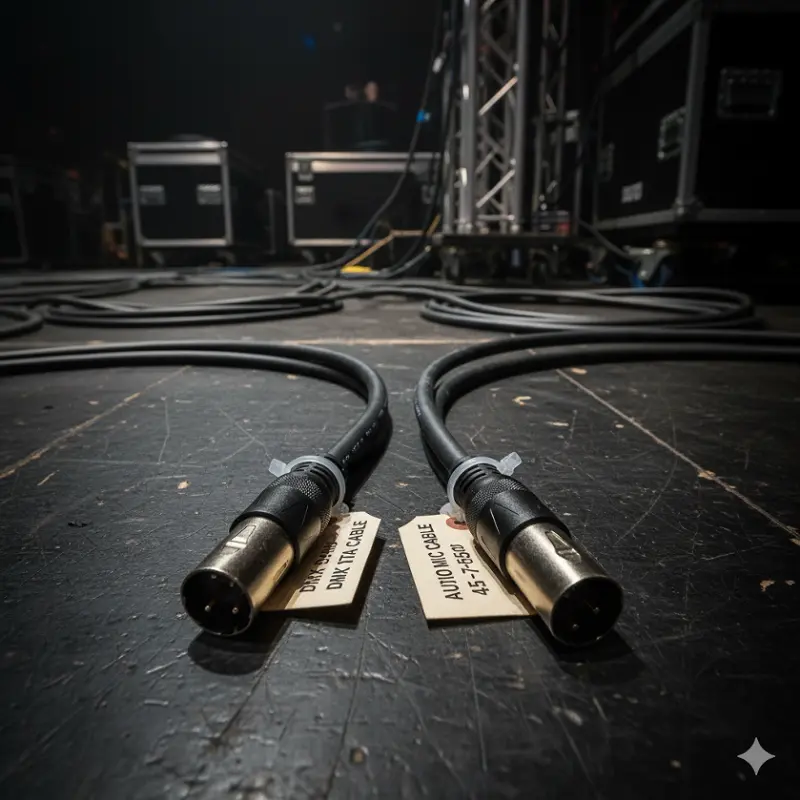
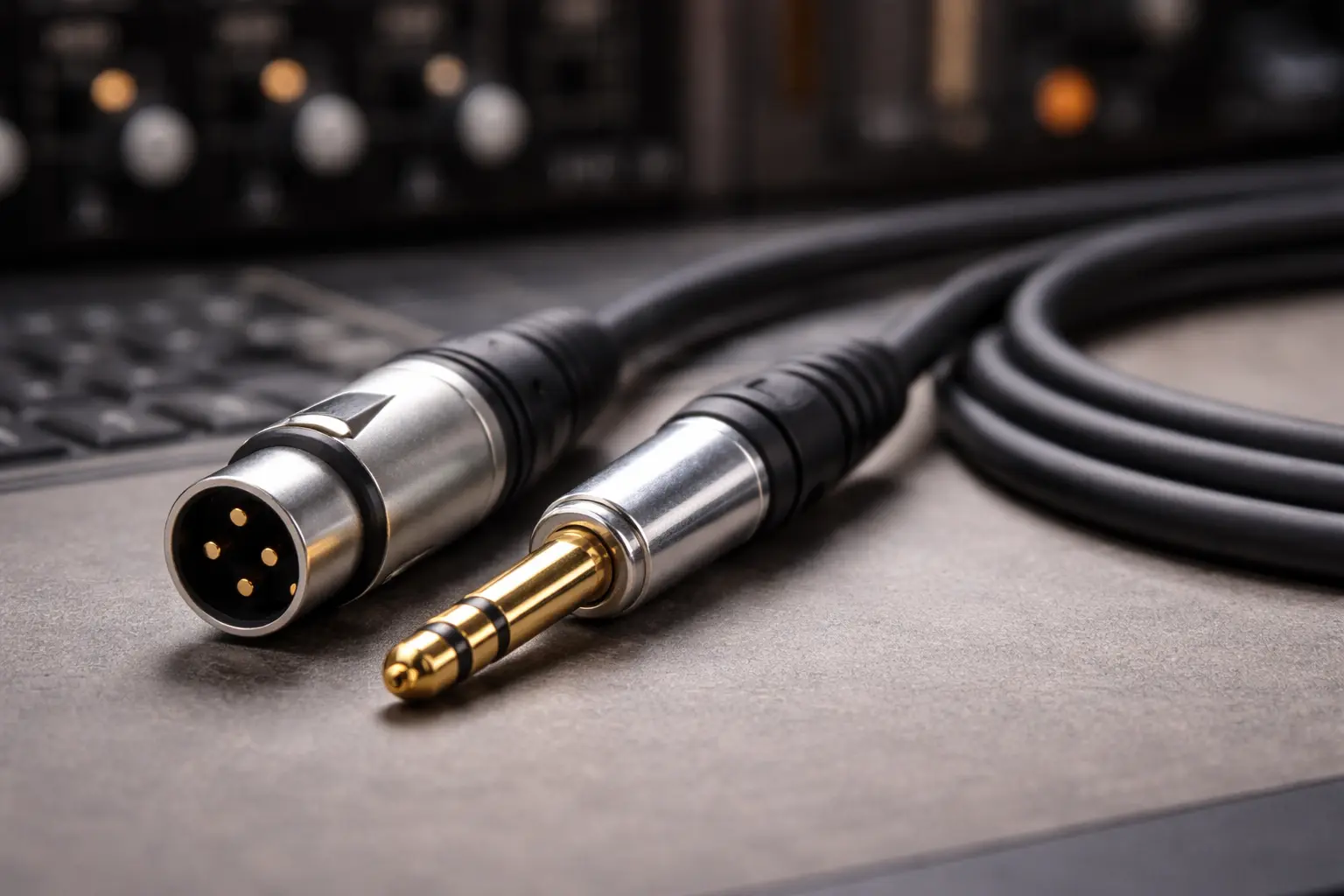
Why do DMX and XLR look identical? Because when the USITT developed DMX512 in 1986, they chose the existing XLR connector to save costs and speed adoption. This decision made professional lighting affordable but created decades of confusion, since cables that look the same are not electrically the same.
Real-World Example

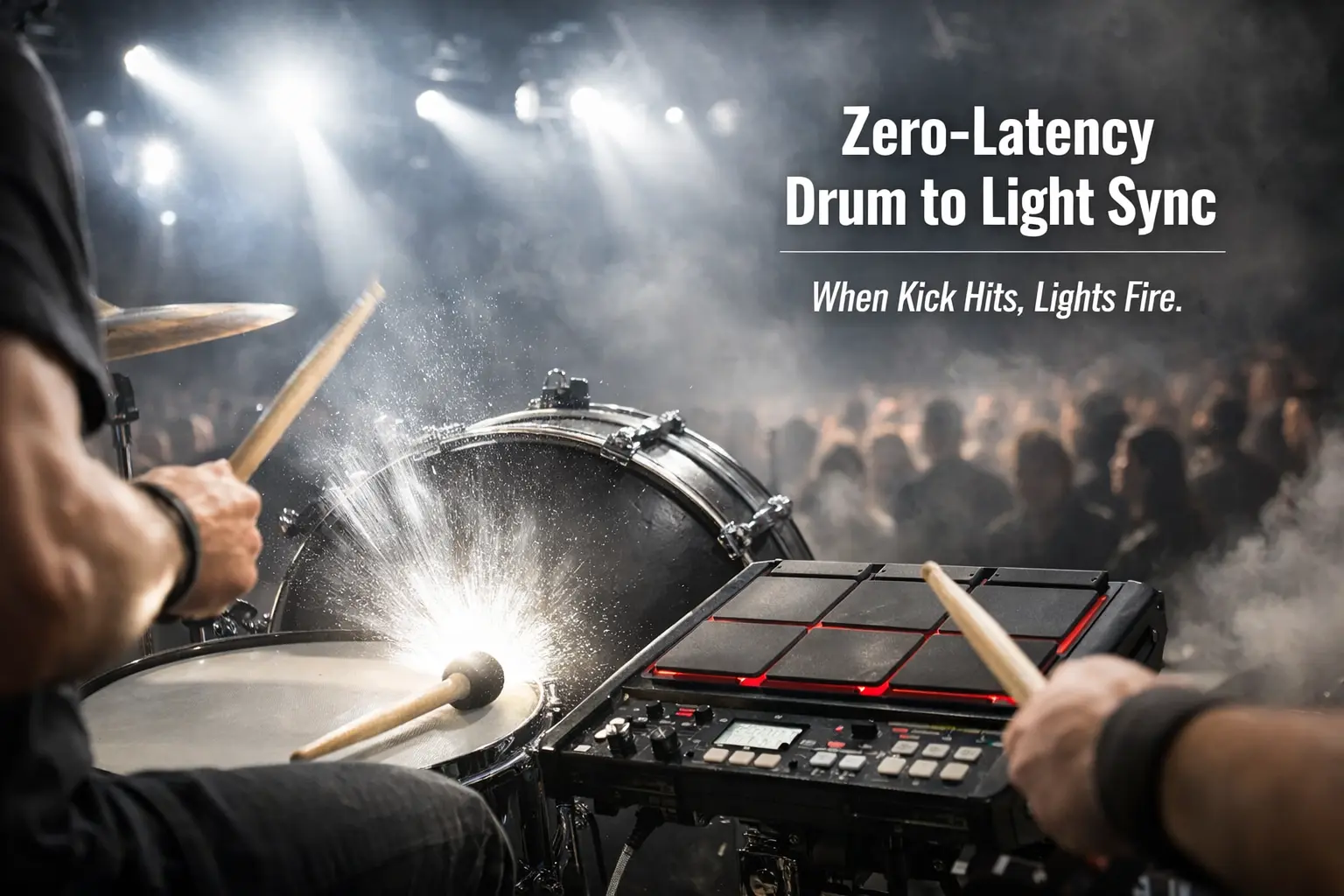
A DJ in Las Vegas sets up at a wedding. He plugs in what looks like the right cable. Halfway through the first dance, lights flicker uncontrollably. The culprit? He used an audio XLR cable instead of a DMX data cable. This is not a “glitch” — it’s an impedance mismatch.
Under the Hood: The Science Behind the Cables
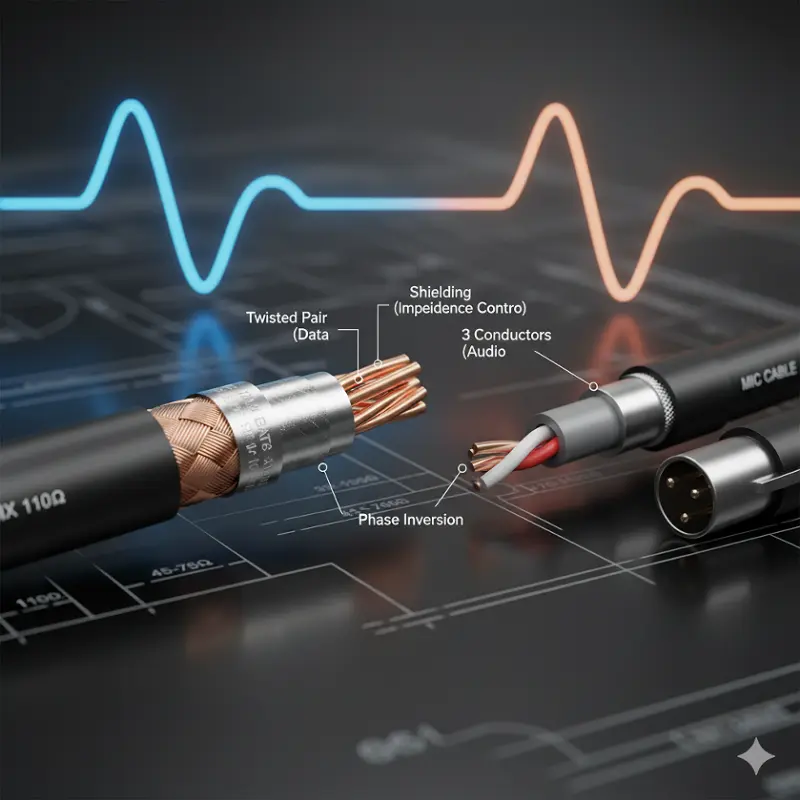
DMX Cables (Lighting Control)
•Built on RS-485 protocol
•Control up to 512 channels per universe
•Require 110–120Ω impedance
•Use twisted pair conductors + shielding
•Without proper impedance: signal reflections = flickering lights
👉 Think of it like plumbing: the wrong pipe diameter creates turbulence. The wrong cable creates digital “echoes.”
XLR Cables (Audio)
•Standard for balanced analog audio
•Uses 3-pin system(ground, hot, cold)
•Cancels noise via phase inversion
•Emphasis on durability, flexibility, shielding for audio range
•Designed for microphones, mixers, speakers
"But It Worked Last Time!" – The False Confidence
•XLR for DMX?Might “work” in a small setup but fails in long runs (>100 ft) or complex rigs. Results: random strobing, ghosting, loss of sync.
•DMX for audio?Less catastrophic, but causes muddy sound and cables wear out faster in stage use.
💬 Reddit r/techtheatre user quote: “I’ve seen DMX down a 200ft audio snake work fine on LEDs, but I’d never trust it on movers where timing matters.”
Pro Cable Management: Avoiding Disaster
✅ Color-Coding Strategy
•DMX cables:purple, green, or blue
•Audio XLR:standard black
•Available at Sweetwater, Guitar Center, Accu-Cable
✅ DMX Terminator (Don’t Forget!)
•Place a 120Ω resistorat the end of every DMX chain
•Prevents signal reflectionsthat cause flicker
•Costs $5, saves hours of troubleshooting
✅ 3-Pin vs 5-Pin DMX
•Standard:5-pin (DMX512 spec)
•Reality:3-pin dominates budget/mid-range gear
•Solution: adapters exist, but label clearly to avoid mix-ups
Advanced Notes & Entity Enrichment
•AES/EBU cables (110Ω)can substitute for DMX safely
•Cat5e/Cat6 shielded cableworks well for long DMX runs with adapters
•Phantom power risk:Accidentally plugging DMX gear into audio lines carrying 48V phantom power can damage electronics
•MIDI vs DMX:Both digital protocols, but completely different purposes
Frequently Asked Questions
Will the wrong cable damage equipment?
Usually no, but performance suffers. Exception: phantom power into DMX gear can cause real damage.
How to tell DMX from XLR if both are black?
Check the jacket text: DMX cables say DMX, Data Cable, 110Ω; audio says Mic Cable, 45Ω–75Ω.
Can AES/EBU digital audio cables be used for DMX?
Yes. They share the same impedance (110Ω). Many pro installs use them.
Can I use Cat5/Cat6 for DMX in my church?
Yes, shielded Cat5e/Cat6 with adapters is common in large venues.
Is it worth paying more for DMX cables for small setups?
Yes. Even one flicker at a wedding ruins the moment. Reliability = reputation.
It’s More Than a Cable: It’s Reliability
The real lesson: a $10 cable can jeopardize a $10,000 event. Professionals:
•Keep audio and lighting cables separate
•Use DMX-rated cables onlyfor lighting
•Maintain labeling & color systems
•Always terminate DMX chains
Citations
- Hosa Technology. "XLR vs. DMX: What's the Difference?" Technical Press Release, 2024. Available at: https://hosatech.com/press-release/xlr-dmx/
- Sweetwater Education Center. "Understanding DMX Control Systems." Professional Audio Education Series, 2024. Available at: https://www.sweetwater.com/sweetcare/articles/understanding-dmx/
- Learn Stage Lighting. "Can I Use Microphone Cables for DMX Lighting?" 2024. Available at: https://www.learnstagelighting.com/can-i-use-microphone-cables-for-dmx-lighting/
- Reddit r/techtheatre Community. "DMX vs Audio XLR Cables - Same Thing?" Technical Discussion Thread, 2024. Available at: https://www.reddit.com/r/techtheatre/comments/dmx_vs_audio_xlr/
- Professional Lighting and Production Magazine. "Cable Management Best Practices for Live Events." Industry Standards Guide, 2025. Available at: https://www.plsn.com/articles/cable-management-best-practices/