

Fiber Optic vs Ethernet (2025): A Practical OEM Cable Guide for U.S. Manufacturers
Key Takeaways
- Fiber optic cables are best for long-distance, high-speed, and noise-sensitive connections.
- Ethernet cables (Cat6a/Cat7) remain ideal for short runs and Power over Ethernet (PoE) devices.
- Many U.S. OEM networks now use a hybrid setup: fiber for backbones and Ethernet for edge devices.
- Jingyi Audio provides OEM-grade cables that meet UL and RoHS standards.
- Real users on forums say fiber SFP+ ports stay cooler and last longer than 10GBASE-T copper ports.
Fiber Optic vs Ethernet — What U.S. OEM Engineers Should Know
When designing modern network systems, the fiber optic vs Ethernet question often decides how fast data moves and how reliable your equipment stays in the field.
For OEM network hardware makers in the U.S., this choice affects long-term performance, compliance, and overall build cost. Both fiber and Ethernet have strong points — the key is knowing where each fits.
Fiber Optic Cabling — Speed and Distance Without the Noise
How Fiber Works
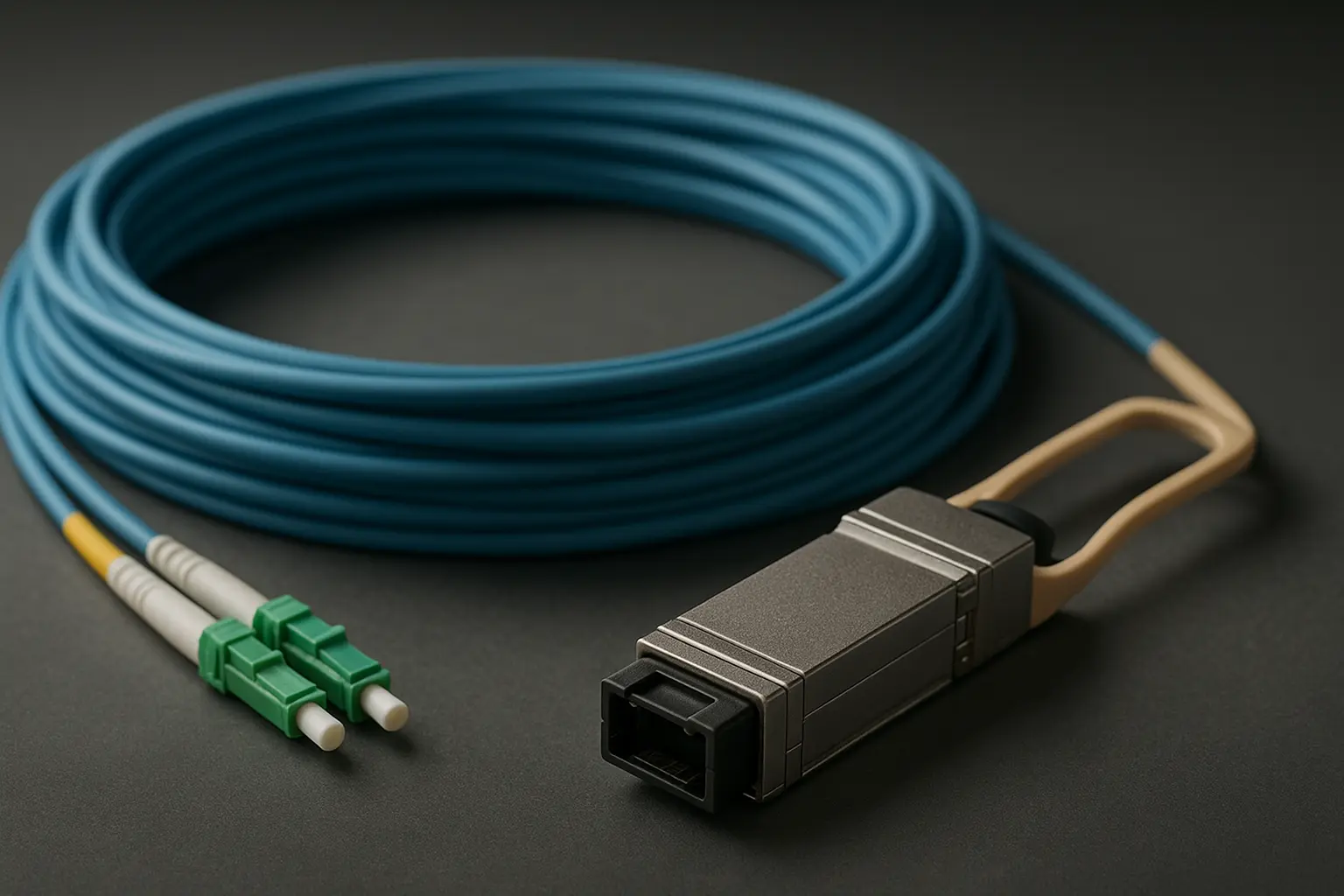
Fiber cables send light signals through thin glass or plastic strands. Because they carry light instead of electricity, they don’t pick up electromagnetic noise from nearby power cables or radio signals. This makes them ideal for data centers, industrial plants, and broadcast studios where electrical interference is common.
Takeaway: Fiber offers faster speeds, longer reach, and clean signal quality — perfect for OEM backbones.
Single-Mode and Multi-Mode Fiber
- Single-Mode (OS2): Works over several miles, ideal for large campuses or carrier networks.
- Multi-Mode (OM3/OM4): Handles up to 500 meters, often used for indoor OEM or factory setups.
Real OEM Example:
A California-based AV integration company uses Jingyi Audio’s rugged opticalCON cables to connect control rooms and stage racks more than 500 meters apart. They’ve reported lower noise and easier cable handling during events.
Ethernet Cabling — Reliable and Ready for PoE
What Makes Ethernet Useful
Ethernet cables (like Cat6a and Cat7) use twisted copper pairs to move electrical data signals. Unlike fiber, Ethernet can deliver both data and power using PoE, which reduces wiring needs for OEMs producing cameras, sensors, or smart devices.
PoE Benefits for OEM Designers
A single Ethernet line can power and connect a device up to 100 meters away. For OEMs designing access points or network switches, this means simpler assembly and fewer power supplies.
Takeaway: Ethernet simplifies builds and lowers cost — ideal for powered edge devices.
Comparing Fiber and Ethernet — Side by Side
|
Feature |
Fiber Optic Cable |
Ethernet Cable (Cat6a/Cat7) |
OEM Insight |
|
Speed |
100–400 Gbps |
1–40 Gbps |
Fiber handles bigger data loads |
|
Distance |
500 m–40 km |
Up to 100 m |
Fiber for long runs |
|
Noise Resistance |
Immune to EMI/RFI |
Needs shielding |
Fiber cleaner in high-EMI zones |
|
Power (PoE) |
No |
Yes |
Copper for powered devices |
|
Installation |
Requires training |
Easy, plug-and-play |
Copper faster to install |
|
Cost |
Higher upfront |
Lower initial |
Depends on project scope |
Takeaway: Fiber wins in speed and distance; Ethernet wins in power delivery and simplicity.
Feedback From Real Users and Engineers
Homelab and Tech Community
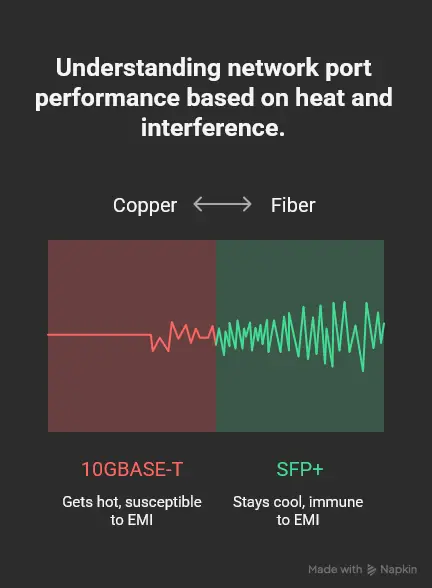
Users in the r/HomeLab forum have noted that 10GBASE-T copper ports can get uncomfortably hot, sometimes exceeding safe operating temperatures. In contrast, SFP+ fiber ports stay cool and draw less power. OEM engineers who build compact switches or fanless gear often prefer fiber for this reason.
“After switching to SFP+ fiber, my rack runs cooler and uses less power,” one user wrote.
Pro AV and Industrial Installations
Sound engineers and network installers using Dante or AV-over-IP systems report better performance with Cat7 and fiber cables in large venues. These environments have lighting rigs, wireless transmitters, and power lines that create EMI, so fiber’s immunity ensures clean audio and video.
Takeaway: Real-world feedback confirms that fiber reduces heat, saves power, and resists interference.
Key Considerations for U.S. OEMs
Compliance and Quality
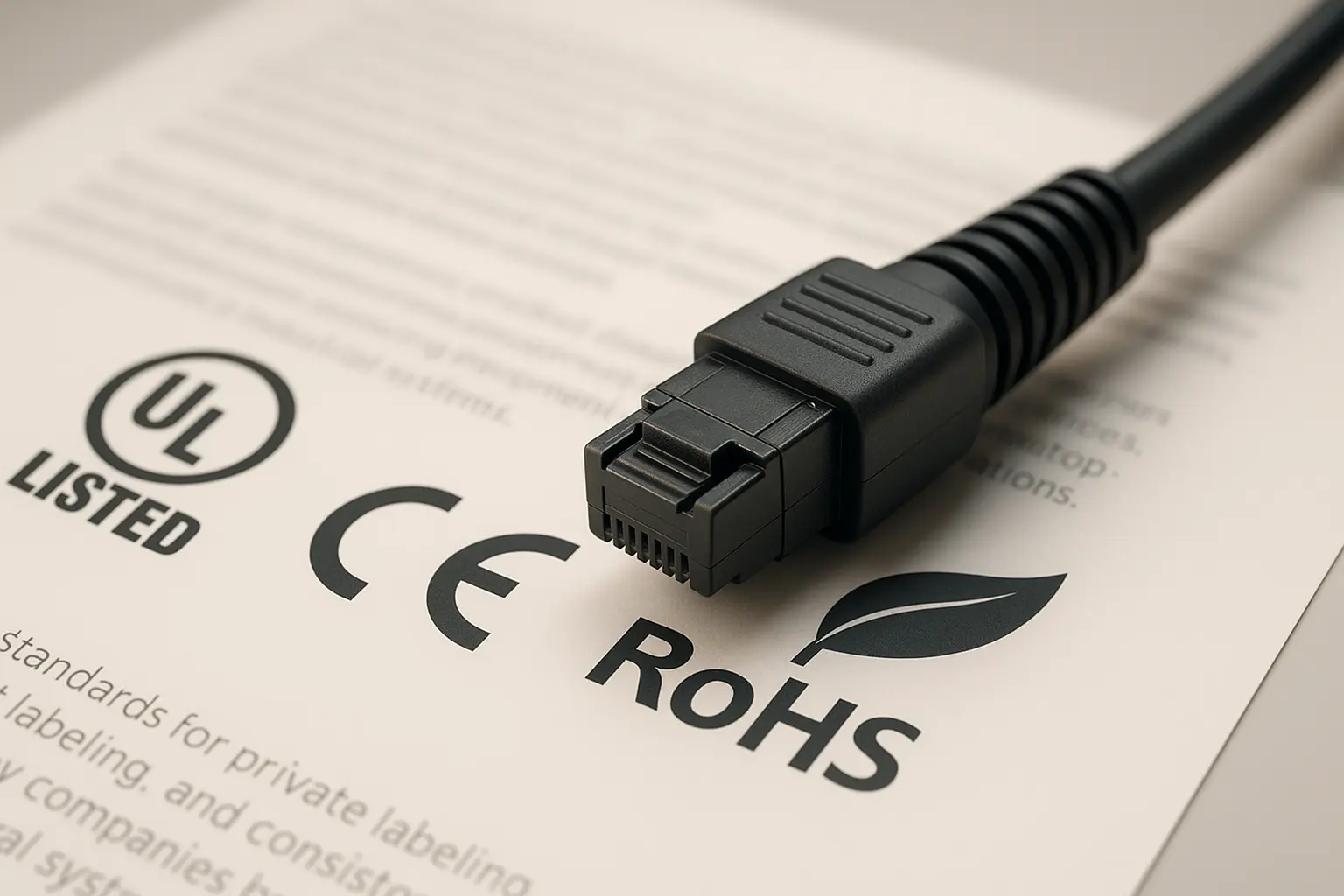
OEMs in the U.S. must meet strict UL, CE, and RoHS standards for safety and environmental compliance.
Jingyi Audio designs all cables to meet or exceed these requirements, offering complete certification packages for OEM importers and distributors.
Supply Chain and Regional Support
With OEM partners in California, Texas, and Illinois, Jingyi Audio offers short lead times, private labeling, and consistent manufacturing quality — an advantage for companies building networking equipment or industrial systems in North America.
Rugged and Flexible Builds
For mobile racks, server rooms, or factory environments, U.S. OEMs increasingly ask for armored fiber or heavy-duty Cat7 cables. Jingyi’s Pro-Link OEM line addresses this with stronger jackets and strain relief, ensuring cables survive daily wear and tear.
Takeaway: Working with a compliant and responsive OEM supplier reduces downtime and simplifies logistics.
The Hybrid Approach — Combining Fiber and Ethernet
Many OEM systems use both fiber and copper. The logic is simple:
- Use fiber for long, interference-free links between major equipment.
- Use Ethernet for short connections and PoE devices.
- Use DAC (Direct Attach Copper) cables for short server-to-switch runs inside racks.
This layout keeps costs balanced while supporting future upgrades. OEMs who plan ahead often run fiber even when current speeds don’t require it — that way, they can scale without replacing infrastructure later.
Takeaway: Hybrid networks give OEMs the flexibility to grow without major rewiring.
Installation and Cost Over Time
Setup and Training
Fiber setup takes more skill — connectors must be polished or spliced carefully, and technicians need the right tools. Once installed, fiber typically lasts for decades.
Ethernet, on the other hand, can be installed by almost any trained electrician using basic crimping tools. It’s faster and cheaper at first, but it may require more frequent replacement or shielding upgrades in noisy areas.
Cost Outlook for OEMs
|
Phase |
Fiber Optic |
Ethernet |
|
Initial Setup |
Higher due to modules and tools |
Lower, plug-ready |
|
Maintenance |
Low (no interference issues) |
Medium (EMI troubleshooting) |
|
Energy Use |
Lower (SFP+ <1 W) |
Higher (10GBASE-T up to 8 W) |
|
Total Lifecycle Cost |
Lower long-term |
Cheaper short-term |
Takeaway: Fiber costs more to start, but pays back with stability and energy savings.
Future of OEM Network Cabling
- 25G and 40G fiber are already replacing 10G copper in dense server racks.
- PoE++ (90 W) keeps copper relevant for IoT and smart devices.
- Pre-terminated assemblies shorten installation time for OEMs.
- Eco-friendly materials and full RoHS 3 compliance will soon be the baseline.
Jingyi Audio continues to support these changes by developing custom OEM fiber and Ethernet assemblies tailored for U.S. integrators and network builders.
Partnering With the Right OEM Supplier
Choosing between fiber optic and Ethernet isn’t about picking a winner — it’s about balancing reach, speed, and budget. OEMs that use both get the best of each technology.
Jingyi Audio has been building professional cables for over 30 years and now supports OEM clients worldwide. From Cat7 shielded cables to rugged optical fiber assemblies, Jingyi helps U.S. manufacturers build reliable products that meet today’s power and data needs.
Takeaway: The right OEM partner gives you dependable, compliant, and scalable cabling without unnecessary complexity.
FAQs
Q1: Is fiber really faster than Ethernet?
Yes. Fiber can move data at hundreds of gigabits per second across long distances, while Ethernet tops out at about 40 Gbps over 100 m.
Q2: Can fiber deliver power like PoE?
No. Fiber only transmits light. You’ll need copper or PoE injectors for powering devices.
Q3: What’s the right Ethernet type for OEM projects?
Use Cat6a for 10G speeds within 100 m, or Cat7 for shielded industrial environments.
Q4: How do OEMs reduce installation time with fiber?
They often use pre-terminated assemblies from suppliers like Jingyi Audio to skip on-site splicing.
Q5: Why choose Jingyi Audio?
Because Jingyi combines global experience with U.S.-focused OEM support, certifications, and flexible design options.
Citations
- TrueCABLE – Fiber Optics vs Ethernet: Understanding the Key Differences
https://www.truecable.com/blogs/cable-academy/fiber-optics-vs-ethernet-understanding-the-key-differences - CablesAndKits – Fiber Optic vs Ethernet Cables
https://www.cablesandkits.com/learning-center/fiber-optic-vs-ethernet-cables - NewYorkCables – Fiber Optic Cables vs Ethernet Cables Differences
https://www.newyorkcables.com/updates/fiber-optic-cables-vs-ethernet-cables-differences/ - Optcore – Cat6 vs Fiber: Choosing the Right One
https://www.optcore.net/cat6-vs-fiber/ - Jingyi Audio – OEM Pro Audio & Network Cable Manufacturer
https://site_5615465d-0395-48c6-b01f-dc3d38213fc5