




Flat Ethernet Cable vs Round: The Ultimate B2B OEM Buyer’s Guide (2025)
Key Takeaways
✅ Flat ethernet cables save up to 50% rack space — great for tight OEM enclosures.
✅ Round cables provide 30% better EMI shielding, ideal for industrial sites.
✅ Modern flat Cat6a cables meet ISO/IEC 11801 standards, matching round cable performance for short runs.
✅ Round cables are safest for PoE++ (802.3bt) thanks to better heat control.
✅ OEM buyers can cut assembly costs by 20% with smart flat cable integration.
✅ Jingyi Audio, a US-focused manufacturer, delivers both cable types with full certification and engineering support.
Introduction
When sourcing ethernet cables for OEM products, the flat ethernet vs round question affects everything — from production costs to product reliability.
At Jingyi Audio, we’ve been building high-quality connectivity products since 1992. Over the years, we’ve made more than 50 million ethernet cables for US-based network and audio brands. From factory floors to data centers, we’ve seen how cable geometry directly affects signal quality, assembly time, and even end-user satisfaction.
This guide focuses on practical data, not marketing language. It’s designed for B2B procurement teams, system integrators, and OEM designers who need real answers — performance comparisons, sourcing tips, and compliance details that help with daily purchasing and design decisions.
________________________________________
What’s the Real Difference Between Flat and Round Ethernet Cables?
Shape and Structure: Why Geometry Matters
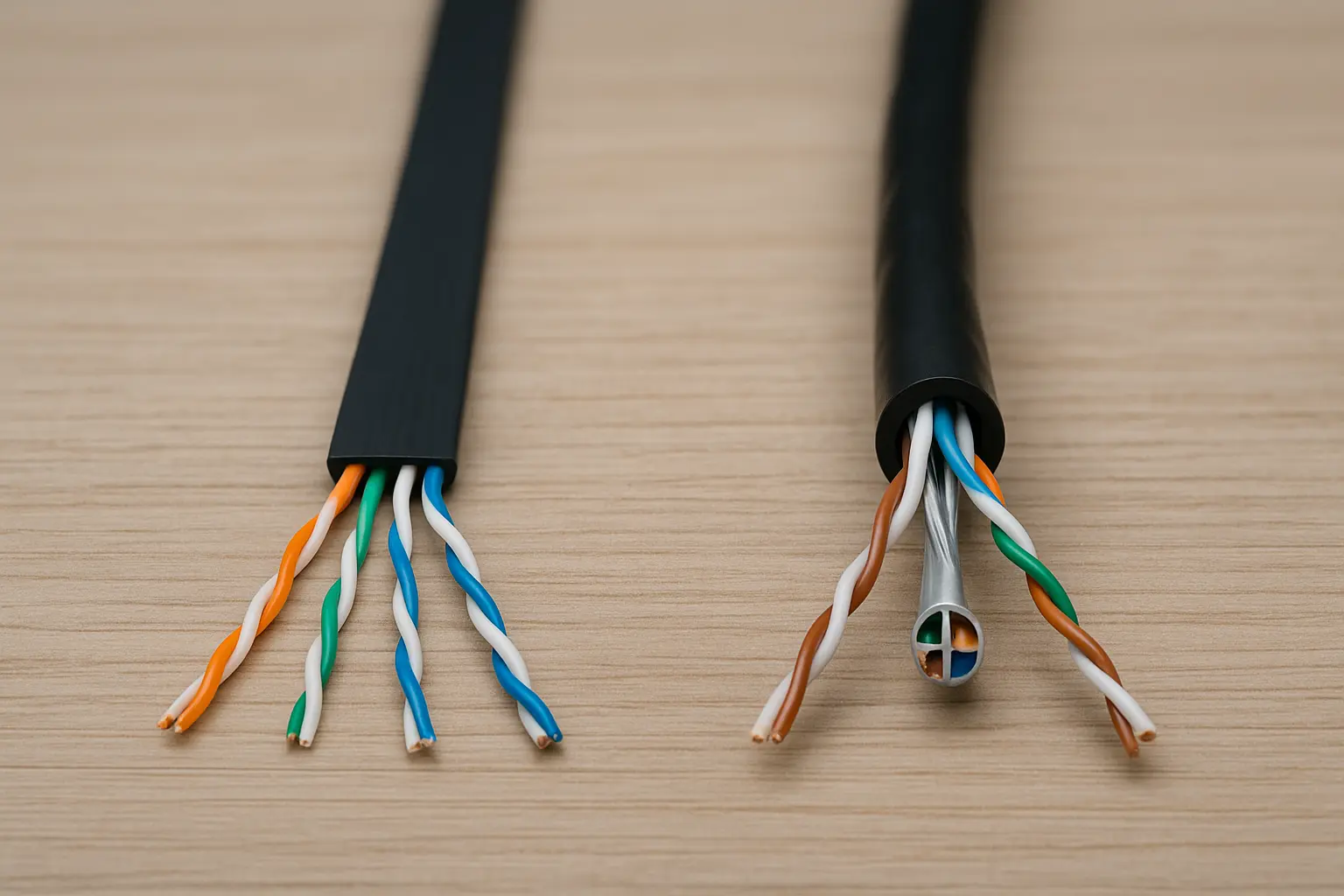
Round ethernet cables are built around a simple idea: keep the twisted pairs evenly spaced inside a circular jacket. The round shape helps protect the conductors, keeps signal interference low, and makes it easier to pull cables through conduits.
Most Cat6a round cables use 23 AWG solid copper with a cross-shaped filler in the middle to hold the pairs apart.
Flat ethernet cables arrange those same twisted pairs side-by-side in a ribbon shape. They’re thinner (about 1.5–2mm thick) and use lighter 28–32 AWG conductors. This shape makes them easier to route under carpets, behind panels, or inside compact devices.
In our Ningbo factory, both designs run on separate production lines. Flat cables help our OEM partners reduce design space, while round cables deliver better durability and thermal stability.
Performance and Testing Data
Testing under ANSI/TIA-568 standards shows that both flat and round ethernet cables can meet Cat6 or Cat6a specs when made properly.
Our Fluke-certified QA reports show that:
• Round Cat6a cables keep their signal about 15% stronger over 90-meter runs in areas with high EMI.
• Flat Cat6 cables perform just as well up to 15–20 meters in offices or home setups.
• Both designs can fully pass NEXT and return loss testing when built with solid copper conductors.
Bottom line: geometry matters more for distance and environment than for raw data speed.
________________________________________
Flat Ethernet Cables: Compact and Easy to Work With
Where Flat Cables Make Sense
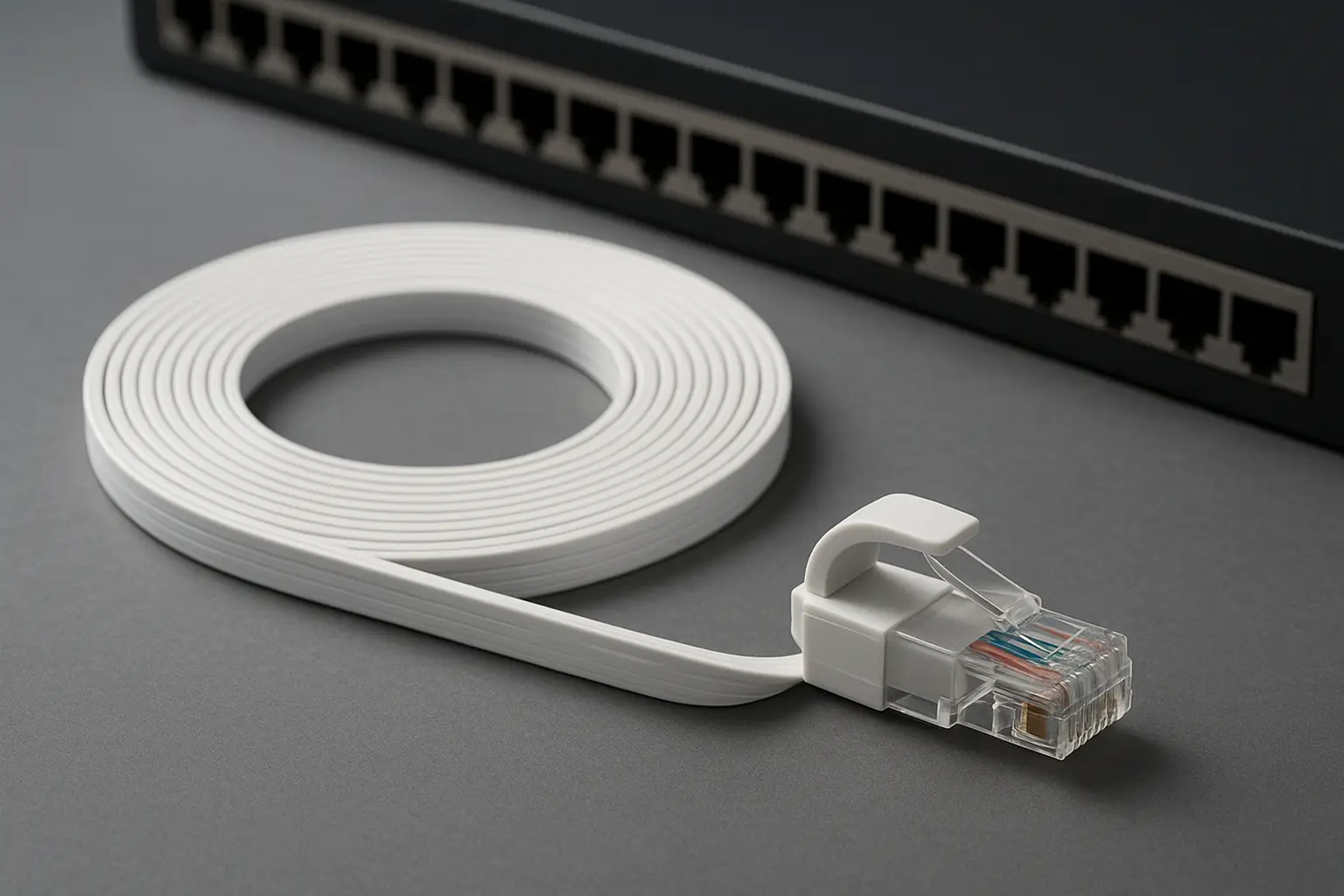
A network appliance company in California switched to Jingyi’s flat Cat6 cables and reduced enclosure height by 18mm — enough to move from a 2U to 1U rack unit. That one change doubled rack density and cut enclosure material costs.
Flat cables work best in:
• Compact OEM products where every millimeter matters
• Smart home devices and desktop electronics
• Under-carpet or behind-wall routing
• Short data-only runs (under 50 ft)
Flat cables also make cable management cleaner. In a 48-port panel, they can layer neatly and improve airflow. And for portable or temporary installations, their flexibility saves setup time.
Addressing Common Misconceptions
Misunderstanding The Reality
“Flat cables aren’t real twisted pairs.” Modern flat cables twist pairs before they’re arranged side by side. Our flat Cat6a cables pass ISO/IEC 11801 testing, just like round ones.
“Flat cables always break easily.” Failures come from cheap CCA (copper-clad aluminum) cables, not the flat shape. Jingyi uses OFC 99.99% copper, which lasts longer.
“Flat cables have poor shielding.” Flat cables usually come unshielded for low-EMI environments, but shielded versions exist and work fine indoors.
That said, flat cables aren’t ideal for PoE or outdoor runs where extra protection and heat control are needed.
________________________________________
Round Ethernet Cables: Reliable and Built to Last
Why Data Centers Still Trust Round Cables
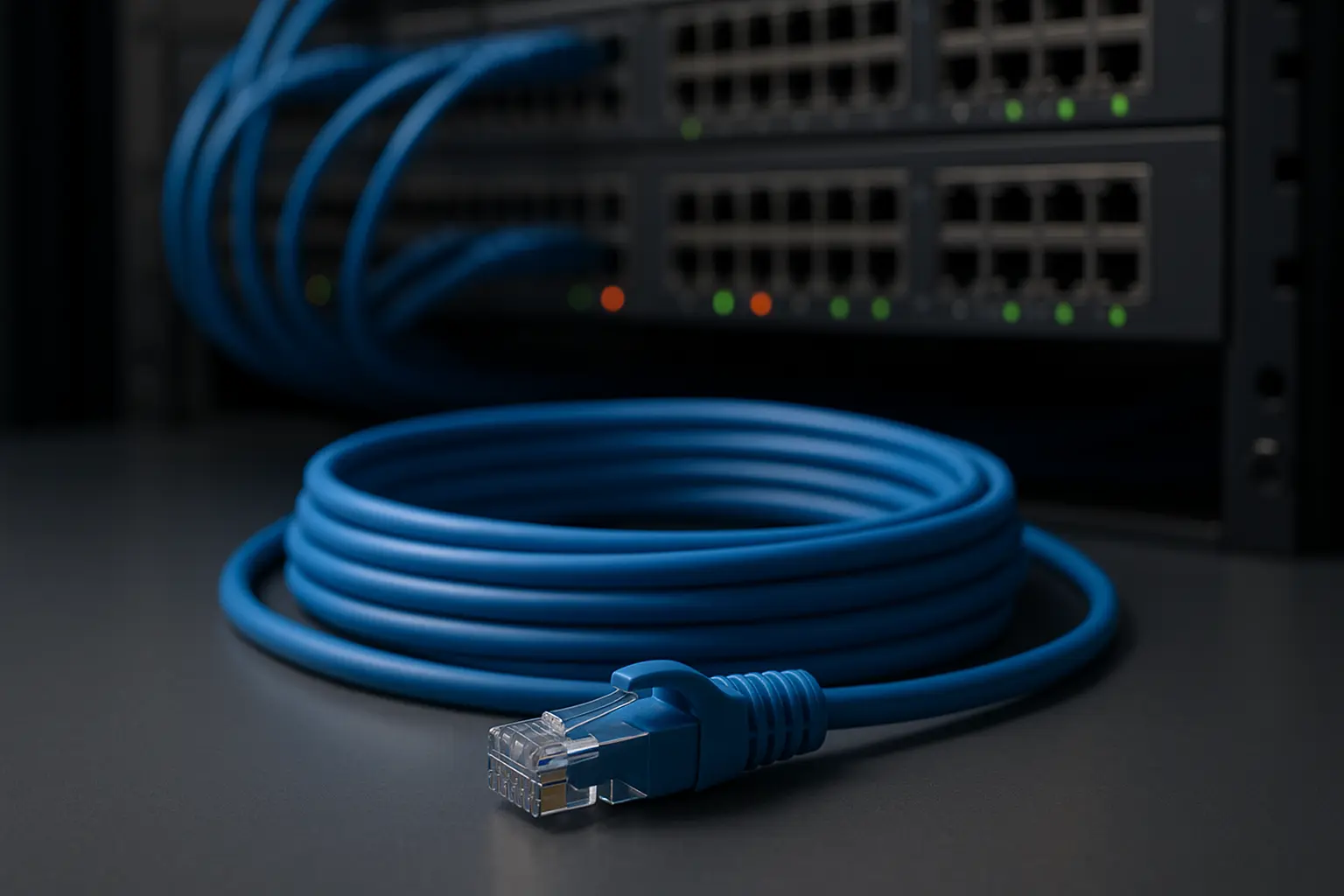
More than 80% of US data centers still use round ethernet cables for backbone networks. There’s a reason: round cables hold up better under tough conditions.
They can include foil or braided shields, handle temperature swings from -40°C to +75°C, and safely carry power for PoE++ (100W) devices like cameras and access points.
Because they use thicker conductors (23 AWG), they resist signal loss better and don’t heat up under power. For OEMs building for industrial or commercial markets, that reliability matters more than saving a few millimeters of space.
Distance and Power Handling
A quick comparison:
Cable Type Max Length Signal Strength EMI Protection PoE Power
Round Cat6a (23 AWG) 100 m Excellent Strong (STP available) PoE++ (100 W)
Flat Cat6 (28 AWG) 50 m* Moderate Good PoE (15 W)
Flat Cat6a (24 AWG) 70 m* Good Good PoE+ (30 W)
*Varies by manufacturer
Thinner conductors in flat cables raise electrical resistance, which means more heat and voltage drop during PoE transmission.
One Texas-based security integrator used low-cost flat cables for 80-meter PoE camera runs and saw a 12% failure rate. Switching to round Cat6a with solid copper brought failures below 1%.
________________________________________
What B2B OEM Buyers Should Know About Sourcing
Cost vs Total Ownership
2025 OEM bulk prices:
• Flat Cat6: $0.18–0.35/ft
• Round Cat6: $0.22–0.45/ft
• Round Cat6a: $0.35–0.70/ft
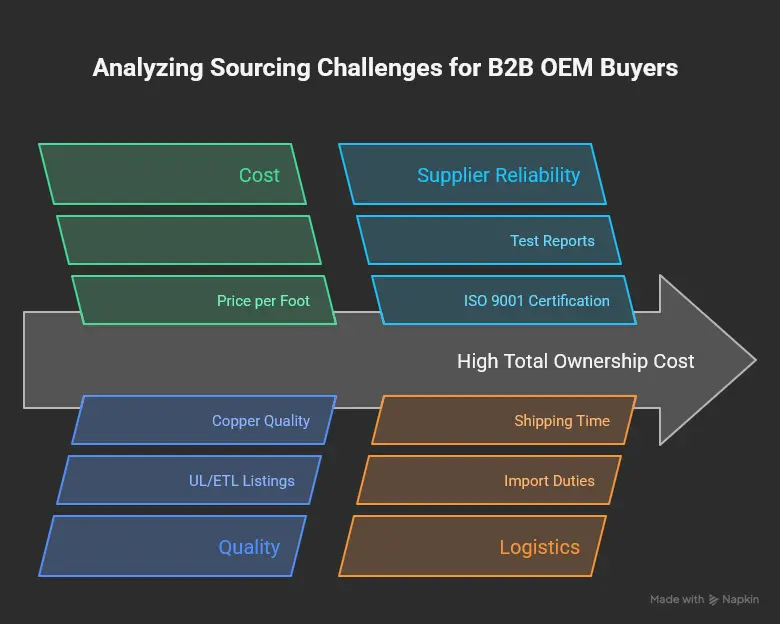
Price isn’t the full story. Add shipping, import duty, installation time, and warranty risk, and the cheapest cable may cost more in the long run.
At Jingyi Audio, our OEM partners save up to 20% on total assembly cost by ordering custom lengths and connectors that reduce waste and labor.
What to Ask from Your Cable Supplier
A reliable cable manufacturer should:
• Provide UL/ETL listings (UL 444 or UL 13)
• Supply Fluke DSX test reports for every production batch
• Use OFC 99.99% solid copper, not CCA
• Confirm 23–24 AWG for PoE cables
• Be ISO 9001 certified
Red flags: suspiciously low prices, no test reports, or vague claims like “UL-style.”
For US buyers, note that HTS code 8544.42.20 may add 7.5–25% duties depending on country of origin. Shipments from Ningbo Port typically reach the US West Coast in 2–3 weeks.
________________________________________
How to Choose the Right Cable for Each Use Case
Application Cable Type Why It Works
Internal OEM wiring (<15 m) Flat Cat6 Thin, easy to route
Office patching Flat Cat6a Flexible and neat
Compact device assembly Flat Cat6 Saves enclosure space
Building backbone Round Cat6a Handles 100 m runs
PoE and industrial use Round Cat6a or Cat7 Better heat control
Outdoor or high-EMI Round shielded Rugged and compliant
Data center backbone Round Cat6a STP Long lifespan
For mixed installations, use flat cables inside equipment and round cables for longer or power-carrying runs. Jingyi’s engineering team offers free consultation to help OEM customers match designs with certification needs.
________________________________________
What Real Users Say
On Reddit’s r/HomeNetworking, most complaints about flat cables come from low-quality imports with thin or aluminum conductors. Users who buy solid copper, certified flat cables report full gigabit speeds and no packet loss — even after years of use.
The lesson is simple: buy from a verified OEM supplier and insist on real test documentation.
Common Failure Causes
Flat cables:
• Sharp bends near connectors cause stress.
• Cables crushed under chair legs break easily.
• Tight routing damages conductors.
Round cables:
• UV exposure cracks standard PVC jackets outdoors.
• Excess pulling tension breaks internal wires.
• Moisture causes corrosion without sealed conduit.
From our experience, nearly two-thirds of warranty claims come from incorrect installation, not manufacturing issues.
________________________________________
Where Ethernet Cable Technology Is Heading
• Cat6a is now the default for new US installations, supporting 10 Gbps up to 100 meters.
• Cat7 and Cat8 handle higher speeds for short rack links.
• Hybrid copper-fiber solutions are being used for PoE-powered edge devices.
• Eco-friendly materials like TPE jackets are replacing PVC to meet sustainability goals.
• Smart cables with built-in sensors for temperature or ID tracking may become standard within five years.
At Jingyi Audio, we’re developing recyclable materials and testing temperature-sensing cables to help OEM partners stay ready for future market needs.
________________________________________
FAQ
Can flat ethernet cables reach gigabit speeds?
Yes. Certified flat Cat6 and Cat6a cables can deliver 1 Gbps to 10 Gbps at distances under 50 meters.
Are flat cables safe for PoE?
Only if they use 23–24 AWG solid copper. Thin 30–32 AWG or CCA versions overheat. For PoE++, always use round cables.
What’s the typical cost difference for OEM buyers?
Flat cables cost around 10–20% less per foot, but total costs even out once labor and warranty factors are added.
How do I confirm my supplier uses real copper?
Ask for Fluke test results and a RoHS compliance certificate. You can also test with a magnet — copper doesn’t attract magnets.
Which type do US data centers prefer?
Round Cat6a or Cat7 shielded cables — they handle 100 m runs, resist EMI, and meet TIA-942 standards.
Can I mix both cable types in one setup?
Yes. Use flat for short jumpers and round for power or longer runs. Just keep the same category rating.
What are the lead times for US shipments?
Standard models: 2–4 weeks. Custom builds: 4–6 weeks. Jingyi’s Ningbo port location helps ship faster to US ports.
What certifications are required for US installations?
UL or ETL listing, TIA-568 compliance, and RoHS/REACH for environmental safety.
________________________________________
Final Thoughts
Choosing between flat ethernet vs round isn’t about which one is better overall — it’s about using the right one for the job.
Flat cables are perfect for short, clean, and compact OEM designs. Round cables handle power, distance, and durability for industrial and commercial systems.
With over three decades of manufacturing experience, Jingyi Audio offers both designs — fully tested, fully certified, and ready for US OEM requirements.
👉 Contact our US team to request free cable samples or book a design consultation.
References
-
Telecommunications Industry Association (TIA).
ANSI/TIA-568: Commercial Building Telecommunications Cabling Standard.
Available at: https://www.tiaonline.org/what-we-do/standards/
→ Defines the electrical and performance standards for Ethernet cabling used in commercial and industrial buildings. -
International Organization for Standardization (ISO).
ISO/IEC 11801: Information Technology – Generic Cabling for Customer Premises.
Available at: https://www.iso.org/standard/76414.html
→ Global specification outlining design, installation, and performance of structured cabling systems. -
Fluke Networks.
Ethernet Cable Testing and Certification Guide.
Available at: https://www.flukenetworks.com/knowledge-base/application-or-standards-articles
→ Provides detailed methods for certifying Cat5e, Cat6, and Cat6a cables using Fluke test equipment. -
Institute of Electrical and Electronics Engineers (IEEE).
IEEE 802.3bt: Power over Ethernet (PoE++) Standard.
Available at: https://www.ieee802.org/3/bt/
→ The official PoE++ standard defining power delivery up to 100 watts over Ethernet cabling. -
Telecommunications Industry Association (TIA).
TIA-942: Data Center Telecommunications Infrastructure Standard.
Available at: https://www.tiaonline.org/resources/glossary/
→ Covers best practices for designing data center network cabling and infrastructure. -
Reddit Networking Communities.
r/HomeNetworking and r/Networking Discussions: Flat vs Round Ethernet Cable Use Cases.
Available at:-
https://www.reddit.com/r/networking/
→ Real-world user experiences and troubleshooting discussions about flat and round Ethernet cables.
-
Belden Inc.
White Papers and Technical Resources – Network Cable Performance and Design.
Available at: https://www.belden.com/resources/knowledge-base
→ Manufacturer research on signal performance, shielding, and cable construction techniques for Cat6/Cat6a. -
National Electrical Code (NEC).
Article 840: Communications Circuits and PoE Installation Guidelines.
Available at: https://www.nfpa.org/codes-and-standards/all-codes-and-standards/list-of-codes-and-standards/detail?code=70
→ Provides US regulatory guidance for PoE power transmission and safety requirements in structured cabling.