

Guitar Cable vs Speaker Cable: The Complete 2025 Guide for Musicians and OEM Buyers
Understanding the Core Difference
🧠 Key Takeaways
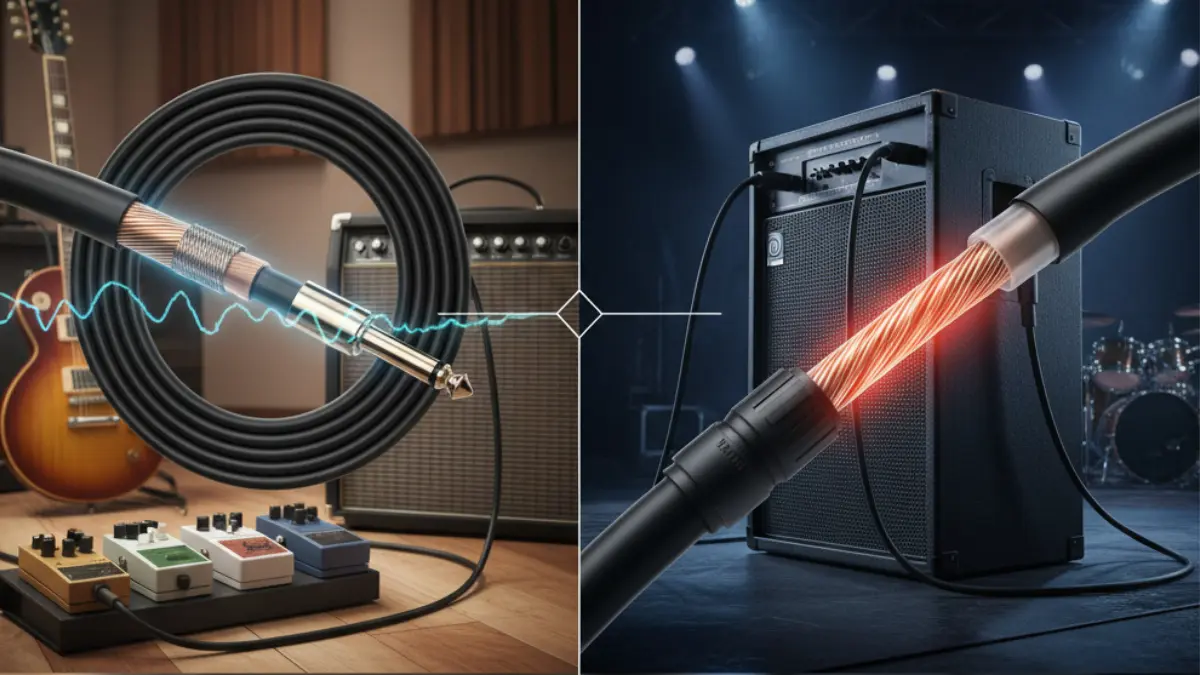
- Guitar cables carry low-level instrument signals and are built with shielded conductors to prevent noise.
- Speaker cables carry high-power, unshielded signals between amplifiers and speakers, requiring thicker wire (lower AWG).
- Using the wrong cable can cause signal loss, overheating, or amplifier damage.
- For OEM/ODM buyers, compliance with UL, IEC, and RoHS standards ensures safety and global export readiness.
- Jingyi Audio (site_5615465d-0395-48c6-b01f-dc3d38213fc5) provides custom OEM/ODM guitar and speaker cables tailored to U.S. musicians, studios, and professional audio brands.
What is the real difference between a guitar cable and a speaker cable?
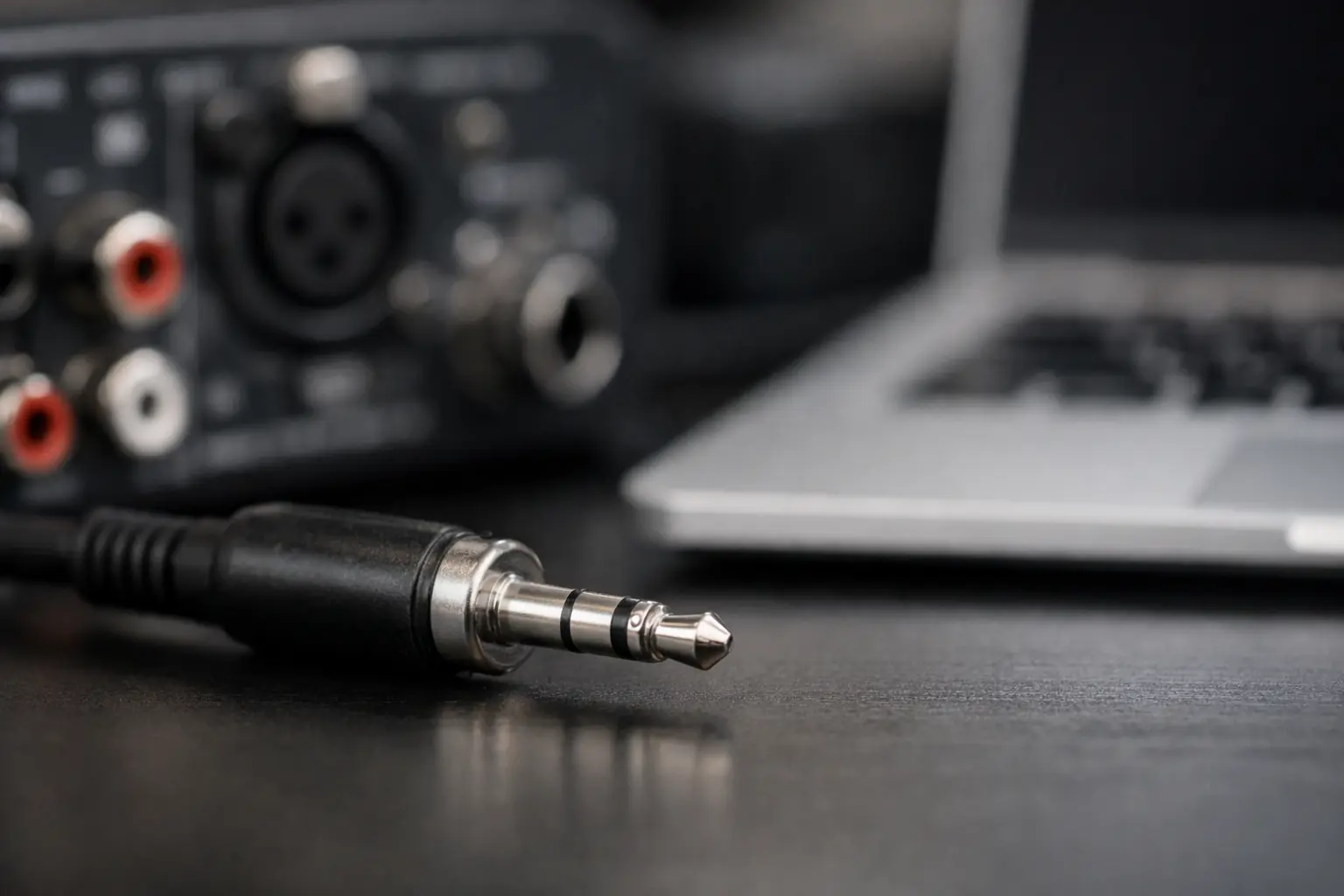
A guitar cable (also known as an instrument cable) is designed to transmit weak, high-impedance audio signals from a guitar or bass to an amplifier or pedalboard. It features shielded conductors to block electromagnetic interference (EMI).
In contrast, a speaker cable is unshielded and built to handle high current signals from an amplifier to a speaker cabinet. Its main function is to deliver power efficiently without resistance or heat buildup.
|
Cable Type |
Shielding |
Typical Use |
Wire Gauge |
Signal Type |
|
Guitar Cable |
Shielded |
Guitar → Amp |
20–24 AWG |
Low-level signal |
|
Speaker Cable |
Unshielded |
Amp → Speaker |
12–16 AWG |
High-power signal |
Why You Should Never Use a Guitar Cable as a Speaker Cable
Q: What happens if I use a guitar cable between an amp and a speaker?
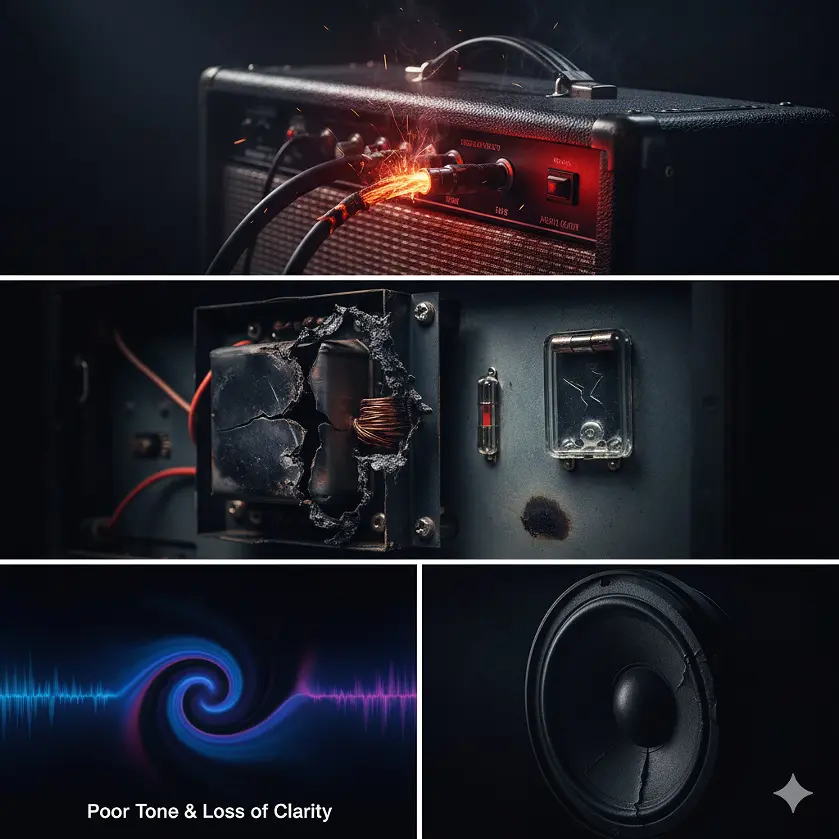
A: This is one of the most common (and expensive) mistakes guitarists make. Guitar cables aren’t designed to handle the current output of a power amplifier. The thin conductor causes voltage drop, heat buildup, and can even fry the amp’s output transformer.
On forums like TalkBass and The Gear Page, users report melting cables and blown fuses after using the wrong type of wire. This happens because the shield inside a guitar cable isn’t meant to carry high current — it acts as a bottleneck.
In short:
- 🔥Risk of overheating
- 💸Expensive amp damage
- 🎛️Poor tone and loss of clarity
Electrical and Acoustic Explanation
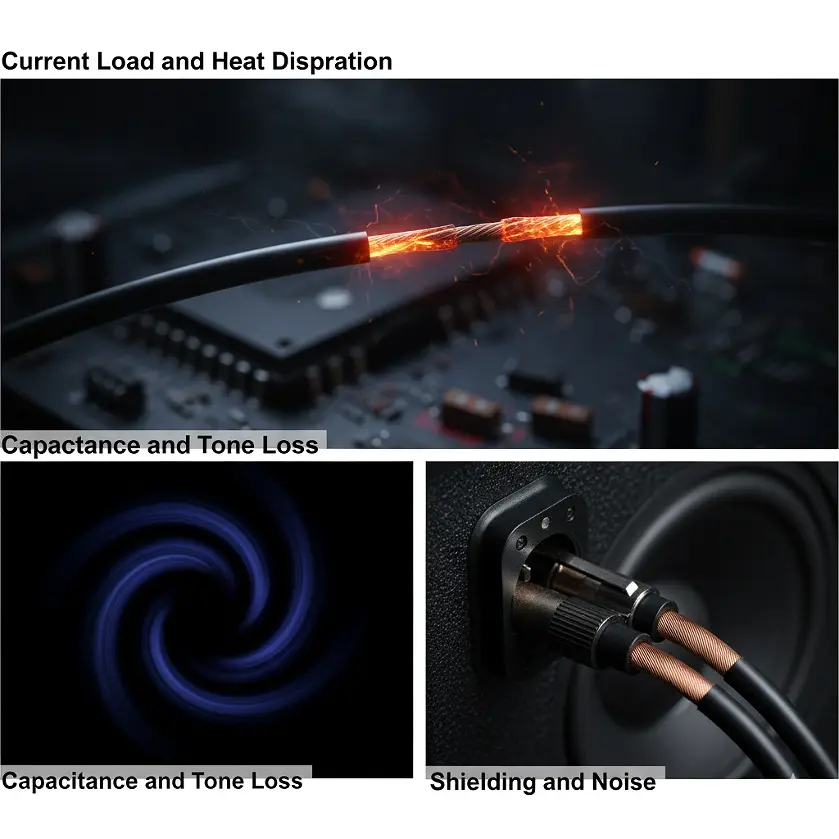
1.Current Load and Heat Dissipation
Speaker cables handle current in the range of 2–10 amps. According to Ohm’s Law, resistance (R) and heat loss (I²R) increase rapidly with smaller conductors. Guitar cables are typically 24 AWG (0.205 mm²) — fine for low signals, disastrous for high current.
2.Capacitance and Tone Loss
A typical guitar cable has capacitance between 30–50 pF/ft, which is acceptable for short runs. But using long instrument cables (>20 ft) can attenuate high frequencies, making your tone muddy.
3.Shielding and Noise
While shielding protects weak guitar signals, it’s unnecessary for speaker-level power transmission. Instead, thicker conductors and proper connectors (like Speakon) are preferred.
How to Identify Guitar and Speaker Cables
|
Feature |
Guitar Cable |
Speaker Cable |
|
Outer Diameter |
Thinner |
Thicker |
|
Shielding |
Yes |
No |
|
Label |
“Instrument” or “Signal” |
“Speaker” or “Amp” |
|
Connector |
¼″ TS plug |
¼″ TS or Speakon |
|
Flexibility |
More flexible |
Stiffer |
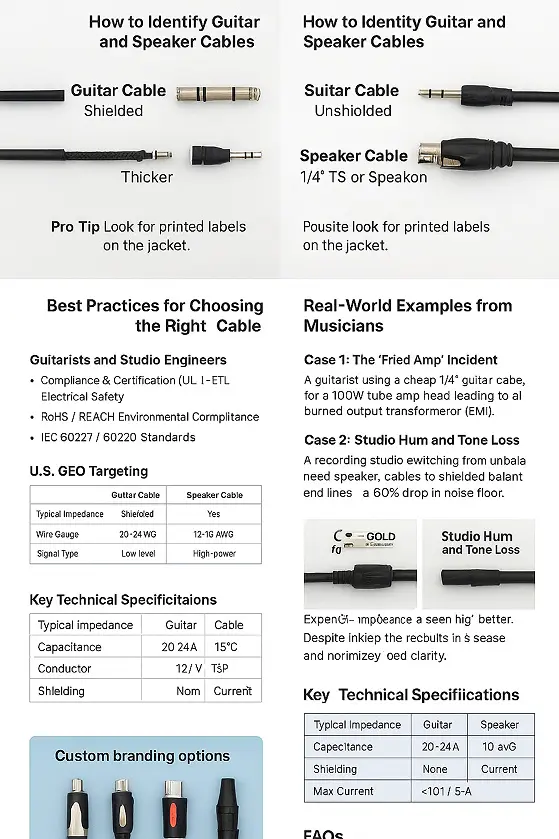
Pro Tip:
Always look for printed labels on the jacket. Reputable manufacturers like Jingyi Audio clearly mark cable type, AWG, and compliance codes (UL/CE/RoHS).
Best Practices for Choosing the Right Cable
For Guitarists and Studio Engineer
- Keep instrument cables under 20 feetto avoid high-frequency loss.
- Use low-capacitance shielded cablesfor clean tone.
- Avoid coiling or compressing cables tightly; it can cause microphonic noise.
For Speaker Applications
- Use 12–14 AWGwire for runs up to 25 ft.
- For long-distance stage setups, go for 10 AWGor Speakon
- Always match the cable’s power rating to your amplifier’s output impedance (4Ω / 8Ω).
OEM/ODM Considerations for U.S. B2B Buyers
- Compliance and Certificatio
OEM clients in the U.S. should ensure all cables meet:
- UL / ETL Electrical Safety
- RoHS / REACH Environmental Compliance
- IEC 60227 / 60320 Standards
- Custom Branding Options
Jingyi Audio offers private-label cable production with customized
- Braided outer sleeves (nylon, PVC, or eco-friendly TPE)
- Embossed logo printing
- Connector engraving (Neutrik, Amphenol, or custom-molded)
- Bulk OEM packaging and retail-ready boxes
Learn more or request samples: site_5615465d-0395-48c6-b01f-dc3d38213fc5
- Why U.S. GEO Targeting Matters
For American OEM clients, working with a supplier familiar with FCC labeling, UL testing, and U.S. customs documentation saves significant compliance time. Jingyi Audio’s logistics partners in California and Texas support direct distribution to retailers and e-commerce warehouses.
Real-World Examples from Musicians
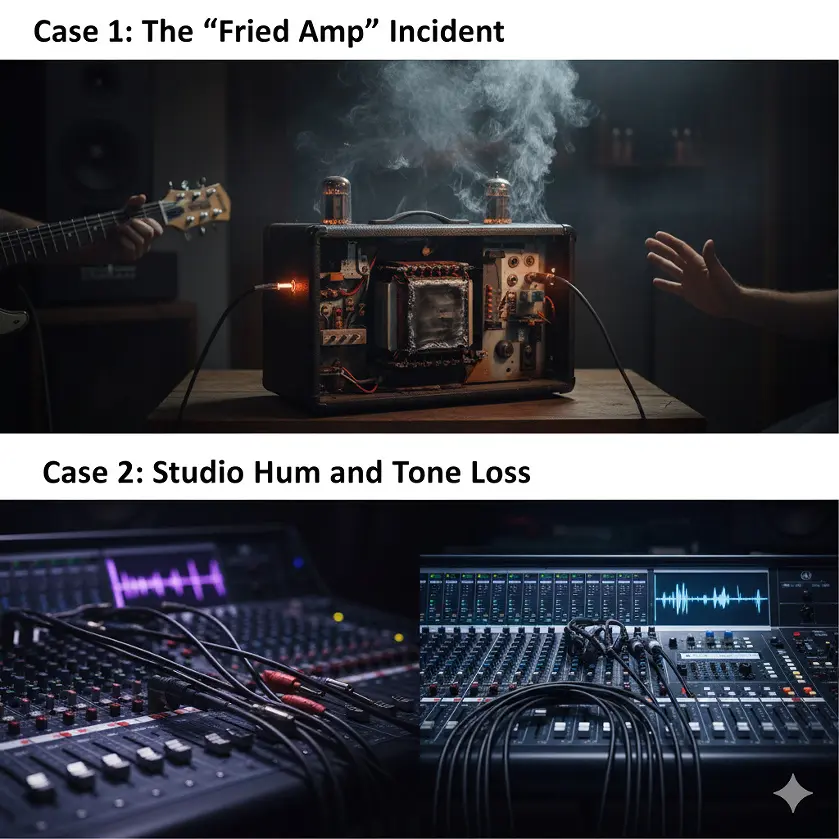
Case 1: The “Fried Amp” Incident
A Nashville guitarist shared on Reddit that he accidentally used a cheap ¼″ guitar cable for his 100W tube amp head. Within minutes, smoke rose from the chassis — a burned output transformer worth $250 to replace.
Case 2: Studio Hum and Tone Loss
A small recording studio in Austin replaced all unbalanced speaker cables with shielded balanced lines (TRS/XLR). The result? A 60% drop in noise floor and noticeably improved clarity.
These experiences underline why choosing the right cable is more than theory — it’s sound economics and safety.
Key Technical Specifications
|
Parameter |
Guitar Cable |
Speaker Cable |
|
Typical Impedance |
20k–50kΩ |
<1Ω |
|
Capacitance |
30–50 pF/ft |
<10 pF/ft |
|
Conductor Size |
20–24 AWG |
10–16 AWG |
|
Shielding |
Braided or Foil |
None |
|
Max Current |
<0.1A |
Up to 10A |
|
Application |
Signal |
Power |
Testing and Quality Assurance
Jingyi Audio’s QC Process includes:
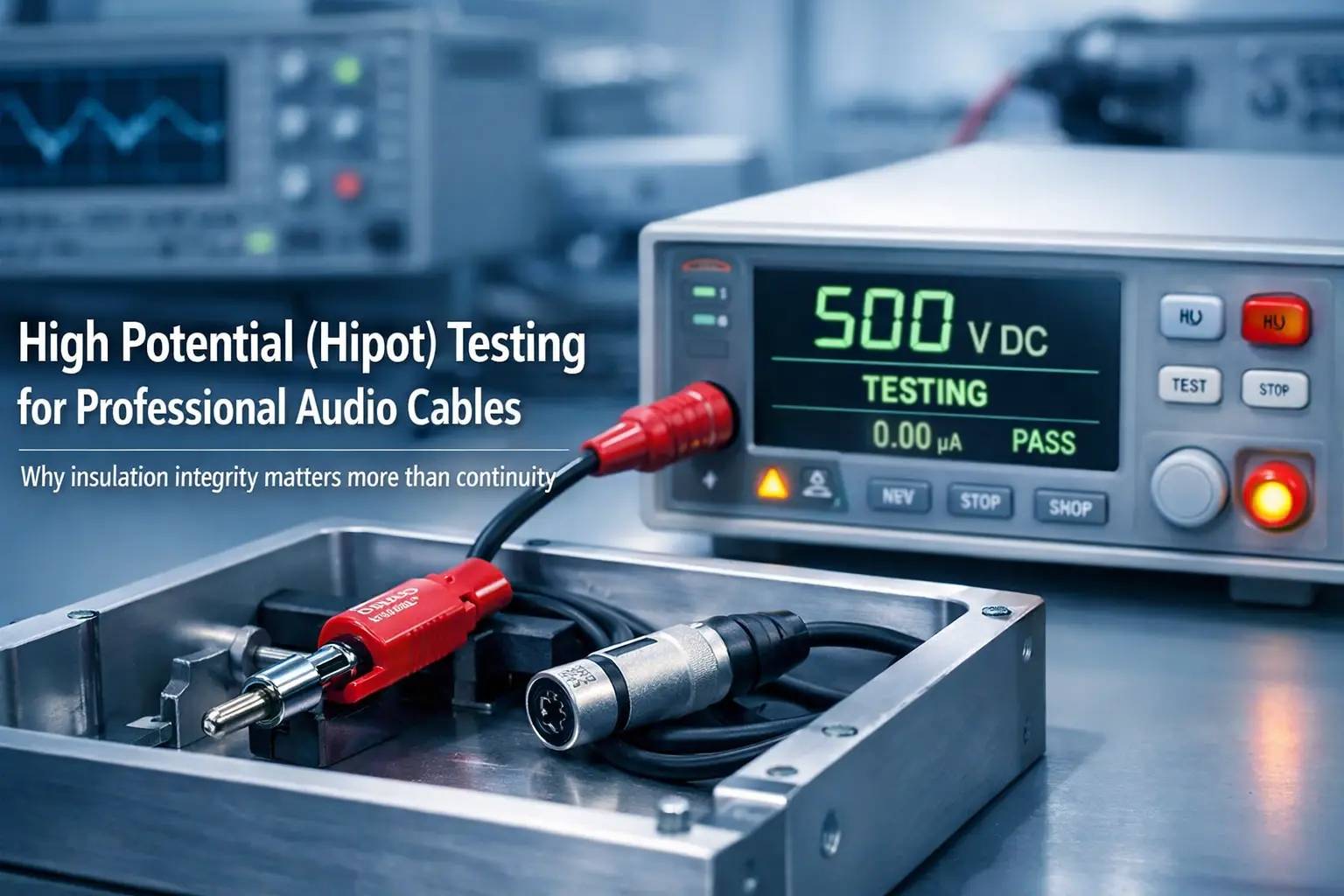
- High-voltage dielectric testing (up to 1,500V)
- Flex-cycle endurance (10,000+ bends)
- 100% continuity inspection
- Capacitance and impedance verification
These practices ensure consistent tone delivery, mechanical reliability, and long service life — critical for professional gear manufacturers and distributors.
FAQs: Guitar Cable vs Speaker Cable
Q1: Can I use a speaker cable as a guitar cable?
No. Speaker cables are unshielded and will introduce noise or hum into your guitar signal path.
Q2: What’s the best cable length for guitars?
Under 20 feet (6 meters) is ideal to preserve tone. Longer cables should use low-capacitance shielded wire.
Q3: How can OEM buyers ensure compliance with U.S. import rules?
Work with suppliers like Jingyi Audio, who provide UL, RoHS, and IEC-compliant documentation and pre-tested product samples.
Q4: Do thicker speaker cables always sound better?
Only when running long distances or high-power setups. Beyond that, diminishing returns apply.
Q5: What’s the difference between ¼″ and Speakon connectors?
Speakon connectors are safer, locking, and rated for higher current — standard in professional PA systems.
Q6: How can I prevent cable confusion on stage?
Label your cables or use color-coded jackets (red = speaker, black = instrument) to avoid costly mix-ups.
Conclusion
Choosing between a guitar cable vs speaker cable isn’t just a technicality — it’s a performance-critical decision. For musicians, it means clean tone and reliable operation. For OEM buyers, it ensures compliance, durability, and customer trust.
Jingyi Audio bridges both worlds — offering certified, OEM-grade cable solutions designed for musicians, studios, and amplifier manufacturers across the U.S.
👉 Learn more at site_5615465d-0395-48c6-b01f-dc3d38213fc5 or contact us for OEM/ODM partnerships.