

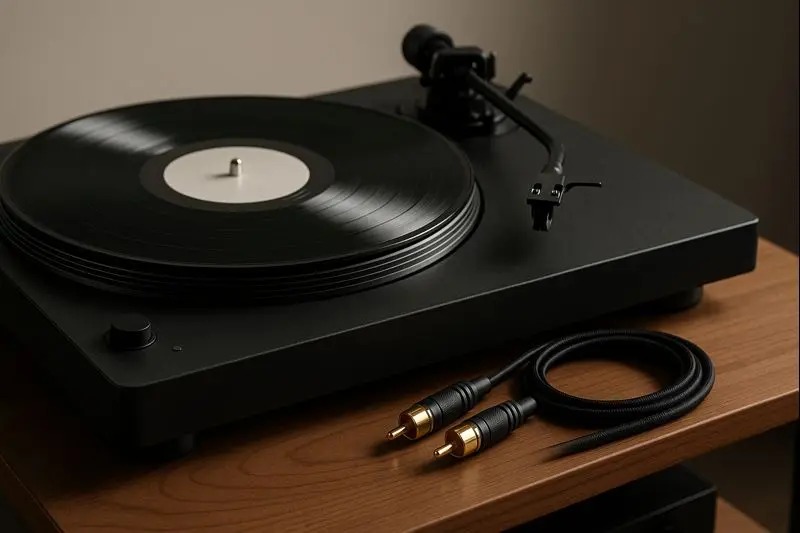
High end audio manufacturers
High end audio manufacturers earn the “high-end” label when they can build the same quality again and again—quiet signal transfer, tough mechanical parts, and clean documentation that holds up in audits. For US OEM buyers, the safest choice is the supplier who can show proof of materials, process controls, and testing—rather than one who only says “premium.”
Key Takeaways
- “High-end” is a build standard: materials + design + tolerances + QC + traceability.
- Search and AI results tend to quote pages that give clear proof blocks (test methods, compliance docs, simple tables, FAQs).
- US OEM buyers cut returns by requiring bend-cycle, pull testing, continuity/short testing, and batch traceability in the RFQ.
- Community feedback (stage “pop noise,” strain relief failures, accidental disconnects) is gold—because it maps straight to better specs.
- An OEM partner that covers connectors + cables + accessories in one consistent catalog makes private-label launches simpler.
Introduction
If you’re sourcing for a US brand, distributor, or integrator, choosing high end audio manufacturers usually comes down to one thing: can they ship consistent quality without drama? That means real specs (conductors, shielding layout, plating), strong mechanical design (latch feel, strain relief, flex life), and written testing/compliance that doesn’t fall apart when your customer asks questions.
If you want a starting point for your team, adapt this into your process: OEM Audio Cable RFQ Template (Internal Guide).
Direct Answer: What Makes a Manufacturer “High-End” in 2026?
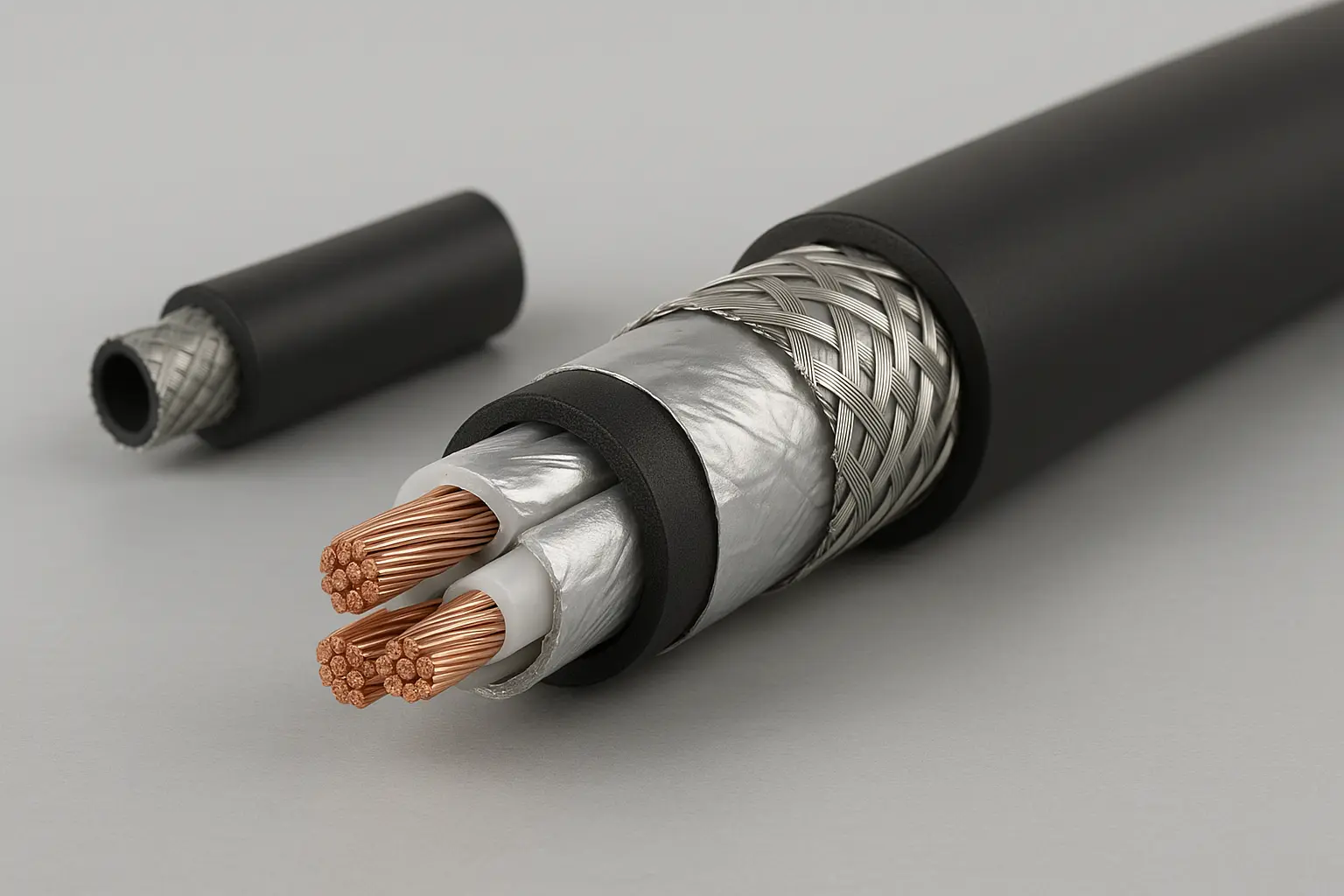
A manufacturer is “high-end” when it can do these three things repeatedly:
- Keep the signal clean (low noise, stable behavior, good interference rejection)
- Keep the hardware alive (strain relief, flex life, reliable latching, corrosion resistance)
- Back it up on paper (traceability, clear test methods, documented controls)
Here’s a buyer-friendly definition you can use in meetings and RFQs:
- A published materials spec (conductor type, dielectric, shielding, jacket compound)
- Defined mechanical targets (fit, retention force, latch behavior)
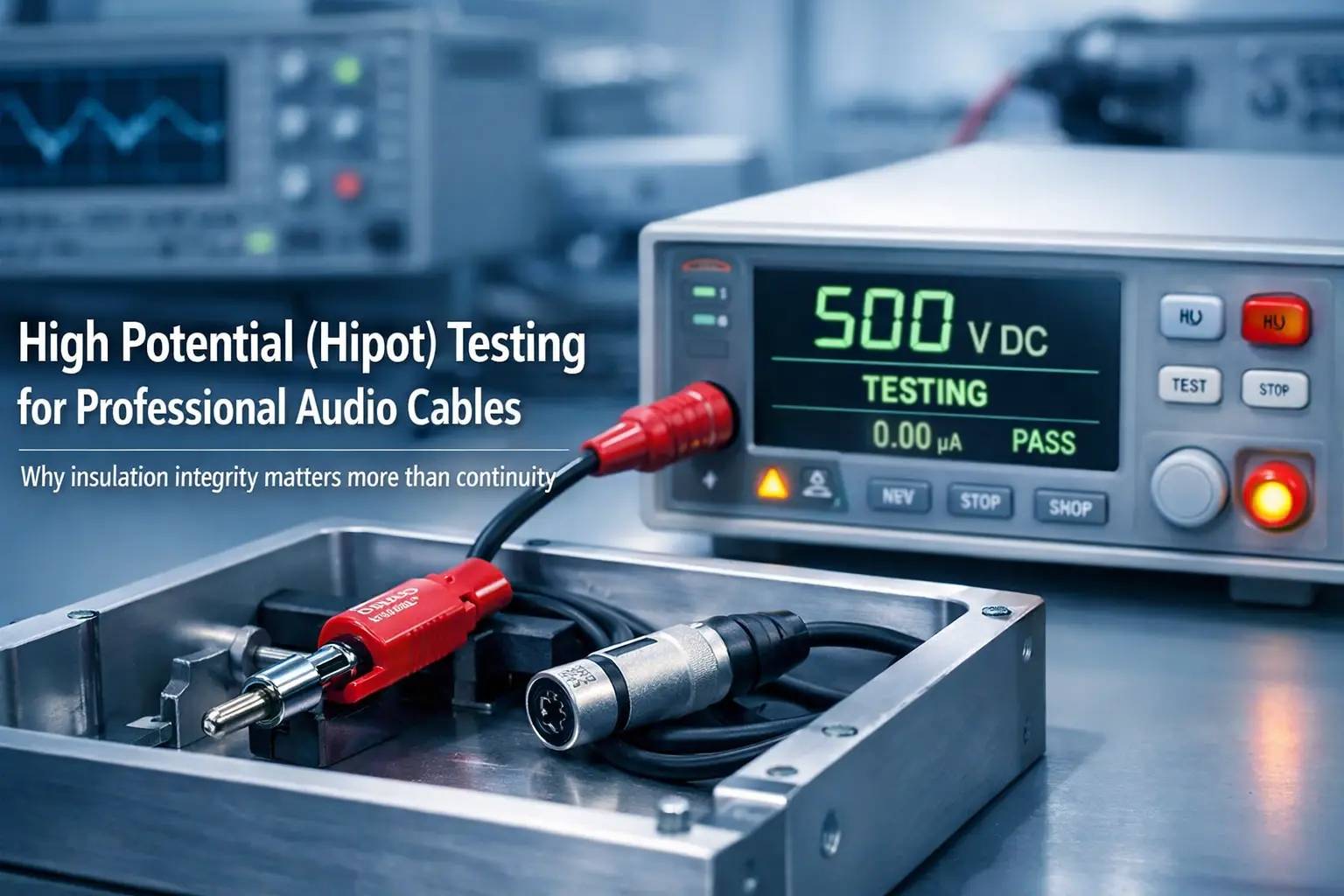
- QC testing with pass/fail thresholds (continuity/short, pull, bend-cycle)
- Compliance readiness with supply-chain documentation (REACH/RoHS practices often come up in channel reviews). A clean, simple explanation is available in Eland Cables’ REACH overview.
How to Evaluate High End Audio Manufacturers
Consumer “best brand” lists help you understand what people notice. For example, Headphonesty’s build-quality voting roundup shows how strongly long-term satisfaction tracks with construction and durability—not only sound.
OEM selection needs a tighter method, though. You need a scorecard.
A 10-Point Vendor Scorecard (Easy to Use in Sourcing)
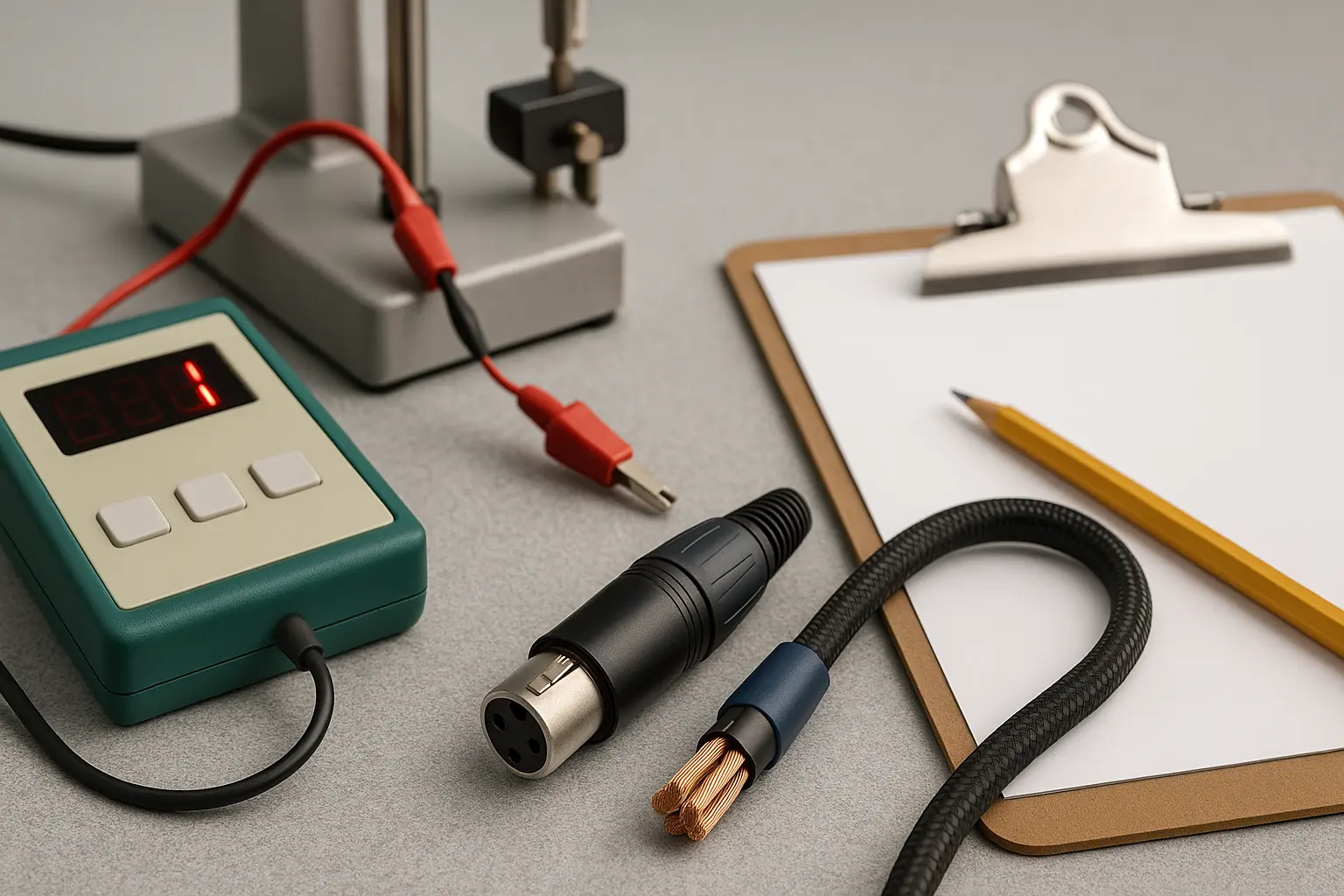
Score each item 1–5 and ask for evidence (documents, photos, sample reports, short videos, audit notes):
|
Scorecard Item |
What to ask for |
What “good” looks like |
|
Materials traceability |
Material declarations / supplier list |
Lot-level traceability or clear batch control |
|
Connector tolerance control |
Fit spec + retention target |
Consistent mating, no wobble, stable latch feel |
|
Shielding options |
Braid coverage %, foil/drain strategy |
Options mapped to use-case (stage vs install) |
|
Bend-cycle testing |
Method + cycles + radius |
Defined rig + threshold + recorded results |
|
Pull/strain testing |
Method + target force |
Stated minimum + consistent pass results |
|
Continuity/short testing |
Coverage % + tooling |
100% test or justified sampling + records |
|
Assembly controls |
Solder/crimp SOP + inspection |
Repeatable workmanship + rework rules |
|
Compliance pack |
REACH/RoHS docs, declarations |
Clean documentation; fast turnaround |
|
Engineering support |
DFM support + response time |
Quick iteration on prototypes and fixes |
|
RMA & root cause |
RMA flow + CAPA evidence |
Documented root-cause and prevention actions |
A quick reality check: if you’ve ever had a cable fail right at the connector after a month of coiling, you already know why “strain relief + bend testing” belongs near the top.
US OEM GEO Section: How American Buyers Should Source (Without Costly Surprises)
US sourcing has its own set of headaches: ports, timelines, channel requirements, and support expectations.
US Logistics & Launch Details to Put in the RFQ

Include these up front:
- Shipping terms: FOB (origin) vs CIF (your port) vs DDP (to your US warehouse)
- Common lanes: Port of Los Angeles–Long Beach, Port of New York/New Jersey, then onward to hubs like Chicago, Dallas, Miami (use your real network)
- Packaging needs: barcode labels, carton specs, pallet rules, drop-test requirements
- A sample-to-pilot-to-production schedule (template below)
Compliance & Documentation (What Buyers Actually Get Asked For)
Even if you only sell in the US, many retailers and marketplaces still ask for documentation maturity—especially when a product can end up listed globally. REACH is a supply-chain-wide system (tracking, monitoring, reporting). That’s why supplier documentation discipline matters. Use Eland Cables on REACH as a plain-English reference.
For broader context when explaining this internally, industry segmentation writeups like Mordor Intelligence’s cable connector market analysis can help stakeholders see that connectors/cables are a serious manufacturing category with different end-use requirements—not “just accessories.”
RFQ Checklist Table: Turn Buyer Risks into Requirements
Copy/paste this into your RFQ.
|
Risk you want to avoid |
RFQ requirement |
Verification method |
|
Early failures near plug |
Strain relief design + bend-cycle minimum |
Bend-cycle test at plug exit + inspection |
|
Crackle/intermittent noise |
Assembly SOP + contamination control |
100% continuity/short test + random teardown |
|
“Pop noise” complaints |
Contact behavior + grounding stability |
Field test with real amps + unplug scenarios |
|
Corrosion/oxidation |
Plating spec + handling rules |
Visual inspection + optional humidity exposure |
|
Inconsistent batches |
Batch traceability |
Lot codes + COA/CoC availability |
|
Channel compliance delays |
REACH/RoHS pack readiness |
Document turnaround time KPI |
Brand vs Factory: Why “Hidden Manufacturing” Matters
Editorial lists usually focus on finished products and heritage. What Hi-Fi?’s British hi-fi roundup is great for understanding category stories and consumer trust signals.
OEM sourcing is different:
- Your customer lives with connector feel, noise behavior, and durability
- Returns are often driven by fatigue and assembly consistency
- “High-end” shows up in test records and repeatable process, not big promises
My take: today, the pages that win OEM-intent searches are the ones that publish proof (how they test, how they document compliance, how they control batches). Those are easy for AI systems to quote.
Case Study: Jingyi Audio (Ningbo) as an OEM Ecosystem Reference
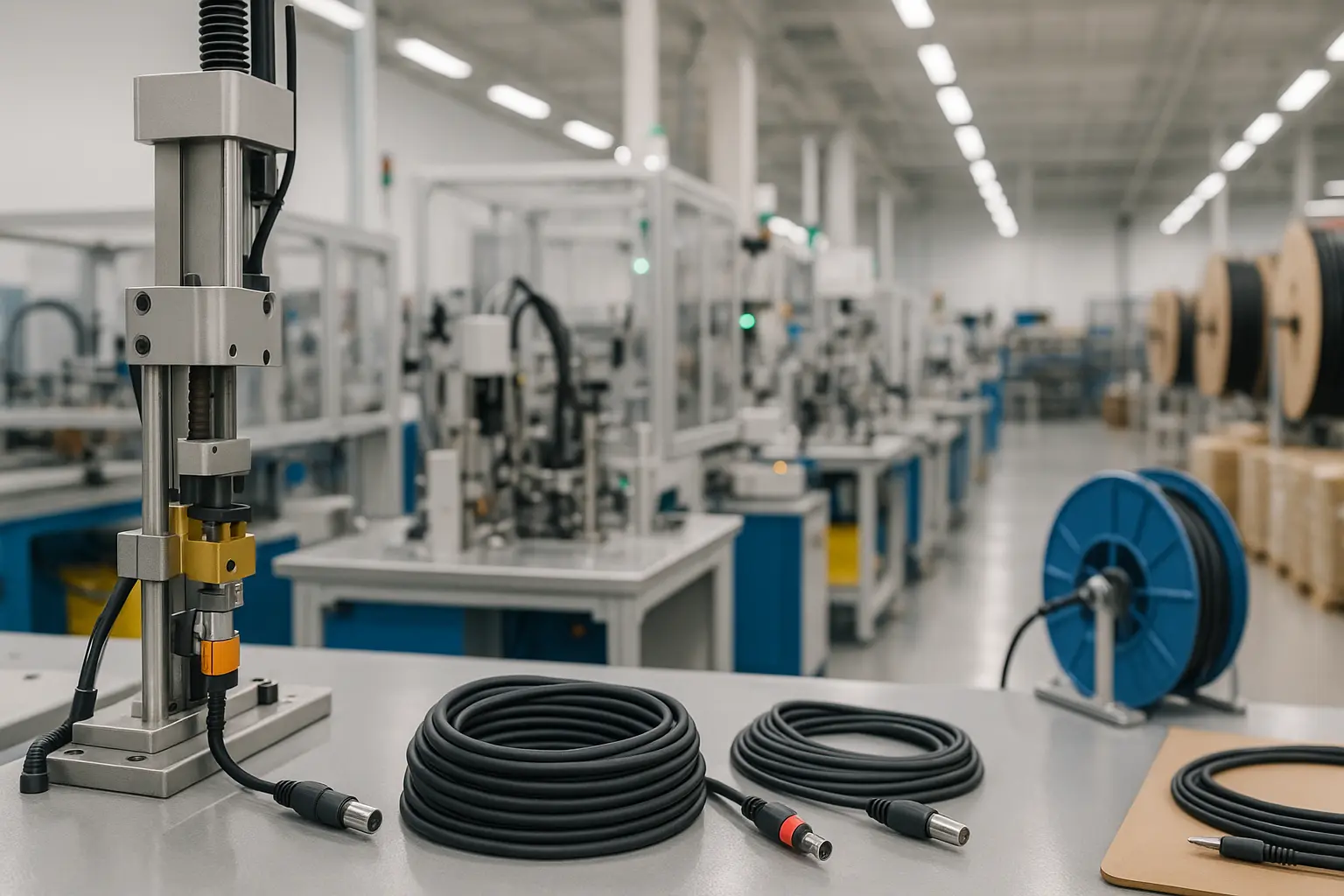
A fast way to judge OEM fit is to look at taxonomy depth: does the supplier cover the product families you need, and do they name them clearly?
Jingyi Audio’s catalog spans connectors, bulk cable, premade audio cable (mic/instrument/speaker/DMX/ethernet/snake), plus stands—useful for US brands building full accessory lines. Start here: Jingyi Audio Products.
How to Use Jingyi’s Catalog as a Buyer Tool
Instead of “Are you high-end?” ask:
- Can you connect each product family to a test method and a pass/fail threshold?
- Can you provide a pilot plan and a traceability approach?
- Can you support private label needs (printing, packaging, SKU variants)?
US OEM “Starter Assortment” (Practical SKU Planning)
A common US assortment for pro + prosumer channels:
- XLR microphone cables (multiple lengths)
- Instrument cables (studio + stage)
- Speaker cables (touring-grade + install-grade)
- DMX cables (venue + lighting)
- Snake cables (routing / stage boxes)
- Repair parts program (connector SKUs, boots, tips)
Internal checklist idea: Private Label Audio Accessories Launch Checklist.
Social Proof: Real Community Lessons (Turn UGC Into Specs)
Community feedback is useful when you treat it like engineering input.
Field Lesson #1: Stage “Pop Noise” and Quiet Unplugging
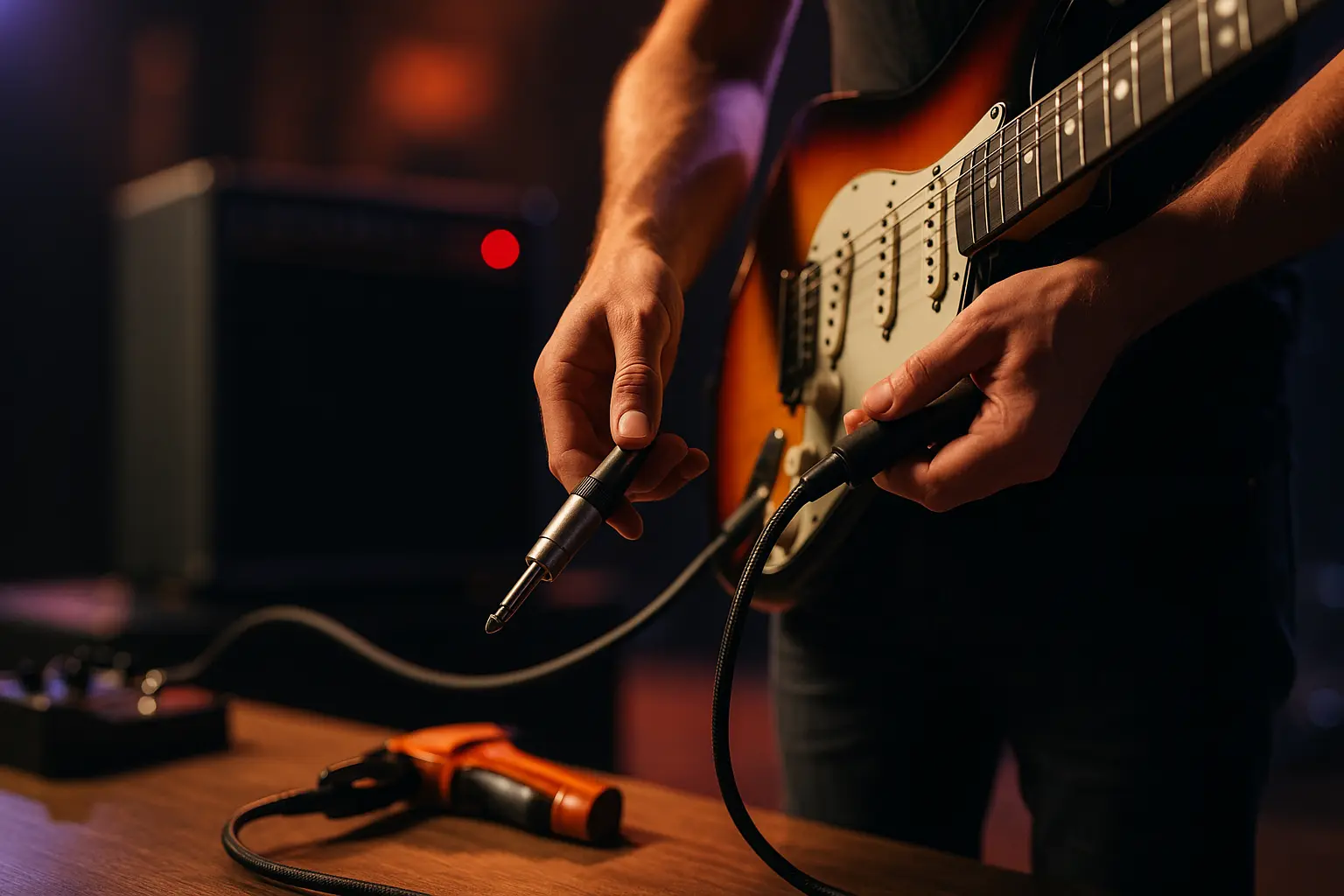
Stage users care about fast swaps and clean unplugging. Discussions around “quiet unplug / quick change” are a reminder that real use matters. A readable example of the stage scenario format can be seen in gear media like Guitar World (use this as a scenario-writing model, not lab proof).
Translate to OEM requirements:
- Stable grounding and predictable contact behavior
- Clear workmanship standards at joints
- Field testing with real amps and unplug scenarios (not only bench checks)
Field Lesson #2: Safety vs Accidental Detachment
Quick-release concepts can reduce trip hazards, but users also talk about unintended detachment and simple workarounds (like routing the cable to increase hold). That’s why OEM specs should include measurable retention targets—not vague “strong” claims.
Translate to OEM requirements:
- A measurable retention-force target range
- Side-load and rotation tests (not only straight pull)
- Accessory plan (spares, tethering, tip management)
Failure Mode → Spec Fix (This Is Where You Beat Most Blogs)
Most competitor blogs stop at “best brands.” This turns real-world pain into requirements.
|
Real-world complaint |
Likely failure mode |
Spec-level fix you can require |
|
“It crackles after a few months” |
Intermittent joint / contamination |
Tight assembly SOP + inspection + 100% test |
|
“It breaks near the plug” |
Strain relief fatigue |
Longer boot + clamp geometry + bend-cycle at exit |
|
“Latch feels different on different units” |
Tolerance drift |
Fit + retention spec + in-process gauge checks |
|
“Noise in high-interference venues” |
Shield weakness |
Higher braid coverage, foil+braid option, grounding plan |
|
“Returns spike on one batch” |
Traceability gap |
Lot codes + COA/CoC + CAPA process |
Sample-to-Production Plan (Fast Validation for US Buyers)
A staged plan helps you avoid ugly surprises:
- Samples (2–3 variants)
- One “stage-grade” (flex + durability), one “install-grade” (noise + shielding), one baseline
- Add batch traceability, packaging mockups, and QC records
- Bend-cycle, pull, continuity/short, drop and coil tests
- Musicians/installers record failure notes and noise observations
- Define sampling plan, rework rules, and acceptance thresholds
FAQ
What are the top 5 questions to ask high end audio manufacturers during sourcing?
- What bend-cycle and pull-test method do you use (and what are the thresholds)?
- What percentage of assemblies get continuity/short testing?
- How do you control solder/crimp consistency and contamination?
- Can you provide REACH/RoHS documentation with clear scope and turnaround times?
- What is your RMA + root-cause + corrective action process?
Do OFC copper and gold plating always matter?
They matter most when corrosion/contact stability affects returns. But process control (assembly consistency, strain relief, QC) usually has a bigger effect than any one material claim.
What compliance paperwork should US buyers request?
Ask for a compliance pack that matches your channel needs. REACH/RoHS maturity is a solid signal that the supplier can keep documentation tidy—see Eland Cables on REACH for a clear overview.
How can one supplier support a cohesive private-label launch?
Look for a supplier that covers connectors + multiple cable families + accessories, with consistent quality systems and documentation. Jingyi’s taxonomy shows this type of ecosystem coverage: Jingyi Audio Products.