

How to Choose the Best Audio Cable Supplier for US OEM & Wholesale Projects (2025 Guide)
When a US brand, AV integrator, or rental company starts looking for an audio cable supplier, the story is usually the same: someone opens Google, types “audio cable supplier USA” or “OEM XLR cable manufacturer,” clicks on a “Top 15 wholesalers” post, then ends up reading long arguments on Audio Science Review or Audiogon about whether premium cables are worth the money.
After a few tabs, it stops being a simple search. You’re trying to find a partner who can build reliable cables, ship to Los Angeles or New York on time, share proper compliance paperwork, and not put your brand in the middle of a forum flame war.
This guide talks to that person on your team—the one who has to pick an audio cable supplier that works for real US OEM and wholesale projects, not just pretty product shots.
Key Takeaways (for Busy US OEM Buyers)
- A lot of “cable companies” are not factories. Many websites belong to brands or wholesalers. Only a smaller group of true OEM/ODM factories own extrusion lines, connector tooling, and assembly, and those are the ones that can actually adjust products for your US projects.
- High-ranking cable content tends to mix simple engineering talk (resistance, capacitance, shielding) with plain-language stories about how cables behave in real systems. Axiom Audio’s The Truth About Cables and in-akustik’s Air Helix pages are good examples of this style.
- Forums like Audio Science Review and Audiogon can make or break a product’s name. Once a thread tears into a cable for bad build or silly pricing, that page can sit in Google for years.
- A “China + 1” model (for example, Chinese core production plus Southeast Asian assembly) gives US buyers more room to deal with tariffs and supply disruptions while still using experienced audio factories such as Ningbo Jingyi Electronic (Jingyi Audio).
- Your best piece of content on this topic should feel like a practical manual: how people search, what to look for in specs, how to think about logistics and geo, what real users complain about, and exactly what to ask in an RFQ.
Table of Contents
- Understanding the Audio Cable Supplier Landscape
- How US Pro Audio OEM Brands Search for an Audio Cable Supplier
- Technical Factors US OEMs Should Check
- Geo Strategy: Asia-Based Manufacturing for the US Market
- What Real Users Say: Lessons from Social Media & Forums
- Evaluating a Supplier: Framework, RFQ Template & Checklist
- Why Vertically Integrated OEMs Like Jingyi De-Risk US Brands
- FAQ – Common Questions from US OEM Buyers
- References & Citations
Understanding the Audio Cable Supplier Landscape
What “Audio Cable Supplier” Really Means in Pro Audio
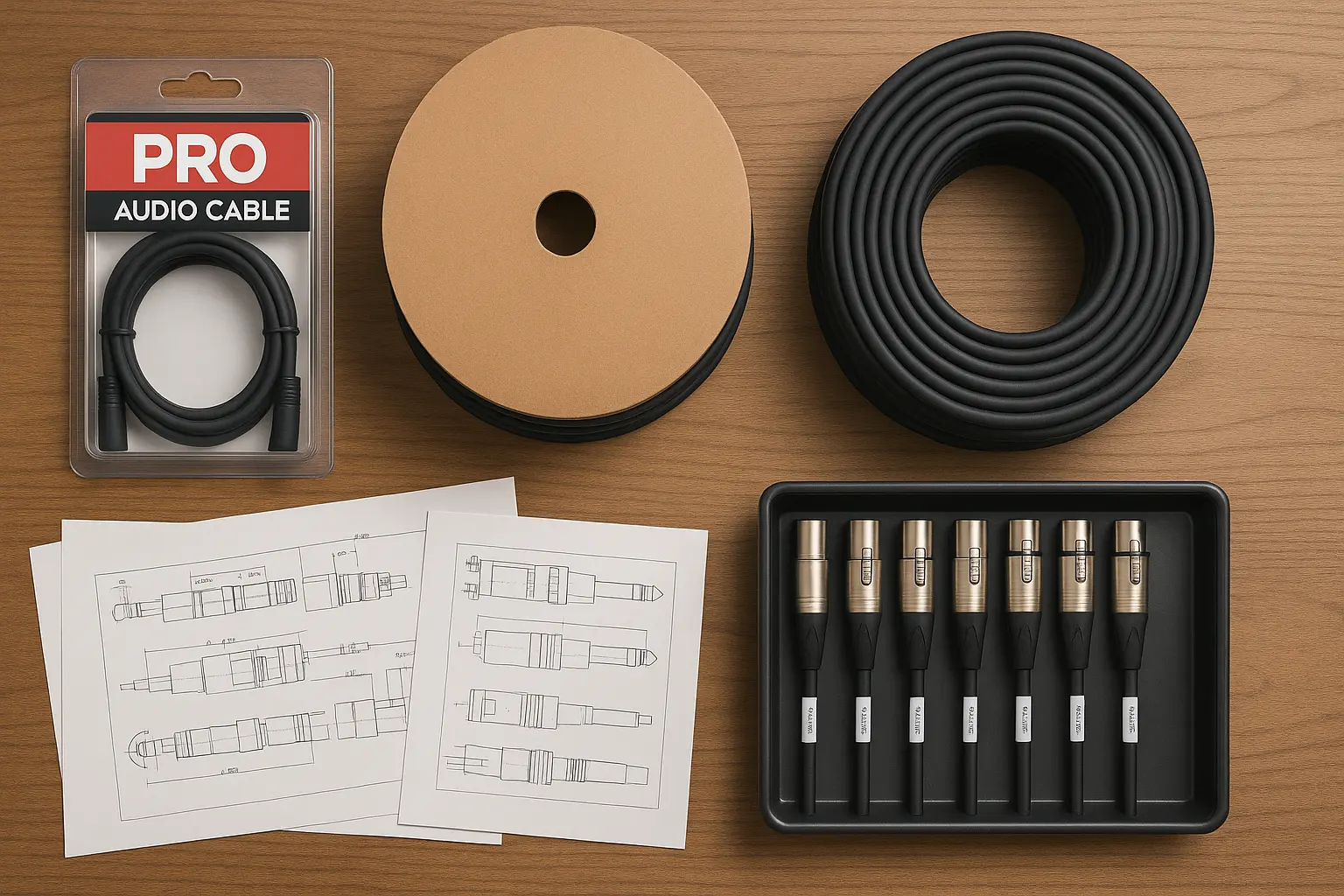
In pro audio, the phrase “cable company” covers several very different business types:
- Brand – controls naming, look, and marketing, but pays someone else to build the product.
- Distributor / wholesaler – buys finished cables and sells them on to dealers or integrators.
- System integrator – builds custom looms, panels, and racks using parts from multiple vendors.
- OEM / ODM manufacturer – owns the machines that draw copper, extrude jackets, cast metal parts, and assemble the finished cable.
If you run a US OEM brand, a regional wholesale line, or a big rental shop, that last group matters most. A real OEM audio cable supplier can:
- Adjust conductor size, shielding style, and capacitance to fit your use case.
- Keep mechanical tolerances tight across large runs, so connectors feel the same every time.
- Offer custom printing and packaging for the US market.
OEM / ODM Manufacturer vs US Brand or Distributor
Most buyers in the US first know cables through famous hi-fi or pro-audio names. Those are useful benchmarks, but they’re not always the right partners behind the scenes.
Brands & distributors:
- Strong marketing and dealer networks.
- Higher prices because each layer adds margin.
- Limited room for deep custom work.
OEM / ODM manufacturers:
- Better control over unit cost once volumes grow.
- Ability to change the structure of the cable and the connector itself.
- Suited to private label, house brands, and long-running product lines.
Rasantek’s “Top 15 High-End Audio Cable Wholesalers” article is a good case: it lists well-known brands, catches search traffic for many different names, and then hints that Rasantek is also a “manufacturer & wholesaler” that can build for you directly.
Common Supplier Types in US-Focused Projects
In practice, a US OEM or integrator tends to work with one or more of these:
- Bulk cable supplier – sends reels so your team can terminate in-house.
- Custom assembly OEM – ships ready-made XLR, TRS, speakON, DMX, or power cables with your logo.
- Boutique hi-fi brand – useful for sound and build benchmarks, but usually too expensive to re-label.
- Integrated factory – companies like Ningbo Jingyi Electronic (Jingyi Audio), which supply audio cables, audio connectors, and stage stands from the same group.
How US Pro Audio OEM Brands Search for an Audio Cable Supplier
Typical Search Queries from US OEM Buyers
Inside a US company, the first search is often broad:
- “audio cable supplier USA”
- “OEM XLR cable manufacturer”
- “bulk microphone cable supplier for rental company”
After reading a few product pages and list posts, people narrow down to questions that match their projects:
- “RoHS compliant DMX cable factory for California install”
- “wholesale balanced audio cable supplier for US integrators”
- “low capacitance instrument cable OEM for US guitar brand”
They bump into posts like Rasantek’s “Top 15” list, Axiom’s “cable truth” article, and brand pages from companies like in-akustik.
Then comes the trust check.
Why Forum Discussions Matter So Much
Once buyers have a short list, many of them head straight to community sites:
- Audio Science Review – with threads such as “This audio cable business is getting out of hand,” where people share measurements, blind tests, and cost breakdowns.
- Audiogon and similar sites – where users ask “Which cable companies make the best cables and sell them directly?” and compare stories about specific brands.
From these threads, a few clear patterns show up:
- Users like brands that show real specs and construction details.
- They complain loudly about high prices without clear benefits.
- They remember stories about stiff jackets, noisy cables, and weak connectors.
So when you pick an audio cable supplier, you’re also picking what kind of conversations will appear about your products later. A good partner makes life easier; a poor choice turns into long, searchable posts you’ll be answering for years.
Technical Factors US OEMs Should Check
Conductors, Shielding, and Capacitance
From an engineering point of view, a cable is basically a set of R, L, and C values wrapped in insulation, plus shielding. Brands like Axiom Audio explain this in simple terms when they talk about why some cables behave better than others.
When you talk to an audio cable supplier, make sure someone on their side can discuss, in plain language:
- Conductor material – OFC (oxygen-free copper) is standard in pro audio; silver or silver-plated copper appears in some premium builds.
- Gauge (AWG) – thicker for speakers, lighter for balanced mic and line-level signals.
- Shielding style and coverage – spiral, braided, foil, or combinations; higher coverage matters near lighting, radio gear, and power cables.
- Capacitance per meter/foot – this number matters for high-impedance instruments and long runs, where too much capacitance can dull the top end.
If a supplier can’t talk about these basics, it’s a red flag.
Example: XLR Cable Options for Typical US Use Cases
Here’s a simple table you can use when you talk through XLR cable needs with an OEM audio cable supplier:
|
Use Case |
Conductor |
Shielding |
Capacitance (typical) |
Jacket Flexibility |
Recommended For |
|
Touring PA rigs (US Midwest / West) |
24 AWG OFC |
Spiral copper |
Medium |
Very high |
Road cases, stage snakes, rental companies |
|
Fixed installs (US churches / venues) |
24 AWG OFC |
Braided + foil |
Low |
Medium |
Clubs, churches, theaters, permanent installs |
|
Studio balanced interconnects (US) |
24–26 AWG OFC |
Braided |
Low |
High |
Patch bays, rack-to-rack connections |
In-akustik’s Air Helix designs are one example of how geometry and dielectric choice are used to lower losses and capacitance.
For OEM projects, you don’t have to copy those designs, but you can borrow the same way of thinking: match construction to use case, not just “one cable for everything.”
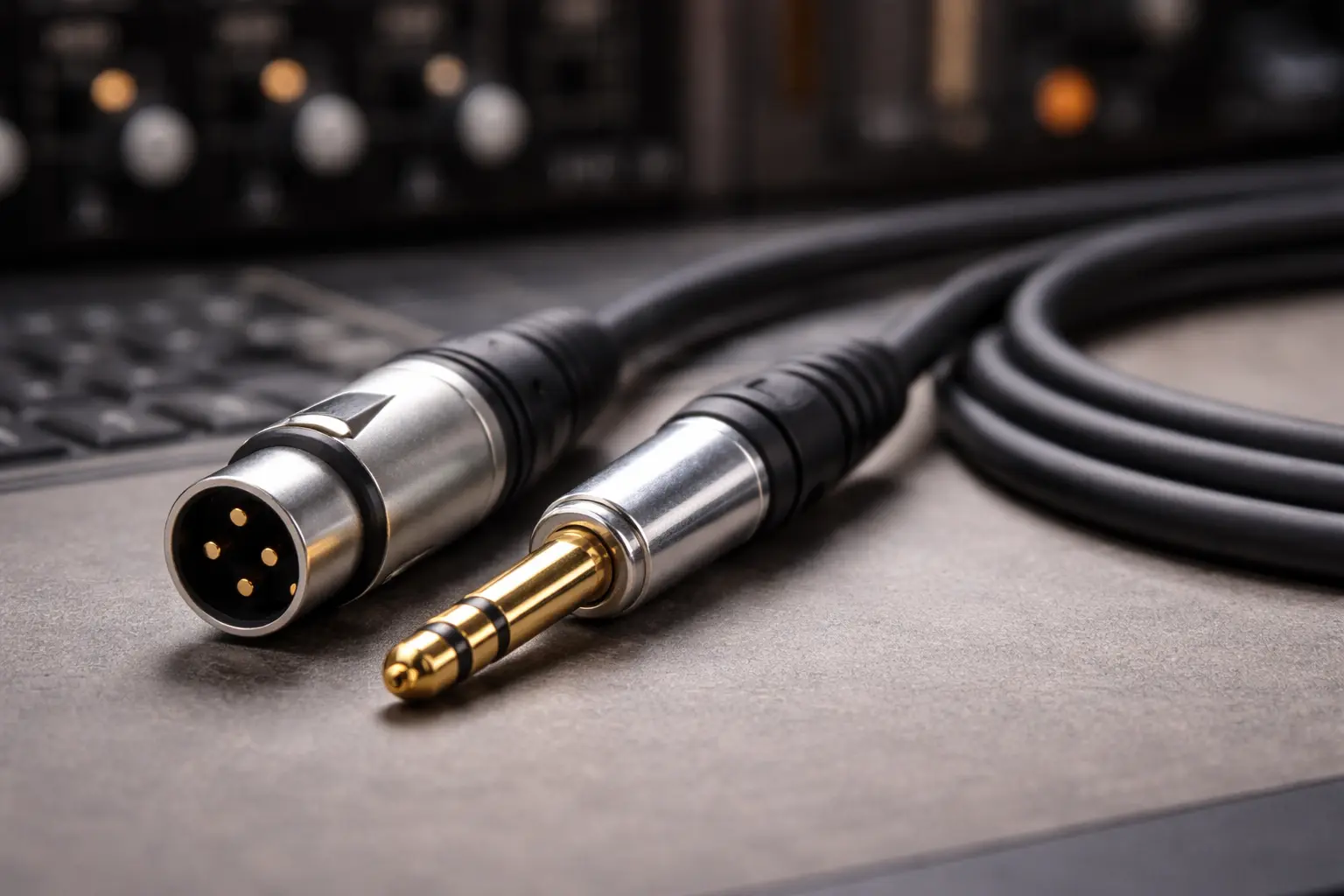
Connectors and the Mating System
Many cable horror stories are really connector stories:
- Plugs that go loose in stage boxes after a few months of gigs.
- Thin plating that goes dull and noisy in damp coastal climates.
- Strain reliefs that crack after constant coiling in rental fleets.
Brands that care about this often talk about connector design almost as much as the cable itself.
Factories like Ningbo Jingyi, which make audio connectors, audio cables, and stage stands, can treat the whole chain as one system:
- Outer diameters of cables match strain reliefs.
- Plating thickness and material are chosen with real environments in mind.
- Mechanical grip is tuned for typical use, not just “good enough for one demo shot.”
Compliance and Safety for US Projects
For US installs and gear, you’ll eventually bump into codes, inspectors, or big-company purchasing rules. At that point, you’ll be glad your audio cable supplier can send the right PDFs.
Ask for:
- RoHS / REACH – so you know restricted substances are under control.
- ISO 9001 or similar – so there is a documented quality system.
- UL / ETL and flame ratings – when you run cables in walls, ceilings, or plenum spaces.
Brands that sell to installers, such as some of the more technical US cable companies, often put this information front and center because it saves time for their customers.
Strategy: Asia-Based Manufacturing for the US Market
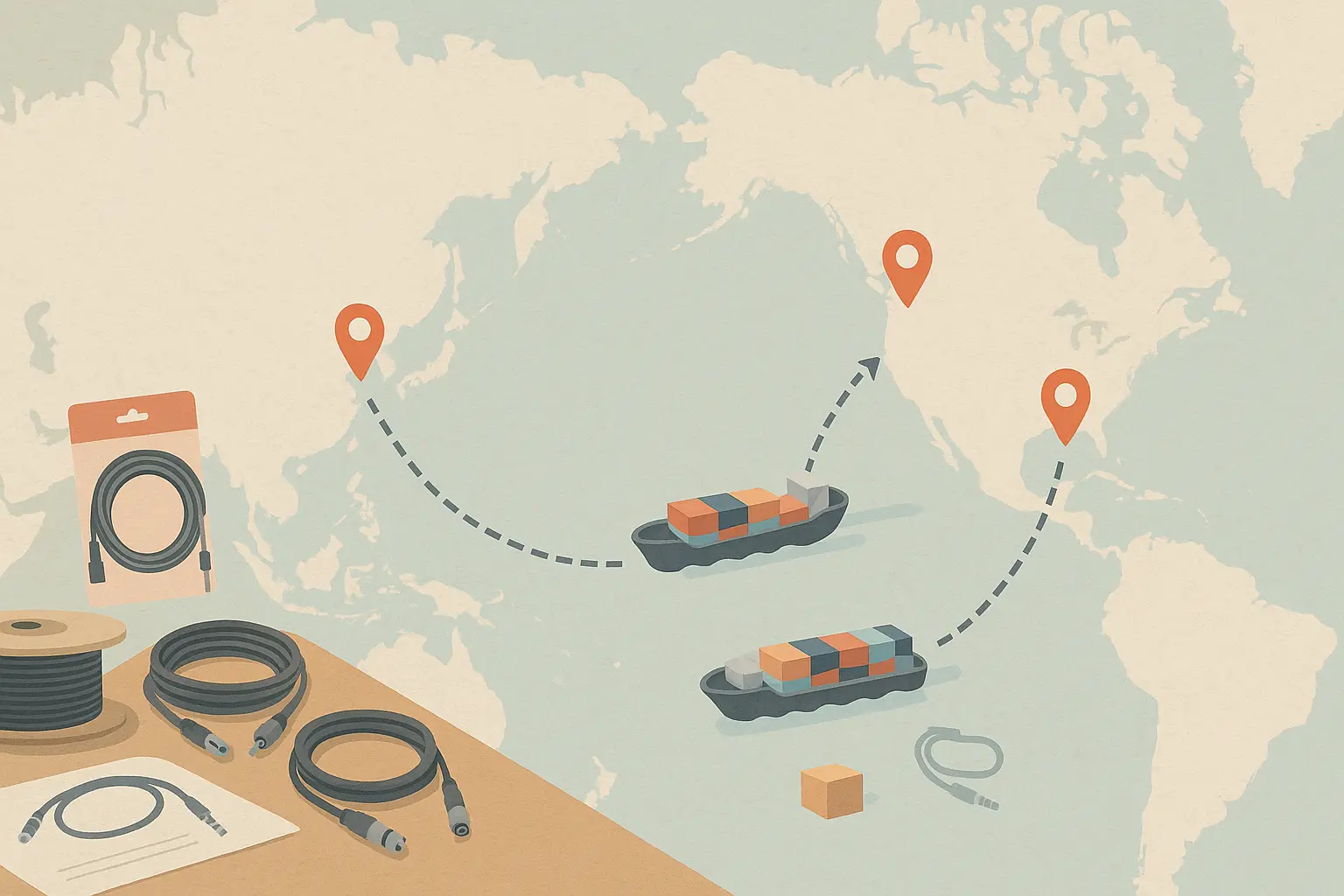
Why “China + 1” Makes Sense for Audio Cables
Over the last few years, tariffs and disruptions have pushed a lot of US brands to rethink where their products are built. For audio cables, a common pattern now looks like this:
- China for:
- Copper drawing
- Cable extrusion
- Connector casting and machining
- Southeast Asia (for example, Thailand or Vietnam) for:
- Final assembly and testing
- Printing and packaging
- Export hubs
This setup lets US buyers:
- Spread duty risk across different HS codes and origins.
- Use more than one port and country in case something goes wrong.
- Keep access to China’s deep supply chain and skilled labor.
Case Example: Ningbo Jingyi (Jingyi Audio)
From public listings, Ningbo Jingyi Electronic Co., Ltd.:
- Sits in Ningbo, Zhejiang, China, near a major port that sends containers to US ports like Los Angeles, Long Beach, Oakland, and New York/New Jersey.
- Focuses on Audio Cables, Audio Connectors, Stage Stands and Accessories.
- Acts as a custom manufacturer with export experience in North America and Europe, offering OEM and ODM services.
For a US OEM brand, this means you can:
- Build a private label cable range and matching connectors.
- Source stands and other hardware from the same group.
- Work with a team that already ships to US customers.
Working with an Asia-Based Audio Cable Manufacturer
When you talk to an Asia-based audio cable supplier, a few topics should be on your first call or email:
- Lead time – typical is 30–45 days after sample approval, plus sea freight.
- Incoterms – FOB Ningbo or Shanghai are common; some partners can quote CIF US ports.
- Stock strategy – can they hold some safety stock for you once demand is stable?
With that info, your US launch dates and install schedules can be planned backward from reality, instead of best-case guesses.
What Real Users Say: Lessons from Social Media & Forums
Cable Hype vs Reality on Audio Science Review
The long Audio Science Review thread called “This audio cable business is getting out of hand” is a good window into how technical users think.
Some common themes:
- People dislike high prices when measurements look ordinary.
- Vague phrases without lab data raise eyebrows fast.
- Brands that share real diagrams and test results get more respect, even when people don’t agree on the audible effect.
If your audio cable supplier can give you clean specs and honest test data, you can talk to this audience without sounding like you’re hiding something.
How Bad Supplier Choices Show Up Online
On hi-fi and pro-audio forums, you can find plenty of posts about:
- Cables that went stiff and cracked after one winter.
- Jacks that lost grip mid-tour.
- Connectors that corroded in coastal states like Florida.
Most of those stories come down to small decisions made at the factory: cheaper plastics, thinner plating, weak strain relief. Once someone posts photos and a rant, that story is easy to find for the next buyer.
Turning Complaints into Better OEM Specs
The helpful twist: every rant is also a spec sheet in disguise. For example:
- “We need jackets that stay flexible outdoors in cold states.”
- “We need low-microphonic mic cable because singers move a lot.”
- “We want standard connectors that can be repaired in the field.”
An experienced OEM audio cable supplier like Jingyi, which designs both connectors and cables, can work through these points with you and suggest changes at the drawing level instead of just sending whatever they already make.
Evaluating a Supplier: Framework, RFQ Template & Checklist
- Capability and Catalog Fit
Ask simple questions first:
- Can this audio cable supplier cover microphone, instrument, speaker, and DMX cables?
- Do they also make connectors and maybe stands?
- Are they used to private label work, or do they mainly sell under their own brand?
If one partner can cover most of your signal path, you spend less time chasing small orders and fixing gaps.
- Quality Systems and Testing
Before you commit to a big run, ask for:
- Samples of each cable and connector combination you care about.
- A short test plan—pull tests, flex tests, basic continuity, simple noise checks.
- A description of their QC flow: incoming, in-process, and final checks.
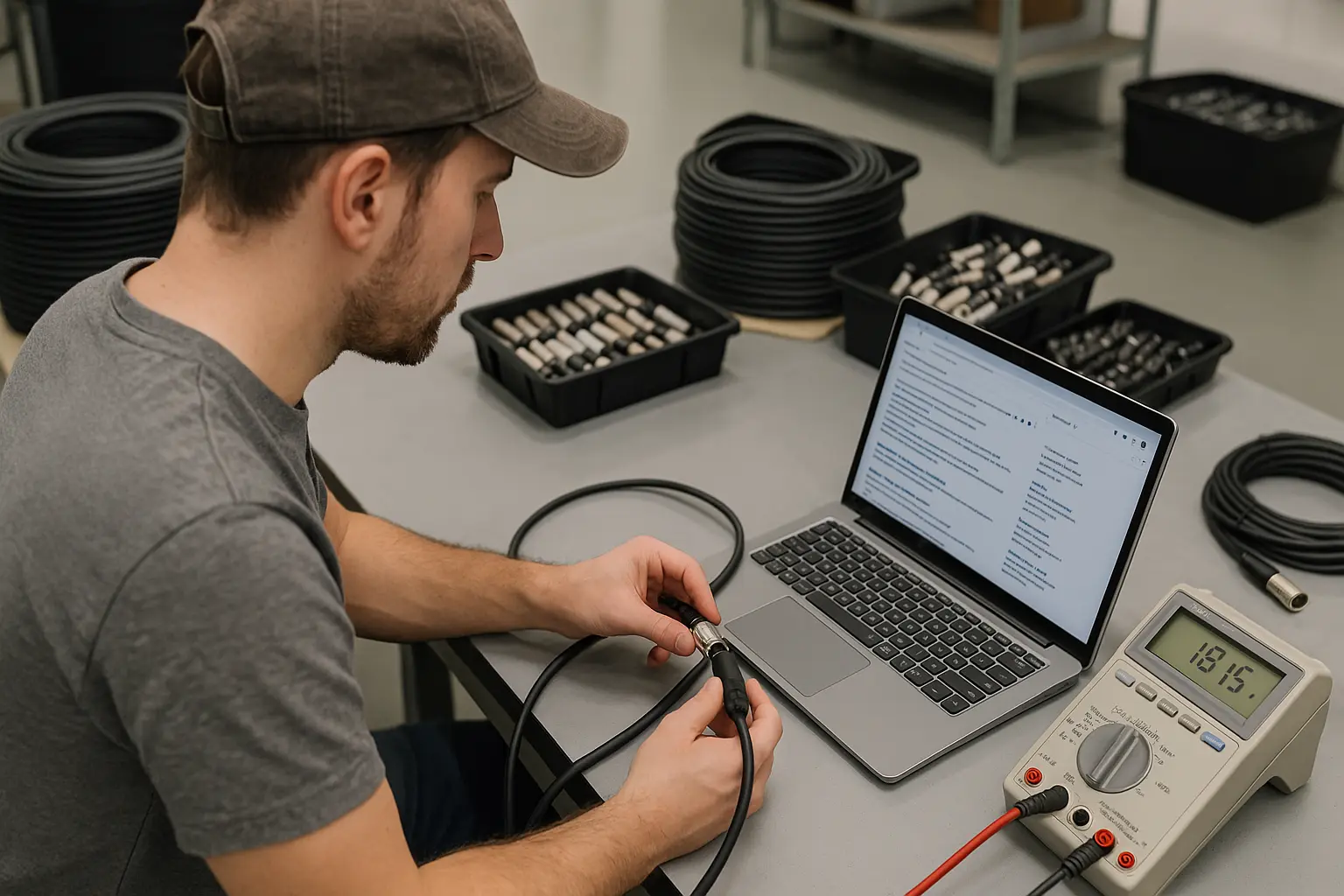
You don’t need a full lab. A basic bench in your US office with a multimeter, a small load, and some real gear can reveal obvious issues quickly.
- Communication and Engineering Support
A good OEM audio cable supplier should feel like a partner, not a black box. Look for:
- Clear answers to RFQs and technical questions.
- Usable drawings and spec sheets, not just catalog pages.
- Willingness to tweak details like jacket hardness, color, or connector finish.
Good communication reduces mistakes and speeds up every change.
Sample RFQ Template for US OEM Audio Cable Projects
Here’s a simple email text you can adapt when you reach out:
Subject: RFQ – OEM Balanced Audio Cables for US Pro Audio Brand
Dear [Supplier Name],
We are a US-based pro audio brand looking for an OEM audio cable supplier for our upcoming product line. Please quote based on the information below:
- Cable types:
- Balanced XLR microphone cable (3 m, 6 m, 10 m)
- Speaker cable (12 AWG, 2-conductor, 15 m)
- XLR cables: [X,000] pcs
- Speaker cables: [X,000] pcs
- OFC conductors, low capacitance for mic cables
- Braided or braided + foil shielding
- Robust strain relief for touring use
- RoHS / REACH compliant
- Please indicate ISO 9001, UL/ETL, and any relevant flame ratings.
- Custom printing on cable jacket
- Private-label packaging for US retail/e-commerce
- Preferred Incoterms: FOB Ningbo or Shanghai
- Shipments to US ports (Los Angeles / Long Beach / New York/New Jersey)
- Samples required by [date]
- Mass production target [date]
Please provide unit pricing by length, MOQs, standard lead times, and any available test reports.
Best regards,
[Your Name]
[Company / Role]
[Email / Phone]
Audio Cable Supplier Checklist (US-Focused)
You can use this checklist when you compare suppliers side by side:
- Experience
- How long have they been making audio cables and connectors?
- Do they already serve North American or European customers?
- Product scope
- Microphone, instrument, speaker, and DMX cables available?
- Connectors and stands from the same group?
- Technical level
- Can they explain their designs in simple engineering terms?
- Do they have drawings and cross-sections to share?
- Compliance
- RoHS / REACH documents ready to send?
- ISO 9001 or similar certification?
- UL/ETL and flame ratings when needed?
- Quality
- Written QC process and test methods?
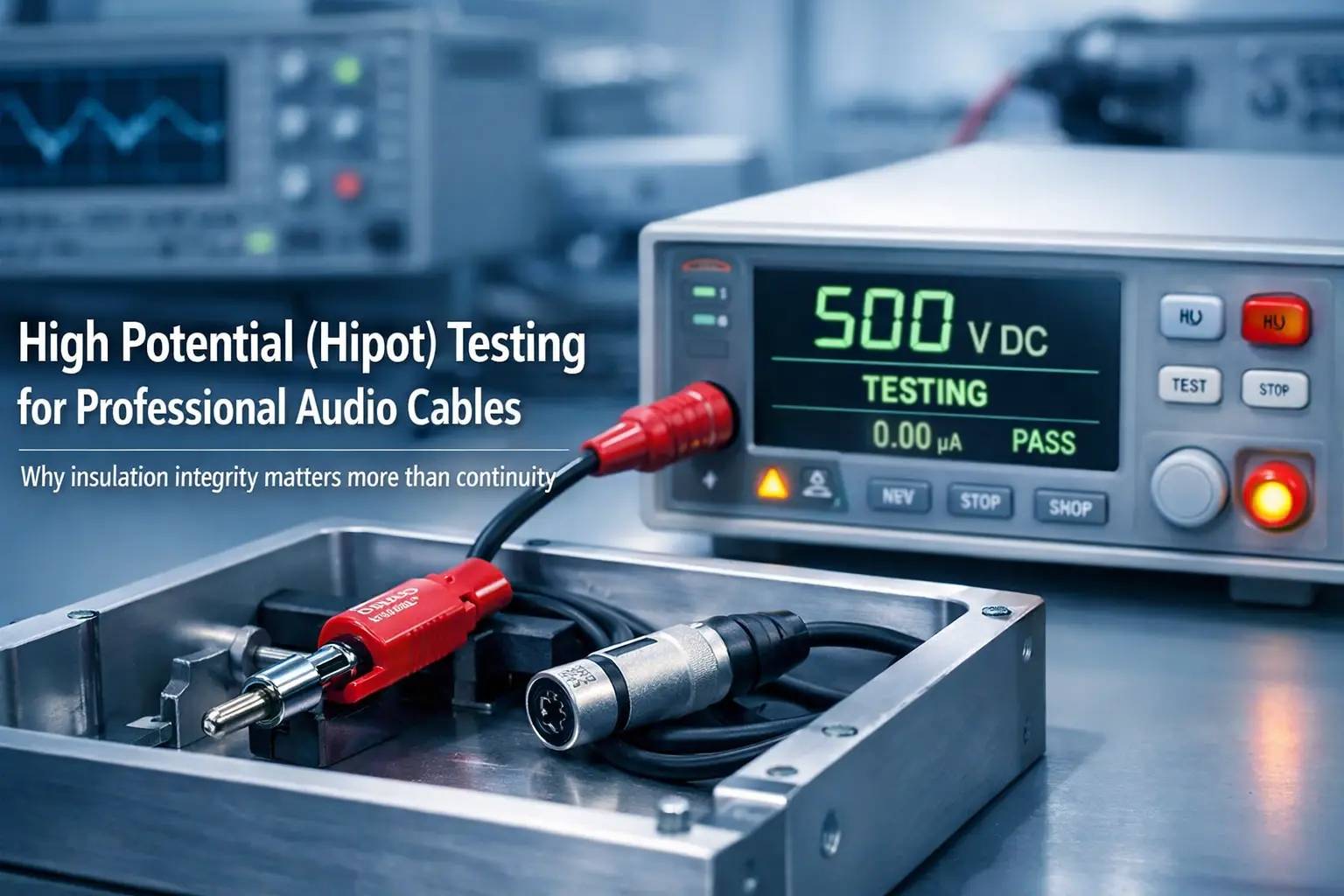
- Sample test reports (tensile, flex, continuity, insulation)?
- Logistics & GEO
- Standard lead times and shipping options?
- Experience shipping to US ports and warehouses?
- Any “China + 1” capability?
- Communication
- Response time to emails and calls?
- English-speaking contact who understands OEM work?
If a candidate scores well on most of these points, you probably have a solid partner to build on.
Why Vertically Integrated OEMs Like Jingyi De-Risk US Brands
From Connectors to Stands: One Supplier for the Whole Chain
A factory that builds:
- Audio connectors
- Audio cables
- Stage stands and accessories
gives US OEM buyers a simpler life:
- Fewer vendors and fewer POs.
- Matching tolerances and finishes across product lines.
- One place to solve problems if something goes wrong.
Ningbo Jingyi (Jingyi Audio) is one example of this kind of setup.
Innovation Without Throwing Away Serviceability
Some brands launch very unusual cable and connector systems. Those can be fun, but forum threads show the downside: heavy plugs that stress jacks, odd shapes that don’t fit tight racks, or parts that can’t be fixed on the road.
For OEM lines aimed at real-world users—musicians, AV integrators, rental houses—sensible choices often work better:
- Common interfaces (XLR, TRS, speakON, PowerCON, etc.).
- Robust yet flexible construction.
- Standard connectors that any tech in the US can repair.
A good OEM audio cable supplier understands this and helps you add smart features without making the product awkward to use or maintain.
Straightforward Engineering as a US Marketing Story
Communities like ASR can read a spec sheet and a marketing page side by side. If those don’t match, someone will call it out.
That’s why a simple message often works best:
“Here are the actual specs. Here is how we designed this cable with our OEM partner. No magic, just solid design and testing.”
An audio cable supplier who can share clear data, construction details, and real photos makes that message easy to write and easy to defend.
FAQ – Common Questions from US OEM Buyers
- What’s the difference between an audio cable supplier, a wholesaler, and an OEM/ODM manufacturer?
- A wholesaler buys finished goods and resells them.
- A brand may design products and handle marketing but outsource production.
- An OEM/ODM manufacturer actually builds the cables and connectors and can adjust structure, printing, and packaging for you.
For ongoing US OEM and wholesale work, dealing directly with the manufacturer usually gives more control.
- How can we check quality before placing a big order from overseas?
- Request samples and test them with your own gear.
- Bend, coil, and plug/unplug them as your customers would.
- Measure basic values if you have the tools.
- Ask for references, QC procedures, and any lab reports.
If a supplier is serious, they’ll be happy to go through this with you.
- Which certifications should our audio cable supplier have for the US market?
Look for:
- RoHS / REACH for substance control.
- ISO 9001 for quality management.
- UL/ETL and flame ratings when cables are used in walls, ceilings, or plenum spaces.
These help with bids, safety reviews, and building codes.
- What’s a normal MOQ and lead time for OEM audio cables?
Every factory is different, but a common pattern is:
- A few thousand meters of bulk cable per type, or a few hundred to a few thousand finished cables per model.
- Around 30–45 days for production once samples are approved, plus ocean shipping time.
Plan your US releases from that baseline with some buffer.
- Do audio cables matter as much as speakers and electronics?
Speakers and electronics shape most of the sound, but cables still matter for:
- Noise (hum, buzz, RF) if shielding and grounding are weak.
- Handling noise and microphonics.
- Reliability in the field.
You don’t need “miracle” products; you need solid, well-built cables from a competent audio cable supplier.
- Is it better to use one integrated supplier or several specialized ones?
Many US OEMs start with one integrated supplier that can cover cables, connectors, and sometimes stands. This keeps purchasing and communication simple.
Some brands later add a second supplier for backup or niche needs. The right mix depends on your risk tolerance and product range, but starting with one strong partner is often easiest.
References & Citations
- Rasantek Audio – Top 15 High End Audio Cable Wholesalers
URL: https://rasantekaudio.com/cables/top-15-high-end-audio-cable-wholesalers/ - Axiom Audio – The Truth About Cables
URL: https://www.axiomaudio.com/blog/cabletruth - in-akustik – Interconnect Cables & Air Helix Technology
URL: https://www.in-akustik.com/cables/interconnect-cables/ - Audio Science Review – This Audio Cable Business Is Getting Out of Hand (forum thread)
URL: https://www.audiosciencereview.com/forum/index.php?threads/this-audio-cable-business-is-getting-out-of-hand.7712/ - Ningbo Jingyi Electronic Co., Ltd. (Jingyi Audio) – Company & Product Overview
URLs: