


How to Use jack to 2 x rca phono stereo audio cable (3.5mm to 2 RCA) – 2025 OEM Guide for US Audio Brands
Key Takeaways
A jack to 2 x rca phono stereo audio cable is still one of the most common links between modern devices with a 3.5mm jack and older or semi-pro gear with RCA inputs in the US market. The way this cable is designed – conductor type, insulation, shielding and connector quality – has a direct effect on noise, clarity and lifetime. Ningbo Jingyi Electronic (Jingyi Audio) is an experienced OEM and ODM factory that builds connectors, bulk cable and finished assemblies for brands that sell into North America and Europe. Users on forums and social platforms often report less hiss, fewer dropouts and cleaner high frequencies after upgrading from ultra-cheap cables to products made under the Jingyi, Roxtone or ZZYZX family. For US OEM, private-label and distributor customers, working with Jingyi on jack to 2 x rca phono stereo audio cable projects opens up custom lengths, branding, packaging and shipping plans that fit US channels.
Introduction: Why jack to 2 x rca phono stereo audio cable Still Matters in a Wireless World
Wireless audio is everywhere, but the jack to 2 x rca phono stereo audio cable has not disappeared. It is still hiding behind TVs and AV receivers in US living rooms, under desks in home studios and offices, and inside racks in churches, schools and small venues.
When someone types “how do I connect my AUX cable to my RCA cable” or “can aux plug into RCA” into a search bar, they are really asking how to use this one cable. For US OEM brands and distributors, that question is a reminder that this is not just a throw-in accessory. With the right design and the right factory, it can become a stable product line that carries your logo, works quietly for years, and supports other parts of your catalog.
How to Connect a 3.5mm Device to RCA Inputs
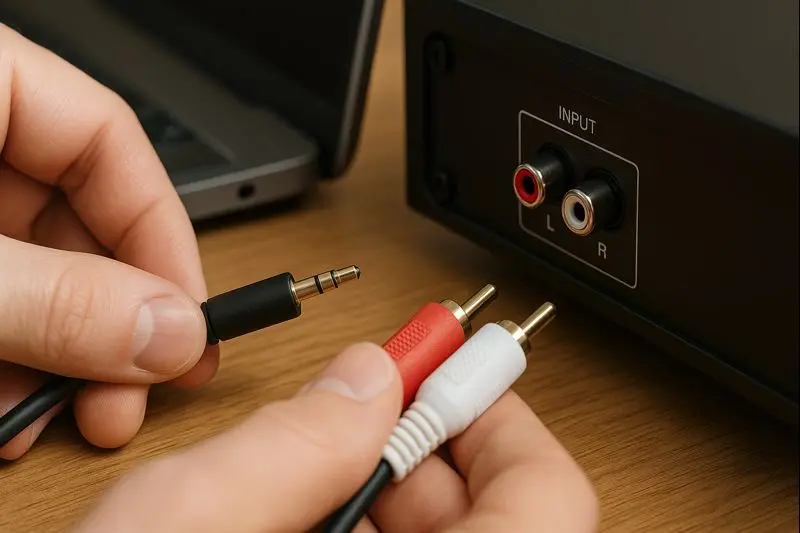
Many readers just want to know how to hook things up without noise or guesswork, so let’s walk through it in plain language.
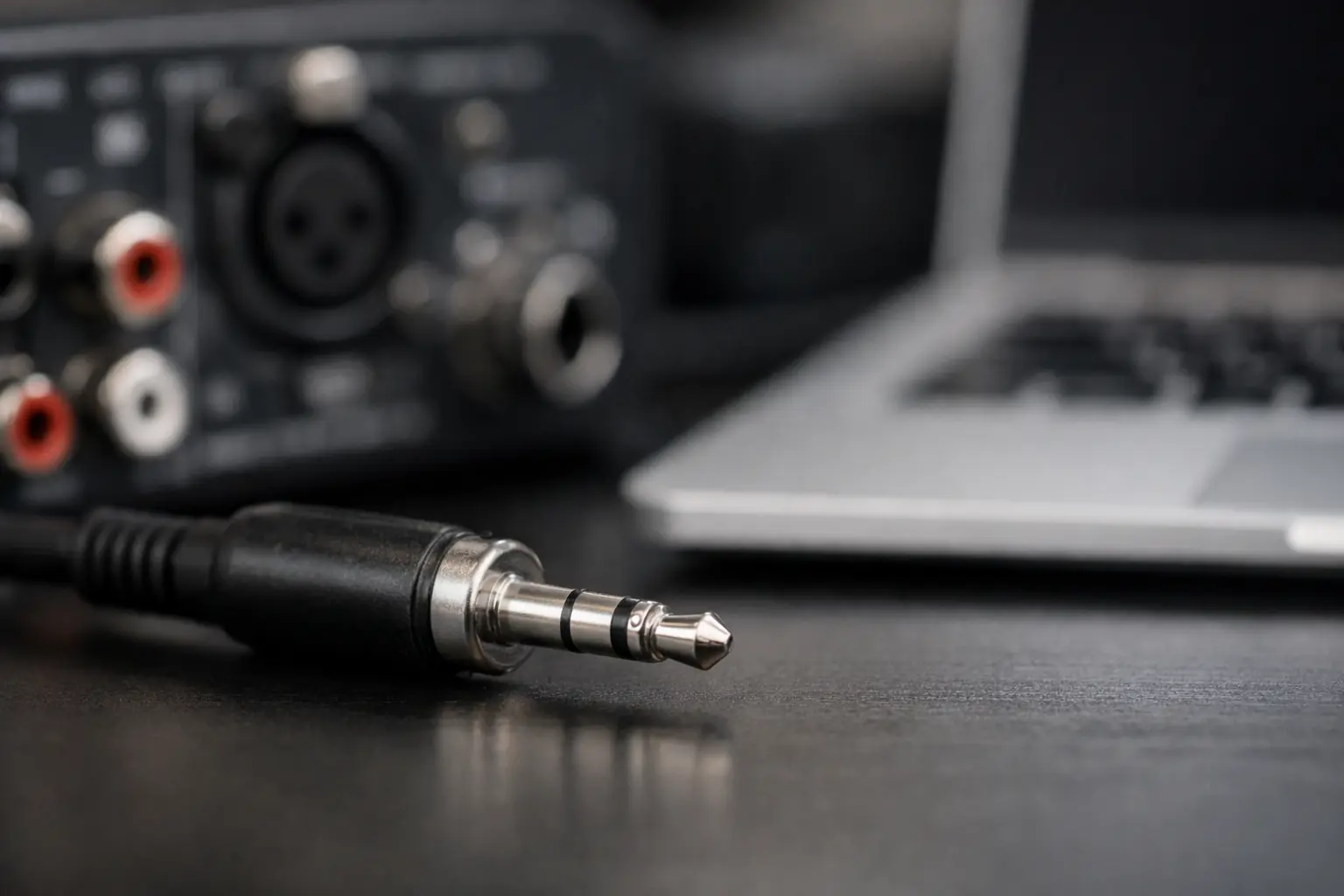
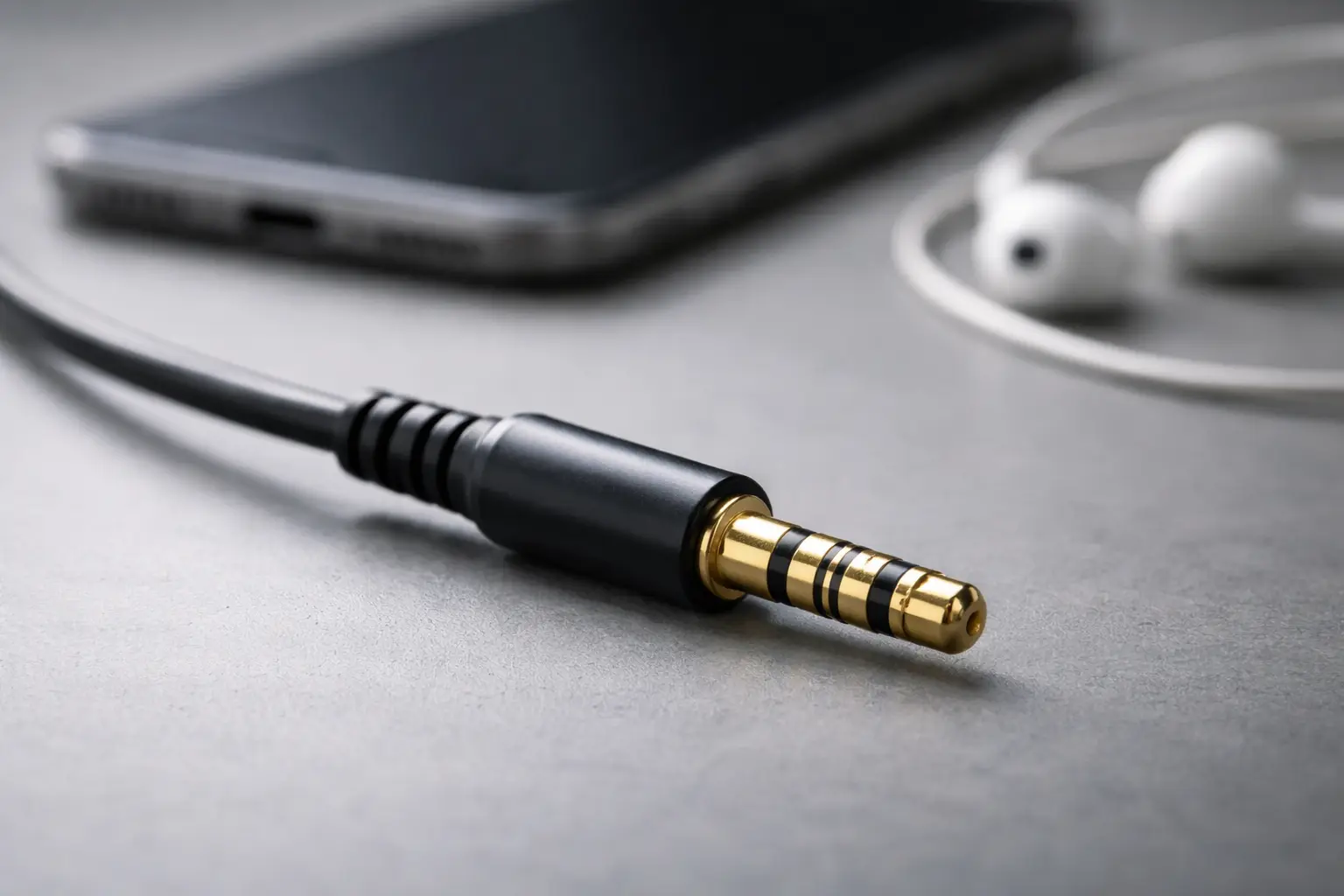
First, find the 3.5mm stereo output on your source device. On a laptop this is usually the headphone jack. On a tablet or older phone it may be the only audio port. On a USB DAC, small mixer or DJ controller it might be labeled “LINE OUT” or “AUX OUT”. The single “jack” end of your jack to 2 x rca phono stereo audio cable goes here.
Next, look at the back of your amplifier, powered speakers or AV receiver and locate the RCA inputs. These are the round sockets, usually with a red ring for the right channel and a white ring for the left channel. They are often labeled AUX, LINE IN, CD, TAPE or ANALOG IN. These are the “phono” ends that the two RCA plugs from your cable will feed.
Now plug everything in. Insert the 3.5mm stereo jack firmly into the source device. Insert the red RCA plug into the right input and the white plug into the left input. Make sure each connector is fully seated; half-inserted RCA plugs are a very common cause of crackling, dropouts and a “missing” channel.
Finally, set your levels. Turn down the volume on both the source and the amplifier before you start playback. Then start a track and slowly bring the levels up. Listen for a solid center image, left and right balance, and a low noise floor. Gently move the cable and the connectors and watch for any sudden pops or cut-outs. If you hear a whine in a car that changes with engine speed, or a strong hum in a room with lots of power cables, a cable with better shielding and controlled capacitance often helps more than swapping devices.
If you are an OEM brand selling to end users, a simple diagram on the box that shows “3.5mm jack → Y-split → red and white RCA” can remove most confusion and reduce support questions.
From AUX and DACs to AV Receivers: Where This Cable Fits
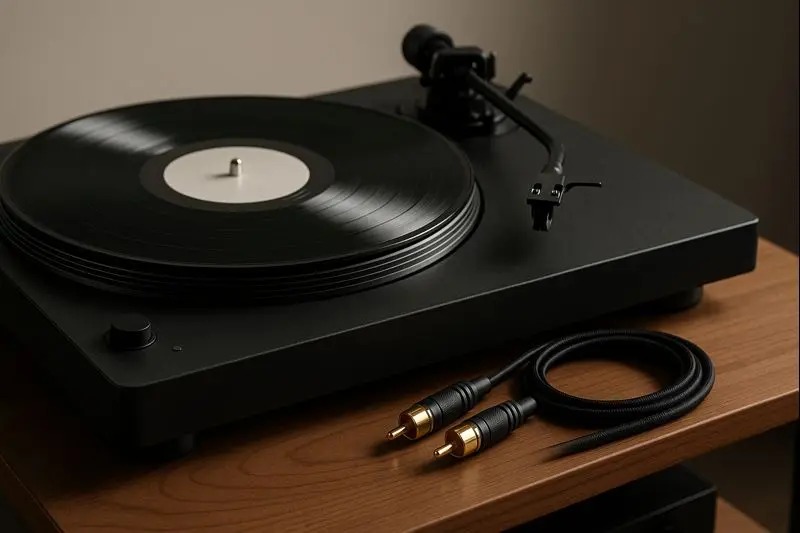
In US systems this cable turns up in a surprising number of places. At home, a USB DAC or streaming box feeds an older stereo receiver through a jack to 2 x rca phono stereo audio cable. On a desk, a laptop’s 3.5mm jack connects to a pair of powered speakers or a subwoofer. In schools, small venues and churches, laptops and tablets are still regularly patched into mixers and installed amps using this style of cable.
RCA is an unbalanced format, which means the signal is more sensitive to hum and interference than a balanced XLR or TRS connection. That sensitivity is one reason why the build of the cable itself matters. A flimsy, poorly shielded cable may be quiet on a short run in a quiet room and then become noisy the moment it is moved near power lines or dimmer packs. A better built cable can help keep systems clean enough that your customers do not think about the cable at all.
Inside the Cable: How Design Choices Change the Result
Oxygen-Free Copper (OFC): Strength and Consistency
Many jack-to-RCA cables built in the Jingyi and Roxtone ecosystem use oxygen-free copper (OFC) for the conductors. The electrical gain compared with very cheap copper is small, but the mechanical gain is meaningful. OFC has fewer impurities and inclusions, so the wire handles more bending and twisting before small internal cracks appear.
In US use cases like portable PA rigs, school carts and rental gear, cables are coiled, stepped on and pulled all the time. Ordinary low-grade copper can fail early in those conditions, often in the form of intermittent signal loss that frustrates users. OFC helps reduce those random faults, and that leads to fewer returns and service tickets. For an OEM brand, “OFC conductors” is a clear, honest spec that points to durability rather than vague sound claims.
PE Insulation and Cable Capacitance
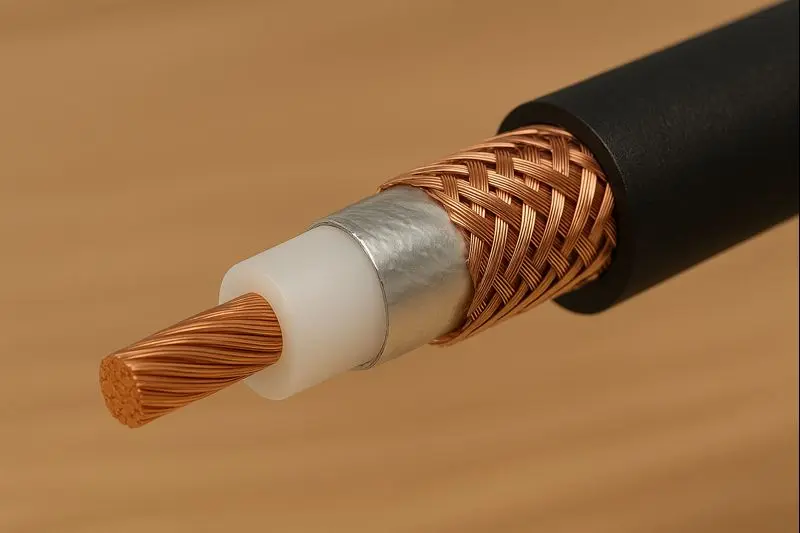
Every unbalanced audio cable behaves like a small capacitor between its inner conductor and its shield. The insulation material between them controls that capacitance. Higher capacitance means the cable will shave off more high-frequency content as distance increases.
Low-cost cables often rely on PVC as the main insulation. Many mid-tier and better lines, including Roxtone GPTC-series 3.5mm-to-2RCA cables, use PE (polyethylene) as the dielectric around the audio cores. PE has a lower dielectric constant, which leads to lower capacitance per meter and better handling of high frequencies over longer runs.
For users pairing sharp-measuring DACs from brands like Topping or SMSL with powered monitors, this can be the difference between a system that keeps all the detail and one that sounds slightly dull when the cable run gets longer. If you run an OEM brand, this is a concrete story you can tell: the cable keeps up with the resolution of modern devices because its electrical behavior has been designed, not guessed.
Shielding and Noise in Homes, Studios and Cars
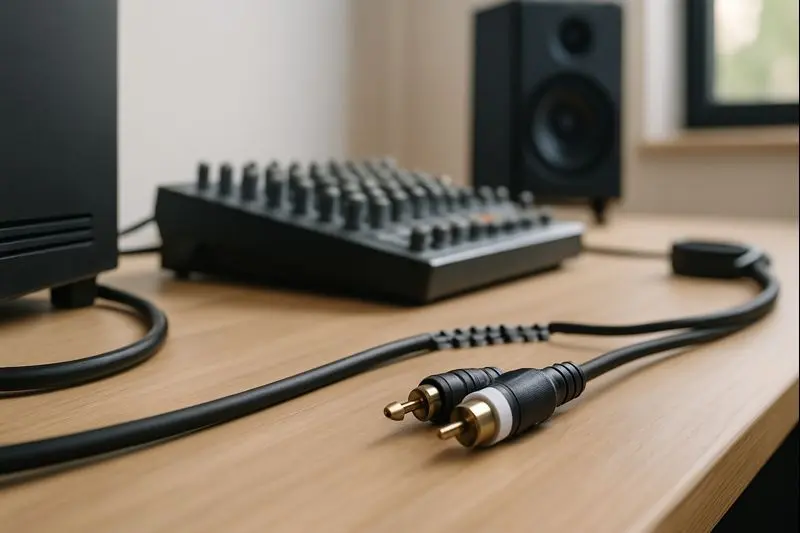
Unbalanced lines are exposed to a lot of electrical mess. LED lamps, dimmer switches, small power supplies, Wi-Fi routers, phone transmitters and in-car alternators all throw energy into the air and into nearby cables.
A better jack to 2 x rca phono stereo audio cable usually wraps its conductors in more than one shield. One common recipe is an aluminum foil shield for full coverage around the insulated cores, plus a braided copper shield outside the foil for extra low-frequency rejection and mechanical strength. A drain wire gives the shield a clear path to ground. The result is a cable that picks up much less junk from the environment.
That is why so many reports on car audio and home theater forums say things like “I replaced the thin free RCA with a thicker, shielded one and the alternator noise almost disappeared.” The devices did not change; the cable did. For brands, that improvement becomes a reason for good reviews and repeat orders.
Building a Better Cable with Jingyi Audio
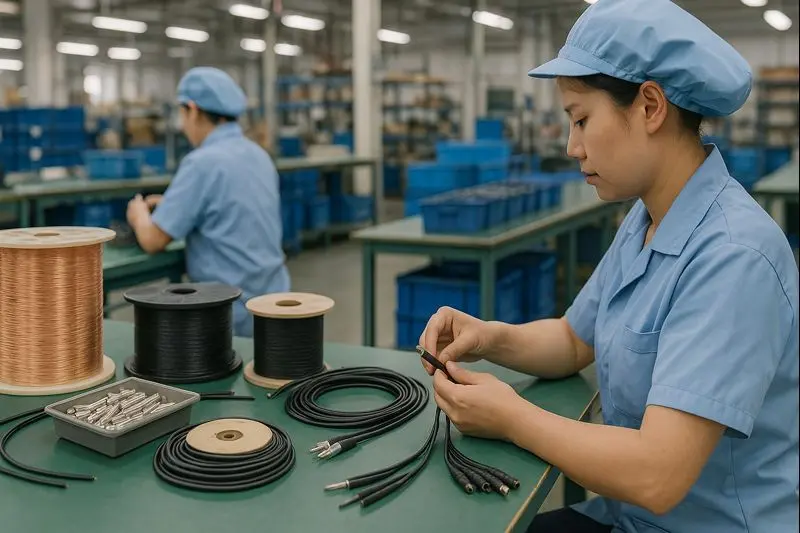
Connectors: From 3.5mm TRS to Dual RCA
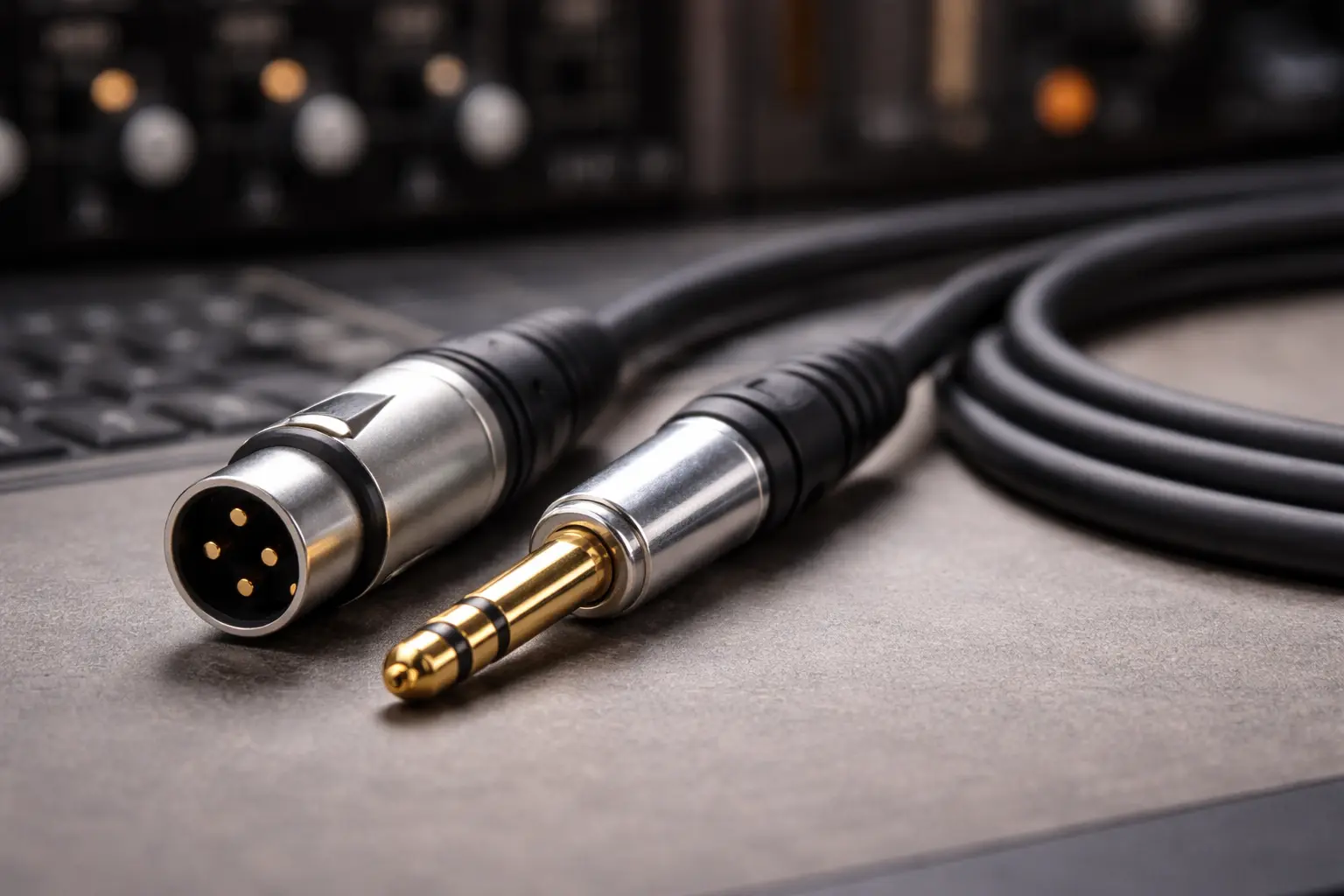
When Jingyi builds a jack to 2 x rca phono stereo audio cable, the connector design is not an afterthought. The 3.5mm stereo plug needs proper strain relief so that a pull on the cable does not transfer directly to the solder joints. RCA plugs need clear red and white markings, the right fit in the socket and a body that can stand daily use without cracking.
Jingyi offers molded plastic connectors for entry-level consumer ranges and die-cast zinc alloy shells for more premium or professional lines. This gives OEM customers room to build a ladder of products, from basic household cables to more rugged options for studios and stage work. The broader connector and cable range can be seen at:
https://site_5615465d-0395-48c6-b01f-dc3d38213fc5/
Internal Construction: A Quick Look
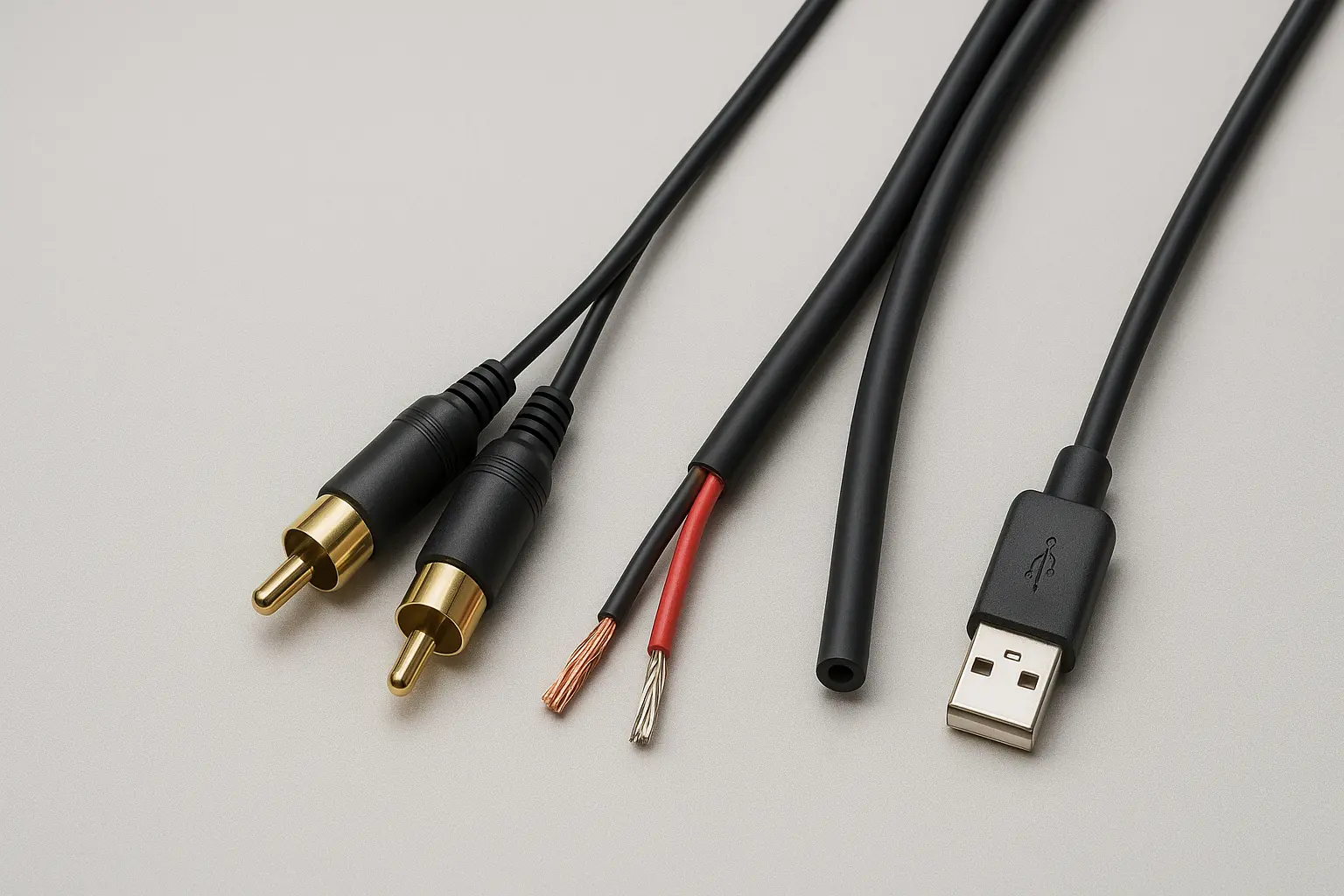
Inside a typical mid-tier OEM cable from the Jingyi or Roxtone family you will often find OFC multi-strand conductors, PE insulation around the signal cores, an aluminum foil shield wrapped around them, then a braided copper shield on top, and finally a flexible PVC jacket. The contact surfaces on the plugs are often gold-plated to slow down oxidation, and the rear of the connector is designed with strain relief or clamping hardware so that pull forces act on the mechanical parts, not the solder itself.
Compared with the thinnest low-cost cables, this kind of build has a clear edge in every practical way. It is quieter, more durable, more stable when moved, and feels like a finished product instead of a temporary lead.
Compliance and Testing for US and EU Markets
Because Jingyi serves North America and Europe, its products are designed with RoHS and other environmental rules in mind. Cables and connectors can be supplied to match CE and customer-specific test plans. Before a model goes into full production it is normal to run bend tests, pull tests and repeated plug/unplug cycles to simulate years of use.
For US OEM and private-label customers this is not just paperwork. It makes customs clearance easier, reduces the risk of shipments being held up due to missing documentation, and lowers the chance that a product will need to be reworked due to non-compliant materials later on.
On your own site you can connect this story by linking terms like “RoHS-compliant audio cables” to a quality and compliance page and “audio cables” to your full product list.
Real-World Stories: What Users Notice When They Upgrade
Desktop Hi-Fi: “The Noise Finally Went Away”
On platforms like Reddit and Head-Fi, many users tell a similar story. They start with the thin cable that came in the box or a very cheap spare. Later they switch to a thicker 3.5mm-to-RCA cable with better shielding and OFC conductors. Once they do, they often report a lower noise floor, cleaner treble and a more stable stereo image, especially with high-resolution DACs feeding sensitive speakers or headphones.
For OEM brands, those stories are gold. They show that a cable with honest, well-designed specs can create a real difference in daily use. Turning them into short case notes or customer quotes for your product pages is an easy way to make your cables feel real and relatable.
Guitar Players and ZZYZX Snap Jack
ZZYZX Snap Jack is another good example of how cable design can solve real problems. Its magnetic plug system for guitars means that if a player trips on the cable, the plug releases instead of ripping out the jack or damaging the amp. It also makes guitar swaps on stage quieter and less stressful.
Reviews from guitar magazines and online shops often praise both the sound and the convenience of this design. It shows that when you think carefully about both the connector and the cable, you can build something musicians talk about for reasons beyond tone.
More details are available at:
https://www.guitarworld.com/gear/zzyzx-snap-jack-cables
https://www.zzounds.com/productreview--JODSNAPAJACK
US Car Audio: Alternator Whine and Simple Fixes
In US car audio communities, many people describe battles with alternator whine. A common pattern is that the head unit and amplifier are fine, but the long RCA or AUX runs are very thin, poorly shielded and routed near power cables. When those lines are replaced with properly shielded OFC cables and the grounding is checked, the whine often drops to a much lower level or vanishes.
If your brand sells into the car audio channel, telling that story clearly, along with the specific shielding and conductor choices in your cable, can turn an inexpensive accessory into a trusted problem solver.
OEM and Private-Label Chances for US Brands
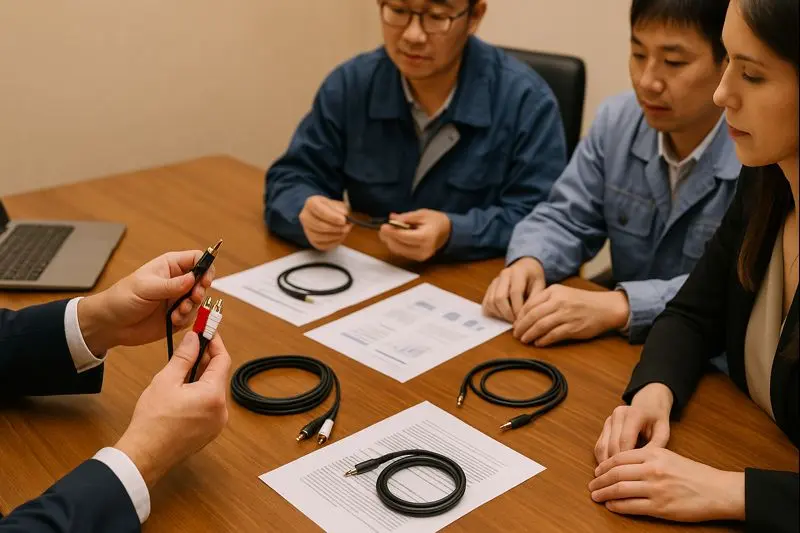
Why US Buyers Look at Ningbo Jingyi
Ningbo Jingyi Electronic Co., Ltd. has a factory base in Ningbo, near major ports, and has been building audio connectors, stands and cable assemblies for many years. It has a steady history of supplying customers in North America and Western Europe.
You can get a sense of its background and product scope here:
https://www.made-in-china.com/showroom/marlene-jingyi
https://nbjingyi.en.alibaba.com/
For US brands this means you can source connectors, bulk cable and finished cable assemblies from one partner and keep your ecosystem consistent instead of juggling several small suppliers with different standards and communication styles.
Custom Options: Length, Look and Packaging
When you design a private-label jack to 2 x rca phono stereo audio cable, there are several knobs to turn. Length is one of the obvious ones. Short runs fit home and desktop use. Medium and long runs target studios, stages and car installs. Color is another. Black is still the default, but white, red, blue and other colors can help shoppers tell cables apart and can make retail shelves more visually strong.
You can also shape the splitter area and strain relief, choose between slim or chunky connector housings and decide where your brand appears. Printing on the jacket, adding branded heat-shrink near the plug, or using custom-tooled connector shells all help your line look like a unified family. Packaging can range from simple poly bags with inserts to printed boxes and hang cards with English copy, barcodes and compliance text ready for US stores.
The more clearly you describe your target customers – for example US Amazon FBA, music chain stores or car audio shops – the easier it is for Jingyi’s team to suggest a matching set of designs.
If you want to talk through a concrete project, you can send your current sample or spec to Jingyi and discuss OFC conductors, double shielding, connector style and packaging, then plan batch sizes and shipping together. The main entry point is the contact section on their site:
https://site_5615465d-0395-48c6-b01f-dc3d38213fc5/
MOQ, Lead Time and Shipping to North America
Minimum order quantities and production times depend on the project, but the general pattern is to begin with samples and small test batches and move up to regular runs once everything is stable. Shipments typically leave FOB Ningbo or Shanghai and head to West Coast ports such as Los Angeles, Long Beach or Seattle, or East Coast ports such as New York and New Jersey.
If you also plan to source microphone stands, XLR cables or other accessories from the same factory, you can consolidate several SKUs into one or a few containers, which simplifies planning and warehouse work.
How to Choose the Right jack to 2 x rca phono stereo audio cable
Length and Routing
For short runs, around one to three meters, most decent cables will sound similar if they are not extremely thin or poorly made. In that range, the main questions are reliability, handling feel and appearance. As distances grow into the three to seven meter range, the electrical behavior of the cable starts to matter more. Capacitance and shielding quality will affect how clean the high frequencies stay and how quiet the line is in rooms with lots of power wiring.
Beyond that distance it makes sense to shorten the unbalanced path or to switch to balanced links where possible. From a product planning angle, you can label short lengths as “home and desktop use” and medium or long lengths as “studio, stage or car audio”, and explain that they use stronger shielding and more robust jackets.
Molded vs Metal-Shell Connectors
Molded cables are a good fit for most household and basic consumer use. When they fail, users usually replace the entire cable, not repair it. They keep costs down and look simple and neat, which is ideal for bundle packs and entry-level lines.
Metal-shell designs that can be opened are more at home in studios, rental companies and installed systems. Technicians can resolder a connector on site instead of discarding the whole cable, and the thicker cable bodies and housings send a clear “pro” message by feel alone.
Because Jingyi builds both connectors and cable assemblies, US brands can order an entry-level molded line, a mid-range metal-shell line and even special versions for car or stage use, all from the same factory.
Middle-Range Design vs “Magic” Cables
On one side of the market you have very cheap leads that are thin, poorly shielded and short-lived. On the other you have exotic cables with high prices and vague promises. Jingyi, Roxtone and ZZYZX sit in the middle ground. Their designs are based on clear parameters: OFC conductors, measured capacitance, specific shielding recipes and defined test conditions.
For US brands, this middle range is often the most comfortable place to build a line. Customers get a clear, step-up experience compared with free or bargain cables, without feeling that they are paying for mythology. That mix of solid hardware and honest messaging is easier to support over time.
What Long-Term Cooperation with Jingyi Audio Looks Like
One Source for Connectors and Cables
Jingyi Audio’s strengths cover audio connectors, stands and many types of cable. That makes it possible for a US brand to treat the jack to 2 x rca phono stereo audio cable as one piece of a larger puzzle, along with 3.5mm plugs, RCA plugs, XLR cables and microphone stands, all sharing a similar look and quality level.
US-Focused SKUs
Because Jingyi has close technical links with Roxtone and ZZYZX, it has hands-on experience with demands from players, studios, cars and home users. US brands can use that experience to shape SKUs that match local habits, such as specific length sets for online sales, strong shelf presence for brick-and-mortar stores, and ruggedized versions for stage or car installs.
Communication and Ongoing Support
In practice, cooperation usually starts with a clear description of who will use the cable and what problem it should solve. The brand shares simple specs or a physical sample. Jingyi’s team responds with structural suggestions and sample builds. Those samples are tested both in the lab and in real systems. Once everyone is happy, the project moves into test production and then regular runs.
If feedback from the field later shows that a certain connector needs to be stronger or that another length is needed, the design can be adjusted in future batches. For US brands this kind of steady, responsive relationship reduces risk and makes it easier to grow a cable line without starting from zero each time.
FAQ: jack to 2 x rca phono stereo audio cable for US OEM and Integrators
What devices usually connect through a jack to 2 x rca phono stereo audio cable today?
The most common pattern is a laptop, tablet or other device with a 3.5mm output feeding a receiver, integrated amp or powered speaker with RCA inputs. USB DACs, small mixers and DJ controllers also often use this cable to talk to older analog gear.
At what length do 3.5mm to 2RCA cables start to cause trouble?
In the one to three meter range, a decent cable usually works fine. Between three and seven meters, capacitance and shielding quality begin to have a more noticeable effect on high-frequency detail and noise. Longer than that, it is wise to shorten the unbalanced segment or move to balanced links whenever possible.
Do I really need very expensive “audiophile” cables?
Most setups do not. A cable with OFC conductors, PE insulation and double shielding already covers the needs of home AV systems, desktop audio, small studios and car sound upgrades. If you have a limited budget, you will often hear more improvement from better speakers, headphones and room treatment than from very costly cables.
Can Jingyi Audio ship directly to US warehouses or FBA locations?
Yes. Shipments can go FOB Ningbo or Shanghai to major US ports on the West or East Coast, or directly to Amazon FBA and other third-party warehouses. It helps to talk through your shipping plan with the Jingyi team early in the project so production and logistics stay in step.
What information should I prepare if I want to build my own 3.5mm to RCA cable line?
You should have a clear idea of who will use the cable, how long it should be, how it should look, what structure you want inside it, how it will be packaged and how many units you expect to sell each year. If you already have a sample you like or dislike, sending it to the factory makes it much easier to discuss improvements.
What is the practical difference between a very cheap AUX-to-RCA cable and one made by Jingyi or Roxtone?
The main differences lie in conductor purity, insulation, capacitance control, shielding and mechanical build. Cables from the Jingyi and Roxtone family usually use better copper, better insulation, stronger shielding and more secure strain relief. For users that means lower noise, fewer contact issues and longer service life. For brands it means less hassle after the sale.
Final Thoughts: Turning a Simple Cable into Real Business Value
The jack to 2 x rca phono stereo audio cable looks like a small, ordinary part, but in US systems it still links modern laptops, tablets and DACs to older receivers, amps, powered speakers and installed sound gear. When you treat it as a piece of engineering rather than a throwaway accessory, it can become a quiet but important part of your brand.
By choosing sensible materials, a sound electrical design and a factory such as Jingyi Audio that has long experience with audio products, a US brand can turn this cable into a repeatable, reliable product line. It then stops being “just a cord in the box” and starts being one more reason customers trust your name when they wire their systems.
References / Citations
Jingyi Audio – Official Website:
https://site_5615465d-0395-48c6-b01f-dc3d38213fc5/
Ningbo Jingyi Electronic – Company and Product Profile:
https://www.made-in-china.com/showroom/marlene-jingyi
Ningbo Jingyi Electronic – Export-Oriented Factory Information:
https://site_5615465d-0395-48c6-b01f-dc3d38213fc5/
Roxtone GPTC140 – 3.5mm Jack Stereo to 2 RCA Plug Cable (Gold-Plated, AL/PT Foil Shielding):
https://global.microless.com/product/roxtone-3-5mm-jack-stereo-to-2-rca-plug-cable-gold-platted-interface-al-pt-foil-shielding-3-meter-length-black-gptc140l3/
ZZYZX Snap Jack Cables – Product Overview and User Reviews:
https://www.guitarworld.com/gear/zzyzx-snap-jack-cables
https://www.zzounds.com/productreview--JODSNAPAJACK