

Instrument Cable Types Explained (2025): A Practical Guide for OEM and Pro Audio Buyers in the U.S.
Key Takeaways
- Learn the main instrument cable types used in music and industrial setups.
- Understand how shielding, capacitance, and conductor materials affect tone, noise, and cable life.
- Hear what real players and engineers say about brands like Mogami and Canare.
- See how JINGYI Audio supports U.S. distributors with compliant, private-label cables.
- Download a free Instrument Cable Selection Chart (PDF) to compare specs and standards.
What Are Instrument Cables and Why They Matter
When you connect a guitar, keyboard, or sensor to an amplifier or mixer, the cable you choose decides how clean your signal stays.
Instrument cable types carry low-level, high-impedance signals that can easily pick up noise.
That’s why these cables are shielded, unlike speaker cables that handle high-power signals.
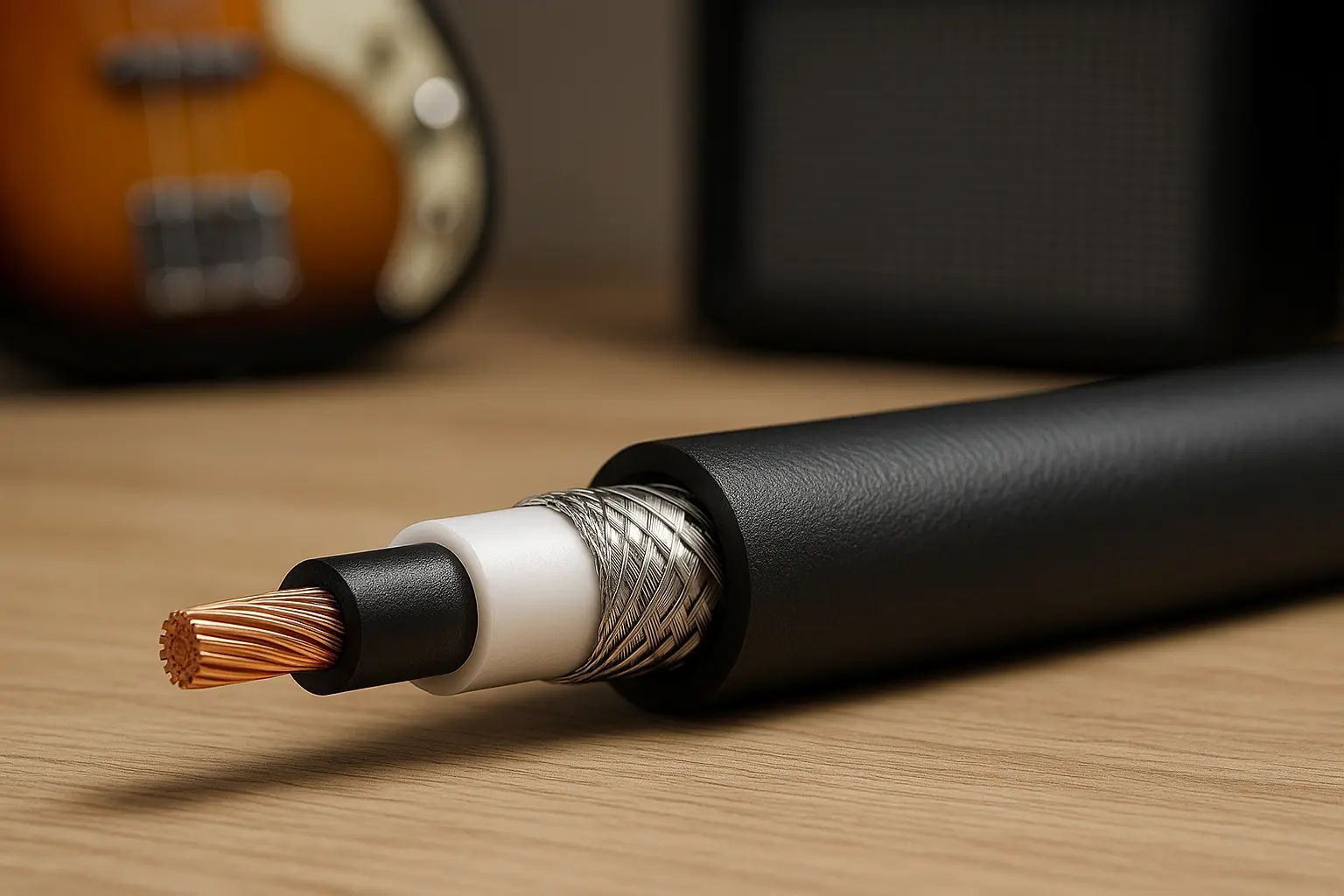
A typical cable has four main layers:
- Center conductor – moves the signal
- Insulation – separates and protects it
- Shield – blocks electrical noise
- Outer jacket – adds strength and flexibility
⚠️ Tip: Never swap a speaker cable for an instrument cable. The thinner wire can heat up and damage your gear.
Table of Contents
- Main Cable Types
- Shielding, Capacitance & Materials
- Jacket Materials
- Standards and Compliance
- Selection Chart
- User Experiences
- Why OEM Buyers Choose JINGYI Audio
- FAQs
- References
Main Instrument Cable Types
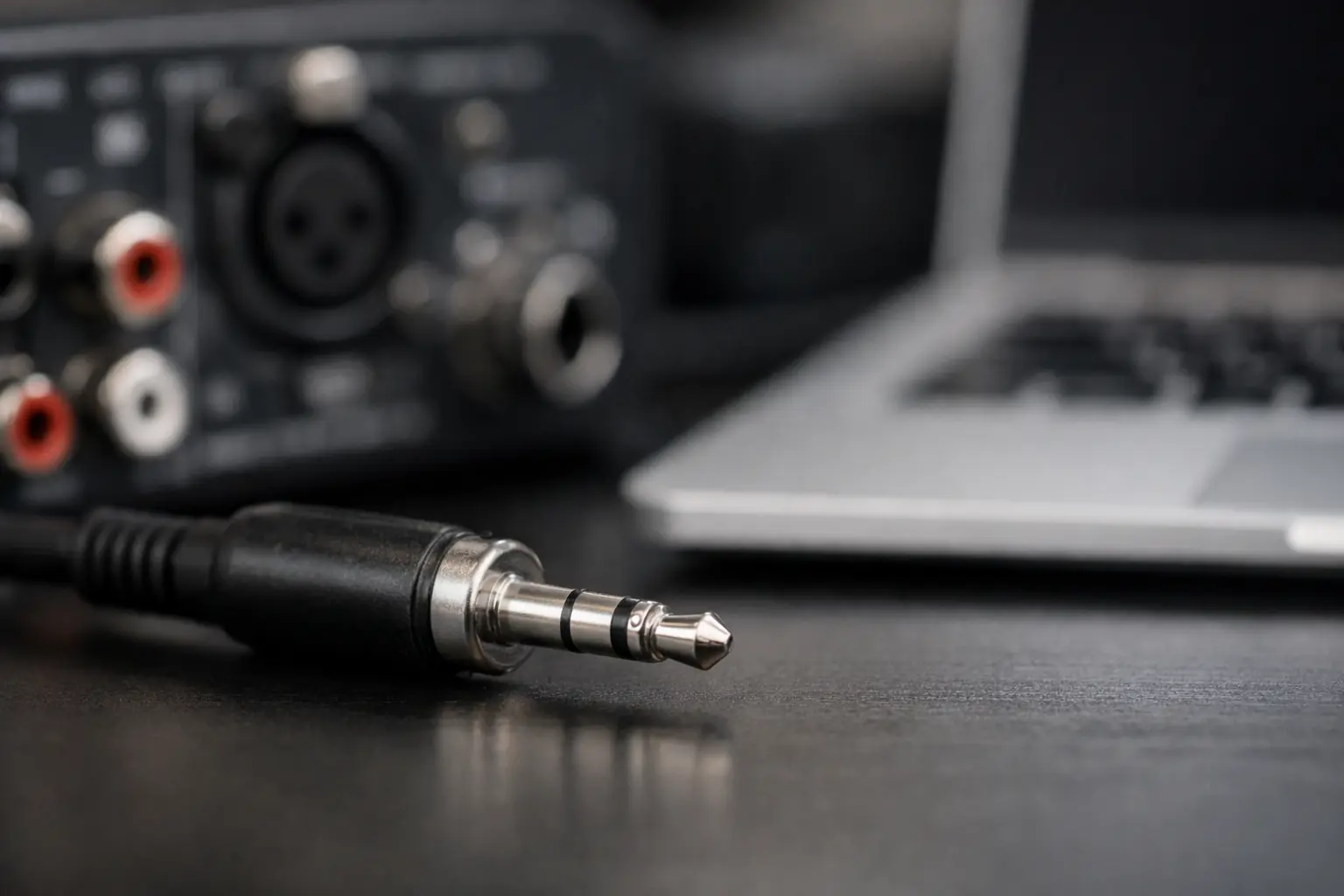
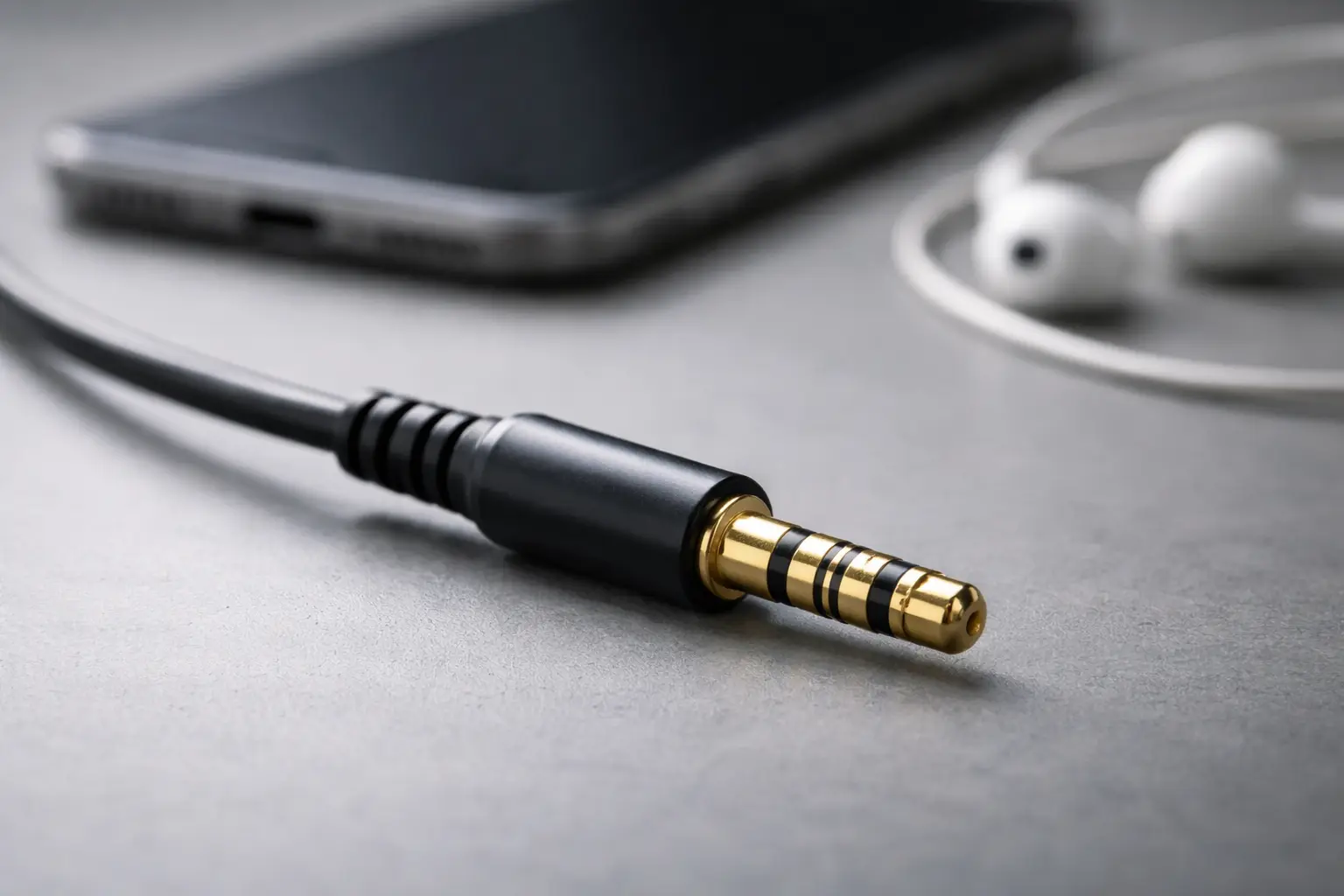
- TS (Unbalanced) — The Guitar Classic
Used with most guitars and keyboards.
- Connector: TS (Tip–Sleeve)
- Signal: Unbalanced mono
- Length: Under 25 ft (7.6 m)
- Good for: Simple setups, home studios
- Watch out for: Hum and noise over long runs
Musicians on Reddit often mention that long, high-capacitance TS cables make guitars sound dull. Shorter or low-cap cables keep the tone bright.
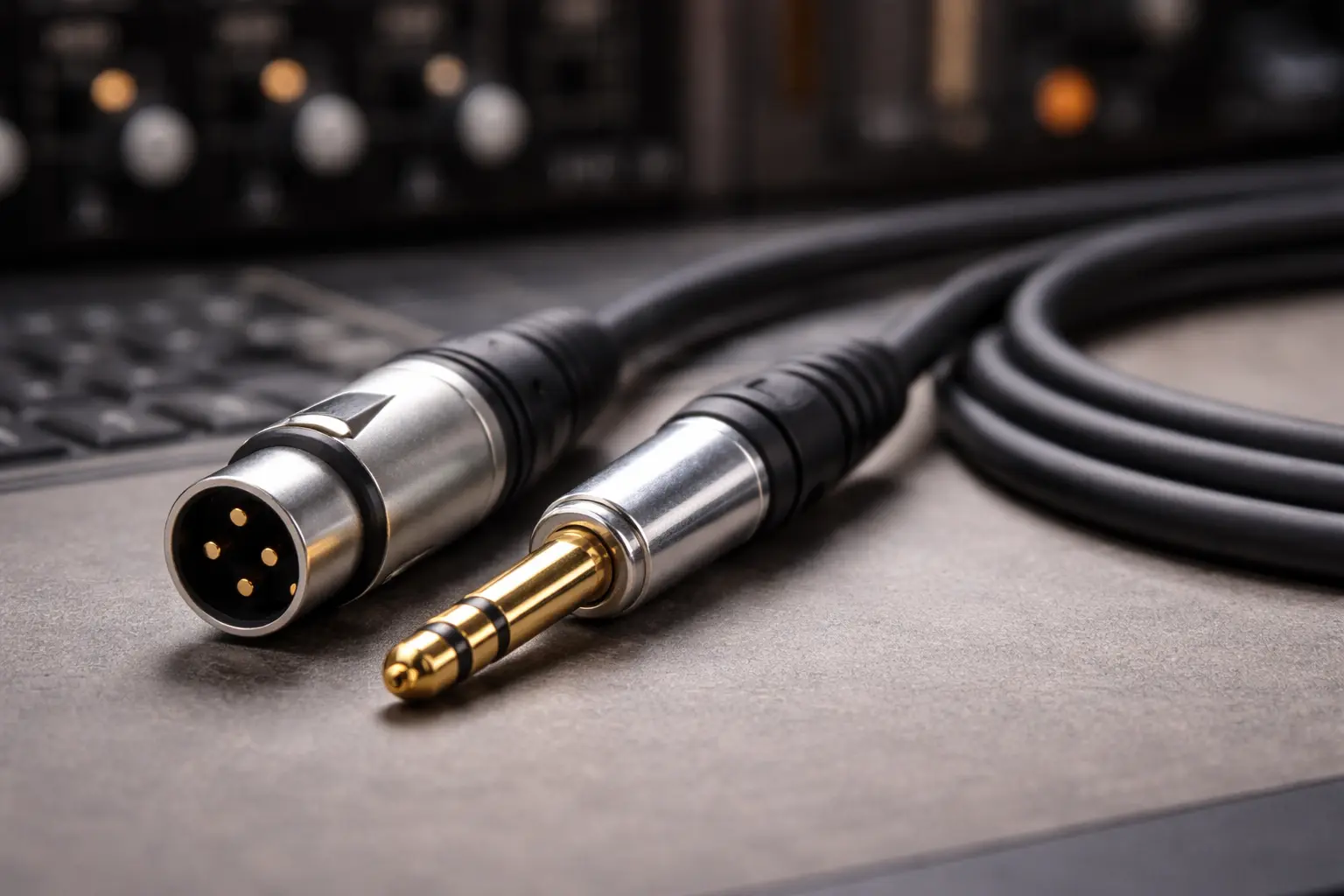
- TRS and XLR (Balanced) — Studio and Stage Favorites
Balanced cables have two signal wires plus a ground. The design cancels noise picked up along the way.
- Connectors: TRS or XLR
- Use: Mixers, interfaces, long cable runs
- Benefit: Quiet operation over distance
- Examples: Mogami 2549 and Canare L-2T2S, both popular with U.S. recording engineers
Balanced lines are the standard for professional audio where silence matters more than saving a few dollars.
- Multi-Pair Instrumentation Cables
These are common in factories and automation systems, sending low-voltage signals from sensors and controllers.
They often follow standards such as BS5308 or EN50288-7 and can have individual shields per pair or one overall shield.
JINGYI Audio builds these for OEM clients who need consistent signal integrity in industrial environments.
Shielding, Capacitance & Materials
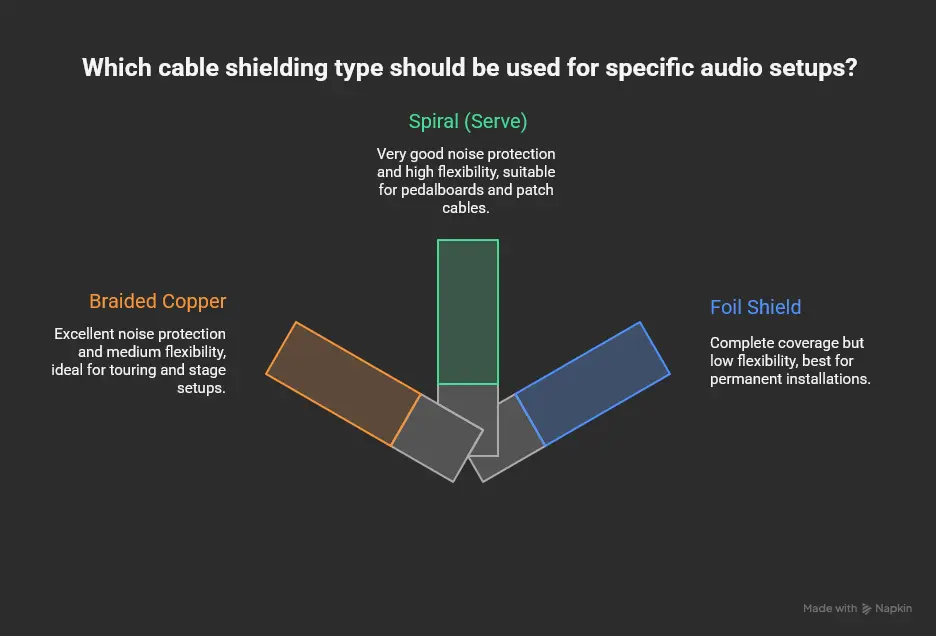
Shielding Types
|
Shield Type |
Noise Protection |
Flexibility |
Typical Use |
|
Braided Copper |
Excellent |
Medium |
Touring, stage setups |
|
Spiral (Serve) |
Very good |
High |
Pedalboards, patch cables |
|
Foil Shield |
Complete coverage |
Low |
Permanent installations |
Players say Canare GS-6 feels sturdy and blocks hum well, while Mogami 2524 bends easily and suits studio rigs.
JINGYI Audio’s ultra-low-noise cables add a thin conductive PVC layer under the shield. It bleeds off static when the cable moves, cutting the crackle you sometimes hear on stage.
Capacitance and Tone
Cable capacitance (pF/m) determines how bright or dark your signal sounds.
Higher capacitance = darker tone.
Lower capacitance = brighter tone.
|
Cable |
Capacitance |
Sound |
|
Belden 8412 |
190 pF/m |
Warm, soft highs |
|
Canare GS-6 |
160 pF/m |
Balanced |
|
Mogami 2524 |
130 pF/m |
Crisp and open |
|
JINGYI OEM Spec |
100–160 pF/m |
Tuned per client |
If you order cables as an OEM buyer, tell the manufacturer your preferred capacitance range so every batch stays consistent.
Conductor Materials
|
Material |
Conductivity |
Lifespan |
Comment |
|
OFC (Oxygen-Free Copper) |
Excellent |
Long |
Industry standard |
|
Silver-Plated Copper |
Slightly higher |
Medium |
Brighter tone but oxidizes |
|
Tinned Copper |
Good |
Very Long |
Resists corrosion |
JINGYI Audio uses 99.99% OFC copper for steady conductivity and oxidation resistance, meeting both RoHS and REACH rules for the U.S. market.

Jacket Materials
|
Jacket |
Heat Limit |
Flexibility |
Best Use |
|
PVC |
+70 °C |
High |
Indoor studio |
|
XLPE |
+110 °C |
Medium |
Industrial |
|
LSZH |
+90 °C |
Medium |
Public or stage areas |
All options are tested to UL, RoHS, and REACH standards so U.S. distributors can import without compliance issues.
Standards and Compliance
|
Standard |
Region |
Covers |
|
BS5308 / PAS5308 |
U.K. / EU |
Instrumentation construction |
|
EN 50288-7 |
EU |
Twisted-pair signals |
|
IEC 60228 |
Global |
Conductor classes |
|
UL / RoHS / REACH |
U.S. / EU |
Safety & environment |
JINGYI Audio supplies:
- UL-equivalent test reports
- RoHS / REACH paperwork
- Export labeling for smooth customs clearance
Instrument Cable Selection Chart
|
Use |
Cable Type |
Shield |
Jacket |
Compliance |
|
Guitar / Bass |
TS (Unbalanced) |
Spiral |
PVC |
RoHS |
|
Studio |
TRS (Balanced) |
Braided |
XLPE |
UL / RoHS |
|
Live Stage |
XLR (Balanced) |
Braided |
LSZH |
UL / CE |
|
Automation |
Multi-Pair |
Foil + Drain |
XLPE |
EN50288 |
|
OEM Custom |
As Requested |
Custom |
Custom |
RoHS / REACH |
📥 Download the full selection chart (PDF) — includes capacitance ranges, shield coverage, and color codes.
User Experiences from the Field
Musicians and engineers often compare cables by feel rather than by name:
- Durability: Braided shields like Canare’s handle stage use for decades.
- Flexibility: Spiral shields like Mogami’s are easier to route around pedals.
- Sound: Capacitance numbers tell you more than marketing claims.
This pattern supports the OEM model: what matters are measurable specs, not brand stickers. JINGYI Audio delivers cables that match these specs for private-label clients at a better cost.
Why OEM Buyers Choose JINGYI Audio
- Established in 1995, based in Ningbo, China
- OEM / ODM specialist for audio and instrumentation cables
- Products: instrument, microphone, speaker, and control lines
- Certifications: RoHS, REACH, ISO 9001
- Markets: North America, South America, Eastern Europe
Benefits for U.S. clients
- Custom branding and packaging
- Adjustable capacitance or shielding specs
- UL-style testing and QC reports
- Sample shipments to the U.S. within 5 days
- Flexible order quantities and short lead times
Visit site_5615465d-0395-48c6-b01f-dc3d38213fc5 to request specs or OEM samples.
FAQs
- What’s the difference between instrument and speaker cables?
Instrument cables are shielded for low-level signals. Speaker cables move high current and are unshielded. - How does capacitance affect tone?
High capacitance smooths highs; low capacitance keeps the sound brighter. - What cable works best for live shows?
Balanced XLR or TRS with braided shielding and LSZH jackets for toughness and safety. - Can I order private-label cables?
Yes. JINGYI Audio customizes color, labeling, and packaging to match your brand. - Which certifications do I need for U.S. imports?
RoHS, REACH, and UL compliance cover most distributor requirements.
References
- AutomationForum – Different Types of Cables in Instrumentation and Applications
- Central Wires – Instrumentation Cable: What Are They?
- Eland Cables – Instrumentation Cable Standards PDF
- GeekStands – Instrument Cables Explained: A Complete Buying Guide
- JINGYI Audio – Official OEM Manufacturer Site