

Instrument Cables vs Speaker Cables – Custom OEM/ODM with Jingyi Audio
Key Takeaways
- Instrument and speaker cables look similar but serve very different purposes.
- Using the wrong cable can cause signal loss, noise, or even equipment damage.
- For U.S. distributors, OEM/ODM customization is a smart way to expand product lines.
- Jingyi Audiobuilds cables to spec—shielding, AWG, capacitance, packaging—so you can sell with confidence.
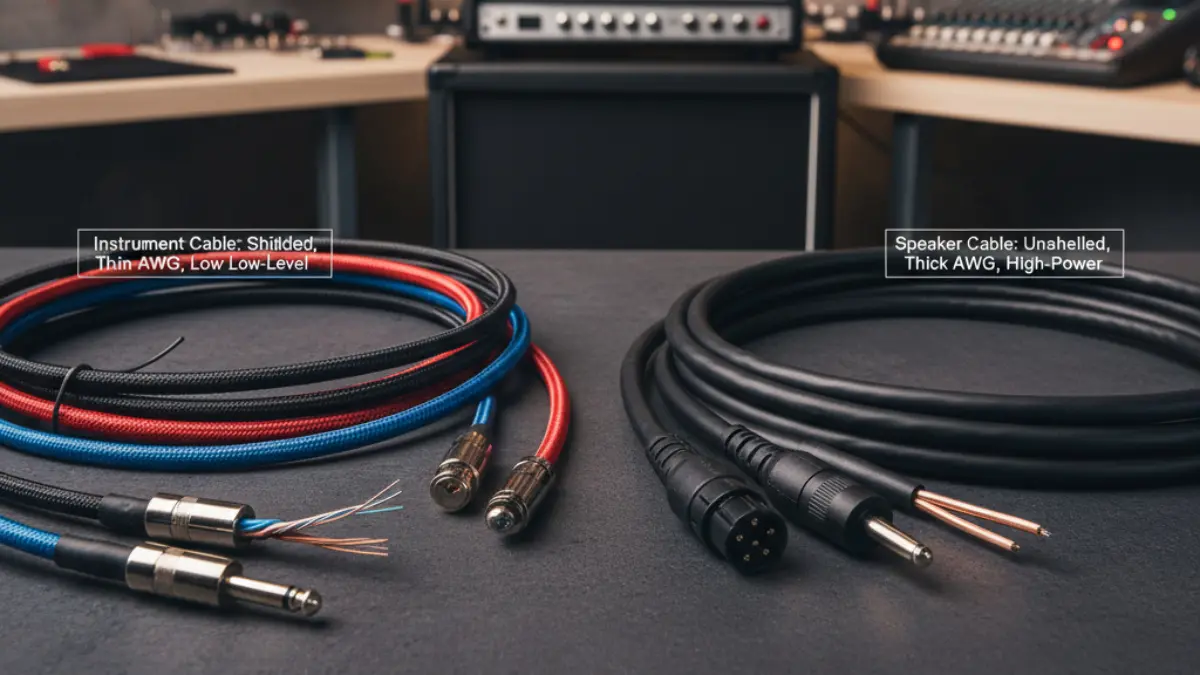
Instrument Cables vs Speaker Cables: At a Glance
|
Feature |
||
|
Signal |
Low-level signal from guitar, keyboard, or mic |
High-power signal from amplifier |
|
Shielding |
Yes, blocks interference |
No, not needed |
|
Wire Thickness (AWG) |
Thin (22–24 AWG) |
Thick (12–16 AWG) |
|
Capacitance |
Directly affects tone and clarity |
Not a concern |
|
Durability Needs |
Flexible for movement |
Heavy-duty for high current |
|
Use Case |
Guitar → amp, keyboard → mixer, studio input |
Amp → speaker cabinet, PA systems |
|
OEM/ODM Options |
Shield type, capacitance, jacket flexibility |
AWG selection, connector type, jacket strength |
Why U.S. Buyers Care About This
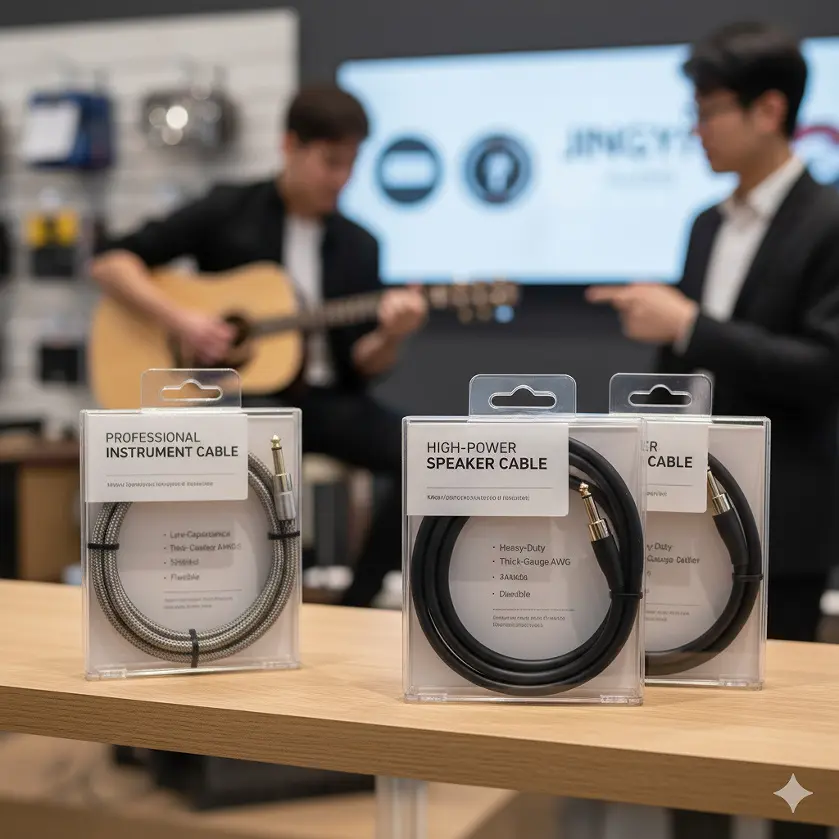
In the U.S. market, many musicians, DJs, and even retailers confuse instrument cables with speaker cables because they share the same 1/4” jack. This mistake can lead to:
- Noisy signalswhen a speaker cable is used for instruments.
- Overheated wireswhen an instrument cable is used for speakers.
- Unhappy customerswho return products or blame the distributor.
For distributors, this confusion is both a risk and an opportunity. The brands that win are the ones that:
- Use clear OEM labeling and packaging.
- Offer better specsthat musicians can hear.
- Deliver reliable performancethat earns repeat sales.
That’s where Jingyi Audio helps you stand out.
Instrument Cables: What Matters Most
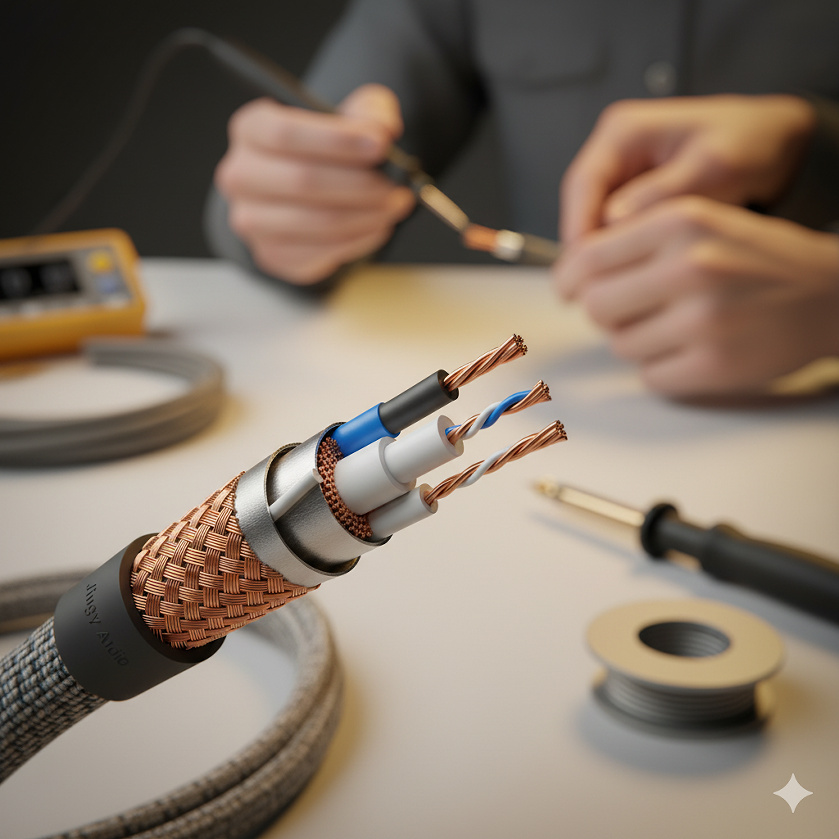
Instrument cables carry a weak, sensitive signal—think of the output from a guitar or keyboard. That makes them more vulnerable to noise and tone loss.
Here’s what distributors need to know:
- Shielding is non-negotiable.Without it, hum and radio noise can leak in. Jingyi Audio offers braided, spiral, or foil shields depending on your product positioning.
- Capacitance defines tone.Lower capacitance = brighter, clearer sound. Many OEM buyers specify exact capacitance per foot to match their target market.
- Flexibility counts.Touring musicians want cables that bend without breaking. Studios want cables that stay quiet even when moved.
👉 With Jingyi Audio, you can customize capacitance ratings and shielding so your instrument cables truly stand apart in the U.S. retail market.
Speaker Cables: Built for Power
Speaker cables are a different story—they’re designed to carry strong, amplified signals.
What matters most here:
- Wire gauge (AWG):12–16 AWG is standard in the U.S. Thicker cables mean less resistance and more efficient power transfer.
- Heat handling:Cheap cables can overheat under heavy loads. Quality copper conductors prevent this.
- Connector options:While 1/4” plugs are still common, Speakon connectors are increasingly popular in the U.S. pro audio market.
For OEM buyers, the real advantage is offering multiple SKUs—different AWG sizes, lengths, and connectors—without adding supply chain headaches. Jingyi Audio makes that possible with flexible production.
What Happens When Cables Get Mixed Up
Here’s a real-world issue that U.S. distributors often hear from customers:
- A beginner buys a speaker cable for their guitar, plugs it in, and hears buzzing and interference. They think the guitar or amp is broken.
- A band uses instrument cables to connect their amp to a speaker cabinet, and during rehearsal the cable overheats, melts, or blows a fuse.
Both lead to bad reviews, unnecessary returns, and brand damage.
By working with Jingyi Audio, distributors can fix this problem at the source—clear labeling, color-coded jackets, and retail-ready packaging.
OEM/ODM Customization with Jingyi Audio
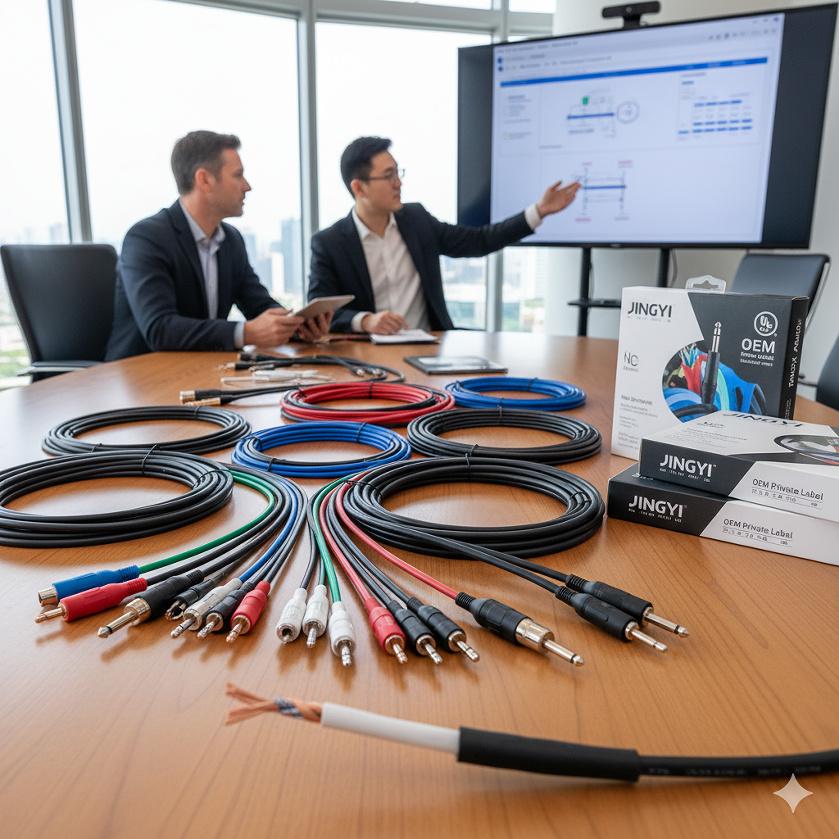
We know U.S. distributors need more than just cables—they need a reliable manufacturing partner. Here’s what Jingyi Audio offers:
Customization Options
- Conductor materials: standard copper or oxygen-free copper (OFC).
- Shielding: braided, foil, spiral.
- Jacket colors: standard black or custom colors for easy retail ID.
- Connectors: 1/4” TS, TRS, Speakon, RCA, XLR, or custom.
- Branding: OEM logo printing, private labeling, and packaging.
Why This Matters for the U.S. Market
- UL-compliant materialsmeet U.S. safety expectations.
- Flexible batch sizeswork for both boutique shops and nationwide retailers.
- Stable lead timeshelp distributors avoid inventory gaps.
- OEM packaginghelps educate the end-user and reduce returns.
Trends in the U.S. Cable Market
Distributors in the U.S. are seeing a shift in what buyers want:
- Premium specs– More musicians are willing to pay extra for low-capacitance cables or thicker speaker wires.
- Eco-friendly materials– Sustainable jackets and recyclable packaging are becoming selling points.
- Plug-and-play labeling– Retailers prefer products that minimize customer confusion, saving time at the point of sale.
With Jingyi Audio’s OEM services, you can adapt quickly to these trends and capture more market share.
Case Example: Solving a Distributor’s Problem
One U.S. distributor we worked with had a major issue: customers kept returning cables because they mixed up instrument and speaker cables.
Here’s how we solved it:
- Designed color-coded jackets(black for instrument, blue for speaker).
- Printed “Instrument” or “Speaker”directly on the cable and packaging.
- Optimized AWG for different lengths and markets.
Result? Returns dropped by over 40%, and customer reviews improved.
That’s the value of the right OEM/ODM partnership.
FAQs for OEM/ODM Buyers
Q1: Can Jingyi Audio make cables that meet U.S. safety standards?
Yes. We use UL-compliant materials and follow U.S. import regulations.
Q2: What’s the minimum order quantity (MOQ)?
We support flexible MOQs—small runs for boutique brands and large runs for national chains.
Q3: Do you support private labeling?
Yes, full OEM branding, packaging, and labeling are available.
Q4: Can I request different specs for different regions?
Of course. We build to U.S., EU, and other regional standards.
Q5: How do I know the capacitance or AWG specs will be consistent?
We provide full QC testing and documentation for every order.
Q6: What shipping and logistics support do you provide?
We assist with export paperwork, customs clearance, and shipping tailored to North America.
Final Word
The difference between instrument cables and speaker cables isn’t just technical—it’s a chance for U.S. distributors to grow their business with better products.
With Jingyi Audio’s OEM/ODM services, you can deliver cables that are reliable, clearly labeled, and tailored to your market. That means fewer returns, stronger brand reputation, and more repeat sales.
👉 If you’re ready to expand your cable product line, reach out to Jingyi Audio today for an OEM/ODM consultation.