

Meeting IEC Standards: Certified Low-Noise Cables for Industrial Audio Applications
IEC standards set global benchmarks for electrical systems, prioritizing safety and performance. Industrial audio systems depend on low-noise cables to preserve signal clarity and minimize electromagnetic interference. Certified low-noise premium audio cables not only meet rigorous IEC requirements but also ensure dependable performance in challenging environments. These audio cables enhance sound quality while streamlining compliance with industry standards, making them an ideal choice for low-noise applications.
Key Takeaways
- Approved low-noise cables improve sound by cutting down interference.
- Following IEC rules makes cables safe, strong, and less likely to fail.
- Check IEC approval before using cables for better sound and lasting use.
IEC Standards and Their Relevance to Low-Noise Cables
Overview of IEC Standards for Electrical Systems
The International Electrotechnical Commission (IEC) establishes global standards for electrical systems to ensure safety, reliability, and performance. These standards cover a wide range of criteria, including material quality, structural durability, and performance under specific conditions. For industrial audio systems, compliance with these benchmarks ensures that components like low-noise cables meet stringent safety and operational requirements.
The table below highlights key aspects evaluated under IEC standards:
| Aspect | Description |
|---|---|
| Safety Tests | Devices must undergo various safety tests from the design stage. |
| Electrical Shock Risk | Assessment of the risk of electrical shock to users. |
| Fire Hazard | Evaluation of potential fire hazards associated with the device. |
| Mechanical Hazards | Review of mechanical hazards that could affect user safety. |
| Material Quality | Criteria for evaluating the quality of materials used in devices. |
| Structural Durability | Assessment of the structural integrity and durability of the device. |
| Performance Review | Evaluation of product performance under specified conditions of use. |
These benchmarks ensure that electrical systems, including audio components, operate safely and efficiently in industrial environments.
Key IEC Standards Applicable to Industrial Audio Applications
Several IEC standards directly apply to industrial audio systems. For example, IEC 60268 focuses on sound system equipment, ensuring that audio devices deliver consistent performance. Similarly, IEC 60332 addresses fire safety by evaluating the flame-retardant properties of cables, which is critical in industrial settings. Standards like IEC 61000 assess electromagnetic compatibility, ensuring that low-noise cables minimize interference and maintain signal integrity.
By adhering to these standards, manufacturers like NINGBO JINGYI ELECTRONIC Co., LTD. produce cables that meet the rigorous demands of industrial audio applications. This compliance guarantees that their low-noise cables perform reliably even in challenging environments.
Why Compliance with IEC Standards Matters for Low-Noise Cables
Compliance with IEC standards is essential for low-noise cables used in industrial audio systems. These standards ensure that cables meet safety, performance, and durability requirements. For instance, cables that pass IEC testing demonstrate resistance to mechanical stress, fire hazards, and electromagnetic interference. This makes them suitable for environments where signal clarity and reliability are critical.
Low-noise cables that meet IEC standards also simplify regulatory compliance for businesses. Using certified cables reduces the risk of system failures, ensuring uninterrupted audio performance. Moreover, it enhances the overall safety of industrial operations, protecting both equipment and personnel.
Tip: Always verify that low-noise cables are certified to meet IEC standards before integrating them into industrial audio systems. This ensures optimal performance and long-term reliability.
Understanding Low-Noise Cables in Industrial Audio Systems

Characteristics of Low-Noise Cables
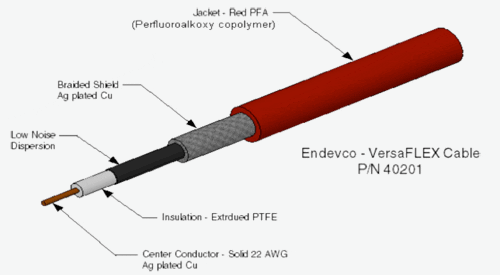
Low-noise cables are engineered to reduce interference and maintain signal clarity in demanding environments. These cables often feature twisted pairs or shielded twisted pairs, which minimize interference through balanced systems. By ensuring equal impedance to ground and noise sources, they effectively reduce capacitive pickup. Twisted pairs also decrease the signal circuit loop area, which is critical for preserving signal integrity. In contrast, unbalanced cables like coaxial types exhibit different capacitance to ground, making them less effective in noise reduction. This design precision ensures that low-noise cables perform reliably in industrial audio applications.
Challenges in Industrial Audio Without Low-Noise Cables
Industrial audio systems face significant challenges without low-noise cables. Electromagnetic interference (EMI) from machinery and other equipment can distort audio signals, leading to poor sound quality. Unbalanced cables are particularly vulnerable to such interference, which can result in signal degradation and data loss. Additionally, the absence of proper shielding increases the risk of crosstalk, where signals from adjacent cables interfere with each other. These issues compromise the reliability and performance of audio systems, making low-noise cables indispensable in industrial settings.
How Low-Noise Cables Ensure Signal Integrity
Low-noise cables maintain signal integrity through rigorous design and testing. High signal-to-noise ratios (SNR) ensure superior signal quality by minimizing background noise. Adequate bandwidth prevents signal distortion and preserves audio fidelity. Other performance metrics, such as insertion loss and return loss, confirm minimal signal power loss and reflection. Skew-matched cables, with near-identical delays and consistent velocity of propagation, further enhance performance in high-speed applications. These features make low-noise cables essential for delivering clear and reliable audio in industrial environments.
Certified Low-Noise Cables and IEC Standards
Certification Process for Low-Noise Cables
Certified low-noise cables undergo a rigorous certification process to ensure compliance with IEC standards. Manufacturers begin by designing cables that meet specific performance benchmarks, including resistance to electromagnetic interference and durability under industrial conditions. Independent testing agencies then evaluate these cables against IEC criteria, verifying their ability to maintain signal integrity and withstand environmental stress.
The certification process also includes assessments of material quality and structural design. High-grade materials, such as flame-retardant insulation, are essential for meeting fire safety standards like IEC 60332. Structural tests ensure that cables can endure mechanical stress without compromising performance. Manufacturers like NINGBO JINGYI ELECTRONIC Co., LTD. prioritize these factors to produce reliable cables that meet IEC requirements.
Testing Procedures for IEC Compliance
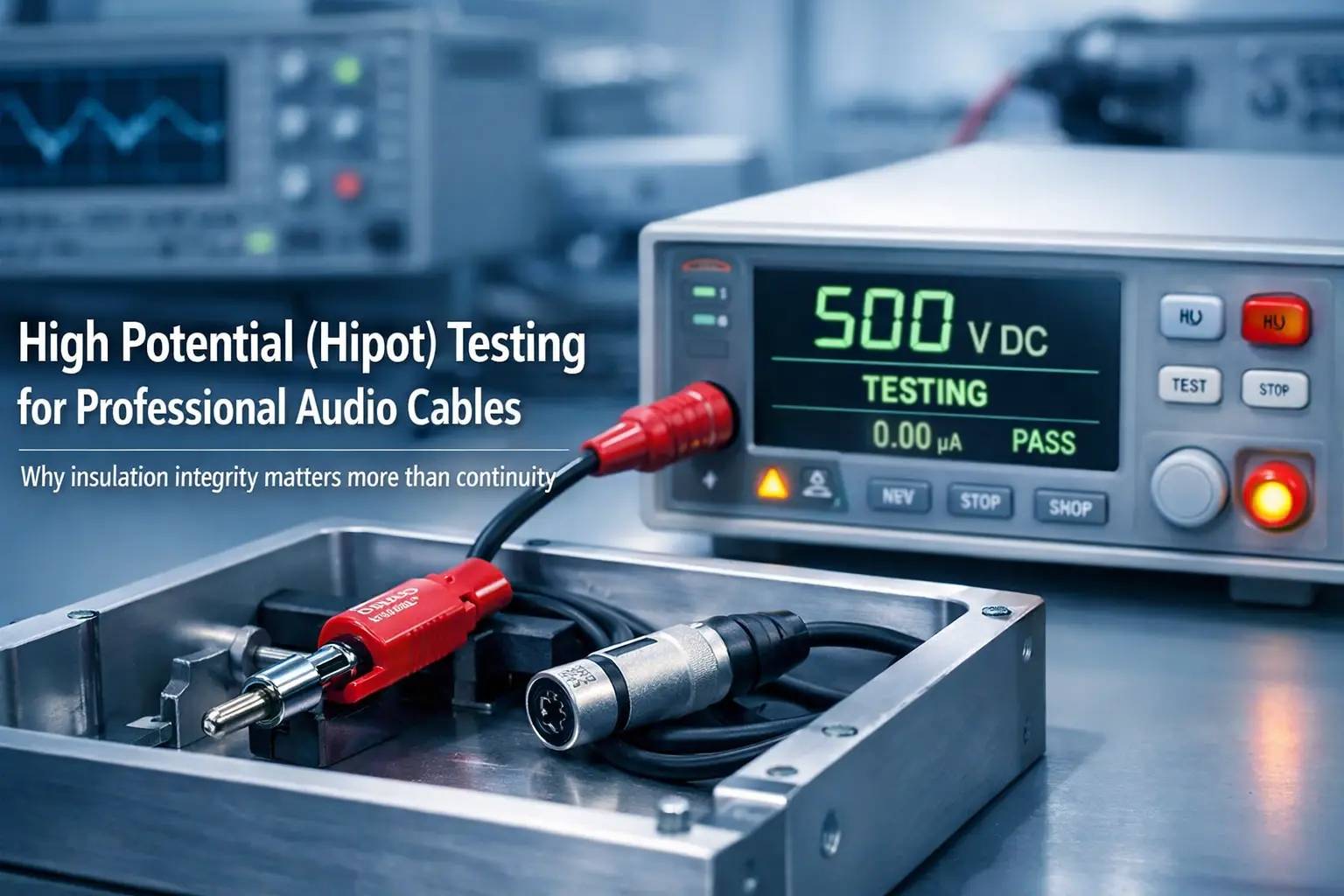
Testing procedures for IEC compliance involve meticulous evaluations to ensure low-noise cables meet stringent standards. Engineers test all leads to account for variations in cable layout, ensuring consistent performance across different configurations. Equipment must handle a 300mVdc offset without affecting results, demonstrating the cable's ability to operate in noisy environments.
Special precautions for grounding and shielding play a critical role during testing. Engineers place the equipment under test (EUT) on an earthed metal bench to minimize external noise. Connections between the test equipment ground, EUT ground, and ground plane are verified for low resistance. These measures ensure accurate results and confirm the cable's ability to attenuate high-frequency noise effectively.
Testing also includes real-world simulations to evaluate the cable's compatibility with standard cabling schemes. Engineers assess the cable's ability to filter broadband common mode noise and maintain signal clarity under industrial conditions. These procedures validate the cable's performance and ensure compliance with IEC standards.
Features of Certified Low-Noise Cables That Meet IEC Standards
Certified low-noise cables offer several features that align with IEC standards. Effective filtering methods reduce electromagnetic interference, preserving signal integrity in industrial audio systems. These cables enhance the magnetic field at critical electrical locations, ensuring consistent performance.
High-frequency noise attenuation is another key feature. Certified cables provide substantial reduction of broadband noise, maintaining audio fidelity even in challenging environments. Compatibility with standard cabling schemes ensures seamless integration into existing systems, simplifying installation and operation.
Manufacturers design these cables with repeatability in mind, allowing businesses to implement them across multiple applications without compromising performance. NINGBO JINGYI ELECTRONIC Co., LTD. incorporates these features into its certified low-noise cables, delivering reliable solutions for industrial audio applications.
Benefits of Using Certified Low-Noise Cables
Enhanced Audio Performance in Industrial Applications
Certified low-noise cables significantly improve audio performance in industrial environments. These cables ensure clear sound transmission by minimizing interference and maintaining signal integrity. Several performance metrics highlight their impact on industrial setups:
- Audio Quality: Certified cables reduce distortion and enhance clarity, ensuring consistent sound output.
- Video Quality: They support high-resolution video with accurate color reproduction and brightness.
- Latency: These cables minimize delays, ensuring perfect synchronization between audio and video.
- Integration and Compatibility: Certified cables seamlessly integrate with various audio-visual components.
- System Responsiveness: They enhance the speed and accuracy of system controls.
- Reliability: Certified cables deliver uninterrupted functionality, even in demanding conditions.
These features make certified low-noise cables indispensable for achieving optimal audio performance in industrial applications.
Improved Reliability and Durability
Certified low-noise cables are designed to withstand harsh industrial conditions. Their robust construction ensures resistance to mechanical stress, temperature fluctuations, and electromagnetic interference. High-quality materials, such as flame-retardant insulation, enhance their durability. This reliability reduces the risk of system failures, ensuring uninterrupted operations. Manufacturers like NINGBO JINGYI ELECTRONIC Co., LTD. prioritize these qualities, delivering cables that perform consistently over time.
Simplified Compliance with Industry Regulations
Certified low-noise cables simplify adherence to strict industrial regulations. For example, Low Smoke Zero Halogen (LSZH) cables meet rigorous safety standards by producing minimal smoke and avoiding toxic emissions during combustion. These cables comply with international standards like IEC 60754 and IEC 62821, ensuring safety in environments with human presence. Certifications such as UL further validate their reliability, making them a trusted choice for industrial applications.
Note: Using certified cables not only ensures compliance but also enhances safety and operational efficiency.
IEC standards play a vital role in industrial audio applications by ensuring safety and performance. Certified low-noise cables meet these standards, delivering reliable signal clarity and durability.
How to Choose Certified Low-Noise Cables
- Verify IEC certifications for compliance.
- Check compatibility with industrial audio systems.
- Prioritize trusted manufacturers like NINGBO JINGYI ELECTRONIC Co., LTD.
Tip: Selecting certified cables ensures long-term reliability and simplifies regulatory compliance.
FAQ
What are the key benefits of using certified low-noise cables?
Certified low-noise cables improve signal clarity, reduce interference, and ensure compliance with IEC standards. They also enhance system reliability and simplify regulatory adherence.
How can businesses verify IEC certification for low-noise cables?
Businesses should check for official IEC markings on product labels or request certification documents from manufacturers like NINGBO JINGYI ELECTRONIC Co., LTD.
Tip: Always confirm certifications through trusted sources to avoid counterfeit products.
Are certified low-noise cables suitable for all industrial environments?
Yes, certified cables meet stringent IEC standards, making them ideal for diverse industrial settings, including high-temperature and high-interference environments.