


Microphone with 1/4 Inch Jack: The Real-World 2025 Guide for Musicians, Creators, and Audio Pros
Key Takeaways
- The microphone with 1/4 inch jack has shifted from recording studios to karaoke, instruments, and older PA systems.
- Standard 1/4" TS jacks don’t carry phantom power, so condenser mics won’t work.
- Companies like Jingyi Audio still make 1/4" connectors, but mainly for instruments and line-level gear, not microphones.
- Best use: guitars, basses, and simple vocal setups.
- For professional use, XLR remains king — it’s quieter, balanced, and more durable.
The 1/4 Inch Jack Explained Simply
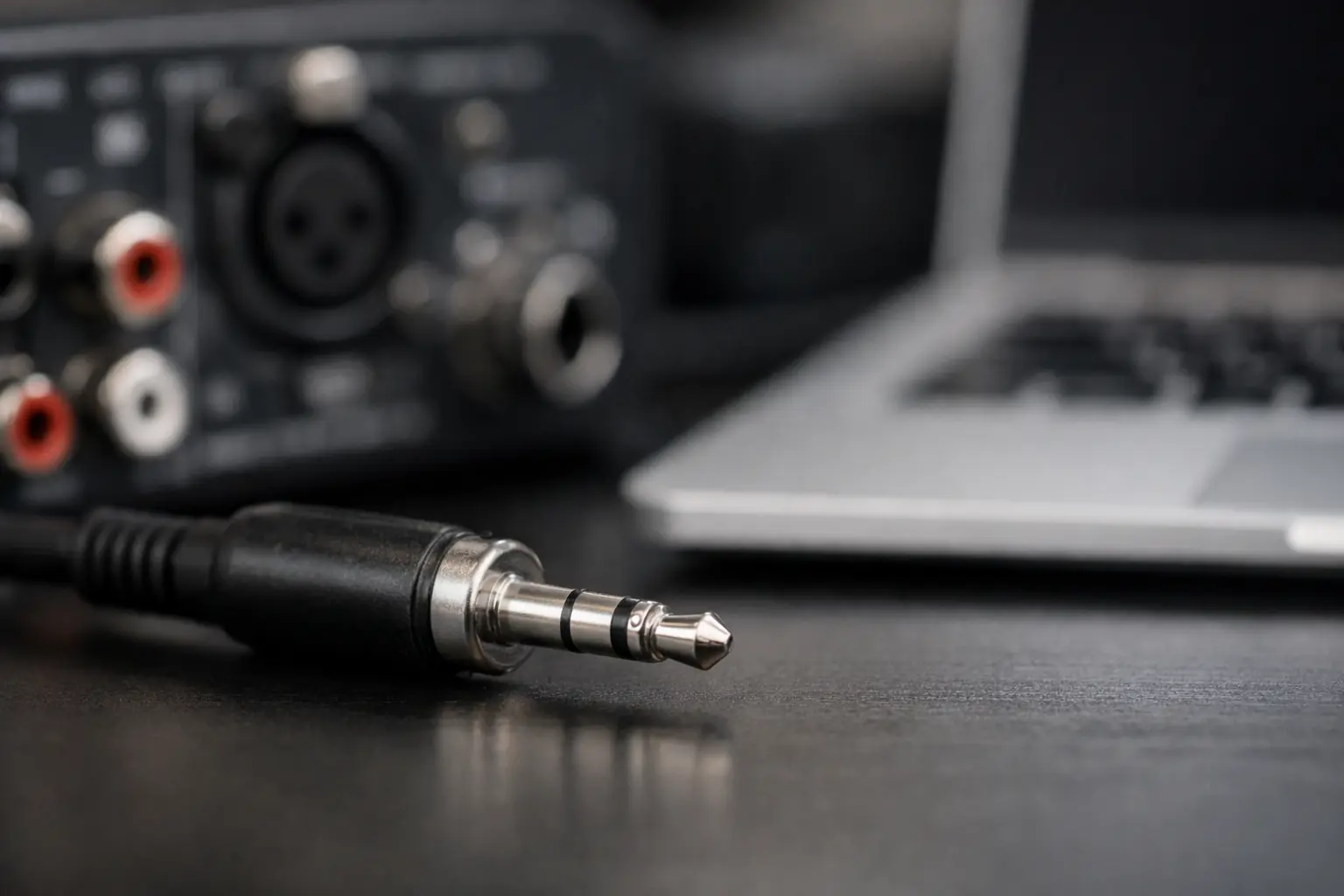
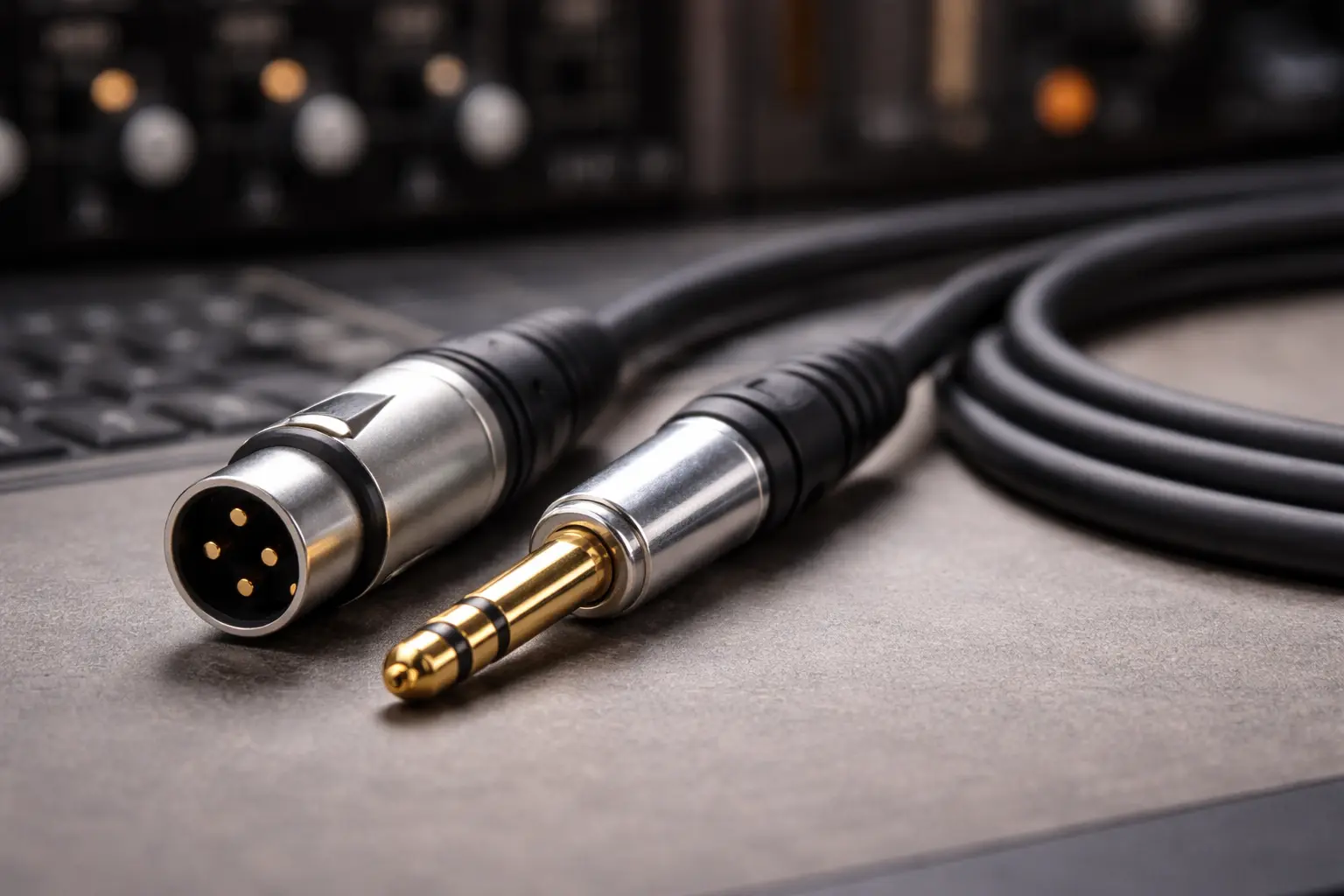
The 1/4 inch jack (6.35 mm) has been around since the 1800s, first used in old telephone switchboards. Today, it’s found everywhere in studios, amps, and audio gear.
But not all 1/4" connectors are the same — and this matters a lot when plugging in a microphone.
|
Type |
Wires |
Signal Type |
Balanced? |
Phantom Power? |
|
TS (Tip-Sleeve) |
2 |
Mono (unbalanced) |
❌ |
❌ |
|
TRS (Tip-Ring-Sleeve) |
3 |
Stereo or balanced mono |
✅/❌ |
⚠ Not standardized |
|
XLR (3-Pin) |
3 |
Balanced mono |
✅ |
✅ +48 V supported |
A TS cable carries one signal and ground — simple, cheap, and fine for guitars.
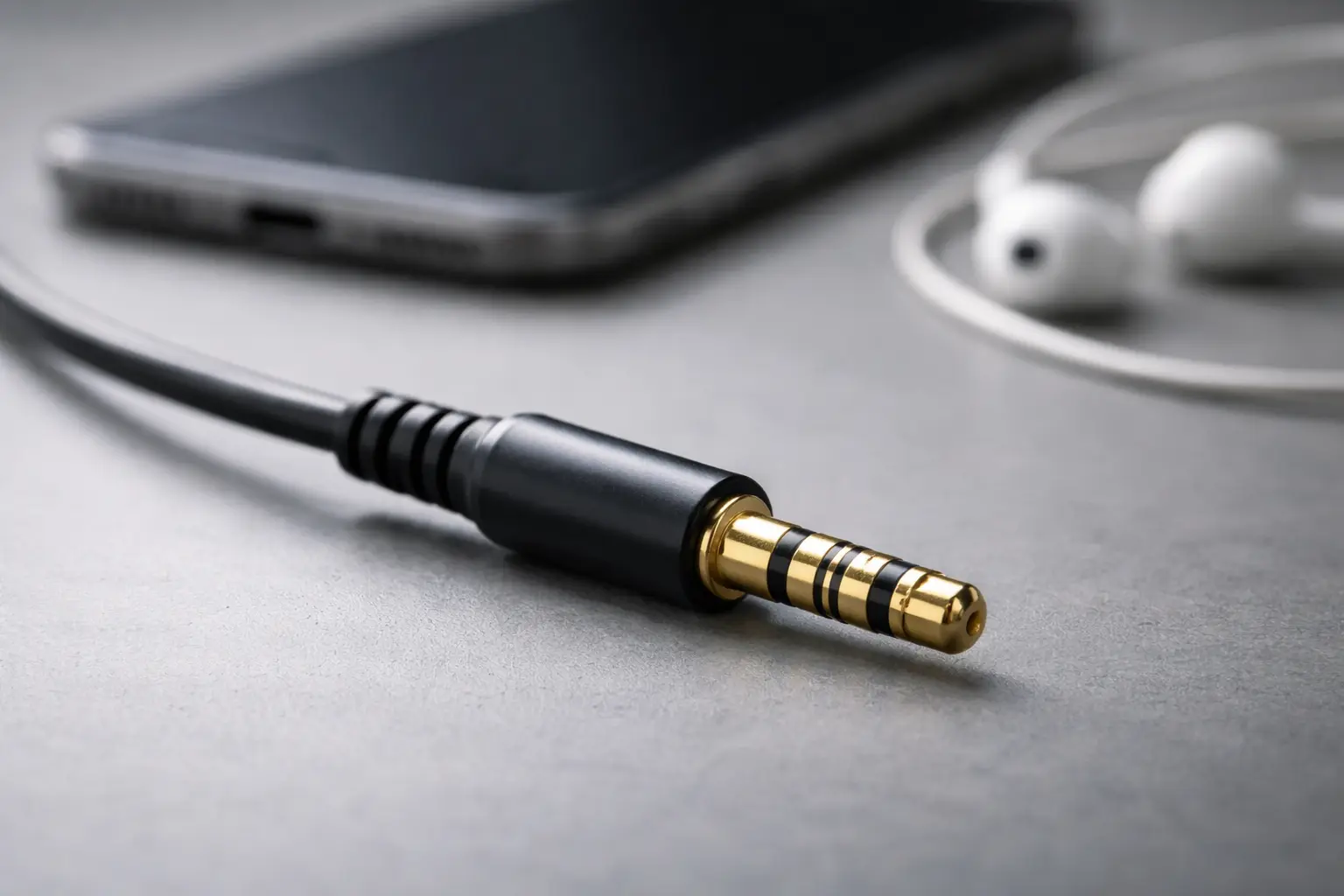
A TRS cable can handle stereo or balanced audio, depending on how it’s wired.
But if you’re connecting a microphone, you need more than just signal and ground — you need noise cancellation and phantom power.
That’s where XLR comes in.
Why Balanced Audio Matters
Here’s a simple way to picture it:
An unbalanced TS cable carries your sound on one wire and uses the other as ground. If it picks up hum from lights or cables nearby, that noise rides along into your speakers.
Balanced cables, like XLR, carry the sound twice — one normal, one inverted. At the other end, the preamp flips one and combines them. The signal gets louder, but the noise cancels out.
That’s why balanced audio is so much quieter and cleaner.
Musicians on forums like Acoustic Guitar Forum often complain that 1/4" mic cables pick up hum on stage. That problem disappears with XLR cables, even with runs over 30 feet.
Where 1/4 Inch Microphones Still Make Sense
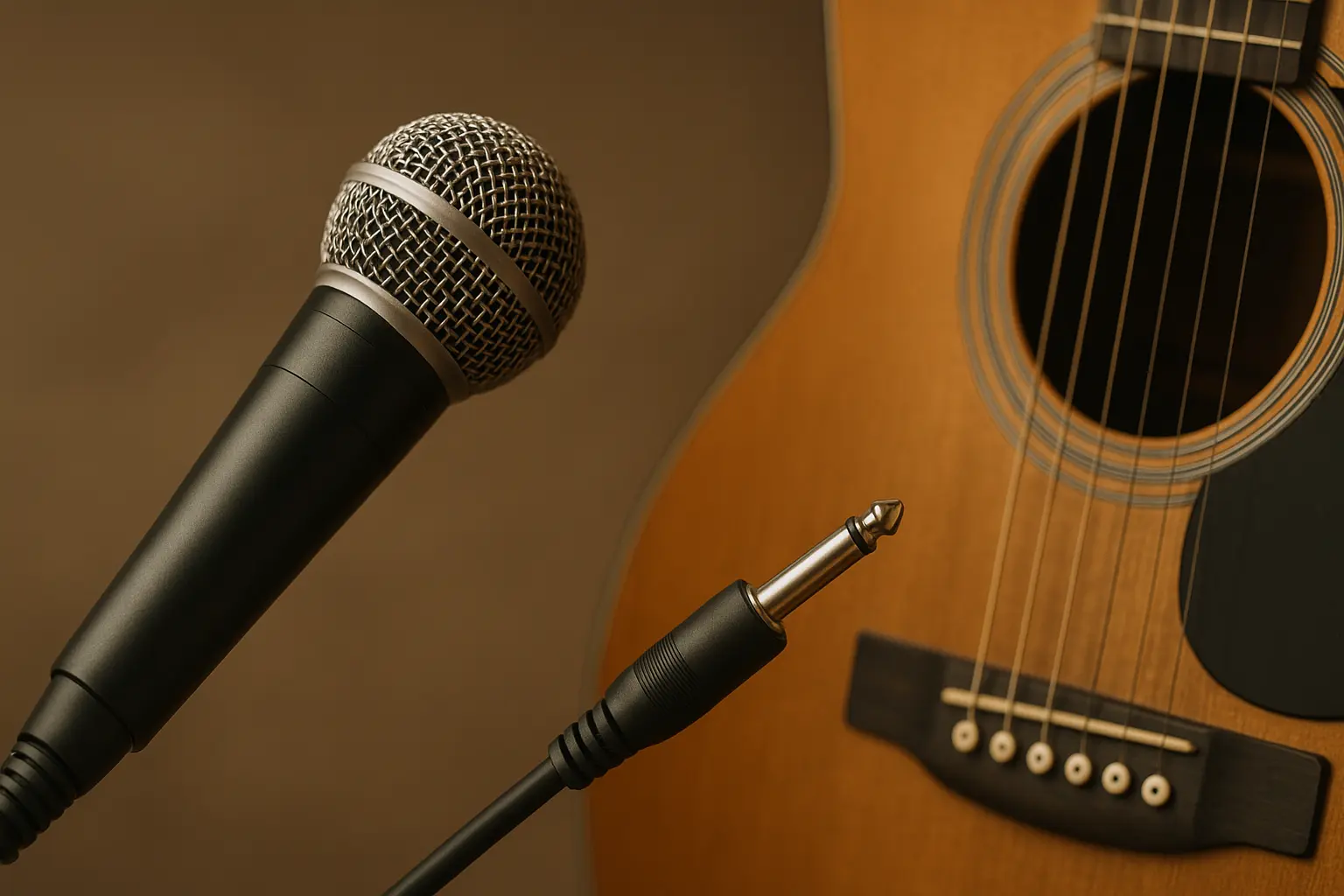
- Karaoke and Budget Systems
If you’ve ever bought a $100 karaoke setup on Amazon, you’ve seen 1/4" microphones.
They’re simple, cheap, and work out of the box. But as many reviewers note, you need to shout into them for decent volume, and the sound often comes out thin.
“You have to yell or turn the sensitivity all the way up. It works, but it sounds harsh.”
— Amazon Reviewer, 2024
These mics are fine for family parties but don’t expect studio quality.
They’re mostly dynamic microphones — no phantom power needed, no fancy circuitry.
- Instruments — The True Home of 1/4"
Here’s the real story:
The 1/4" jack lives on because of instruments, not microphones. Guitars, basses, and keyboards all use them.
Why it works perfectly here:
- Instruments send high-impedance signals matched for 1/4″ inputs.
- Stage cables are short, so noise isn’t a big problem.
- Every amp and interface supports it.
That’s why brands like Jingyi Audio and their ZZYZX line still produce miles of 1/4" cables — the demand is solid, just not for microphones.
- Adapters and Legacy Equipment
Sometimes, you’ll see musicians connecting a mic with an XLR-to-1/4" adapter — usually in older PA systems or busking setups.
- Works fine for dynamic mics (like the Shure SM58).
- Don’t try it with condenser mics — they need phantom power.
- Expect a little extra noise if the cable’s long.
Reddit’s r/livesound users confirm: it works “in a pinch,” but XLR is always better when available.
The B2B Side: What Manufacturers Are Actually Selling
Jingyi Audio — A Real Case Study
Founded in 1992, Ningbo Jingyi Audio started by making XLR connectors and mic stands.
Today, their catalog includes:
- XLR cables and stands
- 1/4" instrument cables
- Gold-plated connectors
- Shielded OFC wire for low noise
Their 15,000-square-meter facility near Ningbo Port ships worldwide, especially to the U.S. and Europe.
But notice something: they don’t make 1/4" microphones.
Instead, they sell connectors and cables — the high-volume, high-margin part of the business.
According to Credence Research (2024), the global instrument cable market is growing at 4.2% CAGR through 2032, while microphone cables remain flat.
Manufacturers have clearly followed the money.
How U.S. Distributors Can Benefit
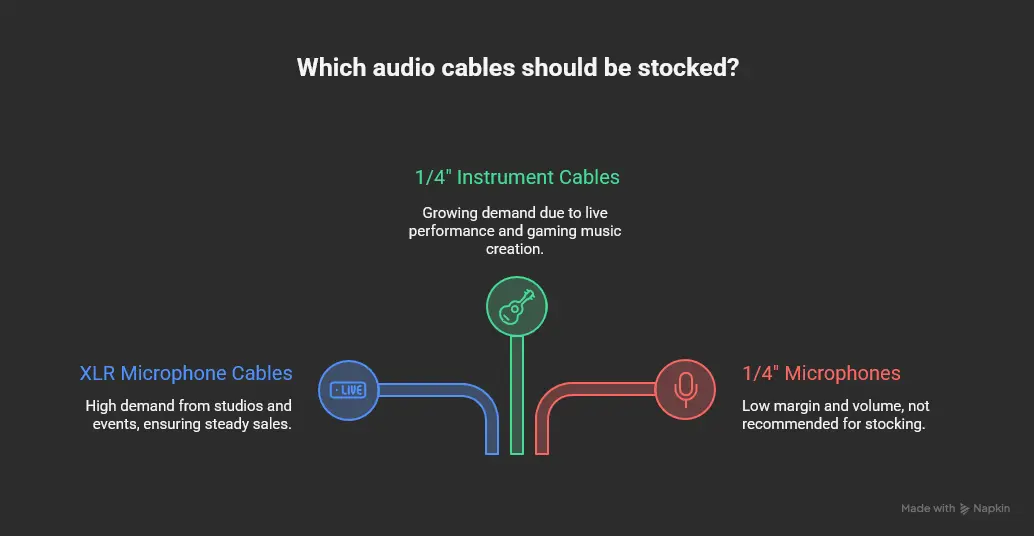
If you’re a U.S. importer or audio retailer:
- Keep XLR microphone cables in stock for studios and events.
- Carry 1/4" instrument cables for MI stores and guitar players.
- Skip “1/4" microphones” — they’re low margin and low volume.
This mirrors Verified Market Reports (2024) findings showing microphone cables holding steady but instrument cables rising thanks to live performance and gaming music content creation.
Why Phantom Power and 1/4" Don’t Mix
Let’s get technical but stay simple.
Condenser mics need phantom power — a steady +48 V sent through the same cable that carries audio.
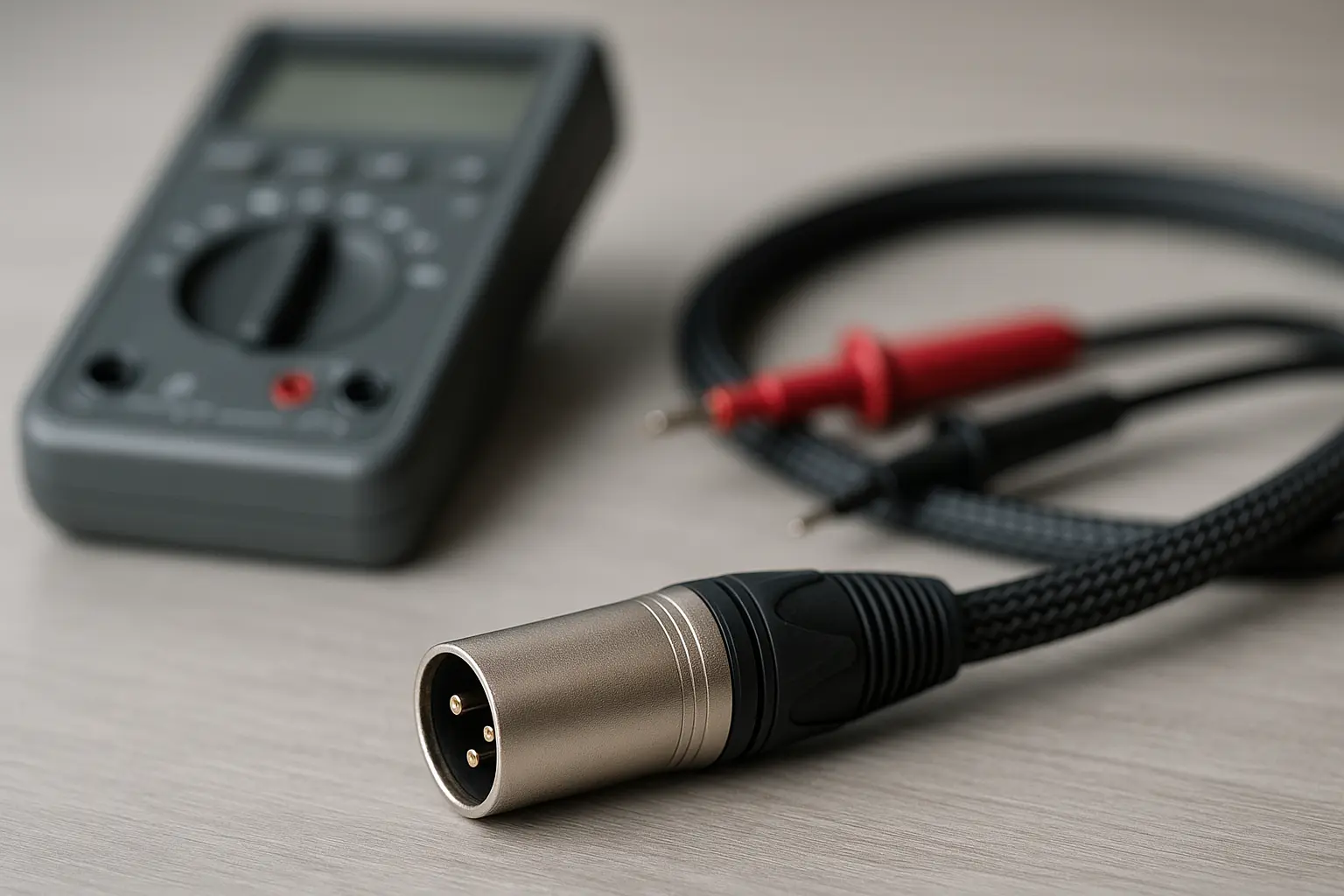
That’s easy with XLR because it has three pins:
- Pin 1: Ground
- Pin 2: Signal +48V
- Pin 3: Signal -48V
A 1/4" TS cable only has two connections — no place for the return voltage.
TRS cables could in theory carry it, but there’s no global standard, so devices wouldn’t match safely.
That’s why RØDE and Shure both warn against using 1/4" connectors for condenser mics — the mic simply won’t power up.
Modern Alternatives in 2025
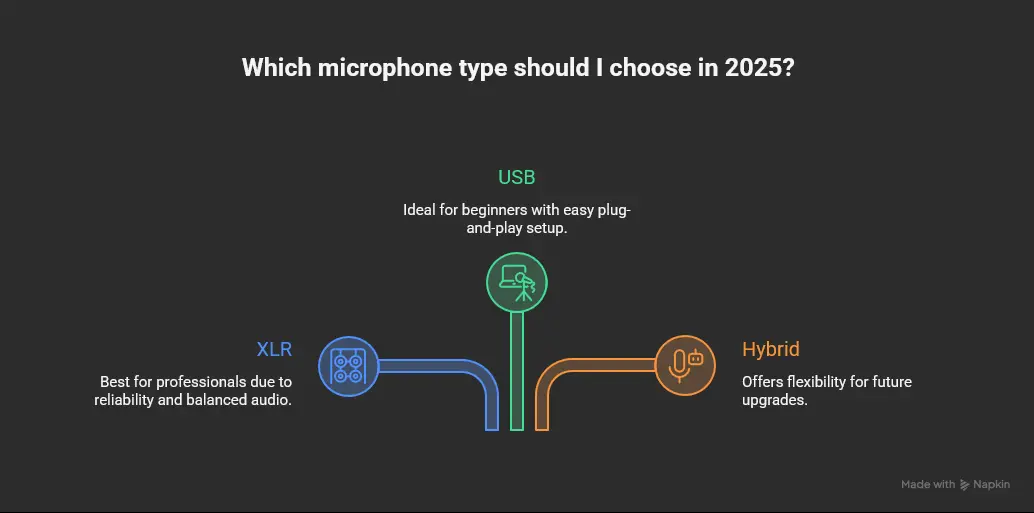
- XLR – The Professional Standard
Still the top choice for pros.
Every live sound board, studio preamp, and podcast interface uses XLR.
It’s balanced, secure, and reliable for long runs.
Top examples:
- Shure SM58 (live vocals)
- Sennheiser e835 (stage)
- Audio-Technica AT2020 (studio)
- USB – The Plug-and-Play Favorite
For beginners, nothing beats a USB mic. Plug it into your laptop, and you’re ready to record.
Popular choices include Blue Yeti, RØDE NT-USB, and Shure MV7.
They sound good and need no interface — but you can only use one per computer without extra software.
- Hybrid USB/XLR Mics
Mics like AT2020X-USB let you start with USB and upgrade later to XLR gear.
That’s perfect for content creators who want room to grow.
Real-World Setup Tips
|
Scenario |
Best Setup |
Why |
|
Live Performance |
XLR dynamic mic (Shure SM58) |
Handles long cables, no noise |
|
Home Studio |
USB condenser mic |
Simple and reliable |
|
Karaoke Night |
1/4" dynamic mic |
Works with karaoke amps |
|
Guitar/Bass |
1/4" TS cable |
Designed for high impedance |
|
Street Performance |
XLR mic + adapter |
Works in older amps |
If your amp only has a 1/4" input, use an XLR-to-1/4" transformer cable. It’ll match the impedance and cut some noise.
The SEO & Market Landscape (2025 Update)
Search data shows what people are really asking:
|
Query |
Monthly Searches |
Intent |
|
“1/4 inch microphone jack adapter” |
1,200 |
Purchase |
|
“microphone with 1/4 inch jack” |
720 |
Comparison |
|
“XLR vs 1/4 microphone” |
390 |
Education |
|
“can I plug XLR mic into 1/4 input” |
210 |
Problem-solving |
Most users start searching for 1/4" mic info — then realize they need XLR or USB instead.
That’s an opportunity for content creators and resellers to guide buyers honestly while recommending the right gear.
FAQ (2025 Updated)
Q1. Can I connect a condenser mic to a 1/4" input?
No. Condensers need phantom power, which 1/4" cables can’t deliver. Use XLR instead.
Q2. Can I use an adapter for a dynamic mic?
Yes. An XLR-to-1/4" adapter works fine for short runs under 15 feet.
Q3. Why is my 1/4" mic buzzing?
You’re likely using an unbalanced TS cable near lights or power lines. Balanced XLR cables eliminate that noise.
Q4. Are there any pro-grade 1/4" microphones?
Not anymore. Top brands dropped them years ago. Only karaoke and toy mics still use them.
Q5. I’m a retailer — should I stock 1/4" mics?
Keep a few for karaoke, but focus on instrument and XLR cables. That’s where the market demand is.
Q6. What’s the best mic type for podcasts?
Start with a USB mic if you’re solo. Move to an XLR setup if you want better sound or multiple hosts.
Looking Ahead: The Future of Mic Connections
By 2026, expect to see more USB-C and wireless microphones entering the mix.
Both cut the need for cables entirely.
But for studios, live sound, and broadcast, XLR will stay the professional standard — it’s reliable, scalable, and built for real performance.
As for the 1/4 inch jack, it’s not disappearing anytime soon — just shifting to where it fits best: instruments, patch bays, and simple vocal gear.
References
- Shure Support (2024) – Will a phantom-power mic work with a 1/4″ input?
🔗 https://service.shure.com/s/article/will-a-phantom-power-mic-work-with-a-1-4-input?language=en_US - RØDE Help (2023) – Why Can’t I Use an XLR to 1/4″ Cable with My Microphone?
🔗 https://help.rode.com/hc/en-us/articles/9383465050767-Why-Can-t-I-Use-an-XLR-to-1-4-Cable-with-My-Microphone - Credence Research (2024) – Instrument (Audio) Cables Market: Size, Share and Forecast 2032.
🔗 https://www.credenceresearch.com/report/instrument-audio-cables-market - Verified Market Reports (2024) – Microphone Cables Market Size, Competitive Landscape, and Forecast 2033.
🔗 https://www.verifiedmarketreports.com/product/microphone-cables-market/ - ProSoundWeb (2024) – Ghost in the Machine: Phantom Power.
🔗 https://www.prosoundweb.com/ghost-in-the-machine-phantom-power/ -
The Acoustic Guitar Forum (2024) – Dynamic Mic with 1/4″ Jack?
🔗 https://www.acousticguitarforum.com/forums/showthread.php?t=539261