


Mini XLR vs XLR: The Ultimate Pro Audio Connector Showdown (2025 Guide)
Key Takeaways
- Standard XLR remains the professional audio champion, backed by the IEC 61076-2-103 standard and universal compatibility across brands.
- Mini XLR isn’t one universal standard but a family of compact connectors (TA3F, TA4F, TA5F) used in space-limited applications.
- Audio quality is identical between XLR and Mini XLR—the real differences are durability, standardization, and compatibility.
- Modern audio pros need both: XLR for universal use, Mini XLR for specialized setups.
- Adapter quality is critical: Professional-grade adapters from Neutrik, Switchcraft, and Mogami ensure reliability.
Picture this: You’re on a film set in Austin, Texas, working with a Blackmagic Pocket Cinema Camera 6K. The audio engineer hands you a shotgun mic with a standard XLR cable, but your camera only has Mini XLR inputs. Production halts. Everyone waits. This is why knowing the difference between Mini XLR and XLR is not optional—it’s essential for every audio professional.

This scenario plays out daily in film sets from Los Angeles to New York, studios in Nashville, and live venues in Chicago. The confusion between Mini XLR and XLR isn’t just technical—it’s a workflow bottleneck that can cost time, money, and reputation.
The Backbone of Pro Audio: Why Standard XLR Rules
Universal Compatibility Through Standards
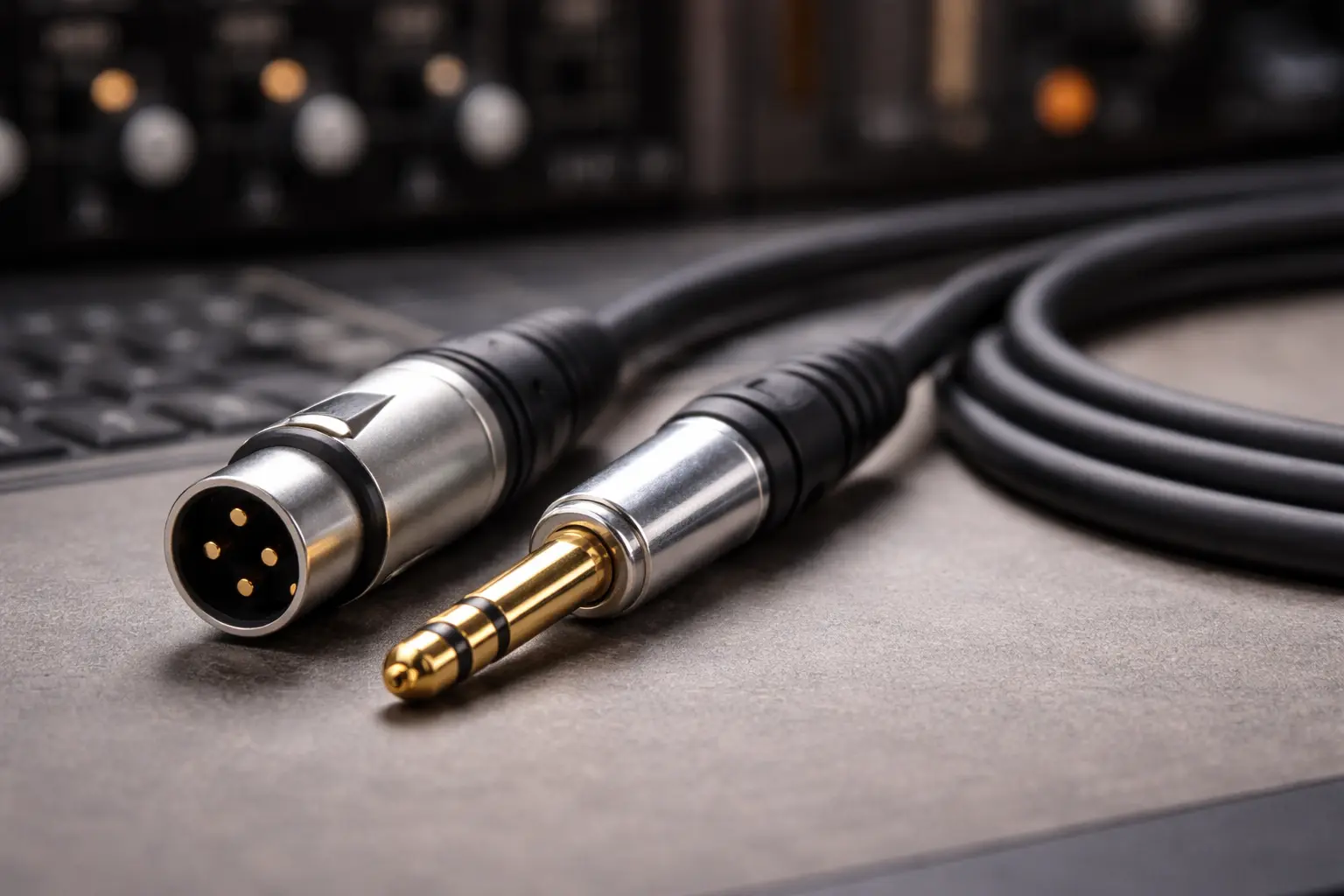
Standard XLR connectors didn’t become the pro audio default by chance. Originating from Cannon’s “X” connectors in the 1950s, improvements added the “L” (latch) and “R” (rubber). Over time, XLR evolved into today’s global standard, codified by IEC 61076-2-103.
This means a microphone with an XLR output from Shure in the U.S. will work with a mixing desk from Yamaha in Japan or a preamp from Neve in the UK—no guessing, no rewiring. That universality underpins what professionals call the plug-and-play promise.
Engineering Built for Abuse
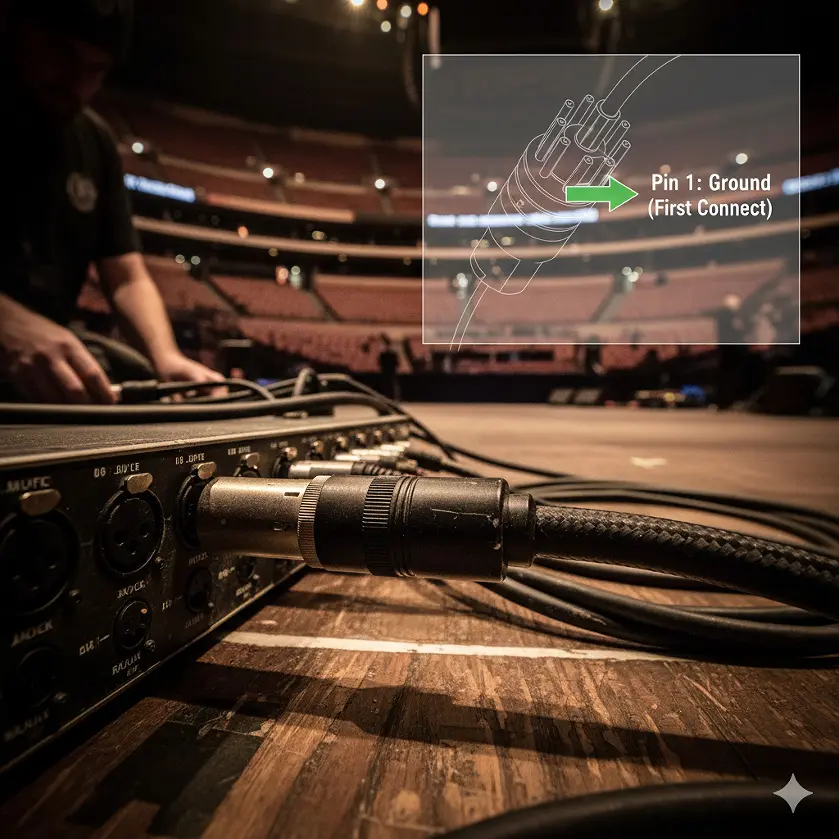
Walk into Madison Square Garden, the Hollywood Bowl, or a small-town church. You’ll find XLR connectors everywhere because they are engineered to withstand decades of abuse. Heavy zinc die-cast shells and solid latch mechanisms keep them secure through thousands of cycles.
A clever design ensures ground (Pin 1) connects first, avoiding loud pops when plugging live. For touring sound crews, this reliability isn’t optional—it’s survival.
Balanced Audio and Phantom Power
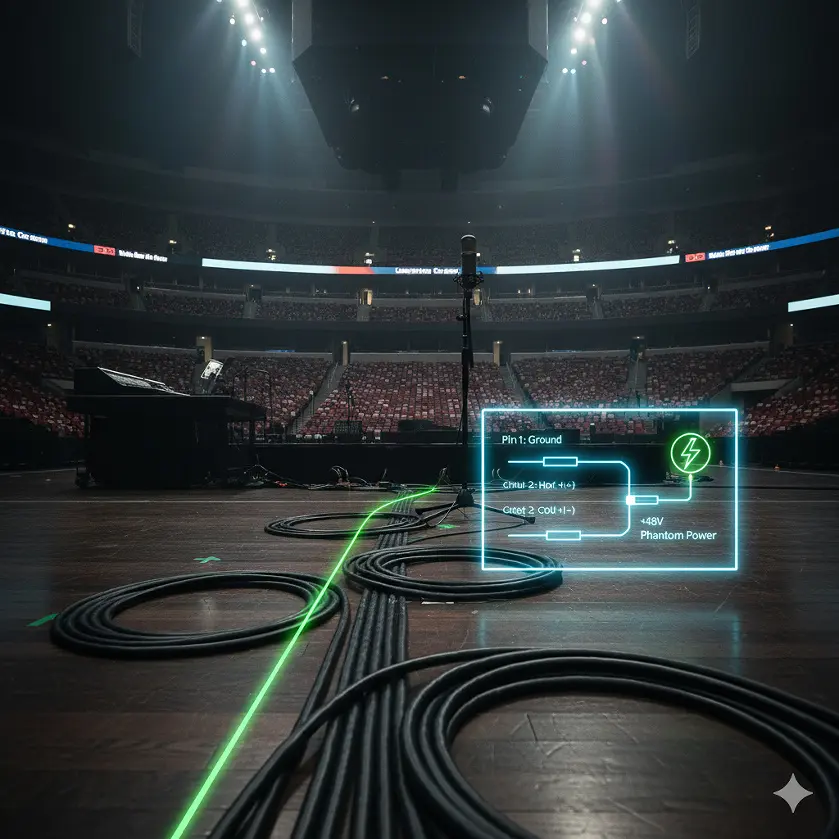
The brilliance of XLR lies in its balanced signal design. The audio signal is duplicated—one “hot” (Pin 2), one inverted “cold” (Pin 3). Interference affects both wires equally, and at the receiving end, the inverted signal is flipped back, canceling noise through common-mode rejection.
This allows clean audio across 100+ foot cable runs in venues like the United Center in Chicago. On top of that, XLR delivers +48V phantom power, fueling condenser microphones from Nashville’s Music Row to Abbey Road Studios.
The Compact Solution: Mini XLR Explained
Meet the TA Family
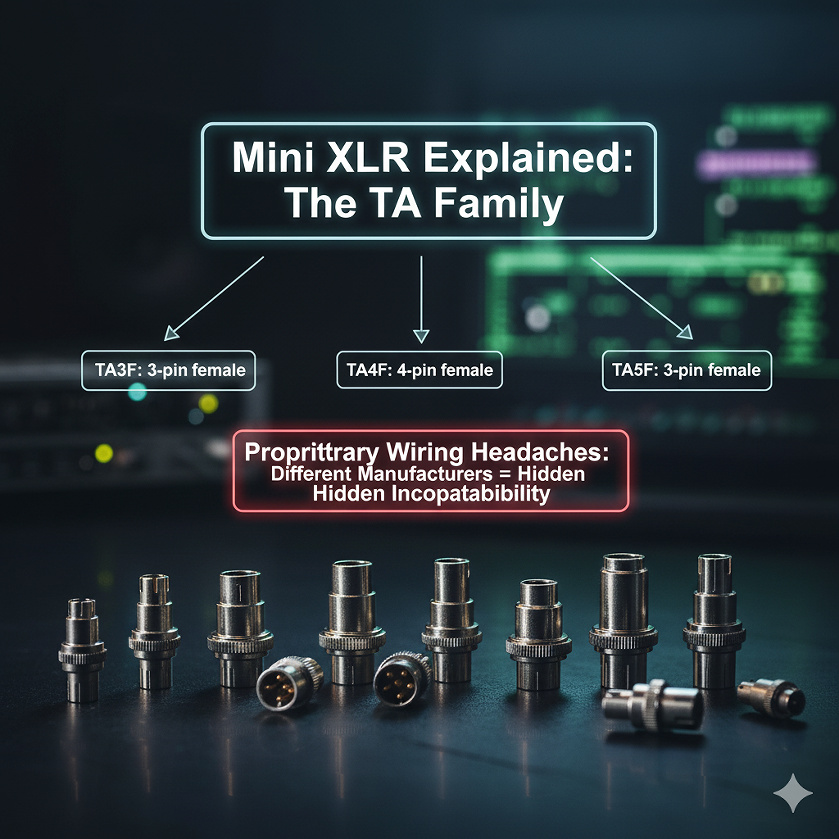
“Mini XLR” isn’t a single universal format. It’s shorthand for Switchcraft’s Tini-QG (TA) connectors and Neutrik’s equivalents. Naming is key:
- TA3F: 3-pin female
- TA4F: 4-pin female
- TA5F: 5-pin female
The problem? Different manufacturers wire them differently, creating hidden incompatibilities.
Where Mini XLR Shines
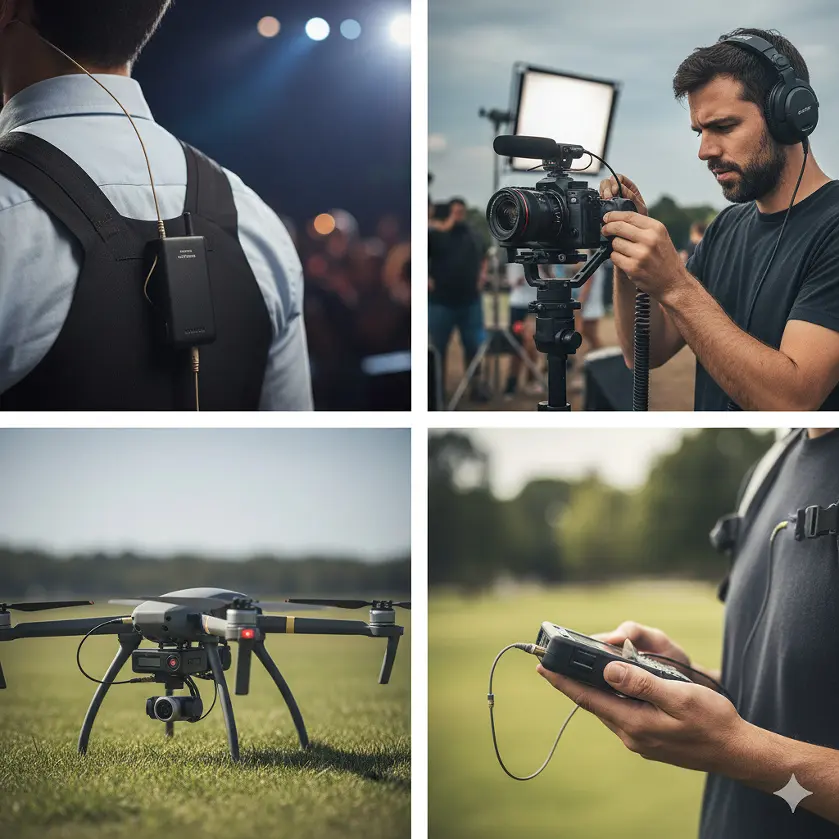
- Wireless Systems: Lavalier mics and bodypacks for Broadway, TV, and corporate events use Mini XLR to save space.
- Cinema Cameras: Blackmagic Pocket Cinema Cameras, Canon C70, and other compact cameras rely on Mini XLR for professional audio without giant connectors.
- Portable Gear: Drones, handheld recorders, and lightweight rigs benefit from the smaller form factor.
As one live sound engineer put it on Reddit: “Tried fitting an XLR on a bodypack—it was bigger than the pack. Mini XLR isn’t optional, it’s essential.”
The Mini XLR Compatibility Challenge
Proprietary Wiring Headaches
Unlike standard XLR, Mini XLR has no universal wiring. Examples:
- Shure TA4F:
- Pin 1: Ground
- Pin 2: +5V bias
- Pin 3: Audio
- Pin 4: Linked to Pin 3
- AKG TA3F:
- Pin 1: Ground
- Pin 2: Audio
- Pin 3: Bias voltage
- Lectrosonics TA5F:
- Pin 1: Ground
- Pin 2: Bias/audio (varies)
- Pin 3: Audio
- Pin 4: 2V bias
- Pin 5: Line level
These differences cause endless frustration. A Gearspace user shared: “Three hours wasted troubleshooting a dead mic—turns out Shure lavs were plugged into AKG packs. Fit perfectly, totally wrong wiring.”
The Cost of Confusion
What looks like a simple connector mismatch can derail productions, weddings, or broadcasts. The physical fit hides electrical incompatibility, creating “gotcha” moments for even seasoned pros.
Adapters: The Bridge Between Worlds
Sound Quality Myths
Does using a Mini XLR-to-XLR adapter degrade sound? No—if it’s quality. With Canare or Mogami cable and Neutrik or Switchcraft connectors, losses are negligible. The real danger is cheap adapters with poor soldering and shielding.
Trusted Choices in the U.S.
- Cables: Canare L-4E6S, Mogami 2534
- Connectors: Neutrik XX series, Switchcraft AAA series
- Suppliers: B&H (NY), Sweetwater (IN), Markertek (NY)
One touring engineer summed it up: “A $200 kit of adapters has saved me thousands in lost gigs.”
Choosing the Right Connector: Strategy for Pros
When to Use XLR
- Universal compatibility (venues, rentals)
- Long runs with minimal noise
- Rugged environments (tours, festivals)
- Phantom-powered mics
When to Use Mini XLR
- Space is critical (bodypacks, cameras)
- Gear concealment (theatre, broadcast)
- Lightweight rigs (drones, handhelds)
- Camera-specific audio ports (BMPCC, Canon C70)
Why It’s Not a Competition
Mini XLR and XLR don’t compete—they complement each other. XLR is the backbone of pro audio, while Mini XLR enables specialized, space-conscious setups. The smartest professionals carry both, plus adapters, to handle any scenario.
Your kit should include:
- Standard XLR cables for universal use
- Mini XLR adapters for cameras/wireless systems
- Only high-grade components, because failure costs more than prevention
Buying Guide: Recommended Adapters (2025)
- Neutrik NA3 series: Rugged build for touring rigs
- Switchcraft TA adapters: Industry gold standard for wireless systems
- Mogami/Canare custom cables: Best balance of flexibility and shielding
- Budget picks: Avoid no-name brands; at minimum, choose Hosa or ProCo
Frequently Asked Questions
Q: Is there audio quality difference between Mini XLR and XLR?
A: No. Both carry balanced audio equally well when properly built.
Q: Can Mini XLR deliver phantom power?
A: Yes for 3-pin Mini XLR with the right adapter, but bodypack bias power (1–5V) is different from +48V phantom.
Q: What adapter works for Blackmagic Pocket Cinema Camera?
A: A 3-pin Mini XLR male to standard XLR female cable. The camera can supply phantom power.
Q: Why won’t my Shure lav work with an AKG pack?
A: Pinouts differ. Shure uses TA4F with bias on Pin 2; AKG uses TA3F with audio on Pin 2. They need adapters.
Q: Are “Mini XLR,” “TQG,” and “Tiny XLR” the same?
A: TQG is Switchcraft’s trademark. In practice, these all refer to miniaturized XLR-style connectors.
Citations
- International Electrotechnical Commission. (2004). IEC 61076-2-103. https://webstore.iec.ch/publication/4429
- Rayburn, R. A. (2008). History of the XLR connector.Sound First Audio Engineering. https://www.soundfirst.com/xlr.html
- Neutrik AG. (2024). XLR Connectors Product Guide.https://www.neutrik.com/en/neutrik/products/audio-connectors/xlr-connectors
- Blackmagic Design. (2023). Pocket Cinema Camera 4K/6K Audio Specs.https://www.blackmagicdesign.com/products/blackmagicpocketcinemacamera
- Professional Audio Community. (2023). Mini XLR troubleshooting discussions. Reddit & Gearspace.