

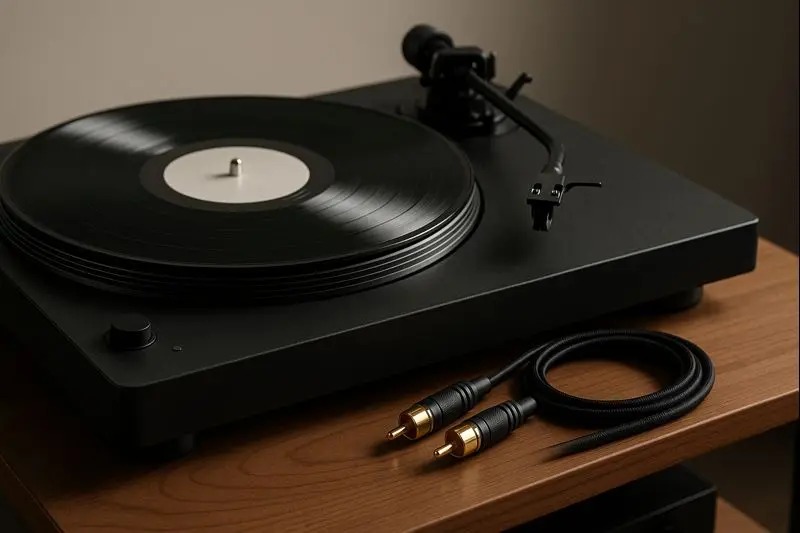
Pro Audio XLR Cables (2025): Ultimate Guide for US Studios, Live Sound & OEM Buyers
Key Takeaways
- Pro audio XLR cables are the “wiring layer” of most studio and live sound systems in the US. When they’re built well, you barely think about them. When they’re not, you hear buzz, hum and random crackles.
- Noise performance comes mainly from balanced wiring, shielding, capacitance, connector quality and cable length – not from fancy marketing terms.
- Blind tests and real user stories show that mid-priced and expensive XLR cables often sound almost the same, but cheap cables fail more often and cause more noise and RF problems.
- US brands, distributors and integrators can save a lot of trouble by choosing a solid OEM XLR manufacturer in China, instead of buying random “mystery” cables.
- Jingyi Audio (Ningbo Jingyi Electronic) builds connectors and cable in one place, offers custom branding, and can supply low-capacitance mic cables that suit studio, rental and install work in North America.
- This guide includes OEM checklists, example specs and practical tables so US B2B buyers can send clear RFQs and get the cables they actually need.
Introduction – Why Pro Audio XLR Cables Still Matter in 2025
Every modern studio and stage in the US has the same quiet foundation: a bundle of pro audio XLR cables running between mics, preamps, stage boxes, mixers and powered speakers. They aren’t exciting pieces of gear. But if they fail, everything else fails with them.
For most engineers and creators, XLR cables stay in the background. For US B2B and OEM buyers, though, cables are a product line:
- maybe under your own brand,
- in your catalog,
- sitting on shelves in US warehouses.
This article speaks to both sides:
- people who plug these cables in every day, and
- people who need to spec and buy them by the thousand.
We’ll walk through what matters electrically and mechanically, how length and price really affect performance, and how companies like Jingyi Audio can support US brands with OEM and private-label runs.
What Are Pro Audio XLR Cables and How Do They Work?
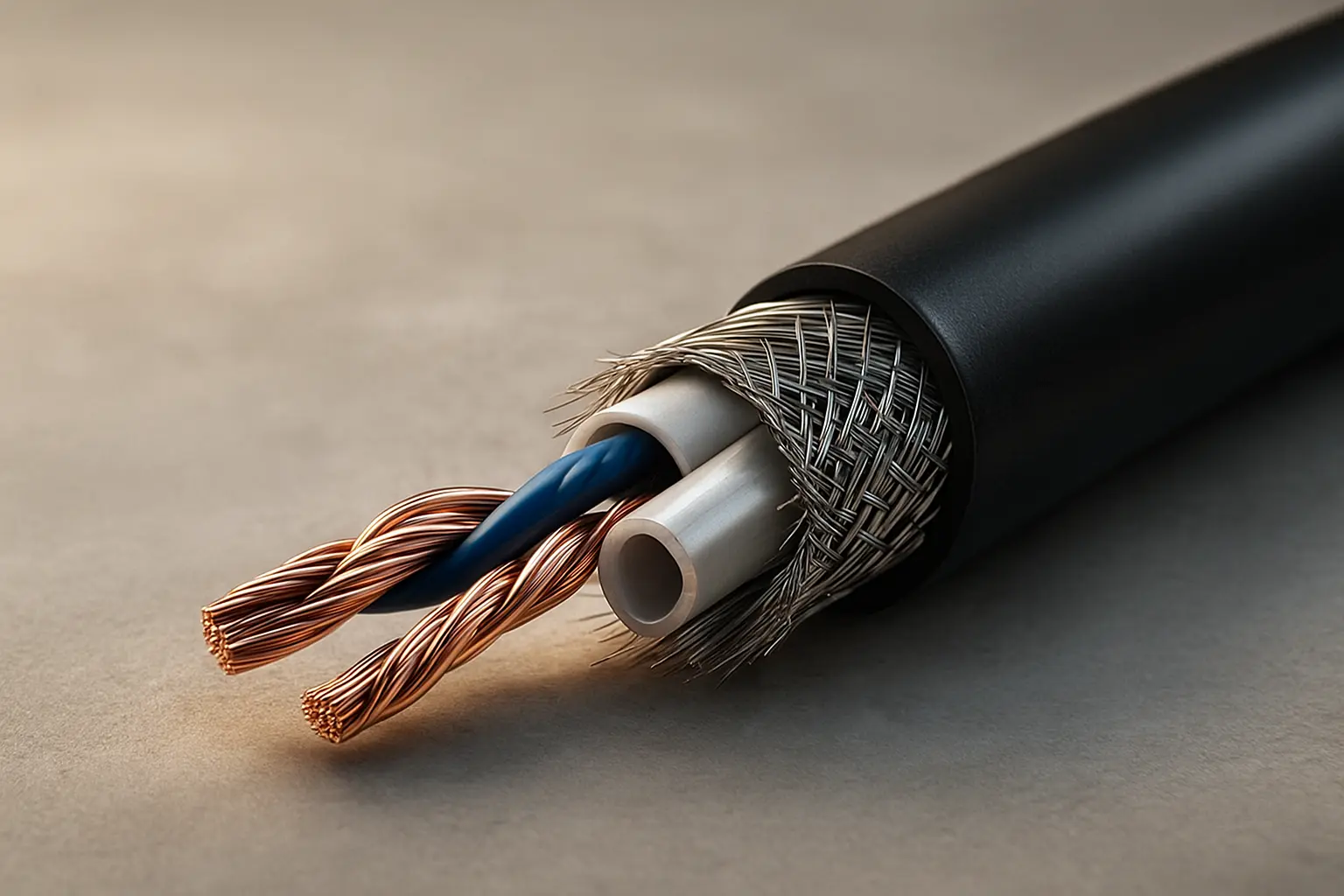
Balanced XLR Microphone Cables vs Unbalanced Leads
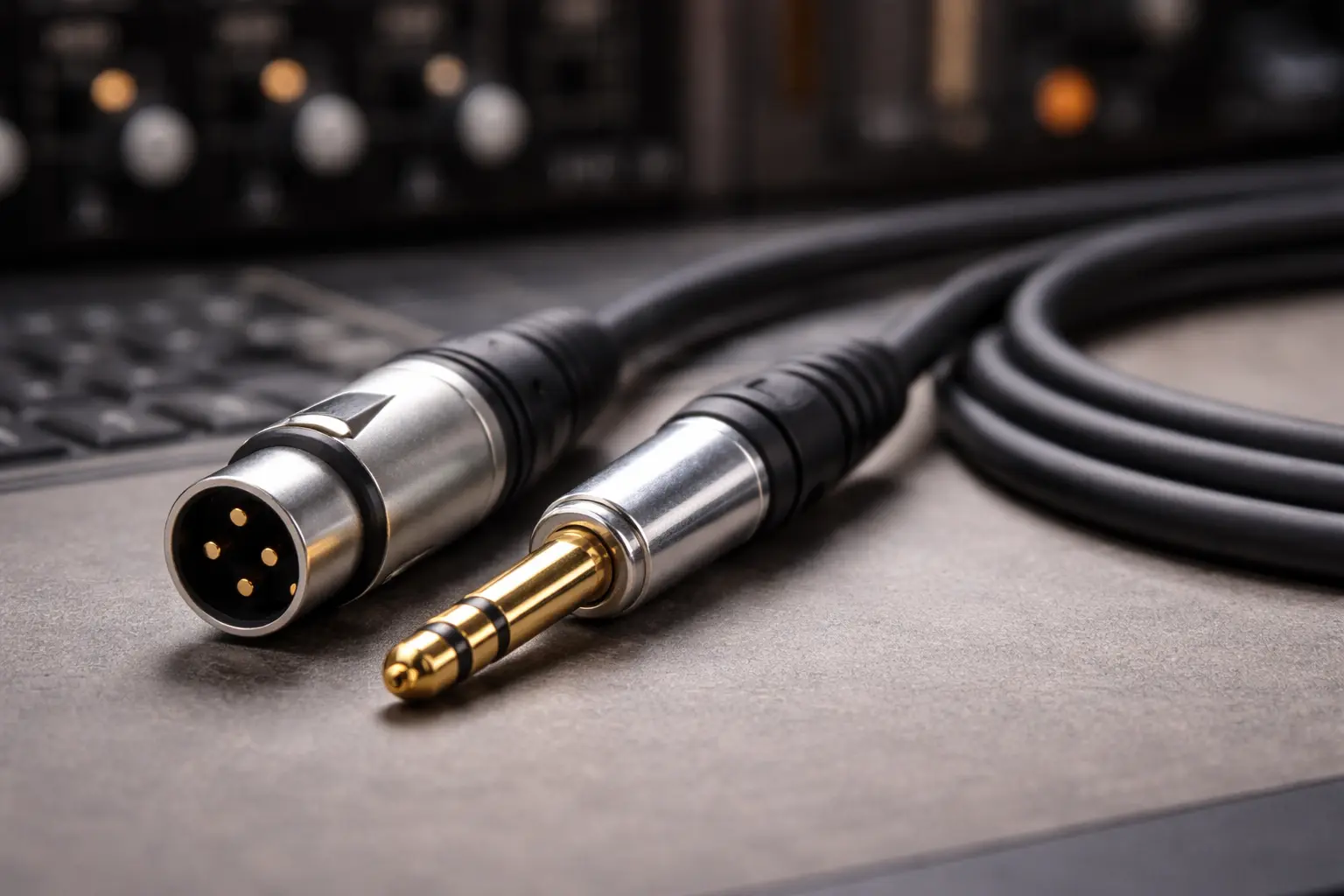
A standard 3-pin XLR cable has:
- Pin 1 – Ground / Shield
- Pin 2 – Hot (+)
- Pin 3 – Cold (–)
Pins 2 and 3 carry the same signal, but one is flipped in polarity. At the other end, a balanced input subtracts one from the other. Any noise that both wires picked up along the way cancels out. That’s why XLR is the default for:
- microphones,
- long analog runs on stage,
- quiet studio patching.
Unbalanced leads (TS, RCA) send signal on one conductor and use the shield as return. That’s fine for short links in hi-fi, keyboards or guitars, but over longer distances they tend to pick up hum and radio noise. That’s why serious studios and venues in the US avoid long unbalanced runs.
Inside a Pro Audio XLR Mic Cable
Most decent XLR mic cables follow the same basic recipe:
- Two conductors (often 24 AWG) made of OFC copper
- Insulation around each conductor
- A shield around the pair (spiral, braided or foil with a drain wire)
- An outer jacket that protects the core and sets flexibility
- Metal XLR connectors with a latch, pins and strain relief
The big differences sit in the details:
- Conductor material
- OFC copper is common in pro audio. It bends well, solders well and keeps resistance low.
- CCA (copper-clad aluminum) is cheaper. It breaks more easily, has higher resistance and can cause bigger voltage drops on long phantom-powered mic lines.
- Shield geometry
- Spiral shields are easy to work with and very flexible.
- Braided shields are tougher and hold up better on the road.
- Foil shields are slim and give full coverage, ideal for install cable that doesn’t move.
- Connector build
- Good shells and pins stay tight for years.
- Poor ones jam in sockets, wobble or crack after a short time.
Why XLR Still Matters When Audio Is Going Digital
Even with Dante, AVB, USB and HDMI everywhere, analog XLR is still hard to replace in two spots:
- At the beginning – microphones, DI boxes and some outboard gear
- At the end – analog feeds into amplifiers, powered speakers, recorders
Network protocols are great for moving a lot of audio channels around a building or a festival site. But at the “edges” of the system, pro audio XLR cables are still the simplest, most repairable option.
The Specs That Actually Matter for Pro Audio XLR Cables
Capacitance and Long Runs
Every cable behaves a bit like a capacitor. Manufacturers usually list capacitance in pF/m or pF/ft. In short:
- Short runs (10–25 ft) between modern mics and preamps are rarely a problem.
- Very long runs with high-capacitance cable can shave off some top-end “air,” especially with certain sources.
For most US studios and small venues, you won’t hear the difference. For big churches, theaters, stadiums and long analog runs, choosing low-capacitance XLR mic cable gives you more headroom before you run into audible loss.
Shielding Types in Professional XLR Mic Cables
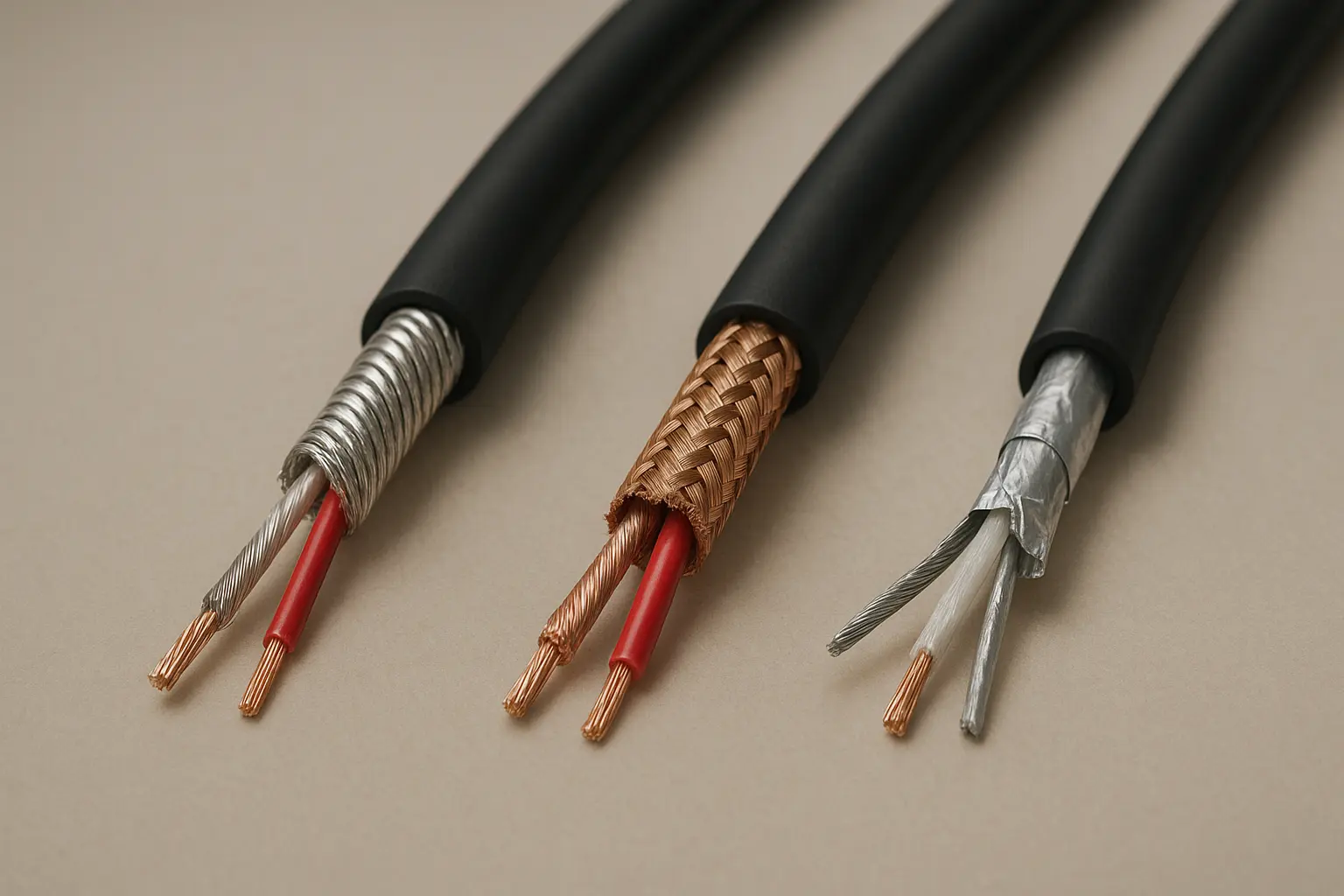
Here’s a quick comparison you can show your team:
|
Shield Type |
Where It’s Often Used |
Strengths |
Weak Spots |
|
Braided |
Touring rigs, rental snakes, stage looms |
Tough, good RF rejection |
A bit stiffer, slightly heavier |
|
Spiral |
Studio patching, flexible mic cables |
Very flexible, easy to strip |
Can open up with heavy use on the road |
|
Foil + drain |
In-wall runs, rack wiring, fixed installs |
Full coverage, slim profile, low cost |
Doesn’t like constant bending and coiling |
When you write an OEM spec, match the shield style to real use: a club in Nashville needs something different from a church doing in-wall wiring in Texas.
Connector Quality, Strain Relief and Reliability
Most horror stories about XLR cables come down to the connector:
- The latch won’t release from the mic.
- Pins feel loose and add crackle when the cable moves.
- The boot doesn’t grip, so the jacket pulls on the solder joints.
- A cold solder joint passes audio when still, but drops out when someone steps on the cable.
Good pro audio XLR cables use:
- Solid shells that don’t deform in normal use
- Pins that keep contact pressure for many years
- Strain relief sized to the jacket
- Consistent soldering or crimping, often with automated steps
This is one place where a factory like Jingyi Audio, which builds both connectors and cable, can cut down on random failures. You’re not dealing with unknown third-party parts squeezed together on a bench.
Jacket Materials, Flexibility and “Memory”
Engineers judge cords partly by how they feel in the hand:
- Do they coil smoothly with an over-under wrap?
- Do they lie flat on stage, or keep the “circle” shape from the coil?
- Do they turn stiff outdoors in cold weather?
For US live sound and rental, a slightly thicker, softer jacket often wins. For dense installs in conduits and trays, a slimmer jacket might make more sense.
Pro Audio XLR Cable Length vs Sound Quality
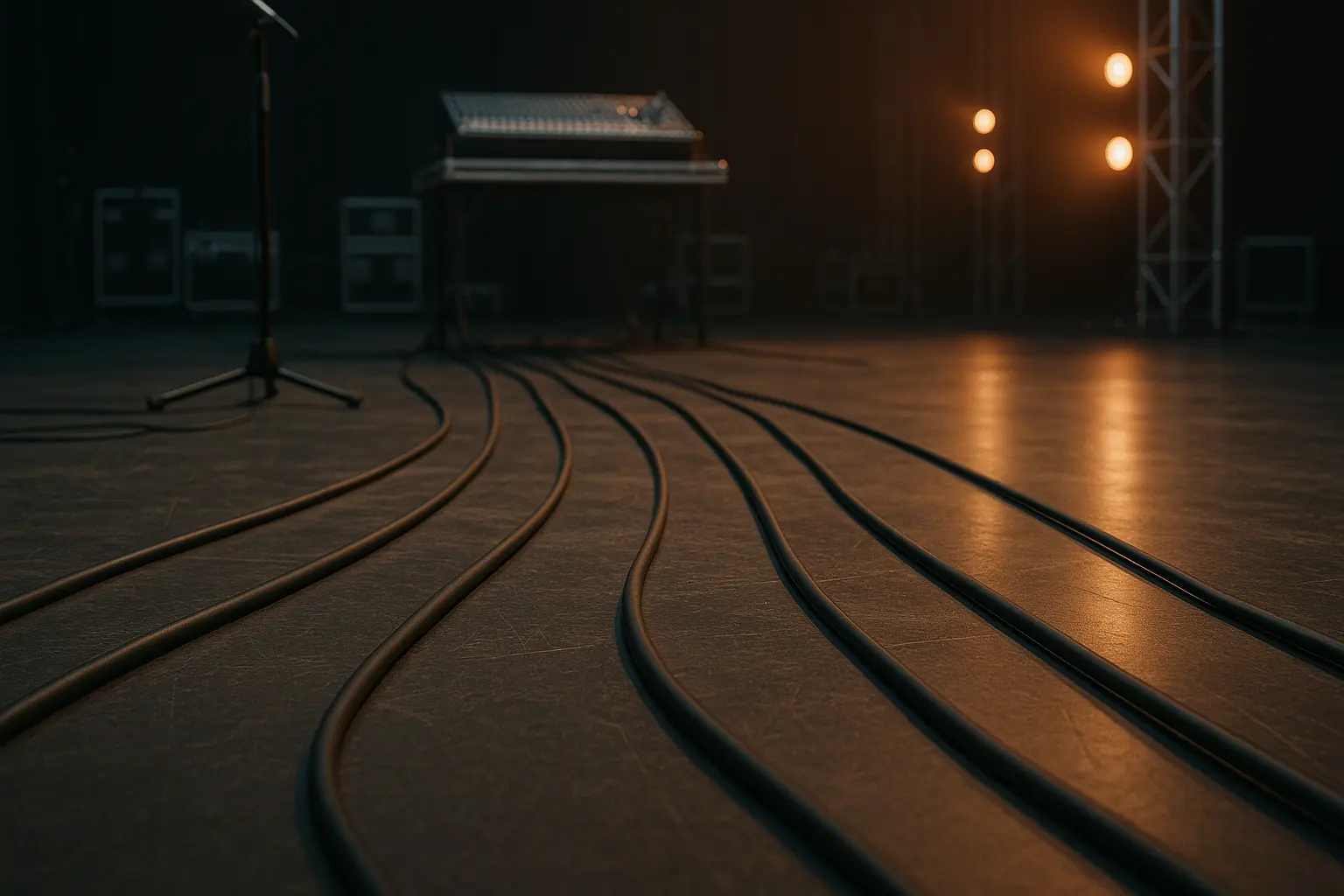
When Length Starts to Matter
If your mic cords are 10–25 ft, cable length is rarely the limiting factor. Once you start running 50 ft, 75 ft, 100 ft and beyond, a few things stack up:
- More capacitance
- Higher resistance
- More chance for interference
A well-made low-capacitance XLR mic cable helps stretch that limit while keeping noise under control. Long runs with very cheap cable are where many US users on forums report hum, hiss or dull sound.
Typical Length Ranges in US Setups
|
Setup Type |
Common Lengths |
Cable Notes |
|
Home / project studio |
6–25 ft |
Mid-tier cable, flexible jacket |
|
Small club or bar |
25–75 ft |
Decent shielding, robust connectors |
|
Regional touring / theaters |
50–150 ft |
Low-cap cable, braided shield preferred |
|
Large church or campus install |
100 ft+ |
Good cable, or move to digital transport |
Length doesn’t ruin a good cable by itself. It just reveals flaws faster. A long, cheap XLR mic cable can turn minor weaknesses into very audible problems.
Cheap vs Expensive Pro Audio XLR Cables – What Really Changes
Sound Quality: Often a Smaller Gap Than People Expect
Blind tests and more technical reviews usually agree on one thing:
If two XLR cables are wired correctly, balanced, and used at normal studio or stage lengths:
- Frequency response differences are tiny.
- Noise floor differences are usually lower than room and gear noise.
- Many listeners can’t tell which is which in a fair test.
So the jump from a good mid-priced cable to a very expensive one rarely transforms your sound.
Where Cheap XLR Cables Cause Real Trouble
Cheaper cables tend to cut corners here:
- Thin, loose shielding that lets in buzz and RF
- Weak connectors with soft metal shells
- Poor strain relief and undersized boots
- Inconsistent soldering that fails after some flexing
On social platforms and forums, people describe cables that:
- crackle every time the singer touches the mic,
- buzz when coiled near dimmer packs,
- or die after a few gigs.
Those failures waste time. They also make your brand look bad if your logo is printed on the jacket.
When Higher-Spec XLR Cables Are Worth the Extra Money
Paying more starts to make sense when:
- You run a touring rig or rental inventory that sees daily abuse.
- You look after a big church, broadcast studio or corporate AV system where downtime is very expensive.
- You want a product range that feels solid in customers’ hands and generates fewer returns.
In those cases, extra dollars per cable are cheaper than truck rolls, troubleshooting and bad reputations.
Real-World Use: Studios, Live Sound and Installations
US Studio and Venue Patterns
If you read threads on places like Reddit and Gearspace, you see the same pattern again and again:
- People start with whatever cable came in the box.
- After a few noisy sessions or failures, they switch to a more trusted XLR line.
- They keep a small set of “known good” cables for critical tasks like vocals and remote recording.
Small clubs and bars often collect a random pile of cords over the years. The venues that run smoothly eventually clean house:
- Throw out the worst offenders.
- Standardize on a type and a few lengths.
- Label everything so techs can grab what they need fast.
Cable Management and Replacement
Good cable habits make any brand last longer:
- Train crews on over-under coiling.
- Use colored boots or labels for length.
- Keep a simple rule: if a cable causes repeat problems, retire it instead of chasing ghosts.
Rental houses often treat cables as consumables. A planned replacement schedule can be cheaper than constant emergency fixes.
OEM and US B2B Buyers – How to Source Pro Audio XLR Cables That Just Work
Now let’s switch hats. If you’re a US brand, distributor or system integrator, you’re not just buying a cable for your own rig. You’re choosing a product line that your customers will judge you on.
Who This Section Is For
- US pro audio brands building a private-label XLR range
- North American distributors selling into MI stores, e-commerce and AV installers
- System integrators wiring churches, schools, theaters and campuses
- Rental and production companies ordering bulk XLR mic cables directly from factories
Four Things That Matter in OEM XLR Sourcing
- Electrical performance
- Balanced, quiet, low failure rates, stable under phantom power
- Jacket, shield, connectors and strain relief that can handle real-world use
- Your logo, your color scheme, a “hand feel” that fits your market
- Lead times to US ports, packaging, certifications and repeatable quality
A good OEM partner works across all four, not just price.
Case Study: Jingyi Audio as a Pro Audio XLR OEM Partner
Who Is Jingyi Audio?
Ningbo Jingyi Electronic Co., Ltd. (Jingyi Audio) sits in Ningbo, a major Chinese port city with long-running routes to:
- Los Angeles / Long Beach
- Oakland
- Houston
- East Coast hubs via intermodal links
Jingyi has been in the audio connector and cable business since the 1990s. Over the years, it has grown from separate parts to full cable assemblies:
- XLR connectors (male/female, straight, right-angle, low-profile)
- Microphone and pro audio cables
- DMX, speaker and Ethernet lines
- Finished mic leads and custom harnesses for export
What “Vertical Integration” Means in Everyday Terms
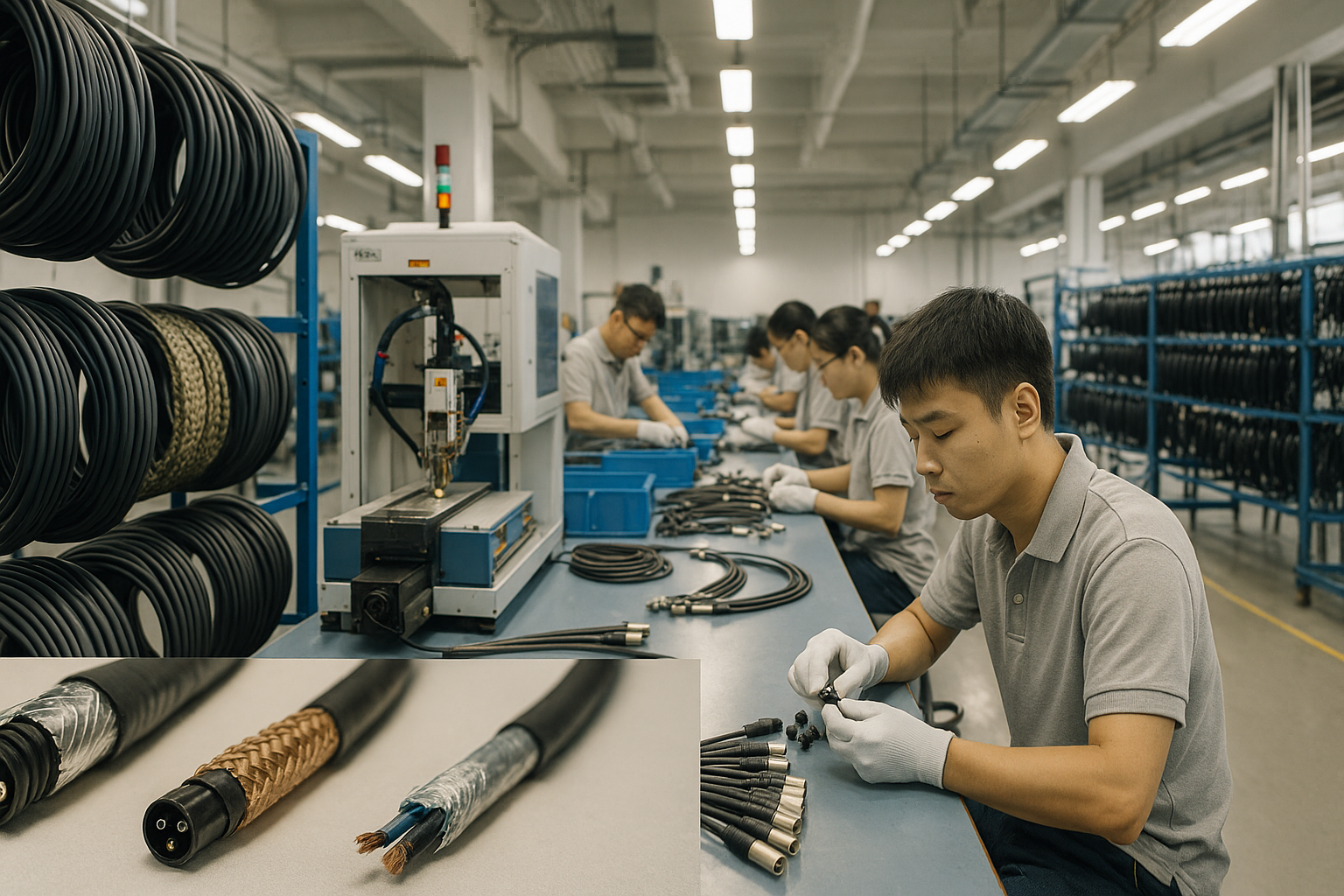
Many small suppliers buy connectors, buy bulk cable, and then just solder. Jingyi goes further:
- Makes its own metal shells with die-casting and machining
- Molds plastic parts like boots and insulators
- Extrudes and shields cable in-house
- Uses automatic pin insertion and assembly for repeatable quality
- Runs 100% electrical tests plus sample pull/flex tests
For a US OEM buyer, that gives you:
- Fewer unknowns in the supply chain
- Easier customization for shells, boots and jackets
- More consistent batches from one order to the next
Example: An OEM-Ready Low-Capacitance XLR Mic Cable
Here’s what an OEM platform from Jingyi might look like on paper:
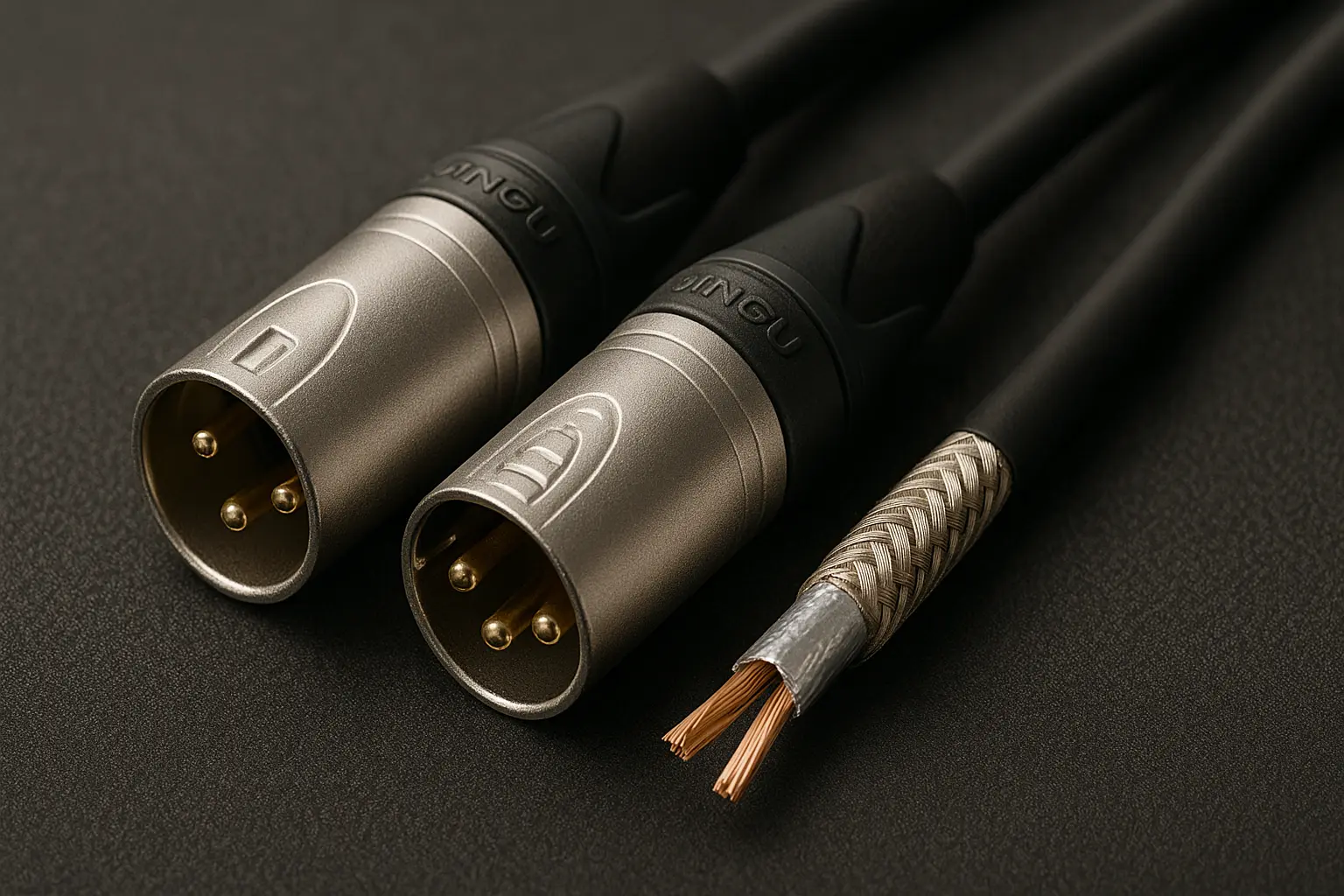
- Conductors: 2 × 24 AWG OFC, finely stranded
- Capacitance: around 60–65 pF/m (suitable for longer runs)
- Shield: spiral or light braid, ≥ 90% coverage
- Insulation: PE for lower dielectric constant
- Jacket: flexible PVC, operating range –20 °C to +70 °C
- Connectors: Jingyi metal XLR shells with gold-plated pins, your logo on shells or heatshrink
From that base, you could define:
- A “studio” line with softer jackets and shorter lengths
- A “touring” line with heavier braid and reinforced boots
- An “install” version with foil + drain and jackets rated for in-wall use (if available)
OEM Checklist – For US Brands Ordering Pro Audio XLR Cables
You can lift this list into your RFQ email template.
- Electrical and Mechanical Details
- Conductor gauge (e.g. 24 AWG) and material (OFC)
- Strand count per conductor
- Capacitance range (pF/m or pF/ft) you’re aiming for
- Shield style (spiral, braid, foil + drain) and minimum coverage %
- Jacket material, overall diameter, and desired flexibility
- Temperature range and any special conditions (outdoor use, trucks, etc.)
- Connectors and Branding
- Shell type (standard, low-profile, right-angle)
- Finish (matte black, nickel, custom color)
- Pin plating (nickel or gold)
- Boot styles and colors (length coding, channel coding)
- Branding on shells, boots and jacket print
- Quality, Compliance and Documentation
- Factory certifications (e.g. ISO 9001, RoHS, REACH)
- Any US code-related needs for install cable (CL2/CL3, plenum or riser if you plan to go in-wall)
- Agreed tests per batch:
- Continuity and insulation resistance
- Pull tests and flex cycles
- Visual inspection and acceptable defect rate
- Logistics and Packaging
- Minimum order quantities per length and color
- Lead time from PO to FOB Ningbo
- Preferred US ports and shipping terms
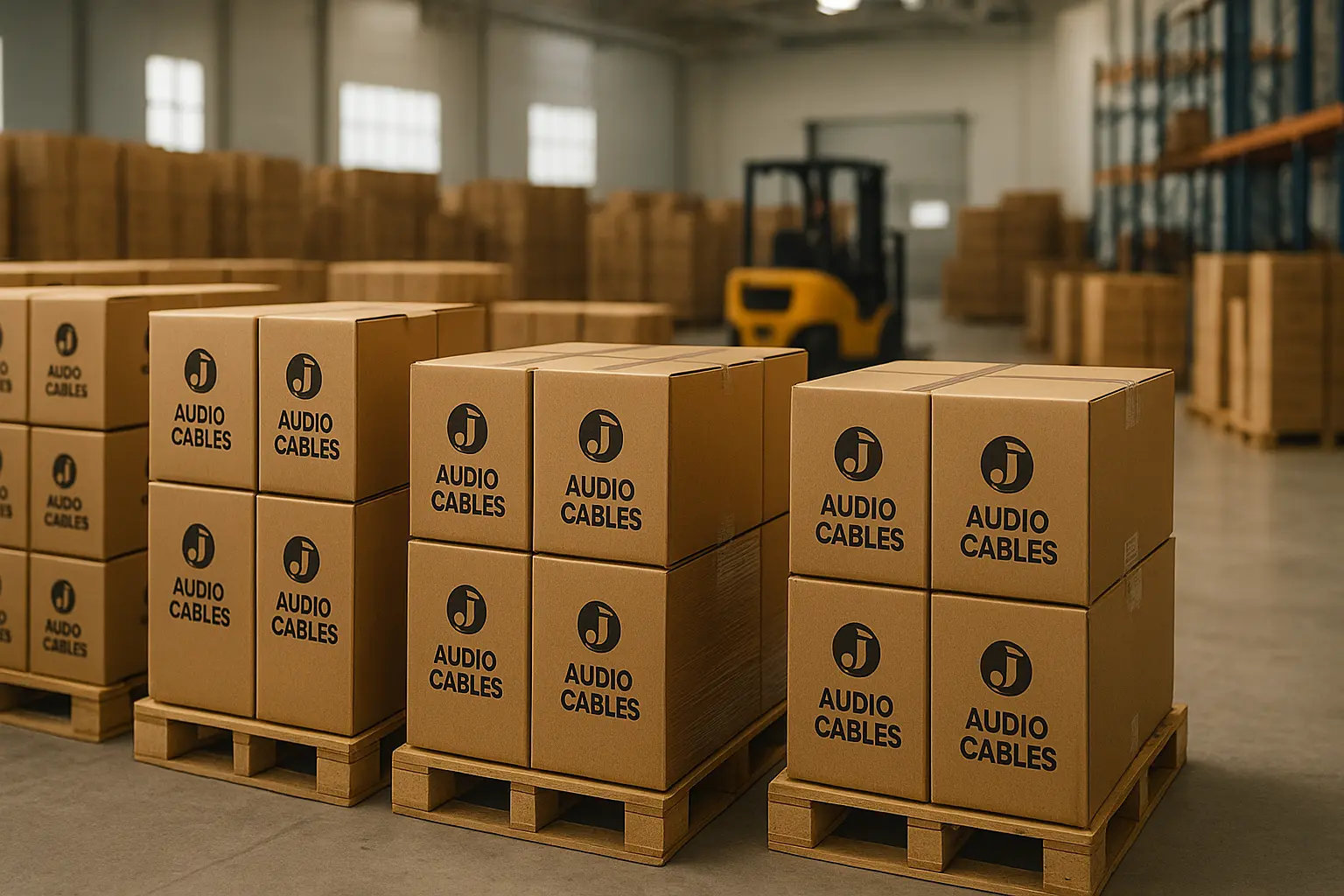
- Carton and pallet packing style (e.g. 10-pack coils in printed boxes, or bulk coils)
Quick Buying Guide for US Pro Audio XLR Use Cases
Simple Path by Use Case
|
Who You Are |
What to Order |
|
Home / project studio owner |
Mid-tier pro audio XLR, OFC, flexible, 10–25 ft lengths |
|
Small venue, rehearsal room |
Stronger jackets, better connectors, 25–50 ft standard lengths |
|
Touring or rental company |
Touring-grade cable, braided shields, reinforced boots |
|
Church / school / campus integrator |
Good portable XLR plus install-rated cable where needed |
|
Corporate AV / broadcast facility |
Mix of field XLR cords and in-wall runs with proper ratings |
If you’re ordering for resale under your own brand, ask the factory to send a small batch of fully branded samples first. Hand them to your engineers and crew to try on real shows or sessions before you commit.
FAQ – Pro Audio XLR Cables for Studios, Live Sound and OEM Buyers
What makes an XLR cable “pro audio” instead of consumer-grade?
A pro audio XLR cable is built to handle microphones and line-level signals in noisy, demanding environments. It is balanced, shielded and rugged. It can be plugged in and pulled out thousands of times, dragged across stages and coiled daily without falling apart.
How long can a pro audio XLR cable be before I hear a problem?
Most studios and small venues in the US can use balanced XLR cables up to 100 ft without obvious loss or noise, as long as the cable is decent and the gear is balanced. Past that point, low-cap cable and good shielding help, and digital or network transport may be a better option for very long runs.
Do expensive pro audio XLR cables sound better?
Once you move above the lowest tier of no-name cables, sound differences between mid-priced and expensive XLR cords are usually very small at normal lengths. The big gap is in failure rate, handling and how often they cause noise issues. That’s where better construction pays off.
What should US studios and rental houses look for in XLR mic cables?
Look for:
- OFC copper conductors
- Reliable shielding (spiral or braid, not token foil)
- Solid connectors with working latches and strain relief
- Jackets that coil cleanly and don’t go stiff in your climate
Those basics matter more than any “exotic” buzzwords.
How should US brands vet an OEM XLR cable manufacturer in China?
Check that the supplier:
- Has a real track record with audio cables and connectors, not just generic wiring
- Controls key steps of production, not only hand assembly
- Can show certifications, test reports and sample parts
- Communicates clearly about specs, packaging and lead times
- Is willing to tweak designs for your market instead of only selling catalog items
When should I move from analog XLR cables to digital or network audio?
If you need many channels over long distances, or you’re wiring a campus or arena, network audio (Dante, AVB and similar systems) can reduce bulk and give more routing flexibility. You will still need good pro audio XLR cables for microphones, stage connections and edge devices, but you can shorten analog paths and simplify the main backbone.
About This Guide and Jingyi Audio
This guide was written with input from the team at Ningbo Jingyi Electronic Co., Ltd. (Jingyi Audio):
- A manufacturer focused on audio connectors and cables since the early 1990s
- Based in Ningbo, China, close to one of the busiest ports serving the US West Coast
- Supplying OEM and private-label XLR mic cables, DMX, speaker and Ethernet products to customers in North America, Europe and Asia
Because Jingyi designs and builds both connectors and cable, the team deals every day with the same questions US brands ask:
- What specs do we put on the drawing?
- How do we keep failure rates low?
- How do we shape a product that feels “right” for studios, stages and installs?
This article is shaped by those daily conversations, plus feedback from engineers, rental houses and integrators using XLR cables out in the real world.
Further Reading (External References)
If you want to compare this guide with other resources on XLR cables and balanced audio, these articles are a good start:
- Voices – “XLR Cables and Connectors: A Comprehensive Guide”
https://www.voices.com/blog/xlr/ - NearStream – “XLR Cables: Professional Guide to Balanced Audio & Quality”
https://www.nearstream.us/blog/professionals-guide-xlr-cables-audio - GeekStands – “XLR Mic Cables: Understanding the Impact of Cable Length on Sound Clarity”
https://geekstands.com/blogs/news/xlr-mic-cables-understanding-the-impact-of-cable-length-on-sound-clarity - PodcastVideos – “Cheap vs. Expensive XLR Cables: Do They Really Sound Different?”
https://www.podcastvideos.com/articles/do-expensive-xlr-cables-make-a-difference/ - Jingyi Audio – Company and Product Information
https://site_5615465d-0395-48c6-b01f-dc3d38213fc5/