




standard rca cable: Complete OEM Guide for US Audio Brands and System Integrators
Key Takeaways
- A standard rca cable is still the go-to analog connection in many US home theater, car audio, and prosumer studio setups.
- When most people say “standard RCA,” they usually mean the red–white–yellow 3RCA AV cable, but stereo audio, subwoofer, and digital coax lines all share the same RCA base.
- Copper quality, shielding, and connectors have far more influence on noise and reliability than most marketing stories about “soundstage” or “air.”
- Forum and social media stories show a clear pattern: a decent standard rca cable is basically “invisible” to the sound, while cheap plugs and weak shielding cause hum, alternator whine, and loose channels.
- US OEMs often buy RCA connectors and cables from Ningbo Jingyi Electronic (Jingyi Audio) in China, using their audio-focused factory, OEM/ODM services, and long export history with North America.
Introduction
If you pull a TV cabinet away from the wall in a US home, odds are you’ll still find at least one standard rca cable behind it. Those red, white, and yellow plugs have been around for decades, and they still connect DVD players, retro game consoles, receivers, powered subwoofers, DJ mixers, and plenty of other gear.
For US audio brands, system integrators, and OEM buyers, that little cable isn’t just a throw-in accessory. It can influence noise levels, product returns, and how “solid” a system feels to the end user. This guide breaks down what “standard RCA” really means, how the color codes work, what types of cables exist, what real users are saying, and how manufacturers like Ningbo Jingyi Electronic (Jingyi Audio) help US customers get reliable standard RCA solutions at scale.
What Do We Mean by a “standard rca cable”?
User Meaning vs Engineering Meaning
Engineers may call any cable with RCA plugs an RCA cable. In daily language, especially in the US, people are a bit more specific.
Most buyers use “standard RCA” for:
- A 2-RCA stereo audio cable (red for right, white or black for left), or
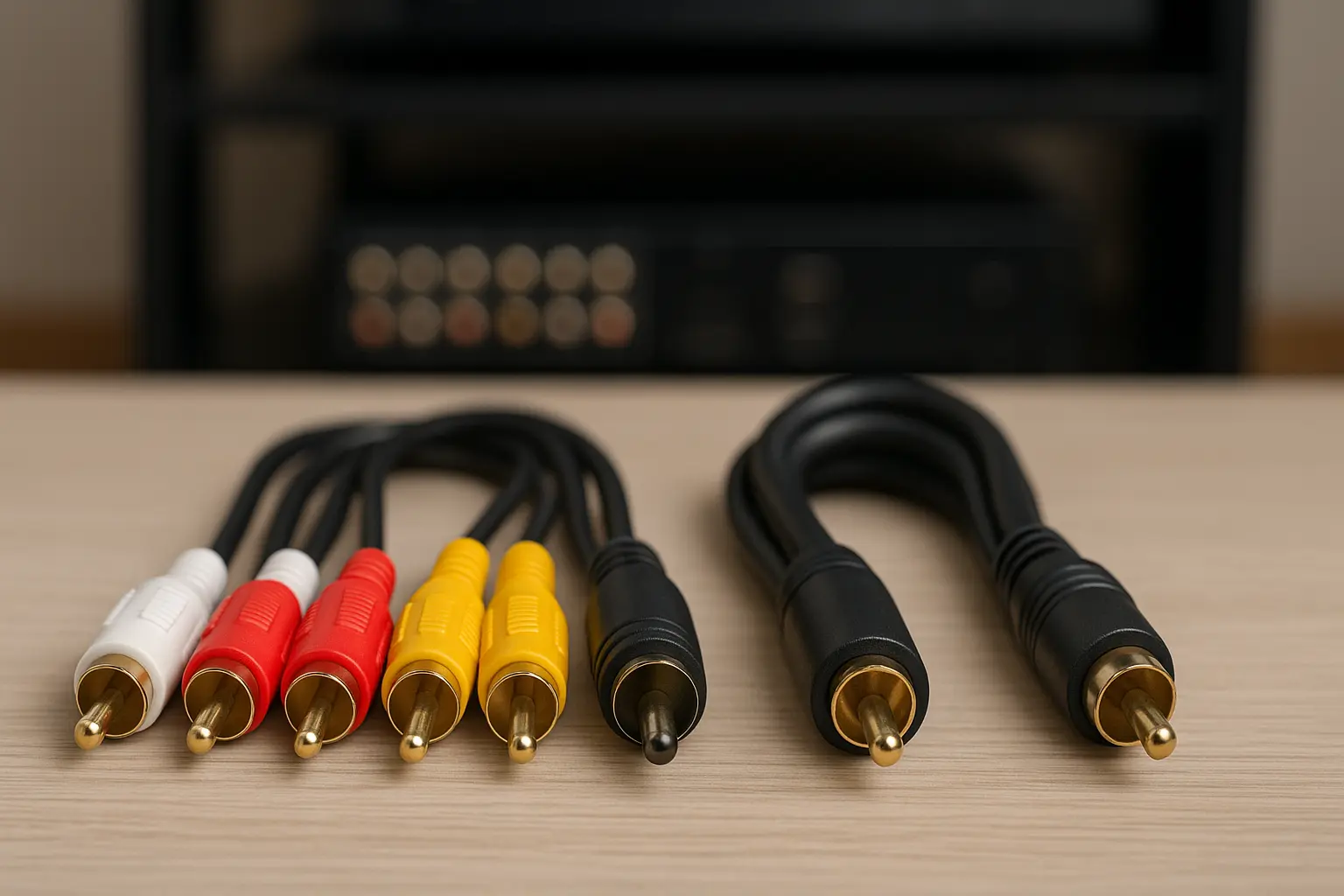
- A 3-RCA AV cable (red/right audio, white/left audio, yellow video).
From an OEM point of view, we can also include:
- Single-RCA cables used for subwoofer / LFE
- Single-RCA digital coaxial cables for S/PDIF
All of these use the same type of plug. They mainly differ in color layout, cable structure, and how they’re marketed.
The Classic Red–White–Yellow 3RCA Cable
Walk into a big US electronics store, ask for a “standard RCA cable,” and most staff will reach for this:
- Three male RCA plugs on each end
- Red – right audio
- White – left audio
- Yellow – composite video
This 3RCA set was the default way to hook up VCRs, DVD players, and older consoles to TVs for years. Even now, installers and DIY users still buy these cables to keep older hardware in service or to connect to capture cards.
Standard RCA Cable Color Code and Signal Types
Standard RCA Cable Color Code for Audio and Video
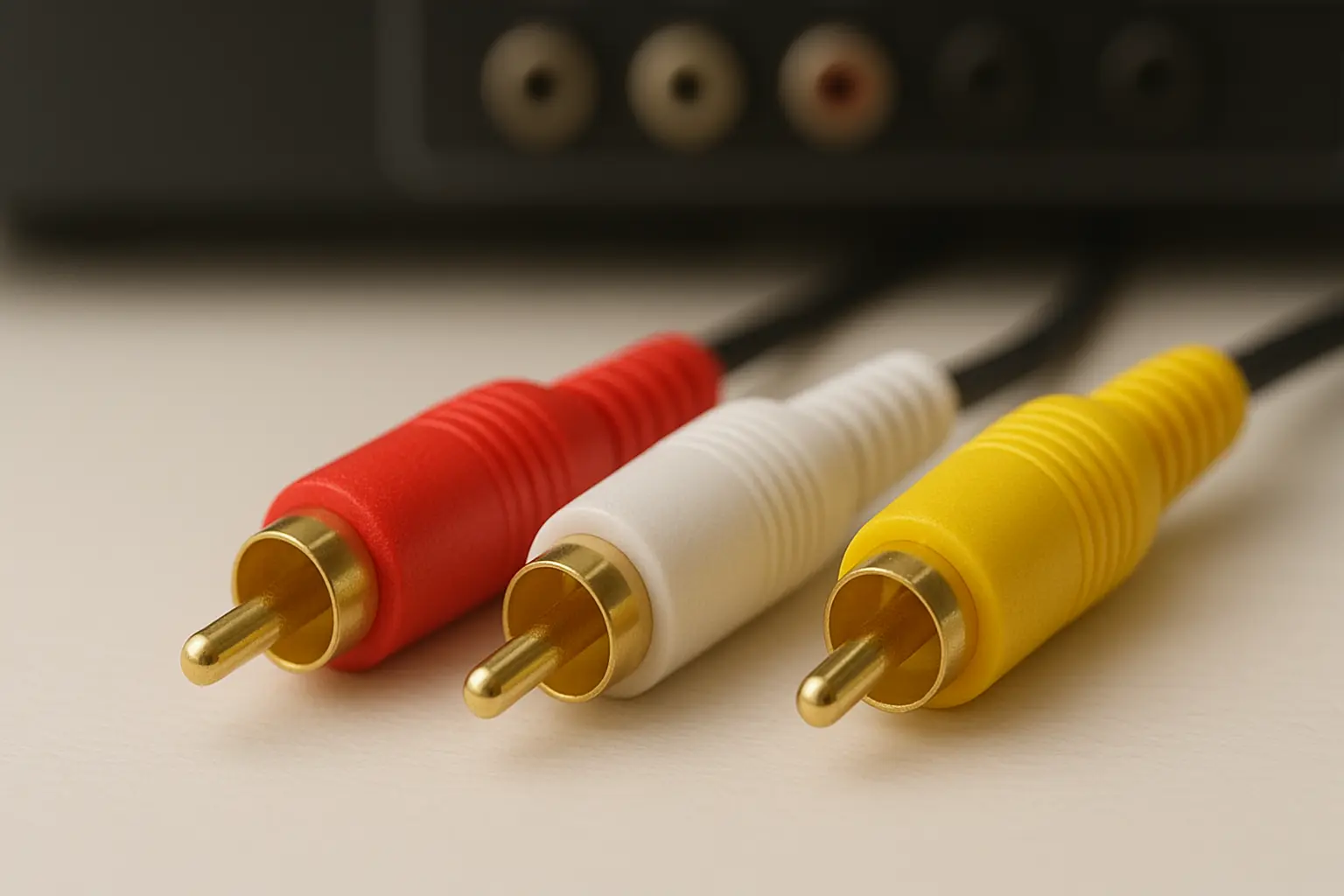
The standard rca cable color code is simple but very handy when you have a tangle of ports on the back of a TV or receiver:
- Red – right audio channel
- White or black – left audio channel
- Yellow – composite video
- Green (Y) – component luma
- Blue (Pb/Cb) – component blue difference
- Red (Pr/Cr) – component red difference
- Orange – digital coaxial audio or LFE/subwoofer
- Purple / other colors – extra channels or brand-specific functions
A few quick memory tricks help users:
- Red = Right (same first letter)
- White or black = the other audio channel
- Yellow = “the picture one”
For OEMs, getting this right cuts down on support tickets where cables are simply plugged into the wrong jacks.
Handling Non-Standard Colors in OEM Designs
Brand owners often want all-black cables or special color themes to match their product line. That’s fine as long as:
- The device rear panel has clear labels (L/R/video) and simple icons.
- Each plug has small color rings or engraved “L / R / Video” markings.
- The manual and packaging show a plain diagram so users can see what plugs into what.
This keeps the visual style flexible, but still feels “standard” during installation.
Inside a Standard RCA Cable: Construction, Materials, and Performance
Conductor Materials in Standard RCA Audio Cables
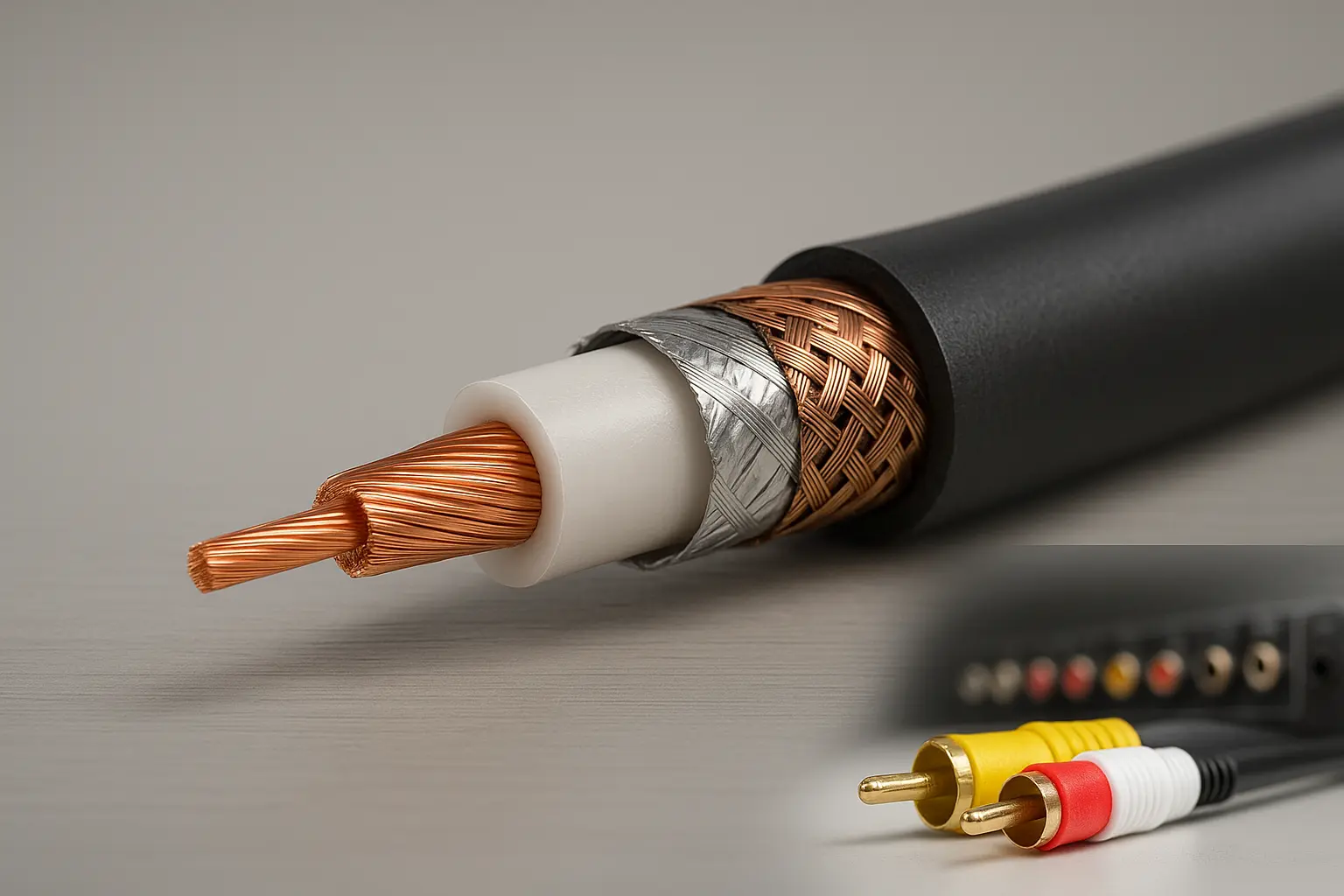
Most standard rca cables use one of these conductors:
- OFC (oxygen-free copper)
- Common in audio lines
- Low resistance and stable over time
- Tinned copper
- Copper coated in tin
- Better corrosion resistance and easier soldering
- Silver-plated copper
- Used in some higher-priced lines
- Slight electrical benefit plus a stronger marketing story
Factories like Ningbo Jingyi Electronic list OFC as a base material for many audio cables, then scale up or down the rest of the design to match a customer’s target price range.
Shielding and Noise Performance
RCA connections are unbalanced, which makes them more sensitive to interference. To keep noise low, cable makers use several shield approaches:
- Single braided shield – enough for short home use
- Foil + braid combo – better protection, good for longer runs
- Extra conductive layer – often used in instrument or camera cable to cut handling noise
If you browse car-audio threads you’ll spot a common story: someone routes a cheap RCA bundle alongside a power cable, hears whining that follows engine RPM, and then fixes it by switching to a better shielded but still “standard” RCA set.
The change isn’t magic. It’s simply better control of noise pickup.
Connectors and Plating: From Basic to Premium
Connectors vary just as much as cable stock:
- Stamped connectors
- Thin metal shells, thin plating
- Lowest cost, often used for bundled “free cables”
- CNC-machined brass connectors
- Thicker bodies, thicker gold or nickel plating
- More consistent grip and better resistance to corrosion
- Look and feel more solid in the hand
Jingyi’s own news and product pages talk about gold-plated RCA connectors that aim for a tight contact and stable resistance, rather than simply chasing fancy finishes. For OEM buyers targeting mid-range and above, this is a practical way to step up from the cheapest stamped parts without blowing up the BOM.
Types of Standard RCA Cables and Recommended Use Cases
To give a quick overview, here’s a simple comparison:
|
Cable Type |
Typical Use |
Impedance |
Shielding Level |
Typical US Retail Length |
|
2×RCA stereo audio |
CD, DAC, stereo amp |
~50–75 Ω |
Basic–medium |
3 ft / 6 ft |
|
3×RCA AV (red/white/yellow) |
DVD, VCR, retro console to TV |
~50–75 Ω |
Basic |
6 ft / 12 ft |
|
Single RCA subwoofer (LFE) |
AVR to powered subwoofer |
~50–75 Ω |
Medium–strong |
10 ft / 25 ft |
|
Single RCA digital coax (S/PDIF) |
CD transport, DAC, soundbar |
75 Ω coax |
Medium–strong |
3 ft / 6 ft |
Standard Stereo RCA Audio Cable (2 RCA to 2 RCA)
This is the classic left/right audio cable:
- Connects CD players, DACs, media boxes, and turntables with built-in preamps to integrated amps or AVRs.
- Most US retail offerings are 3 ft or 6 ft; installers may also keep 1 m and 2 m variants in stock.
Jingyi’s Premium Flat Cable 2RCA to 2RCA (JYCT106) is a good example of a stereo standard rca cable with a twist: a flat profile for easy routing behind racks and cabinets and color-coded tails for quick setup.
Standard 3 RCA AV Cable for Legacy Devices
The 3RCA AV cable is still widely used to:
- Hook up DVD and older Blu-ray players
- Connect VCRs in hotels and school AV carts
- Run retro consoles into TVs or capture devices
US installers often keep these cables in their tool bags, because older TVs and projectors still appear in real projects, especially in education and hospitality.
Standard RCA Subwoofer Cable (LFE)
A subwoofer cable is really just a single-RCA audio cable, but:
- It’s usually longer
- The shield is heavier
- The jacket is thicker and more abrasion-resistant
Brands use thicker barrels, printed “SUB/LFE” text, and different packaging, but at heart it’s still a standard rca cable tuned for long, low-frequency runs.
Standard 75-Ohm RCA Digital Coaxial Cable
Digital coax cables use 75-ohm coax with RCA plugs. True 75-ohm behavior is defined by the cable geometry; the RCA plug shape is not perfect in RF terms, but for consumer S/PDIF runs of a few meters, it works well.
From an OEM spec view, you’ll want:
- Cable stock designed for 75-ohm use (similar to RG59)
- Reasonable lengths (3–6 ft for US retail)
- Clear labels on both the device and the cable as “Digital Coax” or “S/PDIF”
Standard RCA Cable vs HDMI, Optical, and Balanced Connections
Standard RCA Cable vs HDMI and Optical in Home Theater
Home theater guides tend to draw the line this way:
- HDMI – digital audio + digital video, up to multichannel surround and 4K or higher
- Optical (Toslink) – digital audio only
- RCA – analog audio and legacy analog video
RCA doesn’t replace HDMI, but it still helps with:
- Subwoofer connections (LFE)
- Zone 2 analog outputs to a second room
- Older DVD players, VCRs, and set-top boxes
- Basic stereo systems where HDMI would be overkill
If you are designing a product for US living rooms, it’s normal to have HDMI and optical for main duties, with RCA still present to keep older hardware in use.
Standard RCA Cable vs Balanced XLR/TRS for Pro Audio OEMs
Balanced connections (XLR/TRS) are better for:
- Long cable runs
- High noise environments like stages
Unbalanced RCA still makes sense when:
- Cable runs are short (within a rack or around a TV stand)
- Cost is sensitive
- The target user expects RCA jacks
Many prosumer audio interfaces, DJ mixers, and media players ship with both XLR/TRS and RCA outputs, so one device can cover home users, semi-pro studios, and small venues.
Real-World User Experiences: Social Media and Forum Case Studies
Hi-Fi and DIY: Fixing Noise with Better “Standard” Parts
In hi-fi and DIY forums you often see stories like:
- Someone restores an older integrated amp. They replace rusty RCA sockets and pair them with a fresh standard rca cable. Once done, the background hiss that used to be audible at half volume nearly vanishes.
- Another user swaps cheap, thin RCA connectors for solid, turned-brass, gold-plated plugs. The cables stop falling out of the jacks and intermittent cut-outs disappear.
In both cases, the improvement is about contact resistance, grip, and corrosion—not secret audio magic. A decent standard rca cable and a good jack can turn an unreliable system into one that simply works.
Car Audio and Home Theater: Shielding and Routing
Car-audio posts often follow this pattern:
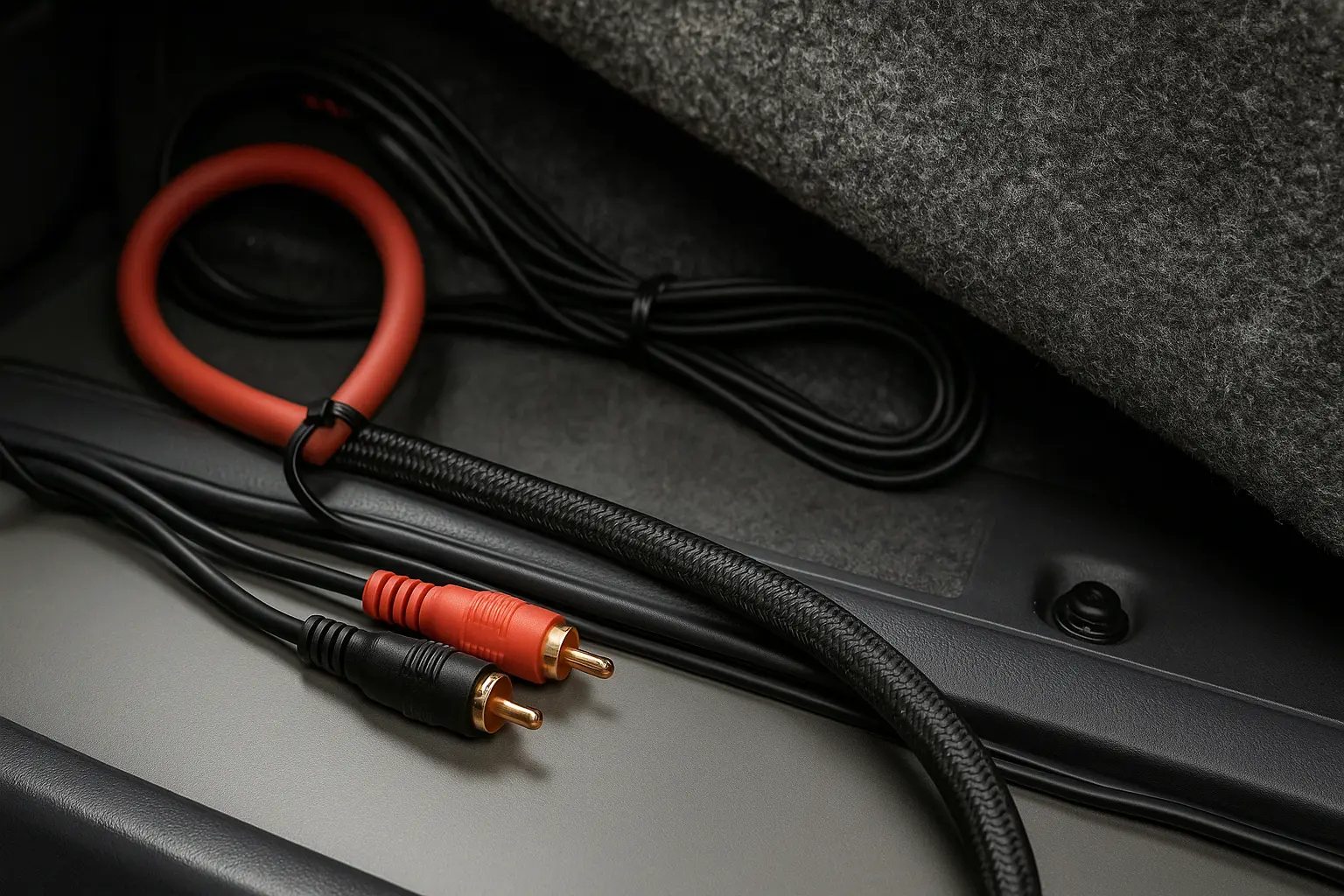
- Basic RCAs are run next to a 12 V power cable. The system develops a whine that changes with engine speed.
- The owner swaps to a shielded “twisted pair + RCA” style cable, or a better classic standard rca cable with stronger shield, and reroutes it a bit farther from power. The noise is gone.
Home theater users tell similar stories when long RCA runs are routed past power strips or cheap wall-wart power supplies. A cable with stronger shield and better connectors is still a “standard” product in marketing terms, but it solves problems that entry-level versions create.
Standard RCA Cable for US OEMs: Requirements and Geo Considerations
What US OEMs and Audio Brands Need from a Supplier
US-based audio brands, private-label sellers, and system integrators usually ask for:
- Stable quality from sample to mass production
- Clear compliance: RoHS/REACH and other docs suitable for customs and big US retailers
- OEM flexibility:
- US-friendly lengths like 3 ft / 6 ft / 12 ft
- Color options and printed logos
- Retail packaging that matches local shelves
- Honest lead times from PO to FOB Ningbo or Shanghai
So the supplier for your standard rca cable should behave like a component partner, not just a trader who finds something “similar” each time.
Why Many US OEMs Source from Ningbo, China
Ningbo, in Zhejiang province, is a major base for audio connectors and cables. It offers:
- Close access to Ningbo-Zhoushan Port, with direct routes to the US West Coast
- A dense network of factories for metal machining, plastic injection, cable extrusion, and assembly
- Long experience shipping parts and finished goods to North America and Europe
For US clients, this means:
- Lower landed cost per cable
- High choice of standard and custom RCA designs
- Shorter transport from factory to port and smoother export processes
Ningbo Jingyi Electronic (Jingyi Audio): An OEM Partner for Standard RCA Projects

Ningbo Jingyi Electronic Co., Ltd. (Jingyi Audio) is one of the established players in this area. Public company profiles say that Jingyi:
- Has been working in audio connectors and cables since the 1990s
- Runs a dedicated factory with several production lines
- Exports a large share of its output to North America, South America, and Eastern Europe
- Focuses on audio connectors, audio cables, microphone stands, and related accessories
For a US OEM building a standard rca cable line, Jingyi can:
- Supply RCA plugs and jacks, bulk cable, and finished 2RCA, 3RCA, subwoofer, and digital coax cables
- Offer OEM/ODM services: custom molding, brand printing, typical US retail lengths, and private-label boxes or bags
- Add extras like balanced-to-RCA converters and flat cable options for special installs
This keeps development and sourcing under one roof, which is easier to manage over time.
Sourcing and Quality Control Checklist for Standard RCA OEM Projects
Technical Specification Checklist
When you prepare an RFQ or internal spec for a standard rca cable, write down:
- Cable type: 2RCA audio, 3RCA AV, subwoofer, digital coax
- Conductor material and gauge: OFC or tinned copper, AWG size
- Shielding: braid only, foil + braid, or extra conductive layer
- Jacket: material, outer diameter, bend radius, and color
- Connector: stamped or machined, plating (nickel/gold), strain relief style
- Lengths: metric and US retail names (1 m / 2 m / 3 m, 3 ft / 6 ft / 12 ft)
- Color code and markings: standard colors vs all-black with printed legends
The more concrete this list is, the less room there is for misunderstanding later.
Quality Control, Testing, and Compliance
On the factory side, ask for:
- 100% continuity and polarity checks on finished cables
- Sample insulation and high-voltage tests
- Pull tests on connectors and strain relief
- Visual checks on molding, plating, and printing
On the paperwork side, request:
- RoHS/REACH statements and certificates
- Clear carton labels with SKUs, barcodes, and origin for US warehouses
- Photos of sample production runs before you approve mass production
How to Choose the Right Standard RCA Cable for Your Product Line
Matching Cable Design to Product Tier
Think in layers:
- Entry-level consumer gear
- Basic PVC jacket, nickel-plated stamped connectors
- Simple packaging and standard color coding
- Ideal for budget DVD players, basic AVRs, and small speaker systems
- Mid-range / prosumer
- OFC conductors, stronger shielding, gold-plated connectors
- More robust strain relief and better packaging
- Good for home theater enthusiasts and project studios
- Hi-Fi / studio-grade accessories
- Machined connectors, thicker jackets, sometimes PTFE insulation
- Sold as separate accessories with strong branding and margin
- Targeted at customers who expect longer service life and nicer hardware
Balancing Cost, Reliability, and Brand Perception
Saving a few cents per cable is tempting when you look at a spreadsheet. But if those savings bring more hum, loose plugs, or early failures, they can hurt your brand in reviews and increase returns.
Working with a partner like Ningbo Jingyi Electronic, you can define one or two “standard builds” for your RCA cables and then use them across multiple product families. That keeps engineering, sourcing, and quality control simpler, while still letting marketing create different bundles and packs.
Conclusion – The Future of the Standard RCA Cable in a Digital World
HDMI, USB-C, and wireless audio keep getting more attention, but RCA is still everywhere in real systems. In US homes, cars, studios, and live rigs, a standard rca cable still carries a lot of important signals.
For OEMs and brands, the message is simple:
- Treat your standard rca cable like a real product, not an afterthought.
- Focus on clear color coding, sensible construction, and honest specs.
- Work with suppliers who understand audio, export rules, and the needs of US buyers, such as Ningbo Jingyi Electronic (Jingyi Audio).
If you do that, your “standard” cable will be one of the quiet heroes of your whole lineup—always there, rarely noticed, and rarely the reason something goes wrong.
FAQ – Common Questions about Standard RCA Cable
What is a standard rca cable?
A standard rca cable is a cable with RCA plugs that carries analog audio, analog video, or digital coaxial signals. In everyday use, it usually means a stereo 2RCA cable (red and white) or a 3RCA AV cable (red, white, yellow) used with DVD players, TVs, receivers, and subwoofers.
Are all RCA cables the same, or is there a real “standard”?
RCA cables differ in copper quality, shielding, and connector design, but they share the same basic connector shape and a familiar color scheme. When people talk about a “standard rca cable,” they normally mean a consumer-grade cable with common colors, reasonable length, and basic shielding for typical home setups.
Can I use a standard RCA cable for both audio and video?
Yes. A 3RCA AV cable is designed for stereo audio (red/white) plus composite video (yellow). That said, it cannot carry HD digital video like HDMI does. RCA is best for analog audio, standard-definition video, and some digital coaxial audio links (S/PDIF).
What is the standard RCA cable color code?
Most sets follow this pattern:
- Red – right audio
- White or black – left audio
- Yellow – composite video
Component analog video adds green/blue/red, and orange is often used for digital coax or subwoofer cables. If a product uses custom colors, the device labels and manual should make the roles clear.
How long can a standard RCA cable be before signal quality suffers?
For short to medium lengths in a living room (1–5 m), a standard rca cable with basic shielding usually works fine. As runs get longer—especially for low-level signals or subwoofers—it’s wise to pick a cable with stronger shielding and a thicker core. For S/PDIF digital coax, staying within a few meters is a safe rule for most consumer systems.
What should US OEMs check before approving a standard RCA cable supplier?
Check at least:
- Technical details (copper type, AWG, shielding, connector style)
- How the factory tests finished cables
- RoHS/REACH and other compliance documents
- Export history to North America and what kind of customers they serve
Public profiles for companies like Ningbo Jingyi Electronic show factory size, core products, and main markets, which helps buyers judge if the supplier fits their needs.
Can Ningbo Jingyi Electronic (Jingyi Audio) provide custom OEM standard RCA cables for the US market?
Yes. Company listings show that Jingyi specializes in audio connectors and cables, offers OEM and ODM services, and already ships a large share of its products to North America. They can supply RCA connectors, bulk cable, and finished standard rca cables with custom lengths, jackets, colors, and branding to match US product lines.
References
[1] Seetronic – “The Ultimate Guide to RCA Connectors: Everything You Need to Know”
https://seetronic.com/blog/the-ultimate-guide-to-rca-connectors/
[2] VRGHT / GHT Cable – “Understanding RCA Cables: A Comprehensive Guide”
https://www.ghtcable.com/article/understanding-rca-cables-a-comprehensive-guide.html
[3] RS Components (AU) – “RCA Connectors Guide”
https://au.rs-online.com/web/content/discovery/ideas-and-advice/rca-connectors-guide
[4] Rasantek Audio – “RCA Connector Color Code: Understanding the Standard Colors and Their Uses”
https://rasantekaudio.com/connectors/rca-connector-color-code/
[5] Ningbo Jingyi Electronic Co., Ltd. – Company Overview & RCA/Audio Product Range
https://site_5615465d-0395-48c6-b01f-dc3d38213fc5/