

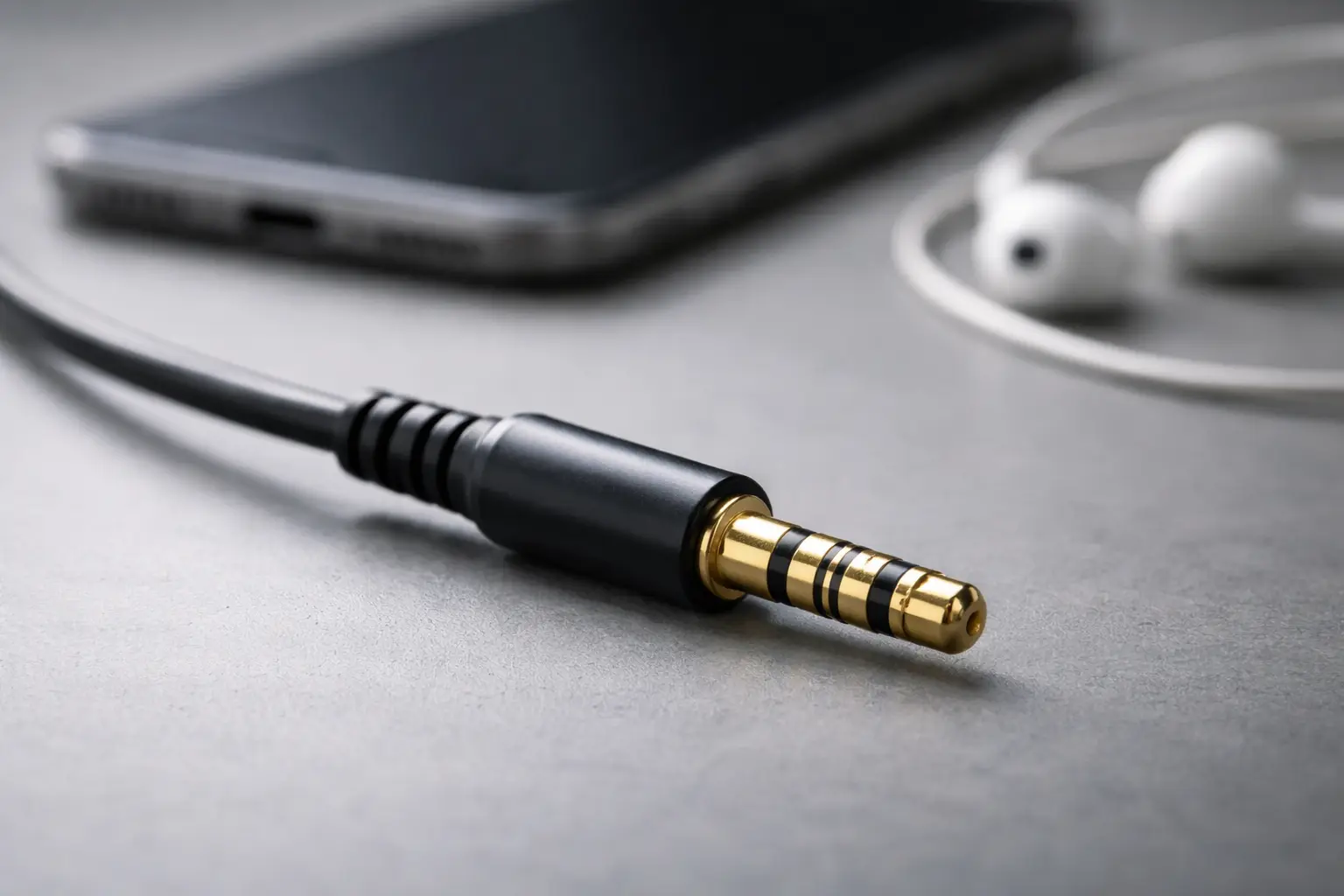
Top 3 Audio Connectors for Reliable Studio Sound in 2025
XLR, TRS (1/4" Balanced), and AES/EBU (Digital XLR) rank as the top audio connectors for 2025 studio sound.
- Studios demand connectors that minimize signal loss and deliver high fidelity.
- Manufacturers invest in advanced materials for audio cable connector reliability.
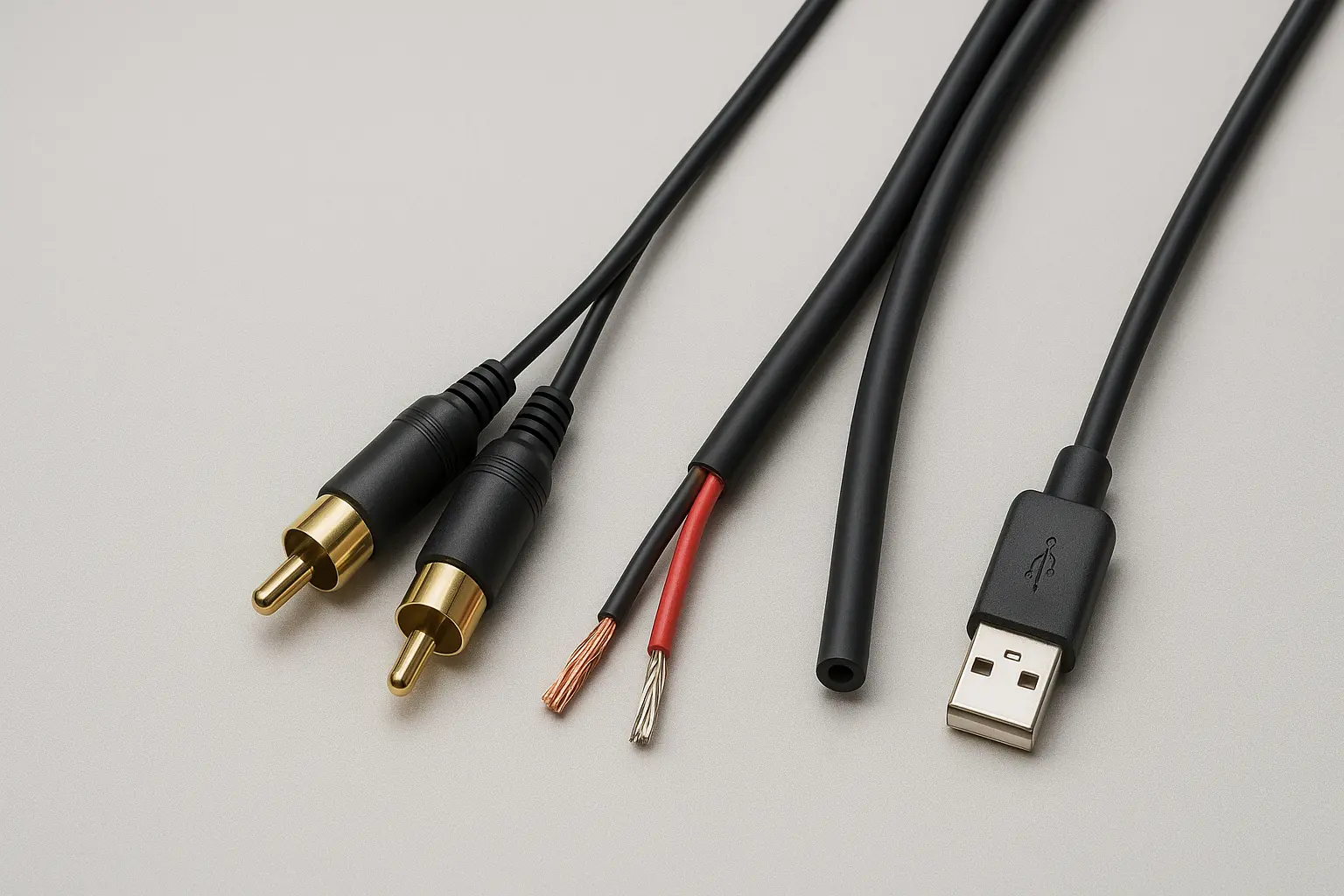
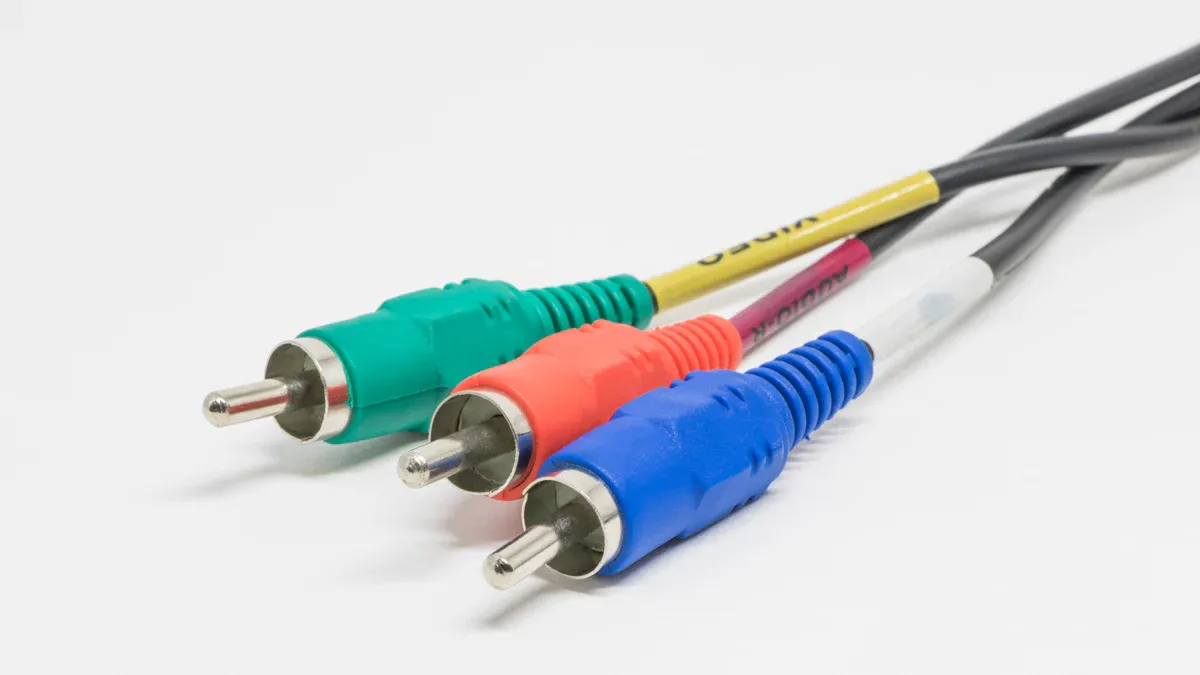
- Mini Xlr connector, RCA connectors, and speaker connectors also show strong demand for dependable performance.
Key Takeaways
- XLR, TRS, and AES/EBU connectors provide reliable, high-quality audio for professional studios by minimizing noise and signal loss.
- Choosing connectors with strong construction, proper shielding, and balanced wiring ensures long-lasting performance and clear sound.
- Match connectors to your studio gear and future needs to maintain smooth workflows and avoid costly issues.
Why Audio Connectors Reliability Matters in the Studio
Audio Connectors and Sound Quality
Reliable audio connectors play a vital role in maintaining sound quality in professional studios. Scientific studies and double-blind tests show that most cables and connectors, regardless of price or brand, perform equally well as long as they meet basic electrical standards. Experts agree that claims about expensive cables improving sound quality often stem from psychological biases rather than measurable differences. In practice, audio connectors only affect sound quality when they fail to maintain electrical integrity or proper shielding. Studios that use connectors with solid construction and proper shielding ensure that the audio signal remains clean and uncolored.
Audio Connectors Preventing Signal Loss and Interference
High-quality connectors help prevent signal loss and interference, which can degrade audio in a studio environment.
- Gold-plated contacts resist corrosion and maintain strong electrical connections over time.
- Advanced shielding, such as braided copper or aluminum foil, blocks electromagnetic and radio frequency interference.
- Balanced connectors like XLR and TRS use phase cancellation to reduce noise, resulting in clearer signals.
- Durable construction, including strain relief and flexible jackets, protects against physical damage that can cause signal degradation.
Tip: Studios that invest in connectors with these features experience fewer issues with noise and signal dropouts, preserving the integrity of their recordings.
Audio Connectors and Long-Term Durability
Long-term durability ensures that connectors withstand frequent use and harsh studio conditions. Manufacturers use materials like oxygen-free copper for conductors and flexible, rugged jackets to extend cable life. Gold or nickel plating on connectors prevents corrosion, while strain relief designs reduce wear at stress points. These qualities help maintain reliable connections and consistent performance, even after years of daily use. Studios that prioritize durable connectors reduce downtime and avoid costly repairs or replacements.
XLR Audio Connectors
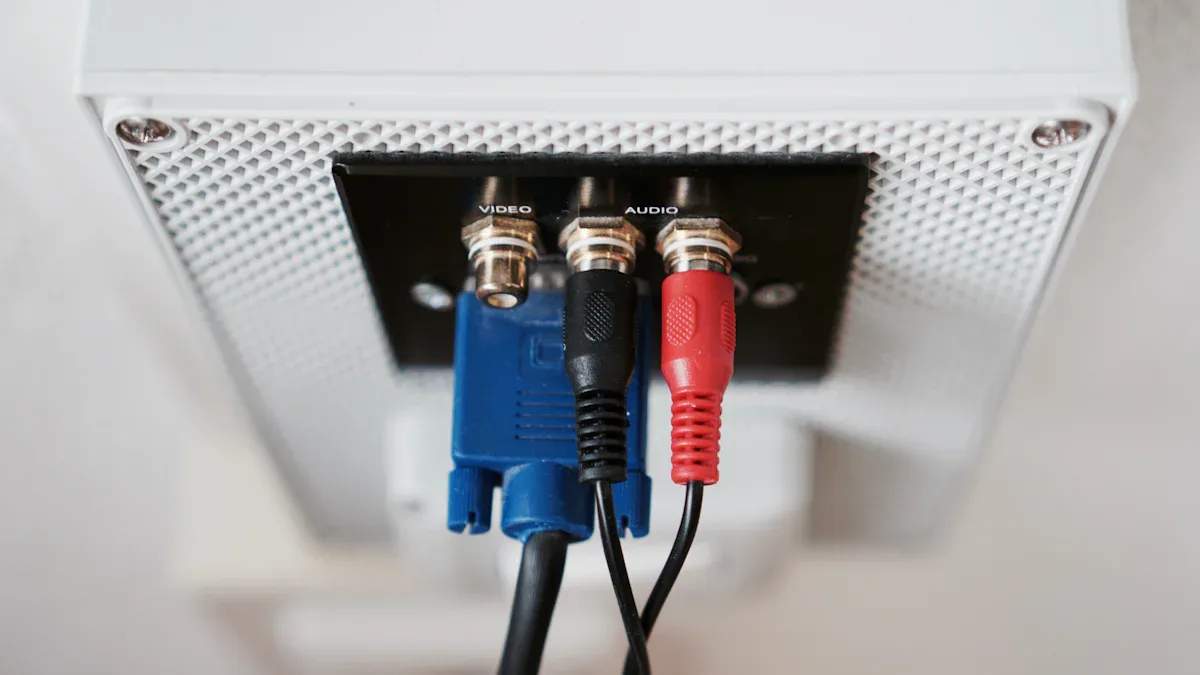
XLR Audio Connectors Overview
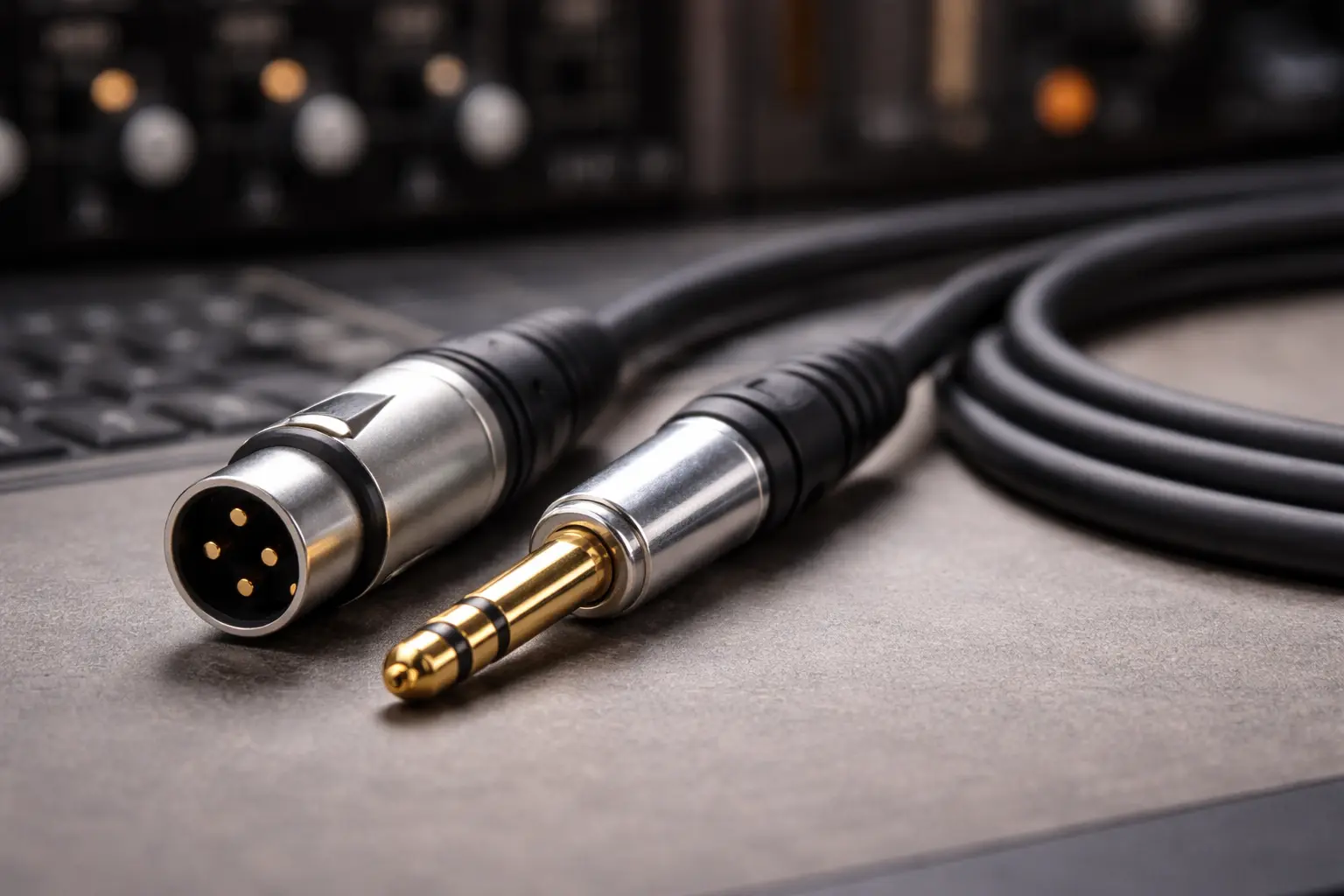
XLR connectors set the standard for professional studio environments. Their balanced three-pin design (positive, negative, ground) reduces electromagnetic interference and hum, which is essential in spaces filled with electronic equipment. Studios rely on XLR connectors for microphones, speakers, and audio interfaces because they deliver consistent, high-quality signal transmission. NINGBO JINGYI ELECTRONIC Co., LTD. manufactures XLR connectors with robust stainless steel housings and gold-plated contacts, ensuring durability and reliable performance.
| Parameter Category | Details |
|---|---|
| Electrical Parameters | Capacitance ≤4pF, Contact resistance ≤3 mΩ, Dielectric strength 1.5 kV DC, Insulation resistance >10 GΩ, Rated current 16 A, Rated voltage <50 V |
| Mechanical Parameters | Cable diameter 3.5-8.5 mm, Insertion/withdrawal force ≤20 N, Service life >1000 mating cycles, Max cable size 2.5 mm² (14 AWG), Locking device: latch lock |
| Material & Environmental | Stainless steel housing, gold-plated copper contacts, flame-retardant, IP40, -30°C to +80°C |
XLR Audio Connectors Reliability Features
XLR connectors excel in reliability due to their robust locking mechanism, which prevents accidental disconnections. Proper shield termination and cable design, such as star-quad construction, minimize radio frequency interference. Oxygen-free copper conductors and low capacitance cables further reduce signal loss over long distances. NINGBO JINGYI ELECTRONIC Co., LTD. incorporates these features, ensuring their Audio Connectors meet the demands of modern studios.
Note: Proper care, storage, and handling extend the lifespan and maintain the quality of XLR cables.
XLR Audio Connectors Studio Use Cases
Studios use XLR connectors for critical applications, including microphones, mixing consoles, and latency loopback tests. Engineers connect XLR outputs to XLR inputs to measure latency performance, supporting low-latency workflows in digital audio workstations. These connectors handle both analog and digital signals, making them versatile for recording, mixing, and live sound.
XLR Audio Connectors Pros & Cons
-
Pros:
- Durable metal housings and locking mechanisms withstand frequent use.
- Balanced design and shielding block noise and interference.
- Compatible with most professional audio equipment.
- Support for phantom power enables use with condenser microphones.
-
Cons:
- Each cable carries only one channel, requiring multiple cables for multi-channel setups.
- Bulkier and heavier than some alternatives.
- Higher cost compared to unbalanced connectors.
TRS Audio Connectors (1/4" Balanced)
TRS Audio Connectors Overview
TRS (Tip-Ring-Sleeve) connectors, commonly known as 1/4" balanced plugs, serve as a staple in professional audio studios. Their robust construction and balanced signal path provide excellent interference rejection, making them ideal for transmitting audio over long distances. Studios rely on these connectors for patch bays, outboard gear, and balanced line-level connections. The design supports high signal integrity, even in environments with significant electromagnetic activity.
| Specification Aspect | Details/Values |
|---|---|
| Conductor | 20/0.12 OFC strands, 0.226 mm² (#24 AWG) |
| Insulation | Cross-Linked Polyethylene (XLCPE), 1.6 mm dia |
| Shielding | Served shield approx. 64/0.18A strands |
| Jacket Material | Flexible PVC, 6.0 mm diameter |
| DC Resistance (20°C) | Inner: 0.083 Ω/m; Shield: 0.012 Ω/m |
| Inductance | 0.4 µH/m |
| Flex Life | 11,000 cycles |
| Operating Temp Range | -20°C to +70°C (-4°F to +158°F) |
These specifications highlight the cable’s durability and suitability for demanding studio applications.
TRS Audio Connectors Reliability Features
Manufacturers design TRS connectors for longevity and consistent performance. Silver-plated contacts withstand more than 15,000 switching cycles, reducing the risk of sticking or failure. The connectors ground automatically through their mounting hardware, supporting stable and noise-free operation. Balanced wiring, with the positive signal on the tip and negative on the ring, matches professional processors and minimizes ground loops. Studios often test cables in the signal chain using loopback methods to verify signal quality and detect faults. Proper shielding and grounding practices further enhance reliability by preventing noise and hum.
Tip: Balanced TRS cables excel in longer cable runs, maintaining clarity and reducing distortion compared to unbalanced alternatives.
TRS Audio Connectors Studio Use Cases
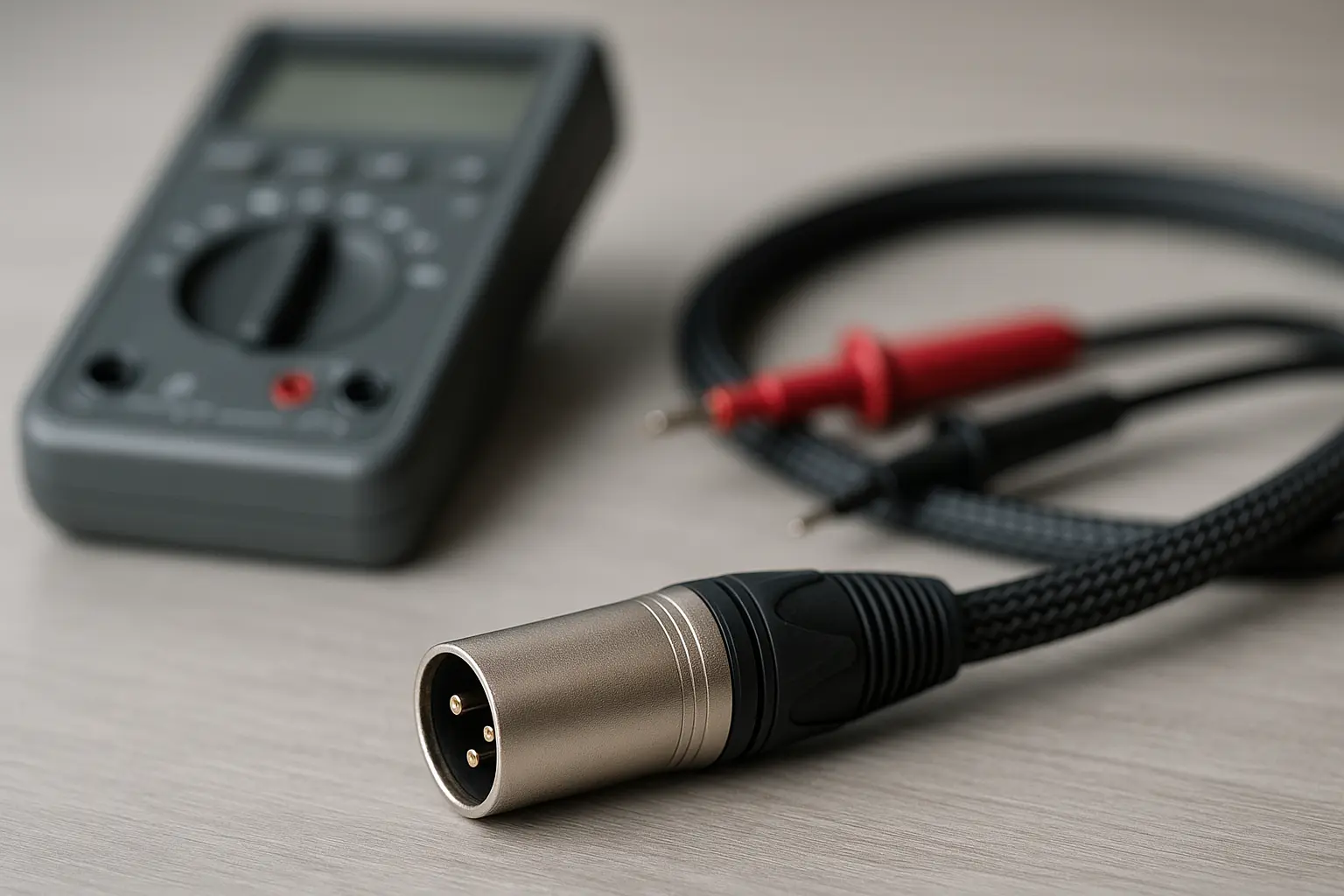
Studios use TRS connectors for a wide range of applications. These include connecting audio interfaces, patch bays, and outboard processors. The Studiospares Ultimate Cable Tester demonstrates a practical approach to ensuring cable integrity. By plugging TRS cables into the tester and observing LED indicators, engineers can quickly identify faults or intermittent issues. This hands-on testing method helps maintain reliable connections and minimizes downtime during recording sessions.
TRS Audio Connectors Pros & Cons
-
Pros:
- Balanced design reduces noise and interference.
- Durable construction supports frequent use.
- Versatile for both mono and stereo applications.
- Easy to test and troubleshoot in studio environments.
-
Cons:
- Larger size may limit use in compact setups.
- Improper wiring can introduce ground loops.
- Not suitable for microphones requiring phantom power.
AES/EBU Audio Connectors (Digital XLR)
AES/EBU Audio Connectors Overview
- AES/EBU represents a professional digital audio interface standard.
- It transmits two channels of digital audio over a single cable, supporting stereo signals.
- The system typically uses XLR connectors with balanced 110-ohm cables, though coaxial or optical options exist with adapters.
- AES/EBU follows the AES3 standard, ensuring high-quality, low-jitter digital audio transfer.
- Studios, broadcast facilities, and high-end audio equipment rely on this robust format.
- AES/EBU outperforms consumer digital standards like S/PDIF, making it ideal for longer cable runs and demanding environments.
AES/EBU Audio Connectors Reliability Features
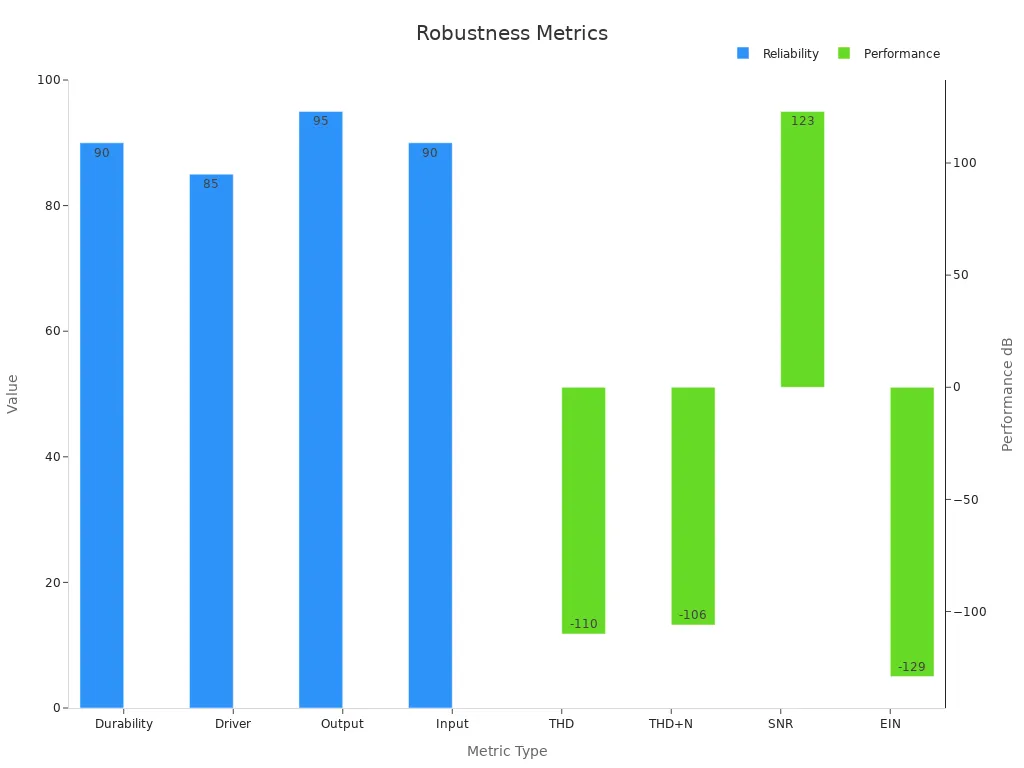
| Feature / Metric | Value / Description |
|---|---|
| User Satisfaction on Durability | 90% of users praised the rugged build and quality materials ensuring long-term use |
| Total Harmonic Distortion (THD) | Less than -110 dB for XLR Line/Mic Inputs, indicating very low distortion |
| Total Harmonic Distortion + Noise (THD+N) | Less than -106 dB for XLR Mic/Line Inputs, showing minimal noise and distortion |
| Signal-to-Noise Ratio (SNR) | Up to 123 dBA for XLR Analog Outputs, ensuring clean audio with minimal background noise |
| Equivalent Input Noise (EIN) | -129 dBu for Combo XLR-1/4" Mic/Line Inputs, allowing quiet sound capture without masking noise |
| Frequency Response | Up to 90 kHz at 192 kHz sample rate, supporting wide audio frequency range |
| Sample Rate Support | Up to 200 kHz with jitter suppression greater than 50 dB, enabling high-resolution audio |
| Latency | As low as 0.57 ms at 192 kHz, critical for real-time audio processing |
| Sync Sources | Multiple options including ADAT, AES3, Internal, and S/PDIF for stable synchronization |
| Clocking | Lock range 27 to 200 kHz with jitter suppression > 50 dB, ensuring timing accuracy |
| Driver Stability | 85% user satisfaction, indicating reliable software performance |
| Output Quality | 95% user satisfaction, confirming clear and accurate sound reproduction |
| Input Quality | 90% user satisfaction, reflecting clean and precise audio capture |
AES/EBU Audio Connectors Studio Use Cases
AES/EBU cables serve as the professional standard in studios. Their balanced 110-ohm impedance and noise reduction capabilities ensure reliable digital audio transmission. Studios use these connectors to link digital mixing consoles, amplifiers, and monitors. Many audio interfaces provide AES/EBU digital I/O, enabling flexible routing and integration with other formats like ADAT and S/PDIF. Real-world testing confirms that AES/EBU supports long cable runs and maintains signal integrity, especially when the main AD converter acts as the master clock. Proper setup with dedicated AES outputs and cables is essential for optimal performance.
Note: AES/EBU connections remain the preferred choice for maintaining pristine audio quality and reducing interference in professional environments.
AES/EBU Audio Connectors Pros & Cons
| Aspect | Evidence / Quantitative Data | Implication for Studio Use |
|---|---|---|
| Signal Loss | Signal loss with a perfect AES/EBU connection is approximately 0.086 dB; adding 100 connectors with 0.1 ohm resistance increases loss by only 0.00009 dB. | Negligible signal degradation even with multiple connectors in series, ensuring audio integrity in complex setups. |
| Connector Resistance | Typical connector resistance is less than 0.1 ohm; contact resistance is in the single-digit milliohm range. | Very low electrical resistance contributes to minimal signal loss and high fidelity. |
| Contact Materials | Gold plating reduces oxidation and corrosion; silver offers lower resistance but oxidizes more; nickel is a compromise. | Gold-plated contacts preferred for stability and reliability, especially in microphone-level signals. |
| Contact Pressure & Design | XLR connectors have lower contact pressure but larger contact surface area, providing stable and reliable connections. | Ensures long-term stable connections suitable for fixed studio environments with infrequent mating cycles. |
| Mechanical Wear & Failure | Wear and oxidation can increase contact resistance; failure usually due to environmental factors like moisture or physical damage. | Minimal issues in controlled studio environments; more relevant in live or field use with frequent connect/disconnect. |
| Longevity | Some XLR connectors have functioned reliably for decades; more failures occur in cables than connectors themselves. | Demonstrates high durability and reliability for studio applications. |
Audio Connectors Comparison Table: XLR vs TRS vs AES/EBU
Audio Connectors Durability
Durability plays a critical role in professional studios. XLR connectors feature robust metal housings and secure latch locks. These qualities help them withstand thousands of connection cycles. TRS connectors also offer strong build quality, with flexible jackets and silver-plated contacts that resist wear. AES/EBU connectors, which use the XLR format, provide similar mechanical strength. Studios often choose these connectors for their ability to handle frequent use without failure.
| Connector Type | Housing Material | Locking Mechanism | Typical Lifespan (Cycles) |
|---|---|---|---|
| XLR | Metal | Latch Lock | 1,000+ |
| TRS | Metal/Plastic | Friction Fit | 15,000+ |
| AES/EBU | Metal | Latch Lock | 1,000+ |
Audio Connectors Sound Quality
Sound quality depends on the connector’s ability to maintain signal integrity. XLR and TRS connectors both use balanced wiring, which reduces noise and interference. AES/EBU connectors transmit digital signals, eliminating analog noise and ensuring pristine audio. Studios report minimal signal loss with all three types when using high-quality cables and connectors.
Note: Balanced connectors like XLR and TRS help prevent hum and buzz in complex studio setups.
Audio Connectors Practical Studio Use
Each connector type serves specific studio needs. XLR connectors handle microphones and professional audio equipment. TRS connectors work well for patch bays, headphones, and balanced line-level gear. AES/EBU connectors support digital audio routing between interfaces and digital consoles. Studios select the right connector based on equipment compatibility and workflow requirements.
- XLR: Best for microphones and long cable runs.
- TRS: Ideal for patching and balanced line connections.
- AES/EBU: Preferred for digital audio transfer.
How to Choose the Right Audio Connectors for Your Studio
Assessing Studio Equipment for Audio Connectors
Studio owners should begin by evaluating the types of equipment in their setup. Microphones, audio interfaces, and outboard gear often require specific connector types such as XLR or TRS. Matching the connector to the device ensures reliable signal transfer and reduces troubleshooting time. Many studios benefit from creating an inventory list of all gear and their input/output requirements. This approach helps identify which cables and connectors are essential for daily operations.
Tip: Always check manufacturer specifications for each device to confirm connector compatibility before making a purchase.
Audio Connectors Compatibility and Future-Proofing
Selecting connectors that support both current and future needs protects the studio investment. Professionals recommend verifying compatibility with Digital Audio Workstations (DAWs) to ensure seamless workflow. Studios should also confirm support for various input types, including XLR for microphones and line-level inputs for instruments. Expansion options such as ADAT, S/PDIF, optical, and USB-C allow for future integration of new gear. Driver stability and regular updates help maintain consistent connections and prevent audio dropouts. Modular interface designs enable studios to add more inputs or outputs as their needs grow.
- Ensure driver and software updates remain available for all devices.
- Choose connectors that support low latency monitoring and built-in DSP for flexible recording.
- Consider modular systems for scalability.
Audio Connectors Budget vs Performance
Budget plays a significant role in connector selection. Listening tests show that cables act as ingredients in the overall sound, with synergy between components being more important than price alone. Break-in time can affect initial impressions, but performance stabilizes after several hours of use. Investing in quality cables prevents system limitations, but overspending on high-end options rarely yields proportional benefits. Many professionals recommend buying used components to maximize value. Research and subjective listening tests help identify cables that complement the studio’s unique sound. Well-known brands often gain trust through word of mouth and online forums, guiding buyers toward reliable choices.
Industry experts recognize USB, Thunderbolt, and Ethernet-based AoIP as the most reliable studio connectors for 2025. Studios benefit from their speed, flexibility, and scalability. Each connector supports different workflows. Studio owners should assess their needs and invest in high-quality solutions to ensure professional, dependable performance.
By: LynnTel: +86 574 86100572#8816
Whatsapp: +86 15168592711
E-mail: sales@jingyiaudio.com
Youtube: JINGYI
Facebook: JINGYI