

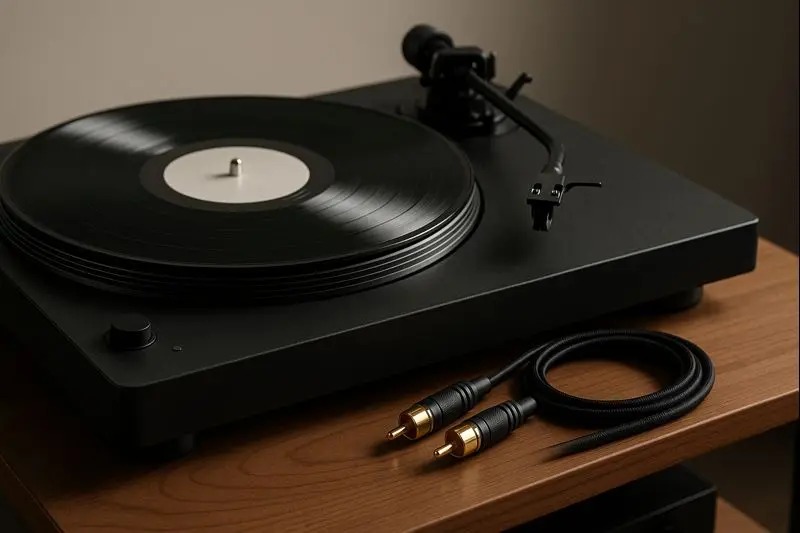
What Are Speaker Cables? Complete 2024 Guide + Selection Tool
Key Takeaways
- Speaker cablesare specialized electrical wires that carry high-current audio signals from amplifiers to loudspeakers, typically made with two copper conductors and insulation.
- Resistance matters most—cable resistance should stay under 5% of your speaker's impedance for the best performance.
- Wire gauge (AWG) selection comes down to three things: cable length, amplifier power, and speaker impedance—longer distances and higher power need thicker cables.
- Material quality varies a lot: standard copper works great for most setups, while oxygen-free copper (OFC) and silver offer small improvements at much higher prices.
- Good installation beats fancy materials: correct polarity, matched cable lengths, and solid connections are what really matter for your system.
- Expensive cables usually aren't worth it: focus on the right gauge and solid construction rather than flashy marketing claims about exotic materials.
Speaker Cable Basics: How They Actually Work
What are speaker cables? These are specialized electrical wires designed to carry alternating current (AC) audio signals from amplifiers to loudspeakers. Unlike those tiny signal cables that handle small voltages, speaker cables must deal with serious power—a 100-watt amplifier pushing an 8-ohm speaker needs about 3.5 amperes of current.
Here's what happens: when your amplifier sends an audio signal to a speaker, it travels as alternating current through the cable's conductors to the speaker's voice coil. This current creates a magnetic field that works with the speaker's permanent magnet, making the cone move and create sound waves.
The main electrical properties that affect speaker cable performance are:
- Resistance: how much the cable fights against current flow, measured in ohms.
- Capacitance: the cable's ability to store electrical charge between conductors.
- Inductance: resistance to changes in current flow.
Of these three, resistance is what really counts at audio frequencies. Capacitance and inductance effects are usually tiny compared to what the speaker itself does electrically.
Types of Speaker Cables (With Comparison Chart)
Conductor Materials
|
Material |
Relative Resistivity |
Cost |
Best Use Case |
|
Standard Copper |
Baseline |
Low |
Most situations |
|
Oxygen-Free Copper (OFC) |
–1% |
Medium |
Mid-range systems |
|
Silver-Plated Copper |
–5% |
High |
High-end setups |
|
Pure Silver |
–7% |
Very High |
Audiophile systems |
|
Copper-Clad Aluminum (CCA) |
+15% |
Lowest |
Budget builds |
Source: "All you need to know about Speaker Cable" (ElectroMarket) and "Speaker Cables – What You Need To Know" (Cambridge Audio)
Cable Construction Types
- Single-Wire Configuration: The traditional approach using one cable per speaker with positive and negative conductors. Works great for most setups and gives you excellent value.
- Bi-Wire Configuration: Uses two separate cables from amplifier to speaker, connecting to different high- and low-frequency binding posts. Claims include less magnetic interaction between conductors, but electrical improvements are minimal.
- Bi-Amp Configuration: Uses separate amplifiers for high and low frequencies with electronic crossovers. This actually gives you real performance benefits through better damping factor and less distortion.
How to Choose the Right Speaker Cable (Interactive Guide)
Wire Gauge Selection Chart
The American Wire Gauge (AWG) system uses backwards numbering—smaller numbers mean thicker cables. Use this chart to pick the right gauge:
|
Speaker Impedance |
Cable Length |
Minimum AWG |
Recommended AWG |
|
4 Ω |
Up to 25 ft |
16 AWG |
14 AWG |
|
8 Ω |
Up to 50 ft |
16 AWG |
14 AWG |
|
4 Ω |
25–40 ft |
14 AWG |
12 AWG |
|
8 Ω |
50–80 ft |
14 AWG |
12 AWG |
|
Any impedance |
Over 80 ft |
12 AWG |
10 AWG |
Source: "Speaker Wire Gauge Guide" (ElectroMarket)
Three Simple Steps to Pick Your Cables
- Figure Out What You Need
- Measure the distance from amplifier to each speaker
- Check your speaker impedance (usually 4 Ω, 6 Ω, or 8 Ω)
-
Know your amplifier's power output
-
Follow the 5% Rule
Cable resistance shouldn't go over 5% of speaker impedance. For 8 Ω speakers, max cable resistance is 0.4 Ω total for the round trip. -
Plan for the Future
Pick one gauge size bigger than the minimum to handle system upgrades and keep that damping factor solid.
-
Follow the 5% Rule
Speaker Cable Installation Best Practices
Connector Types and When to Use Them
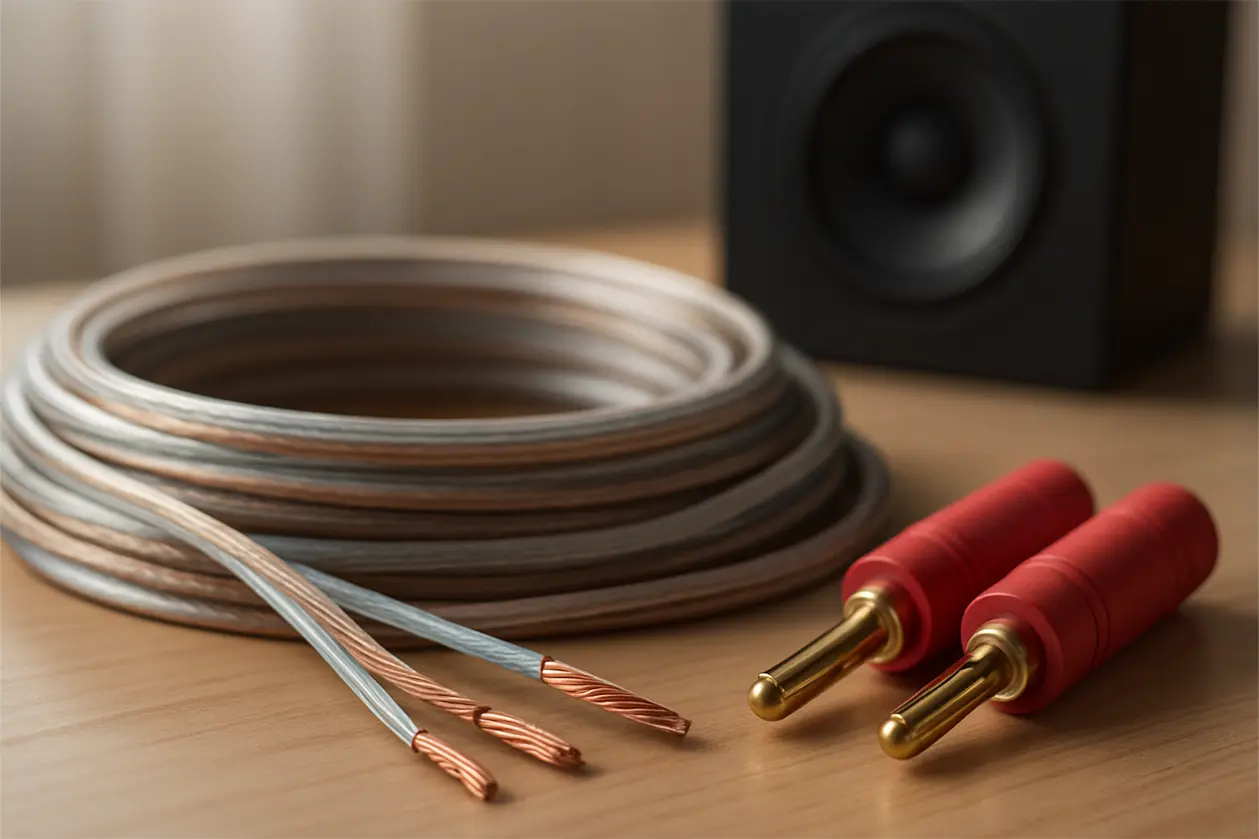
- Banana Plugs: Spring-loaded connectors that are convenient and reliable, often gold-plated to stop corrosion.
- Spade Connectors: U-shaped terminals that give you maximum contact area and lock onto binding posts securely.
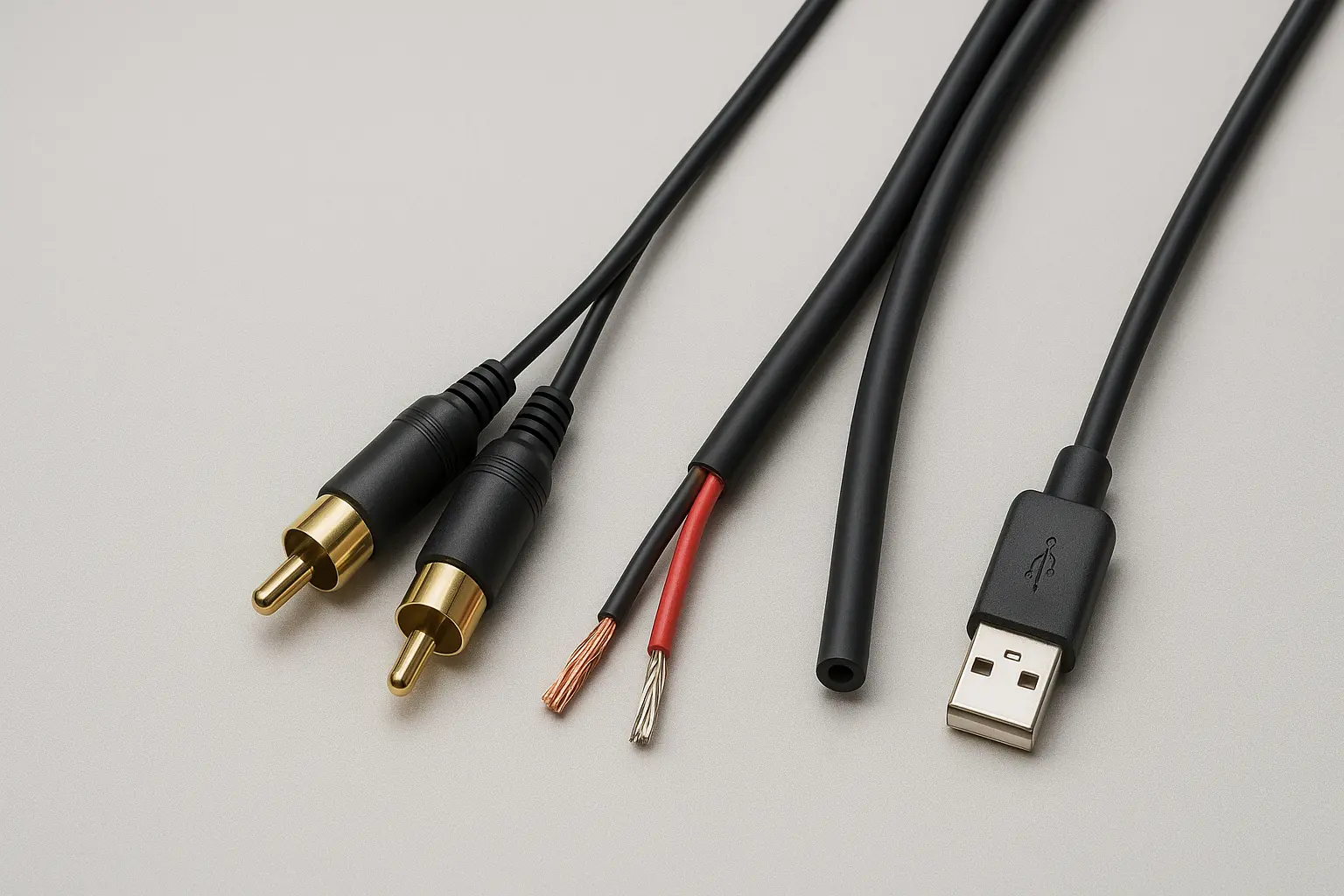
- Bare Wire: The most direct connection with lowest resistance. You'll need to prep it carefully to prevent oxidation and loose strands.
- Professional Connectors:
- Speakon: Locking connectors for high-power PA systems.
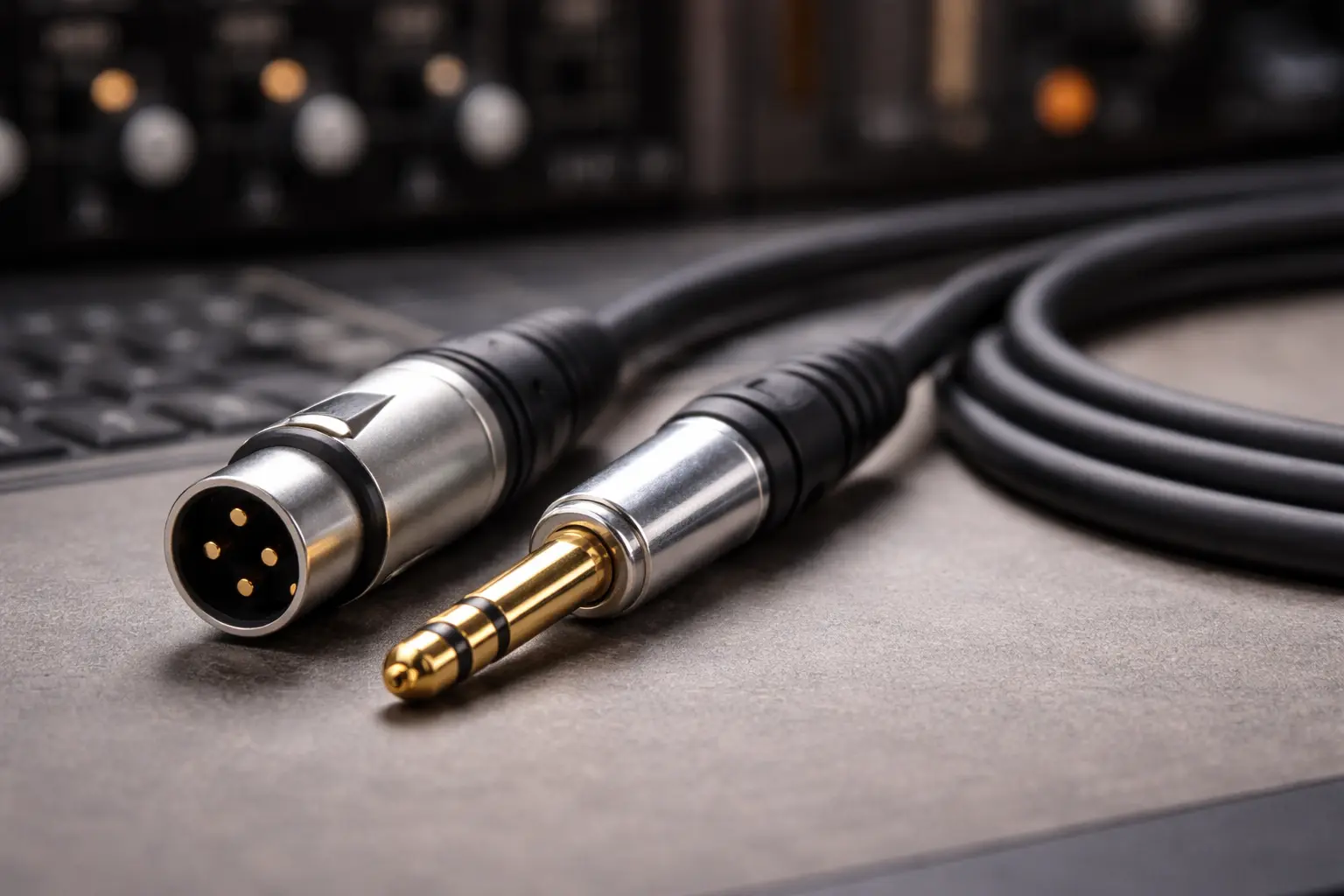
- XLR: Balanced connections for pro audio setups.
Installation Tips That Actually Matter
- Smart Routing: Keep speaker cables at least 12 inches from AC power lines to avoid electromagnetic interference.
- Match Those Lengths: Use identical cable lengths for left and right speakers to keep impedance and timing consistent. This maintains proper stereo imaging.
- Get Polarity Right: Keep consistent polarity throughout your system by connecting positive terminals (red) to positive and negative (black) to negative. Get this wrong and you'll have phase cancellation and weak bass.
Speaker Cable Myths vs Facts (Evidence-Based)
Myth 1: "More expensive always sounds better"
Reality: Once you have the right gauge and decent construction, spending more rarely makes an audible difference. Double-blind tests consistently show no sonic differences.
Myth 2: "Silver cables sound way better"
Reality: Silver's roughly 5% lower resistivity lets you use a slightly thinner gauge for the same performance, but you typically can't hear the difference.
Myth 3: "Directional cables work better"
Reality: Speaker cables carry alternating current that flips direction thousands of times per second. Any "directionality" claims are pure marketing with zero science behind them.
Myth 4: "Cable break-in changes the sound"
Reality: Well-made cables have stable electrical properties from day one. Any perceived changes come from you getting used to the sound or your system settling in.
Quick Decision Tool + What We Recommend
Pick Based on Your Budget
- Budget ($1–3 per ft): 14 AWG oxygen-free copper with PVC insulation—handles runs up to 50 ft with 8 Ω speakers.
- Mid-Range ($3–8 per ft): 12 AWG multi-strand copper, low-capacitance materials, decent banana plugs included.
- High-End ($8+ per ft): Large gauge silver-plated copper, air-dielectric construction, premium rhodium-plated connectors.
What Works Best for Different Setups
- Home Theater: Focus on gauge over fancy materials. Use in-wall rated cables for permanent installs.
- Audiophile Two-Channel: Look for bi-wire capable designs with quality connectors for flexibility.
- Professional Use: Go for durability and standard connectors like Speakon for reliability.
Frequently Asked Questions
-
What are speaker cables and how do they differ from other audio cables?
Speaker cables handle high-current, high-voltage audio signals between amplifiers and speakers, unlike those low-level interconnect cables. -
Do expensive speaker cables really sound better?
Once you have proper gauge and decent construction, expensive cables rarely sound different. Focus on specs, not price tags. -
What wire gauge should I use for my speakers?
Gauge depends on cable length, speaker impedance, and power. For most home setups, 14 AWG works for runs up to 50 ft with 8 Ω speakers. -
Is oxygen-free copper worth the extra money?
OFC gives you a tiny conductivity boost (about 1%) but no real audible benefit in typical setups. Regular high-purity copper works just as well. -
Should I bi-wire my speakers?
Bi-wiring shows no measurable electrical advantage over single-wire connections of equal quality. Better to focus on getting the right gauge. -
How long can speaker cables be before they hurt sound quality?
With the right gauge selection, runs over 100 ft can still maintain less than 5% resistance loss. -
Do I need shielded speaker cables?
Shielding isn't needed for high-level signals and might actually increase capacitance. Regular unshielded cables work fine for most home setups. -
Can I use lamp cord for speaker wire?
Lamp cord works for short, low-power runs but doesn't have the right gauge and construction. Better to use actual speaker cable. -
What's the difference between stranded and solid-core wire?
Stranded wire bends easier; solid-core has slightly lower resistance. Stranded works better for audio installations. -
How do I stop speaker cable oxidation?
Use cables with good insulation, make sure connectors have proper plating (gold or rhodium), and don't leave bare copper exposed to air and moisture.
References
- Speaker wire - Wikipedia
- All you need to know about Speaker Cable | ElectroMarket
- Speaker Cables – What You Need To Know | Cambridge Audio
- Speaker Cables | Audio Advisor
- Audio Cable Types: A Complete Guide | Cable Matters
- Hifi speaker cables for optimal sound | in-akustik
- Learn About Speaker Wire | Crutchfield
- Speaker Cable Criteria | Focal
- Speaker Wire Gauge Guide | ElectroMarket
- How Speaker Cables Work | ElectroMarket