

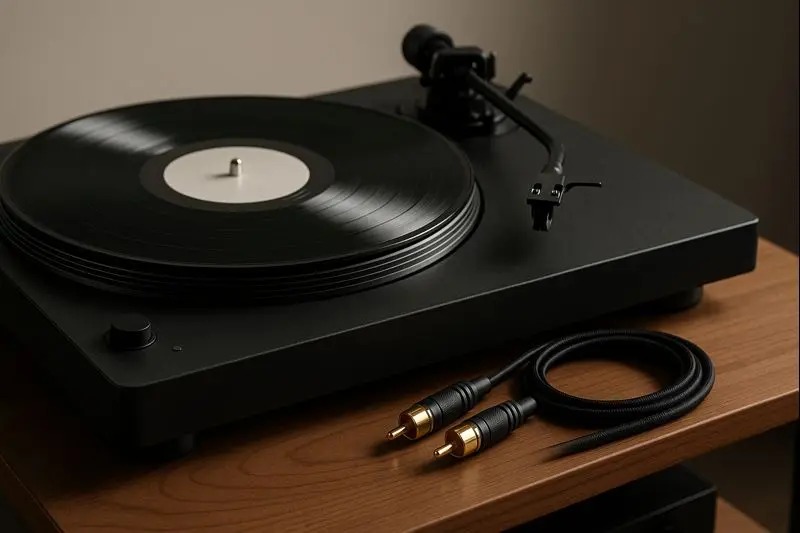
what is a good speaker wire
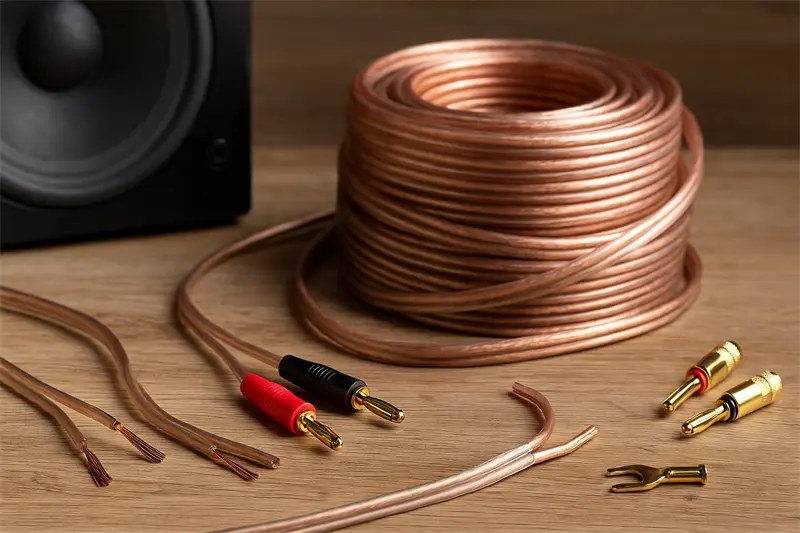
Key Takeaways
• Excellent speaker wire balances conductivity, appropriate gauge, and quality insulation to minimize signal loss.
• Conductor choice: Pure copper or Oxygen-Free Copper (OFC) delivers optimal performance; avoid CCA unless budget-constrained and gauge is upsized.
• Gauge vs. length: Follow AWG guidelines—18–16 AWG for short runs, 16–14 AWG for medium runs, 14–12 AWG for long runs or low-impedance speakers.
• Electrical specs: Prioritize low DC resistance; capacitance and inductance are secondary at audio frequencies.
• Insulation & terminations: Choose jackets rated for your installation (CL2/CL3 for in-wall); use banana plugs or properly soldered/built spade connectors for reliable contact.
• Budget tiers: From entry-level PVC-insulated copper wire to premium silver-plated, braided-shield cables—match features to your use case.
1. Introduction
When crafting a high-fidelity audio system, every component—from source to speaker—plays a pivotal role. Yet, speaker wire is often relegated to “just a cable” status. In reality, its characteristics directly affect signal integrity, frequency response, and dynamic range. This guide demystifies “what is a good speaker wire,” empowering you to select wire that optimizes performance without overspending.
2. The Role of Speaker Wire in Your Audio Chain
Your amplifier generates an electrical signal that traverses the speaker cable before reaching the driver. Along the way, resistance (R), capacitance (C), and inductance (L) influence how faithfully the signal arrives. While myths abound—such as expensive exotic alloys magically transforming sound—the measurable impact of wire is confined to these electrical parameters. A well-chosen cable minimizes R to preserve damping factor, keeps C low to prevent HF roll-off, and maintains L under control to avoid phase shifts near 20 kHz.
3. Conductor Materials: Copper, OFC, and Beyond
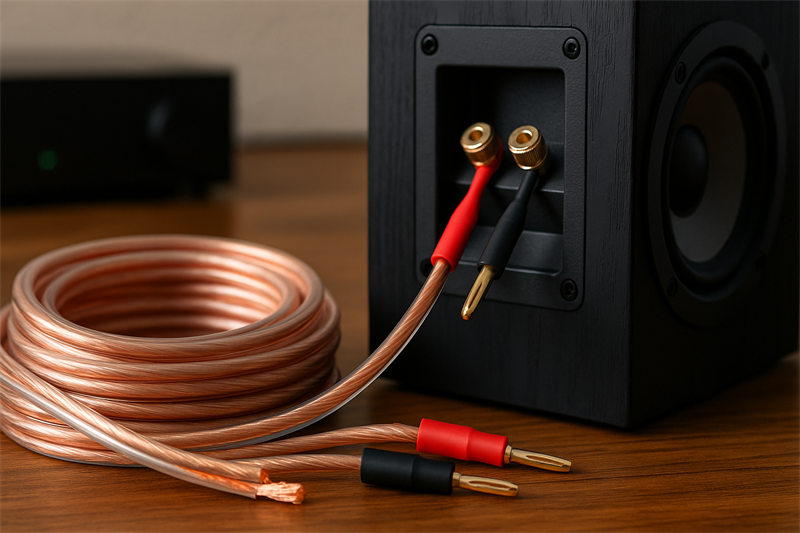
3.1 Pure Copper
Standard copper wire (99.9% purity) offers excellent conductivity (≈58 MS/m) at an affordable price. It resists oxidation reasonably well and suits most home audio applications (Crutchfield Speaker Wire Guide).
3.2 Oxygen-Free Copper (OFC)
OFC promises tighter purity tolerances (99.97%+), reducing oxygen-related inclusions that can increase local resistance over time. In practice, OFC delivers marginal improvements in long-term reliability and skin-effect behavior at high frequencies, though audible differences are subtle (Audiokarma Vintage Speaker Discussion).
3.3 Copper-Clad Aluminum (CCA)
CCA uses an aluminum core coated with a thin copper layer. Its conductivity is only ~60% of pure copper, requiring 1–2 AWG increases to match resistance. While budget-friendly, unpleasant gauge surprises, and higher resistive losses make CCA a last resort (Reddit r/audio Recommendations).
3.4 Exotic Alloys & Silver Plating
Silver is slightly more conductive than copper but significantly more expensive. Unless you’re wiring a pro studio or ultra-high-end system, silver-plated or specialty alloy cables rarely justify their premium beyond marketing allure (What Hi-Fi Best Speaker Cables).
4. Wire Gauge (AWG) & Run Length: Matching Size to Distance
The American Wire Gauge (AWG) system inversely relates diameter to gauge number: lower AWG means thicker conductor and lower resistance. Use the following guidelines:
|
Run Length (One-Way) |
Recommended AWG (8 Ω) |
Notes |
|
≤10 ft (3 m) |
18–16 AWG |
Desktop setups, low-power stereo |
|
10–25 ft (3–8 m) |
16–14 AWG |
Typical home theater front/rear runs |
|
25–50 ft (8–15 m) |
14–12 AWG |
Long runs, bookshelf to amp across room |
|
>50 ft (15 m) |
12 AWG or thicker |
Low-impedance speakers, high-power amps |
Overrunning a run with under-gauged wire adds resistance, reducing damping factor and causing low-frequency roll-off—most noticeable in multi-speaker or subwoofer feeds.
5. Electrical Specs: Resistance, Capacitance, Inductance
• DC Resistance (Ω/ft or Ω/m): Aim for ≤0.005 Ω/ft to keep total loss under 5% for typical home runs.
• Capacitance (pF/ft): Higher capacitance can filter out high frequencies; look for <25 pF/ft.
• Inductance (µH/ft) & Skin Effect: At audio frequencies (<20 kHz), skin depth exceeds conductor radius, so inductance has minimal audible impact if ≤0.1 µH/ft.
• When reviewing datasheets, prioritize DC resistance first, then capacitance; inductance is rarely critical in consumer cables.
6. Insulation, Jacket & Shielding
6.1 Common Jacket Materials
• PVC: Affordable, flexible, and flame-retardant for general use.
• PE (Polyethylene): Lower dielectric constant, slightly lower capacitance.
• Teflon (PTFE): Premium choice—high temperature tolerance and chemical resistance.
6.2 Installation Ratings
• CL2/CL3: NEC-rated for in-wall and ceiling installations.
• Burial/RoHS: UV- and moisture-resistant for outdoor runs.
6.3 Shielding & Braiding
Residential systems rarely need shielding. In studios or EMI-prone areas, a braided or foil shield blocks RF noise but increases capacitance slightly.
7. Connectors & Terminations
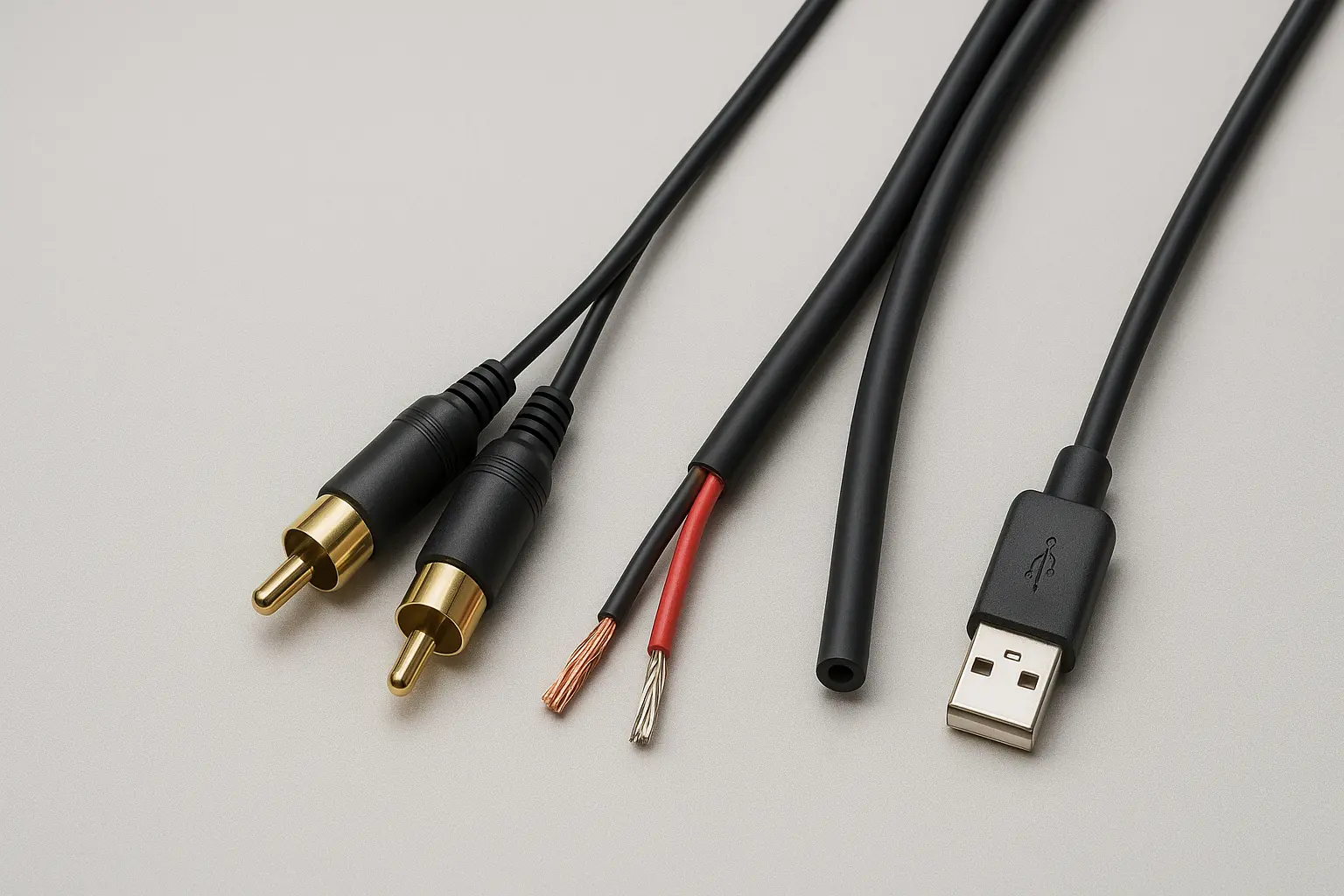
• Bare Wire: Fastest installation; vulnerable to fraying and oxidation.
• Pin/Spade Lugs: Secure under terminal screws; require correct crimp tools.
• Banana Plugs: Convenient push-fit, spring-loaded for consistent contact.
• Best practice: Strip insulation cleanly, twist strands, optionally tin with solder, then attach connectors per manufacturer torque specs to prevent loosening.
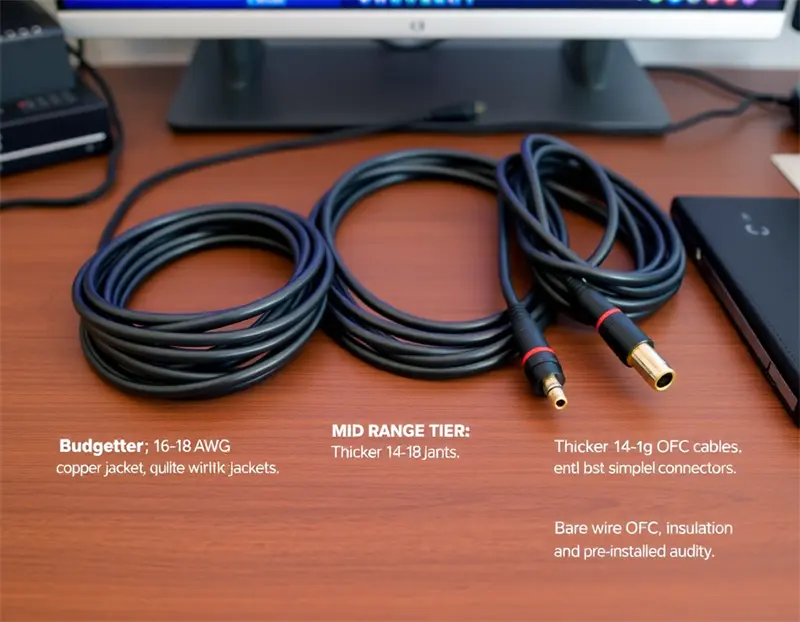
8. Budget Tiers & Buying Guide
|
Tier |
Price Range |
Features |
Use Case |
|
Budget |
$10–30 / 5 m pair |
16–18 AWG copper, PVC jacket, minimal shielding |
Casual listeners, desktops |
|
Mid-Range |
$30–80 |
14–16 AWG OFC, thicker insulation, banana-ready |
Home theater, mid-power systems |
|
Premium |
>$80 |
12–14 AWG silver-plated/OFC, PTFE jacket, braided shield |
Audiophile, pro studios |
Top Picks:
• AmazonBasics 14 AWG OFC (Entry-mid): value and CL2 rating.
• GearIT 12 AWG OFC Silver (Mid-premium): pre-fitted banana plugs.
• AudioQuest Rocket 11 (Premium): low capacitance, braided shield.
9. Common Myths & Misconceptions
• “More expensive always better”: Diminishing returns beyond core specs (What Hi-Fi Best Cables).
• “Bi-wiring/bi-amping is a must”: Minimal gains without matched crossovers.
• “Cable burn-in is crucial”: Double-blind tests show no reliable long-term audible shift (Steve Huff Cable Shootout).
10. Installation Tips & Maintenance
• Routing: Avoid parallel runs with mains wiring; create gentle bends, not sharp kinks.
• Labeling: Color-code or tag each end for multi-speaker systems.
• Inspection: Annually clean connector contacts with isopropyl alcohol, check jacket integrity, and re-torque terminals if needed.
Conclusion
A good speaker wire isn’t a marketing gimmick but a careful match of conductor purity, gauge appropriate to run length, minimal electrical losses, and reliable terminations. By balancing budget against specifications—resistance, capacitance, insulation rating—you’ll ensure your amplifier’s power arrives at the speaker unchanged, revealing the full detail of your music or movie soundtrack.
FAQ
1.What gauge SPEAKER wire should I use for 20 ft runs?
Use 16 AWG for runs under 20 ft to keep losses below 5%.
2.Is OFC worth the extra cost over standard copper?
OFC offers marginal long-term oxidation resistance; audible gains are subtle.
3.Can I use CCA cable for my speakers?
Only if you upsize the gauge by 1–2 AWG to match copper’s resistance.
4.Do I need shielded speaker wire?
Not for typical home use; only in high-EMI environments or studios.
5.Are banana plugs better than bare wire?
They provide quicker, more consistent connections and reduce stray strands.
6.Will burn-in improve my cable’s sound?
Controlled tests show negligible changes; focus on specs over myth.
7.How do I read a cable datasheet?
Prioritize DC resistance (Ω/ft), then capacitance (pF/ft), and ignore inductance for audio.
8.What insulation is best for in-wall installation?
Choose CL2/CL3-rated PVC or low-smoke, flame-retardant jackets.
9.Does thicker wire always sound better?
Only when matched to distance and load; overly thick cables can be hard to route.
10.How often should I maintain my speaker connections?
Inspect and clean annually, or sooner if outdoor or humid conditions prevail.
References
1.Crutchfield Speaker Wire Guide
2.Reddit r/audio “What Wires should I get for my speakers?”
3.Audiokarma Vintage Speaker Wire Discussion
4.What Hi-Fi Best Speaker Cables
5.Steve Huff “Speaker Cables I Really Like…”
6.Reddit r/BudgetAudiophile “Speaker wire recommendations”
7.Amazon GearIT Speaker Wire
8.EliteHTS “Everything You Need to Know…”
9.Infinity Cable Products “Best Gauge for Speaker Wire”
10.Maeden “The Ultimate Guide to Speaker Wire…”