



What is an XLR Connector? The Complete Guide to Professional Audio's Most Trusted Connection
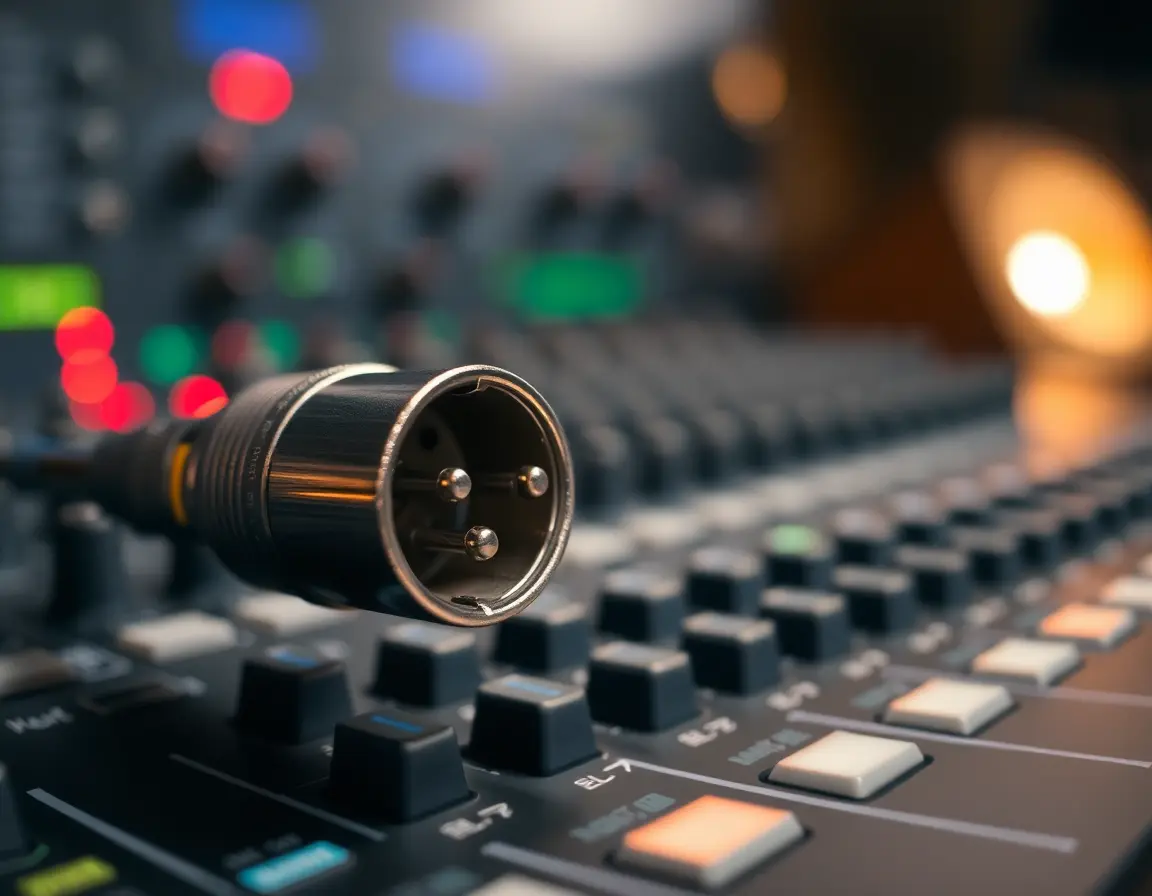
If you've ever noticed those round connectors with three pins on professional audio gear, you're looking at XLR connectors. These sturdy connections are everywhere in the audio world—from recording studios to live concerts.1 But what exactly is an XLR connector, and why has it stuck around for over 50 years?
Understanding the XLR Connector: Definition, 3-Pin Pinout, and Basic Function
An XLR connector is a circular electrical connector mainly used for balanced audio signals in professional setups.2 The name "XLR" comes from how its creator, Cannon Electric, developed it:
X for the original design series, L for the latch they added, and R for the resilient rubber compound that made it tougher.
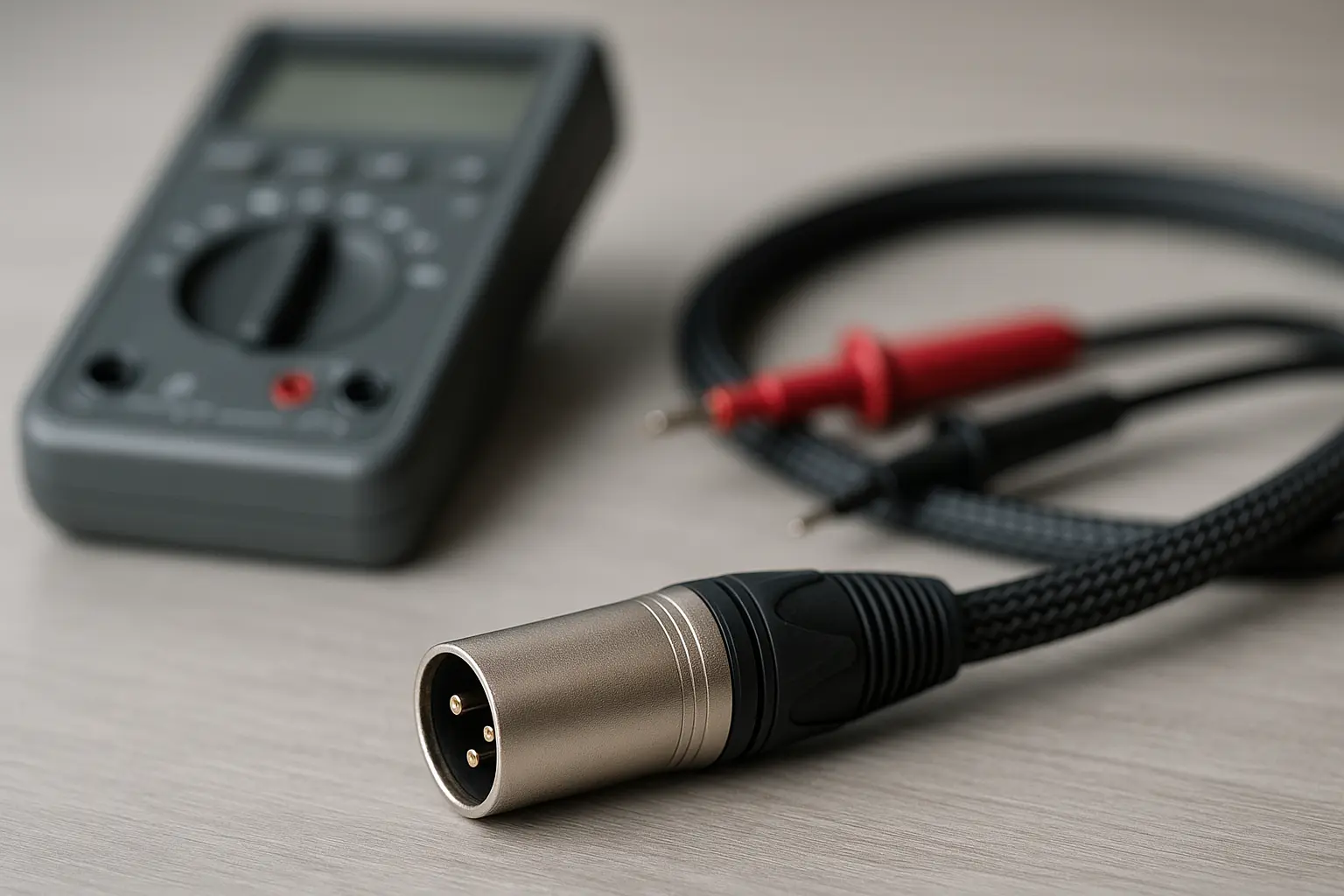
The standard 3-pin XLR connector has a specific pinout defined by the AES industry standard :3
- Pin 1: Ground/Shield connection 5
- Pin 2: Positive signal ("Hot") 5
- Pin 3: Negative signal ("Cold") 5
This three-pin setup is the key to balanced audio transmission, which is the primary reason XLR performs so well in professional settings where signal clarity is non-negotiable.1
The History of XLR: How Cannon Electric's Innovation Became an Industry Standard
Solving Pre-XLR Problems: The Need for a Reliable Audio Connection
Before XLR connectors took over, audio pros dealt with bulky, unreliable connections. Early options like the Canon P Series were large and heavy, though very rugged.9 Other designs didn't lock properly, causing frequent and frustrating disconnections during important shows or recording sessions.10
The Cannon Electric Evolution: From X Series to XLR (1950-1955)
The development of the modern XLR happened in three key steps at Cannon Electric :12
- 1950: Cannon created the XL series, adding a secure locking mechanism (latch) to their existing X series design.9
- 1955: The final XLR series was introduced, which encased the female contacts in a resilient rubber compound for superior durability.9
Formalizing the Standard: The Role of EIA RS-297-A and IEC 61076-2-103
Industry-wide adoption required standardization. The EIA RS-297-A standard set the universal wiring convention, establishing "pin 2 hot" as the rule and ending the confusion that caused phase issues between equipment from different manufacturers.2 Globally, the
IEC 61076-2-103 standard defines the physical dimensions, ensuring that connectors from any certified manufacturer will mate perfectly.2 This combination of a robust initial design and universal standardization created a lasting industry benchmark.
How XLR Connectors Work: The Science of Balanced Audio and Noise Cancellation
Balanced vs. Unbalanced Audio Signals: A Core Technical Comparison
To understand why XLR connectors are superior for professional use, you need to know the difference between balanced and unbalanced signals 19:
-
Unbalanced signals(like those from RCA or TS connectors):
- Use two wires: a signal wire and a ground.20
- Are highly susceptible to picking up electromagnetic noise.21
- The ground wire acts like an antenna, collecting unwanted hum and buzz.19
-
Balanced signals(the XLR design):
- Use three wires: two signal conductors ("hot" and "cold") and a separate ground.23
- Are designed to automatically cancel out noise.23
- Keep the audio signal clean, even over very long cable runs.1
Common-Mode Rejection: The Key to Noise-Free Audio Transmission
XLR connectors fight noise through an elegant process called common-mode rejection 25:
- Signal Duplication:The source sends two identical copies of the signal—one with normal polarity (hot) and one with its polarity flipped 180 degrees (cold).24
- Noise Induction:As the cable travels, outside interference (hum, buzz, RFI) hits both signal wires with the same phase and magnitude.24
- Signal Re-Inversion:The receiving device's differential amplifier flips the "cold" signal back to its original polarity.24
- Final Result:When the two signals are combined, the original audio signals reinforce each other, becoming twice as strong. Meanwhile, the identical noise signals are now out of phase with each other and cancel out completely, leaving a clean, pure audio signal.24
This clever solution gives you up to 6 dB more signal strength while removing almost all induced noise—a massive advantage for professional audio work.19
Anatomy of the XLR Family: Connector Types and Pin Configurations
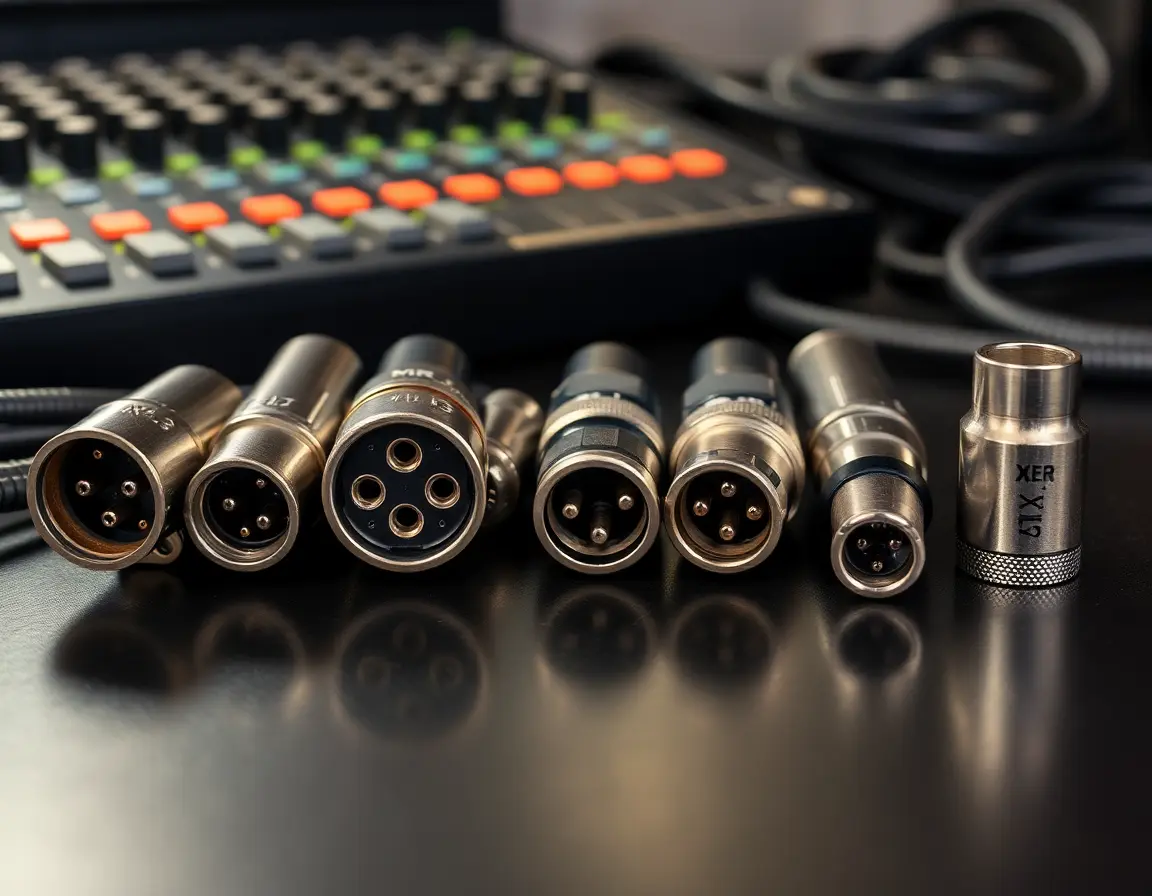
While 3-pin XLR connectors handle most audio jobs, the XLR family includes several specialized types for different applications.27
XLR3: The 3-Pin Standard for Microphones and Mono Audio
- Main use:Balanced mono audio signals.2
- Found on:Microphones, mixing boards, powered speakers, and audio interfaces.1
- Digital use:AES/EBU digital audio.31
XLR4: For Professional Intercom Systems and DC Power
- Used for:Professional intercom headset systems and DC power for film and video cameras.2
- Setup:Two pins for headphone sound, two for the microphone signal.2
XLR5: The Standard for DMX512 Lighting and Stereo Mics
- Main use:DMX512 lighting control (the official standard).2
- Other uses:Stereo microphones and multi-channel communication systems.2
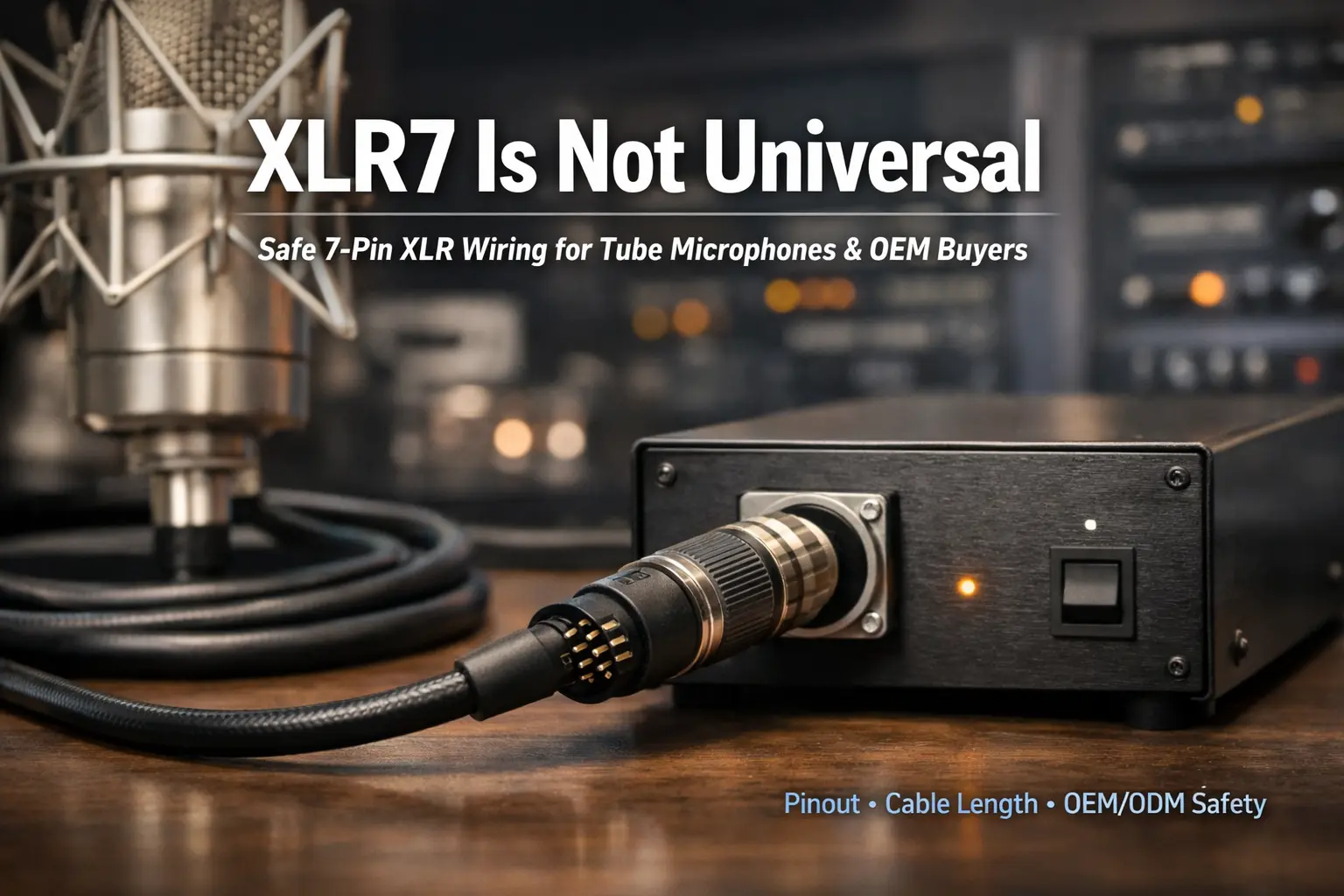
XLR7: Powering High-End Tube Microphones
- Special use:High-end tube (valve) condenser microphones.29
- Purpose:Provides multiple power voltages for the tube's circuitry in addition to the audio paths.3
Mini-XLR (TA Series): Compact Solutions for Wireless Systems
- Found on:Wireless bodypack transmitters, portable recorders, and lavalier microphones.34
- Benefit:Retains the reliability and locking mechanism of a standard XLR in a much smaller package.28
Phantom Power Explained: Delivering +48V to Condenser Microphones
One of XLR's smartest features is phantom power—the ability to send DC voltage to devices that need it, like condenser microphones, without interfering with the audio quality.29
The Circuitry Behind +48V Phantom Power
- Standard voltage:+48V DC is sent equally down Pin 2 and Pin 3.36
- Return path:The current returns through Pin 1 (ground), completing the circuit.38
- Audio safety:Because the DC voltage is identical on both signal lines, the receiving audio circuits ignore it completely, allowing the audio signal to pass through cleanly.39
- Needed for:Condenser microphones that require power for their internal active electronics.
Phantom Power Safety: Protecting Dynamic and Ribbon Microphones
- Modern dynamic microphones are designed to handle phantom power without any issues.
- Older ribbon microphones can be damaged by phantom power, especially if a cable is faulty or mis-wired.
- It's best practice to always turn off phantom power before connecting or disconnecting any device that doesn't require it.
Beyond Microphones: XLR for Digital Signals and Lighting Control
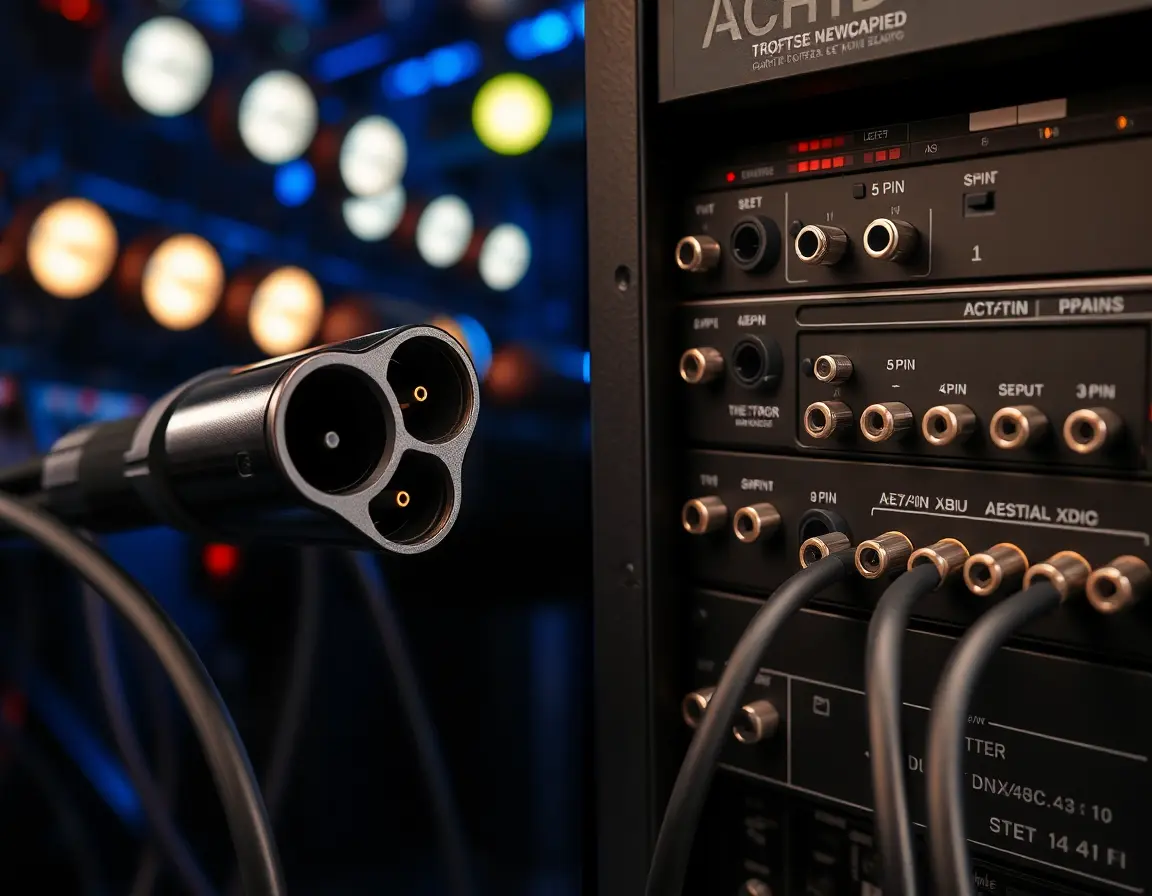
DMX512 Lighting Control: Why 5-Pin is Standard and 3-Pin is Risky
XLR connectors are the standard for running professional lighting systems using the DMX512 protocol.40 But this creates some risks:
- Official rule:The DMX standard specifies 5-pin XLR to avoid mix-ups with 3-pin audio cables.45
- Real world:Many budget-friendly lights use 3-pin XLR to save money.2
- Big danger:Accidentally plugging a 3-pin audio cable carrying +48V phantom power into DMX lighting equipment can permanently destroy the sensitive electronics inside.2
AES/EBU Digital Audio: The Importance of 110-Ohm Cable Impedance
Professional digital audio (AES/EBU standard) also uses the 3-pin XLR connector, but with special requirements 51:
- Cable type:A true AES/EBU cable must have an impedance of 110 ohms to ensure digital signal integrity.51
- Data handling:It carries two channels of high-resolution digital audio on a single cable.53
- Physical match:It uses the same physical connector as analog audio, making it crucial to use the correct cable type to avoid data errors.
XLR vs. Other Connectors: A Head-to-Head Comparison
|
Feature |
XLR |
TRS (1/4") |
RCA |
|
Signal Type |
Balanced mono |
Balanced mono or Unbalanced stereo |
Unbalanced mono |
|
Noise Immunity |
Excellent |
Good (in balanced mode) |
Poor |
|
Build Quality |
Very high (metal, robust) |
Medium |
Low (consumer-grade) |
|
Locking Mechanism |
Yes |
No |
No |
|
Primary Use |
Professional Audio/Mics |
Instruments/Headphones |
Home Hi-Fi |
|
Phantom Power |
Yes |
No |
No |
XLR Cable Buying Guide: What to Look for in a Quality Cable
Key Quality Factors: Shielding, Conductors, and Connector Brands
- Conductor Material:Look for Oxygen-Free Copper (OFC) for the best signal transfer and clarity.
- Shielding:Braided copper shielding offers the best protection against noise and is the most durable option for live shows and touring.29
- Connector Brands:Reputable brands like Neutrik and Switchcraft offer superior build quality and reliability, ensuring a secure fit and long life.55
Debunking Common Myths About "Audiophile" XLR Cables
Expensive "audiophile" XLR cables rarely provide a noticeable improvement in sound quality over well-made standard cables.55 It's more important to focus on solid build quality, effective shielding, and reliable connectors rather than marketing claims about superior sound.
Troubleshooting Common XLR Connection Problems
Diagnosing and Fixing Loose Connections, Hum, and Phase Issues
- Loose connections or intermittent sound:This is often caused by dirty or damaged pins. Cleaning them with a quality contact cleaner can resolve the issue. Worn-out connectors may need to be replaced.57
- Ground loops and buzz:Ensure you are using balanced connections throughout your entire signal chain. If hum persists, a ground lift adapter or DI box may be necessary.57
- Phase problems:If your audio sounds thin or lacks bass, it could be a phase issue. Double-check that all cables are wired correctly to the "pin 2 hot, pin 3 cold" standard.10
The Future of XLR: Why It Remains Relevant in Modern Audio
Even with the growth of digital and wireless technology, XLR connectors continue to be essential.
Modern Innovations: Combo Jacks and Material Improvements
- Combination designs:Neutrik's innovative combo XLR/TRS jack saves valuable space on modern audio interfaces and mixers.
- Smaller versions:Mini-XLR connectors provide professional reliability for compact and portable gear.57
- Better materials:Modern connectors use improved plastics, alloys, and plating for longer life and better performance.1
Why XLR's Durability and Reliability Secure Its Future
XLR connectors remain the professional standard because they provide 59:
- Proven reliabilityin mission-critical situations where failure is not an option.
- Universal compatibilityacross thousands of products and decades of manufacturing.
- Superior noise rejectionthat consumer-grade connectors simply cannot match.
- Easy field repairability, allowing technicians to fix a broken cable with basic soldering skills.59
Conclusion: Why XLR Remains the Unquestioned Professional Standard
The XLR connector's lasting success comes from its perfect mix of technical excellence, practical design, and industry-wide standardization. Its tough construction handles the physical demands of professional work, while its balanced design ensures clean, noise-free audio, even over long distances.
From solving early connection problems to becoming the backbone of professional audio, lighting, and digital systems, the XLR connector is a testament to how great engineering creates lasting standards. Whether you're building a home studio, running live sound, or designing a broadcast facility, understanding the XLR connector is fundamental to achieving reliable, high-quality results.
For audio professionals and enthusiasts alike, the XLR connector means more than just a connection—it's a promise of signal integrity, system reliability, and professional performance that has been earned through decades of flawless operation in the most demanding situations.
Works cited
2.en.wikipedia.org, accessed August 13, 2025,
3.About XLR Pinout (3-Pin, 5-Pin & 7-Pin) - PropAudio, accessed August 13, 2025,
4.XLR Pinouts for Audio - Wiring Diagram - Clark Wire & Cable, accessed August 13, 2025,
5.XLR Connector Wiring - Musical Fidelity, accessed August 13, 2025,
7.How to wire a 3 pin XLR plate for indoor audio? - Daktronics, accessed August 13, 2025,
8.XLR for Microphone: Quality, Comparison, and Top Picks for Use - Maono, accessed August 13, 2025,
9.XLR History - Coutant.org, accessed August 13, 2025,
11.The History of the XLR Connector: From Broadcasting to Professional Audio, accessed August 13, 2025,
12.en.wikipedia.org, accessed August 13, 2025,
13.Talk:XLR connector - Wikipedia, accessed August 13, 2025,