


Which Coaxial Cable Connector Is Used for Audio Signals? (RCA vs. BNC Guide)
Quick Answer:
In most consumer audio gear, the coaxial digital audio output (S/PDIF) typically uses an RCA (cinch/phono) connector. For professional audio workflows—especially AES3id digital audio and word clock—the standard connector is 75Ω BNC. According to NTi Audio, the main thing to watch for is a strict 75-ohm cable impedance: S/PDIF pairs with RCA, while AES3id pairs with BNC.
Why Should OEM/ODM Buyers Care About Connector Choice?
If you buy for an OEM/ODM, picking a connector isn't just about looks. It hits your bottom line. It affects:
-
Whether it works: Will it plug into the old gear your customers already own?
-
Support headaches: Reduces lock issues, signal dropouts, and "no sound" complaints.
-
Factory yield: Changes how consistent your terminations, pull strength, and shielding are.
-
Quality feel: Fit, finish, and plating durability define whether a product feels premium.
Here is the tricky part: digital audio over coax acts like a high-speed RF signal, not a slow analog audio waveform. That’s why specs like 75Ω impedance continuity matter way more than marketing fluff like "thicker copper."
Below is the engineering breakdown, answering the specific questions your users (and procurement teams) ask most often.
Quick Answer: Which Connector Is Standard for S/PDIF vs. AES3id?
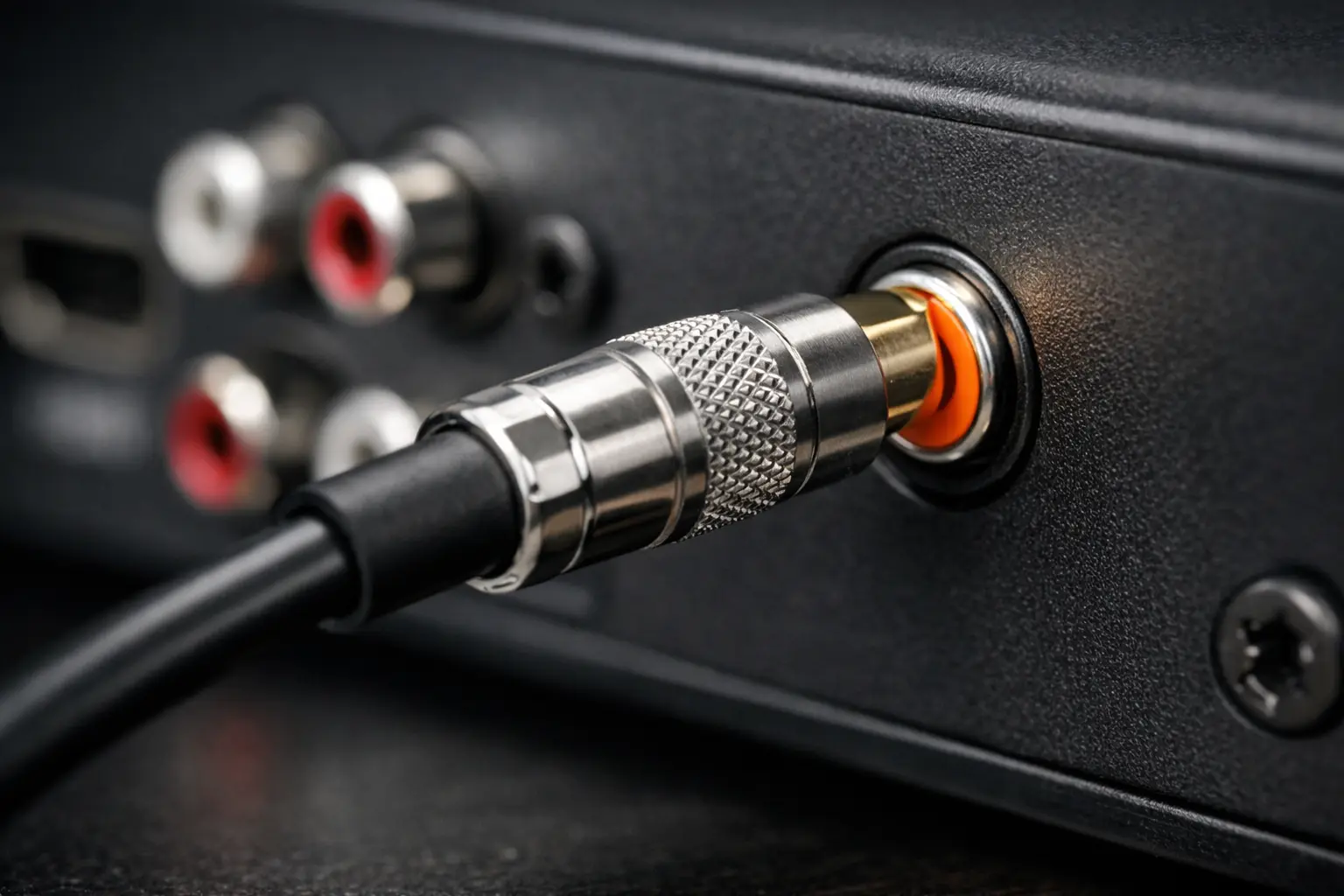
Consumer Digital Coax Audio (S/PDIF)
-
Most Common Connector: RCA (cinch/phono)
-
The Standard: Most brands set up S/PDIF over coax as an unbalanced 75Ω link. NTi Audio explicitly calls for 75Ω cable impedance and suggests video-grade cable with cinch connectors as the right choice.
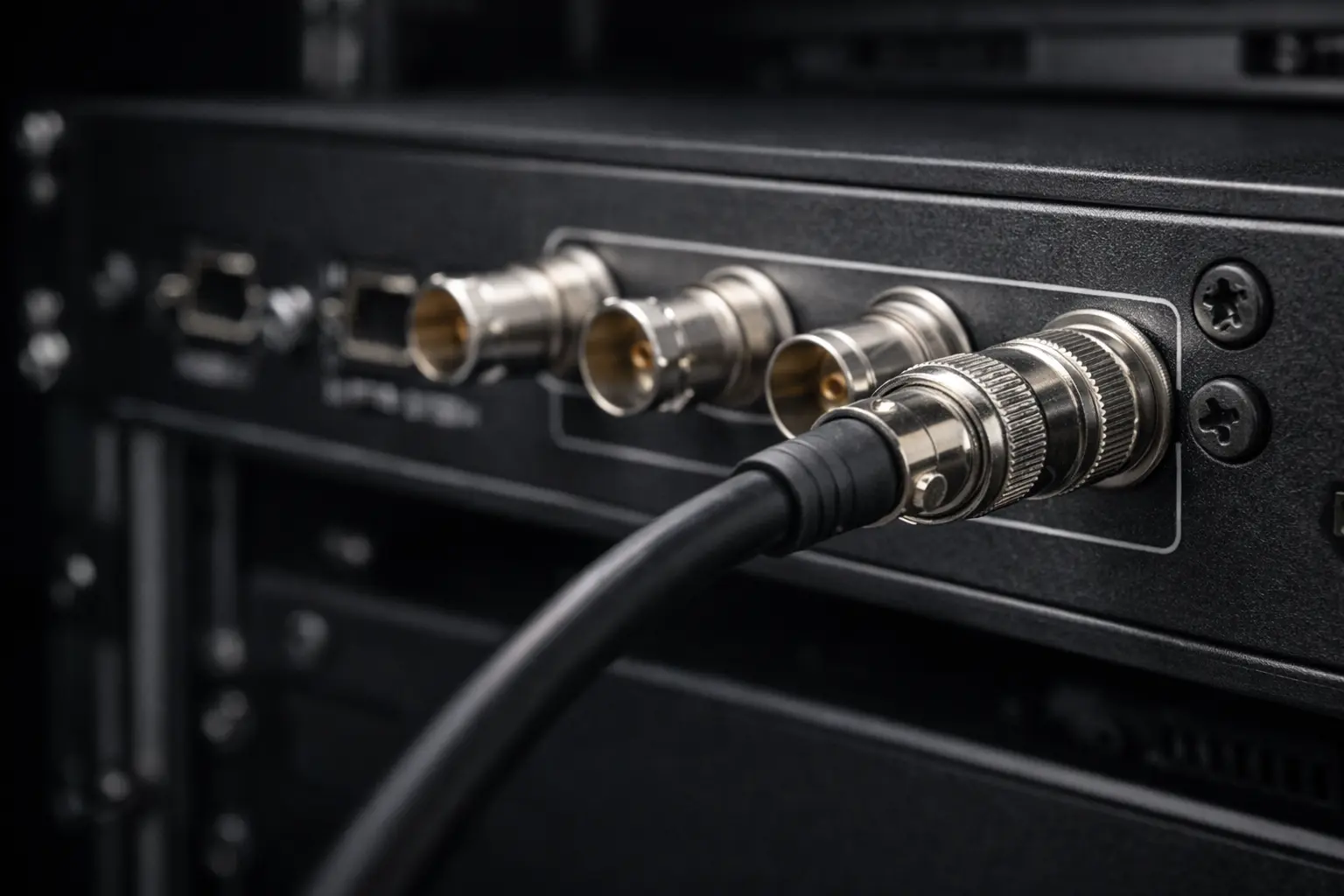
Professional Coax Digital + Sync (AES3id, Word Clock)
-
Most Common Connector: 75Ω BNC
-
The Standard: For pro setups, NTi Audio notes that 75Ω cables and BNC connectors are the norm (just like in broadcast video).
-
Clocking: For clock distribution, Ashly’s word clock guide confirms that word clock jacks use standard 75Ω BNC connectors and require standard 75Ω coaxial cable (TV coax).
Decision Table: What to Ship or Specify
| System You’re Building | Common Interface | Typical Connector | Target Impedance | Buyer’s “Safe Default” |
| TV / Streamer / DAC | S/PDIF Coax | RCA (cinch) | 75Ω | 75Ω “Video Coax” cable + solid RCA termination |
| Broadcast / Pro Racks | AES3id (AES-75) | 75Ω BNC | 75Ω | Broadcast-grade 75Ω coax + true 75Ω BNC |
| Studio Synchronization | Word Clock | 75Ω BNC | 75Ω | 75Ω coax + correct termination strategy |
Coaxial vs. Optical (Toslink): Which Digital Interface Is More Reliable?
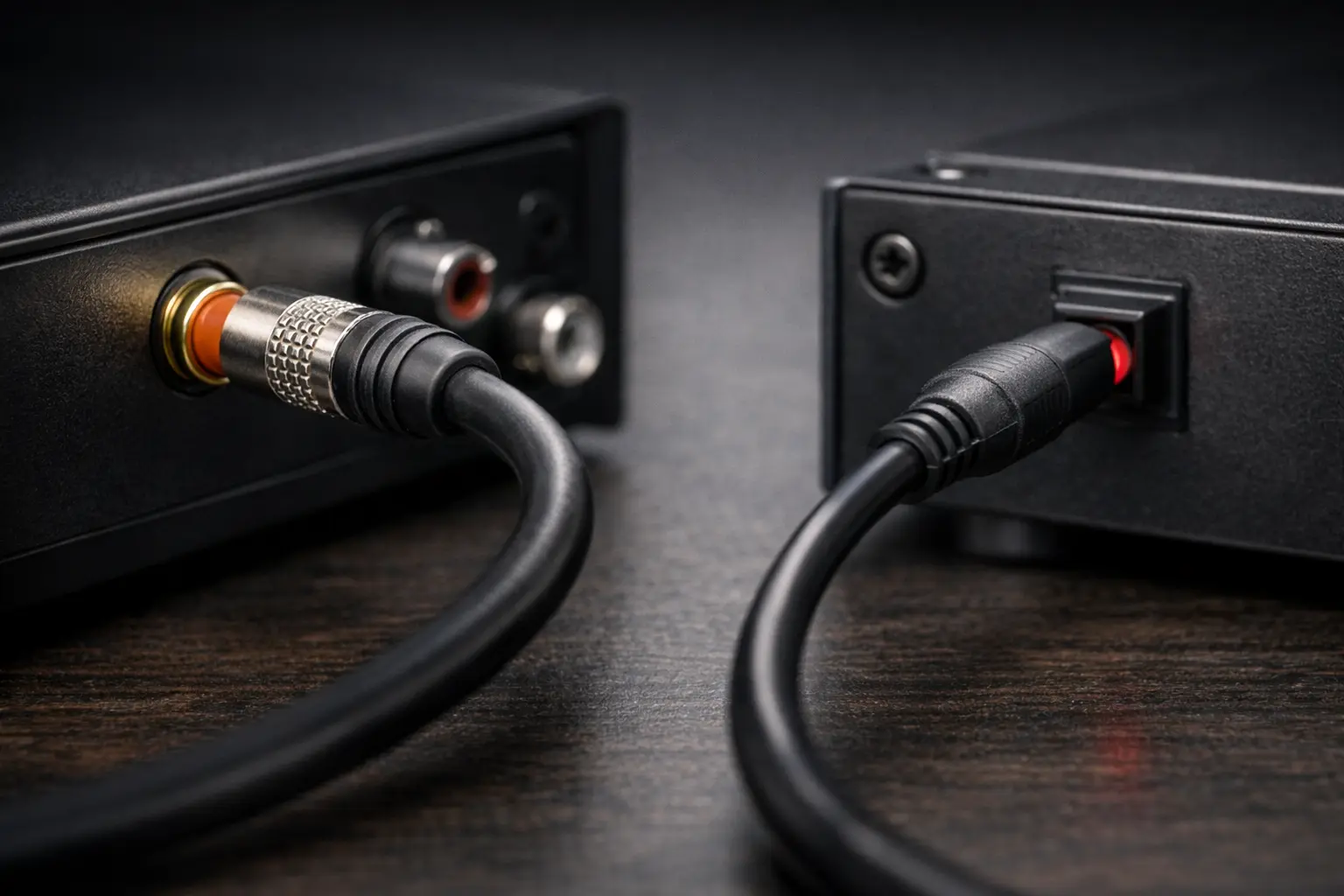
For you, the real question isn’t “which sounds better,” but “which breaks less often” in real homes and studios.
What Coax Does Well (And The Risks)
-
Strengths: Usually tough over practical distances if you design the link around 75Ω coax standards. The supply chain is simple because coax is everywhere.
-
Risks: Since it connects electrically, it can carry ground noise between devices. This causes hum or loops.
What Optical Does Well (And The Risks)
-
Strengths: Electrical isolation. It breaks ground loops by design. This stops those "mystery noise" support tickets in mixed-device home setups.
-
Risks: The link depends heavily on the quality of the emitter and receiver. Also, customers often bend the cables too sharply or let dust get in the connectors.
Recommendation: If your device targets home theaters, TVs, PCs, or soundbars, offer both optical and coax. This lowers support friction. Users can switch to optical if they hit ground loop noise, or use coax if they run out of optical ports.
Can Users Use Standard Analog RCA Cables for Digital Audio?
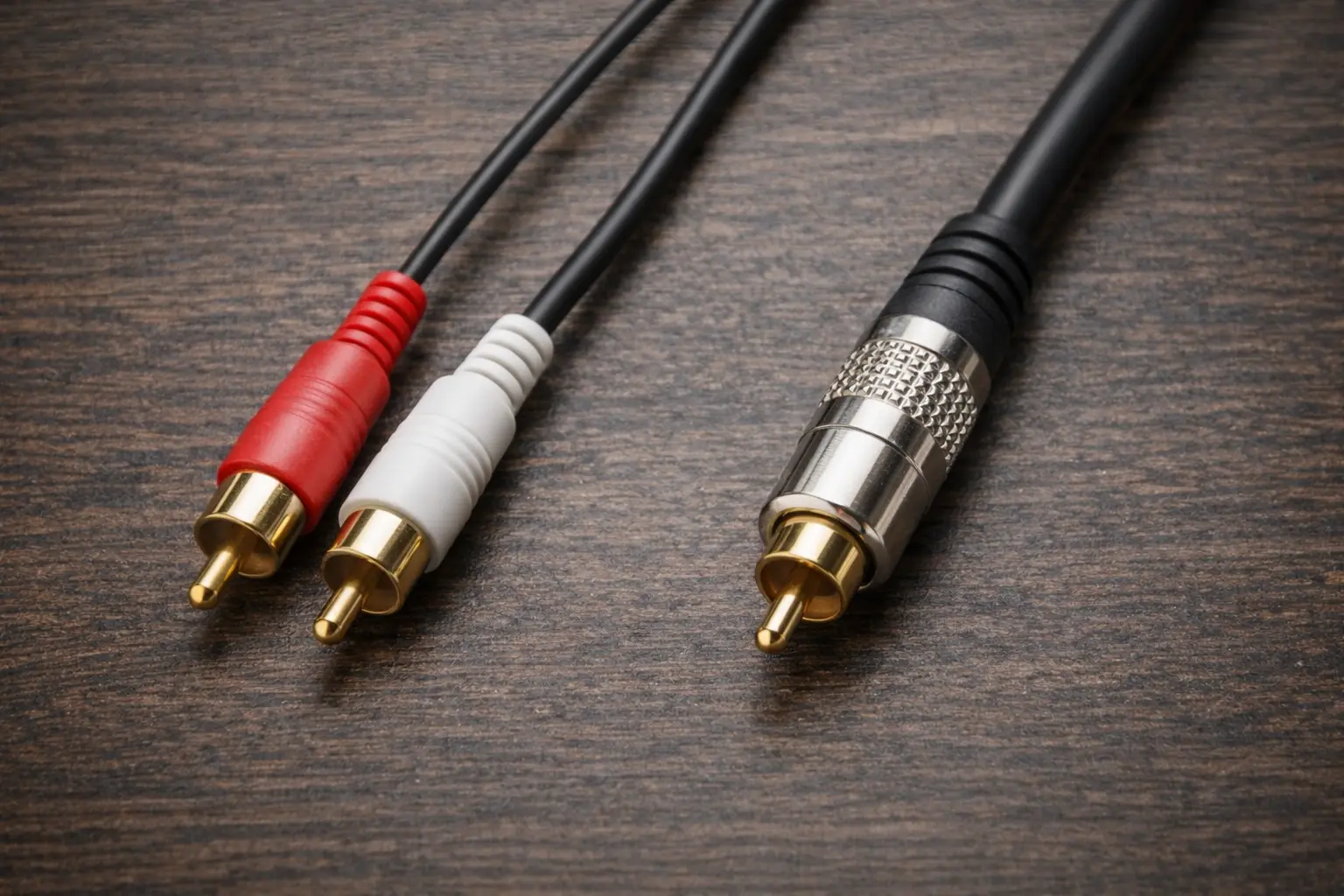
This is one of the most common questions end-users ask. The answer directly changes your support costs.
The Answer: "Yes, but..."
Often, users can "get away with it" for short runs (under 1-2 meters). Many consumer receivers have tolerant input stages, so a generic red/white RCA cable might seem to work.
Why It’s Not Best Practice
The real issue is impedance mismatch and shielding. Standard analog cables almost never meet the 75Ω spec. Mismatched impedance causes signal reflections (jitter). This leads to dropouts or the signal failing to lock.
NTi Audio makes the most practical point you can quote in a manual: S/PDIF cable impedance should be 75Ω, which is the same as common video cable.
What to Put in Your Product Manuals
-
✅ “Use a 75Ω digital coax / video coax cable.”
-
✅ “Avoid adapters if possible.”
-
✅ Fallback: “Short analog RCA cables may work for a while, but 75Ω coax is better for stable operation.”
What Is the Difference Between Subwoofer Cables and Digital Coaxial Cables?
To customers, they look the same: both have RCA ends and a single round cable. For you, the difference is design intent.
-
Subwoofer Cable (Analog, Low Frequency): Impedance matching isn’t the priority here. Instead, manufacturers focus on shielding (to stop hum) and flexibility.
-
Digital Coax (S/PDIF): The goal is a 75Ω RF link with strict geometry and termination to handle high-frequency data.
How to stop the confusion:
If you sell bundled cables, label them clearly to separate SKUs:
-
DIGITAL COAX (S/PDIF) – 75Ω -
SUB/LFE (ANALOG)
Internal Note: Jingyi’s content on High-Density RCA Cables highlights coaxial geometry meant to keep signal quality high—use this context to differentiate your products.
What Does the Orange RCA Jack on Audio Equipment Mean?
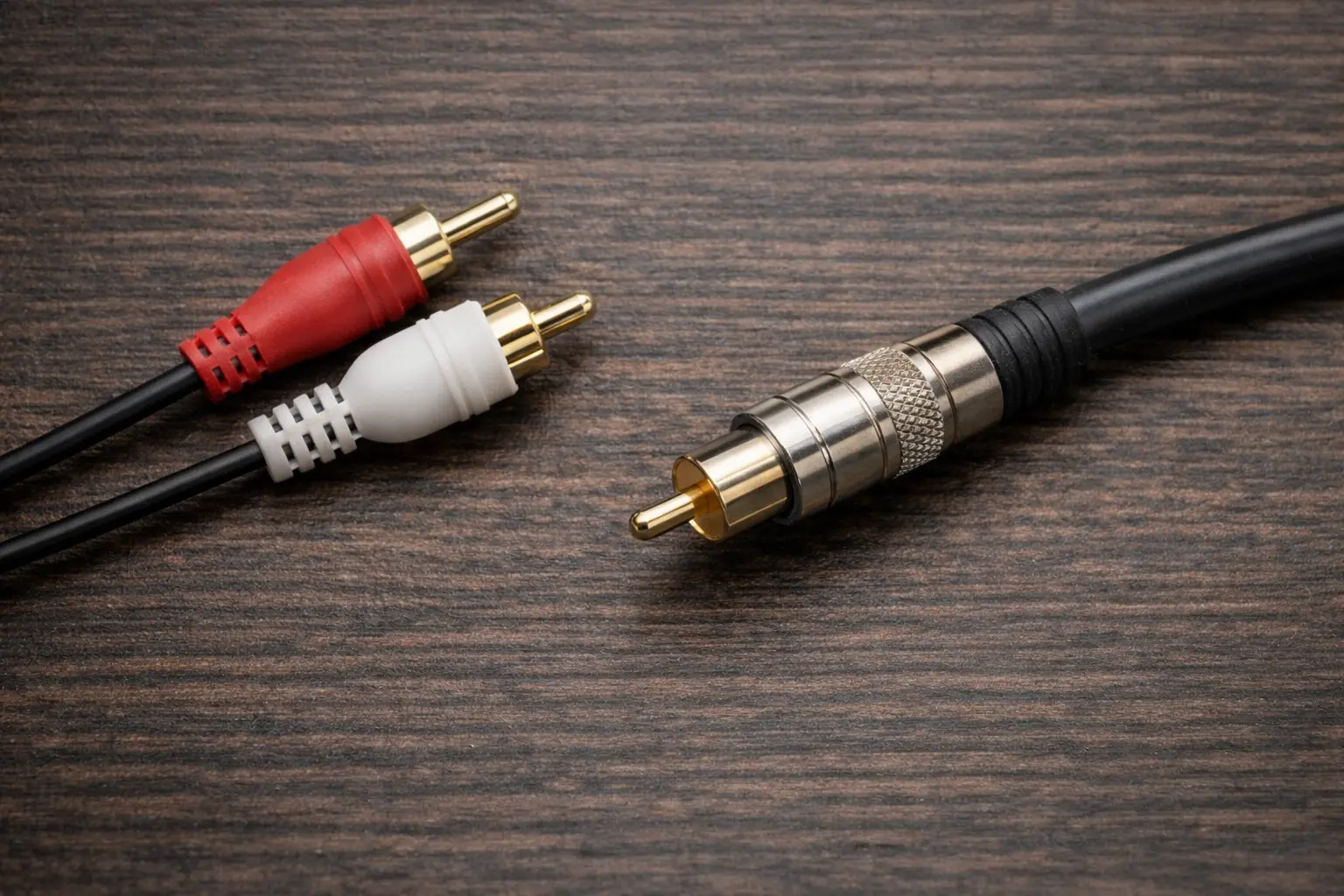
When users see a single orange RCA jack, they often ask: “Is this video? Is it analog audio?”
What Orange Usually Means
In the consumer AV color code standard, the orange RCA jack almost always marks the S/PDIF digital coax audio port.
How to Confirm (Without Guessing)
-
Look for labels like
COAX,DIGITAL OUT, orS/PDIF. -
Check the manual for “Digital Audio Output.”
-
If the device spec says “75Ω coax,” that is the S/PDIF port.
Labeling Tip: Add COAX OUT (S/PDIF) or DIGITAL COAX (75Ω) to your back-panel silkscreen. This tiny print choice stops a lot of setup confusion before it starts.
Why Do High-End Consumer DACs Still Use RCA Instead of BNC?
If BNC is the "RF-correct" connector for 75Ω signals, why don't premium consumer DACs switch to it?
-
Compatibility Wins: RCA is everywhere. Requiring BNC means customers need new cables or adapters. That creates friction and leads to returns.
-
"May Work" vs. Standard: As Rane warns, AES3id (BNC) and S/PDIF (RCA) are not electrically identical. While they often work together, they follow different standards.
-
The "75Ω-Optimized RCA" Compromise: Premium brands often use 75Ω-specific RCA connectors (like those from Canare or specialized OEM designs). Factories crimp these to keep impedance closer to the ideal 75Ω than a standard solder-cup RCA.
How Should OEM Buyers Specify Coaxial Audio Cables to Suppliers?
This section saves you money in production. Use this checklist for your RFQs:
-
Name the Interface:
-
S/PDIF Coax Output: RCA (cinch), 75Ω expectation.
-
AES3id/Word Clock: 75Ω BNC.
-
-
Set Cable Requirements:
-
Target: 75Ω Coax.
-
Shield: Ask for braid coverage percentage (+ foil if the environment is noisy).
-
Flexibility: Set a bend radius for tight consumer racks.
-
-
Control the Termination:
-
Ask for crimp or controlled solder processes.
-
For premium claims, match the connector style with 75Ω standards.
-
-
Quality Control (QC):
-
Mandatory: 100% continuity + shorts test.
-
Mandatory: Visual check on shield termination (this is the #1 hidden failure).
-
Premium Tier: Sample-based TDR (Time Domain Reflectometry) checks to verify impedance.
-
Avoid the Adapter Trap:
Rane warns that conversion is "filled with cautions." If you must offer an adapter (e.g., BNC to RCA), treat it as a designed accessory. Specify its mechanical life and how much force it takes to pull it out.
Resource: Check out Jingyi’s RCA connector category for OEM plug/jack options or Coax to RCA adaptors for procurement solutions.
The Bottom Line
-
Consumer: RCA (cinch) is the standard for S/PDIF digital audio.
-
Pro: 75Ω BNC is the standard for AES3id and Word Clock.
-
Reliability: To cut down on support tickets, specify 75Ω cable continuity and use as few adapters as possible.