

xlr max length: A Practical Guide with Tables, Simple Math, Real-World Proof, and OEM Specs
Key Takeaways
-
xlr max length isn’t one fixed number. It depends on signal type, cable build, and the noise/grounding in your space.
-
Balanced analog XLR usually goes farther than people think. “30 m / 100 ft” is often a convenience rule, not a hard limit.
-
AES/EBU and DMX can fail suddenly if you use the wrong cable type or miss termination.
-
If you want fewer surprises, think in three checks: bandwidth, noise, and phantom power.
-
For OEM/B2B buyers, the real win is a clear spec sheet + QC test plan so every batch performs the same.
If you’re searching xlr max length, you’re probably trying to answer one of these: “Can I run my mic to the booth?”, “Will my mixer reach the powered speakers?”, or “Can I push AES/DMX down an XLR line without dropouts?” The right answer depends on what you’re sending (analog audio vs digital), what gear is driving the line, and how the cable is built (capacitance, wire gauge, shielding). This post starts with quick numbers, then explains the parts that actually change the result, adds real-world “what engineers say” notes, and finishes with an OEM checklist you can hand to a supplier.
Quick Answer Table: XLR Cable Distance Limits (Mic / Line / AES / DMX)
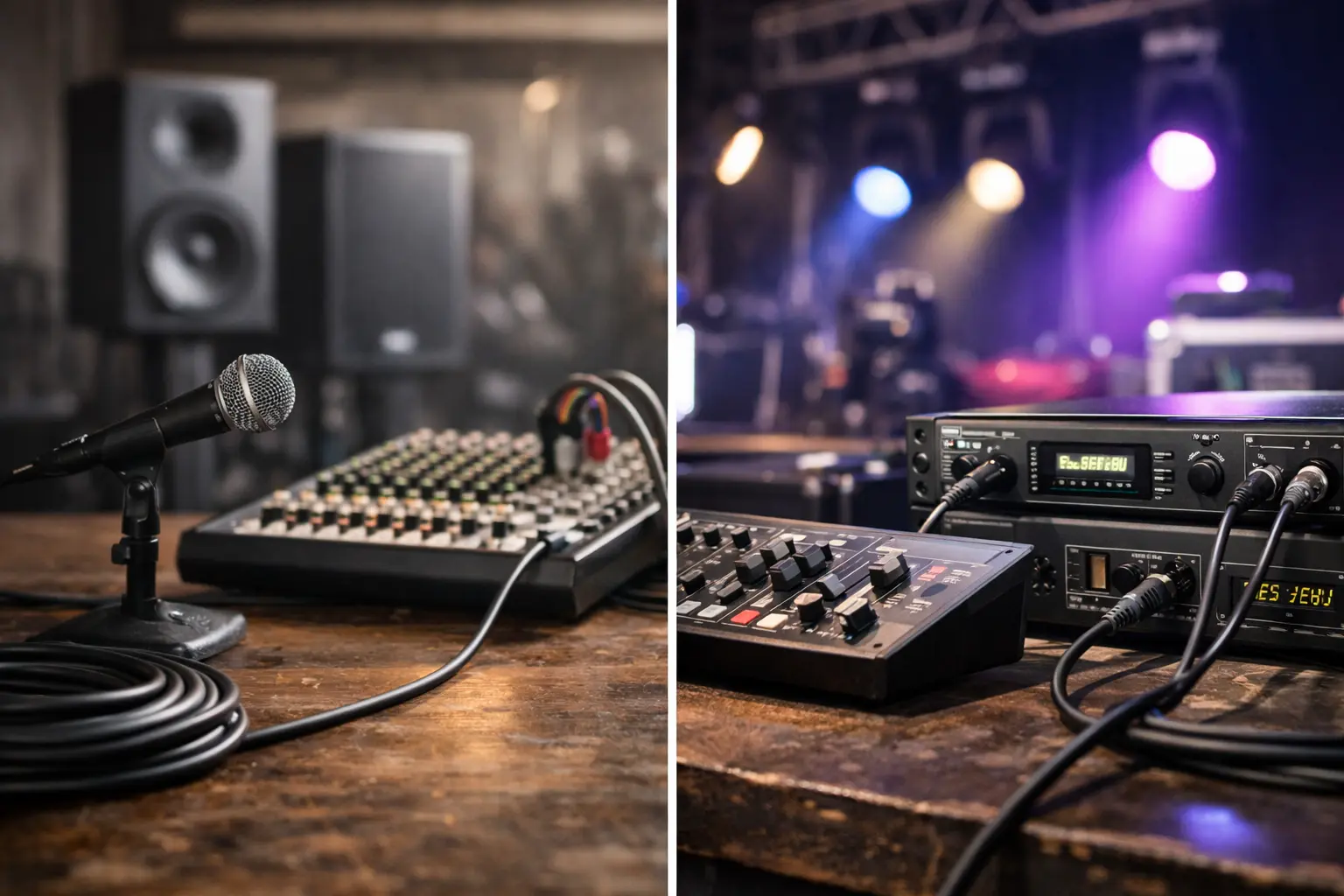
Here’s a safe starting point. If your run is critical, keep reading and test the full chain.
| Signal over XLR | Easy planning number | Often works in the real world (when set up well) | What usually stops you first |
|---|---|---|---|
| Analog mic-level (dynamic/condenser) | 30 m / 100 ft | 90 m / 300 ft is common | EMI, grounding, bad connectors |
| Analog line-level (balanced) | 90 m / 300 ft | 150–300 m / 500–1000 ft in clean installs | Ground loops, routing near power |
| AES/EBU digital audio | 100 m with 110Ω cable | 100 m+ depends on gear | Reflections, jitter, receiver tolerance |
| DMX lighting | ~300 m per segment with 120Ω cable + termination | ~300 m is a common plan | Termination/topology mistakes |
Analog audio usually gets worse slowly. Digital often stays perfect… then cuts out.
What “Maximum” Means: 3 Different Ways Things Go Wrong
When people argue about “max length,” they’re often talking about different problems.
-
Tone change
Long cables can soften the top end if the source has higher impedance and the cable has higher capacitance. -
Noise
The signal arrives, but hum/buzz/RF noise gets loud enough to bother you. -
Sudden failure (digital)
AES/EBU and DMX can drop out, click, lose lock, or flicker if impedance and wiring are wrong.
A simple way to stay sane: check three things—bandwidth, noise, phantom power.
Why Balanced XLR Can Run Long
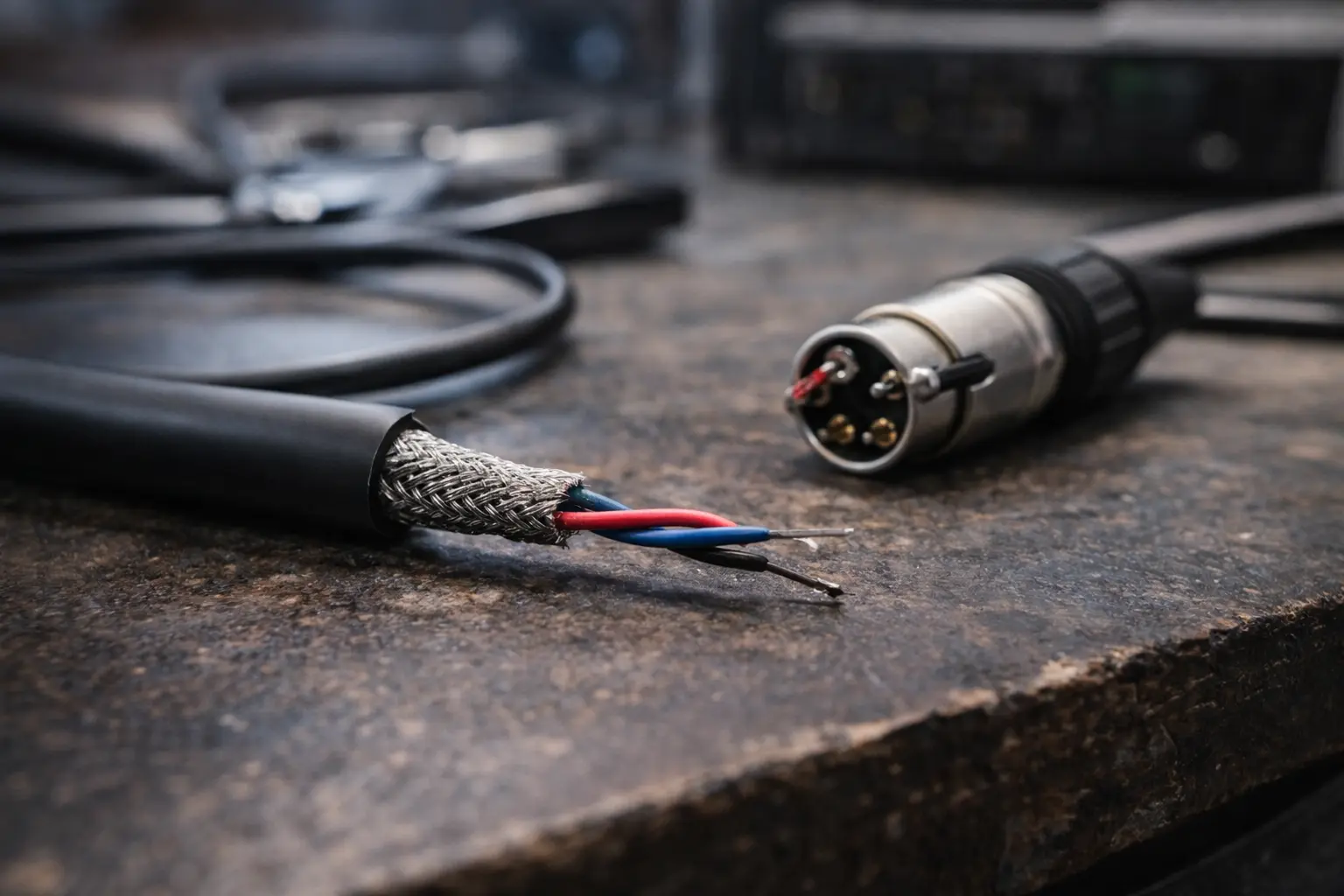
Balanced XLR uses two conductors carrying the same signal with opposite polarity. The input subtracts them. Noise that hits both conductors tends to cancel out.
But that only works well if things stay even on both sides. Poor cable build, sloppy soldering, and bad shield connections can ruin the noise rejection and make a long run feel “too long” even when the distance isn’t crazy.
The “Simple Math” Behind xlr max length: Capacitance + Source Impedance
Cable has capacitance. Your gear has output impedance. Together they act like a gentle low-pass filter.
A handy approximation is:
[
f_c=\frac{1}{2\pi R_s C_{total}}
]
-
(R_s): source/output impedance (ohms)
-
(C_{total}): total capacitance (Farads)
Quick calculator steps
-
Total capacitance:
[
C_{total} = (C_{pF/m} \times L) \times 10^{-12}
] -
Cutoff frequency:
[
f_c=\frac{1}{2\pi R_s C_{total}}
]
Example using a real spec style (Jingyi-style mic cable numbers)
A Jingyi CM001-style mic cable lists about 83.8 pF/m. For a 100 m run:
-
(C_{total}=83.8 \times 100 = 8380pF = 8.38nF)
Now compare common source impedances:
-
150Ω (many dynamic mics): cutoff well above hearing
-
600Ω (older gear / less friendly sources): cutoff comes down closer
-
10kΩ (high-impedance instrument without DI): cutoff drops into the audible range fast
So if someone says “my long XLR killed my highs,” it’s often because the source wasn’t really meant to drive a long line (or the wiring/grounding is off).
Does XLR cable length affect sound quality?
Most of the time, no—at normal studio lengths with modern gear. If you hear a change, look at:
-
impedance mismatch (especially instruments without DI)
-
EMI (dimmers, power cables, wireless gear)
-
connectors and solder joints
How long can an XLR cable be before signal loss?
For balanced analog audio, you usually hit noise and grounding trouble before you hit a dramatic loss of level.
Phantom Power on Long Runs: Wire Gauge Matters
Phantom power runs through the cable conductors. Long runs increase resistance, which can reduce the voltage reaching the mic.
A practical rule:
-
For long phantom-powered runs, pick 24 AWG or thicker when you can.
-
If you must go thin, test under real gain and real SPL.
Mic-Level vs Line-Level: Different Risks
Mic-level
Small signal, so it’s more likely to pick up junk if the environment is noisy. Routing and shielding matter.
Line-level
Bigger signal, usually more forgiving. If you can place a preamp or stagebox close to the mic and send line-level afterward, long runs get easier.
XLR cable length for powered speakers (mixer to speaker)
This is where people often blame “distance” when the real issue is power and grounding.
Quick checks:
-
Keep XLR away from AC runs where possible
-
If you must cross AC, do it at 90°
-
If you get hum, look at ground loops and isolation tools
AES/EBU Over XLR: Use 110Ω Cable If You Want It to Stay Stable
AES/EBU is digital. It cares about clean edges and impedance. With the wrong cable, it might work for short runs and then get flaky as you go longer.
Can I use a mic XLR cable for AES/EBU?
Sometimes, for short patches. But for anything you don’t want to babysit, use the right 110Ω cable. Random clicks, mutes, or “loss of lock” are common warning signs when things are marginal.
DMX vs Mic Cable: Same Connector, Different Job
DMX uses XLR connectors a lot, but it’s data. DMX likes:
-
~120Ω cable
-
correct termination
-
daisy chain wiring (avoid random star splits unless you’re using proper splitters)
If your lights flicker, don’t “just buy a pricier mic cable.” Fix the wiring and use proper DMX cable.
Star Quad vs Standard Twisted Pair
Star quad can help in nasty electrical spaces. The trade-off is that it often has higher capacitance, which can reduce your margin on very long analog runs.
Rule of thumb:
-
If you’re fighting heavy EMI: star quad is worth a look
-
If you want maximum length in a clean install: low-capacitance twisted pair is often better
What Engineers Say in the Real World (Short Case Cards)
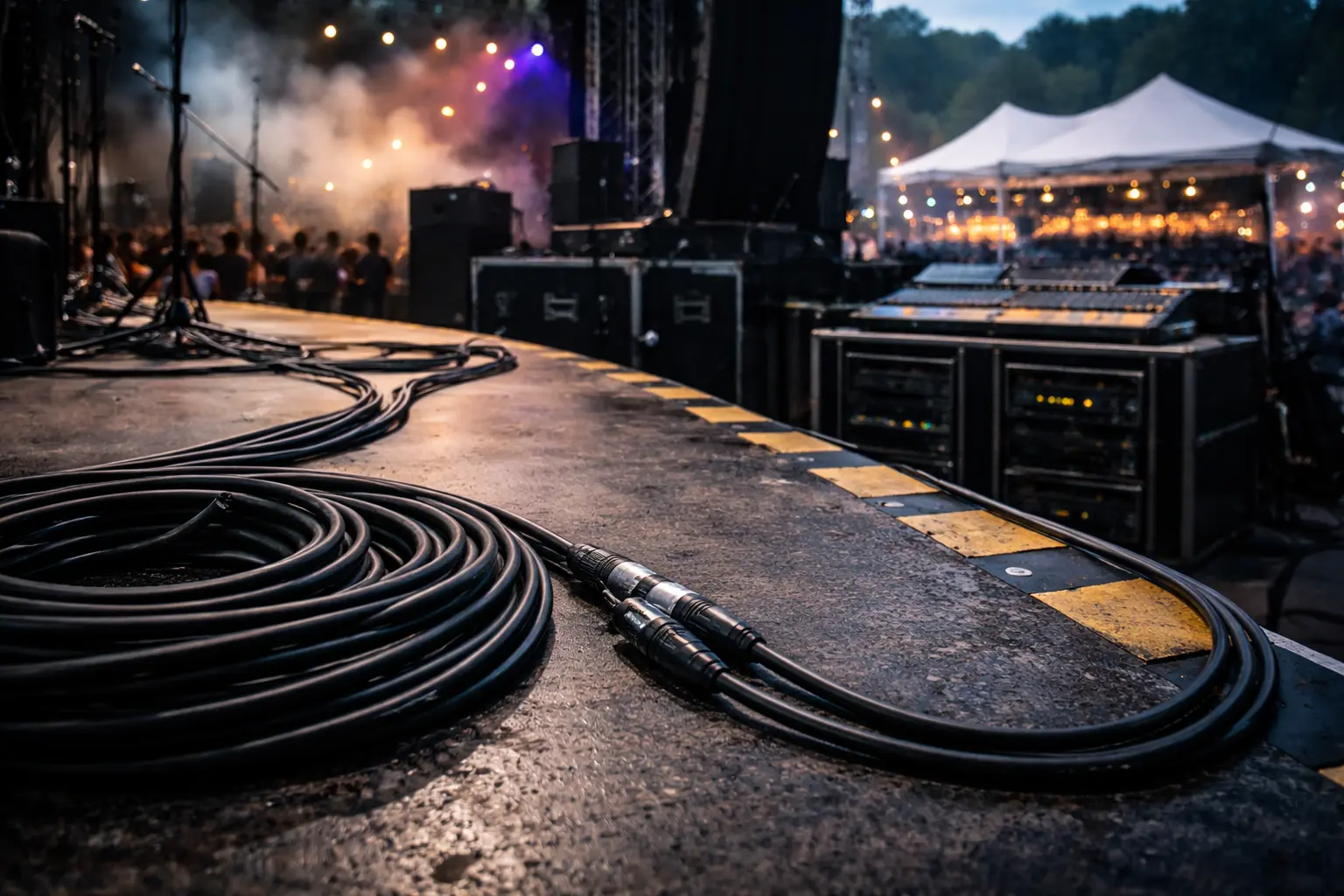
These are the kinds of comments that show up again and again in forum threads about XLR length:
-
“100 ft is easy.” People use it because it’s manageable, quick to troubleshoot, and rarely causes drama.
-
“300 ft snakes are normal.” Lots of live rigs run 300 ft without audible issues when the cable and setup are decent.
-
“Very long runs can work with the right tools.” Some users report extreme distances using isolation transformers and careful grounding. Not a default plan, but it shows distance alone isn’t the whole story.
(These patterns are visible in long-running discussions like the Harmony Central thread and similar community posts.)
OEM/B2B Section: How to Spec a Cable for Long Runs (US / EU / SEA Buyers)
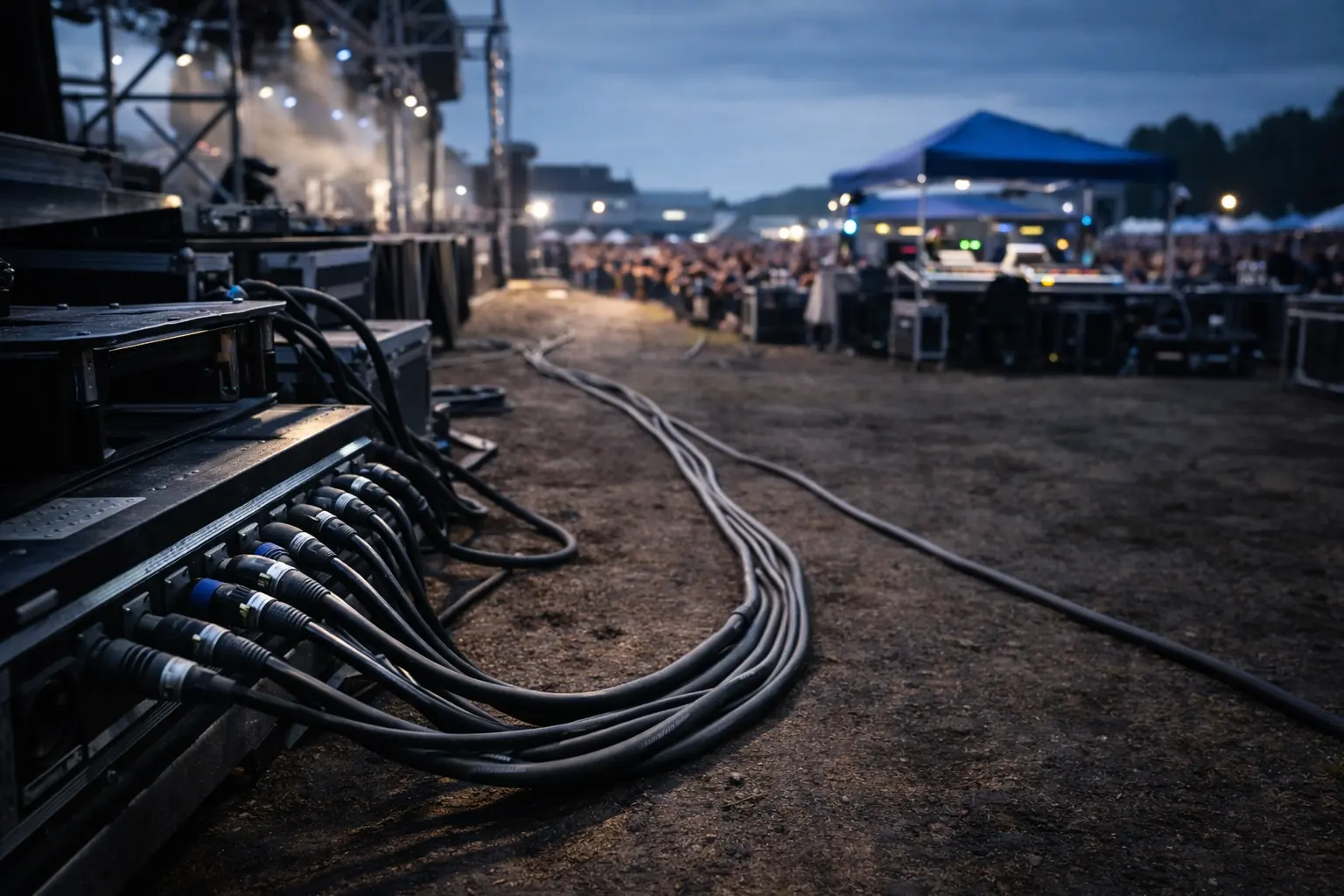
If you’re buying in bulk, your goal is simple: every batch performs the same.
OEM spec checklist (copy/paste)
Electrical
-
Capacitance: ___ pF/m
-
Conductor gauge: ___ AWG
-
DC resistance: ___ Ω/km
-
Shield type: spiral / braided / foil + coverage %
-
If AES: 110Ω characteristic impedance
-
If DMX: 120Ω characteristic impedance
Mechanical
-
Jacket material and temperature range
-
OD tolerance
-
Flex requirement (install vs touring)
Assembly + QC
-
Strain relief type
-
Pull test target
-
100% continuity + polarity test
-
Batch spot checks for capacitance and resistance
Packaging and labeling (Geo intent)
-
US: rental-friendly labels + barcodes
-
EU/UK: consistent documentation
-
SEA: humidity-aware storage notes and durable packaging
Where Jingyi Audio fits
Jingyi Audio already publishes practical guides and product pages that talk about cable use, wiring, and customization paths. For an OEM buyer, the next step is making the “long-run spec” easy to request: capacitance target, AWG choice, shielding type, jacket, and QC plan. That’s what turns a blog reader into a real inquiry.
FAQ
1) What is the xlr max length for a microphone?
A safe planning number is 30 m / 100 ft, and 90 m / 300 ft is common with good cable and setup. Your noise environment and grounding matter more than the number on the reel.
2) Does XLR cable length affect sound quality in a home studio?
Most of the time, no. If you hear changes, check grounding, EMI sources, and impedance mismatch first.
3) How long can an XLR cable be for powered speakers?
Often tens of meters are fine. Hum problems usually come from grounding and power, not distance by itself.
4) Can I join two XLR cables to make a longer run?
Yes, but each extra connection adds risk. Use a proper coupler and strain relief, and test it before a show or install.
5) What’s the maximum AES/EBU cable length?
Many systems aim around 100 m using proper 110Ω AES/EBU cable. Wrong cable can cause dropouts even when audio sounds fine at first.
6) Can I use mic cable for DMX?
Short runs might work, but it’s not a good plan for stable systems. Use proper 120Ω DMX cable and correct termination.
7) Is star quad better for long runs?
It can help with interference, but it often has higher capacitance. Choose based on your environment.
8) What specs should I ask for in an OEM order?
Capacitance (pF/m), AWG, shield type/coverage, jacket, strain relief, plus a clear QC plan (continuity tests and batch checks).