


XLR7 Safety Guide for OEM/ODM: Pinouts, Length, QA
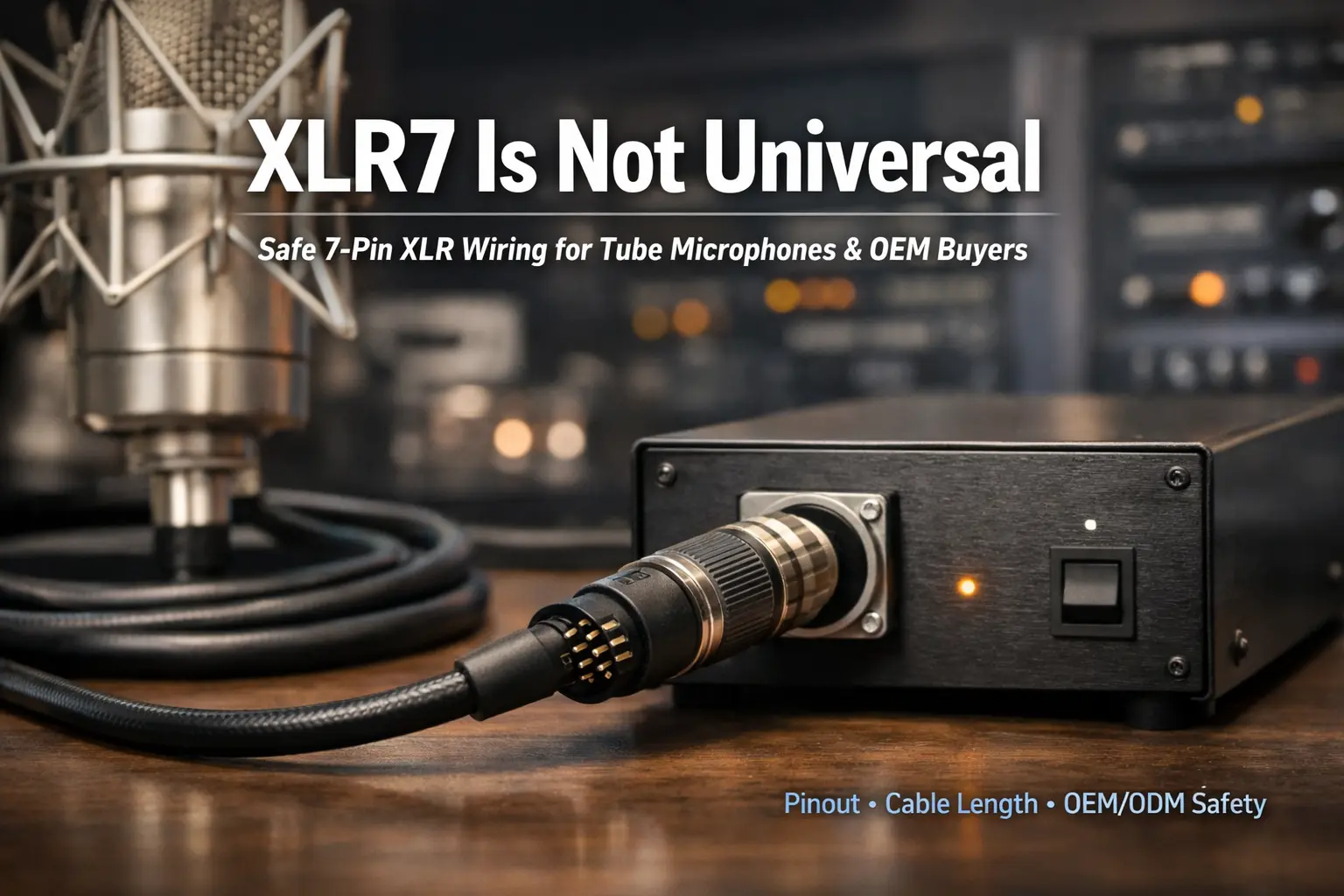
Short answer: xlr7 (7-pin XLR) is not one universal “plug-and-play” cable standard. In tube-mic systems, pin assignments can differ by brand and model, so the wrong cable can cause anything from noise to real hardware damage. For OEM/ODM buyers, the safest approach is simple: lock the pinout on paper, build the cable to that drawing, and test every unit.
What xlr7 is (in plain terms)
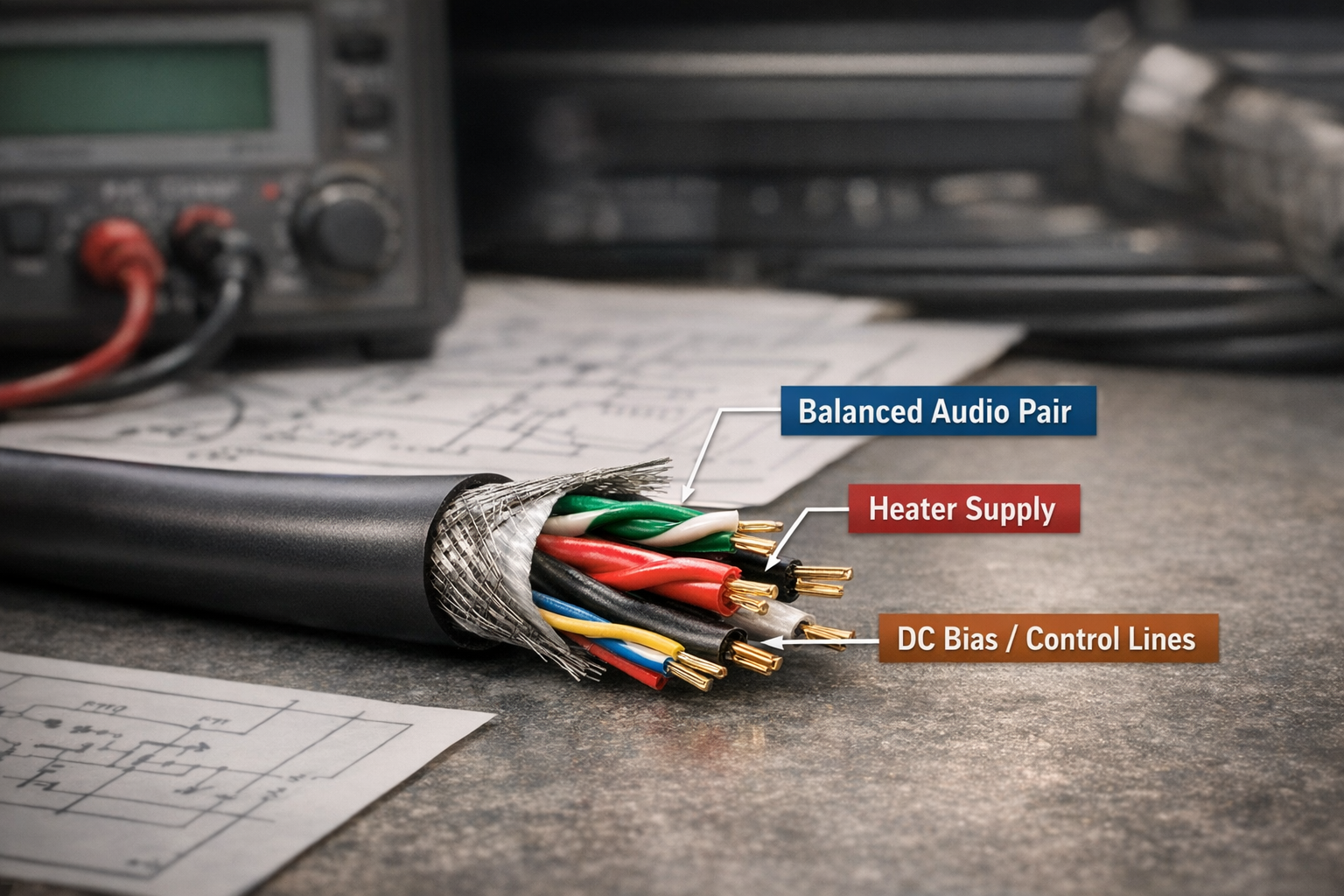
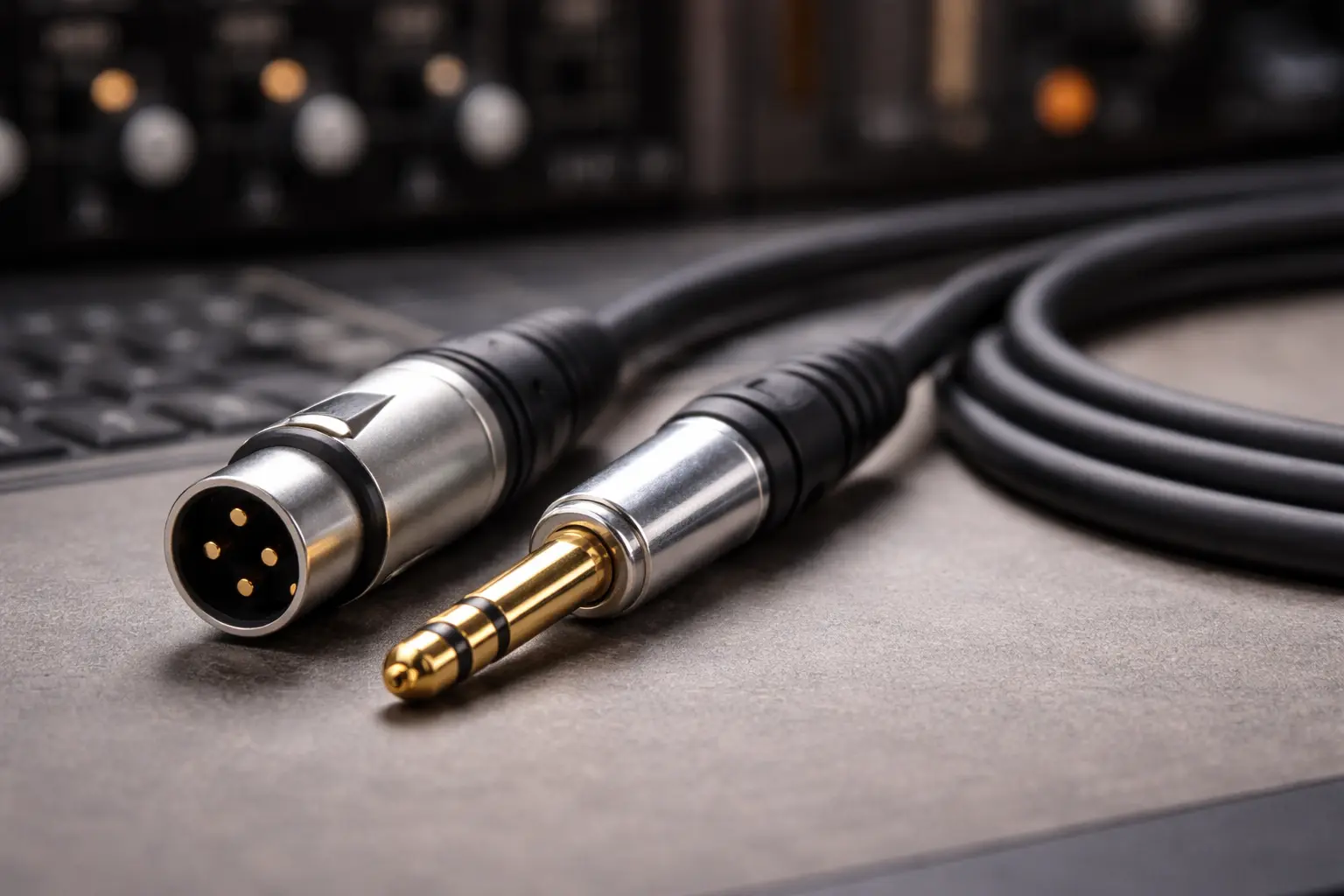
xlr7 usually means a 7-pin XLR connector and cable used when three pins aren’t enough. The most common case is tube microphones that need a cable between the mic and its external power supply (PSU). That one cable may carry:
-
A balanced audio pair
-
A heater supply (low voltage, higher current)
-
Bias / polarization or other DC rails
-
Sometimes pattern/control lines
Here’s the catch: a 7-pin XLR connector can also be used in other gear families (like intercom headsets), where the pins do completely different jobs. Clear-Com publishes an XLR-7M headset pinout that includes left/right headphone lines and push-to-talk pins, which is a totally different wiring world than tube mic PSU cables.
Direct answer to the big question: is xlr7 standardized and universal?
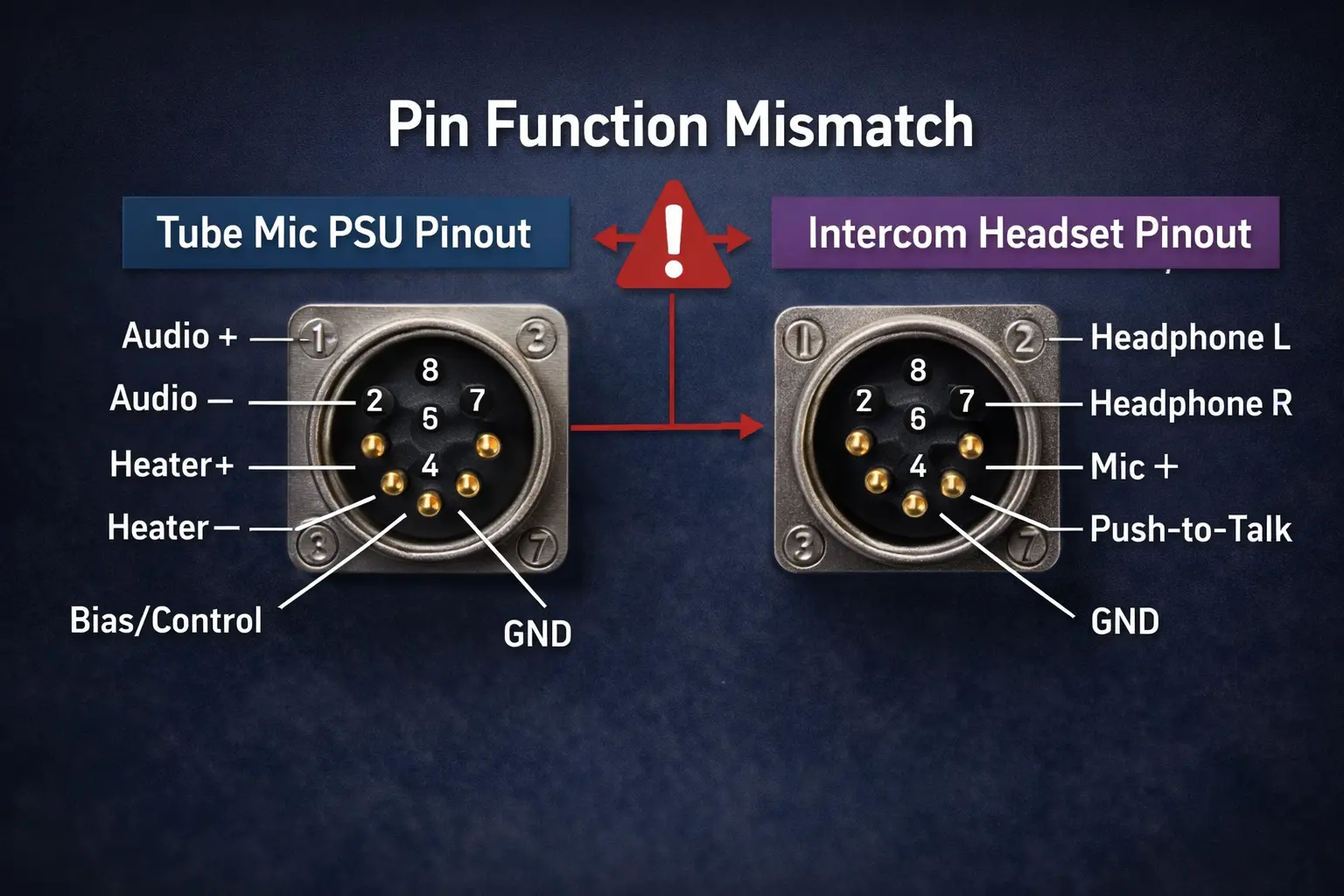
No. There isn’t one global “xlr7 pinout” you can count on across brands. Gotham Cable, a well-known pro-audio cable maker, says tube mic 7-pin wiring has no universal pin pattern and you must follow the microphone maker’s wiring diagram.
If you’re buying, building, or sourcing xlr7 assemblies, treat them like a configured system part, not a generic mic cable.
Question people keep asking: “How long can I run an XLR7 cable for a tube mic without losing quality or dropping voltage?”
Most of the trouble with long tube-mic xlr7 runs isn’t “audio loss” like people think. The real issues are usually:
-
Heater voltage drop (because heater lines carry more current)
-
Hum and buzz (shielding and ground handling)
-
Mechanical wear (strain relief, repeated bending, connector fit)
Heater lines are often the length limiter
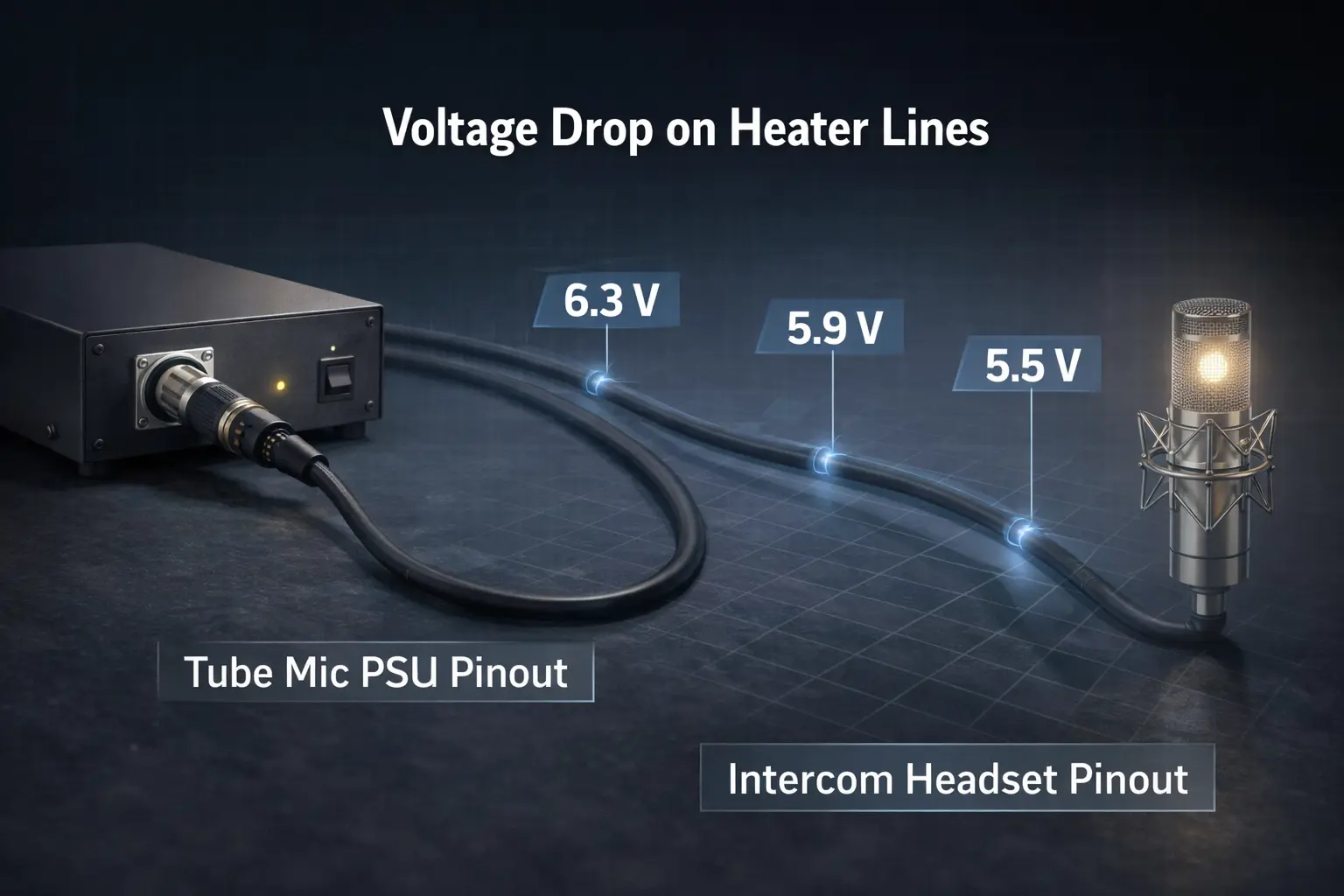
Heater supplies tend to be low voltage and relatively higher current. That combo makes the cable’s DC resistance more noticeable as length increases. Even if your audio pair is fine, heater sag can leave a tube running off its sweet spot, which can show up as extra noise or a “weirdly weak” sound.
For OEM/ODM specs, don’t guess. Put numbers on it.
A good reference style is Mogami’s tube mic cable W3172 spec sheet, which lays out conductor sizes and measurable electrical properties (like DC resistance and capacitance). Those are the kinds of figures that let an engineer estimate heater drop and set acceptance limits.
A practical length policy for OEM/ODM buyers
Instead of claiming one universal max distance, build a policy around testing:
-
Standard length: ship a length you have validated (commonly around 6 m in many product bundles and replacement offerings)
-
Extended options: offer longer lengths only when you have test evidence that:
-
heater voltage at the mic end stays within your product’s safe window after warm-up
-
hum/noise stays under your spec in a realistic EMI environment
-
the cable passes bending and pull tests without intermittent faults
-
Microphone-Parts sells a 7-pin tube mic cable for specific mic families at 20 feet (about 6 m). That’s not a universal limit, but it’s a common “safe default” in the market for certain mic ecosystems.
Question people keep asking: “Are all 7-pin XLR cables the same, or can the wrong one blow up my PSU?”
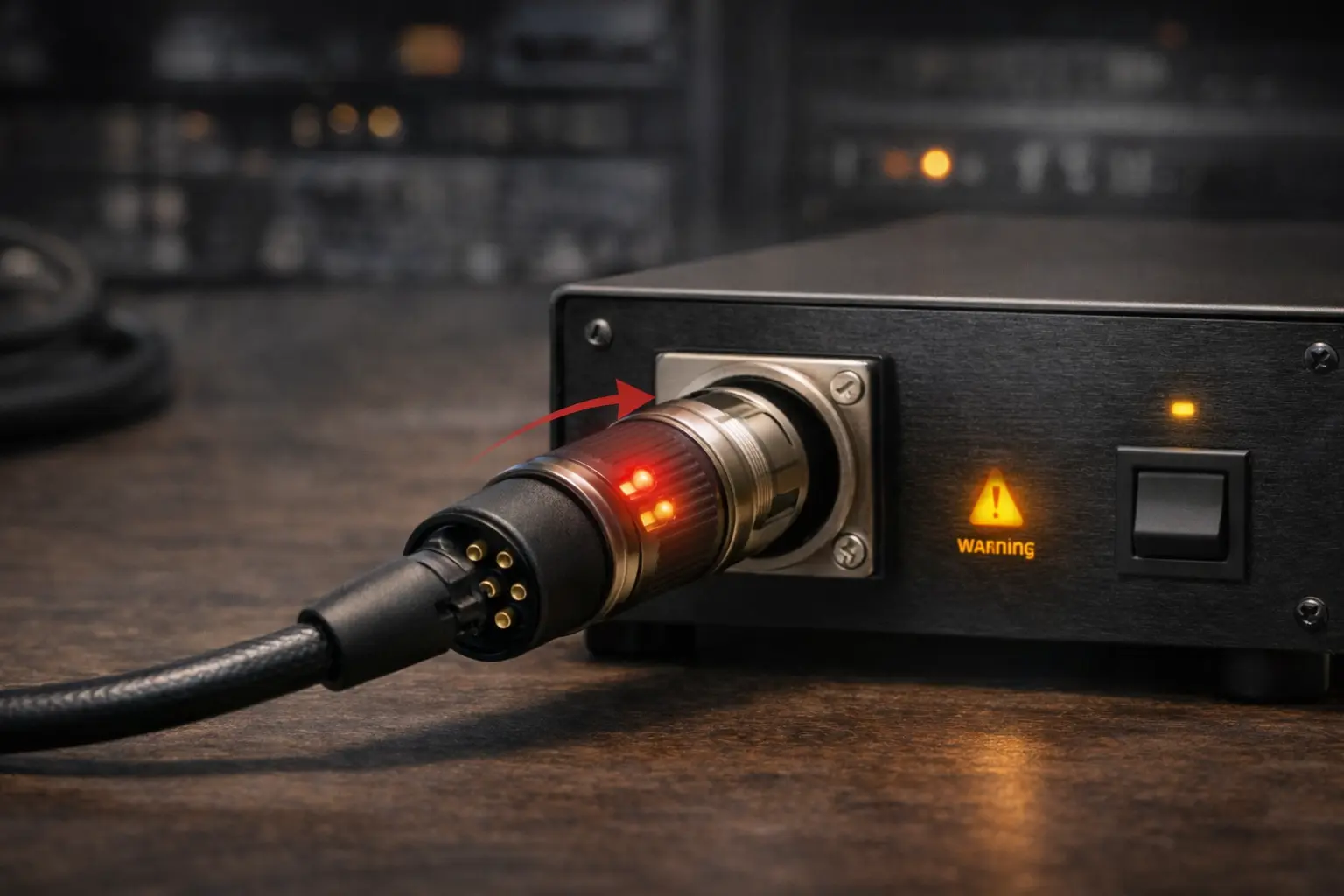
They are not all the same, and yes, the wrong wiring can cause serious problems—especially in tube mic systems where some pins carry DC rails.
Here’s the pattern that causes accidents:
-
A buyer sees “7-pin XLR” and assumes it’s universal
-
A cable built for one mic family gets plugged into another
-
A DC rail lands on a pin that the other system expects as ground (or an audio line)
Cable vendors avoid promising universal compatibility for exactly this reason. Gotham’s guidance is blunt: you need the maker’s wiring diagram for tube mic 7-pin cables.
At the other end, some replacement cables are intentionally “straight-through” (pin 1 to pin 1, etc.) and sold as compatible with a defined list of mic models. Microphone-Parts does this, and it works because they’re targeting a specific ecosystem rather than claiming “fits everything.”
A safe rule to put in your manuals (OEM/ODM ready)
-
“Use only the supplied cable or a cable built to the official pinout for this model. Substituting a 7-pin XLR cable can damage the microphone or PSU.”
Support doc you should publish (internal link)
-
Pinout verification checklist: /guides/xlr7-pinout-verification
Make it easy for customers and techs to confirm continuity before power-on.
Connector reality check: datasheets can save you from bad assumptions
A lot of people assume any 7-pin XLR connector is “high-voltage ready.” That assumption can be wrong in awkward ways.
For example, Neutrik’s NC7MXX datasheet (dated 23.12.2025) lists a rated voltage < 50 V, plus dielectric strength, insulation resistance, and contact resistance figures.
What this means for OEM/ODM sourcing:
-
Don’t buy a connector only because the form factor matches
-
Read the datasheet and define how it fits your design and compliance needs
-
Document your connector choice and derating rules in your build spec
Two terms that get mixed up
-
Rated voltage: an operating rating under defined conditions
-
Dielectric strength: a test value about insulation breakdown under test voltage
They’re related but not interchangeable. Your safety/compliance team should decide what matters for your product class, operating environment, and expected wear.
Don’t mix ecosystems: headset/intercom xlr7 vs tube mic xlr7
This is where real-world mistakes happen during touring, rentals, or rushed studio sessions.
Clear-Com’s XLR-7M headset wiring includes separate headphone channels and push-to-talk wiring.
That pin map is not meant for tube mic PSU cables. If you ship both product types, treat them as separate:
-
Separate BOM families
-
Separate cable jacket markings
-
Separate QC fixtures
-
Separate packaging colors or labels
It sounds basic, but it cuts down “mystery failures” that are really just cable swaps.
Question people keep asking: “Does the Snap Jack magnetic cable keep signal clean, and does it stop the ‘pop’?”
This topic is related because it’s about connector behavior and customer expectations, but it’s usually not an xlr7 tube-mic PSU product. Snap Jack is typically discussed in the context of instrument cables (guitar/bass).
What we can say from public product/retail descriptions: Reverb listings describe Snap Jack as a magnetic breakaway cable that reduces damage risk and claims it avoids popping or screeching noises when it disconnects.
A separate write-up also describes it as disconnecting without noise.
Those are market claims, not lab papers. If you’re an OEM/ODM buyer evaluating a similar idea, make it measurable.
How an OEM can test “no-pop” claims in a way that doesn’t feel like hype
-
Measure transient peak at the amp input during disconnect under a defined load
-
Run the test across cable lengths and humidity levels (static changes)
-
Do durability cycles and re-test (plating wear changes behavior)
If your product passes repeatable tests, your support team will have something solid to stand on.
OEM/ODM build guide: how to specify an xlr7 cable assembly so it doesn’t come back to haunt you
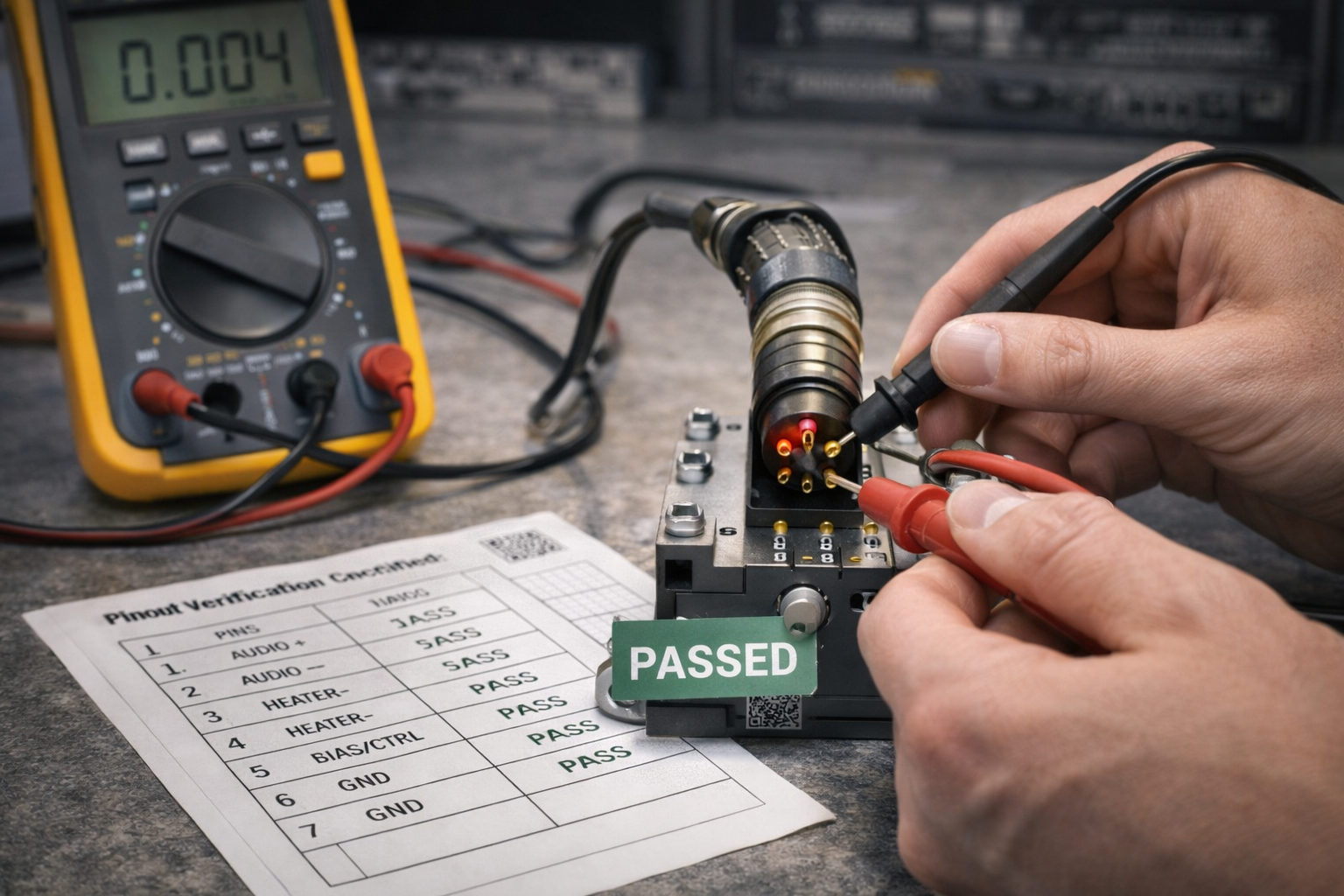
Below is a buyer-friendly, engineer-friendly checklist you can drop into a statement of work (SOW).
1) Lock the pinout as a controlled document
-
Pin number → function mapping
-
Wire colors per pin
-
Shield termination method
-
Shell bonding policy (yes/no; one end or both ends)
Make it a revision-controlled drawing (example: XLR7-CA-001 Rev C). If you change one pin function later, you want traceability.
2) Specify the cable by circuit, not just “7 cores”
-
Heater pair: focus on low DC resistance
-
Audio pair: balanced geometry and shielding plan
-
Control/bias lines: insulation and stability
Mogami’s W3172 spec sheet is a good example of the kind of published parameters you can mirror in your own spec language.
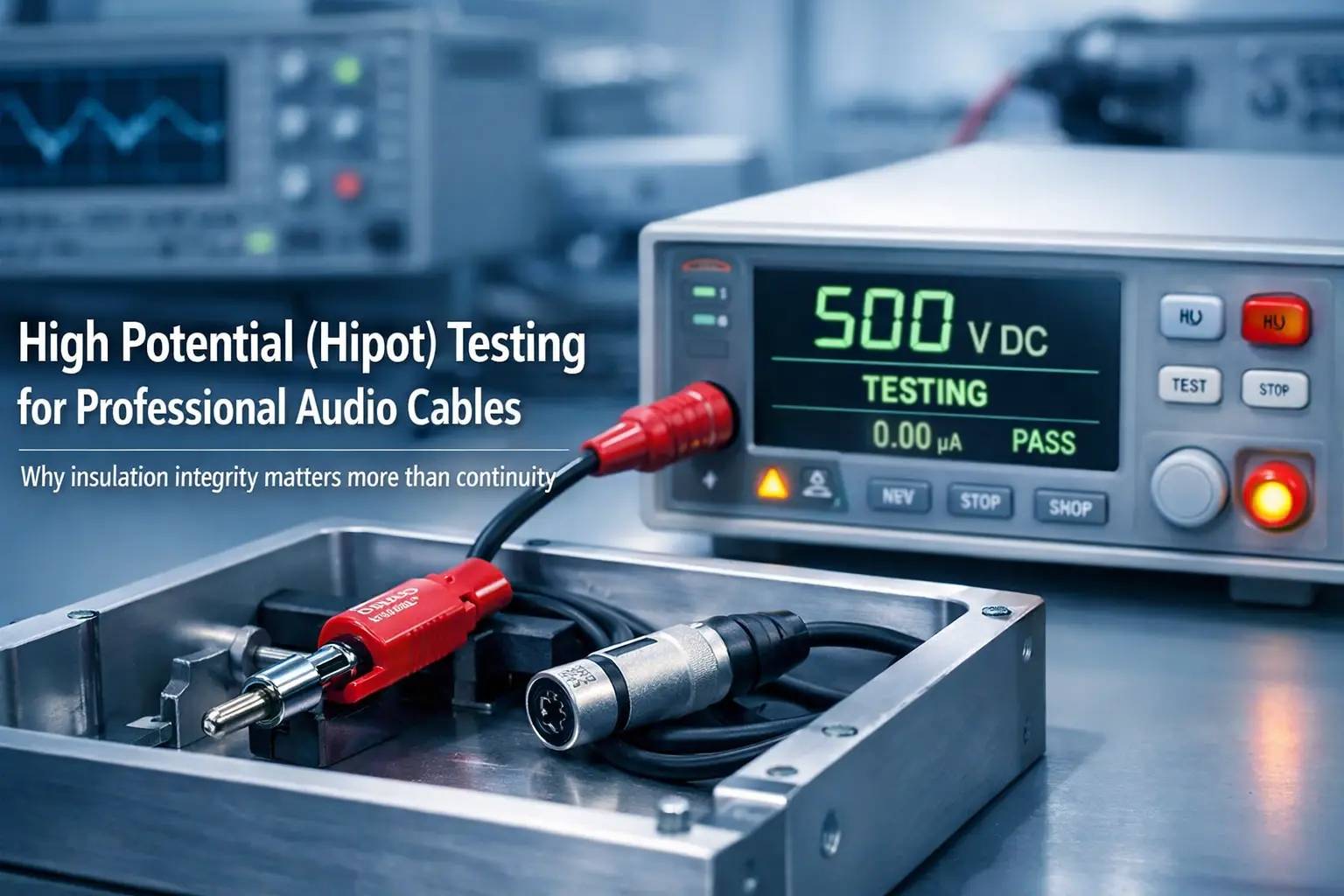
3) Require 100% electrical testing, not sample checks
Minimum recommended tests per finished assembly:
-
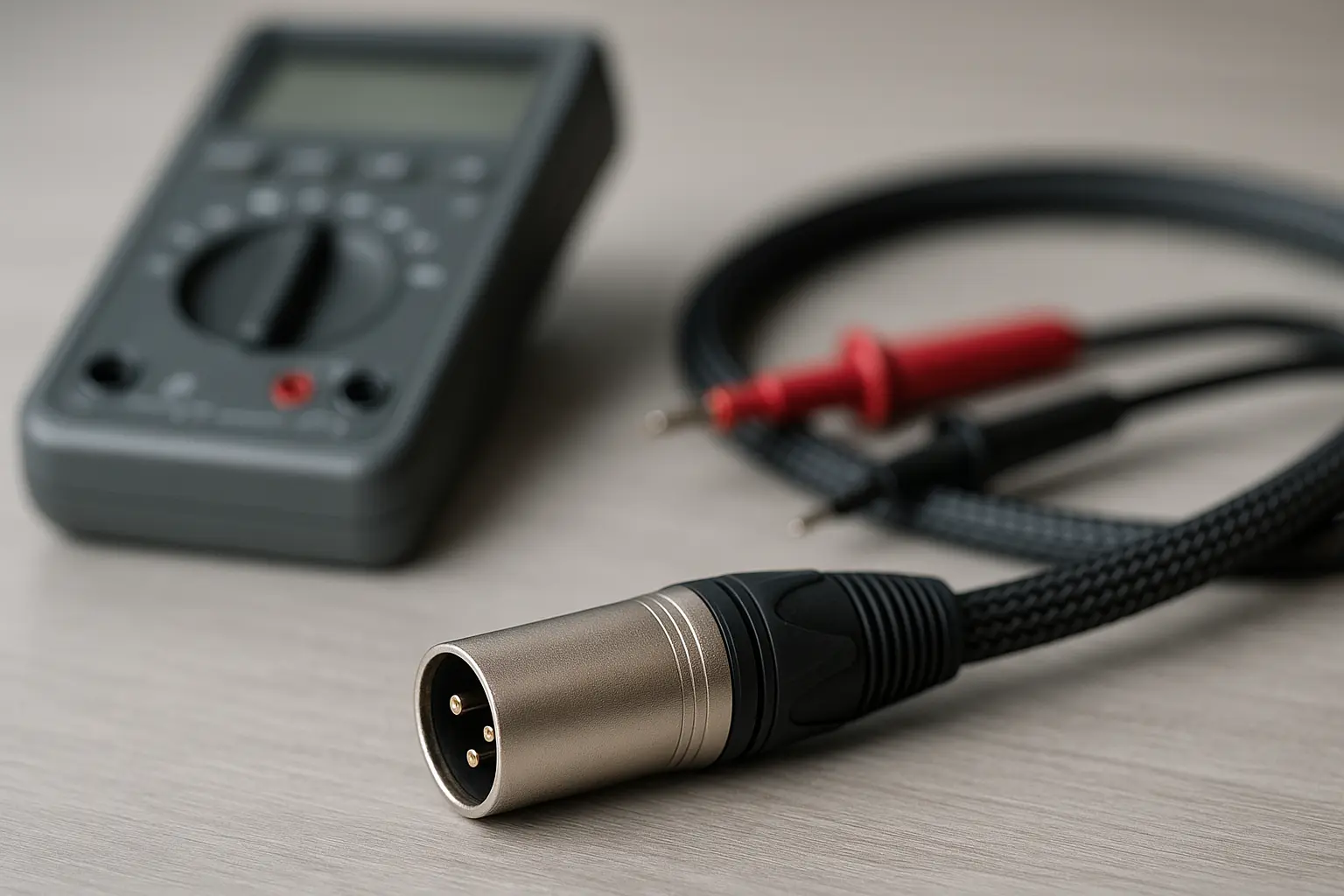
Pin-to-pin continuity against the drawing
-
Short test matrix between all pins
-
Conductor resistance for each core (at least heater cores)
-
Shield continuity and shell bond verification
4) Mechanical tests that prevent intermittent faults
-
Pull/strain relief test at connector exit
-
Flex cycle near backshell
-
Visual inspection of solder joints and insulation
5) Packaging controls that stop cable swaps
-
Heat-shrink labels on both ends (“Tube Mic PSU Cable — Model ABC”)
-
Color ring coding per product line
-
QR code label that points to your verification guide
-
A warning card: “Do not substitute 7-pin cables”
Where JINGYI’s manufacturing details fit (if you’re vetting OEM partners)
JINGYI’s Thailand manufacturing page mentions a constant 21°C workshop environment for hand soldering, inspection, and packaging. For cable assembly work, those kinds of process cues often go with stable QC routines and repeatable results.
Quick comparison table (useful for buyers and support teams)
| Use case | What it carries | Main risk | Safe rule |
|---|---|---|---|
| Tube mic (PSU ↔ mic) | Audio + heater + DC rails/control | Pinout mismatch, heater sag, hum | Use only the cable built to the official pinout |
| Intercom/headset | Mic ±, L/R headphone, push-to-talk | Cable swaps across systems | Don’t mix headset XLR-7 with tube mic PSU cables |
| Magnetic instrument cable | Instrument signal path | Pop/noise claims, wear | Validate transient behavior + durability |
Takeaways for OEM/ODM customers
-
xlr7 is a connector format, not a universal wiring standard. In tube mic systems, pin maps vary by maker.
-
Cable length problems often come from heater voltage drop and noise pickup, so publish measurable targets and test at max length.
-
Connector datasheets matter. Neutrik’s NC7MXX lists rated voltage and other parameters that should be reviewed when setting your own limits.
-
Headset/intercom xlr7 wiring can be completely different from tube mic xlr7 wiring, so keep product lines and packaging separate.
-
A good OEM xlr7 program is mostly paperwork + test discipline: controlled pinout drawings, 100% electrical testing, and clear labeling.