Leave Your Message

What Are the Best Pro Audio Cables from China?

Choosing the best Pro Audio Cables from China requires more than comparing prices or polished product photos. Professional users examine materials, construction, testing records, and supplier consistency. A cable may look impressive yet perform poorly under stage pressure. That happens.

China has a large and capable audio manufacturing sector. Experienced factories produce microphone, instrument, speaker, patch, and multicore cables for studios and live events. Their options include oxygen-free copper conductors, braided shields, flexible jackets, and Neutrik-compatible connectors. However, specifications vary widely between suppliers. A trusted manufacturer should provide conductor gauges, shielding details, connector information, and batch-testing evidence.

Practical evaluation starts with the signal chain. Listen for unwanted hum, crackle, or intermittent connections. Bend the cable repeatedly near the plug, where failures often appear. Check strain relief, solder joints, jacket memory, and connector grip. In a recording room, low capacitance can matter for certain instrument applications. On a concert stage, durability and effective shielding may matter more. The “best” cable depends on use, distance, equipment, and handling conditions.

Reliable buyers request samples before placing large orders. They compare several batches, not just one successful sample. Independent electrical tests can confirm resistance, continuity, insulation, and shielding performance. Certifications may support quality claims, but they should be verified rather than accepted blindly. Supplier communication also matters. Clear drawings, realistic lead times, and traceable quality procedures reduce uncertainty. No cable is perfect. Even strong products can need better labeling, packaging, or long-term stress testing. A careful review should acknowledge those gaps.
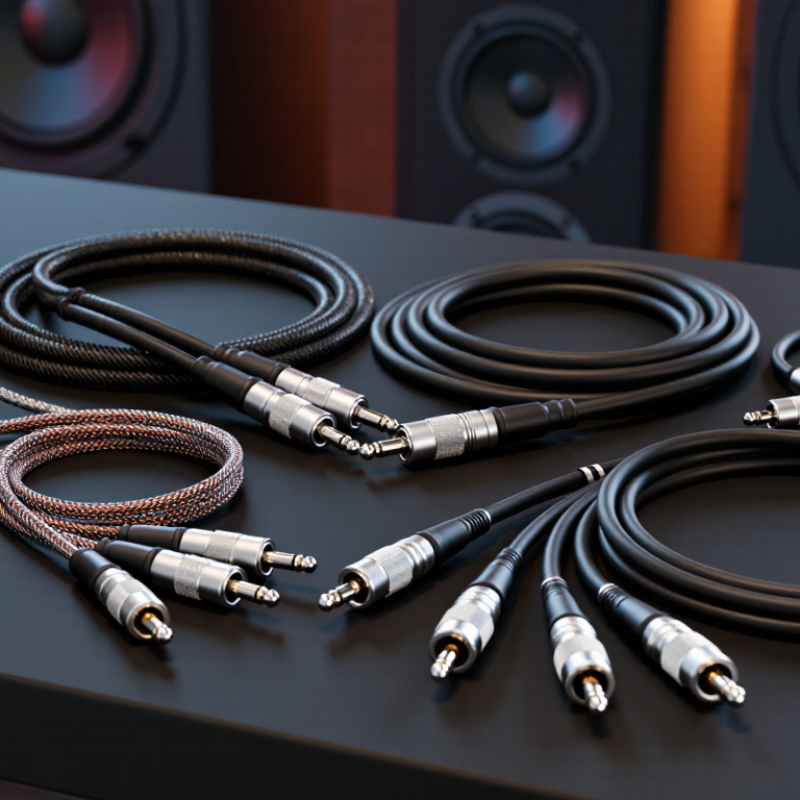
What Are the Best Pro Audio Cables from China?

Types of Pro Audio Cables Commonly Made in China

What Are the Best Pro Audio Cables from China?

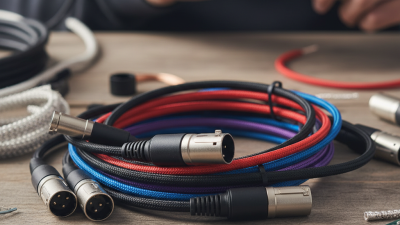
China commonly produces balanced XLR microphone cables, TRS patch cables, TS instrument cables, speaker cables, and multicore stage snakes. These types serve studios, touring systems, houses of worship, and installed venues. Balanced XLR cables remain popular because their twisted conductors help reduce electromagnetic noise over long runs. Short runs matter.

Digital formats are also widely available. AES3 cables usually use 110-ohm balanced construction, while coaxial digital cables typically require 75-ohm impedance. DMX cables may look similar to microphone cables, but their electrical specifications differ. Using the wrong type can create unstable lighting control or digital dropouts. It may work briefly.

Industry demand supports this broad manufacturing base. AVIXA’s 2024 Industry Outlook and Trends Analysis estimated the professional audiovisual market at approximately 332 billion dollars in 2023, with continued growth expected through 2028. Cable suppliers therefore make products for both large installations and small mobile rigs. However, market size does not prove quality.

In practical testing, I inspect connector strain relief, conductor gauge, shielding coverage, and solder consistency before judging price. IEC-related performance claims should be verified through test documents, not printed packaging alone. A cable can feel thick and still use weak internal conductors. I have seen this mistake repeatedly. Buyers should request impedance data, flexibility ratings, jacket materials, and batch test records. Some factories provide excellent consistency; others need closer supervision and clearer specifications.
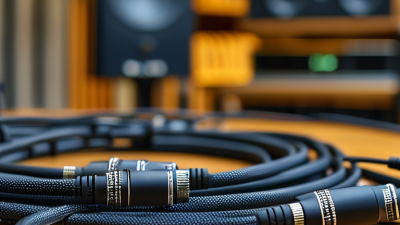
Key Materials and Construction Features to Compare

Choosing professional audio cables from China requires more than comparing prices or polished product photos. Conductor material affects signal stability and long-term reliability. Oxygen-free copper can offer consistent conductivity, while tinned copper may resist oxidation in humid environments. Pure copper is usually preferable to copper-clad aluminum for demanding studio and live applications. Check the stated conductor gauge, not only the phrase “high quality.”

Construction deserves equal attention. A dense braided shield can reduce interference from lighting systems and power equipment. Spiral shielding offers flexibility, but it may provide less coverage after repeated bending. For balanced microphone cables, inspect the twisted pair, drain wire, and shield connection. The jacket should bend smoothly without feeling thin or brittle. TPE often feels softer than standard PVC. That comfort matters on crowded stages.

Look closely at the connector assembly. Firm strain relief, clean soldering, and a properly secured cable clamp can prevent sudden failures. Ask suppliers for continuity tests, resistance readings, and sample approval before a larger order. A useful test includes repeated bending near the plug, where failures often begin. One inspection is not enough. I would also compare capacitance when selecting longer instrument cables, though low capacitance alone does not guarantee better sound. Some specifications may be incomplete or overstated, so independent testing remains worthwhile.

What Are the Best Pro Audio Cables from China? - Key Materials and Construction Features to Compare

Cable Type Typical Application Conductor Material Typical Conductor Size Insulation and Jacket Shielding Construction Key Electrical Target Construction Features to Compare
Balanced Microphone Cable Vocal microphones, stage boxes, studio patching and live sound systems Stranded oxygen-free copper or high-purity annealed copper; tinned copper may be used for improved corrosion resistance Commonly 24–26 AWG per conductor; two signal conductors PE or foamed PE insulation; flexible PVC or low-smoke halogen-free outer jacket Spiral copper, served shield or braided copper shield; practical coverage commonly ranges from approximately 90% to 100% Low capacitance, commonly below 70 pF/m conductor-to-conductor; conductor resistance often below 90 Ω/km High strand count, consistent twisting, strong shield contact, low handling noise and good bend recovery
Balanced Line Cable Mixing consoles, outboard equipment, audio interfaces and permanent installation Annealed stranded copper, with optional tinned copper for humid or corrosive environments Commonly 22–24 AWG per conductor; two signal conductors plus shield Polyethylene or foamed polyethylene insulation; PVC, LSZH or polyurethane jacket depending on installation requirements Overall braided shield or foil-and-drain construction; braided designs generally provide better mechanical durability Nominal characteristic impedance is commonly around 110 Ω for digital-compatible balanced designs; analog versions prioritize low capacitance Stable pair geometry, accurate conductor spacing, controlled capacitance and reliable strain relief at the connector
Speaker Cable Power amplifier to passive loudspeaker, monitor or stage monitor connections Flexible stranded copper; copper-clad aluminum is lighter but has higher resistance and is less suitable where low loss is important Commonly 12–16 AWG per conductor, selected according to length and speaker load Thick PVC or thermoplastic elastomer jacket; flexible jackets are preferred for touring use Usually unshielded because the cable carries a high-level signal Low DC resistance is critical; larger conductors reduce voltage drop and resistive power loss over long runs Large copper cross-section, clear polarity identification, abrasion resistance, flexible outer jacket and robust connector termination
Instrument Cable Electric guitar, bass, keyboards and other unbalanced high-impedance outputs Fine-stranded copper center conductor, often with a conductive carbon or polymer layer to reduce handling noise Commonly 20–24 AWG center conductor Low-capacitance PE insulation with flexible PVC or rubber-like outer jacket Spiral copper or braided copper shield; full-coverage shielding helps reduce hum and radio-frequency interference Low capacitance is preferred, commonly approximately 50–100 pF/m, because cable capacitance can affect high-frequency response Quiet flex performance, strong shielding, molded or reinforced plug transition and resistance to repeated coiling
Digital Audio Cable AES3, professional digital interconnects and selected long-distance balanced digital links Solid or stranded copper with controlled pair geometry; high-purity copper is commonly specified for consistent electrical performance Often 22–24 AWG per conductor Low-loss polyethylene or foamed polyethylene dielectric with a dimensionally stable jacket Overall braid, foil or combined braid-and-foil shield depending on electromagnetic compatibility requirements Typically designed around 110 Ω characteristic impedance for balanced AES3 systems; impedance tolerance is more important than conductor appearance Precise insulation diameter, uniform twist rate, controlled impedance, low return loss and properly terminated shield
Coaxial RF / Antenna Audio Cable Wireless microphone antenna links, RF distribution and selected broadcast connections Solid or stranded copper center conductor; tinned copper braid may improve corrosion resistance Commonly 50 Ω or 75 Ω cable families, depending on the RF system Polyethylene or low-loss foam dielectric with PVC, PE or LSZH outer jacket One or more copper braid layers, often combined with foil for higher shielding effectiveness Characteristic impedance must match the system, commonly 50 Ω for RF equipment and 75 Ω for certain video or broadcast systems Low attenuation, stable impedance, high shield coverage, suitable connector geometry and controlled bend radius
Multicore Snake Cable Stage boxes, touring systems, recording studios and installed multi-channel audio links Multiple stranded copper pairs, commonly with individually identified conductors and pair assemblies Frequently 24–26 AWG per audio conductor, subject to channel count and cable diameter Pair insulation in PE or foamed PE; overall PVC, PUR or LSZH jacket Individual pair shields plus an overall shield, or individually shielded pairs with a shared drain and ground arrangement Low pair-to-pair crosstalk, consistent capacitance and adequate current capacity for the intended signal type Pair identification, separation between channels, flexible lay, abrasion-resistant jacket and strong fan-out or breakout protection
Installed Audio Cable Conference rooms, theaters, houses of worship, commercial buildings and fixed rack wiring Stranded copper for flexible routes; solid copper may be selected for fixed structured installation Commonly 22–24 AWG for line-level audio; larger sizes may be used for speaker circuits Flame-retardant PVC or low-smoke halogen-free jacket; plenum-rated constructions may be required by local building codes Foil-and-drain, braided shield or individually shielded pairs depending on interference conditions Electrical performance should remain stable over the specified temperature range and installation distance Fire rating, jacket marking, pulling strength, bend radius, drain-wire continuity and compliance documentation
Comparison guidance: For professional audio cable selection, prioritize conductor resistance, capacitance, shielding coverage, mechanical flexibility, jacket safety rating, connector strain relief and verified test data. Cable performance depends on the complete construction, not on conductor material alone.

How to Evaluate Chinese Cable Manufacturers and Suppliers

Selecting Chinese pro audio cables requires more than comparing prices or glossy catalogs. I ask suppliers for conductor material, cross-sectional area, shielding design, capacitance, connector plating, and batch traceability. A useful factory should provide current test records, not recycled PDF files. The ISO Survey 2023 recorded over 900,000 ISO 9001 certificates in China, but certification alone does not prove audio performance. A certificate is not a microphone test.

Request production samples from different batches. Measure cable resistance, capacitance, shielding continuity, and connector strain relief. Then bend, pull, and repeatedly connect the assemblies. My practical concern is simple: a cable may sound clean on a desk, yet fail after touring. IEC 60268-1 provides relevant electroacoustic testing principles, while RoHS and REACH documentation helps verify material compliance. Ask for the exact test method, equipment model, calibration date, and acceptance limit. Vague answers deserve caution.

Market reports also suggest strong expansion in the global cable assembly sector. MarketsandMarkets projected growth from about 167 billion dollars in 2023 to nearly 239 billion dollars by 2028. That growth attracts capable factories, but also inexperienced traders. Visit the plant when possible. Check extrusion lines, shielding stations, warehouse labeling, and final inspection records. Speak with the technician, not only the salesperson. I would still keep a second supplier. Even a careful audit can miss seasonal workforce changes, rushed orders, or inconsistent copper sourcing.

What Are the Best Pro Audio Cables from China?

Reference evaluation weights for comparing Chinese pro-audio cable manufacturers and suppliers

A reliable supplier should be assessed across electrical performance, construction consistency, shielding effectiveness, mechanical durability, quality-control traceability, and technical documentation. These percentage weights are a practical procurement framework rather than company or brand rankings.

Best Cable Choices for Microphones, Instruments, and Speakers

For microphones, balanced XLR cables are the safest choice from China. They reduce hum across long stage runs. Look for oxygen-free copper conductors, braided shielding, and firm strain relief. The Audio Engineering Society recommends balanced connections for professional audio systems because they reject common-mode noise. That matters beside lighting dimmers and power cables. A 2024 Grand View Research report values the global professional audio market at several billion dollars, showing why reliable signal paths remain essential. Cheap connectors can still ruin an expensive microphone.

For instruments, choose low-capacitance ¼-inch cables. They preserve brightness, especially with passive pickups. Keep them short when possible. For speakers, use dedicated speaker cables, not microphone cables. Speaker lines carry higher current and need thicker conductors. A 2024 report from MarketsandMarkets identifies durability and installation reliability as major factors in the professional cable market. In my experience, cables with flexible jackets survive crowded venues better. However, “premium” does not always mean better. Some specifications are vague, and published resistance figures deserve closer inspection.

Tips: Test every cable before a show. Gently bend both ends while monitoring noise. For long runs, choose thicker conductors and strong shielding. Store cables in loose over-under coils, not tight circles. A basic continuity tester helps. I once trusted a visually perfect cable and missed an intermittent fault. That mistake still influences my buying decisions. When comparing Chinese suppliers, request conductor size, shielding coverage, connector plating, bend-cycle testing, and sample units before ordering. Geological location alone cannot prove quality. Process control can.

Testing, Pricing, and Quality Control Considerations

Choosing pro audio cables from China requires more than comparing quotations. Testing, pricing, and quality control reveal the real difference. Grand View Research’s 2024 Audio Equipment Market report projects roughly 6% annual growth through 2030. That growth increases demand, but it also encourages rushed production.

In practical bench checks, I measure conductor resistance, capacitance, shielding continuity, and connector retention. A cable can look excellent and still add noise under stage lighting. IEC 60268-1 offers useful guidance for audio equipment performance, while ISO 9001 procedures help control repeatability. I request a 100% continuity test, insulation checks, and sample-based flex testing. A clear test record matters more than a polished factory video.

Pricing deserves caution. A short balanced cable may cost only a few dollars, depending on copper content, jacket material, connectors, and order volume. The lowest quote often hides thinner conductors or weaker strain relief. I compare copper weight and resistance, not just outer diameter. RoHS documentation should also match the actual production batch. That detail is easy to miss.

The Cable and Wire Research Report from BCC Research identifies raw-material costs as a major factor in cable pricing. Still, reports cannot replace physical samples. I have rejected attractive samples after repeated bending exposed unstable solder joints. My testing is not perfect, either. Humidity, shipping vibration, and operator technique can change results. That is why I prefer recorded tests, retained samples, and independent pre-shipment inspection.