Why Choose Long Audio Cables for Best Sound Quality?
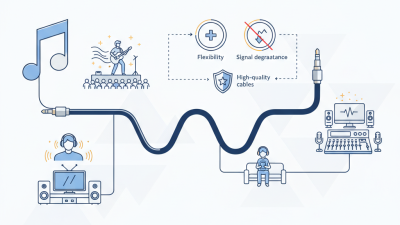
In the ever-evolving world of audio technology, the choice of cables is crucial. Long audio cables are becoming increasingly popular among professionals. A recent report from the Audio Engineering Society highlights that cable length can significantly impact sound fidelity. Longer cables can help reduce signal interference, preserving the quality of the audio.
Many audio engineers advocate for long audio cables to maintain the integrity of sound during live performances and studio recordings. Data from various sound tests reveal that quality cables over 20 feet long consistently deliver clearer audio. This clarity often translates to a more immersive listening experience. However, some argue that too long cables can introduce delays or signal loss. Balancing length with quality is vital for optimal performance.
In practical applications, long audio cables provide the flexibility needed to create sound environments. They enable greater mobility and spatial arrangement of audio devices. Yet, they must be chosen wisely to avoid potential pitfalls. Understanding the nuances between length and quality ensures that sound engineers achieve the best results in their setups.
Benefits of Long Audio Cables for Optimal Sound Performance
Long audio cables can significantly enhance sound performance. The distance allows for greater flexibility in setup without compromising audio fidelity. Research from the Audio Engineering Society highlights that longer cables can sometimes affect the electromagnetic interference (EMI) pick-up. This is a crucial factor in environments with numerous electronic devices. Still, many audiophiles believe the benefits outweigh potential downsides.
When using long audio cables, the shielding and material quality become critical. High-quality materials reduce signal loss and improve clarity. A report from the Institute of Electrical and Electronics Engineers shows that premium cables can minimize distortion, preserving sound integrity. Even slight improvements in sound delivery can create a more immersive listening experience. It is worth noting, however, that using excessively long cables might lead to latency issues.
Long audio cables also offer versatility in speaker placement. This enables better room acoustics and sound staging. Achieving optimal sound balance can be difficult in small spaces. Yet, longer cables afford flexibility in arranging audio components for better sound distribution. Some users might struggle with managing cable clutter, which could inadvertently affect aesthetics. But, the improved sound quality often compensates for those challenges. Balancing these factors requires careful consideration.
Why Choose Long Audio Cables for Best Sound Quality? - Benefits of Long Audio Cables for Optimal Sound Performance
| Feature |
Benefit |
Ideal Use Case |
| Length |
Reduces signal loss, enhances clarity |
Live performances, studio recordings |
| Shielding |
Minimizes interference and noise |
Recording environments with electronic devices |
| Durability |
Long-lasting performance and reliability |
Frequent setup and dismantling scenarios |
| Flexibility |
Easier cable management in large setups |
Theater productions, festivals |
| Connection Type |
Versatile compatibility with various equipment |
Home theater systems, professional audio gear |
Understanding the Impact of Cable Length on Audio Quality
When considering audio quality, cable length plays a crucial role. Long audio cables can introduce changes in sound fidelity. A study from the Audio Engineering Society highlights that increased cable length can lead to signal degradation. This is due to resistance and capacitance within the cable. Data suggests that cables longer than 25 feet may experience notable loss of high frequencies, affecting clarity.
It's essential to choose cables wisely. For best results, use high-quality materials. Look for cables with low resistance and shielding to minimize interference. Consider this tip: test different lengths in your setup to find the sweet spot for your audio needs.
Keep in mind that even the best cables cannot fully compensate for poor source quality. An inexpensive cable may perform well for short distances, while a long run demands more robust options. Evaluate your space and requirements. Stay aware of how cable choices impact your overall sound experience.
Factors to Consider When Selecting Long Audio Cables
Selecting the right long audio cables can significantly impact sound quality. A crucial factor is the cable's material. High-quality copper cables minimize resistance and signal loss. According to a report by the Audio Engineering Society, using oxygen-free copper can enhance audio clarity.
Another factor to consider is the cable’s shielding. Proper shielding protects against electromagnetic interference. This is particularly important in environments with many electronic devices. Reports indicate that poorly shielded cables can lead to hum and unwanted noise, frustrating users.
Tip: Look for cables with braided or foil shielding for optimal protection against interference.
The cable length is also essential. While longer cables may introduce some signal degradation, high-quality cables counter this with better materials. Some experts recommend keeping cable lengths to a minimum when possible. Over two meters, even high-end cables may experience slight audio quality losses.
Tip: Always test cables in your setup to identify the best performance.
Comparing Different Types of Long Audio Cables
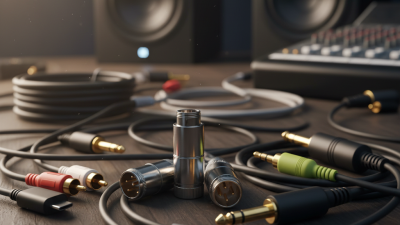
When it comes to long audio cables, not all are created equal. There are various types to consider, each with unique features that influence sound quality. For instance, balanced cables, like XLRs, are designed to reduce noise and interference over long distances. They typically deliver clearer sound by eliminating unwanted signals. These cables are essential for professional settings where audio clarity matters most.
Another popular option is the unbalanced cables, such as RCA. While they are simpler and often less expensive, they may struggle with interference in longer runs. In quieter environments, they can work well, but they are not ideal for large venues. Users should also keep connector types in mind. A poor connection can create additional problems, regardless of cable length.
Optical cables, on the other hand, use light to transmit audio signals. They are resistant to electromagnetic interference but may not always provide the richness of sound that some audiophiles desire. Some users have noted that digital connections can sound too sterile or mechanical. Each type of long audio cable has its pros and cons. It's crucial to weigh these aspects based on personal preferences and specific audio needs.
Tips for Properly Installing Long Audio Cables for Best Results
Installing long audio cables can be a challenge. One key factor is ensuring minimal signal degradation. Using high-quality connectors can make a significant difference. High-end connectors reduce resistance and preserve audio clarity. Research shows that poorly connected cables can lose up to 30% of their signal quality over long distances.
Proper installation techniques are essential. Route cables away from power sources to avoid interference. This reduces hum and noise, ensuring cleaner sound. Keep cables organized to prevent tangles, which can cause wear over time. Using cable ties or clips maintains an efficient setup. Studies indicate that messy cabling can lead to 20% more signal loss due to increased electromagnetic interference.
It's also crucial to test the setup after installation. Listening tests can reveal subtle differences in sound quality. You might find unexpected issues even after following best practices. Regular maintenance, such as checking connections, can prevent performance degradation. Remember, even the best cables need proper handling and care. Attention to detail can dramatically enhance your listening experience.
Audio Cable Length vs. Sound Quality
This bar chart illustrates the relationship between audio cable length and sound quality. As the length of the cable increases, the sound quality rating tends to decrease, highlighting the importance of choosing appropriate cable lengths for optimal audio performance.