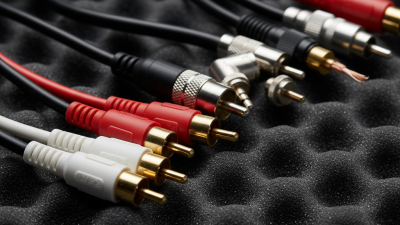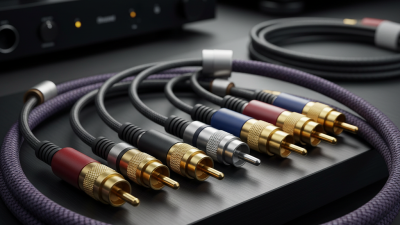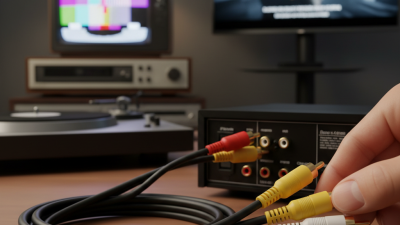
Choosing the right RCA Cable Ends can affect signal stability, installation speed, and long-term product reliability. Global buyers often compare connectors by appearance, yet small construction details matter more. A gold-plated contact may resist oxidation, while a nickel-plated option can reduce costs for high-volume orders. The best choice depends on the application, cable structure, equipment design, and expected operating environment.
This guide examines ten common RCA cable end types used in audio, video, automotive, and professional equipment. These include standard male plugs, female sockets, right-angle connectors, panel-mount ends, solder terminals, crimp styles, and compression designs. Each type offers practical advantages. A right-angle plug may fit neatly behind a television. A panel-mount socket can provide stronger support on a metal enclosure. A solder connector may suit repair work, but it requires careful heat control and steady hands.
Reliable purchasing requires more than reading a supplier’s product title. Buyers should verify conductor size, contact material, housing strength, cable compatibility, and connection method. Samples should be tested for insertion force, continuity, shielding, and repeated plugging. In practical inspections, connectors sometimes appear identical but perform differently under vibration. That detail is easy to miss. I have also seen specifications that sounded complete, yet failed to state tolerance ranges or plating thickness. A careful review should question unclear claims. Certification and test documents can support confidence, but they should come from traceable sources. This overview helps international buyers compare options clearly and avoid choosing only by price.
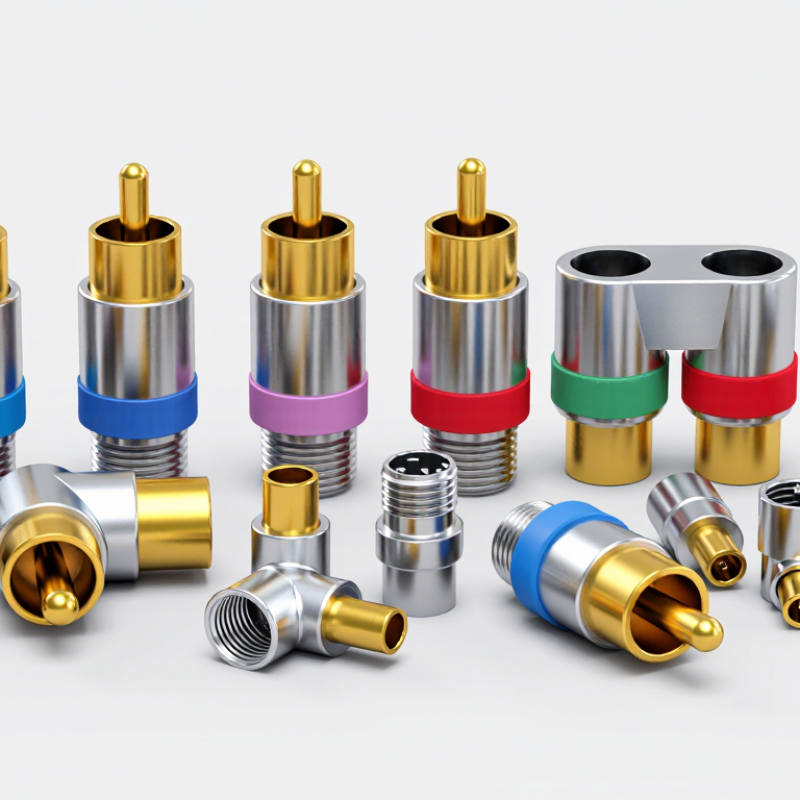
RCA cable ends use a simple coaxial structure. The center pin carries the signal. The outer sleeve provides the return path and shielding. A dielectric layer separates both conductors. The connector body supports alignment and mechanical protection. Key terms include male plug, female jack, contact, sleeve, insulator, and strain relief. Fit matters.
Common end types include straight plugs, right-angle plugs, molded ends, metal-shell ends, cable-mount plugs, panel-mount jacks, mono ends, stereo pairs, solder terminals, and crimp-style terminals. Straight plugs suit open spaces. Right-angle designs reduce bending behind equipment. Molded ends resist movement, while metal shells can improve durability. However, housing material alone does not prove better signal quality.
During purchasing inspections, check pin diameter, sleeve depth, cable flexibility, and contact pressure. A loose connection may create intermittent noise or signal loss. Excessive pressure can damage a socket. Gold-colored plating may resist oxidation, but it does not guarantee superior performance. I still treat color coding as a convenience, not proof. Measure twice. Also verify whether the end is designed for soldering, crimping, or factory assembly. Small differences often affect installation speed and long-term reliability.
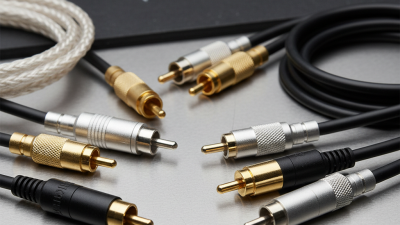
RCA male plugs connect media players, receivers, and amplifiers. RCA female jacks receive these plugs inside equipment or patch panels. Right-angle male ends save space behind televisions and rack systems. Right-angle female ends fit compact audio housings. Panel-mount male ends create fixed connections on cabinets.
Panel-mount female ends suit control panels and testing stations. Locking RCA ends reduce accidental disconnection during stage work. Compression-fit RCA ends support quick field termination and repairs. 3.5 mm-to-RCA ends connect phones, tablets, or laptops to stereo inputs. RCA-to-BNC hybrid ends link selected consumer devices with test instruments.
Practical assembly checks matter more than appearance. Confirm plug polarity, shell clearance, and cable diameter before ordering. Shield coverage affects noise performance, especially near power supplies. Strain relief also deserves attention; a beautiful connector can fail after repeated bending. Gold-colored contacts may resist oxidation, but they do not fix poor soldering. I have seen right-angle ends chosen for neatness, then blocked by a nearby socket. That mistake is easy to repeat.
Tips: Match the end type to the installation space. Use locking designs where movement is likely. Test continuity and left-right channels before shipment. For long runs, compare shielding, conductor size, and signal loss. Keep a small sample set for fit checks. It saves time, though it is not always convenient.
RCA cable ends vary widely: straight plugs, right-angle plugs, panel sockets, chassis mounts, bulkhead types, locking versions, solder terminals, crimp terminals, PCB-mount ends, and molded ends. Their performance depends less on appearance than on material selection. Brass provides practical strength and easy machining. Copper alloys improve conductivity. However, bare copper oxidizes quickly in humid storage. That small brown film can raise contact resistance.
Plating deserves closer attention. Nickel offers hardness and corrosion resistance, making it useful under gold or decorative finishes. Gold provides stable contact performance, especially in low-current audio connections. Silver has excellent conductivity, but it tarnishes and needs better environmental control. Tin is economical and solder-friendly, yet it can develop surface films during long storage.
The 2024 MarketsandMarkets connector industry report projects continued growth in connector demand, driven partly by higher reliability requirements in consumer and industrial equipment. That trend makes plating thickness and adhesion more important than color.
IEC 60512 testing practices examine contact resistance, mechanical endurance, and environmental durability. Buyers should request test results, not only plating claims. A molded strain relief should flex without whitening near the plug body. A metal shell should resist twisting when the cable is pulled sideways.
I would not call gold automatically superior. Thin gold can wear through after repeated insertion. In my experience, a well-applied nickel barrier and controlled plating thickness often outperform a cheaper, thicker-looking finish. Humidity testing is still easy to overlook. That is the uncomfortable part.
Top 10 Types of RCA Cable Ends for Global Buyers
Matching RCA cable ends starts with the equipment, not the connector’s appearance. Red and white RCA ends normally carry left and right analog audio. Yellow ends usually carry composite video. Component video uses three ends: Y, Pb, and Pr. Each signal needs the correct socket and cable structure. The RCA Audio and Video Cable Market report by Grand View Research projects roughly 6% annual growth through 2030, reflecting continued demand for compatible legacy equipment.
For digital coaxial audio, choose a 75-ohm RCA cable with firm shielding. IEC 60958-3 identifies 75-ohm coaxial transmission for consumer digital audio. A standard audio lead may work briefly, but it can create dropouts. Small details matter. For turntables, select low-capacitance RCA leads and connect the separate ground wire when required. Subwoofers usually need one shielded RCA end, while stereo receivers need two. Right-angle ends suit crowded rear panels. Panel-mount and locking ends help fixed installations. Female-to-female couplers extend reach, but every extra joint can weaken mechanical stability.
I have seen buyers connect red and white ends correctly, yet overlook cable direction and impedance. That mistake is common. It is also avoidable. Check the equipment manual, signal type, required length, and socket depth before ordering. Gold-plated contacts may resist surface oxidation, but they cannot repair poor shielding or loose tolerances. The match should be tested under real operating conditions, not only on a clean workbench.
Global buyers should compare RCA cable ends by application, not appearance. Ten common options include straight male, straight female, right-angle, panel-mount, bulkhead, solder, crimp, compression, locking, and shielded ends. Each supports a different installation. In cable inspections, I check contact pressure, plating, strain relief, and shield continuity first. A bright finish proves little. Very little.
The selection process needs measurable criteria. Composite video usually requires 75-ohm impedance and stable geometry, while basic analog audio may prioritize low contact resistance and handling strength. Buyers should specify cable diameter, bend radius, temperature range, pull force, mating cycles, and connector material.
IPC/WHMA-A-620 can support workmanship discussions for assembled harnesses. Compliance files should also cover applicable RoHS and REACH requirements. These details prevent costly rework across borders.
Fortune Business Insights reported a global audio equipment market value of 33.94 billion US dollars in 2023. That scale increases demand for dependable, compatible cable assemblies, including older RCA interfaces. Custom solutions should include engineering drawings, first-article samples, continuity tests, shielding checks, and packaging trials. A supplier offering only a catalog part may miss enclosure depth or cable-flex limits. I have seen this happen. Buyers should also confirm minimum order quantities, replacement consistency, labeling, and export documentation before production. A perfect connector can still fail when its strain relief is too stiff.