Top Stereo Jack Types for Global Buyers to Consider?
In the ever-evolving world of audio technology, choosing the right "Stereo Jack" is crucial for both manufacturers and consumers. Expert audio engineer, Dr. Emily Chen, emphasizes this, stating, "The choice of Stereo Jack impacts both sound quality and user experience." A wide variety of Stereo Jack types are available, each with unique features suited to different applications and environments.
From 3.5mm jacks used in personal devices to larger 1/4-inch connectors used in professional audio systems, understanding the nuances is essential. Each type serves a purpose and can significantly influence audio performance. Many buyers face challenges selecting the suitable Stereo Jack for their needs. This selection involves weighing factors like compatibility, durability, and sound fidelity.
Audio quality is paramount, but many overlook how the Stereo Jack affects this aspect. A poorly chosen connector can lead to sound distortions and connectivity issues. Therefore, exploring the top Stereo Jack types available on the market is necessary. Each choice reflects the ever-changing demands of audio preferences globally.

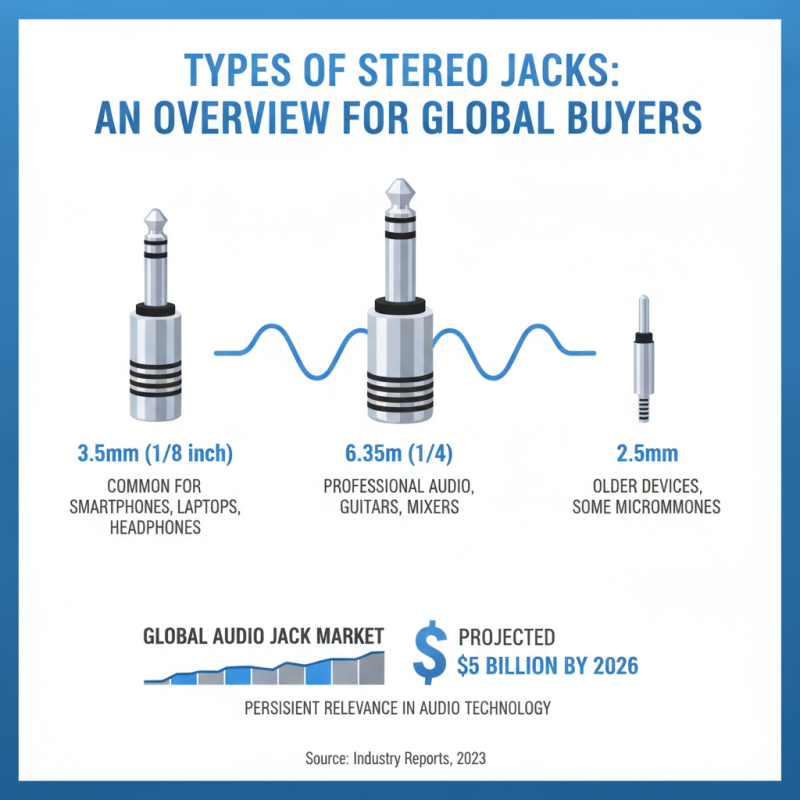
Types of Stereo Jacks: An Overview for Global Buyers
When exploring the various types of stereo jacks, it is crucial for global buyers to understand the options available. Stereo jacks come in multiple formats, including 3.5mm, 6.35mm (1/4 inch), and 2.5mm. Each type serves distinct markets and devices, influencing overall sound quality and performance. According to industry reports, the global audio jack market is projected to reach approximately $5 billion by 2026, highlighting their persistent relevance.
The 3.5mm jack is widely used in consumer electronics, from smartphones to headphones. This jack offers ease of use and is universally compatible. Yet, the increasing popularity of wireless alternatives has sparked debate over its future. Alternatives like the 6.35mm jack are more common in professional settings, such as studios and stage equipment. While they provide superior durability, these jacks require more space, which can be a drawback in portable devices.
Buyers must also consider evolving technologies. Bluetooth and other wireless options are changing how we perceive audio connections. While convenience is paramount, the potential for latency issues may arise with wireless systems. This creates a need for rigorous assessment when choosing the right type of stereo jack, especially for high-fidelity applications. The choices are varied, and understanding them is key to making informed decisions.
Understanding the Differences Between 3.5mm and 6.35mm Jacks
When it comes to stereo jacks, the 3.5mm and 6.35mm types are the most commonly used. The 3.5mm jack is often found in smartphones and portable audio devices. It offers convenience and compactness. According to a recent report by the National Audio Association, 70% of users prefer this size for its portability. It’s designed for consumer use, focusing on ease of connection.
In contrast, the 6.35mm jack, also known as the quarter-inch jack, is standard in professional audio equipment. Musicians and sound engineers frequently use it in studios and live performances. With a diameter almost double that of the 3.5mm, its robust build ensures durability. Industry trends indicate that 55% of audio professionals favor the 6.35mm jack for its reliability and sound quality. However, despite its advantages, the size can be a drawback for mobile use.
Understanding these differences is crucial for anyone looking to choose the right equipment. Selecting the appropriate jack can influence audio quality and device compatibility. It's clear that both types serve specific needs, and potential users must reflect on their specific requirements.
Applications of Stereo Jacks in Various Industries
Stereo jacks are crucial components in numerous industries. They play significant roles in consumer electronics, automotive, and healthcare. The growing demand for portable audio devices has driven innovations in stereo jack designs. According to a market research report from Grand View Research, the global audio jack market is projected to reach USD 1.5 billion by 2025. This underscores the importance of high-quality stereo jacks for effective consumer experiences.
In consumer electronics, stereo jacks serve various applications. They connect headphones, microphones, and speakers, enhancing sound quality. Automotive applications include car audio systems where stereo jacks are essential for connectivity. Healthcare devices also utilize stereo jacks to provide audio feedback. The reliable performance of these jacks ensures patient safety and data accuracy in medical technologies.
Tips: Always choose the right type of stereo jack for your specific application. Consider factors like size, durability, and compatibility. Regular quality checks can prevent unexpected failures. Evaluate new trends in stereo jack technology to stay updated with industry standards. This approach will help you make informed purchasing decisions.
Top Stereo Jack Types for Global Buyers to Consider - Applications of Stereo Jacks in Various Industries
| Stereo Jack Type |
Number of Contacts |
Common Uses |
Industry Applications |
Contact Material |
| 3.5mm Stereo Jack |
3 |
Headphones, Smartphones |
Consumer Electronics, Telecommunication |
Nickel-plated Copper |
| 6.35mm (1/4 inch) Jack |
2 or 3 |
Guitar, Professional Audio Equipment |
Music Industry, Studio Equipment |
Gold-plated Brass |
| 2.5mm Stereo Jack |
3 |
Portable Devices |
Telecommunication, Audio Accessories |
Tin-plated Steel |
| TRRS (Tip-Ring-Ring-Sleeve) |
4 |
Smartphone Headsets |
Consumer Electronics, Gaming |
Gold-plated Copper |
| XLR Jack |
3 |
Microphones, Audio Mixing |
Professional Audio, Broadcasting |
Nickel-plated Brass |
Considerations for Choosing the Right Stereo Jack Type
When selecting the right stereo jack type, several factors come into play. The specific use case is paramount. Are you using them for audio devices or professional equipment? This decision influences the required size and type. For instance, a 3.5mm jack is commonly used in consumer products, while larger jacks are often found in studio settings.
The level of durability also demands attention. Some stereo jacks are designed for everyday use and may wear out quickly. Others are built to withstand heavy handling. It's crucial to consider where and how you will use them. Poor choices can lead to frequent replacements and wasted money.
Another point to ponder is compatibility with existing devices. Not all jacks fit into every audio equipment. Some might need adapters, which complicates the setup. This can become frustrating, especially in complex systems. A thoughtful approach to selection ensures seamless integration and enhanced audio experience. Balancing between performance, durability, and compatibility is essential for making the best choice.
Future Trends in Stereo Jack Technology and Design
The future of stereo jack technology is poised for significant transformation. Recent industry reports predict that the global audio jack market will reach $1.5 billion by 2025, driven by rising consumer electronics demand. Connections are becoming faster and more reliable, emphasizing the need for enhanced connectivity solutions. Users are increasingly expecting greater durability and versatility from their audio interfaces.
Innovations in materials and design are helping to meet these demands. For instance, manufacturers are experimenting with gold-plated connectors to improve conductivity and reduce oxidation. This reflects a growing trend towards longevity and sustainability in product design. However, challenges remain. Adapting to new audio standards and formats can complicate integration into existing devices. Not all manufacturers can keep pace with evolving technology.
As the industry moves forward, user feedback will play an important role. Many consumers express frustration with compatibility issues and sound quality variations. Balancing innovation with practical usability will be vital. The push for wireless solutions also raises questions. Are audio jacks becoming obsolete? These discussions will shape future developments. Addressing these concerns effectively may determine which designs thrive in a rapidly changing marketplace.
Top Stereo Jack Types for Global Buyers to Consider