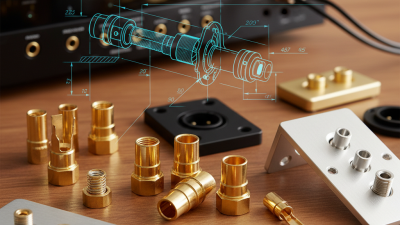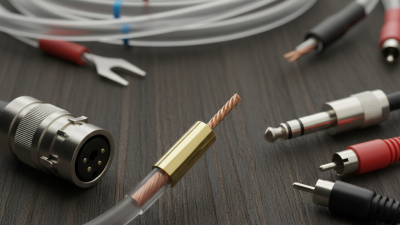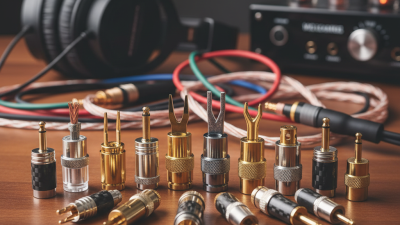
Choosing the right Speaker Jacks can determine whether an audio system feels dependable or frustrating. A loose connection may create crackling, signal loss, or sudden silence. That risk becomes obvious when a cabinet vibrates beside a powerful amplifier. Buyers should examine more than shape and price. Contact material, current capacity, mounting style, impedance requirements, and cable compatibility all matter.
This guide introduces the top 10 types of Speaker Jacks buyers should know. It covers spring terminals, binding posts, banana connectors, Speakon sockets, 1/4-inch TS jacks, TRS connectors, RCA sockets, XLR connectors, terminal blocks, and combination jacks. Each type serves a different installation. Some suit home audio. Others handle touring stages, rehearsal rooms, or permanent commercial systems. Audio designer Rod Elliott has stated, “The humble connector is often the weakest link in an audio system.” That warning remains useful.
Small parts matter.
A buyer’s real experience often begins during installation. A jack that looks robust may accept the wrong plug. A low-cost terminal may loosen after repeated cable changes. Even a premium connector can fail when strain relief is ignored. I have seen specifications appear impressive while the rear terminals felt thin and poorly secured. That is an easy detail to miss.
The following overview compares practical strengths, limitations, and typical applications. It also raises an uncomfortable point: there is no universal best Speaker Jacks solution. The right choice depends on power, environment, maintenance habits, and user skill. Careful selection prevents avoidable repairs and protects the sound system over time.
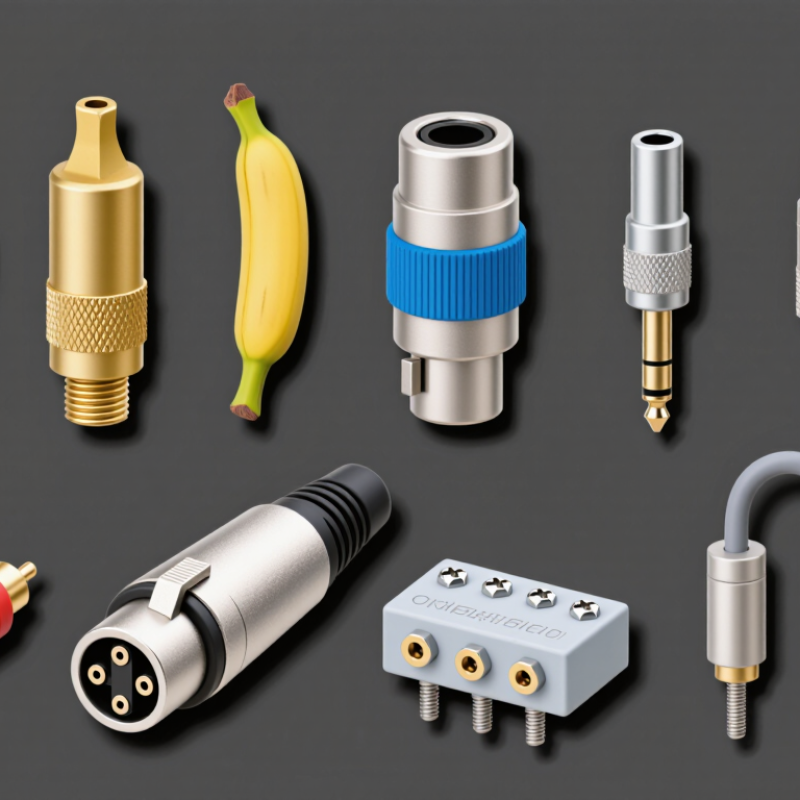
Speaker jacks are the contact points between an amplifier, cable, and speaker. Their design affects signal stability, installation speed, and long-term safety. Common types include binding posts, banana sockets, spring clips, RCA sockets, TS jacks, TRS jacks, XLR connectors, and locking two-pole connectors. Each suits a different working environment. Binding posts accept bare wire and banana plugs, while spring clips provide quick connections for compact systems. In field inspections, loose terminals and exposed wire strands remain common failure points.
Design details matter more than appearance. A locking connector can prevent accidental disconnection during vibration. Gold-plated contact surfaces may resist oxidation, but plating alone cannot fix poor mechanical pressure. Insulation spacing also matters. IEC 60268-1 provides guidance for audio equipment safety and performance. Buyers should check current ratings, conductor size, panel thickness, and strain relief. Small differences become obvious after hundreds of connection cycles.
The wider market supports this attention to reliability. Grand View Research’s 2024 loudspeaker analysis estimated the global market at over USD 7 billion, with continued growth expected through 2030. That growth includes residential, commercial, and professional installations. Still, market expansion does not guarantee better connector choices. A high-current speaker may need a locking connector, while a simple home setup may only need a binding post. I have found that buyers often overvalue compatibility and undervalue access space. That mistake is easy to repeat.

Top 10 Types of Speaker Jacks Buyers Should Know
The ten main types of speaker jacks differ in contact strength, signal use, and installation style. A 1/4-inch TS jack suits simple passive speaker connections. A 1/4-inch TRS jack adds balanced wiring, reducing noise in longer runs. Locking professional speaker connectors provide secure, high-current connections. XLR connectors offer balanced signal paths and strong strain relief. Binding posts accept bare wire, spades, or banana plugs. Banana jacks allow quick installation and firm contact. Spring-clip terminals are affordable and convenient, but they hold thinner wires better. RCA jacks suit consumer audio, although they are usually unbalanced. A 3.5 mm jack fits compact devices and desktop speakers. Euroblock terminals support neat, permanent installations with screw-clamp wiring.
Market context matters. Grand View Research estimated the global loudspeaker market at roughly 7 billion US dollars in 2023. That scale increases demand for safer, more compatible connections. IEC 60268-7 also emphasizes electrical performance and mechanical reliability in loudspeaker systems. Yet, connector choice still depends on power, distance, and maintenance access. My field experience suggests that buyers often overvalue appearance. That can be a costly mistake.
Tips: Check impedance, current capacity, wire gauge, and polarity before ordering. Choose locking connectors for mobile systems. Use binding posts for flexible home setups. Confirm panel depth first. Small details matter. A connector may fit physically but fail electrically. Recheck the specification sheet, especially when replacing an older jack.
The chart compares common speaker connector types by their typical number of electrical contacts or terminals. Actual power handling depends on the connector design, cable size, and speaker system.
Buyer tip: Binding posts, banana plugs, and spring clips are common on passive speakers, while speakON connectors are preferred for secure professional connections. TS, TRS, RCA, XLR, barrier-strip, and Euroblock connectors are selected according to the equipment layout and signal requirements.
Top 10 Types of Speaker Jacks Buyers Should Know
Speaker jacks differ in size, wiring, and signal capacity. A 6.35 mm TS jack is common for passive speakers and carries two conductors. Its tip usually carries positive signal, while the sleeve carries negative or ground. A TRS jack adds a ring contact, but it does not automatically mean stereo or higher power. It may support balanced wiring or a special speaker connection. Small 3.5 mm jacks suit low-level audio, not demanding speaker loads.
Binding posts accept bare wire, spades, or banana plugs. They provide firm contact and often handle higher current. Spring clips are cheaper and faster, though their grip can weaken with thick cable. SpeakON-style connectors lock securely and suit high-power systems. XLR connectors may carry speaker-level signals in some equipment, but their pin wiring requires careful checking. RCA connectors normally carry low-level signals. Terminal blocks and Euroblock connectors support organized fixed installations. Banana sockets offer quick changes, but exposed metal can cause accidental contact.
Size alone does not define capacity. A larger jack can still have poor internal contacts. Check the connector’s current rating, conductor size, insulation, and expected impedance. Wiring polarity matters: reversed terminals can thin bass and weaken sound. I once selected a jack by panel fit alone, then found its contacts overheated under continuous load. That mistake was avoidable. Measure the cutout, inspect the datasheet, and confirm whether the connection carries low-level or amplified signal. Some specifications remain vague, so asking the equipment maker for a wiring diagram is safer than guessing.
Choosing the right speaker jack starts with the amplifier, cable, and installation space. A 1/4-inch TS jack suits many passive speaker connections, but it must handle the expected power safely. Binding posts accept bare wire, spades, or banana plugs. They work well in home audio systems and fixed listening rooms. Spring-clip terminals are affordable and simple, though they hold thicker cables less securely.
Professional setups often use twist-lock speaker connectors because they resist accidental disconnection. XLR and terminal block connectors can serve specific speaker systems, especially in installed audio.
However, an XLR socket may carry microphone or line-level signals instead. RCA connectors usually serve low-level audio, not high-power passive speakers. Always verify the signal path.
Match the jack’s current rating with the amplifier output. Check impedance requirements, cable gauge, polarity, and enclosure clearance. A tight connector is not automatically a suitable connector. In field installations, I have seen buyers select a familiar 1/4-inch jack for a high-power cabinet, then discover heat damage after extended use. The jack should also match the environment. Choose locking hardware for mobile rigs and corrosion-resistant contacts for humid rooms. Check the manual. My selection rule is useful, but not perfect. Odd layouts sometimes require an adapter, and every adapter adds another possible failure point.
Top 10 Types of Speaker Jacks Buyers Should Know
Installation, Compatibility, and Safe Use of Speaker Jacks
Speaker jacks vary in contact design, load capacity, and installation method. Common choices include 1/4-inch TS, 1/4-inch TRS, binding posts, spring clips, banana-compatible terminals, terminal blocks, and locking twist connectors. TS connectors suit simple unbalanced speaker wiring, while TRS connectors require careful verification because their extra contact can create wiring mistakes. Binding posts offer firm connections for thicker cables, but exposed metal may cause accidental shorts.
Check impedance, current rating, wire gauge, and polarity before installation. The connector must handle the amplifier’s output, not just fit the cabinet opening. IEC 60268-1 identifies electrical and performance requirements for loudspeaker systems, reminding buyers that mechanical compatibility is only one part of safe selection. In field installations, I use a multimeter to confirm continuity and polarity before applying power. I once trusted a matching plug and missed reversed polarity. Small error. Noticeable result.
Safe use also depends on sound exposure. NIOSH recommends limiting occupational noise to 85 dBA over an eight-hour time-weighted average, while the World Health Organization reported that over 1 billion young people may risk hearing loss from unsafe recreational listening. Keep output controlled, secure loose cables, and switch off power before changing connections. Avoid mixing spring clips with oversized conductors. They may loosen. Recheck every terminal after the first test, because vibration can expose weaknesses that a quiet bench test misses.
| No. | Speaker Jack Type | Typical Use | Common Compatibility | Installation Notes | Safe-Use Considerations |
|---|---|---|---|---|---|
| 1 | Binding Post Terminal | Home audio, hi-fi amplifiers, passive loudspeakers, and test equipment. | Accepts bare wire, spade lugs, and usually banana plugs when the post is designed for them. | Insert the conductor through the side hole or secure it under the tightened cap. Observe red for positive and black for negative. | Do not allow stray wire strands to touch the opposite terminal. Disconnect the amplifier before changing connections. |
| 2 | Spring-Clip Terminal | Compact stereo systems, entry-level amplifiers, and small passive speakers. | Usually accepts bare speaker wire; many versions are intended for small or medium-gauge conductors. | Press the lever, insert a stripped conductor fully, and release the lever to clamp it securely. | Avoid oversized wire that prevents the terminal from closing. Check that no copper is exposed beyond the terminal. |
| 3 | Barrier Strip Terminal | Installed sound systems, commercial amplifiers, control panels, and fixed speaker wiring. | Works with bare wire, ring terminals, and spade lugs, depending on screw and washer design. | Route wires neatly and tighten the screws evenly. Use strain relief where the cable may be pulled or moved. | Cover unused terminals and prevent adjacent conductors from bridging the connection points. |
| 4 | Euroblock / Pluggable Terminal Block | Installed amplifiers, distributed audio systems, conference equipment, and loudspeaker control panels. | Compatible only with the matching plug or socket pitch and pin arrangement; common pitches include approximately 3.5 mm and 5.08 mm. | Confirm pitch, pole count, wire-entry direction, and polarity before ordering. Label each channel during installation. | Never assume two similar-looking blocks are interchangeable. Verify the amplifier output type and terminal rating. |
| 5 | 1/4-Inch TS Speaker Jack | Musical instrument cabinets, stage monitors, and older professional audio equipment. | Uses a 6.35 mm unbalanced tip-sleeve plug and requires a compatible TS socket and cable. | Use speaker-rated cable rather than thin instrument cable when carrying amplifier output. Confirm the connector is wired for speaker-level power. | Do not insert or remove the plug while the amplifier is delivering power. Do not confuse a speaker output with a line-level jack. |
| 6 | Locking Twist Speaker Connector | Portable PA systems, stage speakers, touring equipment, and high-current loudspeaker connections. | Requires the matching locking plug, correct pole count, and compatible cable gauge. | Insert the plug fully and rotate it until locked. Check the connector’s contact arrangement and current rating. | Use only for the signal type specified by the equipment. Never connect it to mains voltage or use an unapproved adapter. |
| 7 | 3-Pin XLR Speaker Connector | Legacy professional loudspeaker systems, powered speakers, and certain amplifier-to-speaker connections. | Compatible only when the equipment documentation confirms speaker-level wiring and pin assignment. | Check whether the connector carries microphone-level, line-level, or speaker-level audio before connecting equipment. | Pin assignments are not universal for every application. Never connect a speaker output to a microphone input without verification. |
| 8 | Banana Socket | Benchtop audio systems, educational equipment, test setups, and amplifier terminals. | Accepts standard banana plugs, commonly based on a 4 mm plug diameter, when the socket spacing and design match. | Insert the plug straight and fully. Confirm positive and negative polarity and avoid forcing incompatible plugs. | Keep exposed metal away from adjacent sockets and conductive surfaces. Verify the system is powered down before rewiring. |
| 9 | RCA Phono Jack | Powered speakers, subwoofers, audio sources, and low-level signal connections. | Designed primarily for unbalanced line-level signals; it is generally not suitable for passive speaker power output. | Use shielded RCA cable and connect the source output to the correct input. Check whether the socket is input or output. | Do not connect an amplifier’s high-power speaker output to a standard RCA input; excessive voltage can cause damage. |
| 10 | 3.5 mm TRS Audio Jack | Computers, mobile devices, compact powered speakers, headphones, and small multimedia systems. | Uses a 3.5 mm tip-ring-sleeve plug for stereo or other low-level audio signals; it does not normally drive passive speakers directly. | Match the plug configuration and use the correct input or output. Insert the plug completely to prevent channel or grounding problems. | Keep volume low when connecting or disconnecting. Do not connect this jack directly to a passive speaker without a suitable amplifier. |