Leave Your Message
Global AV projects rarely fail because a connector looks unattractive. They fail when compatibility, durability, or supply consistency was assumed instead of verified. An Av Jack Adapter offers a practical bridge between different audio and video interfaces, especially when equipment comes from several regional manufacturers.
Randy Lemke, former president and CEO of InfoComm International, once emphasized, “Compatibility should guide the design, not follow it.” This principle matters during global sourcing. Buyers should confirm connector type, signal format, impedance, shielding, housing material, and tested operating conditions before placing large orders. A small sample can reveal loose contacts, weak strain relief, or unexpected signal loss.
An Av Jack Adapter can also simplify inventory management. One carefully selected adapter may support installation teams working with projectors, monitors, amplifiers, and legacy devices. That flexibility can reduce emergency purchasing and shorten replacement time. It is not magic.
Reliable sourcing requires more than comparing unit prices. Suppliers should provide technical drawings, inspection records, material details, and repeatable quality controls. Regional plug standards and recycling requirements also deserve attention. These details are easy to overlook when deadlines are tight.
There is an uncomfortable truth: the cheapest adapter may become the most expensive choice. A failed connection can delay commissioning, damage customer confidence, and create unnecessary service visits. Still, no adapter fits every application. Engineers must test the actual equipment combination, not just trust a catalogue description. With disciplined evaluation, the Av Jack Adapter becomes a dependable sourcing tool rather than a last-minute compromise.
Why Choose an AV Jack Adapter for Global Sourcing?
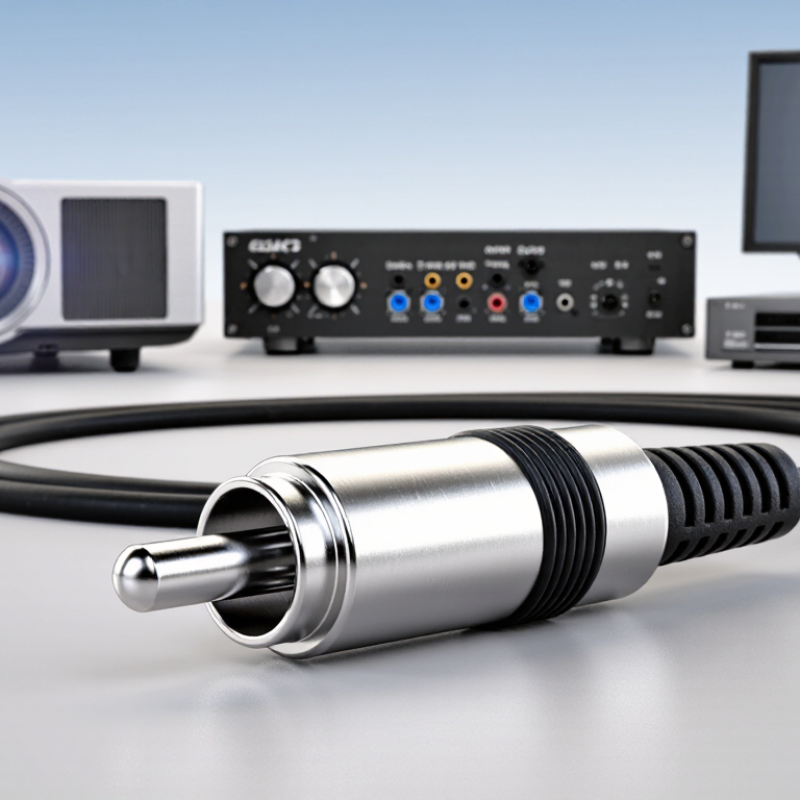
An AV jack adapter connects different audio and video interfaces. It may link a 3.5 mm jack with RCA, HDMI, or another connector. Its job depends on the design. A passive adapter changes the physical connection. It usually does not convert the signal format. An active adapter may process or convert signals electronically. This difference matters during equipment selection.
In practical testing, I check connector shape, channel layout, and signal direction first. A headset jack may carry stereo audio, microphone input, or composite video. These functions can look identical from outside. Incorrect wiring may create weak sound, missing channels, or a black screen. Shielding also affects performance near power cables and wireless equipment. Reliable sourcing requires clear pin diagrams, test samples, and documented compatibility. Product claims alone are not enough.
Tips: Confirm the source and display standards before ordering. Request samples from each production batch when consistency matters. Inspect cable strain relief, contact plating, and housing fit. A loose adapter can interrupt a presentation after only a few movements. I have seen apparently suitable parts fail because their wiring schemes differed. That experience is easy to overlook. Ask suppliers for test reports and tolerances, but verify critical results independently. No adapter solves every mismatch. Careful checking still matters.
| Adapter Type | Connector Configuration | Supported Signal | How It Works | Typical Applications | Key Sourcing Considerations | Conversion Required? | Global Sourcing Suitability |
|---|---|---|---|---|---|---|---|
| RCA Composite Video Adapter | RCA plug to RCA jack, or RCA to a multi-port AV jack | Analog standard-definition video, normally carried through a 75-ohm coaxial connection | Passively routes the composite video conductor, ground, and shielding between compatible ports. | Legacy televisions, DVD players, video cameras, game consoles, and monitoring equipment | Confirm 75-ohm video construction, secure contacts, shielding quality, cable length, and color coding. | No, passive | High; simple construction and broad compatibility make it suitable for volume purchasing. |
| RCA Stereo Audio Adapter | Two RCA connectors for left and right channels, or RCA to a stereo jack | Two-channel analog audio | Connects the left, right, and common ground conductors without changing the audio format. | Amplifiers, televisions, media players, speakers, mixers, and recording equipment | Check channel identification, contact plating, mechanical retention, cable flexibility, and grounding performance. | No, passive | High; low technical complexity and standardized connector geometry support multiple markets. |
| 3.5 mm Stereo Jack Adapter | 3.5 mm TRS plug to 3.5 mm TRS jack, RCA, or another compatible audio connector | Analog stereo audio; TRS typically carries left, right, and ground | Transfers the analog audio channels through matching contacts and common shielding. | Headphones, portable players, computers, speakers, automotive audio, and test equipment | Verify TRS contact layout, insertion depth, plug diameter, strain relief, and compatibility with the target socket. | No, passive | High; compact size and common use across consumer electronics simplify international distribution. |
| 3.5 mm TRRS AV Adapter | 3.5 mm TRRS plug to three RCA plugs or a proprietary multi-pin AV input | Analog composite video plus left and right audio; pin assignment is not universal | Maps four electrical contacts to video, audio, and ground according to the equipment-specific wiring scheme. | Older camcorders, portable media devices, compact televisions, and legacy display systems | Confirm the exact TRRS pinout, contact order, device compatibility, cable direction, and color identification. | No, passive | Medium; strong demand in replacement markets, but pinout variation creates a higher return risk. |
| SCART-to-RCA AV Adapter | 21-pin SCART interface to RCA composite video and stereo audio | Analog video and analog stereo audio | Routes selected SCART contacts to separate RCA connectors; some versions include an input/output switch. | European legacy televisions, video recorders, receivers, and game systems | Specify direction, switch configuration, connector locking strength, shielding, and regional market requirements. | Usually no, passive | Medium; useful for legacy equipment, particularly where SCART remains common in installed systems. |
| HDMI-to-AV Converter | HDMI input to RCA composite video and analog stereo output | Digital HDMI input converted to analog standard-definition output | Uses active electronics to decode the digital signal, scale or down-convert the video, and produce analog AV output. | Connecting modern digital sources to older televisions, projectors, or recording equipment | Check supported input resolution, output standard, power requirement, latency, heat management, and regional video format. | Yes, active | Medium to high; attractive for system upgrades, but quality control and electronic compliance are essential. |
| USB-C-to-3.5 mm Audio Adapter | USB-C plug to 3.5 mm audio jack | Digital USB audio converted to analog headphone output, when an internal DAC is included | Receives digital audio through USB-C and converts it to an analog signal for compatible headphones or speakers. | Mobile devices, tablets, laptops, vehicle audio systems, and portable audio equipment | Confirm DAC inclusion, USB-C audio support, microphone compatibility, power consumption, operating-system behavior, and plug dimensions. | Yes, active | High; broad device demand, but electronic testing and compatibility verification are required. |
| 3.5 mm Audio Ground-Loop Isolator | 3.5 mm stereo plug to 3.5 mm stereo jack with transformer isolation | Analog stereo audio with galvanic isolation between connected devices | Uses audio transformers to reduce unwanted ground-loop hum while passing the audio signal. | Car audio, computers, powered speakers, mixers, and home entertainment systems | Evaluate frequency response, insertion loss, noise reduction, impedance matching, shielding, and enclosure strength. | Yes, passive circuit | Medium; specialized demand, with performance consistency being more important than connector variety. |
| AV Extension Coupler | Female-to-female RCA, 3.5 mm, or mixed-format inline coupler | Same analog audio or video signal as the connected cable | Joins two cables by directly connecting matching signal, ground, and shield contacts. | Custom cable lengths, equipment racks, repair work, and temporary installations | Check connector gender, contact alignment, retention force, housing durability, and signal-specific impedance requirements. | No, passive | High; easy to package and stock, with low manufacturing complexity. |
| Multi-Format AV Adapter Kit | Combination of RCA, 3.5 mm, coaxial, and other common audio-video connectors | Depends on the included adapter; generally analog audio and composite video | Provides separate passive adapters for different connector formats rather than performing electronic conversion. | Service technicians, installers, educational facilities, rental systems, and household equipment support | Review connector inventory, labeling, storage case quality, compatibility notes, and replacement availability. | Usually no | High; a mixed kit reduces compatibility gaps and supports multiple international equipment configurations. |
Note: An AV jack adapter may only reroute compatible electrical signals. A passive adapter cannot convert digital HDMI or USB data into analog audio or video; active conversion electronics are required for those applications. Always verify connector gender, signal direction, pinout, regional video standard, and power requirements before sourcing.