Choosing a Stereo Jack is not just a matter of matching a plug to a socket. Buyers must consider signal type, device space, connection frequency, and the conditions where equipment will operate. A jack used in a compact headphone amplifier may not suit a mixing console exposed to frequent cable changes. Small details matter. Contact layout, mounting style, and housing dimensions can affect installation and long-term reliability.
This guide introduces ten common stereo jack types and explains where each may fit. It compares familiar options, including panel-mount and PCB-mount designs, while noting practical trade-offs. For example, a sturdy metal body can help in demanding installations, but it may add cost or require more room. Check the product drawing. Confirm the number of contacts and the intended audio configuration with the supplier before ordering. Specifications can vary between manufacturers, even when product names sound similar.
The right choice depends on the application, not on a ranking alone. Buyers should review datasheets, sample parts, and production requirements together. That advice is easy to overlook when schedules are tight. Yet a quick fit check can prevent rework. This overview is a starting point, not a substitute for testing the selected component in its final equipment.
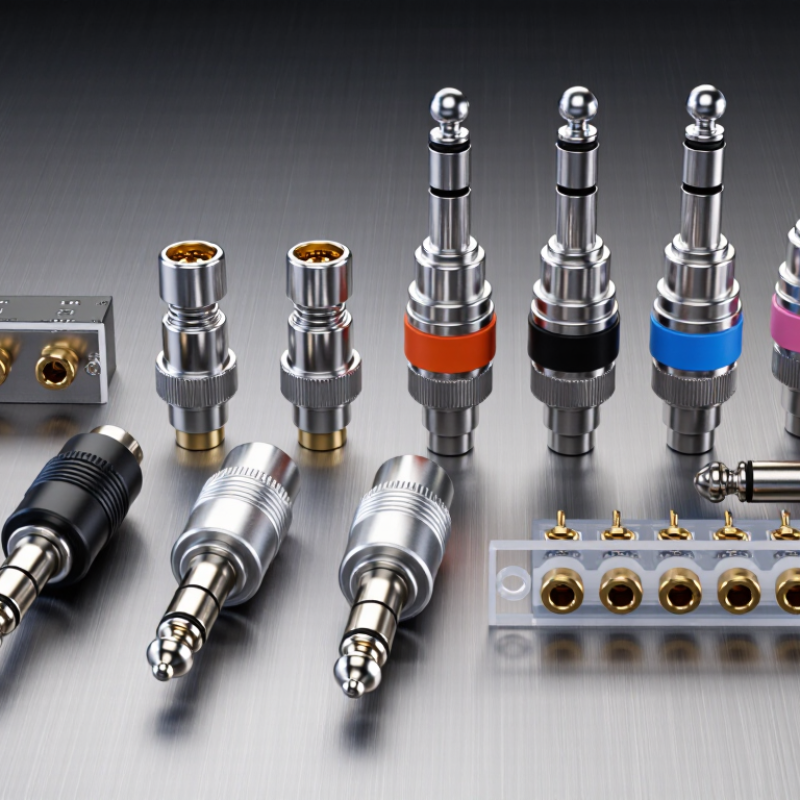
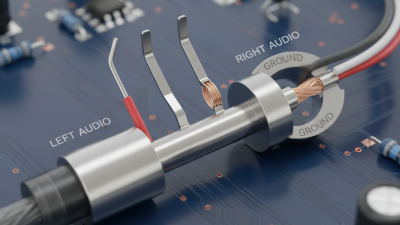
A stereo jack is a compact mechanical switch for moving two audio channels. The common TRS design uses three contacts: tip, ring, and sleeve. The tip normally carries the left channel. The ring carries the right channel. The sleeve provides the return path. Simple, but not foolproof. A small tolerance error can create noise, weak contact, or channel imbalance.
Contact pressure matters during daily use. Spring contacts must hold a plug firmly without damaging its surface. IEC 60603-11 specifies key dimensions for miniature audio connectors, helping manufacturers control fit and interchangeability. In practice, buyers should inspect plating thickness, insertion cycles, contact resistance, and insulation spacing.
The 2024 Global Audio Equipment Market analysis from IMARC Group reports continued growth in connected audio equipment, increasing demand for compact and reliable connector assemblies. The report does not remove a practical concern: smaller parts leave less room for manufacturing mistakes.
Signal flow changes with the jack type. A standard stereo jack passes left and right signals. A switched version can disconnect an internal speaker when a plug enters. A panel-mount version adds threaded hardware for stronger installation. Right-angle types save space but may concentrate cable stress. I have seen failures begin at that bend.
Buyers often focus on pin count and forget mechanical loading. That is a mistake. A datasheet helps, yet real testing should include repeated insertion, cable pulling, vibration, and temperature changes. Even good designs need review.
Top 10 Stereo Jack Types for Global Buyers?
How Stereo Jack Sizes and Configurations Differ
Stereo jacks differ by diameter, contact layout, and installation method. The 6.35 mm jack suits mixers, amplifiers, and studio patch panels. Its larger body handles repeated plugging better. The 3.5 mm jack fits headphones, portable recorders, and compact control panels. The smaller 2.5 mm version saves space, but it tolerates less mechanical stress. Size alone does not define performance.
A standard TRS connector carries left audio, right audio, and ground. A TRRS connector adds another contact, often for a microphone or control signal. However, contact assignments can vary between devices. Buyers should verify the wiring diagram, not trust appearance. Right-angle plugs reduce cable strain. Panel-mount sockets need precise hole dimensions and thread clearance. Locking versions may improve reliability in mobile equipment.
MarketsandMarkets projects the global audio equipment market to reach about USD 38.7 billion by 2028, with steady annual growth. Future Market Insights also identifies rising demand for compact audio connectors in consumer and professional equipment. These figures support careful connector selection, but market reports group many connector types together. They cannot replace application testing. In practical sourcing, I would check mating cycles, insulation resistance, rated current, and contact plating. Small details matter. A 3.5 mm jack may fit perfectly, yet fail after repeated movement.
How stereo jack sizes and configurations differ
Nominal diameter refers to the plug size. Contact count includes the tip, ring section(s), and sleeve; switching contacts are not included. TRS connectors have three contacts, TRRS connectors have four, and TRRRS connectors have five. Mechanical versions such as locking, switched, panel-mount, and right-angle designs normally retain the same electrical contact count but differ in installation and application.
Top 10 Stereo Jack Types for Global Buyers
Global buyers usually compare connector size, mounting method, contact reliability, and environmental resistance. The ten practical types include 3.5mm TRS, 6.35mm TRS, 2.5mm TRS, panel-mount, PCB-mount, cable-mount, right-angle, locking, switched, and sealed stereo jacks. Each type fits a different design problem.
Small devices often use 3.5mm jacks because they save space. Musicians and test engineers may prefer 6.35mm versions for stronger handling. A 2024 MarketsandMarkets report estimated the global audio connectors market could grow from about USD 1.8 billion in 2023 to USD 2.4 billion by 2028. That growth supports demand for compact and durable connection systems. However, market estimates vary between research firms.
IEC 60603-11 provides useful dimensional guidance for certain audio connector interfaces. Buyers should still verify mating depth, insulation resistance, rated current, and insertion cycles. Right-angle designs reduce cable strain inside crowded equipment. Locking types help prevent accidental disconnection during movement. Sealed versions suit outdoor panels, but “water-resistant” does not always mean fully waterproof.
Check the real enclosure first.
In my experience, switched jacks can simplify signal routing, yet their internal contacts may wear faster in frequent-use equipment. A cheaper jack may pass initial tests and fail after repeated plugging. That is an easy detail to underestimate. Regional certification, packaging protection, and sample testing also deserve attention before volume purchasing.
| No. | Jack Type | Typical Contacts | Common Applications | Compatibility Considerations | Buyer Selection Notes |
|---|---|---|---|---|---|
| 1 | 3.5 mm TRS stereo jack | 3: tip, ring, sleeve | Headphones, portable audio equipment, and line-level connections | Typically carries left audio, right audio, and a shared ground; it does not provide a microphone contact. | A widely used compact stereo format. Confirm plug dimensions, mounting style, and whether the socket is switched. |
| 2 | 6.35 mm (1/4 in) TRS stereo jack | 3: tip, ring, sleeve | Headphones, mixers, instruments, and professional audio equipment | May carry stereo unbalanced audio or a balanced mono signal, depending on the equipment wiring. | Check the equipment’s wiring diagram rather than assuming every TRS socket is a stereo output. |
| 3 | 3.5 mm TRRS headset jack | 4: tip, two rings, sleeve | Headsets combining stereo audio and a microphone | CTIA and OMTP headset arrangements assign microphone and ground to different contacts, so compatibility can vary. | Specify the required pinout and confirm support for the intended headset standard. |
| 4 | 4.4 mm five-contact balanced headphone jack | 5: tip, three rings, sleeve | Balanced headphone connections and selected high-fidelity audio equipment | Requires compatible balanced-output equipment and a correctly wired cable; it is not interchangeable with a 3.5 mm socket. | Verify the connector standard, equipment pinout, and cable wiring before ordering. |
| 5 | 2.5 mm TRS stereo jack | 3: tip, ring, sleeve | Compact or legacy portable audio devices | Smaller than 3.5 mm connectors and not physically compatible with 3.5 mm plugs. | Confirm the exact plug diameter and contact configuration; availability may be more limited than for 3.5 mm parts. |
| 6 | 2.5 mm TRRS headset jack | 4: tip, two rings, sleeve | Compact devices requiring stereo audio and microphone connections | Pin assignment and device support can differ; the connector size alone does not establish headset compatibility. | Request a pinout drawing and test with the target device and cable assembly. |
| 7 | 3.5 mm TS jack | 2: tip, sleeve | Mono audio inputs and outputs, including some compact instrument connections | TS is a mono configuration, not a stereo connection. A TS plug in a TRS socket may not provide the intended stereo signal. | Choose this type only when the application requires a two-contact mono connection. |
| 8 | 6.35 mm TS jack | 2: tip, sleeve | Mono instrument, amplifier, and audio connections | Commonly used for unbalanced mono signals; it has fewer contacts than a 6.35 mm TRS connector. | Check whether the application needs mono TS or a three-contact TRS connection. |
| 9 | Panel-mount stereo jack | Usually 3 for TRS; other configurations are available | Equipment enclosures, control panels, and audio interfaces | Panel thickness, mounting thread, insulation, and terminal layout affect mechanical fit and installation. | Compare the datasheet dimensions with the enclosure drawing, including the required mounting-hole diameter. |
| 10 | PCB-mount stereo jack | Usually 3 for TRS; switched versions may have additional terminals | Consumer electronics, audio boards, and compact embedded equipment | Through-hole and surface-mount versions have different footprints; switched contacts may disconnect or redirect a signal when no plug is inserted. | Match the footprint, board thickness, contact rating, and switching function to the PCB design. |
Note: “TRS” and “TRRS” describe contact arrangements, while connector diameter and mounting style describe other aspects of a jack. Always verify the manufacturer-neutral mechanical drawing, wiring pinout, and device requirements before purchasing.
Compatibility begins with the signal, not the connector shape. A 3.5 mm TRS jack usually carries left, right, and ground contacts. A 6.35 mm TRS jack serves many studio and stage applications, where thicker plugs withstand repeated insertion. Compact 2.5 mm jacks can support stereo signals, but their wiring is less consistent across equipment. Check the plug diameter, contact layout, mounting style, and panel thickness before purchasing.
TRS does not always mean stereo. In professional equipment, the same three-contact structure may carry balanced mono audio. TRRS adds a fourth contact for microphones or control signals, yet contact assignments vary. CTIA wiring is common, while older OMTP layouts may reverse microphone and ground contacts. That small difference can create silence, noise, or poor microphone performance.
Locking, panel-mount, right-angle, switched, and waterproof versions fit different installation needs. Choose based on cable movement, dust exposure, service access, and expected insertion cycles.
Global buyers should request drawings, tolerance data, contact-plating details, and test reports. Confirm whether the jack follows the required dimensional and environmental standards for the destination market.
For consumer devices, impedance and headset detection matter. For mixers and instruments, contact durability and grounding matter more. For embedded systems, footprint accuracy is critical.
I have seen visually identical jacks fail because their internal switch pins were positioned differently. Datasheets help, but sample testing remains necessary. A small overlooked detail can become an expensive redesign.
Global buyers often compare 3.5 mm TRS, TRRS, 6.35 mm, panel-mount, locking, and right-angle stereo jacks. The right type depends on equipment space, mating frequency, cable movement, and signal requirements. Quality begins with stable contact pressure, clean machining, and corrosion-resistant terminals. Check insertion force, contact resistance, insulation performance, and repeated plug cycles. A jack may look precise but fail after months of vibration.
Cost needs a wider view. Compare sample prices, tooling charges, minimum order quantities, packaging, inspection, and shipping. A low unit price can hide inconsistent dimensions or high rejection rates. Ask suppliers for material specifications, production records, and test reports. Request samples from different batches. I once trusted a polished sample too quickly; the production parts felt looser. That mistake still matters. Supplier reliability shows through clear drawings, honest lead times, traceable lots, and fast responses when defects appear.
Tips: Test jacks with the actual plug and cable. Measure noise during movement, not only at rest. Confirm terminal plating thickness and mounting tolerance. Keep a written acceptance standard. A factory audit helps, but it is not perfect. Review corrective actions, not just certificates. For critical products, approve a pilot order before scaling. Small details often decide long-term performance.