Leave Your Message

China Top Speaker Sockets Suppliers for Global Buyers?

China has become a significant sourcing destination for Speaker Sockets, serving professional audio brands, amplifier manufacturers, and custom electronics builders. However, selecting a reliable supplier requires more than comparing factory prices. Buyers must examine contact materials, housing strength, terminal design, insertion force, and production consistency. A socket may look polished in a sample, yet fail after repeated plugging, vibration, or heat exposure.

W. Edwards Deming, a respected quality expert, said, “Quality comes not from inspection, but from the improvement of the production process.” His principle applies directly to Speaker Sockets sourcing. Strong Chinese manufacturers usually combine controlled tooling, documented inspections, traceable materials, and repeatable assembly methods. Buyers should request dimensional drawings, plating specifications, test reports, and sample approval records. Small details matter. A loose terminal can create noise. Poor plating can accelerate oxidation. Weak plastic may crack near the mounting hole.

This guide introduces leading China Speaker Sockets suppliers for global buyers and explains how to assess their practical capabilities. It considers factory experience, customization support, packaging quality, communication, and export reliability. Certifications are useful, but they should not replace direct verification. That is where many purchasing plans become overly optimistic. A supplier with attractive photographs may still lack stable process control. In-person audits are not always possible, so video inspections, third-party testing, and production samples become valuable alternatives. The best choice is rarely the cheapest quote. It is the supplier that delivers consistent fit, dependable contact performance, and honest technical communication across every batch.

China Top Speaker Sockets Suppliers for Global Buyers?

What Are Speaker Sockets and Why Do Global Buyers Need Them?

China Top Speaker Sockets Suppliers for Global Buyers?

What Are Speaker Sockets and Why Do Global Buyers Need Them?

Speaker sockets are compact connection points between loudspeakers, cables, amplifiers, and installation panels. They transfer audio signals while holding plugs firmly in place. Common designs use spring contacts, locking structures, or screw terminals. Each choice affects resistance, vibration tolerance, and installation speed.

Global buyers need sockets because audio systems face repeated plugging, movement, dust, and heat. A loose connection can create crackling sound or intermittent output. Field inspections often find that small terminal failures interrupt otherwise reliable equipment. The risk increases in portable speakers, commercial sound systems, and vehicle installations. Buyers should check contact materials, rated current, insulation strength, temperature range, and mechanical cycle testing.

Industry data supports this demand. Grand View Research estimated the global loudspeaker market at about 6.4 billion US dollars in 2023, with continued growth expected through 2030. Mordor Intelligence also reports steady expansion in the audio equipment market, driven by professional venues, home systems, and connected devices. These figures suggest more replacement parts and assemblies will be required. However, market growth does not guarantee socket quality. A cheaper component may save money initially, but poor plating can raise contact resistance later. That assumption deserves testing.

Reliable suppliers should provide dimensional drawings, material specifications, sample approval, and batch inspection records. Buyers also need clear tolerance data. Small differences can prevent a plug from seating correctly. A socket is small. Its consequences are not.
Key Types of Speaker Sockets Supplied by Chinese Manufacturers

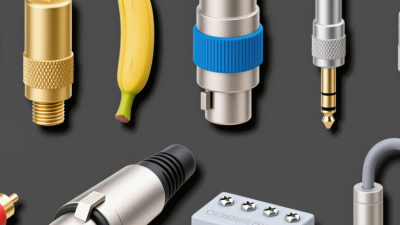
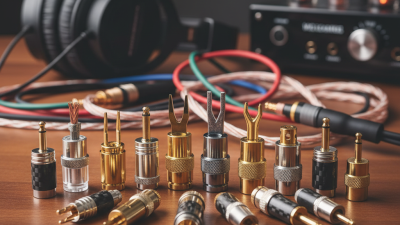
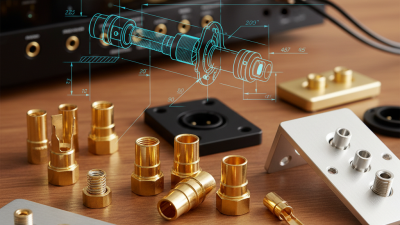
Chinese manufacturers supply several speaker socket types for global audio equipment builders. Binding-post sockets support banana plugs, bare wire, and spade terminals. They suit home amplifiers and test benches because their screw collars provide firm contact. Spring-clip terminals are faster for compact speakers. They accept stripped wire and reduce assembly time. For professional cabinets, twist-lock speaker sockets offer stronger retention during transport and live operation. Panel-mount versions may use solder tabs, PCB pins, or screw terminals.

A reliable supplier should provide drawings, contact-plating details, current ratings, and insulation materials. Common options include nickel-plated brass contacts, flame-retardant housings, and dust-resistant covers. Check the rear clearance carefully. A socket may fit the panel but interfere with internal wiring. In practice, catalog descriptions are not always precise. Confirm hole diameter, mounting thread, terminal spacing, and mating plug dimensions before ordering samples. Small errors become expensive during enclosure production.

Tips: Request several samples from Chinese manufacturers. Test insertion force, cable grip, vibration resistance, and heat buildup. Compare ten repeated connections, not just one. Ask for inspection records and material declarations. A slightly cheaper socket may fail earlier when spring tension weakens. That point deserves honest review. Suppliers with stable quality control, traceable batches, and responsive technical support are usually safer choices for long-term projects.

China Top Speaker Socket Suppliers for Global Buyers

Key Types of Speaker Sockets Supplied by Chinese Manufacturers

This chart compares common speaker socket formats by their typical number of electrical contacts. Two-contact designs are widely used for standard passive speaker connections, while locking multi-pole connectors support professional audio systems and multiple signal paths.

How to Evaluate China’s Speaker Socket Suppliers

How to Evaluate China’s Speaker Socket Suppliers

Evaluating China’s speaker socket suppliers requires more than comparing unit prices. Start by checking material specifications, contact resistance, rated current, and temperature tolerance. Ask for drawings and inspection records. Clear documents often reveal production discipline.

Request production samples before placing a larger order. Test the sockets with your actual speaker terminals, wires, and mounting panels. Check insertion force, fit stability, solder performance, and surface finish. Small details matter. A loose socket can create noise during transport or repeated use.

Visit the factory when possible, or arrange a live video audit. Review molding equipment, assembly lines, storage conditions, and final inspection procedures. Ask how workers trace batches and handle defective parts. Independent laboratory reports can support claims about material safety and electrical performance, but verify the report numbers directly. Supplier experience with export packaging and communication is also important. Delayed answers may signal future problems. Still, fast communication does not prove reliable quality. One practical evaluation may be incomplete, especially when samples come from carefully selected batches. Record every weakness, request corrective action, and compare the response with the supplier’s promises. Contact references from similar projects, while remembering that references can be selective. Price should remain only one part of the decision. A stable supplier should explain limitations, production capacity, tooling costs, lead times, and quality controls without avoiding difficult questions.

Manufacturing Standards, Quality Control, and Customization Options

China Top Speaker Sockets Suppliers for Global Buyers?

Reliable speaker socket suppliers must control more than appearance. They need stable dimensions, clean contacts, and repeatable assembly. IEC 60268-1 provides a useful reference for audio equipment safety and performance. The ISO Survey 2023 recorded more than 1.2 million ISO 9001 certificates worldwide. Certification helps, but it never replaces factory-level inspection.

Experienced buyers should request material certificates, incoming inspection records, and production samples. Quality teams can measure contact resistance, insertion force, terminal alignment, and housing strength. Salt-spray testing may expose weak plating. Heat-cycle testing can reveal plastic deformation. Small details matter. A loose terminal can create noise during transport or vibration. Suppliers should also document RoHS and REACH-related material controls for applicable markets.

Customization usually covers terminal type, pin spacing, mounting holes, plating thickness, housing color, and packaging. Tooling drawings should receive written approval before mass production. A pilot run of several hundred pieces can identify molding flash, uneven plating, or fit problems. ISO certification is useful evidence, not proof of perfection. No factory is flawless. Some inspection reports still miss problems found after shipping, which deserves honest review. Buyers should compare defect rates, corrective-action speed, and traceability across several production batches.

China Top Speaker Sockets Suppliers for Global Buyers? - Manufacturing Standards, Quality Control, and Customization Options

Evaluation Dimension Common Supplier Offering Typical Technical Data Recommended Buyer Verification
Product Families Panel-mount speaker sockets, chassis connectors, binding posts, spring terminals, 1/4-inch audio sockets, XLR-format audio connectors, and twist-lock loudspeaker connectors Configurations commonly include 2-pole, 3-pole, or 4-pole contacts; PCB, solder, screw, crimp, or quick-connect terminations Confirm connector mating compatibility, pole count, contact layout, mounting method, and panel cutout dimensions
Applicable Manufacturing References Manufacturing systems may be aligned with ISO 9001 quality-management practices and product testing may reference relevant IEC connector, audio-equipment, or environmental-test requirements Relevant references can include IEC 60268-7 for loudspeaker-related equipment, IEC 60529 for IP-code testing, IEC 60068 for environmental testing, and ISO 2859-1 for acceptance sampling Request current certificates, scope statements, test procedures, and batch records rather than relying only on catalog claims
Rated Electrical Performance Low-voltage audio and loudspeaker connector designs for consumer, commercial, and professional equipment Typical catalog ratings range from approximately 30 V to 250 V AC/DC and from approximately 1 A to 30 A, depending on contact geometry, insulation, and connector family Verify ratings under the exact wire size, ambient temperature, mating cycle, and AC/DC application required
Contact Materials Copper-alloy contacts with protective plating; brass or copper-alloy terminals are common for cost-sensitive designs Common surface finishes include nickel, tin, silver, or gold plating; plating thickness and base-metal composition vary by supplier and application Request material certificates, plating-thickness reports, contact-resistance limits, and corrosion-test results
Insulating Materials Thermoplastics selected according to temperature, flame, dielectric, and mechanical requirements Common engineering plastics include PA, PBT, PC, and ABS; typical operating ranges are approximately -20 °C to 85 °C, with higher-temperature grades available Confirm resin grade, flame-retardant classification where required, continuous-use temperature, and color consistency
Dimensional Control Molded and stamped components produced using progressive dies, injection molds, CNC fixtures, and automated assembly equipment Critical dimensions commonly include panel cutout, mounting-hole spacing, terminal position, contact alignment, and mating depth Approve a controlled drawing with tolerances, first-article samples, inspection gauges, and change-notification procedures
Electrical Quality Control Incoming material inspection, continuity testing, contact-resistance measurement, insulation-resistance testing, and dielectric-strength testing Typical acceptance checks may include 100% continuity verification and sample-based insulation or dielectric tests, depending on the product risk level Define test voltage, test duration, resistance limit, sampling plan, and traceability requirements in the purchase specification
Mechanical Reliability Mating-cycle tests, terminal-retention tests, pull-force tests, vibration tests, and mounting-strength checks Common validation programs use hundreds to several thousand mating cycles, depending on connector type and intended service life Request the test cycle count, force limits, post-test electrical criteria, fixture design, and failure analysis records
Environmental Testing Temperature cycling, humidity exposure, salt-spray testing for suitable metal finishes, and vibration or shock testing Testing should be selected according to the actual environment; IP protection is design-specific and is not automatically provided by a panel-mounted connector Confirm test method, duration, sample quantity, acceptance criteria, and whether the finished assembly or only individual parts were tested
Material Compliance Material declarations and restricted-substance documentation for international shipments Documentation may cover RoHS substance restrictions, REACH substance communication, halogen status, and conflict-minerals declarations where applicable Check document issue date, product scope, homogeneous-material coverage, and laboratory reports for critical materials
Customization Options Custom housing shape, terminal layout, contact count, cable-entry direction, mounting method, color, surface finish, and packaging Tooling changes may be required for new housings or contact geometries; existing platforms usually provide faster sampling than fully new designs Ask for tooling ownership terms, design-for-manufacturing review, prototype timing, engineering-change control, and minimum order quantities
Production Traceability Lot identification through date codes, production orders, material batches, inspection records, and packing labels A traceable lot should link raw materials, tooling or machine information, operators, inspection results, and shipment records Specify retention period, barcode format, certificate-of-conformance requirements, and nonconforming-product handling
Packaging and Export Readiness Bulk packing, tray packing, individual bags, export cartons, moisture protection, and customer-specific labels Packaging should prevent terminal deformation, plating damage, contamination, and mixed-lot identification during international transport Approve packaging drawings, carton drop-test requirements, quantity tolerances, labeling language, and shipping documentation

Note: Technical values shown are representative industry ranges and reference points, not guaranteed specifications for every supplier or product. Final acceptance should be based on an approved drawing, sample, test plan, and applicable destination-market requirements.

How to Select, Order, and Import Speaker Sockets from China

Selecting Speaker Sockets from China requires more than comparing unit prices. Define the connector type, terminal layout, mounting method, and panel thickness before contacting suppliers. Share a clear drawing with dimensions, tolerances, material requirements, and expected annual volume. A factory should answer technical questions directly, not only send a price sheet.

Request samples from two or three qualified manufacturers. Check terminal grip, solder strength, plastic insulation, plating quality, and fit inside your speaker cabinet. Use a caliper for mounting dimensions. Small differences can create assembly delays.

I once accepted a sample without testing repeated insertion cycles. The socket looked fine, but its grip weakened during production testing. That mistake changed my inspection process.

Ask for production lead time, minimum order quantity, packaging details, and payment terms in writing. Confirm whether the quoted price includes tooling, labels, and export packaging. Before ordering, approve a golden sample and require a pre-shipment inspection with photographs and test records. For importing, confirm the correct customs classification with your broker, then prepare the commercial invoice, packing list, transport documents, and origin information. Choose shipping by urgency and volume, not habit. Sea freight may reduce cost, while air freight can protect a delayed launch. Keep communication precise, because translation gaps can affect dimensions, quantities, and delivery dates. Mistakes remain possible. Build time for correction.